
Daniel DePetris: What does the election of a reformist as president mean for Iran?

posted in: Politics | 0

Even as Americans are inundated by news about the seemingly never-ending contest between Joe Biden and Donald Trump, several other elections occurred last week.

In the United Kingdom, the Labour Party beat the Tories and captured the reins of government after a 14-year stretch as the opposition. In France, President Emmanuel Macron was given a slight reprieve after his party and a coalition of leftists teamed up to prevent Marine Le Pen’s far-right National Rally from controlling the French National Assembly.

But it was in Iran, a country not associated with free and fair democratic procedures, where the most interesting election took place by delivering the most surprising result.

A little known reformist lawmaker, Masoud Pezeshkian, defeated a pillar of the conservative Iranian political establishment by a whopping 3 million votes. What many assumed would be another highly controlled election in which the conservative candidate would sail to victory instead turned out to be a blunt rejection of the system, writ large. Confronted with a choice between Saeed Jalili, an ultra-conservative hardliner known for his theological diatribes, or a lawmaker campaigning on loosening social restrictions and exploring an opening to the West, more than 16 million Iranian voters chose the latter.

Not much is known about Pezeshkian or his policies. A heart surgeon, a health minister under former reformist President Mohammad Khatami and a lawmaker for nearly 20 years, Pezeshkian pursued the office facing steep odds. Indeed, he has firsthand knowledge about how difficult it is to break into Iran’s national political scene; in 2021, he was disqualified from running for president by the guardian council, an unelected panel of jurists, clerics and officials appointed by Supreme Leader Ayatollah Ali Khamenei to ensure candidates are firm believers in the Islamic Republic. That presidential contest was a stage-managed affair, with the field cleared for Ebrahim Raisi, Khamenei’s loyal protege, to assume the presidency.

However, Raisi’s death in a helicopter crash in May meant that Iran had to organize elections in short order. Many candidates were barred from running this time as well, but Pezeshkian was allowed to enter the contest. It’s likely Khamenei wanted more Iranians to turn out to the polls after dismal participation rates during the last few elections. During the 2024 parliamentary election earlier this year, only 41% of Iranians cast ballots, a pathetic figure that caused the supreme leader’s office significant distress. Allowing a reformist candidate into the race would, presumably, compel more Iranians — particularly in the cities and among the young — to engage. If that was the purpose, it worked to a degree — about 50% of eligible Iranians participated.

Pezeshkian was also a safe choice. Although he ran as a moderate who wants to curtail the morality police, the good doctor is hardly a reformist revolutionary. In fact, Pezeshkian is a product of the system and has been an active participant in it since the mid-1990s, when he was first appointed deputy foreign minister under the Khatami administration. Whereas his old boss, Khatami, relished shaking up the Islamic Republic’s political system in the hope of turning it more democratic (Khatami was stymied by Khamenei and the security services), Pezeshkian is more cautious and seems to understand that an Iranian leader isn’t going to get very far if he isn’t mind-numbingly patient. He also needs to play the part and reaffirm his loyalty to the supreme leader and the Islamic Republic as a whole, something Pezeshkian did constantly during his short presidential campaign.

Even so, the longtime lawmaker said all the right things on the trail. He was emphatic, particularly during the presidential debates, that it was absolutely unacceptable for police officers to beat women for wearing their clothing a certain way. He blasted the Raisi administration (without explicitly naming it) as an incompetent bunch who couldn’t negotiate their way out of a paper bag. He blasted his opponent, Jalili, for being wholly unqualified to manage anything, let alone a country whose economy has been hemmed in by U.S. sanctions, whose currency is depreciating and where inflation hovers around 40%. And he scoffed at Jalili for making economic promises he didn’t have the experience to keep.

Pezeshkian had a major difference of opinion on foreign affairs as well. Unlike Jalili, a former nuclear negotiator who stonewalled diplomacy during Mahmoud Ahmadinejad’s presidency, Pezeshkian argued that the only way Iran was going to turn its economy around was by reopening nuclear talks with the United States in order to get Washington’s sanctions regime lifted. It’s no surprise that Pezeshkian’s most vocal supporter was Mohammad Javad Zarif, a onetime Iranian foreign minister who was instrumental in getting the Iranian nuclear deal across the finish line back in 2015.

Nuclear talks with the United States have been largely dormant for the last two years, and whether they will resume is anybody’s guess. For one thing, the Biden administration has bigger fish to fry right now, including sustaining Ukraine’s war effort against Russia, trying to finalize a cease-fire agreement between Israel and Hamas and preventing another explosion of violence in the Middle East along the Israel-Lebanon border. Second, Pezeshkian’s hands are still tied; it’s Khamenei’s office, not the presidency, that will determine Iran’s nuclear policy. Having been burned by Washington during Donald Trump’s administration, Khamenei will likely wait until the 2024 U.S. election is over before making any major moves. After all, why negotiate something with an administration that could possibly be out by January?

Iran could be in for an interesting few years.

Daniel DePetris is a fellow at Defense Priorities and a foreign affairs columnist for the Chicago Tribune.

Related Articles

Opinion |


Stephen Mihm: Cigarette labels were bad. Social media labels would be worse

Opinion |


Jennifer Schwab: President Joe Biden’s student debt relief is another blow to meritocracy and personal responsibility

Opinion |


David French: What happened to the Originalism of the Originalists?

Opinion |


Trudy Rubin: NATO dithers while Russia’s indiscriminate killing in Ukraine underlines that Putin only understands force

Opinion |


Lisa Jarvis: Women need more than Roe v. Wade. Biden should know that
Other voices: Presidential immunity must have clearer limits

posted in: Adventure | 0

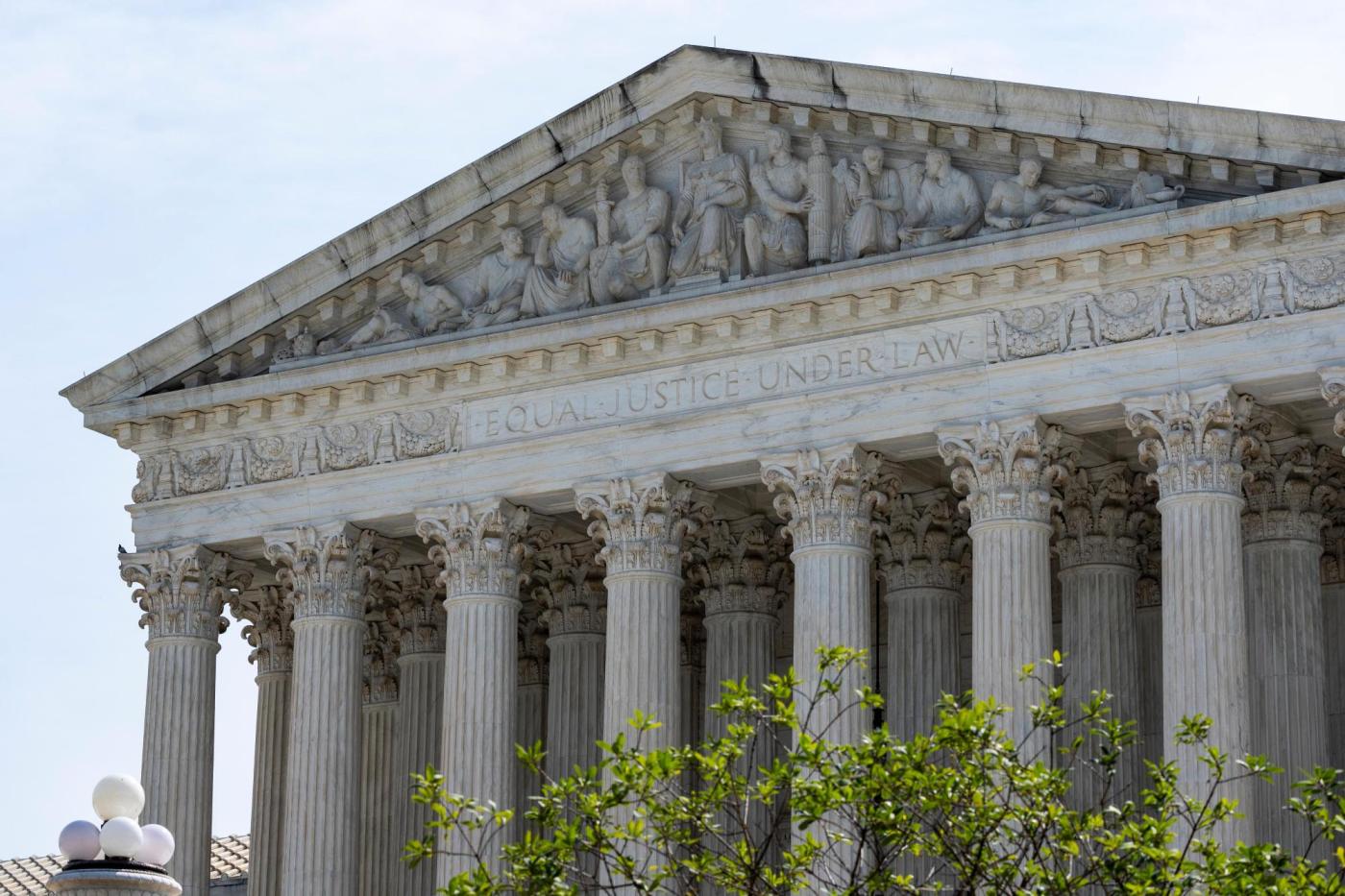
Chief Justice John Roberts declared emphatically that “the President is not above the law” in his majority opinion for last week’s sweeping presidential immunity decision. And yet the U.S. Supreme Court’s 6-3 ruling does place the nation’s chief executive above the law and protect the office from criminal prosecution in certain circumstances.

While the decision is not the blanket shield that many say would make a president a king or dictator, it goes considerably too far in excusing the holder of the executive office from accountability.

The ruling creates absolute immunity for a president carrying out the core constitutional duties of the office — what are considered “official acts” — including powers ascribed to a unitary executive in the Constitution, such as granting pardons, hosting foreign ambassadors and engaging in foreign relations.

The decision also creates essentially two lower classes of presidential acts — those considered within the outer perimeter of official responsibilities of the office, from which he has presumptive immunity, and those considered entirely private, for which there is no immunity.

We support the instinct of the court to preserve the critical separation of powers and protect a president from having his constitutional authority marginalized by a barrage of lawsuits — or by the fear of them.

But it goes against American values to offer such complete immunity even when carrying out core constitutional functions.

The result is not terribly surprising considering five of the six conservative justices who joined the majority opinion all worked extensively for previous presidents in the executive branch of government.

But codifying that a president can block an investigation or launch politically motivated investigations without cause or fear of accountability raises the likelihood a president could engage in illegal activity — as former President Donald Trump is accused of in the case that prompted the court’s review.

Former President Gerald Ford’s 1974 pardon of predecessor Richard Nixon, for example, would have been unnecessary under this ruling because Nixon presumably would have been absolutely immune from prosecution for the obstruction of justice allegation that compelled his resignation after he conspired to thwart the investigation of the Watergate break-in.

Presidents can still be prosecuted for some criminal acts, although it will be much more difficult to investigate those acts within the office.

Justice Amy Coney Barrett’s concurrence notes nothing in the Constitution insulates a president from criminal liability for their official acts, although any attempt to charge a president could always face a constitutional challenge.

That is a measured approach and one that should have been adopted in the majority’s opinion. Better yet would have been more unanimity from the court on such an impactful decision.

Legal scholars are divided on how sweeping the protections are, which is reflected in the justices’ individual commentary.

In her dissent from the majority opinion, Justice Sonya Sotomayor took one extreme, arguing the decision enables a president to be emboldened to take a plethora of actions with “evil ends,” such as bribes or assassinations.

Barrett, in her concurrence, sought to calm fears that prosecution — including specific charges against Trump for pressuring state electors in Michigan and elsewhere to overturn election results — would be thrown out.

Notably, the court remanded most of the charges against Trump back to lower courts for evidentiary processing, a clear indication the ruling is not a blanket protection for anything a president might do.

There is a possibility that some of the ambiguities will gain clarity as cases against Trump move through the legal process.

While we agree with Roberts that the ruling should not allow the president to get away with anything, there’s a clear danger that it allows current and future presidents to get away with too much.

— The Detroit News

Related Articles

Opinion |


Toby Proctor: Are you tired of our toxic two-party system?

Opinion |


Stephen Mihm: Cigarette labels were bad. Social media labels would be worse

Opinion |


More states consider voter ID laws amid conflicting research on their impact

Opinion |


Nikki Haley releases delegates, urges them to back Trump at convention

Opinion |


Harris rallies in Las Vegas for Biden. Many Democrats agree, but some want her to face Trump

Spectacular summer menu includes easier clam chowder

posted in: News | 0

We’re on a high with cooking at my house. Pretty much everything we’re eating is from one farmers’ market or another, because glorious summer produce is upon us. It’s heavenly. The fresh, fully formed flavor of ripe, in-season fruits and vegetables makes cooking exciting — and easier.

Take, for example, hothouse tomatoes. In winter, they require a fair amount of intervention to taste like much, whereas ripe summer tomatoes need little more than a sprinkle of salt and a splash of extra-virgin olive oil.

It needn’t be as simple as that, but the summer first course here isn’t much more complicated. It takes a cue from bruschetta and panzanella, both Italian favorites that feature tomatoes, bread, garlic, basil and oil.

In this variation on the theme, a multicolored mix of well-marinated cherry tomatoes are served spooned over toasted sourdough bread to catch all the delicious juices. The key is, after dressing them, to let the halved cherry tomatoes sit for half an hour or so, to meld with the olive oil, red wine vinegar, salt and garlic. Of course, these marinated tomatoes could also be tossed with greens for an easy salad or spooned over grilled fish.

For a main course, I wanted something akin to clam chowder.

Inspired by New England-style white chowders, made with milk and potatoes, it’s more of a dinner stew than a soup. Fairly easy to put together, it all cooks in one pot, with various ingredients added along the way. Start with sautéed onions and celery, building a savory white sauce thickened with a touch of flour. Sliced potatoes go in next, followed by sweet corn and a few clams.

When the clams have opened, seasoned chunks of cod are added to finish the stew. It’s nice if some of the fish stays firm and some breaks up a bit.

Checking the seasoning, I pronounced my chowder delicious but a touch bland. So, to add spark, I finished it with grated lemon zest, slivers of serrano chile and lots of chopped dill and chives, which supply a necessary zing to the mild, creamy base.

You can prepare the chowder up to two hours in advance and reheat it gently just before serving, to avoid any last-minute rushing.

I always say fruit — whether a bowl of sweet berries or a wedge of watermelon — makes the best dessert. But stone fruits are a real treat, especially nectarines, and a little lime syrup makes them into something truly special, adding sweetness and a pronounced lime flavor. (A squeeze of fresh lime juice, though, is necessary to provide the acidity you want.)

Serve the fruit well chilled, for an inordinately refreshing finish to a meal on a hot summer day.

Marinated Cherry Tomatoes on Toast

Marinated cherry tomatoes on toast. Letting the tomatoes sit for a half-hour or so lets them meld with the garlicky red-wine dressing. Food styled by Simon Andrews. (David Malosh/The New York Times)

By David Tanis

Taking a cue from Italian bruschetta and Spanish pan con tomate, these easy marinated cherry tomatoes go with everything. Toss them over greens for a summery salad or spoon them over grilled fish. Or serve them as they are here, on toasted bread, a great vehicle for catching all the delicious juices.

Yield: 6 servings

Total time: 10 minutes, plus 30 minutes’ marinating

INGREDIENTS

1 1/2 pounds cherry tomatoes, preferably a mix of different colors

Salt and pepper

3 tablespoons extra-virgin olive oil

2 tablespoons red wine vinegar

1 large garlic clove, grated

Pinch of red-pepper flakes

6 basil leaves, plus more for garnish

6 (3/4-inch-thick) slices sourdough bread

DIRECTIONS

1. Cut cherry tomatoes in half and place in a salad bowl. Season well with salt and pepper.

2. Add olive oil, vinegar, garlic, red-pepper flakes and basil. Toss well. Let sit at room temperature for about 30 minutes.

3. To serve, toast the bread and place on a platter or individual plates. Spoon cherry tomatoes over toast, dividing evenly among slices, and drizzle over any remaining juices from bowl. Garnish with more basil leaves.

Summer Chowder With Cod and Clams

Summer chowder with cod and clams. A generous amount of lemon zest, herbs and chile before serving lend verve to this chowder. Food styled by Simon Andrews. (David Malosh/The New York Times)

By David Tanis

Based on East Coast white chowder, made with milk and potatoes, but more of a dinner stew than a soup. Lemon zest and slivers of serrano chile add spark to the mild creamy base. Prepare the chowder up to two hours in advance and reheat it gently just before serving, to avoid any last-minute rushing.

Yield: 6 servings

Total time: 1 hour

INGREDIENTS

1 pound cod or other white fish, cut into 2-inch chunks

Salt and pepper

2 tablespoons extra-virgin olive oil

1 teaspoon chopped dill, plus 3 tablespoons chopped dill for garnish

3 tablespoons unsalted butter

1 yellow onion, diced small (about 2 cups)

1/2 cup diced celery (2 small ribs)

3 tablespoons all-purpose flour

6 cups whole milk

1 small dried bay leaf

Pinch of ground cayenne

1 1/2 pounds yellow-fleshed potatoes (preferably on the smaller side), peeled and sliced 1/4-inch-thick

1 1/2 cups corn kernels (from 2 ears)

12 littleneck clams, rinsed

Zest of 1 lemon

1 serrano chile, thinly sliced

2 tablespoons thinly sliced chives, for garnish

DIRECTIONS

1. Place fish in a medium bowl. Season with salt and pepper. Add olive oil and 1 teaspoon chopped dill. Toss to coat and set aside.

2. Melt butter in a large heavy-bottomed pot or Dutch oven over medium-high heat. Add onion and celery, season with salt and pepper, and cook, stirring, until onions are softened, 5 to 8 minutes. Lower heat as necessary to keep onions from browning.

3. Over medium-high heat, sprinkle onion-celery mixture with flour and stir to coat well. Add milk 1 cup at a time, stirring frequently to prevent scorching as it thickens, bringing to a simmer between additions, until all 6 cups have been incorporated. (Add more milk as needed to thin. The consistency should be like a thin milkshake.) Add bay leaf and cayenne. Taste and add salt, if necessary.

4. Lower heat to medium and add potatoes. Cook, stirring frequently, until tender, about 10 minutes.

5. Add corn and clams, and cook until clams begin to open, about 5 minutes. Add fish, stir well, and adjust heat to maintain a low simmer. Cook for about 10 minutes, until fish is opaque. Stir in lemon zest.

6. To serve, divide fish and sauce among 6 soup bowls, with 2 clams per bowl. Add a few slivers of serrano chile to each bowl and sprinkle generously with chopped dill and chives.

Nectarines in Lime Syrup

Nectarines in lime syrup. Ripe nectarines need little adornment, but a simple lime syrup enhances their natural charms. Food styled by Simon Andrews. (David Malosh/The New York Times)

By David Tanis

Fruit — whether a bowl of sweet berries or a wedge of watermelon — makes the best dessert, but stone fruits are a real treat, especially nectarines. Sliced and dressed in a lime syrup, served chilled as they are here, they’re a refreshing, sophisticated and shockingly simple end to a meal.

Yield: 4 to 6 servings

Total time: 20 minutes, plus at least 1 1/2 hours’ cooling and chilling

INGREDIENTS

1/2 cup fresh lime juice (from 4 large limes)

1 cup granulated sugar

2 tablespoons orange liqueur

4 to 6 ripe nectarines

Lime wedges, for garnish

DIRECTIONS

1. In a small stainless-steel saucepan, combine lime juice, sugar and 1/2 cup water. Bring to a boil over medium-high heat, stirring to dissolve. Turn heat to low and simmer for 5 minutes. Cool completely, then add orange liqueur.

2. Slice nectarines (no need to peel) about 1/2-inch thick and place in a medium bowl. Add 1/2 cup lime syrup and toss to coat. Chill well, about 1 hour. (Refrigerate leftover syrup for up to 1 month.)

3. To serve, spoon slices into dessert glasses or shallow bowls. Garnish with lime wedges, for a final squirt of fresh lime at the table.

Related Articles

Restaurants, Food and Drink |


How to make the perfect pierogi at home

Restaurants, Food and Drink |


3 summer cocktail recipes from cocktail influencer Julianna McIntosh

Restaurants, Food and Drink |


Gretchen’s table: Ancho chile-spiced beef street tacos make for a sweet and spicy treat

Restaurants, Food and Drink |


Gretchen’s table: Lasagna replaces pasta with low-calorie zucchini

Restaurants, Food and Drink |


A beginner’s guide to homemade cheese ravioli

Toby Proctor: Are you tired of our toxic two-party system?

posted in: News | 0

Imagine this: A general election with no negative campaigning and four or five viable candidates (regardless of party affiliation) competing based on their own personal ideas and actions — not simply their level of obstruction or how well they demonize their opponents. In this reformed election process, the candidate with the best ideas and the broadest appeal will win. The result: The exhausted majority will finally be well-represented again.

What is the “exhausted majority,” you ask? Are you tired of our toxic, two-party political system? Are you a member of one of our two major parties who no longer feels well-represented? Or, like me, are you an independent/unaffiliated, politically homeless voter? If you answered “yes” to any of these questions, welcome to the exhausted majority!

Yes, I’m exhausted by modern American politics. Most of the time, it feels like a middle-school shouting match. With all the fear, outrage and division that’s being sold to us every day, sometimes the easiest thing to do is to turn off the TV and social media completely. Many people have done this and might be enjoying a higher quality of life.

Here’s the problem: Many of these exhausted, reasonable Americans are exactly the voices we need to hear the most in our dangerously divided public arena. But what can be done? Will things ever get any better, or are we entering the final phase of what one well-respected political author has called “The Two-Party Doom Loop”?

As a proud Navy veteran, I’m choosing to channel my frustration with our dysfunctional system into wise action. I’m pushing past my personal exhaustion to answer the call of duty, one more time, by joining Veterans for All Voters and supporting its noble and urgent mission of making our system less toxic and more competitive by mobilizing veterans (and their supporters) to advocate for the most powerful election innovations.

Through election innovations such as open, nonpartisan primary elections where ranked-choice voting is used to select a winner in the general election, we can forge a more competitive American democracy where everyday citizens are incentivized and excited to participate. Don’t you think it is unfair that 44 percent of registered voters in Connecticut, my home state, are not allowed to participate in taxpayer-funded primaries? That results in 44 percent of Connecticut voters having zero input as to which candidates are on the November general ballot. That can’t be true representative democracy.

Veterans for All Voters believes that the best way to make our government, and our leaders, more accountable is through better, more competitive elections. In 2020, only 8 percent of eligible voters elected over 80 percent of our Congress. This is our “Primary Problem” and the primary reason why Congress is so ineffective and unaccountable. Our antiquated and unnecessarily partisan primary election system has led to many other systemic failures, from partisan gridlock to something even worse — actually rewarding toxic and divisive behavior.

Why, you ask, would anyone be excited to participate in our political process? Because, once we adopt these powerful election innovations we will no longer be stuck with the “lesser of two evil” choices in November. Under these new election systems, like the version already adopted by Alaska, we will have four or five viable candidates to choose from in each general election.

We can create this new, healthier and more competitive American democracy together. Please join Veterans for All Voters today and take part in our fight for responsible government and accountable politicians through open and competitive elections.

Let’s work together to save our democratic republic. Duty is calling, once again.

Toby Proctor, a Navy veteran, is a volunteer with Veterans for All Voters. He wrote this column for The Fulcrum, a nonprofit, nonpartisan news platform covering efforts to fix our governing systems.

Related Articles

Opinion |


Stephen Mihm: Cigarette labels were bad. Social media labels would be worse

Opinion |


Jennifer Schwab: President Joe Biden’s student debt relief is another blow to meritocracy and personal responsibility

Opinion |


David French: What happened to the Originalism of the Originalists?

Opinion |


Trudy Rubin: NATO dithers while Russia’s indiscriminate killing in Ukraine underlines that Putin only understands force

Opinion |


Lisa Jarvis: Women need more than Roe v. Wade. Biden should know that