Rainbow Health’s sudden closure a shock to employees, LGBTQ clients

posted in: News | 0

Rainbow Health, which has been providing healthcare services to the Twin Cities LGBTQ community for just over 40 years, announced its closure to employees on Thursday, according to union members.

Employees were informed of the closure at a staff meeting that was announced in the morning and took place at 12:15 p.m.

“We had no idea this was coming,” said Michele Peterson, a benefits counselor for Rainbow Health who is also a union leader with Rainbow Health Workers Union, represented by SEIU Healthcare Minnesota & Iowa.

Peterson said that members of the board of directors at the meeting cited funding issues as a reason for the closure, and indicated that all locations would be closing down, including a behavior clinic that in St. Paul that opened in 2018.

Rainbow Health leadership did not respond to phone calls and emails Friday asking for a statement. Currently, the number for Rainbow’s primary office redirects to a recorded message that announces their closure, which also cites funding issues. Rainbow Health’s website (rainbowhealth.org) has also been updated to announce the closure.

Peterson said the union is currently discussing possible legal avenues, particularly because the union’s contract requires 30 days advance notice of layoff.

The Rainbow Health Workers Coordinating Committee released a statement expressing shock at the sudden closure and asking for information including about the status of funding the organization was receiving.

“How do you justify the lack of notice while knowing the harm this will cause to our highly marginalized clients that depend on our professional support?” the statement said. “As we demand answers to these questions from the organization’s Board of Directors, we are united and will keep fighting for our rights as workers and to find ways to ensure continuity of client care for the community members we serve.”

No-confidence vote

Peterson, who had just celebrated her fifth year working for Rainbow Health in June, said many of her clients were left in the dark by the sudden closure. Some of those people had been clients of Rainbow Health and its predecessor the Minnesota AIDS Project for over 30 years.

First started by volunteers in 1980, the Minnesota AIDS Project focused on providing a support network and information for gay and bisexual men in the midst of the AIDS epidemic. It eventually grew to include a formalized referral network in the early 2000s and merged with Rainbow Health Initiative in 2018, briefly becoming named JustUs Health before being renamed again to Rainbow Health in 2021.

Peterson said communication had been a frequent problem in recent years. Just days before the announcement of the nonprofits’ closure, CEO Jeremy Hanson Willis resigned following a unanimous vote of no confidence, according to the union statement. The lack of communication was cited as a major reason for the no confidence vote, Peterson said.

“We were never invited to discussions,” Peterson said. “This was the first time we had even seen the board.”

Peterson said that workers, some 60 of whom are represented by the union, had been vaguely aware the organization had been having funding issues, something they had been demanding more clarity about.

She said Thursday was their last paid day and many workers were volunteering their time with no guarantee of pay to help close up Rainbow and transition clients.

“This is going to leave a big hole,” Peterson said, adding that many of her clients would be without health services until other organizations could absorb them.

She encouraged clients to look into other organizations that might be able to supply information they need, such as the Aliveness Project.

“There’s just nothing more I can do to help.”

Related Articles

Health |


A wet summer can mean more mushrooms — and increased odds of eating the wrong ones

Health |


Discover the sweet health benefits of summertime melons

Health |


‘A bottomless pit’: How out-of-pocket TMJ costs drive patients into debt

Health |


Study: Inconsistent sleep leads to higher risk of type 2 diabetes

Health |


As public health becomes political, state surgeons general play delicate role

Team of Midwestern women leads home-grown fight against Missing and Murdered Indigenous People crisis

posted in: Society | 0

Day after day, Lily Mendoza works to heal family and community through the Red Ribbon Skirt Society. She dedicates her life to saving the lives of others.

Lily Mendoza aims to reconnect with her Lakota roots over the next two years so that she can bring songs, prayers, and traditional ceremonies back to the families she serves. (Courtesy of the Bush Foundation via Grand Forks Herald)

Mendoza, a citizen of South Dakota’s Cheyenne River Sioux Tribe, founded the society eight years ago to alleviate the crisis of Missing and Murdered Indigenous People. She advocates for resilience through building cultural identity among the Lakota people.

Since 2016, women in the Northern Plains area have joined the society to organize events, assist families, and raise awareness of the issue. Mendoza consults, travels, and speaks, often without remuneration. Based in the Black Hills, she focuses on the surrounding areas in North Dakota, South Dakota, Minnesota, and Montana.

Now Mendoza can continue her work with a grant from the Bush Foundation, which specifically serves the same geographic area.

“She will seek teachings from Lakota elders, tribal leaders and sacred sites — and take time to heal herself so that she can lead from an informed Indigenous perspective and help more families find healing in Lakota lifeways,” the foundation website states.

Her Bush Fellowship, announced June 11, is among 24 available spots in the annual competition. Recipients receive grants of $100,000 each to fund leadership plans. Fellowships last 12 to 24 months.

Grief and the loss of a loved one set Mendoza on this path. Her son died of diabetes when he was 21 years old back in 2012.

“You know, when you lose a child, or you lose anybody, but specifically a child, you go through a lot of grief,” Mendoza told Buffalo’s Fire. “My other son was very close to his brother and we were just falling apart as a family. I started as a mother, as a parent, a grandmother, trying to help my children heal, bringing everybody together.”

Early during her MMIP work, she met another mother who was grieving a child.

“When I reached out to that mother, she said nobody had asked her in a really long time, ‘How are you doing?’ She had lost her daughter who was 11 years old.” The girl had gone missing and was murdered. “So we just began building a relationship,” Mendoza said.

“She was doing the same things that I was doing –– sitting on the couch, sitting on the bed, just not wanting to do anything anymore,” said Mendoza. “And she had been doing that for quite some time.”

Mendoza provided emotional support that family members of MMIP often don’t receive. The two formed a friendship stimulating the Red Ribbon Skirt Society. “Now she’s able to go out and speak, be a voice for her daughter. Some of the other women I’ve reached out to are also part of the society,” Mendoza said.

The group name originated with the decision to wear jingle dresses and red ribbon skirts at events to spread awareness. The color red often symbolizes the MMIP victims who have been silenced.

According to the Bureau of Indian Affairs, around 4,200 missing and murdered cases remain unsolved. Approximately 1,500 missing American Indian and Alaska Natives are registered in the National Crime Information Center. The Not Invisible Act Commission issued a report last November providing details of the national crisis of MMIP across the country. The Interior and Justice departments responded to the commission’s Not One More report.

Related Articles

News |


U.S. Rep. Betty McCollum joins calls for Biden to drop out of presidential race

News |


A wet summer can mean more mushrooms — and increased odds of eating the wrong ones

News |


Discover the sweet health benefits of summertime melons

News |


‘A bottomless pit’: How out-of-pocket TMJ costs drive patients into debt

News |


Study: Inconsistent sleep leads to higher risk of type 2 diabetes

For the last 35 years Mendoza’s base has been the Black Hills where she and her son own a small book business specializing in literature by Native American authors. This location is where she’s raised her children and grandchildren. She grew up on the Cheyenne River Indian Reservation, where she graduated from high school before moving on to Black Hills State University for her degree.

The Red Ribbon Skirt Society now has about 25 active members in and around Rapid City, S.D. The group is all-volunteer and doesn’t accept any federal or state funding. “We are just a group of women that volunteer our time to this cause,” said Mendoza. It consists mostly of mothers, grandmothers, and members of those families that have lost individuals,” she said. “They go out and speak, they spread awareness and they really are a voice for their lost one and for other women and children as well.”

In addition to hosting events and amplifying the voices of families, participants help families through court processes. This includes meetings with attorneys general, victims’ assistants and investigators. Mendoza said Red Ribbon Skirt Society members accompany community members to court hearings when asked by families uneasy with the legal system.

Prayer is a significant part of the group’s activity. At events, Mendoza usually asks if someone can speak or sing in Lakota. She sometimes finds no one to recite certain prayers in the Native language. “We need to smudge and we need to put tobacco down to prepare for this,” said Mendoza.

The Bush Fellowship is to strengthen her Lakota roots. “It’s to reconnect and learn about my traditional ceremonies, because I need to learn these things,” Mendoza said.

Throughout the next two years, Mendoza expects to learn her songs, how to help run a sweat lodge ceremony and better ways to commune with nature. “I’m going to the sacred sites that are here in South Dakota and also beyond,” said Mendoza. “There’s a sacred site in Wyoming, which I will be going to as well. And just in spending time there, connecting to the land, connecting to the person I need to be, a Lakota woman.”

She plans to share the knowledge of her cultural heritage with others in the Red Ribbon Skirt Society and families needing support. She wants families to incorporate these teachings into their healing journeys.

“I hope that somehow in the future that I can carry on those teachings and pass those on to younger women,” said Mendoza. “As well as to pass those on to still those women that are my age and older.”

This story was originally published on BuffalosFire.com.

Related Articles

News |


Literary picks for week of June 23: Native American words and music are on display this week

News |


MN Historical Society agrees to return 1862 ‘Mankato hanging rope’ to Prairie Island Indian Community

News |


St. Paul, native community break ground on Wakan Tipi Center in Dayton’s Bluff

News |


U.S. Department of Justice notes efforts, partnerships addressing MMIP crisis

News |


Prairie Island Indian Community seeks ‘hanging noose’ of 1862 from MN Historical Society

U.S. Rep. Betty McCollum joins calls for Biden to drop out of presidential race

posted in: Politics | 0

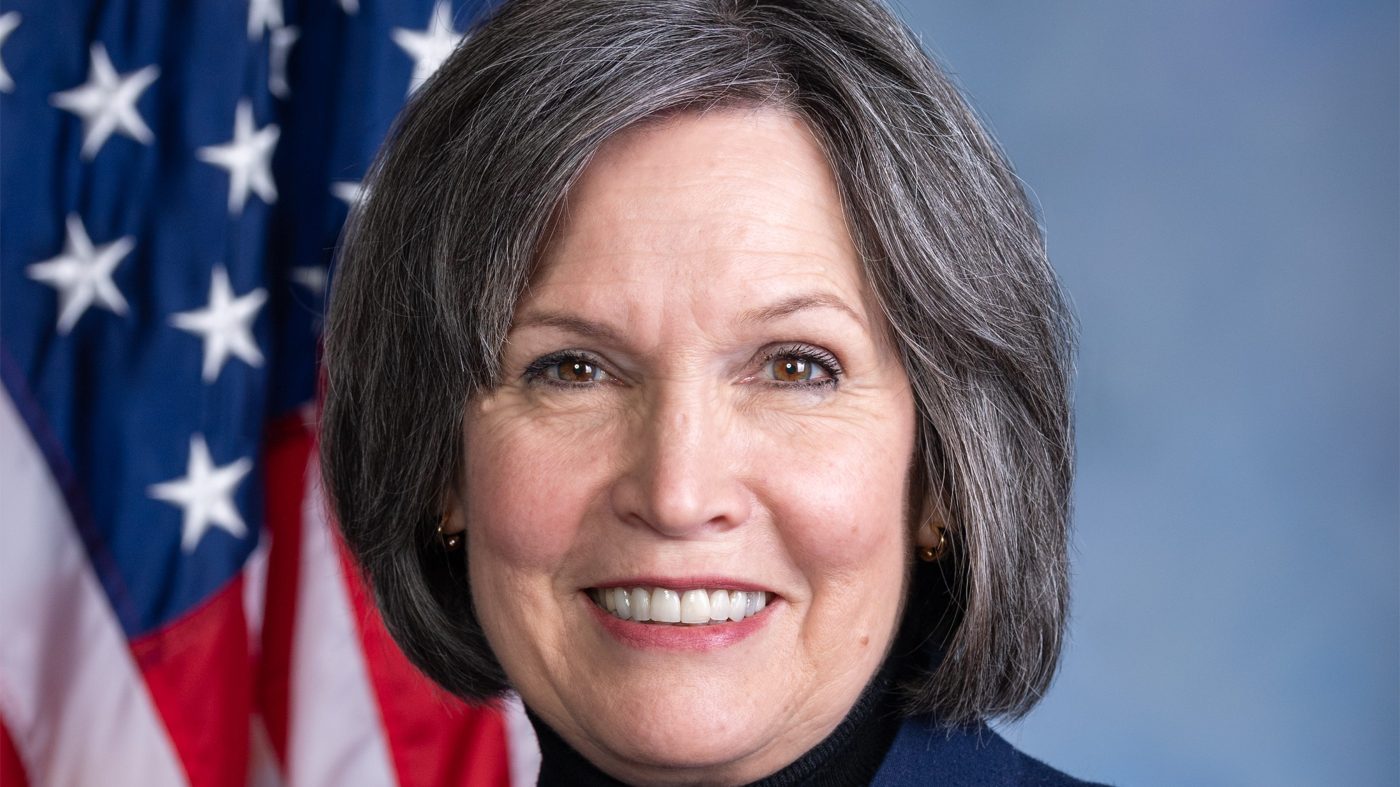
U.S. Rep. Betty McCollum is the second Democrat in Minnesota’s congressional delegation to call on President Joe Biden to drop out of the campaign and allow another candidate to take his place.

In a statement released Friday, McCollum, who has represented St. Paul and the east metro for more than two decades, said Biden should step aside. She joins a growing chorus of Democrats calling for a new presidential nominee as doubts grow about the 81-year-old Biden’s age and fitness for office.

“Winning in November and defeating Trump’s dangerous, hate-filled agenda must be Democrats’ sole focus,” McCollum said. “To give Democrats a strong, viable path to winning the White House, I am calling upon President Biden to release his delegates and empower Vice President (Kamala) Harris to step forward to become the Democratic nominee for President.

McCollum said delegates to the Democratic National Convention in August should consider adding Minnesota Gov. Tim Walz to the ticket, citing the need for a “strong Midwestern running-mate.”

Gov. Tim Walz, D-Minn., speaks before President Joe Biden at the Earth Rider Brewery, Thursday, Jan. 25, 2024, in Superior, Wis.  (AP Photo/Alex Brandon)

A growing number of Democratic members of Congress are calling for the president to step aside and allow the vice president to take his place in the race. As of Friday afternoon, more than 30 had called for Biden not to drop out.

McCollum is the second member of Minnesota’s congressional delegation to call on Biden to end his reelection bid. Democratic Rep. Angie Craig, who represents the south Twin Cities suburbs, called on Biden to step aside earlier this month.

Dean Phillips, who represents the west metro suburbs and attempted to run for president himself, has not called on Biden to step aside, though he has said he believes the president is too old to run for a second term.

U.S. Sen. Amy Klobuchar and U.S. Sen. Tina Smith have not called for Biden to step aside. U.S. Rep. Ilhan Omar, who represents a district that includes Minneapolis, has been a vocal supporter of Biden.

Walz has not called for Biden to step down and has been a vocal supporter of the president — even as concerns grew about Biden’s poor performance in his June debate with Donald Trump.

After a meeting of Democratic governors at the White House earlier this month, Walz said he believed Biden was “fit for office.”

Related Articles

Politics |


Royce White, Joe Fraser present contrasting conservative visions in first Senate debate

Politics |


Minnesota’s minimum age of 21 to carry guns unconstitutional, appeals court rules

Politics |


Joe Soucheray: Should Minnesotans take some measure of pride in our governor’s blossoming national profile?

Politics |


Minnesota study finds fault with state agencies over pay adjustments

Politics |


Dakota County Board selects first woman to serve in county’s top role

Five questions as the second half of the Twins’ season gets underway

posted in: News | 0

The beginning of the Twins’ season was unlike any other. Good play followed poor play and the cycle kept repeating itself, the highlight being a 12-game winning streak and the low light a seven-game losing streak.

“I couldn’t take any more of that streaky stuff,” manager Rocco Baldelli said. “It was more than a little bit. It was excessive.”

It sure was.

But the Twins eventually settled in, found some offensive consistency and started rattling off series wins. They finished the first half of the season with a 54-42 record, on pace to win 91 games and in line for a playoff berth.

Here are five questions facing the Twins as the second half of the season gets underway:

Will the Twins make a move at the trade deadline?

The trade deadline is fast approaching — it will fall on July 30 at 5 p.m. CT this year — and the Twins currently are in position to be buyers. Holding a Wild Card spot at the moment, the big question will be how much the Twins want to push to supplement this roster.

After a slow start, the offense has been among the best in the majors. It seems as if contending teams could always use bullpen help at the deadline, but the Twins’ group could be getting major reinforcements soon in the form of injured relievers Brock Stewart and Justin Topa.

But the status of the starting rotation is more of a question.

The Twins have Pablo López, Joe Ryan, Bailey Ober, Simeon Woods Richardson and Chris Paddack currently in the rotation. But their starting pitching depth is thin. And the Twins will need to continue carefully monitoring Paddack’s workload in his first full season since 2019.

Would they swing a trade for a starting pitcher? And how much would they have to part with to do so? They have a little over a week to figure that out.

How healthy will the Twins be?

The Twins limped into the all-star break, forced to play a catcher, Christian Vázquez, at third base last Saturday due to a string of injuries to their infielders.

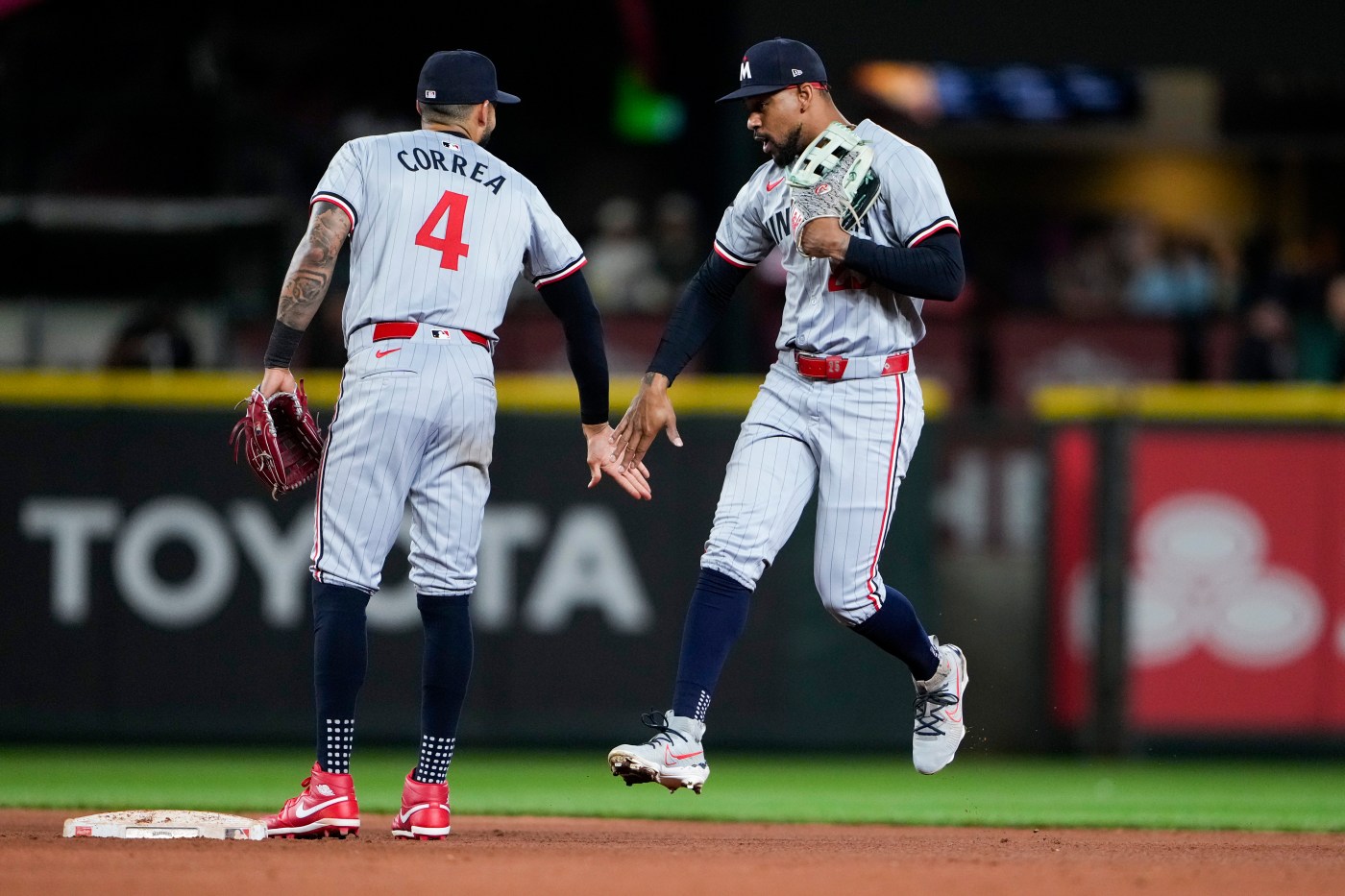
After staying mostly healthy for much of the first half of the season, both Kyle Farmer (shoulder) and Jose Miranda (back) landed on the injured list and Carlos Correa (more on him below) was sidelined with a foot injury.

Austin Martin was already on the injured list at the time, though his return could be quite soon. Fellow infielder Royce Lewis, whom the Twins said early in July they would re-evaluate after the all-star break, was too. Lewis is dealing with an adductor strain that the Twins expected would keep him out for a few weeks.

Stewart appears to be near a return — which could provide a big boost to the bullpen —rehabbing with the Triple-A Saints last week after missing two months with shoulder tendinitis, and Topa (knee) could be moving toward making his season debut.

The Twins haven’t said much publicly about Alex Kirilloff’s status since he landed on the IL a little more than a month ago, though it’s hard to see how he fits into the picture at the current moment when he is healthy.

How big of a problem will Carlos Correa’s foot be?

Carlos Correa was scratched from the lineup on Saturday and imaging revealed plantar fasciitis in his right foot. The all-star break came at a good time for him, and if he does take the field on Saturday, he would have had seven days to rest.

But how serious is the injury?

The early word is that it is less serious than the plantar fasciitis he had in his left foot last season, but it still has to be a concern considering how much he was limited by his foot a season ago.

Correa said last Sunday if he could have done things differently last year, he would have taken more time off when the issue started to make sure that the pain doesn’t worsen.

But how much time is enough time? And how much will plantar fasciitis affect and limit Correa, who has been the Twins’ team MVP to this point?

What will the Twins do with Brooks Lee when Royce Lewis returns?

It’s a good problem to have, certainly, but what will the Twins do with their No. 2 prospect when Lewis makes his return?

Lee was called up from Triple-A when Lewis landed on the injured list, and his performance in a small sample size has impressed those around him.

Though he’s primarily played third base since he got called up, and was drafted as a shortstop, he had an very notable day in the field last weekend at second base, making multiple nice plays, which drew praise from manager Rocco Baldelli.

If Lee continues to perform, the Twins could opt to shift him over to second, letting him play a little bit of third and possibly even short, as well. That could free up super utilityman Willi Castro to move around the field as needed.

Can the Twins catch Cleveland?

The Twins hit the all-star break 4½ games behind the division-leading Cleveland Guardians in the American League Central division and they will spend the second half of the season trying to track them down.

Despite the ground to make up, FanGraphs gave them a 38.1 percent chance to win the division (behind Cleveland’s 53.3 percent).

The Twins will play seven games in the second half against the Guardians — they went 0-5 against them in the first half — and will have an opportunity to gain some games on Cleveland then.

If they are unable to catch the Guardians, they are still well positioned to make the playoffs currently. As it sat at the break, they held the second Wild Card spot — matching them up for a series in New York against a historically-dreaded playoff foe: the Yankees.

Related Articles

Minnesota Twins |


Check out the company Joe Mauer joins in the Hall of Fame

Minnesota Twins |


Three current Twins learned valuable lessons from sharing clubhouse with Joe Mauer

Minnesota Twins |


‘From St. Paul to the Hall’: Paul Molitor steals home

Minnesota Twins |


Justin Morneau excited to see longtime friend, Twins teammate Joe Mauer honored in Cooperstown

Minnesota Twins |


Twins release 2025 schedule