Business People: Former Pioneer Press photo editor Hillery Smith Shay takes executive role at Children’s

posted in: News | 0

OF NOTE

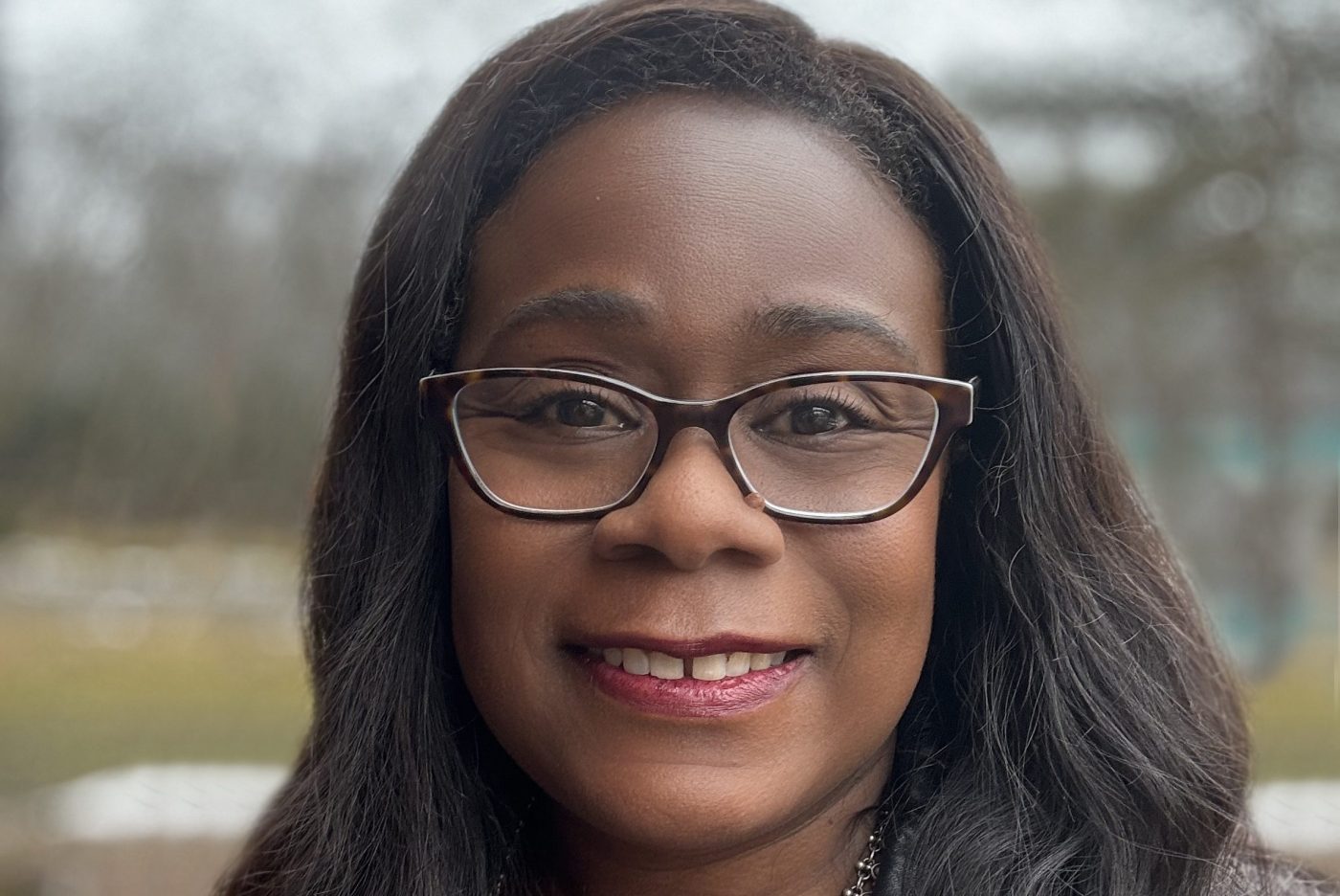
Hillery Smith Shay

Children’s Minnesota, a Twin Cities-based chain of hospitals and clinics focused on pediatric care, announced the promotion of Hillery Smith Shay to chief marketing and experience officer, senior vice president of communications. Prior to her role at Children’s, Shay served in leadership roles at Abbott Labs and also worked as a photojournalist and team leader, including as photo editor at the St. Paul Pioneer Press.

ARCHITECTURE/ENGINEERING

Pope Design Group, a St. Paul-based architecture firm, announced the promotions of Elise Kelly, Raphael Lister and Zac Rosenow to associate. Kelly is a project manager and architect; Lister is director of education, project manager and architect, and Rosenow, senior project designer and architect.

FINANCIAL SERVICES

Veridian Credit Union, Eden Prairie, announced the hire of Mitch Kasten to manager of indirect lending. Kasten previously was vice president regional sales manager for Wells Fargo Auto. … Nepsis, a Minneapolis-based national financial adviser and investment management firm, announced the appointments of Jack Cahill as senior vice president of tax and Chad Koebnick, vice president of specialized tax services.

FOOD

General Mills, Golden Valley, announced the appointment of Asheesh Saksena as chief strategy & growth officer, effective Aug. 26. Saksena succeeds Dana McNabb, following her prior promotion to group president, North America Retail. Saksena most recently served as chief growth officer for Gap Inc.

GOVERNMENT

The City of Bloomington announced the appointment of Kathy Hedin as assistant city manager-external services, effective July 22. Hedin previously served Ramsey County as public health director, social services director and deputy county manager.

HEALTH CARE

Ebenezer and Fairview Senior Services, a Twin Cities-based provider of senior living services, announced the appointment of Brett K. Anderson as president and chief executive officer, effective July 29. Anderson succeeds Jon Lundberg, who will retire in September. He joins Ebenezer and Fairview from Ecumen, where he served as senior vice president, and chief operations and strategy officer. … Allina Health, a Minneapolis-based metrowide chain of hospitals and clinics, announced the opening of its Center for Mental Health and Addiction, 520 Osborne Road in Fridley.

LAW

The Hennepin County Bar Association announced the appointment of m boulette as president. boulette is a partner in the Minneapolis office of Taft Stettinius & Hollister, where they practice family law.

MANUFACTURING

Donaldson Co., a Bloomington-based maker of filtration systems for industry, announced the following leadership changes effective Aug. 1: Andrew Dahlgren, currently president, Life Sciences appointed president, Mobile Solutions, and Richard Lewis, currently president, Mobile Solutions appointed president, Life Sciences.

MEDICAL TECHNOLOGY

CVRx, a Maple Grove-based developer of a treatment for chronic heart failure, announced the appointment of Robert John as chief revenue officer; John most recently served as a divisional vice president and general manager of Cardiac Rhythm Management at Abbott Labs. … Medtronic announced that Karen Parkhill will resign as executive vice president and chief financial officer, effective Aug. 2, to become chief financial officer for HP Inc. Gary Corona, senior vice president, Global Financial Planning and Analysis, will serve as interim chief financial officer. Medtronic is a Dublin, Ireland-based maker of electronic heart devices and spine treatments with executive offices in Fridley.

MILESTONES

MISCO Speaker Co., a St. Paul-based maker of audio equipment for industry, announced it is celebrating its 75th anniversary.

NONPROFITS

Cookie Cart, a Minneapolis-based youth leadership organization, announced it has named Jacquelyn Carpenter as executive director. Carpenter most recently served as vice president of Workforce and Development at Twin Cities RISE. … The YMCA of the North, Minneapolis, announced the following new board members: W. Anders Folk, Jones Day; Mike Olson, Deepwater Asset Management, and Kate Siegrist, Eisner Advisory Group.

SPONSORSHIPS

Schwan’s Co., a Bloomington-based retail food distributor, and Special Olympics USA announced a partnership to support the 2026 Special Olympics to be held in Minnesota.

Related Articles

Business |


Business People: Fairview fills chief people officer role

Business |


3M Co. finance chief leaves to join ADM

Business |


Business People: St. Paul Realtors Association names new CEO

Business |


Business People: Target Corp. announces C-Suite promotions

Business |


Business People: Eagan attorney Alex Webb wins Army Corps of Engineers award

EMAIL ITEMS to businessnews@pioneerpress.com.
2024 Olympics: Everything you need to know about the Games

posted in: News | 0

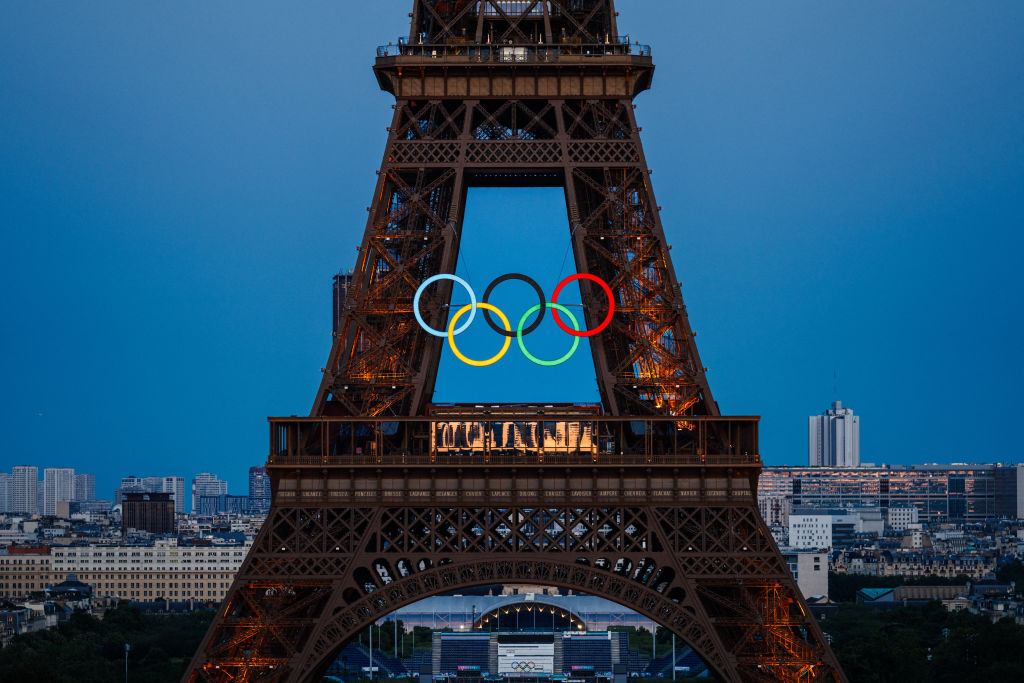
It’s almost time for the 2024 Olympics. Get ready for all the action — everything on the track, courts and fields, in the pools and all the other events — with a guide that tells you everything you need to know about the global gathering in Paris.

How can I watch the Olympics?

In a variety of ways, on a variety of channels.

Each day’s most popular events will air live on NBC in the morning and afternoon in the United States. NBCUniversal says the Paris Games will have more programming hours on NBC than any previous Olympics.

Mike Tirico will host two daily Olympics shows, one that coincides with prime time in Paris (2 to 5 p.m. Eastern in the U.S.) and features live competition in marquee sports like swimming and gymnastics. The other, during prime-time hours in the United States while Paris sleeps, will be a curated view of the day’s best action.

USA Network, E!, CNBC and GOLF Channel also will show live action and Olympic programming. Peacock will serve as the U.S. streaming home. It will stream every sport, including all 329 medal events.

When do the 2024 Olympics start?

The action begins on July 24 with eight men’s soccer matches and the preliminary phase for rugby sevens. The schedule for the following day includes archerywomen’s soccerwomen’s handball and rugby sevens, and the opening ceremony is scheduled for July 26.

How are they doing the Paris Olympics opening ceremony?

The bold, daring plan has about 10,000 athletes parading on more than 90 boats on the Seine River for 6 kilometers (3.7 miles). The open-air ceremony will be held during sunset and is expected to last nearly four hours, transforming Paris and its iconic landmarks into a giant stage.

Safety is a concern. French President Emmanuel Macron has said the ceremony could be shifted to the Stade de France if the security threat is deemed too high. But organizers are moving forward with their open-air plans. About 45,000 security force members will be deployed, and the airspace and all airports within a 150-kilometer (90-mile) radius around Paris will be closed for the proceedings.

French soldiers from the Operation Sentinelle patrol on boat on the Seine River in Paris on July 17, 2024. The anti-intrusion water barrier is ready on the Seine in eastern Paris, and sonar equipment is submerged at the bottom of the river: the French army is deploying ‘exceptional resources’ to secure the embarkation area for the 10,000 athletes who will take part in the opening ceremony of the Olympic Games. (ALAIN JOCARD/AFP via Getty Images)

About 220,000 invited and security-screened spectators are expected to fill the upper tiers of the river’s banks, and another 100,000 paying spectators will watch from the lower riverside and around the Trocadéro plaza.

What’s the Olympics schedule?

Swimming and gymnastics both begin on July 27. Swimming finishes on Aug. 4, and the final day for artistic gymnastics is Aug. 5. Track and field runs from Aug. 1-11.

The men’s basketball final is on Aug. 10, and the women’s championship is the following day. The gold medal match for men’s soccer is on Aug. 9 at Parc des Princes, and the women hold their final at the same venue the next day. Roland Garros hosts the women’s singles final for tennis on Aug. 3, and the men’s singles championship on Aug. 4.

What are the new 2024 Olympics sports?

Breakdancing makes its Olympic debut at the Paris Games in another step in the International Olympic Committee’s pursuit of a younger audience. Judges will score breakers using what’s known as the Trivium judging system. A panel of five judges scores each breaker on creativity, personality, technique, variety, performativity and musicality.

Two dancers perform breakdancing during a tribute evening to Pierre de Coubertin and the creation of the modern Olympic Games at the Sorbonne University in Paris on June 23, 2024. (OLYMPIA DE MAISMONT/AFP via Getty Images)

Who to watch at the Paris Olympics?

It’s going to be a starry summer in the City of Lights.

Simone Biles is back, looking to add to her seven medals from two previous trips to the Olympics. The American gymnast won a team silver and a bronze in balance beam in Tokyo despite removing herself from multiple competitions to focus on her mental health. She returned to the sport last year, winning a record sixth world all-around title.

Simone Biles celebrates as she is announced as a member of the Olympic Team on Day Four of the 2024 U.S. Olympic Team Gymnastics Trials at Target Center on June 30, 2024 in Minneapolis, Minnesota. (Elsa/Getty Images)

U.S. basketball star LeBron James is going for his third gold medal. The 39-year-old James averaged 25.7 points, 8.3 assists and 7.3 rebounds in 71 games for the Los Angeles Lakers in his 21st NBA season. He is the league’s career leading scorer.

Sha’Carri Richardson won the 100 meters at the U.S. track trials, booking her spot for what assuredly will be a loaded field for the race in Paris. Richardson also won the 100 meters at the trials in 2021, but the victory was erased because she tested positive for a chemical found in marijuana.

Noah Lyles, another American track star, will try to win gold in the men’s 100 meters, and Katie Ledecky is the face of the U.S. swim team as she competes in her fourth Olympics. Masters champion Scottie Scheffler and Spain’s Jon Rahm are set to compete at Le Golf National, and Rafael Nadal and Carlos Alcaraz — two Spanish tennis players who know a little something about winning at Roland Garros — plan to team up for doubles in Paris.

Which country is expected to win the most gold medals?

The U.S. is -500 favorites to win the most Olympic gold medals, according to BetMGM sportsbook. The over/under is 39.5. The Americans are followed by China (+300, 33.5 over/under) and France (+8000, 26.5).

Real World Economics: Depend on the security of the bond market

posted in: News | 0

Edward Lotterman

With 107 days left before the presidential election and 182 to Inauguration Day, our nation is in unprecedented political turmoil.

What does that mean for the economy generally? What about household concerns such as interest rates or retirement account returns? No one really knows — but some conditions will hold, regardless of who wins in November.

Ultimately, if all other institutions fail us economically, it’s the global bond trade that can, and will, rescue us from damaging political interference in the market. They’re called “securities” for a reason, and when there is money to be made — but especially lost — traders will act spontaneously to make things right.

But first, let’s consider our current situation, and what brings us to this discussion.

Our situation is shot through with “uncertainty” — a circumstance in which we do not know what will happen. Uncertainty differs from “risk,” however. Risk also involves not knowing what will happen, but includes some information, such as on weather, climate, health, stock market patterns, gambling odds, or other variables, that allow estimates of statistical probabilities of different outcomes.

Uncertainty is when there is no such basis of any kind for predictions. That is precisely what we face now. We know there will be an election on Nov. 5. There should be an inauguration next Jan. 20. Before those dates, but primarily after, no one knows how critical events will play out.

But economically, on some issues, we can form expectations. One is that the Federal Reserve will not make major changes in monetary policy. Fear and uncertainty may roil financial markets. Bond and stock prices may gyrate, and with them interest rates. But only in the most dire circumstances, such as the real estate debt blowout of the late 2000s, will the Fed make significant, drastic changes.

This stability will continue post-inauguration regardless of who takes the oath. Pundits may punt about what Donald Trump or Joe Biden will do, particularly Trump, but our nation’s central bank was designed to be insulated from control by elected officials and from politics generally.

Both Biden and Trump are well-known commodities. But 99% of the uncertainty still centers on Trump. A Democratic win, whether by Biden or someone else, would mean cautious stay-the-course policies in virtually all policy areas, but especially the economy,

If Trump wins, multiple questions arise, based on his past behavior and current comments. Will he try to dictate Fed money and interest rate policies? Will he fire Chair Jerome Powell, whom he appointed, or other members of the Board of Governors to bring in his own lackeys? And, failing that, how, for example, would our central bank react if Trump succeeds in getting Congress to pass laws raising import tariffs to unprecedented levels, making drastic changes in other taxes or changing defense policies relative to NATO or the EU or Taiwan that would affect business and trade globally?

No one can predict what the Fed would do in a crisis. Both its reactions to a looming financial meltdown in 2008 and its unprecedented 25% increase of the money supply over the year following COVID’s 2020 outbreak were drastic, unprecedented and still controversial. Yet in both cases Fed acted on its own, not in response to orders or pressure from the White House or Congress.

Some “experts” suggest Trump will instruct the Fed to lower interest rates or will quickly replace Powell. Well, probably not. We can thank three people from history — and the amorphous bond market — for that.

Start with Carter Glass. This newspaper editor and publisher from Lynchburg, Va., served in the House of Representatives, as U.S. Treasury Secretary and as a senator. In 1913, he helped write the Federal Reserve Act and shepherded it through Congress. In the 1930s he oversaw banking reforms including Federal Deposit Insurance, the separation of commercial and investment banking and an overhaul of the Fed.

His key contribution was the structuring of the Fed into 12 independent regional banks — legally private corporations. They had a statutory mandate but were free from political control. This compromise solved divisions between conservatives who did not want anything headquartered in Washington, and those who feared anything based on Wall Street. Neither side wanted presidents to control the new institution.

In congressional reform of banking and finance during the 1930s, Glass was joined by Utah business owner Marriner Eccles. He had taken over the businesses of his father, an immigrant from Scotland, who was Utah’s first multi-millionaire. These included banks and Eccles understood the sector deeply.

The Fed had let the economy implode after 1929 because it was too decentralized. So the 12-bank structure was kept but a seven-member board of governors was created. These governors together with five of the 12 district bank presidents in rotation would make monetary policy. Great care went into designing a system of 14-year governors’ terms on a schedule so that no president could ever appoint a majority on the board. And the district presidents on the policy-making Federal Open Policy Committee answered to no politician.

Eccles was the first chair of the new board, acting effectively, but staying on too long. After the brief term of a faceless replacement, William McChesney Martin took over as chair. With an English degree from Yale, Martin was the greatest Fed chair ever and an unsung American hero. Serving from April 1951 to the end of January 1970, Martin oversaw two decades of growth and prosperity with low inflation.

Martin’s most important action was in his last year. Shortly after Richard Nixon’s inauguration in January 1969, Martin was summoned to the White House. He was told to step down so that Arthur Burns, a distinguished academic, could take over. Martin told Nixon to go pound sand. His term had another year to run, precisely because the law was written to prevent a new president from grabbing control of the money supply and interest rates. Nixon had no statutory power to fire him.

Powell should emulate Martin’s principled stand if Trump tries to fire him. The key problem, however, is that Nixon backed down and did not make it a public issue. There is no question that if Trump openly called on Powell or any other governor to leave the board, there would be a political and financial crisis. But governors should stand firm.

But even if Powell or other governors did acquiesce, there is yet one more check: The five district presidents on the policy-making FOMC are not subject to the executive branch in any way. They did block a key action by the Board of Governors in August 2008 as the financial debacle started. And they would block any kowtowing to any orders from the White House.

But the final check on overreaching power is the amorphous global bond market.

In his 1812 invasion of Russia, Napoleon Bonaparte was defeated by “General Winter.”  Several presidents with big plans, including Bill Clinton, have been defeated by “General Bond Market.” Simply put, financial markets are naturally roiled by political adventuring — stock prices fall, interest rates rise and politicians pull back. Indeed, Clinton’s key policy adviser James Carville famously said, “If there was reincarnation … I would want to come back as the bond market. You can intimidate everybody.”

One can hate the global market centers of Wall Street and the City of London and Frankfurt and Basel, but international financial markets are the ultimate check on the powers of mercurial leaders. None of the conspiracy delusions of shadowy control are true or needed. It is actually the spontaneous reactions of thousands of banks and investors to reckless moves by any government that are the ultimate check on power. One can regret that generally, but depend on it now.

Related Articles

Business |


Real World Economics: Data is vital; two new reports tell us why

Business |


Real World Economics: Using fuzzy math to debate Social Security

Business |


Real World Economics: The climate is speaking; are we listening?

Business |


Real World Economics: Righting the ship when things go awry

Business |


Real World Economics: The social Darwinism of climate change

St. Paul economist and writer Edward Lotterman can be reached at stpaul@edlotterman.com.

Skywatch: Lunar landing memories

posted in: News | 0

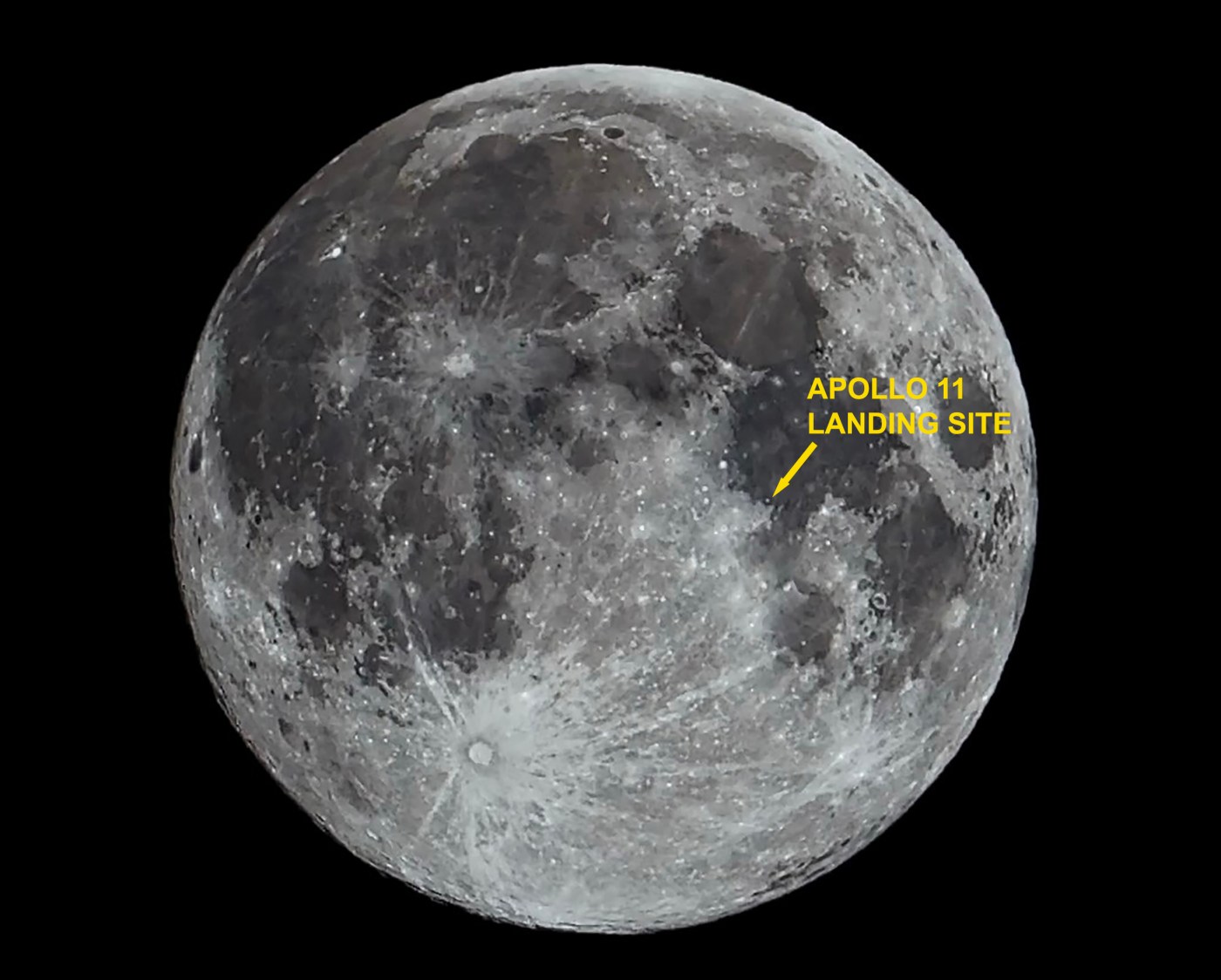
We have a full moon this weekend, which only seems appropriate since this is the 55th anniversary of the Apollo 11 moon landing mission, the first time people landed on the moon. It’s so hard to believe it was that long ago. I was 13, but it seems like it was yesterday. It was the culmination and fulfillment of the challenge made by President John F. Kennedy in 1961 after Alan Shepard completed the first American manned mission into space. JFK challenged NASA to send Americans to land on the moon and safely return by 1970. This was a highly ambitious goal, considering the U.S. space program hadn’t even put a man in orbit around the Earth when he pitched his challenge. John Glenn wouldn’t do that for almost another year.

The goal of getting men to the moon in the ’60s was scientific exploration, but a significant part of the motivation was political and military. We had to make sure an American flag was planted on the moon instead of the red hammer and sickle of the communist Soviet Union. After all, they embarrassed the USA by getting the first satellite, Sputnik, into space in 1957. Then they rubbed it in when they got the first man into space and orbit on Earth in 1961. America needed to catch up and exceed the Soviets in space.

The successful race to the moon probably wouldn’t have happened without German scientists leftover from the Hitler-World War II era. They were at the leading edge of rocket development, and both the Soviet Union and the U.S. had them in the fold. The Germans developed the V2 rockets and were constantly hitting Great Britain and other European ally targets during WWll. The V2 was developed by Werner Von Braun, who eventually ended up on the American side with NASA. Von Braun designed the Saturn V rockets that launched Apollo astronauts to the moon. Developing rockets for human space flight, though, was secondary for the U.S. and U.S.S.R. The primary mission was to create missiles to transport nuclear weapons halfway across the world.

Even though lunar landing missions were born more out of politics than science, at least in my opinion, it was indeed an exciting time. In less than 75 years, we went from flying the first airplanes to landing on the moon. As a kid, I was really, really caught up in the manned spacecraft program in the 1960s. Don Fallen, my next-door neighbor and one of my best buddies, helped me build a space capsule of plywood in my back yard. We even went on pretend missions into space.

I remember the night before the Apollo 11 mission took off. I was so excited that I stayed up all night, eagerly anticipating the launch. I almost missed it because I fell asleep. Just in the nick of time though, I woke up 15 minutes before the launch and caught Walter Cronkite’s call on CBS TV. The thrill of that moment is something I’ll never forget.

As Apollo 11 raced to the moon in its three-day journey, I journeyed to CYC summer camp Near McGregor, Minn., for 10 days. I almost canceled the trip because I feared I’d miss the TV coverage. I had my Dad call the camp to ensure all campers would experience this history. They promised that they would. The rules of the camp prohibited transistor radios. I smuggled one in anyway, and the first night I was there, I crouched very uncomfortably, deep into my sleeping bag, and listened to any news I could about Apollo 11 with one of those old-fashioned earphones stuck in my ear. It worked. I never got busted!

Neil Armstrong, Mike Collins and Buzz Aldrin of the Apollo 11 mission (NASA)

Then Sunday, July 20, 1969, arrived, the day Neil Armstrong and Buzz Aldrin climbed into the lunar module lander and left Mike Collins in the command module to continue orbiting the moon, awaiting the moon landers’ safe return. I remember the head camp counselor, Louie Grams, announcing over the camp loudspeakers that we were invited to the main lodge to watch the moon landing coverage. I was surprised that only about half of my fellow campers came. We were glued to that little black and white TV as Walter Cronkite proclaimed about 3:20 in the afternoon…. “Man on the Moon!” Shortly after that happened, we were shooed away from the TV. I just wasn’t going to settle for that. I knocked on the door of the councilor’s lodge, and short of pounding fists on the walls, I insisted that I get to see more of the coverage. They didn’t want a scene, so I spent a little time watching.

I wasn’t through, though, because that night, Neil Armstrong was to set foot on the moon around midnight local time. Lights were out for the campers at 10:30 p.m. I was prepared to listen to the coverage on my transistor radio in my sleeping bag, but by 11:00, I couldn’t stand it anymore. I snuck out of the tent and once again pounded on the door of the councilor’s lounge, where they were crowded around that same black and white TV. Once again, I got my way and watched that historic moment when Neil Armstrong proclaimed, “That’s one small step for man, one giant leap for mankind.” Those ghostly images of Neil Armstrong hopping around on the moon with Buzz Aldrin are burned in my memory forever.

I’m not sure it’s all that beneficial for men and women to walk around the moon again someday. Robotic spacecraft can do an excellent job exploring the moon, which is much cheaper than sending people there. Also, it’s hazardous for humans to be out deep in space away from the protective magnetic fields of Earth for extended periods because they are so vulnerable to cosmic rays and solar storm radiation. Back in 1972, the Apollo 17 astronauts just missed being hit by lethal solar radiation.

There isn’t a way to protect humans from this, but hopefully, there will be someday. Until then, I don’t think it will be worth the risk.

This makes me even more impressed with the courage of the Apollo 11 astronauts and all the other moon missions that boldly went to and walked in a place where no human had ever been. Keep that in mind the next time you gaze upon the moon.

Mike Lynch is an amateur astronomer and retired broadcast meteorologist for WCCO Radio in Minneapolis/St. Paul. He is the author of “Stars: a Month by Month Tour of the Constellations,” published by Adventure Publications and available at bookstores and adventurepublications.net. Mike is available for private star parties. You can contact him at mikewlynch@comcast.net.

Related Articles

Outdoors |


Skywatch: Astronomical tape measures

Outdoors |


Skywatch: Summer’s upside-down hero

Outdoors |


Skywatch: Classic summer stargazing in July

Outdoors |


Skywatch: Long days, long moon shadows, and a promising comet?

Outdoors |


Skywatch: Happy summer solstice