Hundreds of dairy cattle have their 12 days of fame at the Minnesota State Fair milking parlor

posted in: News | 0

Making it to the Minnesota State Fair with your family in tow can be a feat in and of itself. Imagine bringing along your family, 15 cows and two calves to stay for the full 12 days of the fair, plus two extra days in preparation of the start of the Great Get Together.

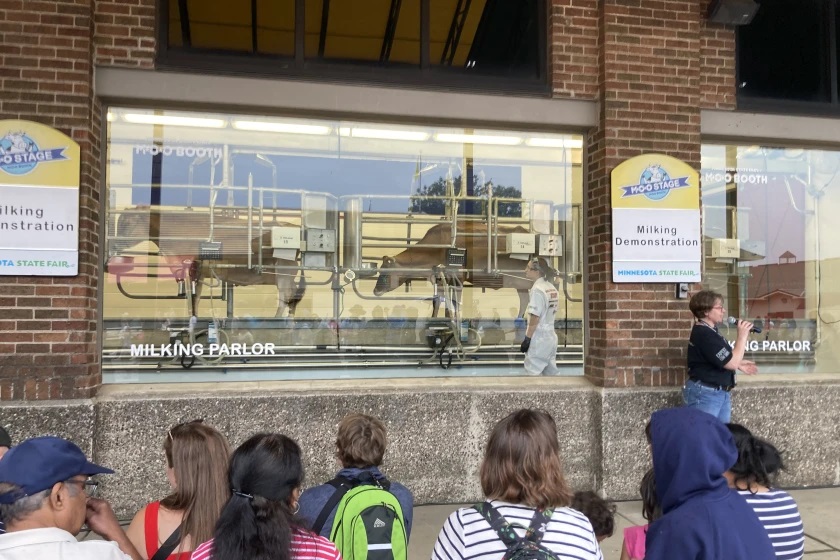
That was the task Kristen Reiman Duden was up for and one she called an honor Thursday, on the first day of the fair. Reiman Duden was standing out in front of her cattle answering questions of the public in the cattle barn and took a few moments to chat with Agweek between having cows cycled through the milking parlor where each cow is milked in front of bleachers full of people on the other side of giant glass windows.

Reiman Duden shared that she’s a fourth-generation part of the farm, which is part of Brickton Genetics, where she and her husband Thomas own 40 registered Jersey and Holstein cattle near Princeton, Minn.

Kristen Reiman Duden of Brickton Genetics describes her work schedule Thursday, Aug. 22, 2024, at the Minnesota State Fair. (Michael Johnson / Agweek)

Every year, the Minnesota State Fair showcases a different breed as part of the parlor herd. This year the featured breed was Jersey. The Minnesota Jersey Cattle Association asked if anyone would like to be featured, and Reiman Duden stepped up to the plate.

“I always thought it would be cool that someday maybe we’d be able to feature our herd here,” Reiman Duden said.

To be featured at one of the biggest celebrations of dairy in the world is a rare opportunity.

“I love the Minnesota State Fair … I’m just really proud to be here and to showcase our cattle,” she said.

They brought 15 milk cows and two calves. A few of the cows they brought were from other nearby farms. They stretch out in front of the milking parlor area where hundreds of cows will be milked daily during the fair. On Thursday, that included more than 50 4-H cattle.

Reiman Duden said their cows come from their 40 milk cows that make up the Princeton farm that are part of Brickton Genetics. The business gets its name from the old town of Brickton, Minnesota, where bricks were once made from the clay-filled ground there. The farm has been operating since 1933.

Being on display for more than a million people during the fair can be a lot of pressure. It takes a group of cows that’s calm and used to the crowds.

“The fun thing is is most of these animals have all been shown by 4-Hers or FFA kids. So they’ve been leashed, they’ve been walked, they’ve been worked with. So that’s what we really pride ourselves that we have a really calm set of cattle.”

Brickton Genetics has the showcase herd at the Minnesota State Fair and the cattle are on display inside the Cattle Barn each day of the fair. They are also milked daily in front of the public, viewable through large glass windows. (Michael Johnson / Agweek)

They are milked at 10 a.m., noon, 2 p.m., 4 p.m. and 6 p.m. daily. They will likely have other special appearances throughout the fair.

While the cows need to be pleasant and handle the milking schedule, Reiman Duden said the team of people caring for these animals are working around the clock to make sure they all look clean and orderly. They’ll be working here until the final milking on Labor Day at 4 p.m.

“It’s a huge honor, it’s a lot of work, but it is a labor of love,” Reiman Duden said.

She thanked friends and family for helping them get here and she thanked the many hands that were helping to make sure people’s questions were being answered around the clock about their herd and their passion.

Every ounce matters

The Jersey cows on display are known for their quality milk often used for making cheese. It just so happens that’s where all the milk coming out of the state fair is going this year, to First District Association in Litchfield, Minnesota.

Making sure it gets there was Chuck Godding, of Advanced Dairy LLC. Advanced Dairy is contracted to supply service and supplies necessary to keep the milk parlor operating each day of the fair. They took full responsibility of this service last year. He said the calibration of equipment and cleanliness are key as the Minnesota State Fair is a qualifying event for the World Dairy Expo.

“We do that as a dealership just because it looks better on their books to have it done by an authorized dealer, if anyone would complain about anything,” Godding, a voluntary milking systems specialist said. Every ounce of milk matters in this setting so precise milking matters.

The milking parlor at the Minnesota State Fair is viewable from inside the Cattle Barn where all lactating dairy being shown are milked. (Michael Johnson / Agweek)

Godding was at the fair on Thursday to watch his grandchildren show beef cattle and will return again next week to be on call as part of the DeLaval staff that handle any parlor issues that arise. He said the opportunity to have dairy cattle on display in front of such big crowds was a privilege that herdsmen should be proud of. The setting, literally surrounded by thousands of people at all hours of the day, is far from a rural setting most are used to. But bringing the agriculture to the crowds matters, Godding explained.

“I do like what you see in this barn here,” Godding said standing in front of the cattle barn. “This barn does a really good job of representing agriculture to the non-agricultural Minnesotan.”

As he sat with his grandkids and their cattle he watched them walk up to people and ask if they would like to pet the cattle or answer any questions.

“I think those little things are really important so that agriculture can be in a positive light. Because these kids that are involved in agriculture, they work hard,” Godding said.

With many kids starting the day at 5 a.m. and continuing until the fair closes at night, their work is on full display. From catching cow manure with buckets to maintaining a clean setting to answering questions that run the gamut.

Visitors walk by dairy cattle on display at the Minnesota State Fair on Thursday, Aug. 22, 2024. (Michael Johnson / Agweek)

During the fair there will be upwards of 400 dairy cows milked. Godding estimated numbers were down somewhat due to the H5N1 virus. There have been up to 650 cows milked during the fair.

Related Articles

Things to Do |


Grandstand review: Nate Bargatze entertains sold-out crowd with his everyman humor

Things to Do |


From new classics to mixed up combos: Our rankings of the State Fair’s new foods for 2024

Things to Do |


State Fair Grandstand review: Chance the Rapper gives a lesson in perseverance

Things to Do |


Concert review: Latin pop star Becky G opens Minnesota State Fair Grandstand season with abundantly good vibes

Things to Do |


Photos: Opening day of the 2024 Minnesota State Fair
Death of East Grand Forks man, shot by undercover police officer, still under review

posted in: News | 0

POLK COUNTY, Minn. — More than seven months after an East Grand Forks man was killed by a then-undercover — but since identified — police officer, it has not been determined whether criminal charges will be filed against the officer.

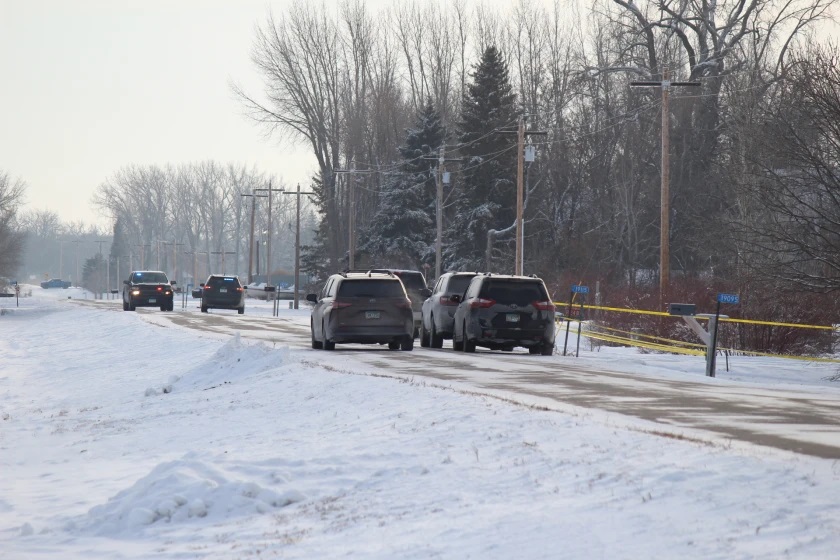
Lucas Paul Gilbertson, 42, was shot multiple times on Jan. 9, while at his mother’s residence in Rhinehart Township, Polk County.

He later died while undergoing surgery at Altru Hospital, according to a federal civil court document later filed on behalf of Gilbertson’s father.

Law enforcement was at the residence that day because they received a tip that Gilbertson was there.

Out on bond at the time for a pending criminal case, Gilbertson had a warrant out for his arrest due to alleged release violations.

The acts leading up to the shooting were caught on four body cameras; however, the shooter — East Grand Forks Police Officer Aeisso Schrage — was not wearing one, and he was alone with Gilbertson when shots rang out inside the home.

Prior to the shooting, Gilbertson is seen on video running from officers around the perimeter of the residence.

Within approximately one minute of him returning inside, an officer yells that Gilbertson is throwing “stuff” out of the window, then says, “shots fired.”

It was later confirmed that Gilbertson threw a gun out the window. Law enforcement has not confirmed whether he fired any of the shots, or if he was armed with any other weapons.

Reviewing the body camera footage, the Herald heard what appear to be six shots.

Due to Schrage’s status as an undercover officer with the Pine to Prairie Drug Task Force, he was exempt from identification under Minnesota law. His identity was revealed, though, when a lawsuit was filed against him in federal court.

Documentation from the lawsuit, which was filed in federal court by Gilbertson’s father one month after his son’s death, says the gun found outside the window was not fired during the shooting.

A month after the civil case was opened, Schrage filed a response to the complaint, denying any wrongdoing. Amended pleadings in the civil case are due by Oct. 31.

As is standard procedure, the Minnesota Bureau of Criminal Apprehension immediately took over the investigation into Schrage’s use of deadly force against Gilbertson.

The investigation typically takes around two months, then BCA Public Information Officer Bonney Bowman told the Herald in January.

It took approximately six months for this investigation to conclude, and the information to be passed along to the county attorney’s office.

Polk County Attorney Greg Widseth, in a Monday, Aug. 19, email to the Herald, said most of the investigation was forwarded to his office in May, but the complete investigation — including everything necessary for a full review — came in late June.

The full investigative report has been in the agency’s possession for approximately two months.

“The matter is still under review by our office,” Widseth wrote. “We are short-staffed, and we have been, and will continue, to devote the necessary time to this case to conduct a thorough review before making a decision. Under the circumstances, that takes time.”

Prior to Gilbertson’s death, the most recent fatal shooting of a Polk County civilian carried out by law enforcement was the March 20, 2017, death of Clarence Duane Huderle.

Law enforcement was called to a Northland Township residence after Huderle, 73, shot the window out of a mail carrier vehicle, according to a BCA press release.

The BCA investigated the death and turned its findings over to the county attorney’s office on May 3, 2017. An article published on the Herald website Aug. 30, 2017, said the attorney’s office determined the shooting was justified.

The whole process took 163 days, or approximately five months.

The time it took from the report being turned over to the attorney’s office to a verdict being reached was just shy of four months.

Related Articles

Crime & Public Safety |


Man gets 6 years in prison for Bloomington fentanyl bust that was one of state’s largest

Crime & Public Safety |


St. Paul gunman pleads guilty to fatally shooting teen during North End drug deal

Crime & Public Safety |


Estranged wife of DOC commissioner charged with attempted murder of their adult son

Crime & Public Safety |


Adam Fravel’s murder trial moved from Winona to Mankato

Crime & Public Safety |


Coon Rapids man posts gender reveal video after his pregnant wife, unborn child die in car crash

Minnesota man awakens from 2-month coma on his birthday, returns home

posted in: News | 0

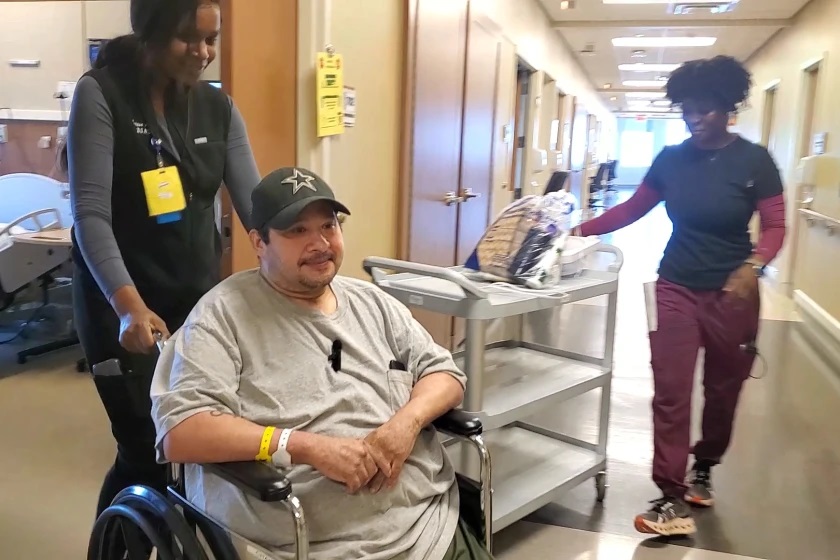
EAST GRAND FORKS, Minn. — An East Grand Forks man is finally back home after months of touch-and-go moments that had family and medical staff wondering if he would ever make it out of the hospital.

Gabriel Soto, 47, was hospitalized in a coma from May 15 until he woke up months later on July 14, his birthday.

“I don’t remember anything,” Soto said.

When Soto loaded up his belongings for the trip home from Vibra Hospital, inside the Sanford Medical Center in Fargo, there was a lot going through his mind, including the days few thought he would leave the facility alive.

After all, he spent a good portion of the spring and summer in a coma due to complex medical issues.

“I don’t know, just suddenly clarity. I think Jesus just wanted me to snap out of it, it was just amazing,” Soto said.

Nurses and staff at Vibra, more than thrilled to see Soto leave, wheeled him down the halls of Vibra on Friday for a trip home to East Grand Forks with family.

“Really, it is not just a success story, it is a miracle. We certainly did not expect this outcome, and it warmed all of our hearts. When he woke up, he woke up just like that. And he was clear and strong and sat at the edge of the bed, and he had been on a ventilator so he had not been able to talk to us or respond to us because of his medical condition,” said Bonnie Vangerud, chief clinical officer for Vibra.

Soto, a huge football fan, is looking forward to the fall season and maybe even getting back to work as a project painter. He has a new outlook on life, too.

“Enjoy every day you have on this planet,” Soto said.

Related Articles

News |


Smart ingredient swaps for healthy fall baking

News |


Traveling to die: The latest form of medical tourism

News |


Hundreds of thousands of parents died from drugs. Their kids need more help, advocates say

News |


The politics holding back Medicaid expansion in some Southern states

News |


FDA authorizes first over-the-counter syphilis test to use at home

Texas State Police Gear Up for Massive Expansion of Surveillance Tech

posted in: Politics | 0

Everything is bigger in Texas—including state police contracts for surveillance tech.

In June, the Texas Department of Public Safety (DPS) signed an acquisition plan for a 5-year, nearly $5.3 million contract for a controversial surveillance tool called Tangles from tech firm PenLink, according to records obtained by the Texas Observer through a public information request. The deal is nearly twice as large as the company’s $2.7 million two-year contract with the federal Immigration and Customs Enforcement (ICE). 

Tangles is an artificial intelligence-powered web platform that scrapes information from the open, deep, and dark web. Tangles’ premier add-on feature, WebLoc, is controversial among digital privacy advocates. Any client who purchases access to WebLoc can track different mobile devices’ movements in a specific, virtual area selected by the user, through a capability called “geofencing.” Users of software like Tangles can do this without a search warrant or subpoena. (In a high-profile ruling, the Fifth Circuit recently held that police cannot compel companies like Google to hand over data obtained through geofencing.) Device-tracking services rely on location pings and other personal data pulled from smartphones, usually via in-app advertisers. Surveillance tech companies then buy this information from data brokers and sell access to it as part of their products.

WebLoc can even be used to access a device’s mobile ad ID, a string of numbers and letters that acts as a unique identifier for mobile devices in the ad marketing ecosystem, according to a US Office of Naval Intelligence procurement notice.

Wolfie Christl, a public interest researcher and digital rights activist based in Vienna, Austria, argues that data collected for a specific purpose, such as navigation or dating apps, should not be used by different parties for unrelated reasons. “It’s a disaster,” Christl told the Observer. “It’s the largest possible imaginable decontextualization of data. … This cannot be how our future digital society looks like.”

While a device’s mobile ad ID is technically an anonymous piece of information, it is easy to cross reference other data points to determine the owner, according to Beryl Lipton, an investigative researcher at the Electronic Frontier Foundation. “If there is another data point—like the address of the person who lives at the place where your phone seems to be all of the time—it can be very easy to quickly identify and build a profile of people using this supposedly anonymous information,” Lipton said. 

In 2018, the U.S. Supreme Court ruled in Carpenter v. United States that police must have a warrant to obtain cell phone location data from service providers like AT&T and Verizon. But Nate Wessler, the attorney who argued the Carpenter case and the deputy director of the American Civil Liberties Union’s Speech, Privacy, and Technology Project, told the Observer that companies have justified selling phone location information through data brokers by arguing that mobile ad IDs are anonymous. 

“These companies absolutely trot that out as one of their defenses, and it is pure poppycock. … It’s transparently a ridiculous defense, because the entire thing that they’re selling is the ability to track phones and to be able to figure out where particular phones are going,” Wessler said. 

The privacy implications of police using services—like Tangles—that provide location data are “identical” to the issues raised in the Carpenter case, Wessler said. That’s because location data harvested from apps, as opposed to that obtained from service providers, can be even more invasive, he said. “You can tell just as much about somebody’s GPS history from their apps as you can from their cell phone location data from their phone provider. And in some cases, you can tell more,” Wessler said.

Surveillance has ramped up dramatically along the Texas border. (Shutterstock)

Tangles is a product offered by the cybersecurity company Cobwebs Technologies, which was founded in Israel in 2014 by three former members of Israeli military special units. The company has said their products, which are marketed as open source intelligence (OSINT) tools, have been used to combat terrorism, drug smuggling, and money laundering, but Meta has accused the company of operating as a surveillance-for-hire outfit. In 2023, Cobwebs Technologies was acquired by the Nebraska-based tech firm PenLink Ltd.

Christl, the Austria-based digital rights researcher, said that companies selling software that incorporates data harvested from mobile phone apps have greatly expanded the definition of OSINT tools. If a company has to buy personal data from third-party brokers to incorporate into a software that they sell to police, he said, then that isn’t really an open source tool.

Lipton, the investigative researcher at the Electronic Frontier Foundation, said that’s troubling for the public. “People don’t realize that some of this stuff comes with a high cost,” she said. “Both price-wise and privacy-wise.”

In a written statement, a PenLink spokesperson told the Observer their “open-source intelligence (OSINT) solutions are used to protect our communities from crime, threats, and cyber-attacks by providing seamless access to data that is publicly available. From a technology perspective, we want to note that we operate only according to the law, adhering to strict standards and regulations.” The spokesperson did not answer other specific questions.

Cobwebs Technologies, now part of PenLink, has scored contracts through its Delaware-based subsidiary Cobwebs America Inc. with various federal agencies, including ICE, the Internal Revenue Service, the Bureau of Indian Affairs and Bureau of Indian Education, and the U.S. Fish and Wildlife Service. ICE holds Cobwebs America’s highest-dollar federal contract so far, according to usa.spending.gov.

DPS’ Intelligence and Counterterrorism division has used Tangles since 2021, as first reported by The Intercept. The agency first purchased the software as part of Governor Greg Abbott’s multi-billion dollar Operation Lone Star border crackdown, doling out an initial $200,000 contract as an “emergency award” with no public solicitation. Each year since, DPS has expanded the contract: In 2022, it paid $300,000, and in 2023, more than $400,000, according to contracting records on DPS’ website. The agency’s new plan for a 5-year Tangles license, from 2024 through 2029, will cost about $1 million per year.

In its acquisition plan, DPS states that Intelligence and Counterterrorism division personnel need the tool to “identify and disrupt potential domestic terrorism and other mass casualty threats.” The plan references two Texas mass shootings. In August 2019, a racist white man from Allen killed 23 at a Walmart in El Paso. A few weeks later, a different perpetrator went on a deadly shooting in Midland and Odessa. The plan does not mention the 2022 Uvalde school shooting, when 91 DPS officers formed part of a massive botched law enforcement response. 

“Following the attacks in El Paso and Midland-Odessa Governor Abbott issued several executive orders designed to prevent similar events,” the acquisition plan obtained by the Observer states. “In response to these orders, DPS [Intelligence and Counterterrorism division] dedicated staff to identify potential mass attackers and terrorist threats.”

It is unclear how DPS has used Tangles or whether the software has helped stop any potential mass shootings. DPS did not respond to written questions or an interview request for this story.

After DPS purchased the initial license for Cobwebs’ software in 2021, local Texas law enforcement agencies followed suit. Operation Lone Star spending records from the Goliad County Sheriff’s Office, obtained by the Observer, show that the Goliad sheriff obtained a “cooperative use of [Cobwebs] software” in fall 2023 along with the sheriffs of Refugio and Brooks counties to “identify, link, and track the movements of cartel operatives throughout the region.”

Other Texas clients that have purchased Cobwebs’ software include the Dallas and Houston police departments and the sheriff’s office in Jackson County, which shares access with the Matagorda County Sheriff’s Office, according to local government meeting minutes and DPS emails.

Prior to its acquisition by PenLink, Cobwebs Technologies received backlash for how clients used its products. In 2021, Meta banned seven companies—including Cobwebs—that it had identified as participating in an online surveillance-for-hire ecosystem. As part of its sanctions, Meta removed 200 accounts operated by Cobwebs and its customers. In a company report, Meta investigators wrote that they identified Cobwebs customers in Bangladesh, Hong Kong, the United States, New Zealand, Mexico, Saudi Arabia, Poland, and other countries. 

Cobwebs’ customers were not solely focused on public safety activities, Meta’s report said. “We also observed frequent targeting of activists, opposition politicians and government officials in Hong Kong and Mexico,” the report stated.

Agencies across the globe have used Tangles. From at least 2021 to 2022, Salvadoran police used it, according to the investigative outlet El Faro. Police in Mexico have also purchased the software, according to Excelsior, a Mexico City newspaper. 

In 2022, a Cobwebs Technologies sales rep asked a DPS employee if the state agency could serve as a customer referral for a police agency in Israel, according to an email obtained by the Observer. In the email, the sales rep stated that DPS had at least 20 Tangles users at the time. DPS’ new acquisition plan allows for 230 named users.

Wessler, the ACLU attorney, said the sale of mobile device data to third-party data brokers and surveillance tech firms remains a legal gray area. “There are some legal frameworks that get at the edges of this, but there’s a whole kind of core of issues that the law just hasn’t caught up to,” Wessler said.

But he said other government agencies already have moved away from purchasing products that use massive amounts of cell phone location data. The services can be expensive, the use of data is invasive, and there isn’t much evidence that these services have substantially helped investigations or solved a lot of cases, he added.

“It’s just like the juice isn’t worth the squeeze,” Wessler said. “We shouldn’t be spending taxpayer money for this kind of haystack of data that they then are trying to pick needles out of, right?”