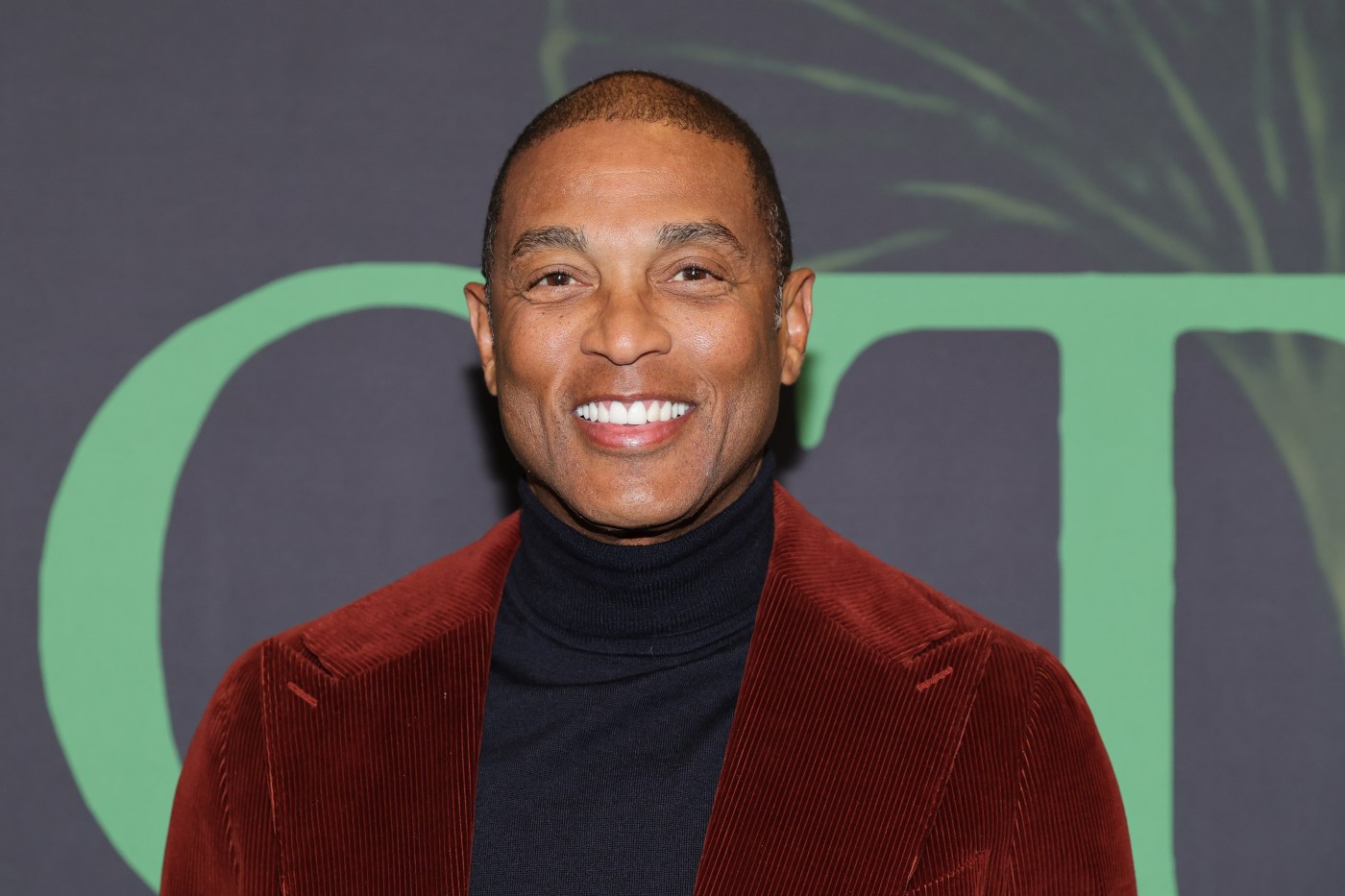
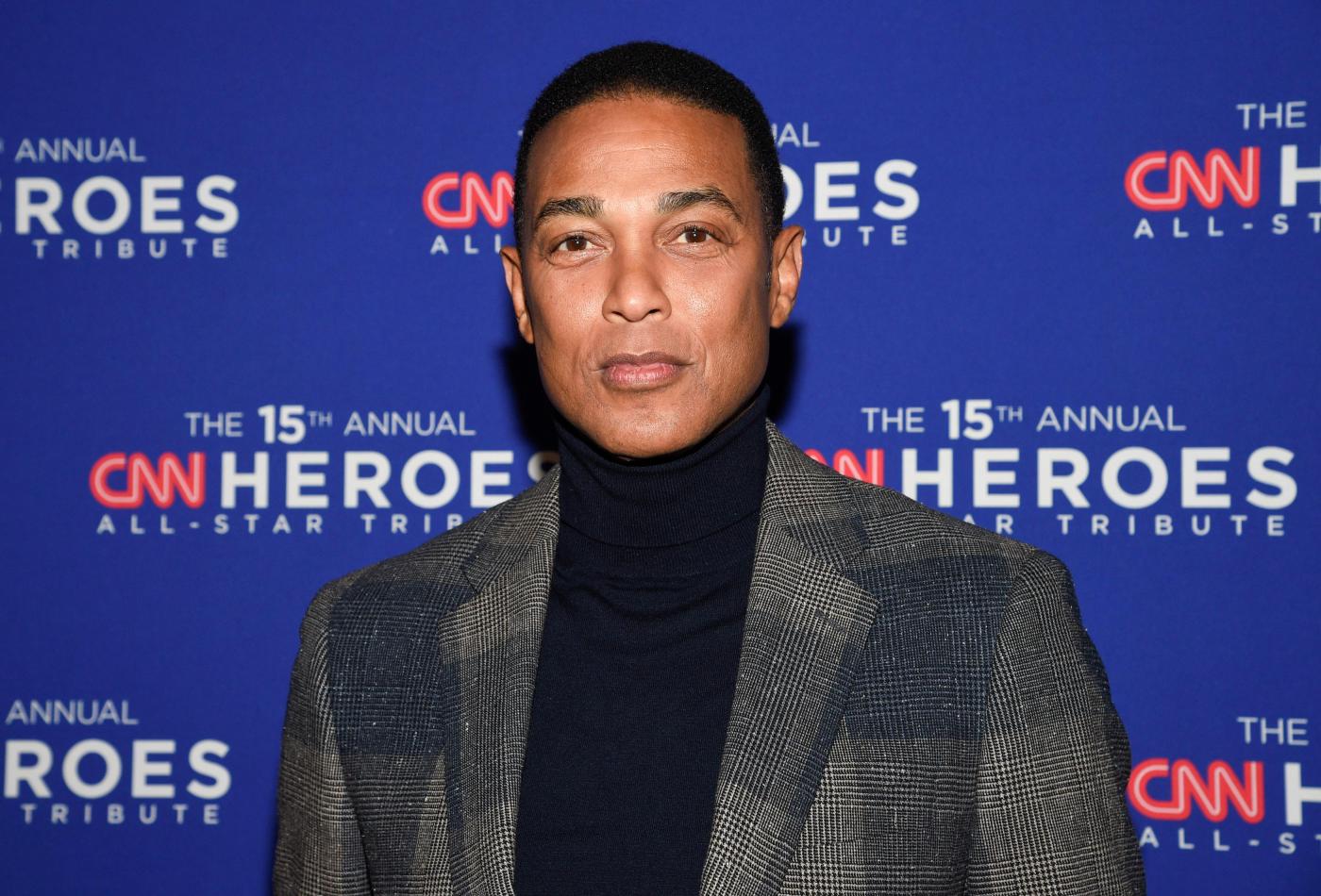
Journalists Georgia Fort, Don Lemon among 4 more arrested in St. Paul church protest

posted in: All news | 0

Four additional people have been arrested in a protest at a St. Paul church, including journalists Don Lemon and Georgia Fort.

U.S. Attorney Pam Bondi posted on social media that Lemon and Fort, along with St. Paul activist Trahern Crews and Jamael Lundy, are under arrest. Lundy works at the Hennepin County Attorney’s Office as the intergovernmental affairs coordinator and is married to St. Paul City Council Member Anika Bowie.

Georgia Fort (Caroline Yang / Bush Foundation)

Last week, three people were arrested — Twin Cities civil rights attorney Nekima Levy Armstrong, St. Paul School Board member Chauntyll Allen and social media personality William Scott Kelly.

They were charged with disrupting services inside Cities Church on Summit Avenue, near Snelling Avenue, in St. Paul on Jan. 18. The group said they went to the church because the acting field office director for U.S. Immigration and Customs Enforcement in Minnesota serves as a pastor there.

The recent arrests came after a magistrate judge last week rejected prosecutors’ initial bid to charge Lemon.

Independent journalist Fort went live on Facebook Friday morning, saying that agents were at her door.

“They’re saying that they were able to go before a grand jury sometime, I guess, in the last 24 hours” and they had a warrant for her arrest.

The FBI and Homeland Security Investigations carried out the arrests, FBI Director Kash Patel wrote on X Friday morning.

Fort was arrested at her home just after 6 a.m. Friday and taken to the federal Whipple Building, according to BLCK Press, which Fort founded.

“She said in a video, ‘As a member of the press, I filmed the church protest a few weeks ago and now I’m being arrested for that. It’s hard to understand how we have a Constitution, Constitutional rights, when we can just be arrested for being a member of the press,’” BLCK Press posted on social media Friday morning.

Lemon, who was fired from CNN in 2023, has said he has no affiliation to the organization that went into the church and that he was there as a journalist chronicling protesters.

He was arrested by federal agents in Los Angeles, where he had been covering the Grammy Awards, his attorney Abbe Lowell said.

This is a breaking story and will be updated. The Associated Press contributed to this report. 

Related Articles


Journalist Don Lemon arrested after protest that disrupted Minnesota church service


DHS ramps up surveillance in immigration raids, sweeping in citizens


Celebrities speak out against ICE: ‘Turn anger into action’


Feds drop case against Guatemalan man in alleged ICE assault in Virginia, Minn.


Bells will ring in unity across the Twin Cities on Saturday

Journalist Don Lemon arrested after protest that disrupted Minnesota church service

posted in: All news | 0

By ALANNA DURKIN RICHER and ERIC TUCKER

WASHINGTON (AP) — Journalist Don Lemon was arrested in connection with an anti-immigration protest that disrupted a service at a Minnesota church and increased tensions between residents and the Trump administration, his lawyer said Friday.

Lemon was arrested by federal agents in Los Angeles, where he had been covering the Grammy Awards, his attorney Abbe Lowell said.

It is unclear what charge or charges Lemon is facing in the Jan. 18 protest. The arrest came after a magistrate judge last week rejected prosecutors’ initial bid to charge the journalist.

Lemon, who was fired from CNN in 2023, has said he has no affiliation to the organization that went into the church and that he was there as a journalist chronicling protesters.

“Don has been a journalist for 30 years, and his constitutionally protected work in Minneapolis was no different than what he has always done,” Lowell said in a statement. “The First Amendment exists to protect journalists whose role it is to shine light on the truth and hold those in power accountable.”

Lowell added that “Don will fight these charges vigorously and thoroughly in court.”

A prominent civil rights attorney and two other people involved in the protest were arrested last week. Prosecutors have accused them of civil rights violations for disrupting a service at the Cities Church in St. Paul, where a local official with U.S. Immigration and Customs Enforcement serves as a pastor.

The Justice Department launched a civil rights investigation after the group interrupted services by chanting “ICE out” and “Justice for Renee Good,” referring to the 37-year-old mother of three who was fatally shot by an ICE officer in Minneapolis.

“Listen loud and clear: WE DO NOT TOLERATE ATTACKS ON PLACES OF WORSHIP,” Attorney General Pam Bondi wrote in social media post last week.

Cities Church belongs to the Southern Baptist Convention and lists one of its pastors as David Easterwood, who leads an ICE field office. Many Baptist churches have pastors who also work other jobs.

The Justice Department’s swift investigation into the church disruption stands in contrast to its decision not to open a civil rights investigation into Good’s killing by an ICE officer. The department has not said whether it will open a civil rights probe into the killing of 37-year-old Alex Pretti by federal officers.

“Instead of investigating the federal agents who killed two peaceful Minnesota protesters, the Trump Justice Department is devoting its time, attention and resources to this arrest, and that is the real indictment of wrongdoing in this case,” Lowell said.

Related Articles


DHS ramps up surveillance in immigration raids, sweeping in citizens


Celebrities speak out against ICE: ‘Turn anger into action’


Feds drop case against Guatemalan man in alleged ICE assault in Virginia, Minn.


Bells will ring in unity across the Twin Cities on Saturday


Protesters gather outside as U.S. Rep. Pete Stauber speaks at Duluth Teamsters meeting

Sheldon Jacobson: Free speech needs a reset in America

posted in: All news | 0

The First Amendment to the U.S. Constitution, part of the Bill of Rights, guarantees each person the freedom to speak out, untethered by government, in addition to freedom of the press. Yet our society has morphed into a segregated form of free speech that erodes the very essence of such freedom.

Terms like “hate speech” and “ racism” are viewed negatively in our society. They describe beliefs and phenomena that are critical of certain groups of people based on personal traits, color of skin, or race. Yet if freedom of speech is truly a right, should people have the opportunity to make statements that may be interpreted by others as hate speech or racism?

The answer is yes, given that the Supreme Court has consistently protected hate speech under the First Amendment.

Yet all speech today is filtered. The key difference is what the filters are.

University campuses, often viewed as bastions of free speech as well as centers for healthy discourse and debate, are often caught in what some may believe to be a contradiction. The ACLU argues that all speech is protected, provided it does not lead to harassment or involve threats. People may not agree with what a person says, but that of itself does not mean that it should not be said.

The president has argued that there is a lack of free speech on campuses. Yet his focus is on speech that he disagrees with and what contradicts his ideological beliefs.

Universities in general are liberal-leaning and in many cases suppress conservative views. This is consistent with the assessment by the Foundation for Individual Rights and Expression, which noted that nearly 65 percent of the top schools in the nation earned an “F” grade for free speech friendliness. Universities have gone so far as to create “ free speech zones” as isolated areas on campus where anything may be said. Yet are such zones really needed? To maintain order and reduce risk, universities create communication codes that effectively inhibit free speech and the associated debate.

On the flip side, when conservatives are given free speech rights, they employ the same suppression tactics used by their left-leaning brethren.

If speech is to be truly free, one must separate the content of the speech from the person delivering the speech. When the two are mingled inextricably, as naturally happens, it is impossible to assess whether limitations on free speech are rooted in what is being said or who is saying it. This shines a bright light on perspective and bias that inherently colors speech.

For example, when students on campuses around the country protested the actions of the Israel Defense Forces in Gaza in 2023, this was viewed by some as antisemitic, including the president. Other viewed it as support for a suppressed group of Palestinians living in Gaza. How one interprets all such actions are based on one’s ideological beliefs and world views.

Of course, if free speech leads to intimidation and physical violence, the speech may be protected, but the hostile actions are not.

The well-known principle often attributed to Voltaire — “ I wholly disapprove of what you say — and will defend to the death your right to say it” — captures what the freedom of speech should be. Yet in today’s ideologically bifurcated society, the exact opposite is now true.

Freedom of speech is inherently fraught with bias. When one speaks openly about an issue that they support, free speech justifies such actions. When another speaks about issues that one abhors, labelling it as hate speech or racism is an easy default reaction.

If freedom of speech is to exist on college campuses, a forum for productive dialogue and peaceful disagreement is necessary. But this also must occur everywhere that people who disagree come together.

Marjorie Taylor Green once called for a “national divorce,” whereby people with diametrically opposing views are split apart into two countries. Yet even within conservative or liberal groups, there are signs that each one would eventually emerge with the same types of schisms that exist today.

Instead of finding ways to break apart, what is needed are ways to come together, despite our differences. Such differences make us stronger. If we were all the same and interchangeable, the redundancy would make us less effective. And with uncensored free speech, we can continue to remain together, even with all such differences.

Sheldon H. Jacobson, Ph.D., is a professor of computer science in the Grainger College of Engineering at the University of Illinois Urbana-Champaign. He has researched risk-based aviation security for over 25 years, which provided the technical justification for TSA PreCheck. This piece was originally published by The Hill.

Related Articles


Robert Pearl: Political and economic pressures set up a health care shift in 2026


Lisa Jarvis: The problem with that ‘Great Healthcare Plan’


Abby McCloskey: Republicans have ideas on affordability — just not conservative ones


Thomas Friedman: Minneapolis and Gaza now share some of the same violent language


Julie Roland: We can’t let Pete Hegseth win his war on women in combat

Robert Pearl: Political and economic pressures set up a health care shift in 2026

posted in: All news | 0

Health care in 2025 was consumed by chaos, conflict and relentless drama. Yet despite unprecedented political turmoil, cultural division and major technological breakthroughs, there was little meaningful improvement in how care is paid for or delivered.

That outcome was not surprising. American medicine is extraordinarily resistant to change. In most years, even when problems are obvious and widely acknowledged, the safest bet is that the care patients experience in January will look much the same in December.

But when meaningful change does occur, it is usually because motivated leaders find themselves in rare political and economic conditions. Think of President Barack Obama in 2009, with unified Democratic control of Congress and widespread voter frustration over health care costs and coverage. By contrast, President Bill Clinton’s ambitious reform effort collapsed in 1993 when it collided with powerful industry opposition and a divided political environment.

If most years prove stagnant, why should anyone expect 2026 to be different? In a word: pressure.

Congress, the president, drug manufacturers and insurers are all confronting forces that make inaction increasingly risky. Three external pressures will drive change:

For Republicans broadly, and for President Trump personally, the 2026 midterm elections present significant political risk. Even a modest shift in “purple” districts could flip control of the House, reshaping committee leadership and reviving the prospect of Trump’s impeachment.

The “Big Beautiful Bill” passed by Congress in mid-2025 locked in permanent tax cuts with a multi-trillion-dollar price tag, narrowing the universe of spending categories large enough to materially reduce the deficit.

With health care accounting for nearly 30% of the federal budget (and other categories such as Social Security and defense politically untouchable), medical spending became one of the few remaining fiscal levers. But pulling it also handed Democrats a potent midterm weapon.

The shutdown compounded the problem. By linking government dysfunction to health care funding and coverage uncertainty, Democrats spotlighted rising medical costs as a symbol of incumbent political failure.

As health care economics worsen in 2026, the pressure will intensify. Premium increases will outpace wage growth. Deductibles will remain high. Tens of millions of Americans face potential Medicaid coverage losses, while 20 million more will see sharply higher exchange premiums.

The likeliest response to pressure: Fearful of losing the House, Trump and congressional Republicans are likely to pursue targeted, high-visibility actions designed to appease voters.

Drug pricing offers a clear example. In November, the White House announced agreements with nine large pharmaceutical companies to lower prices on certain medications under a “most-favored-nation” framework. However, those deals won’t materially lower prices because they apply only to Medicaid and selected drugs, leaving most privately insured patients exposed to persistently high costs.

Other options Congress and the president are likely to pursue include a short-term extension of exchange subsidies paired with familiar proposals such as expanded health savings accounts, “catastrophic” plans and lower limits on premium support.

For decades, the pharmaceutical industry has occupied a uniquely protected position in the U.S. economy. Long patent exclusivities, limited competition from generics and biosimilars and sustained lobbying success have shielded it from price regulation. As a result, pharmaceuticals remain among the fastest growing and most profitable U.S. sectors.

Americans currently pay two to four times more for prescription drugs than patients in other wealthy nations, and roughly one in three prescriptions goes unfilled because of cost. Affordability has become a crisis for employers and voters.

The likeliest response to pressure: Given the growing political pressure, drugmakers face a strategic choice. One path is familiar: resist change through lobbying, campaign contributions and legal challenges. The other is more adaptive: accept lower margins on some products in exchange for higher volumes and reduced political risk.

Based on the recent agreements that brought 14 of the 17 largest drugmakers into voluntary pricing arrangements with the administration, most are likely to continue to follow the second path.

By shielding their most profitable products while conceding selectively on pricing, manufacturers can reduce political pressure without materially sacrificing profitability.

In 2026, employer-sponsored premiums are projected to rise at roughly twice the rate of inflation. The annual cost of coverage for a family of four will be $27,000, with employees paying roughly one-quarter of that total out of pocket.

Patients already delay or forgo care because of cost. Meanwhile, medical bills remain the leading contributor to personal bankruptcy in the United States.

Insurers, who have no control over how medicine is practiced, have relied on tighter prior-authorization requirements, narrower networks and higher rates of claims denial. While these tactics can suppress short-term spending, they have fueled widespread backlash from patients, physicians, employers and lawmakers.

In effect, insurers are being squeezed from both sides: rising costs they cannot fully pass on and a public increasingly hostile to how those costs are managed.

The likeliest response to pressure: When premiums and out-of-pocket costs exceed what payers and patients can bear, the traditional insurance model begins to fracture.

That is where capitation re-enters the conversation. Under capitation, insurers make a fixed, per-patient payment to a physician group or health system to manage most or all care for a defined population. Providers assume responsibility for utilization, coordination and cost control. In return, they gain flexibility in care delivery and the opportunity to share in savings when prevention and chronic disease management succeed.

For insurers, the appeal is straightforward: capitation shifts financial risk downstream and reduces reliance on unpopular utilization controls. But moving from fee-for-service to capitation would require major structural change. As a result, insurers in 2026 are more likely to introduce pilot programs, partial risk arrangements and expanded use of generative AI rather than pursue wholesale transformation.

A new year carries the promise of change. Look for shifting political and economic climates to make 2026 a year of health care improvement, especially compared to 2025.

Robert Pearl, the author of “ChatGPT, MD,” teaches at both the Stanford University School of Medicine and the Stanford Graduate School of Business. He is a former CEO of The Permanente Medical Group. He wrote this column for the Fulcrum, a nonprofit, nonpartisan news platform covering efforts to fix our governing systems.

Related Articles


Sheldon Jacobson: Free speech needs a reset in America


Lisa Jarvis: The problem with that ‘Great Healthcare Plan’


Abby McCloskey: Republicans have ideas on affordability — just not conservative ones


Thomas Friedman: Minneapolis and Gaza now share some of the same violent language


Julie Roland: We can’t let Pete Hegseth win his war on women in combat