
Gretchen’s table: Cauliflower ‘steaks’ are tender on the inside and crispy on the outside

posted in: All news | 0

By Gretchen McKay, Pittsburgh Post-Gazette

Like a lot of shoppers, I look for bargains when it comes to choosing which fruits and vegetables to cook each week.

Related Articles


Even in winter, the sun still shines in these 5 citrus recipes


Resolutions, revived: Five nutritious weeknight dishes


Recipe: This Super Bowl snack is scrumptious and easy to prepare


These ugly (but super tasty) chocolate chip cookies are the comfort food we all need right now


The secret to perfect tortiglioni with peppers and eggplant from a 1929 Italian cookbook

Even in winter, when selections can be slim if you’re not a fan of root veggies and brassicas like cabbage, broccoli and kale, I tend to buy not what looks the yummiest or most interesting, but what’s on sale — or at least has a price I can live with.

When it comes to cauliflower, I won’t spend more than $3 for a head of the nutritious crunchy vegetable my kids called “brains” when they were little. As adults, they love cauliflower after learning how good it tastes when slow-roasted or processed into “rice” for a gluten-free pizza crust.

This flavor-packed plant-forward recipe is another winner for brassica lovers. Instead of breaking the white head into florets or boiling and mashing it like you would potatoes, I sliced the cauliflower into thick “steaks.” Then, after seasoning the slabs with salt, pepper and smoked paprika, I fried it in butter with minced garlic until it was crispy on both sides.

The steaks then went into a hot oven and were slow-roasted until they were tender enough to be pierced with a fork.

The coup de maître? After plating the cauliflower on a swoosh of lemony white bean puree, I topped it with a bright and herbaceous (and garlicky) chimichurri made with fresh parsley and cilantro.

If eating more veggies is a new year’s goal, I succeeded brilliantly with this dish — and you can, too!

When choosing cauliflower, look for creamy white heads that feel heavy, with tightly packed florets. There shouldn’t be any black spots on the curds — that’s a sign the veggie is getting old and on a road to being tossed (though you can still eat it if you cut the spots off).

You can use any mix of fresh herbs for the chimichurri. Just be sure to add some vinegar along with the garlic and crushed red pepper to brighten the flavor.

Roasted cauliflower “steaks” are served with a creamy white bean puree and topped with homemade chimichurri. (Gretchen McKay/Pittsburgh Post-Gazette/TNS)

Cauliflower ‘Steaks’ With White Bean Puree And Chinichurri

For steaks

1 large cauliflower
Salt and pepper
1 tablespoon smoked paprika
2 tablespoons butter
3 garlic cloves, coarsely chopped

For chimichurri

1 cup packed fresh parsley leaves, including thin stems
1 cup packed cilantro leaves, including thin stems
1 shallot, chopped
2 or 3 garlic cloves, peeled and smashed
1/2 -1 cup extra-virgin olive oil, divided
1/4 cup red wine vinegar
1 teaspoon dried oregano
1 teaspoon freshly ground black pepper
1/2 teaspoon crushed red pepper flakes, or more to taste
1/2 teaspoon kosher salt, or more to taste

For bean puree

2 (14-ounce) cans great northern or cannellini beans, rinsed and drained
Juice 1 1/2 lemons
1 large garlic clove, minced
2 tablespoons nutritional yeast
Salt and pepper, to taste

Prepare the chimichurri. In blender or food processor, combine parsley, cilantro, shallots, garlic, 1/4 cup olive oil, vinegar, oregano, black pepper, red pepper flakes and salt. Process until the ingredients are minced and combined, adding more olive oil until you reach the desired consistency. Season to taste with more salt or pepper, as desired, then transfer to a small bowl. (Sauce should be more like salad dressing than pesto.)

Prepare beans. Place beans into a blender with the juice of 1 1/2 lemons, 1 minced garlic clove, nutritional yeast and a generous pinch of salt and pepper. Blend, adding a little bit of water at a time, until you get a creamy consistency. If you like, add a little garlic powder or white miso for extra oomph.

Chop 2 or 3 thick flat steaks out of the middle of the cauliflower by slicing from the stalk up to the top. Save the florets that fall off for another recipe or add to a pan with a little salt, pepper, paprika and olive oil and stir-fry until brown and crispy to serve on top of the finished dish.

Preheat oven to 400 degrees.

Season steaks with salt, pepper and paprika on both sides. Add butter to a large cast-iron or other oven-proof pan (mine measured 12 inches) and heat over medium-high heat.

When butter is sizzling, add cauliflower slices and garlic and allow to cook for about 5 minutes until you get a good sear on one side of the steaks. (You will want to press it down with a spatula.) Then flip and cook the other side until seared and golden brown.

Place pan in preheated oven and roast until the cauliflower is tender and deeply golden brown, about 20 minutes. (You will be able to easily pierce it with a fork.)

To serve, spoon 1/2 cup bean purée into the middle of a plate and spread it in a circle with a spatula. Place cauliflower steak on top, drizzle with chimichurri and scatter over the fried reserved cauliflower bits, if using.

Serves 3-4.

Gretchen McKay, Post-Gazette

©2026 PG Publishing Co. Visit at post-gazette.com. Distributed by Tribune Content Agency, LLC.

Farmers now owe a lot more for health insurance

posted in: All news | 0

By Sarah Boden, Drew Hawkins, Gulf States Newsroom, KFF Health News

Last year was a tough one for farmers. Amid falling prices for commodity crops such as corn and soybeans, rising input costs for supplies like fertilizer and seeds, as well as the Trump tariffs and the dismantling of USAID, many farms weren’t profitable last year.

And now, the enhanced Affordable Care Act subsidies that many Americans, including farmers, relied on to purchase health insurance are gone, having expired at the end of December.

James Davis, 55, who grows cotton, soybeans, and corn in northern Louisiana, said he didn’t know how he and his wife would afford coverage. Their share of their insurance premium quadrupled for 2026, jumping to about $2,700 a month.

“You can’t afford it,” Davis said. “Bottom line. There’s nothing to discuss. You can’t afford it without the subsidies.”

A tractor in Richland Parish. ((Drew Hawkins/Gulf States Newsroom)/KFF HEALTH/TNS)

More than a quarter of the agricultural workforce purchases health insurance through the individual marketplace, according to an analysis from KFF, a health information nonprofit that includes KFF Health News.

That 27% rate is much higher than the overall population’s — only 6% of U.S. adults have non-group coverage.

Farmers are used to facing challenges such as unpredictable weather and fluctuating commodity prices. But the loss of the enhanced subsidies, coupled with challenging economic conditions, will make coverage unaffordable for many.

Without major intervention from Washington, farmers say they’ll have to choose between being uninsured or leaving the farm work behind for a job that offers health insurance.

A Gamble for Farmers

Farming is dangerous work. Agricultural workers spend much of their time outside and exposed to the elements. Many of their duties can lead to injury or illness. They drive and operate heavy machinery, work with toxic chemicals, and handle large animals.

The rate of work-related deaths for farmers is seven times the national average.

The financial toll of non-fatal farm injuries is also significant. A study from the University of Nebraska Medical Center found that the average cost of a farming injury was $10,878 in medical care and $4,735 in lost work.

Related Articles


US life expectancy hit an all-time high in 2024, CDC says


AI therapy chatbots draw new oversight as suicides raise alarm


Medicare proposes new transplant system rules that might spur use of less-than-perfect organs


Gen Z hates diet sodas, but loves them with ‘Zero Sugar’ branding


Sleep-tracking devices have limits. Experts want users to know what they are

It’s essential that farmers can purchase comprehensive insurance, said Florence Becot, a rural sociologist and associate professor of agricultural health and safety at Pennsylvania State University, where she studies the social and economic needs of farm households.

In a 2022 study, Becot found that more than 20% of U.S. farm households had medical debt exceeding $1,000 and that more than half were not confident they could cover the costs of a major illness or injury.

“That shows you the level of vulnerability and concerns that farmers are facing,” she said.

Mental health is also a concern. Farmers are roughly twice as likely to die by suicide compared with the general population. Mental health hotlines that serve rural communities have seen an uptick in calls.

These concerns around farmers’ increased emotional distress, coupled with a rise in bankruptcies, conjures memories of the farm crisis of the 1980s, said Michael Klein, a vice president at the industry group USA Rice. During that decade, there was a raft of foreclosures, and hundreds of farmers took their own lives.

“We’re really afraid of what’s going to happen,” Klein said.

Prairie Star Farm has been in Meghan Palmer’s family for three generations. ((Meghan Palmer)/KFF HEALTH/TNS)

Farmers can be reluctant to acknowledge that they rely on government-subsidized insurance, said Meghan Palmer, 43, who runs a dairy farm in northeastern Iowa with her husband, John, 45.

“We’re not handout-takers,” Palmer said.

More than 40% of dairy farmers lack health insurance — one of the highest rates among all agricultural sectors.

But going uninsured is not an option for the Palmers.

During their first year of marriage, the couple recalled, they were uninsured and had to pay out-of-pocket for two unexpected health crises: Palmer had an appendectomy, and her husband needed stitches after getting kicked in the face by one of his cows.

“It was stupid of us,” Palmer said of the decision to forgo coverage.

But this year, the combined out-of-pocket monthly cost of their plans is increasing by more than 90%, to $368.18. Their total 2026 deductible is $7,200.

Palmer is a registered nurse who picks up shifts on an as-needed basis, allowing her the flexibility to prioritize her work on the farm. She’s now searching for a job with health benefits. But she worries a job that doesn’t allow her to keep up with the farm work will create a greater burden for her husband.

“John is working exhausted most of the time,” she said. “That’s when mistakes get made and you end up in the ER.”

Cotton grows on a farm in Richland Parish in northern Louisiana. James Davis grows cotton, soybeans, and corn in the region. Like many farmers, he is seeing his health insurance costs spike. ((Drew Hawkins/Gulf States Newsroom)/KFF HEALTH/TNS)

Political Consequences

Even after the enhanced subsidies expired at the end of 2025, the Palmers estimate their income will still be low enough that they’ll qualify for some tax credits to purchase coverage.

However, under the GOP’s One Big Beautiful Bill Act, repayment limits are being eliminated, so if the Palmers have a surprisingly profitable 2026, they’ll be forced to pay some, or even all, of that subsidy back at tax time.

A farmer’s income can vary drastically year to year, Becot said, partly because commodity prices can fluctuate rapidly.

Some farmers might deliberately choose to not expand their businesses, because too much profit might mean they lose access to health care subsidies.

Farmers who are insured through Medicaid have similar concerns, Becot said. But prioritizing health care affordability by suppressing operational growth can have long-term consequences for a farm’s success.

Palmer, in Iowa, and Davis, in Louisiana, are both upset that lawmakers aren’t more sensitive to the economic demands of farming and how those have coincided with rising health costs.

President Donald Trump recently pledged $12 billion in one-time bridge payments to row crop farmers, but that’s not going to stop health care costs from ballooning.

Republicans are aware that health care affordability is a problem and have put forth proposals, said Donna Hoffman, a political scientist at the University of Northern Iowa. But most don’t support extending the enhanced ACA subsidies, because they don’t see them as a good solution to the problem of rising health care costs.

This article is from a partnership that includes the Gulf States Newsroom, NPR, and KFF Health News.

©2026 KFF Health News. Distributed by Tribune Content Agency, LLC.
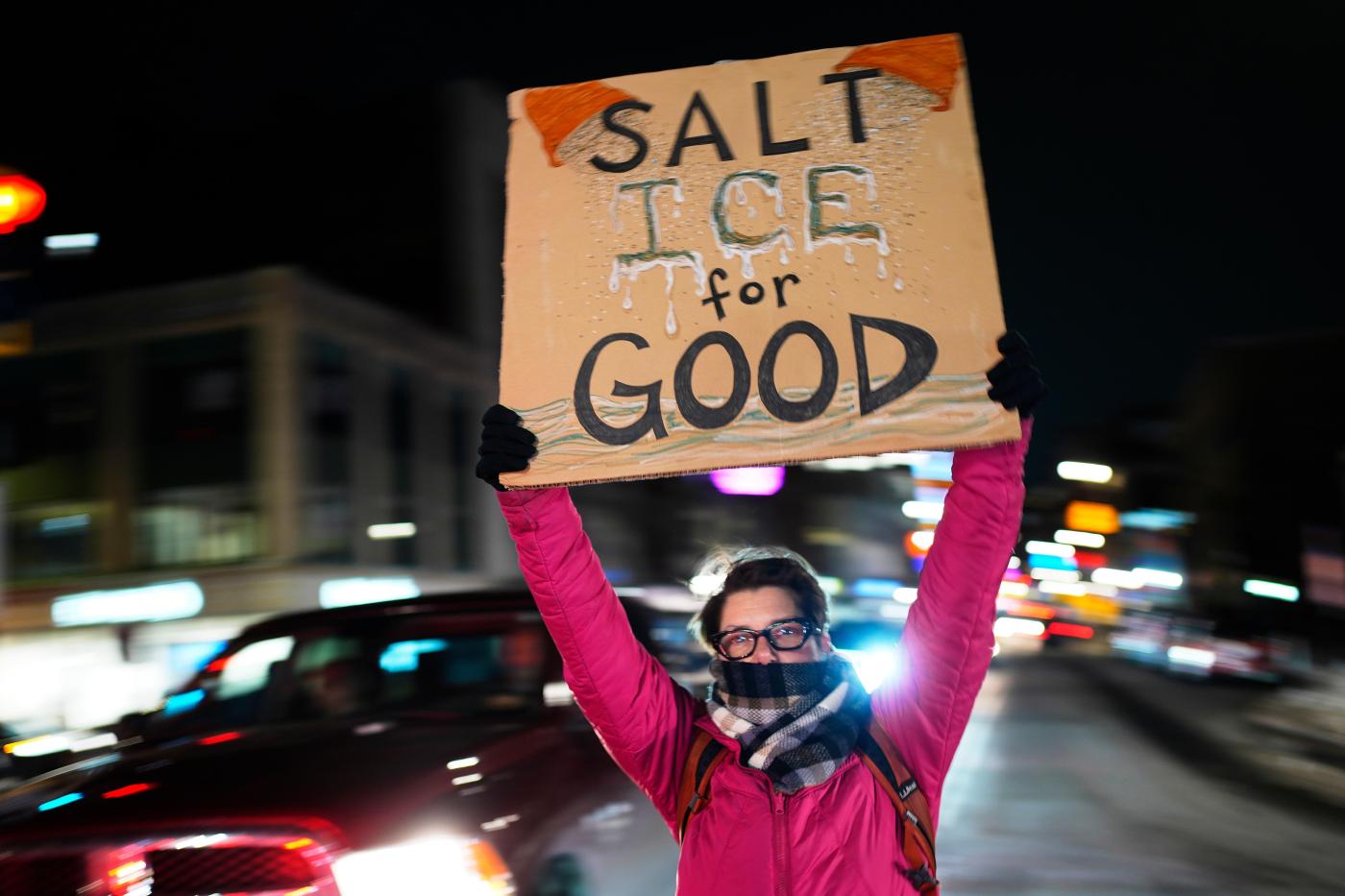
Protesters call for nationwide strike against Trump’s immigration policies

posted in: All news | 0

By KIMBERLEE KRUESI and HOLLY RAMER, Associated Press

Protesters across the U.S. are calling for “no work, no school, no shopping” as part of a nationwide strike on Friday to oppose the Trump administration’s immigration crackdown in Minneapolis.

The demonstrations are taking place amid widespread outrage over the killing Alex Pretti, an intensive care nurse, who was shot multiple times after he used his cellphone to record Border Patrol officers conducting an immigration enforcement operation. The death only reignited scrutiny over the administration’s tactics after the Jan. 7 death of Renee Good, who was fatally shot behind the wheel of her vehicle by a U.S. Immigration and Customs Enforcement officer.

“The people of the Twin Cities have shown the way for the whole country — to stop ICE’s reign of terror, we need to SHUT IT DOWN,” some of the organizers wrote on their website.

Related Articles


Journalist Don Lemon arrested after protest that disrupted Minnesota church service


DHS ramps up surveillance in immigration raids, sweeping in citizens


Today in History: January 30, Catholic civil rights marchers killed on ‘Bloody Sunday’


Former First Brands CEO Patrick James and his brother are indicted for bilking billions from banks


Owner of Johnny Rockets, Fatburger files for bankruptcy

Multiple businesses announced they would be closed during Friday’s “blackout,” and some schools in Arizona and Colorado preemptively canceled classes in anticipation of mass absences.

Some students took part in walkouts. In Michigan, several dozen walked out of Friday morning classes at Groves High School in Birmingham, north of Detroit. The students braved the zero-degree temperatures and walked about a mile to the closest business district where a number of morning commuters honked horns in support.

“We’re here to protest ICE and what they’re doing all over the country, especially in Minnesota,” said Logan Albritton, a 17-year-old senior at Groves. “It’s not right to treat our neighbors and our fellow Americans this way.”

“The teachers, generally, have been pretty supportive,” Albritton added. “But there was an email sent out last night trying to get us not to do this, and we came and did it anyway.”

Albritton said the email was more about the students’ safety.

Many other demonstrations are planned for students and others to gather at city centers, statehouses and churches across the country.

6 clever ways I’ve saved money (that weren’t as scary as I thought)

posted in: All news | 0

By Tommy Tindall, NerdWallet

Are you feeling financially stressed or fiscally encouraged this year?

Over a third of Americans said they feel optimistic (35%) and/or confident (35%) about their finances going into 2026, according to NerdWallet’s 2026 Consumer Outlook Report. But nearly as many feel anxious (32%) and/or stressed (30%).

If you’re in camp nervous, looking for clever ways to cut expenses could chill you out.

I’m no genius, but these couple of money traits keep me clever:

I’m curious enough to question the value of the services I pay for.
I’m willing to try a new service, plan or strategy when potential savings are compelling.

I’ve also gotten more comfortable being uncomfortable. These subtle shifts saved me thousands.

I switched my cell phone plan and sacrificed nothing

I think $90 per month for two lines of cell phone service is too much. That’s about what I was paying for two lines of T-Mobile service. One of my most impactful money moves was leaving T-Mobile proper for its lower-cost Mint Mobile brand a couple years back. I’ve saved hundreds in the time since.

My biggest worry — that I might lose my precious phone number during the change over — was unfounded. Fortunately, the process of porting your number when you change providers has become easy to do yourself.

So is bringing your phone, as long you’re not locked into an installment plan with the previous carrier. I was all good, and switched to Mint in under 30 minutes.

Poor signal strength was another fear, but it’s been just as good as my old plan. Now, my wife and I each pay $20 per month (with the 12-month plan) for a Mint plan. Here’s my math:

Old plan: About $90 per month x 12 months = $1,080 per year.
New plan: $40 per month x 12 months = $480 per year.

Do you want to save on cell phone service? Find a cheap cell phone plan that provides coverage in your area, then visit the brand’s help center or FAQ page. Read the instructions for signing up and transferring your number. If you’re good with the process, get your confidence up and make the switch.

I got cheaper (slightly slower) internet service and still Zoom

I used to have one of those cable internet plans that came with a low introductory rate for the first couple of years, and then doubled in price on day one of year three.

When the sudden increase caught my attention, I researched ways to lower my internet bill. I realized I really didn’t need the level of speed I was paying for.

So, I found and switched to a stripped-down service from Xfinity called Now Internet. There are just two plans. One plan is 100 Mbps internet for $30 per month, the other is 200 Mbps for $45. The modem is included at no extra cost.

I went with the 200 Mbps plan, and it’s been more than adequate. My previous plan had higher download speeds and was about $60 per month. I now save $180 annually and haven’t dropped off a video call yet.

I got rid of a car payment and felt freer

Cars are expensive, and my wife and I each need one. For a time, we had two late-model vehicles, both with loans. The cars were great, but the double shot of monthly payments got me.

So, I decided to sell one (my sporty hatchback) and replace it with something older and cheaper, but still fun. The process was more straightforward than you might think.

I checked around to get a good sense of the car’s value and listed it on Facebook Marketplace and Craigslist for a fair private party price of $18,000. I still owed around $8,000.

It took a month or so, but a potential buyer messaged me on Facebook and said he wanted the car for his son. After some back and forth and a test drive, we made a deal for pretty close to my asking price.

Related Articles


Here’s when you’ll get your tax refund from the IRS


Average US long-term mortgage rate ticks higher, holding near lowest point in more than 3 years


4 ways to relaunch your finances in 2026


What’s a ‘good enough’ financial plan?


Fed expected to keep rates unchanged as Chair Powell pivots back to economics

I got a check, he got the car. I mailed him the title after I used the money to pay the balance of the loan.

NerdWallet’s autos expert, Shannon Bradley, says people often think selling a car they still owe money on will be complicated.

“But it really doesn’t have to be,” Bradley says. “Talk to your lender first to see how it handles payoffs and titles. When you think you have a likely buyer, be upfront about still having a loan balance on the car.”

Getting out of the second car payment was freeing. What’s even sweeter: I got a steal on a used luxury sport sedan and paid cash for it.

“The savings can go beyond just the payment,” Bradley says. “Paying cash for a reliable used car can reduce insurance costs, registration fees and depreciation losses.”

An even easier — but possibly less lucrative — method is to sell your financed car online to a company like Carvana or Driveway.

I cut out minor conveniences and lived

If you’re not quite ready to sell your car, these other frugal tips I tried take less effort (but may require you to wear a jacket inside).

I put my thermostat on a schedule and stopped touching it: Electricity costs can make up a significant portion of people’s budgets. I cut down my bill by walking over to my thermostat once and using the “schedule” feature to set the air to 65 degrees during the day and 70 at night. The U.S. Department of Energy estimates you can save as much as 10% on your energy bill by going up or down 7-10 degrees, depending on the season.
I delivered takeout to myself: I was on a DoorDash kick until I looked closely at a recent receipt. I had a lunch order of two BLTs. I saw $11 of added costs due to fees and the tip. All so I could avoid a 2-mile drive and stay at my desk. It wasn’t easy, but I quit delivery and try to get out of the house for lunch now. Turns out I like the sun.
I started sending $75 per month to a HYSA: Despite my clever cuts, my expenses are still high in this season of life (multiple kids, amiright?). Every little bit you can save helps. Right now, I send a manageable $75, via automatic transfer, to a high-yield savings account every month. It earns more interest than a regular savings account, and I’ll up the ante as soon my kids stop eating so many frozen waffles.

You, too, can save money without changing your lifestyle

I can honestly say, these little cuts to save money have done wonders for my stress. And I’ll stay on the hunt for more clever ways.

The key was to look for small wins that didn’t require major lifestyle overhauls. For me, and hopefully for you, being clever with money is more about noticing than suffering. Keep curious, be willing to try some cost-cutting, and you’ll probably feel better about your finances in 2026.

Tommy Tindall writes for NerdWallet. Email: ttindall@nerdwallet.com.