Justice Department releasing 3 million pages from its Jeffrey Epstein files

posted in: All news | 0

By ERIC TUCKER, MICHAEL R. SISAK and ALANNA DURKIN RICHER

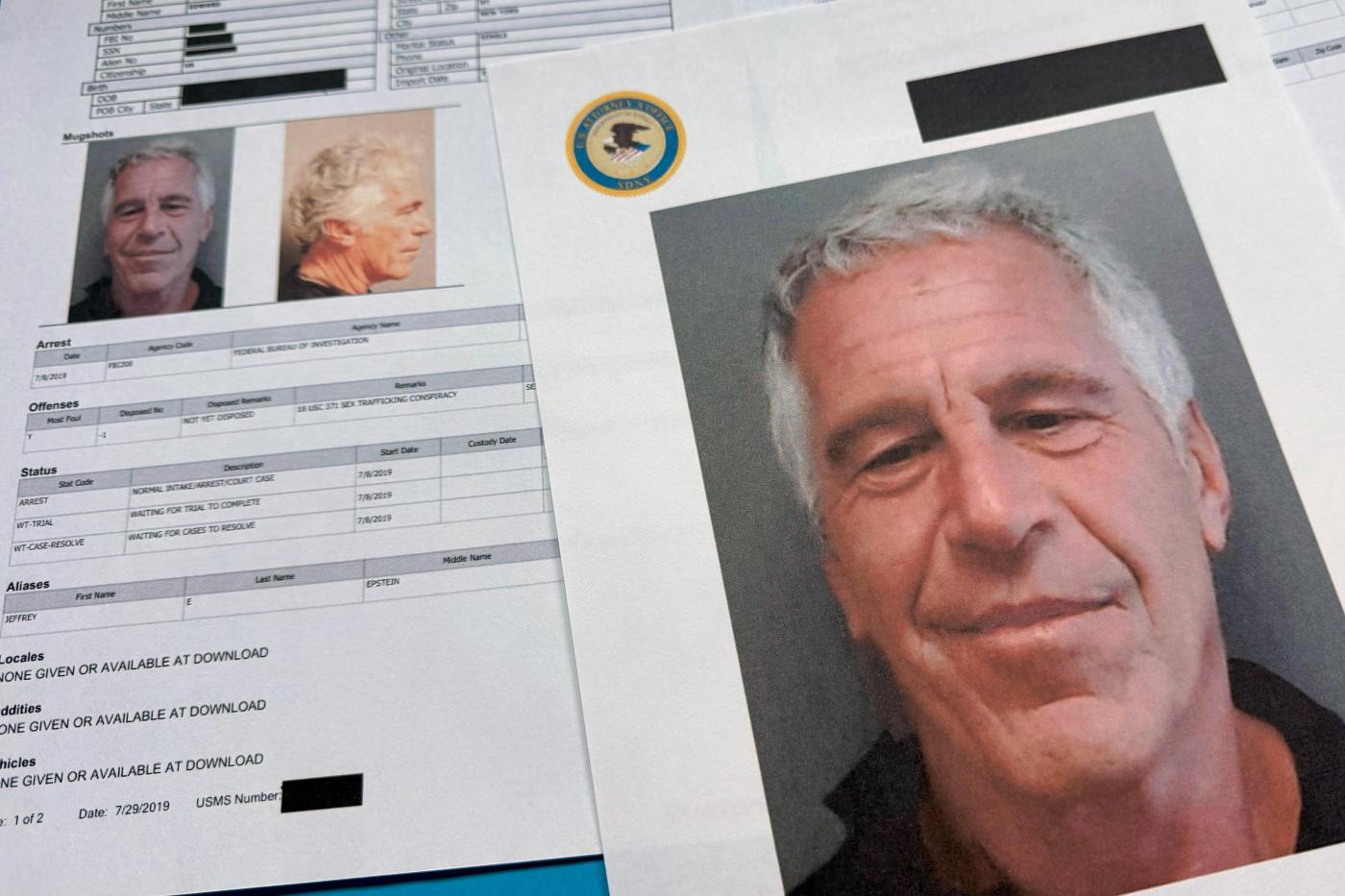
NEW YORK (AP) — The Justice Department on Friday released many more records from its investigative files on Jeffrey Epstein, resuming disclosures under a law intended to reveal what the government knew about the millionaire financier’s sexual abuse of young girls and his interactions with the rich and powerful.

Deputy Attorney General Todd Blanche said the department was releasing more than 3 million pages of documents in the latest Epstein disclosure. The files, posted to the department’s website, include some of the several million pages of records that officials said were withheld from an initial release of documents in December.

They were disclosed under the Epstein Files Transparency Act, the law enacted after months of public and political pressure that requires the government to open its files on the late financier and his confidant and onetime girlfriend, Ghislaine Maxwell.

After missing a Dec. 19 deadline set by Congress to release all of the files, the Justice Department said it tasked hundreds of lawyers with reviewing the records to determine what needs to be redacted, or blacked out, to protect the identities of victims of sexual abuse.

The number of documents subject to review has ballooned to 5.2 million, including duplicates, the department said.

The Justice Department released tens of thousands of pages of documents just before Christmas, including photographs, interview transcripts, call logs and court records. Many of them were either already public or heavily blacked out.

Those records included previously released flight logs showing that Donald Trump flew on Epstein’s private jet in the 1990s, before they had a falling out, and several photographs of former President Bill Clinton. Neither Trump, a Republican, nor Clinton, a Democrat, has been publicly accused of wrongdoing in connection with Epstein, and both have said they had no knowledge he was abusing underage girls.

Also released last month were transcripts of grand jury testimony from FBI agents who described interviews they had with several girls and young women who said they were paid to perform sex acts for Epstein.

Epstein killed himself in a New York jail cell in August 2019, a month after he was indicted on federal sex trafficking charges.

Related Articles


New US sanctions against Iran target interior minister over crackdown on protesters


Newsom files a civil rights complaint against Dr. Oz in latest feud with the Trump administration


Trump names former Federal Reserve official Warsh as the next Fed chair to replace Powell


Senate leaders scramble to save bipartisan deal and avoid a partial shutdown


Trump sues IRS and Treasury for $10 billion over leaked tax info

In 2008 and 2009, Epstein served jail time in Florida after pleading guilty to soliciting prostitution from someone under the age of 18. At the time, investigators had gathered evidence that Epstein had sexually abused underage girls at his home in Palm Beach, but the U.S. attorney’s office agreed not to prosecute him in exchange for his guilty plea to lesser state charges.

In 2021, a federal jury in New York convicted Maxwell, a British socialite, of sex trafficking for helping recruit some of his underage victims. She is serving a 20-year prison sentence at a prison camp in Texas, after being moved there from a federal prison in Florida. She denies any wrongdoing.

U.S. prosecutors never charged anyone else in connection with Epstein’s abuse of girls, but one of his victims, Virginia Roberts Giuffre, accused him in lawsuits of having arranged for her to have sexual encounters at age 17 and 18 with numerous politicians, business titans, noted academics and others, all of whom denied her allegations.

Among the people she accused was Britain’s Prince Andrew, now known as Andrew Mountbatten-Windsor after the scandal led to him being stripped of his royal titles. Andrew denied having sex with Giuffre but settled her lawsuit for an undisclosed sum.

Giuffre died by suicide at her farm in Western Australia last year at age 41.

Tucker and Richer reported from Washington.

Follow the AP’s coverage of Jeffrey Epstein at https://apnews.com/hub/jeffrey-epstein.
Council Lets Eric Adams’ COPA Veto Stand, and What Else Happened this Week in Housing

posted in: All news | 0

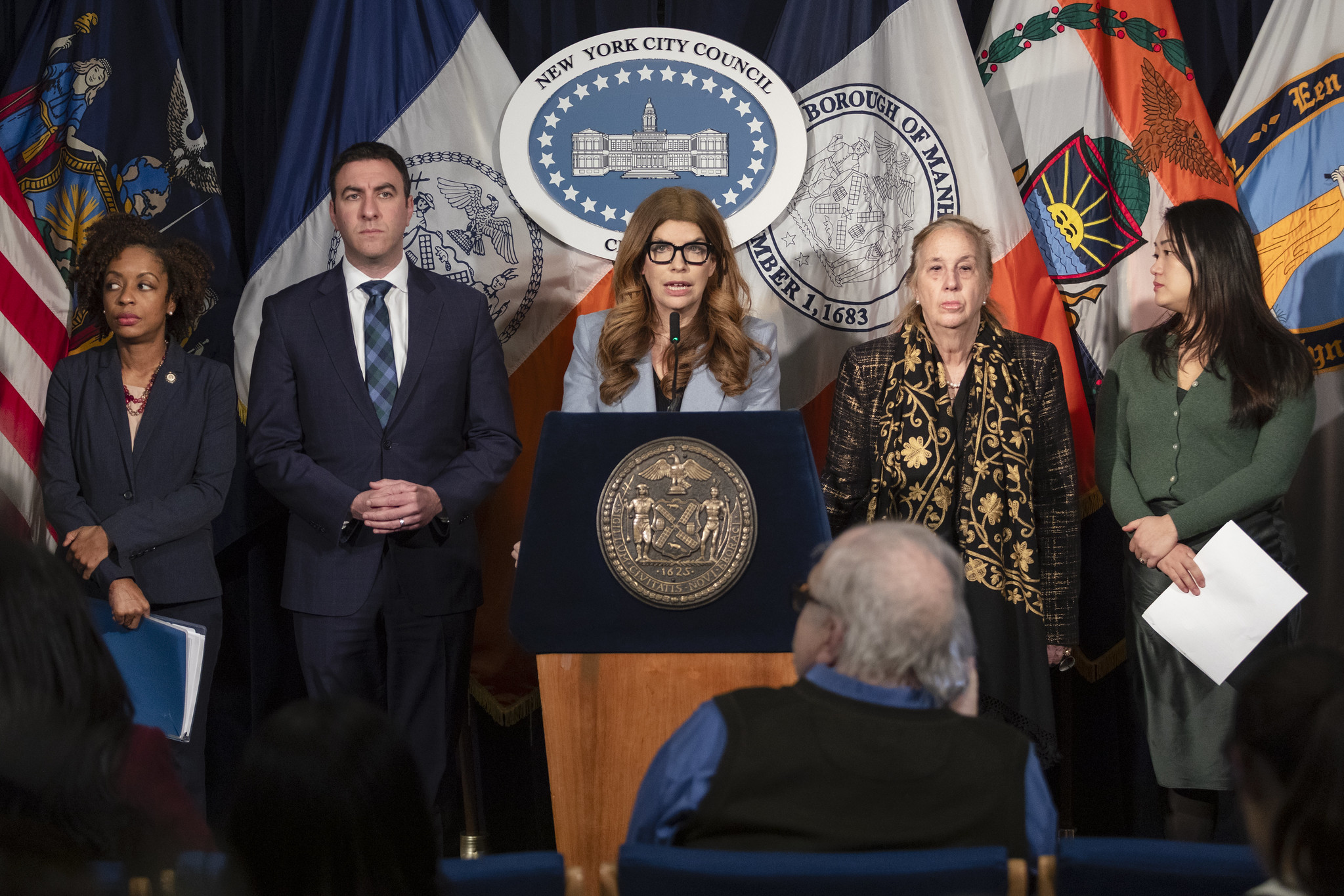
Council progressives had hoped they could convince fellow lawmakers to override former Mayor Adams’ veto and pass the Community Opportunity to Purchase Act. But new Speaker Menin, who abstained from voting on COPA last year, declined to call it for an override vote, effectively killing it—for now.

New Council Speaker Julie Menin kicking off Thursday’s stated meeting, where lawmakers override a number of Eric Adams’ vetos, but let others stand. (Emil Cohen/NYC Council Media Unit)

A lot can change in a month.

A social housing bill that would give community groups first dibs on buying certain residential buildings was unceremoniously vetoed by Mayor Eric Adams—one of 20 bills he struck down on his last day in office.

Since then, Mayor Zohran Mamdani was inaugurated, five new members joined the City Council and Julie Menin became its new speaker.

Council progressives had hoped they could convince a new Council to override the former mayor’s veto and pass the Community Opportunity to Purchase Act, or COPA. Mamdani backed the bill, while real estate groups were strongly opposed.

But the mood shifted late in the game this week. Legal issues reportedly scared off some supporters. New Speaker Menin, who abstained from voting on COPA last year, declined to call it for an override vote, effectively killing it.

Councilmember Sandy Nurse, COPA’s sponsor, expressed disappointment with the defeat of a bill she said was the Council Progressive Caucus’s top priority.

Supporters say it would give mission-driven groups, including community land trusts, a leg up against deep-pocketed real estate speculators in the city’s competitive housing market. The amended version of the bill passed by lawmakers in December applied specifically to buildings in physical distress or where affordable rent requirements are expiring. 

“Our good faith effort to create a targeted, legally-sound preservation tool was met with a well-funded misinformation campaign from the most powerful real estate interests in the city,” Nurse told City Limits in a statement.

But the bill faced intense opposition from real estate groups, who said it unfairly favors nonprofits at the expense of private property owners. Ann Korchak, who represents the group Small Property Owners of New York, previously called COPA, “government-engineered interference in private free-market transactions.”

Lawmakers said they would reintroduce COPA later this year. 

The Council also declined to override a veto on a bill from Bronx Councilmember Eric Dinowitz that would have mandated at least 25 percent of units in new affordable housing be two-bedrooms, and 15 percent be three-bedrooms.

But lawmakers voted to override vetoes on two other housing bills: one that mandates minimums for homeownership units, and another that requires the city to finance a minimum percentage of units priced for “very low” or “extremely low” income households (up to $43,740 and $72,900 for a family of three, respectively). 

All three bills passed in December with a supermajority of support. The Department of Housing Preservation and Development and Mayor Mamdani were opposed to all three, which they say would cost $600 million dollars a year or result in more than 3,275 fewer affordable units overall.

Speaker Menin’s office did not respond to requests for comment about why some bills advanced but not others. But a spokesperson told City & State earlier this week that the bills didn’t have the votes to override a mayoral veto, which requires a supermajority.

Dinowitz said he would work with HPD and City Hall on a new version later this year.

“It’s absolutely a crisis that we are not building enough family-sized units,” said Councilmember Eric Dinowitz. “Shelters are inundated with families and children.”

He said that while his bill would not have affected the current affordable housing pipeline, there were concerns that it would change how newly constructed buildings would be designed.

Here’s what else happened this week —

ICYMI, from City Limits: 

Mayor Mamdani is pushing to tax the rich to pay for his ambitious affordability agenda. City Limits spoke to experts and advocates about what that might look like. One takeaway? A pied-à-terre tax—targeting New Yorkers with multimillion-dollar second homes—isn’t high on progressives’ priorities list, as it wouldn’t raise enough revenue to make the political fight worthwhile. 

Amid frigid temperatures, New Yorkers lodged 26,000 311 complaints about lack of heat or hot water over the last week, the most in a seven-day period since 2018. City Limits’ reporter Patrick Spauster spoke to WNYC’s The Brian Lehrer Show about what landlords are required to provide, and what tenants can do if their heat isn’t working. 

New York approved a massive new casino project for Queens. Supporters say it’ll create 25 acres of new green space on what’s currently a parking spot. But opponents say the entire 50-acre site should be used as a climate resilient park to help curb flooding in the low-lying area, which is hemmed in by Flushing Bay and Flushing Creek. 

State lawmakers should pass the Accelerate Solar for Affordable Power Act (ASAP Act), which would “double New York’s rooftop and community solar goal, and cut red tape to lower the costs of getting community solar connected to the grid” argues op-ed author Kate Selden of the nonprofit Solar One.

ICYMI, from other local newsrooms: 

The City spoke to unhoused New Yorkers living outside this week despite the frigid temperatures. One man said the shelter system wouldn’t allow him to enter with his cat, while others said they preferred to avoid the conditions and strict rules at some shelter facilities. 

Voters last fall approved changes to the city’s land use approval process that gives borough presidents a bigger role. Gothamist examines how they might wield their new power. 

The New York Times covers the trial of Randy Rodriguez Santos, who is accused of killing four homeless men in Chinatown in 2019, an attack that drew renewed attention to the dangers unhoused New Yorkers face. 

More towns in upstate New York are opting into Good Cause Eviction protections, Shelterforce reports.

To reach the reporter behind this story, contact Patrick@citylimits.org. To reach the editor, contact Jeanmarie@citylimits.org.

Want to republish this story? Find City Limits’ reprint policy here.

The post Council Lets Eric Adams’ COPA Veto Stand, and What Else Happened this Week in Housing appeared first on City Limits.

Warsh’s challenge: Navigating Fed independence and Trump’s demands

posted in: All news | 0

By CHRISTOPHER RUGABER and JOSH BOAK, AP Writers

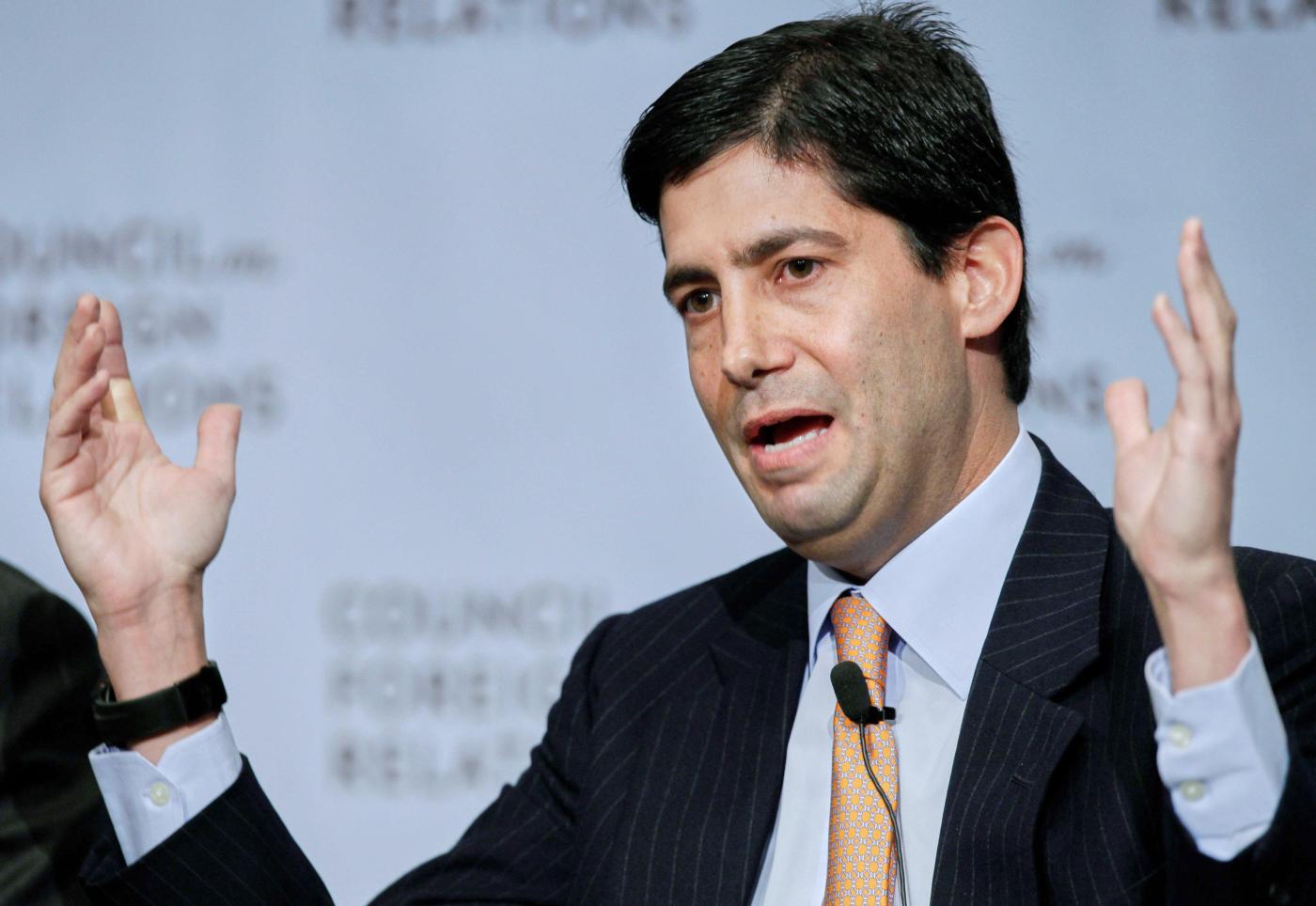
WASHINGTON (AP) — Kevin Warsh has sought the job of Federal Reserve chair, off and on, since President Donald Trump first considered him for the position nearly a decade ago. Now that he is in line for the position, the enormity of the challenge ahead of him is clear.

Related Articles


US stocks dip and gold swings as markets react to Trump’s choice to lead the Federal Reserve


Farmers now owe a lot more for health insurance


6 clever ways I’ve saved money (that weren’t as scary as I thought)


Saks Global to close most of its Saks Off 5th stores as it restructures during Chapter 11 bankruptcy


Trump names former Federal Reserve official Warsh as the next Fed chair to replace Powell

To be effective, Warsh must gain the trust of at least three constituencies: the committee of Federal Reserve officials whose votes he will have to win to change interest rates; the financial markets, which can undermine his efforts to reduce borrowing costs if they think he is acting politically; and not least Trump, a former real estate developer with an exquisite sense of just how much difference a cut or increase in interest rates can make for those with large debts, whether they are businesses, households or a government.

“He has to thread that needle,” said Raghuram Rajan, an economist at the University of Chicago and former head of India’s central bank. “If you are seen as too pliable to the administration, you lose the support of the members of the (Fed), you become ineffective in creating consensus.”

Yet if he alienates the White House, Rajan said, Warsh runs the risk of putting the Fed back in the White House’s sights. Under Trump, the current chair Jerome Powell has come under relentless fire for not cutting interest rates as quickly as the president would like, and is now under criminal investigation by the Department of Justice. Powell has called the investigation a pretext to force him to lower rates.

Warsh may also face a bumpy confirmation process in the Senate, where two Republicans have already said they will oppose his nomination unless the criminal investigation is resolved. One of them, Thom Tillis from North Carolina, is on the banking committee, and could prevent that panel from approving the nomination if he and all Democrats vote against it. Tillis repeated Friday that he would oppose Warsh until the Justice Department investigation is resolved.

And Democratic Sen. Mark Warner from Virginia, who is also on the committee, said: “It is difficult to trust that any chair of the Federal Reserve selected by this president will be able to act with the independence required of the position, knowing that this administration will levy charges against any leader who makes interest rate decisions based on facts and the needs of our economy rather than Trump’s personal preferences.”

And there may be even more drama ahead: Powell, as part of the Fed’s complex structure, could remain on the Fed’s governing board, as well as its rate-setting committee, even after his term as chair ends in May. That would leave Warsh facing a situation no Fed chair has dealt with in 80 years: A former chair potentially acting as a counterweight to the new leader of the Fed.

Demonstrating some independence from the White House will likely be Warsh’s biggest challenge. Alan Blinder, a former Fed vice chair, said that most important unknown is what promises Trump extracted from Warsh in return for nominating him to lead the U.S. central bank. The Princeton University economist said he worries about the private conversations between Trump and Warsh about what Fed policy needed to be.

“We all know Donald Trump — he wants a loyalty pledge of some kind,” Blinder said. “I hope Kevin Warsh didn’t give one.”

Blinder said that Warsh does have experience with markets and monetary policy, which are good preparation for the job. But, more importantly, Warsh is a people person who has the skills to influence other Fed officials when debating policy.

“The one thing he has in abundance is personal and diplomatic skills,” Blinder said. “He knows how to get along with people. He’s expert at that. He’s very likable.”

Don Kohn, a former Federal Reserve governor whose term overlapped with Warsh’s, said Warsh “is very smart — both intellectually and in his ability to read the room.”

“He understands how important it is that the Fed’s decisions be based on a longer-term view” of the Fed’s goals of stable prices and maximum employment, “rather than the short-term objectives of whomever happens to be in the White House,” Kohn said.

With Yosemite ditching reservations for firefall, will it be a mess? Here’s what to know

posted in: All news | 0

By Christopher Reynolds, Los Angeles Times

Yosemite’s firefall — the winter convergence of sunbeams and falling water that has drawn growing crowds to the national park’s Horsetail Falls — will be different this year. At least for those hoping to plan a trip.

A view of the firefall at Yosemite’s Horsetail Falls in 2019. (Raul Roa/Los Angeles Times/TNS)

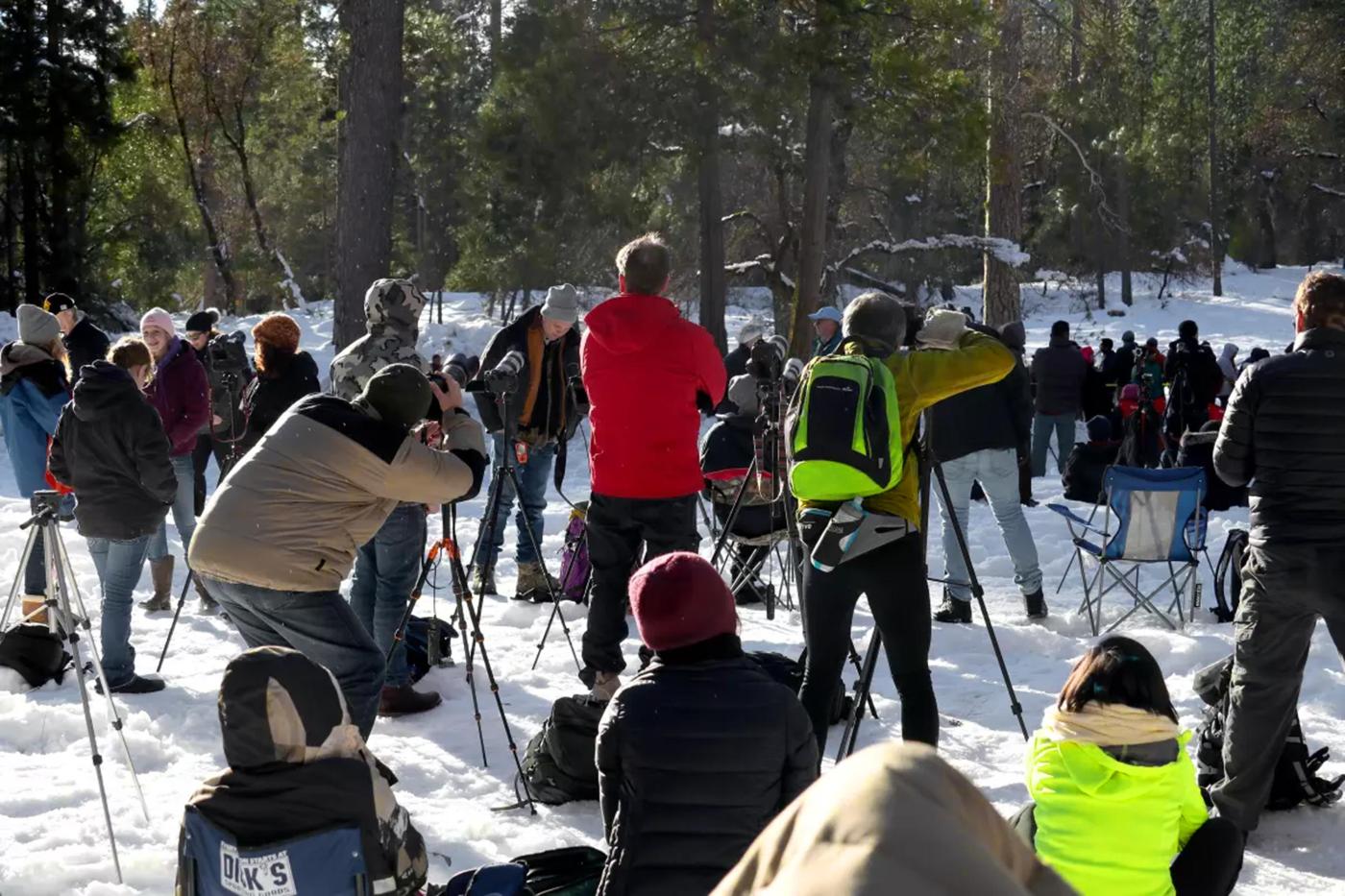
When skies are clear and Horsetail Falls is flowing, the firefall phenomenon happens in mid- to late February as the setting sun illuminates the falls for a few minutes before disappearing, giving the water a lava-like orange glow. A hazy or cloudy evening can dramatically reduce or destroy the effect. Yet since photographer Galen Rowell captured a striking image in 1973, thousands of visitors (many of them photographers) have made the journey, vying for the ideal position, prompting various safety measures. By 2021, rangers were using reservation requirements to thin the crowds.

This year, firefall views are considered mostly likely to take place Feb. 10-26, and a reservation is not required to see it or to visit Yosemite in February. Instead, park officials aim to limit crowds by restricting car and foot traffic. As the Mariposa Gazette reported, Yosemite National Park Superintendent Ray McPadden said that “a bunch of boots on the ground is going to be our principal strategy.” With these changes, here are a few things to know if you’re hoping to experience the glow.

Where to park

Rangers are urging visitors to park in the Yosemite Falls parking area (just west of Yosemite Valley Lodge) and walk 1.5 miles to the viewing area near El Capitan Picnic Area. If there’s no parking available at Yosemite Falls, rangers say, visitors should park at Yosemite Village or Curry Village and use the free shuttle (which stops at both) to get to Yosemite Falls parking/Yosemite Valley Lodge, then begin the walk.

What to bring

Expect snow and ice, and bring warm clothes, traction devices for your boots and a headlamp or flashlight for the 3-mile round-trip walk, rangers advise.

Visitors gather near Horsetail Falls in Yosemite in 2019. (Raul Roa/Los Angeles Times/TNS)

Restricted areas

To make more room for pedestrians, Northside Drive will have one lane closed to vehicles between the viewing area and Yosemite Falls parking. Parking, stopping or unloading passengers will be prohibited between Lower Yosemite Fall and El Capitan Crossover (but vehicles displaying a disability placard will be allowed greater access). On busy weekends, rangers say, they may close Northside Drive entirely for about 30 minutes following sunset.

Related Articles


See costumes from the Oscar-nominated wardrobe of ‘Sinners’ at the African American Museum in Philadelphia


Across the forgotten walls of a Hong Kong island, a flock of bird murals rises


It’ll cost you $45 to fly without a Real ID starting in February


What travelers can expect as Southwest Airlines introduces assigned seats


New Museum of Illusions brings mind-boggling fun to downtown Detroit

Rangers say the park’s Southside Drive will be open to vehicles, but parking, stopping, and unloading passengers will be prohibited between El Capitan Crossover and Swinging Bridge Picnic Area. In addition, pedestrians will be banned from walking on or adjacent to the road in that area.

Also, from Cathedral Beach Picnic Area to Sentinel Beach Picnic Area, the area between the road and the Merced River (including the river itself) will be closed to visitors. El Capitan Crossover, the road that connects Northside and Southside Drives near El Capitan, will be open to vehicles, but parking, stopping and unloading passengers will be prohibited. The Yosemite National Park website includes a detailed map of the Horsetail Fall viewing area and restrictions.

©2026 Los Angeles Times. Visit at latimes.com. Distributed by Tribune Content Agency, LLC.