Polygamous sect’s sway has dwindled in twin towns on Arizona-Utah line. Residents enjoy new freedoms

posted in: All news | 0

By JACQUES BILLEAUD

COLORADO CITY, Ariz. (AP) — The prairie dresses, walled compounds and distrust of outsiders that were once hallmarks of two towns on the Arizona-Utah border are mostly gone.

Related Articles


Catherine O’Hara, Emmy-winning comedian of ‘Schitt’s Creek’ and ‘SCTV’ fame, dies at 71


Fearing ICE, Native Americans rush to prove their right to belong in the US


Cheerios, Pringles, Nutella among thousand of products recalled over rodent, bird waste


Tens of thousands enter 6th day without power as Carolinas and Virginia prep for a winter storm


Justice Department says it’s releasing 3 million pages from its Jeffrey Epstein files

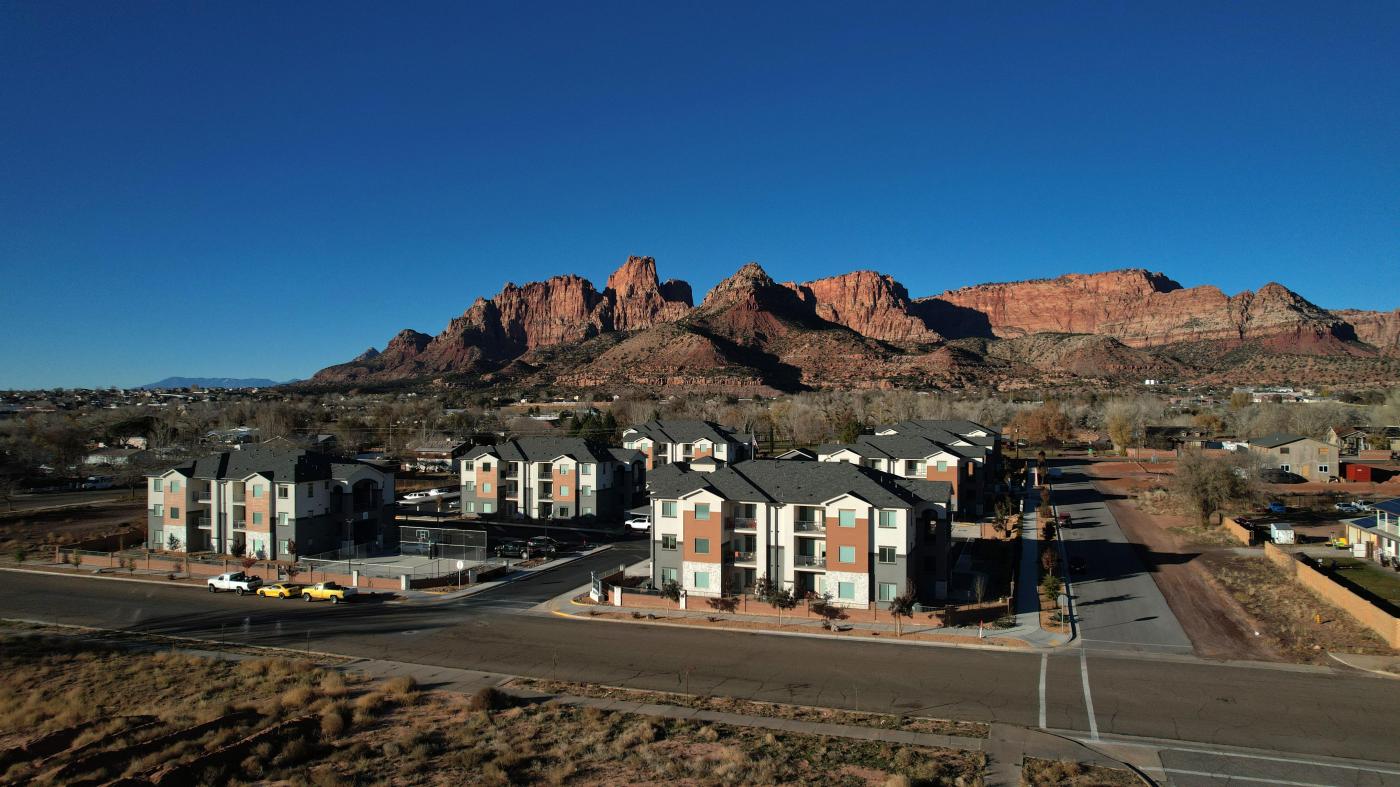
These days, Colorado City, Arizona, and neighboring Hildale, Utah, look much like any other town in this remote and picturesque area near Zion National Park, with weekend soccer games, a few bars, and even a winery.

Until courts wrested control of the towns from a polygamous sect whose leader and prophet, Warren Jeffs, was imprisoned for sexually assaulting two girls, youth sports, cocktail hours and many other common activities were forbidden. The towns have transformed so quickly that they were released from court-ordered supervision last summer, almost two years earlier than expected.

It wasn’t easy.

“What you see is the outcome of a massive amount of internal turmoil and change within people to reset themselves,” said Willie Jessop, a onetime spokesman for the Fundamentalist Church of Jesus Christ of Latter-Day Saints who later broke with the sect. “We call it ‘life after Jeffs’ — and, frankly, it’s a great life.”

A dark turn

Some former members have fond memories of growing up in the FLDS, describing mothers who looked out for each other’s kids and playing sports with other kids in town.

But they say things got worse after Jeffs took charge following his father’s death in 2002. Families were broken apart by church leaders who cast out men deemed unworthy and reassigned their wives and children to others. On Jeffs’ orders, children were pulled from public school, basketball hoops were taken down, and followers were told how to spend their time and what to eat.

“It started to go into a very sinister, dark, cult direction,” said Shem Fischer, who left the towns in 2000 after the church split up his father’s family. He later returned to open a lodge in Hildale.

Church members settled in Colorado City and Hildale in the 1930s so they could continue practicing polygamy after the sect broke away from The Church of Jesus Christ of Latter-day Saints, the mainstream Mormon church that renounced plural marriage in 1890.

Stung by the public backlash from a disastrous 1953 raid on the FLDS, authorities turned a blind eye to polygamy in the towns until Jeffs took over.

After being charged in 2005 with arranging the marriage of a teenage girl to a 28-year-old follower who was already married, Jeffs went on the run, making the FBI’s Ten Most Wanted Fugitives list before his arrest the next year. In 2011, he was convicted in Texas of sexually assaulting two girls ages 12 and 15 and sentenced to life in prison.

A court-ordered overhaul

Even years after Jeffs’ arrest, federal prosecutors accused the towns of being run as an arm of the church and denying non-followers basic services such as building permits, water hookups and police protection. In 2017, the court placed the towns under supervision, excising the church from their governments and shared police department. Separately, supervision of a trust that controlled the church’s real estate was turned over to a community board, which has been selling it.

FILE – Warren Jeffs appears in a courtroom surrounded by guards in Las Vegas, on Aug. 31, 2006. (AP Photo/Laura Rauch, File)

The towns functioned for 90 years largely as a theocracy, so they had to learn how to operate “a first-generation representative government,” Roger Carter, the court-appointed monitor, pointed out in his progress reports.

The FLDS had controlled most of the towns’ land through a trust, allowing its leaders to dictate where followers could live, so private property ownership was new to many. People unaccustomed to openness and government policies needed clarification about whether decisions were based on religious affiliation.

Although the towns took direction from the sect in the past, their civic leaders now prioritize residents’ needs, Carter wrote before the court lifted the oversight last July.

‘Like a normal town’

With its leader in prison and stripped of its control over the towns, many FLDS members left the sect or moved away. Other places of worship have opened, and practicing FLDS members are now believed to account for only a small percentage of towns’ populations.

Hildale Mayor Donia Jessop, who was once distantly related to Willie Jessop through marriage, said the community has made huge strides. Like others, she has reconnected with family members who were divided by the church and quit talking to each other.

When a 2015 flood in Hildale killed 13 people, she was one of many former residents who returned to help look for missing loved ones. She got a chance to visit with a sister she hadn’t seen in years.

“We started to realize that the love was still there — that my sister that I hadn’t been able to speak to for in so many years was still my sister, and she missed me as bad as I missed her,” the mayor said. “And it just started to open doors that weren’t open before.”

Longtime resident Isaac Wyler said after the FLDS expelled him in 2004, he was ostracized by the people he grew up with, a local store wouldn’t sell him animal feed, he was refused service at a burger joint and police ignored his complaints that his farm was being vandalized.

Things are very different now, he said. For one thing, his religious affiliation no longer factors into his encounters with police, Wyler said. And that feed store, burger joint and the FLDS-run grocery store have been replaced by a big supermarket, bank, pharmacy, coffee shop and bar.

“Like a normal town,” he said.

People with no FLDS connections have also been moving in.

Gabby Olsen, who grew up in Salt Lake City, first came to the towns in 2016 as an intern for a climbing and canyoneering guide service. She was drawn to the mountains and canyons, clean air and 300 days of sunshine each year.

She said people asked “all the time” whether she was really going to move to a place known for polygamy, but it didn’t bother her.

“When you tell people, ‘Hey, we’re getting married in Hildale,’ they kind of chuckle, because they just really don’t know what it’s about,” said Olsen’s husband, Dion Obermeyer, who runs the service with her. “But of course when they all came down here, they’re all quite surprised. And you’re like, ‘Oh yeah, there’s a winery.’”

A ways to go

Even with the FLDS’ influence waning, it’s not completely gone and the towns are dealing with some new problems.

Residents say the new openness has brought common societal woes such as drug use to Hildale and Colorado City.

And some people are still practicing polygamy: A Colorado City sect member with more than 20 spiritual “wives,” including 10 underage girls, was sentenced in late 2024 to 50 years in prison for coercing girls into sexual acts and other crimes.

Briell Decker, who was 18 when she became Jeffs’ 65th “wife” in an arranged marriage, turned her back on the church. These days, she works for a residential support center in Colorado City that serves people leaving polygamy.

Now 40 and remarried with a child, Decker said she thinks it will take several generations to recover from the FLDS’ abuses under Jeffs.

“I do think they can, but it’s going to take a while because so many people are in denial,” Decker said. “Still, they want to blame somebody. They don’t really want to take accountability.”

Associated Press religion coverage receives support through the AP’s collaboration with The Conversation US, with funding from Lilly Endowment Inc. The AP is solely responsible for this content.
It’s official: Bruce Springsteen is now in Minneapolis for benefit concert

posted in: All news | 0

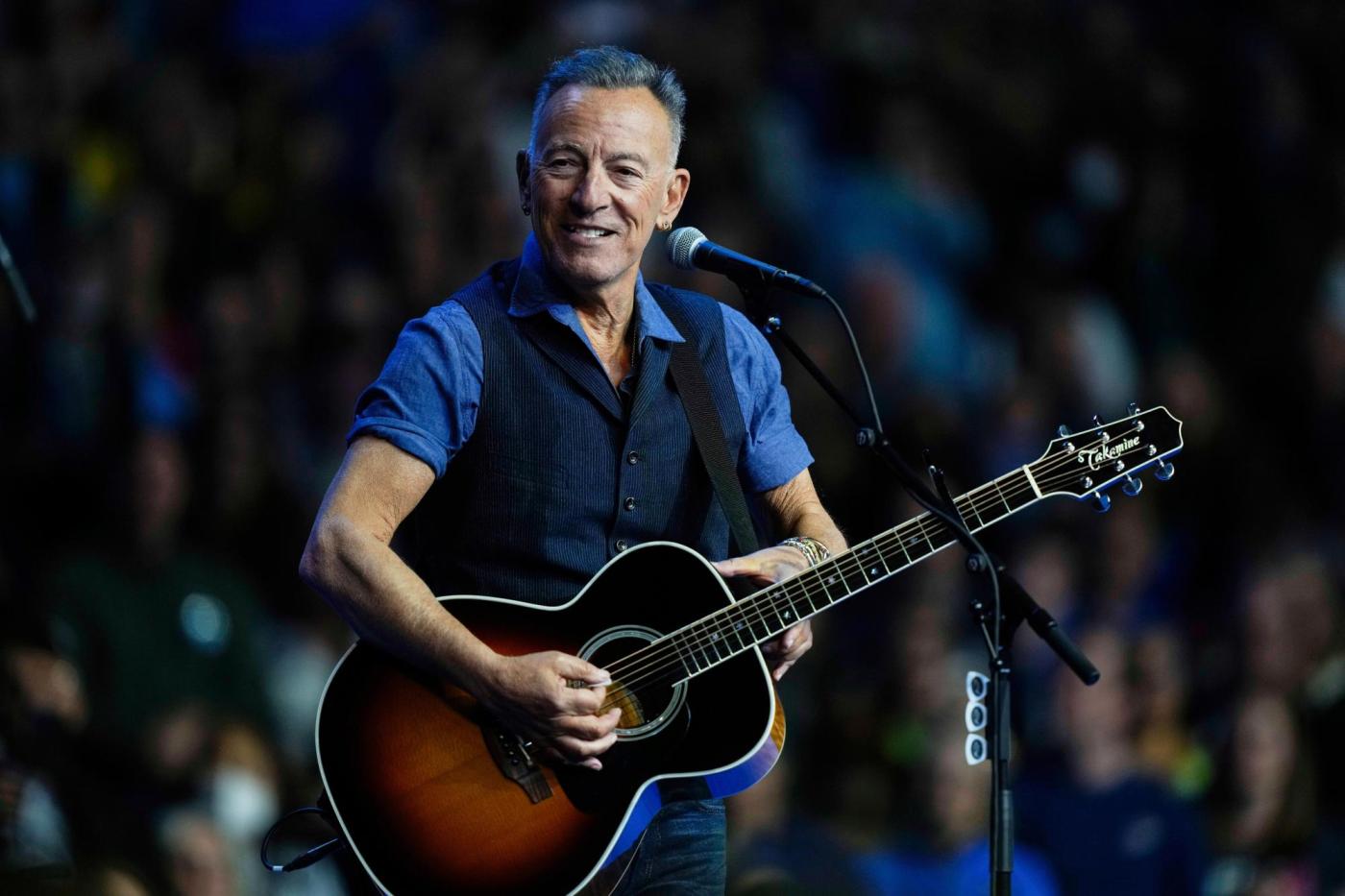
The rumors are true. The Boss is in Minneapolis.

Wednesday afternoon, Rage Against the Machine guitarist Tom Morello announced a benefit concert happening two days later, Friday, at First Avenue. All proceeds will go to the families of Renee Good and Alex Pretti, who were both shot and killed by federal agents in Minneapolis.

“We are coming to Minneapolis where the people have heroically stood up against ICE, stood up against Trump, stood up against this terrible rising tide of state terror,” Morello said in a news release. “Where the people have stood up for their neighbors and themselves, for democracy and justice. Ain’t nobody coming to save us except us and it’s now or never.”

Punk rock band Rise Against, jazz guitarist Al Di Meola and singer/songwriter Ike Reilly are also on the bill along with a “very special guest.”

The tickets sold out quickly and, soon after, fans began speculating that guest would be none other than Bruce Springsteen. He’s a known friend of Morello and, on Tuesday, released the song “Streets of Minneapolis” in support of Good and Pretti.

Earlier this month during a surprise performance at a New Jersey Parkinson’s disease benefit concert, Springsteen dedicated the song “The Promised Land” to Good and said “if you believe you don’t deserve to be murdered for exercising your American right to protest, then send a message to this president. And as the mayor of that city has said, ICE should get the f— out of Minneapolis. So this one is for you, and the memory of the mother of three and American citizen Renee Good.”

Social media lit up Friday morning with chat about Springsteen. At 10:25 a.m., Timberwolves chaplain Matt Moberg wrote on a Facebook post he just watched “The Boss pull into #FirstAve. I don’t know that it will change a lot, but I’m grateful that he’s here. A lot of celebrities say the right things from a safe distance with PR proof typed prayers, well-lit captions, love sent by carrier pigeon.”

In an unusual move, the concert began at noon and is scheduled to run until 2 p.m. The “very special guest” is set to take the stage at 1:40 p.m. according to Morello’s publicist.

Related Articles


The Justice Department has opened a federal civil rights probe into the killing of Alex Pretti


Journalist Don Lemon has been arrested after he covered a Minnesota church protest


Bells will ring in unity across the Twin Cities on Saturday


No school. No work. No shopping. A second, national ‘day of action’ planned for Friday.


Trump’s border czar suggests a possible drawdown in Minnesota, but only after ‘cooperation’

Israel reopening Gaza’s border crossing with Egypt on Sunday after long closure

posted in: All news | 0

By SAM METZ

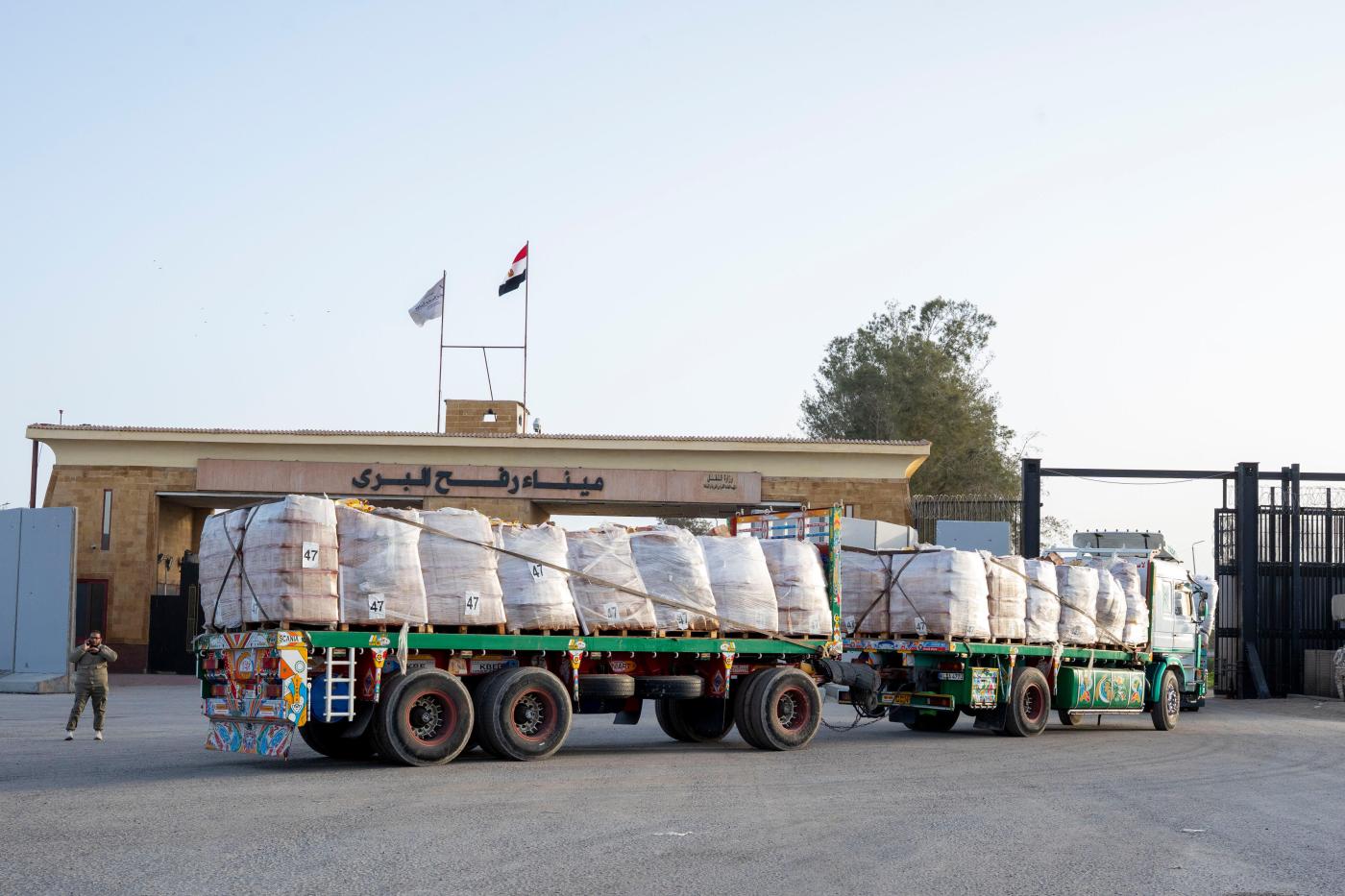
JERUSALEM (AP) — Israel said Friday that it will reopen the pedestrian border crossing between the Gaza Strip and Egypt over the weekend, marking an important step forward for U.S. President Donald Trump’s Gaza ceasefire plan.

Related Articles


New US sanctions against Iran target interior minister over crackdown on protesters


Panama Canal ports will keep operating after court finds concession unconstitutional, president says


Trump claims Putin agreed to temporary halt in energy attacks on Ukraine, but terms are unclear


Today in History: January 30, Catholic civil rights marchers killed on ‘Bloody Sunday’


Trump threatens tariffs on any country selling oil to Cuba, a move that puts pressure on Mexico

COGAT, the Israeli military body in charge of coordinating aid to Gaza, said in a statement that starting on Sunday a “limited movement of people only” would be allowed through the Rafah crossing, Gaza’s main gateway to the outside world.

The announcement followed statements from Israeli Prime Minister Benjamin Netanyahu and Ali Shaath, newly appointed to head the Palestinian administrative committee governing Gaza’s daily affairs, that it would likely open soon.

How the crossing will operate after nearly two years of closure remains unclear.

While COGAT said the passage will open in both directions on Sunday, Shaath said the first day will be a trial for operations and that travel both ways will start Monday.

COGAT said both Israel and Egypt will vet individuals for exit and entry through the crossing, which will be supervised by European Union border patrol agents. In addition to screenings at the crossing, Palestinians leaving and returning will be screened by Israel in the adjacent corridor, which remains under Israeli military control.

The crossing has been under a near complete closure since Israel seized it in May 2024, saying the step was part of a strategy to halt cross-border arms smuggling by Hamas. It was briefly opened for the evacuation of medical patients during a short-lived ceasefire in early 2025.

Israel had resisted reopening the crossing, but the recovery of the remains of the last hostage in Gaza on Monday cleared the way to move forward. A day later, Netanyahu said the crossing would soon open in a limited and controlled fashion.

Thousands of Palestinians inside Gaza are trying to leave the war-battered territory, while tens of thousands who fled the territory during the heaviest fighting say they want to return home.

An Israeli official who spoke on condition of anonymity in accordance with policy told The Associated Press that dozens of Palestinians would initially be allowed through each way, starting with medical evacuees and Palestinians who fled during the war.

Gaza’s health system was decimated in the war, rendering advanced surgical procedures out of reach. Roughly 20,000 sick and wounded Palestinians need treatment outside Gaza, according to the territory’s health ministry. In the past, those prioritized for evacuation have been mostly children, cancer patients and people suffering from physical trauma.

The reopening is one of the first steps in the second phase of last year’s U.S.-brokered ceasefire agreement, which includes challenging issues ranging from demilitarizing Gaza to putting in place an alternative government to oversee rebuilding the mostly destroyed enclave.

Netanyahu said this week that Israel’s focus is on disarming Hamas and destroying its remaining tunnels. Without these steps, he said that there would be no reconstruction in Gaza, a stance that could make Israel’s control over Rafah a key point of leverage.

More deadly strikes in Gaza

Palestinians in Gaza on Friday mourned friends and relatives who died earlier this week in Israeli strikes, which have slowed but not stopped since the return of the remains of the final hostage held in the territory.

Three Palestinians were laid to rest in traditional Islamic funeral rites. Men gathered to pay their final respects, carrying the shrouded bodies through the streets before praying over them.

Israel’s military said four people were killed in airstrikes Friday in central Gaza, saying they were armed and approaching troops near the ceasefire line dividing Israeli-held areas and most of Gaza’s Palestinian population.

The most recent deaths Friday are on top of the 492 Palestinians killed since the ceasefire began in October, according to the Gaza Health Ministry. The ministry doesn’t distinguish between civilians and combatants in its figures. It maintains detailed casualty records that are seen as generally reliable by U.N. agencies and independent experts.

Associated Press journalist Toqa Ezzidin in Cairo contributed to this report.

Find more of AP’s coverage at https://apnews.com/hub/israel-hamas-war

Fearing ICE, Native Americans rush to prove their right to belong in the US

posted in: All news | 0

By GRAHAM LEE BREWER, SAVANNAH PETERS and STEWART HUNTINGTON

MINNEAPOLIS (AP) — When U.S. Immigration and Customs Enforcement flooded Minneapolis, Shane Mantz dug his Choctaw Nation citizenship card out of a box on his dresser and slid it into his wallet.

Related Articles


St. Paul: Customs and Border Protection employee charged with DWI


Protesters call for nationwide strike against Trump’s immigration policies


Journalists Georgia Fort, Don Lemon among 4 more arrested in St. Paul church protest


Journalist Don Lemon has been arrested after he covered a Minnesota church protest


DHS ramps up surveillance in immigration raids, sweeping in citizens

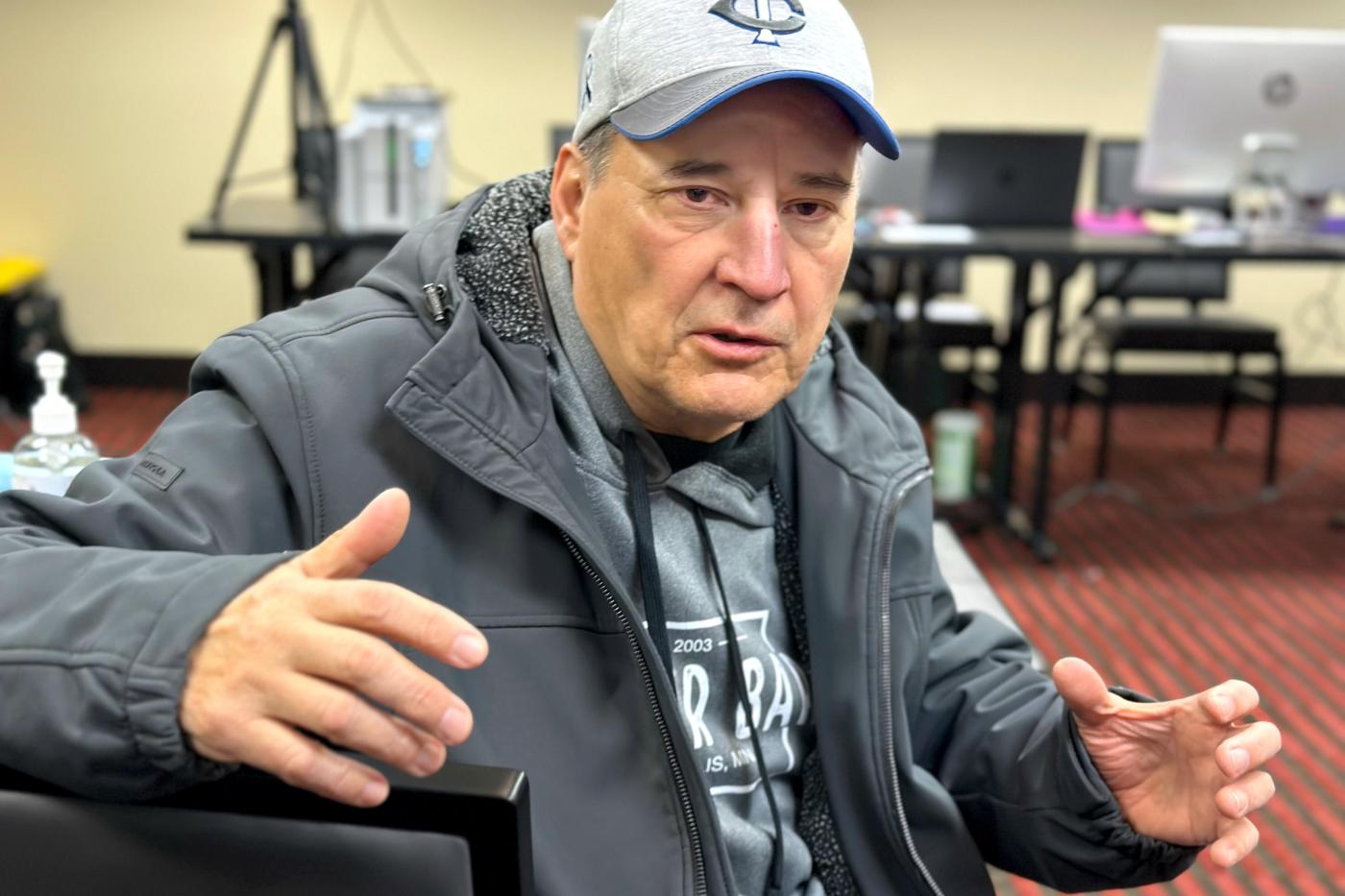
Some strangers mistake the pest-control company manager for Latino, he said, and he fears getting caught up in ICE raids.

Like Mantz, many Native Americans are carrying tribal documents proving their U.S. citizenship in case they are stopped or questioned by federal immigration agents. This is why dozens of the 575 federally recognized Native nations are making it easier to get tribal IDs. They’re waiving fees, lowering the age of eligibility — ranging from 5 to 18 nationwide — and printing the cards faster.

It’s the first time tribal IDs have been widely used as proof of U.S. citizenship and protection against federal law enforcement, said David Wilkins, an expert on Native politics and governance at the University of Richmond.

“I don’t think there’s anything historically comparable,” Wilkins said. “I find it terribly frustrating and disheartening.”

As Native Americans around the country rush to secure documents proving their right to live in the United States, many see a bitter irony.

“As the first people of this land, there’s no reason why Native Americans should have their citizenship questioned,” said Jaqueline De León, a senior staff attorney with the nonprofit Native American Rights Fund and member of Isleta Pueblo.

The U.S. Department of Homeland Security didn’t respond to more than four requests for comment over a week.

Native identity in a new age of fear

Since the mid- to late 1800s, the U.S. government has kept detailed genealogical records to estimate Native Americans’ fraction of “Indian blood” and determine their eligibility for health care, housing, education and other services owed under federal legal responsibilities. Those records were also used to aid federal assimilation efforts and chip away at tribal sovereignty, communal lands and identity.

Beginning in the late 1960s, many tribal nations began issuing their own forms of identification. In the last two decades, tribal photo ID cards have become commonplace and can be used to vote in tribal elections, to prove U.S. work eligibility and for domestic air travel.

About 70% of Native Americans today live in urban areas, including tens of thousands in the Twin Cities, one of the largest urban Native populations in the country.

There, in early January, a top ICE official announced the “largest immigration operation ever.”

Masked, heavily armed agents traveling in convoys of unmarked SUVs became commonplace in some neighborhoods. By this week, more than 3,400 people had been arrested, according to Immigration and Customs Enforcement. At least 2,000 ICE officers and 1,000 Border Patrol officers were on the ground.

Representatives from at least 10 tribes traveled hundreds of miles to Minneapolis — the birthplace of the American Indian Movement — to accept ID applications from members there. Among them were the Lac Courte Oreilles Band of Ojibwe of Wisconsin, the Sisseton Wahpeton Oyate of South Dakota and the Turtle Mountain Band of Chippewa of North Dakota.

Turtle Mountain citizen Faron Houle renewed his tribal ID card and got his young adult son’s and his daughter’s first ones.

“You just get nervous,” Houle said. “I think (ICE agents are) more or less racial profiling people, including me.”

Events in downtown coffee shops, hotel ballrooms, and at the Minneapolis American Indian Center helped urban tribal citizens connect and share resources, said Christine Yellow Bird, who directs the Mandan, Hidatsa and Arikara Nation’s satellite office in Fargo, North Dakota.

Yellow Bird made four trips to Minneapolis in recent weeks, putting nearly 2,000 miles on her 2017 Chevy Tahoe to help citizens in the Twin Cities who can’t make the long journey to their reservation.

Yellow Bird said she always keeps her tribal ID with her.

“I’m proud of who I am,” she said. “I never thought I would have to carry it for my own safety.”

Some Native Americans say ICE is harassing them

Last year, Navajo Nation President Buu Nygren said that several tribal citizens reported being stopped and detained by ICE officers in Arizona and New Mexico. He and other tribal leaders have advised citizens to carry tribal IDs with them at all times.

Last November, Elaine Miles, a member of the Confederated Tribes of the Umatilla Indian Reservation in Oregon and an actress known for her roles in “Northern Exposure” and “The Last of Us,” said she was stopped by ICE officers in Washington state who told her that her tribal ID looked fake.

The Oglala Sioux Tribe this week banned ICE from its reservation in southwestern South Dakota and northwestern Nebraska, one of the largest in the country.

The Standing Rock Sioux Tribe of North and South Dakota said a member was detained in Minnesota last weekend. And Peter Yazzie, who is Navajo, said he was arrested and held by U.S. Immigration and Customs Enforcement in Phoenix for several hours last week.

Yazzie, a construction worker from nearby Chinle, Arizona, said he was sitting in his car at a gas station preparing for a day of work when he saw ICE officers arrest some Latino men. The officers soon turned their attention to Yazzie, pushed him to the ground, and searched his vehicle, he said.

He said he told them where to find his driver’s license, birth certificate, and a federal Certificate of Degree of Indian Blood. Yazzie said the car he was in is registered to his mother. Officers said the names didn’t match, he said, and he was arrested, taken to a nearby detention center and held for about four hours.

“It’s an ugly feeling. It makes you feel less human. To know that people see your features and think so little of you,” he said.

DHS did not respond to questions about the arrest.

Mantz, the Choctaw Nation citizen, said he runs pest-control operations in Minneapolis neighborhoods where ICE agents are active and he won’t leave home without his tribal identification documents.

Securing them for his children is now a priority.

“It gives me some peace of mind. But at the same time, why do we have to carry these documents?” Mantz said. “Who are you to ask us to prove who we are?”

Brewer reported from Oklahoma City and Peters from Edgewood, New Mexico.