When Brad Jacobsen, a retired St. Paul police officer, was informed by his doctor at Regions Hospital that his November medical appointment would have to be rescheduled, he asked for a date early next year. HealthPartners, his medical system, denied the request.
“I asked to reschedule in January and they said no, because my insurance wouldn’t be accepted,” said Jacobsen, a former president of the St. Paul Police Federation and current secretary of the St. Paul Police Retirement Association. “I’ve gone to Regions Heart Center since 2000, when I had my heart attack. I’ll need to find a different cardiologist now.”
Jacobsen isn’t alone. Thousands of fellow public retirees insured by UnitedHealthcare may soon be in the same boat.
“From our end on the retirement association, we’ve had three people — myself included — that were denied appointments in 2025,” he said.
Impasse shows no sign of ending
In July, HealthPartners notified some 30,000 seniors enrolled in UnitedHealthcare’s Medicare Advantage program that it will no longer accept their insurance next year, effectively excluding them from sites such as Regions Hospital in St. Paul and Lakeview Hospital in Stillwater. Come January, even established patients who show up willing to pay extra for out-of-network care with their long-standing doctors will be turned away, according to the health care provider.
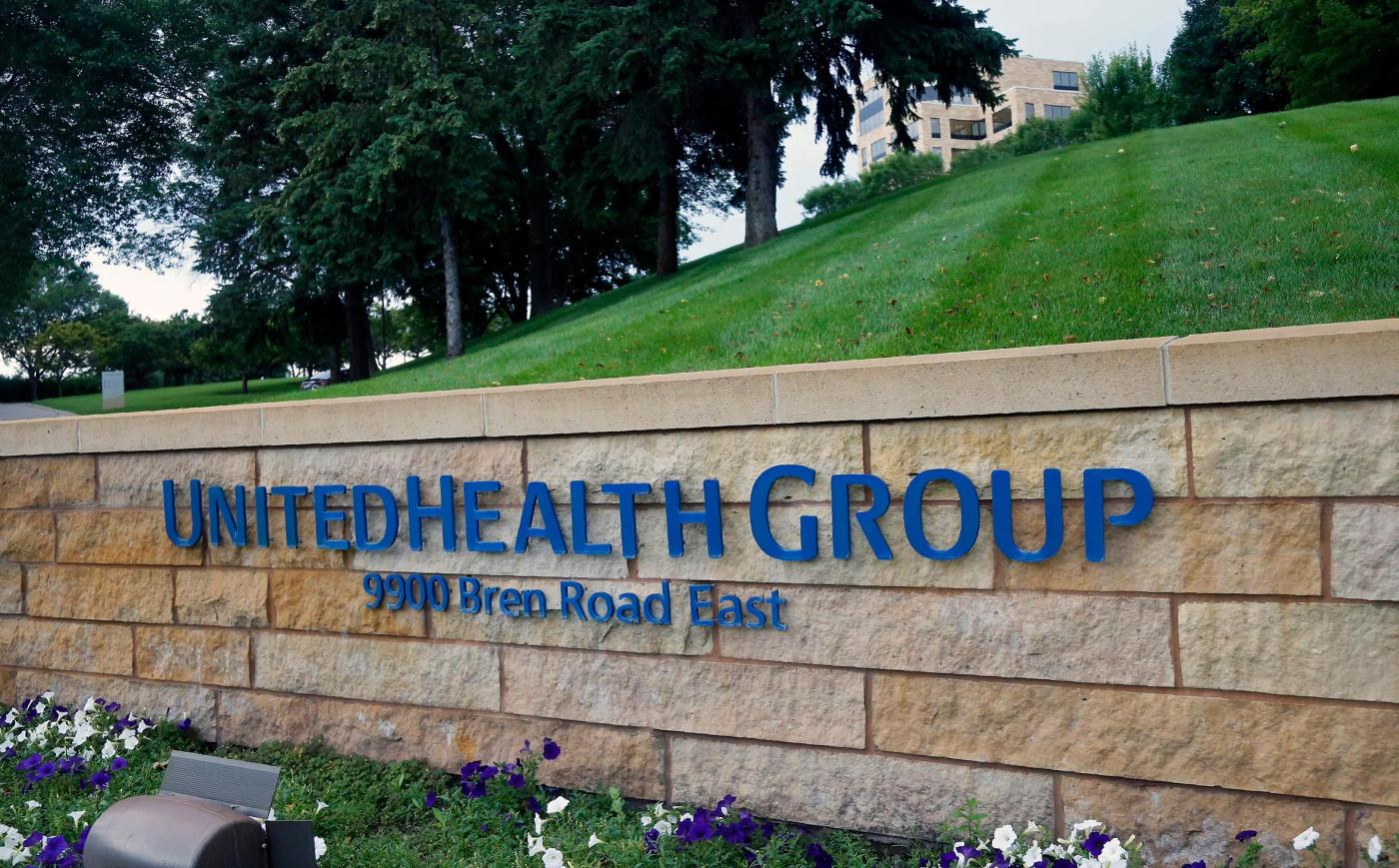
That news sent a chill through thousands of retired public employees who have earned retirement benefits through Ramsey County, the city of St. Paul, St. Paul Public Schools and the Metropolitan Council, among other public employers. Bloomington-based HealthPartners has accused UnitedHealthcare, a Minnesota-based for-profit health insurer, of aggressively denying claims at rates up to 10 times greater than other insurers, while offering limited reimbursement for medical services.
UnitedHealthcare and others have raised the possibility that the hospital network is bluffing and will not turn anyone away in 2025. But the impasse has shown no signs of thawing. A spokesperson for HealthPartners said Wednesday that he had no information to add to the statement issued in July.
In an email Thursday, UnitedHealthcare spokesman Cole Manbeck said: “We recently met with HealthPartners. We continue to remain at the negotiating table with the goal of renewing our relationship. We hope HealthPartners continues to engage with us and works toward a new agreement that ensures continued access to the health system for people enrolled in our Medicare Advantage plans.”
Essentia Health, a Duluth-based health system, announced in recent weeks that it also would drop UnitedHealthcare come January.
“For patients who are covered by UnitedHealthcare’s Medicare Advantage plan, we will no longer schedule any appointments that occur after Dec. 31,” reads Essentia’s announcement, which was posted this month to its website. “In evaluating UHC’s Medicare Advantage plan, we found excessive prior authorizations and denial rates for patients who are covered by the plan.”
District, teachers ask AG to intervene
With few other options, the St. Paul school district sent its retirees a four-page letter this month, dated Sept. 9, urging them to contact the Minnesota Attorney General’s Office and ask state powers to intervene. The letter, signed by Patricia Pratt-Cook, executive chief of human resources, noted the school district’s retiree benefits are backed by $15 million in taxpayer funds, and switching insurance providers is a complicated process that involves a request for proposals and some eight to 12 months of administration.
About 2,300 out of 3,500 retired St. Paul Public Schools employees are impacted by the impasse between HealthPartners and UnitedHealthcare, according to the district.
The school district did explore the possibility of issuing an expedited request for proposals.
“Even with a compressed timeline, we would not be able to complete the process prior to January 1,” reads the letter. “We’ve also asked that our retirees reach out to the Minnesota Attorney General’s Office because the volume of your many voices carries weight.”
The school district also shared with retirees a side-by-side comparison between their Medicare Advantage and a Medicare Supplement plan, which would offer the group fewer benefits for higher premiums.
“I’ll be honest. It’s frightening for our seniors,” said John Thein, the school district’s interim superintendent, in an interview Friday. “There are some options, but those are not exactly what our retirees would want.”
St. Paul Retired Teachers Inc., a charitable nonprofit led by former teachers, also began circulating a form letter on Sept. 13 for retirees to send to the attorney general’s office and their state senator or state representative.
“(St. Paul Public Schools) retirees were promised a certain level of healthcare benefits, often in exchange for accepting smaller salary increases during our working years,” reads the letter. “We also paid higher premiums than many surrounding districts to ensure access to quality healthcare in retirement.”
“Many of us have been with the same healthcare providers for over a decade, during which time our health conditions have become more complex,” it goes on to say. “These doctors know our medical histories intimately and are crucial to managing our ongoing health needs. … It is unfair to force retirees to abandon trusted providers simply because of insurance coverage changes.”
Joe Soucheray: There was our governor, westbound on Marshall, then into the security zone
Inmate found dead in cell at Moose Lake prison, state Corrections Department says
Twin Cities man, 18, charged with carjacking student at Gustavus Adolphus College in St. Peter
Minnesota adds 14,400 jobs in August, highest monthly total in two years
St. Paul playwright aims to honor 130th anniversary of the Great Hinckley Fire
St. Paul, Ramsey County retirees also impacted
Of the 2,190 city of St. Paul retirees using the UnitedHealthcare Medicare Advantage plan, 1,000 of them selected HealthPartners/Park Nicollet as their provider, according to the mayor’s office, and those 1,000 retired workers represent all city departments. The city is contracted with UnitedHealthcare through 2025.
“For the two largest healthcare networks in our state and region to walk away from negotiations without a solution for our retirees is unacceptable,” said St. Paul Mayor Melvin Carter, in a written statement last month. “We count on our partnership with UnitedHealthcare and HealthPartners and expect them to go back to the table to keep their promises to our retirees.”
The plan also insures a total of 2,480 former Ramsey County workers and their spouses, and 45% of them visited a HealthPartners provider this year, according to data provided by the county.
Ramsey County Board Chair Victoria Reinhardt, who is about three months from retirement, said the county is in negotiations toward solutions on all sides.
“We care about our retirees. We are working on what that would look like. Honestly, we don’t have answers to that. But we are working on it,” Reinhardt said. “What would be the really best thing is if UHC and HealthPartners came to a solution.”
Legal fights, protests dog UnitedHealthcare
City and county retirees have noted that switching insurance providers on their own during open enrollment — which runs from Oct. 15 through Dec. 7 for Medicare beneficiaries — can have huge consequences, including losing benefits they’ve accrued through years, if not decades, of public employment.
“If I take on an insurance plan or insurance supplement on my own, I permanently lose my retirement health coverages currently received through the city,” said Rick Anderson, a retired employee from the city of St. Paul. “I am bound to take whatever plan the city chooses.”
“As the end of the year approaches, it is more concerning each week,” Anderson added. “HealthPartners is my primary provider for health care, so losing my ability to use them is upsetting, to say the least. For retirees, continuity of care is extremely important to us.”
Controversy surrounding UnitedHealthcare isn’t new. The Minnetonka-based for-profit multinational corporation is one of the world’s largest companies by revenue, and its practices have drawn tough scrutiny from the U.S. Department of Labor and other interested parties.
National health insurance carriers like UnitedHealthcare entered the Minnesota market after the Republican-controlled Legislature lifted the 40-year-old state ban on for-profit health insurance in 2017. A new state law takes effect next year re-implementing a key aspect of the ban — barring for-profit HMOs from running Medicaid health plans — though UnitedHealthcare has filed suit against the state to prevent its enforcement.
The U.S. Department of Labor last year sued UMR, a third-party administrator and UnitedHealthcare subsidiary, for allegedly denying thousands of patients’ payments for emergency room services and urinary drug screenings. The lawsuit was filed in U.S. District Court for the Western District of Wisconsin.
Also in 2023, patients enrolled in a UnitedHealth Medicare Advantage plan and their families filed a class-action lawsuit against UnitedHealthcare and its subsidiary NaviHealth for cutting off payment for rehab care based on what they alleged was faulty direction from the company’s artificial intelligence software, known as “nH Predict.” The lawsuit, which could potentially involve thousands of patients, was filed in the U.S. District Court for Minnesota.
In July, 11 people were arrested for blocking the street outside the UnitedHealthcare headquarters in Minnetonka during a sizable street demonstration against claim denials. The People’s Action Institute’s “Care Over Cost” campaign drew some 150 protesters.
St. Paul: California company seeks to convert Lowertown’s Allen Building into commercial storage
Plane pull competition in South St. Paul on Saturday aims to raise critical funds for veterans
Free farmers’ market at Allianz Field Friday
After record-breaking attendance in 2023, Summit Hill House Tour is back this weekend
St. Paul City Council votes 7-0 to approve 300 ft. distance requirement from schools for cannabis shops