AmeriCorps seeks more tutors as Minnesota children fall behind in reading and math

posted in: Society | 0

WILLMAR, Minn. — Janessa Rodriguez was fresh out of high school in 2023, with no idea what her next steps would be.

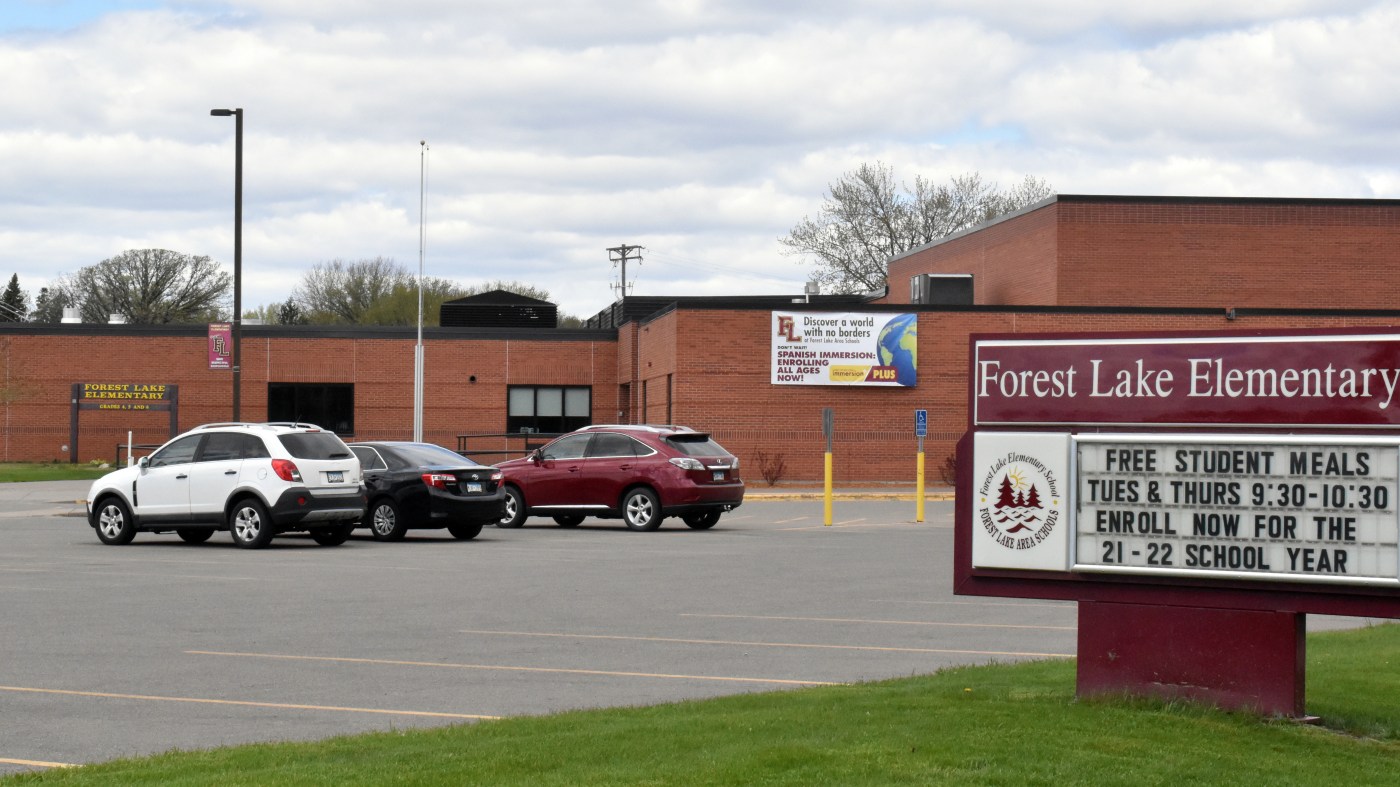
Searching on the Indeed jobs website, she found an AmeriCorps math tutoring job at Roosevelt Elementary School in Willmar, a school that she attended.

“I struggled with math too, so I understood what these kiddos were going through,” Rodriguez said. “I didn’t think I’d be good at it, but it was one of the best decisions I’ve ever made.”

Tutors like Rodriguez help kids work on their math or reading skills individually or in small groups, a more personal approach to learning that AmeriCorps utilizes in schools across Minnesota.

The AmeriCorps tutoring program in Minnesota started with Reading Corps in 2003 and expanded with Math Corps in 2008. The organization’s goal is to get kids in grades K-3 to achieve grade-level proficiency in reading and math. However, according to AmeriCorps, fewer than a third of Minnesota students are doing so.

That’s why the organization is looking for 900 tutors across Minnesota for the upcoming school year.

“Ever since the pandemic, students have fallen behind in these areas,” said Laura Isdahl, senior manager at Reading Corps. “That’s why the need for these positions have grown.”

That’s why a more personal approach to early learning could be a solution, according to the director of Minnesota programs Christine Fankhanel.

“When students work with a tutor, incredible things happen,” said Fankhanel in a news release. “They often make more than a year’s progress during the school year.”

Rodriguez can attest to that.

“One of the most rewarding things about this job is that light bulb moment when a kid understands a concept that they’re struggling with,” Rodriguez said. “And to not only build relationships with the kiddos, but the staff as well, it’s very rewarding.”

Rodriguez is now going to Ridgewater College, receiving tuition assistance from AmeriCorps. Tutoring, however, is not just for high school graduates or college students.

Isdahl said about two-thirds of tutors are retirees or parents who want to get back into the workforce. They also have flexible hours, with the choice of working 18, 25 or 35 hours a week, with a stipend every two weeks that is equivalent to about $15 an hour.

Isdahl also said that there is training for tutors before their positions start to ensure they feel prepared.

“I’d highly recommend it, especially for college students,” said Rodriguez. “But it’s really for anybody who wants to work with kids.”

AmeriCorps directs those interested in a position to go online for more information at join.readingandmath.org.

Related Articles

Education |


Minnesota falls to 19th in education in state ranking

Education |


Less than half of Minnesota school districts employ a licensed nurse, report says

Education |


Backlash against DEI spreads to more states

Education |


For child care workers, state aid for their own kids’ care is ‘life-changing’

Education |


St. Paul school board OKs billion-dollar budget as transparency questions remain

St. Paul awaits ‘major flood stage’ river crest of about 20 feet Friday; Stillwater prepares for Sunday crest

posted in: Society | 0

In downtown St. Paul, the Mississippi River was measuring 15 feet on Monday morning and is expected to crest around 20 feet on or about Friday — well into “major flood stage” — submerging low-lying areas in Harriet Island Regional Park and other parts of the city. The river last crested at 20 feet in March 2019.

“Models have moved down a tad since last week due to less rain than expected over the weekend, but … the hydrograph is still showing a crest at 20 feet on or around Friday,” said Clare Cloyd, a spokesperson for St. Paul Parks and Recreation.

In anticipation of river flooding, St. Paul officials closed a 3-mile stretch of Shepard/Warner Road on Sunday evening and have taken other precautionary measures at parks, trails and low-lying areas. Some one-way street segments downtown that normally connect to Shepard Road have been closed to through-traffic and converted to two-way traffic for local access to buildings. Temporarily closing Shepard Road/Warner Road is part of the city’s official flood response plan when rising river levels near the “moderate flood stage” of 15 feet. Major flood stage is reached at 17 feet.

In addition to street closings announced last week, Fourth Street between Willius Street and Commercial Street is now closed, and Childs Road will close at 9 a.m. Tuesday.

“We don’t anticipate any impact to the new construction areas along Harriet Island, but are monitoring and our (Department of Safety and Inspections) staff has made rounds of in-person contact, and frequent written communication updates to property owners along the floodplain on both sides of the river,” Cloyd said.

The St. Croix River at Stillwater

Meanwhile, the St. Croix River was at 685.1 feet in Stillwater on Monday afternoon; minor flood stage is 687 feet. The river is set to crest in Stillwater at 9 a.m. Sunday at 687.8 feet, which is just under moderate flood stage, according to the National Weather Service.

Mayor Ted Kozlowski said he and other city officials are “keeping their eyes on the sky at this point.”

“We could get more rain tonight,” he said. “It could be nothing. There’s just so much uncertainty. Any precipitation at this point is just going to extend the flood situation.”

No volunteers are needed to help prepare sandbags to reduce floodwater damage, he said, “but we’re only a 3-inch rain event from potentially needing some.”

For updated information on the Mississippi River at St. Paul go to water.noaa.gov/gauges/STPM5 For information on the St. Croix River at Stillwater go to water.noaa.gov/gauges/stlm5.

Top recorded river crests for Mississippi River at St. Paul

If and when the Mississippi River surpasses 19.02 feet at downtown St. Paul, it will be a top 10 historic recorded crest for the city. The No. 1 spot was achieved on April 16, 1965 when the river crested at 26.01 feet. For more information go to StPaul.gov/flood.

Here’s how the 20-foot forecasted crest compares to past historic levels recorded in St. Paul:

• 26.01 feet on 04/16/1965.

• 24.52 feet on 04/15/1969.

• 23.76 feet on 04/18/2001.

• 23.20 feet on 04/30/2001.

• 22.37 feet on 04/13/1997.

• 22.02 feet on 04/16/1952.

• 20.19 feet on 03/31/2019.

• 20.13 feet on 06/26/2014.

• 19.15 feet on 06/26/1993.

• 19.02 feet on 03/29/2011.

Related Articles

Local News |


What’s causing the devastating flooding in the Midwest?

Local News |


Minnesota officials address emergency response to ‘unprecedented’ flooding

Local News |


Minnesota falls to 19th in education in state ranking

Local News |


Midwest flooding collapses Iowa rail bridge, forces evacuations and kills at least 1

Local News |


Minnesota National Guard mobilized to assist with flooding in south-central region

What’s causing the devastating flooding in the Midwest?

posted in: News | 0

ST. LOUIS — Hundreds of Iowa residents have needed rescue from record-setting flooding that has swamped parts of the state, covering buildings up to their rooftops, shutting down major roads, and disrupting basic services like electricity and drinking water.

Iowa Gov. Kim Reynolds said water in some areas rose above records from 1993, a flood many in the Midwest remember as the worst of their lives. Floodwaters were so powerful they pulled down a train bridge connecting North Sioux City, South Dakota, with Sioux City, Iowa.

The water is expected to be at its highest early this week — in some places it has already passed — and then the crest of the river will move south, eventually into the Missouri and Mississippi rivers.

“Businesses are shuttered, main streets have been impacted. Hospitals, nursing homes and other care facilities were evacuated,” Reynolds said at a news conference over the weekend, calling the expected damage “staggering.”

It’s hot, too, making dangerous conditions worse.

Here’s a look at why waters are so high in the Midwest:

What is causing the bad flooding?

Torrential rains. In a three-day stretch, Sioux Falls, South Dakota, received about 7 inches of rain. In Canton, South Dakota, roughly 30 miles to the southeast, 18 inches of rain fell. In Iowa, some areas since Friday got as much as 15 inches of rain.

“It has been just round after round through the month. And then recently, we’ve had a few big rounds,” said Joseph Bauers, a meteorologist with AccuWeather.

Hot air in the Northeast has directed the path of storms through the Midwest, according to Shel Winkley, a weather and climate expert with Climate Central, a nonprofit focused on climate science.

“With that big high-pressure system over the East, that kind of helps steer these and slow these systems down specifically to where we’ve seen the flooding over the past few days,” he said.

And the most recent rounds of heavy rain have fallen on wet ground. When soil is wet, it can’t absorb as much new moisture, so more of the rain runs into rivers and streams.

Flooding is a big change for a part of the country that has endured drought in recent years. Rain started to hit the region in late April and early May, according to National Weather Service hydrologist Jeff Zogg.

Then the really heavy storms came Friday and Saturday.

“There were some cases where rainfall was falling at a rate of over 1 inch in 15 minutes, for example,” Zogg said. “And that’s because there’s just so much moisture in the atmosphere that there is a lot of moisture for the thunderstorms to wring out.”

What is a crest and why do they matter?

A crest is the highest level a river reaches before receding, and they are tracked closely by forecasters. It’s essential to know when a crest is expected to hit, how bad it will be and how fast it is traveling down river.
Because recent rains dumped extraordinary amounts of water on the region, rivers rose quickly, and crests are expected soon or have already occurred in some places.

Sioux City Fire Marshal Mark Aesoph told reporters that the Big Sioux River stabilized Monday morning at around 45 feet, over 7 feet higher than the previous record.

“It’s just been difficult to predict what’s going to happen when levels are this high when we have no history with it,” he said.

South Dakota Gov. Kristi Noem said other rivers, the James and Vermillion, are expected to crest Wednesday. The flooding is “more spread out” than expected, which is helping lessen flooding in some inhabited areas. It will “bump up” Missouri River levels, but not as much as anticipated, she said at a news conference Monday.

“The later and the lower crest levels gave us some time that we need to upgrade some levees that we needed to get done,” Noem said.

While the heaviest rain has been concentrated in northwestern Iowa, parts of northeastern Iowa will see up to an inch on Monday, said Zogg. The rainfall across northern Iowa will take “several days” to make its way through the state. He said the location of the rain was particularly bad for Iowa because it has to drain through the state’s entire river system before exiting.

Since all that water eventually drains into the Missouri and Mississippi rivers, Zogg said, flooding is expected in those big rivers, as well.

And there is the possibility for more rain later this week.

“When it comes to the rainfall and river response, location and timing and the amount” will determine how the river responds and whether floods will get worse, he said.

Is this related to climate change?

In the Midwest, flooding isn’t new. Nor is heavy rain in June. And linking any particular big rainstorm to climate change is difficult, Winkley said.

But, as greenhouse gases warm the planet, the hotter atmosphere can hold more water. That means big rainstorms can pour down even more water, overwhelming sewer systems and flooding downtowns. Plus, bad floods are growing more common, he said.

“The extremes are becoming more extreme,” said Winkley.
___
Associated Press reporters Hannah Fingerhut in Des Moines, Iowa, and Margery A. Beck in Omaha, Nebraska, contributed to this report.
___
The Associated Press receives support from the Walton Family Foundation for coverage of water and environmental policy. The AP is solely responsible for all content.

Related Articles

National News |


Midwest flooding collapses Iowa rail bridge, forces evacuations and kills at least 1

National News |


Minnesota National Guard mobilized to assist with flooding in south-central region

National News |


As rivers rise, Stillwater and St. Paul prepare for flooding

National News |


River floods in northeastern Minnesota community of Cook, submerging downtown

National News |


Torrential rains wash out northeastern Minnesota roads, turn rivers into gushers

US is expected to send Ukraine $150 million more in munitions to fight off Russia’s attacks

posted in: All news | 0

WASHINGTON (AP) — The U.S. is expected to announce Tuesday it is sending an additional $150 million in critically needed munitions to Ukraine, as Russia accuses Ukraine of using U.S.-provided munitions to strike inside Russia or Russian-held territory, according to two U.S. officials.

On Monday, Russia summoned the American ambassador to protest what it says was the use of U.S.-made advanced missiles in a Ukrainian attack on Crimea on Sunday that reportedly killed four people and wounded more than 150.

Crimea, which Russian seized from Ukraine in 2014 in a move that most of the world rejected as unlawful, long had been declared a fair target for Ukraine by its Western allies.

However, the Pentagon said last week that Ukraine’s military is also now allowed to use longer-range missiles provided by the U.S. to strike targets inside Russia if it is acting in self-defense. Since the outset of the war, the U.S. had maintained a policy of not allowing Ukraine to use the weapons it provided to hit targets on Russian soil for fear of further escalating the conflict.

The continued flow of U.S. munitions, which will be drawn from existing stockpiles, is intended to help Ukrainian forces repel intensified Russian attacks.

The upcoming shipment is expected to include munitions for the High Mobility Artillery Rocket Systems, or HIMARS. That system is capable of firing the longer-range missiles from the Army Tactical Missile System, or ATACMS, which Russia has said would prompt retaliation and risk escalating the conflict. One of the U.S. officials said they could not verify whether this aid package included ATACMS munitions, but said the aid did not include cluster munitions.

The officials spoke on the condition of anonymity to provide details that had not yet been made public.

The package also includes anti-armor weapons, small arms and grenades and the highly sought after 155 mm and 105 mm artillery rounds, among other support.