Loons coach Eric Ramsay responds to Caden Clark’s critical comments

posted in: News | 0

After an August trade from Minnesota United, Wayzata native Caden Clark has rediscovered confidence and goal-scoring with CF Montreal in September.

With two goals across 359 minutes in five total matches, Clark spoke freely Saturday about his goalless 23-game stint with his home-state Loons.

“Why do I feel so comfortable? Why do I feel like I can do certain things I didn’t do before?” Clark asked after scoring a goal in a 2-0 win over Chicago Fire. “It’s just who I am, really. Nothing has changed. I talked to my dad about it. ‘What do you do differently?’ This and that. It’s nothing. It’s my mindset. It’s staying calm, and trust in yourself.

“I think, in Minnesota, it was tough for me,” Clark continued. “It was really tough. The coach was asking 10,000 different things from me, and right back.”

Clark smiled and added: “That was my struggle.”

Clark’s words reached MNUFC head coach Eric Ramsay.

“I can’t imagine that he would wake up the following morning thinking it’s a sensible way to talk about his ex-club, in any way,” Ramsay told the Pioneer Press on Tuesday. “But he’s entitled to say what he wants, and we wish him nothing but the best from here.”

Clark considers himself an attacking midfielder; that’s where he’s been playing in Montreal; and that’s where he started playing for the Loons from February into May. But Ramsay moved Clark to wingback on a five-man back line for the majority of his time in Minnesota. That defensive spot where the club projected the now-21-year-old to be best suited.

When it didn’t work out — includuing Clark being a late scratch in two matches — Loons’ chief soccer officer Khaled El-Ahmad traded Clark for $50,000 in 2024 General Allocation Money (GAM) and up to $100,000 in GAM if Clark meets performance marks. The Loons also retain a sell-on percentage if Clark is transferred out of MLS.

Clark’s frustration at how things went in Minnesota is understandable. He was coming off a difficult stint at RB Leipzig in Germany and was looking forward to a homecoming, where he could play matches in front of family on weekends and hang out with friends after training sessions on weekdays.

Clark was brought to Minnesota via a marginal transfer fee by former Loons manager Adrian Heath and Clark would have played in attacking positions in Heath’s free-flowing offensive system.

But Heath was fired in October; Clark arrived in January; Ramsay came in March.

In some ways, Ramsay is a polar opposite to the elder Heath. The 32-year-old has shown himself to be a detailed, defensive-focused tactician. He will look to add more parameters for players to play within — not subtract them. And he looks for players with versatility to play multiple positions within his systems.

Clark said Saturday he’s “never had more fun” playing on a team than right now. Montreal head coach Laurent Courtois is a big reason for that.

“He just gives me freedom and trust,” Clark said. “I worked hard to earn that, he’s given it back to me, and now it’s paying off for both of us. It’s just the trust and freedom, and not asking me to be in this spot at this time. He’s trusting me in my play style to really manipulate players and play my own game, so I really, really appreciate that. And hopefully it will keep working going forward.”

From 2019-21, Ramsay coached the Under-23 team at Chelsea, a London club often loaded with talented young players. He used his experience in the academy of an English Premier League club when discussing Clark.

“I’ve seen countless players over my time, particularly Chelsea, that you think, ‘OK, top, top players, really good players, but there’s absolutely no way that if they stay here, they’re going to reach their potential,’ ” Ramsay said. “So I think Caden, we felt like he was one of them. It just wasn’t a good fit. Him and the environment weren’t well suited. And perhaps some in the area (of) being a home guy, and the pressure that that brings, hopefully (he) really goes and flourishes over there. Fingers crossed it’s the start of that.”

For Ramsay, well-wishes to Clark are the respectful and professional thing to express, but if Clark gets back on the trajectory of being a highly regarded U.S. youth international while playing in attacking positions, MNUFC’s assessment of Clark’s positioning and future in Minnesota won’t reflect as kindly.

US health authorities need to play a larger role in cannabis policy, a new report says

posted in: News | 0

By CARLA K. JOHNSON

With more Americans using ever-stronger marijuana, a federal advisory panel is calling for a public health approach that’s a big departure from “Just Say No.”

Thursday’s report proposes a health-focused strategy with the Centers for Disease Control and Prevention taking a larger role in cannabis policy than ever before.

“We’d like the federal government to step up to provide some leadership in this area,” said Dr. Steven Teutsch of the University of Southern California, who chaired the committee behind the National Academies of Sciences, Engineering and Medicine report. The CDC and the National Institutes of Health sponsored the report. A CDC spokesperson said Thursday that the agency would study the recommendations and that more money would be needed to implement them.

Related Articles

Health |


Old newspaper boxes are being used to distribute the overdose reversal drug Narcan

Health |


Billions of people are missing these 7 key nutrients, study says

Health |


‘Living’ device that releases E. coli into bladder could treat UTIs, researchers say

Health |


It’s time to roll up sleeves for new COVID, flu shots

Health |


Suicidal ideation is terrifying and isolating. This survivor is ‘living proof’ recovery is possible.

An estimated 18 million Americans report using marijuana daily or near-daily, more than the number who drink alcohol that often.

Today, 38 states and the District of Columbia allow the medical use of marijuana and many of those states also allow adult recreational use, with taxes and regulation of sales similar to alcohol. Florida voters will decide on recreational use in November.

Marijuana remains illegal under federal law, although the government is taking steps to reclassify cannabis as a less dangerous drug while still illegal.

Cannabis is getting stronger, with levels of the intoxicating compound THC rising. Twenty-five years ago, cannabis flower contained about 5% THC.

“Now you go into the stores, it’s hard to find products that are less than 20% THC,” said Beau Kilmer, co-director of the RAND Drug Policy Research Center and a report committee member.

Cannabis can ease chronic pain, but evidence on other health benefits has been limited by lack of research. The risks for heavy users include car accidents and repeated bouts of vomiting that can send people to the emergency room.

For teens, cannabis can get in the way of learning and increase the risk of mood and anxiety disorders. Regular use during pregnancy can raise risks for the baby.

Public health “took a back seat” as states passed cannabis laws, Teutsch said. “Financial interests played a substantial role in influencing those policies.”

According to the report, industry lobbying has prevented attempts in Washington state to limit THC concentration and attempts in Colorado to restrict pesticides in cannabis cultivation.

Aaron Smith of the National Cannabis Industry Association said states have protected public health by replacing criminal markets with regulated businesses “that are required to test products for contaminants, practice truth in labeling, and most importantly, keep cannabis products out of the hands of minors.” Making cannabis legal nationally would improve public health through federal regulation, Smith said.

Among the report’s recommendations for the CDC:

Develop and evaluate health campaigns about cannabis, specifically for parents, young people, pregnant women and people 65 and older.
Monitor cannabis cultivation, sales, use and health impacts.
Create best practices for state regulation, including ways to limit youth access.

For Congress:

Close a loophole that allows intoxicating products derived from hemp to be widely sold, even in states where other cannabis products are illegal.
Remove restrictions on the Office of National Drug Control Policy that prevent it from studying the effects of cannabis legalization.

For states:

Require training and certification for cannabis retail staff.
Automatically expunge or seal records for low-level cannabis-related offenses in states that have decriminalized cannabis.
Adopt and enforce quality standards set by the U.S. Pharmacopeia, an independent group that sets standards in medicines and dietary supplements.

The Associated Press Health and Science Department receives support from the Howard Hughes Medical Institute’s Science and Educational Media Group. The AP is solely responsible for all content.

Old newspaper boxes are being used to distribute the overdose reversal drug Narcan

posted in: All news, News | 0

By LEAH WILLINGHAM

CHARLESTON, W.Va. (AP) — For decades, Jeff Card’s family company was known for manufacturing the once ubiquitous tin boxes where people could buy newspapers on the street.

Today, reach into one of his containers and you may find something entirely different and free of charge: Naloxone, the opioid overdose reversal drug.

Naloxone distribution containers have been proliferating across the country in the more than a year since the U.S. Food and Drug Administration approved its sale without a prescription. Naloxone, a nasal spray most commonly known as Narcan, is used as an emergency treatment to reverse drug overdoses.

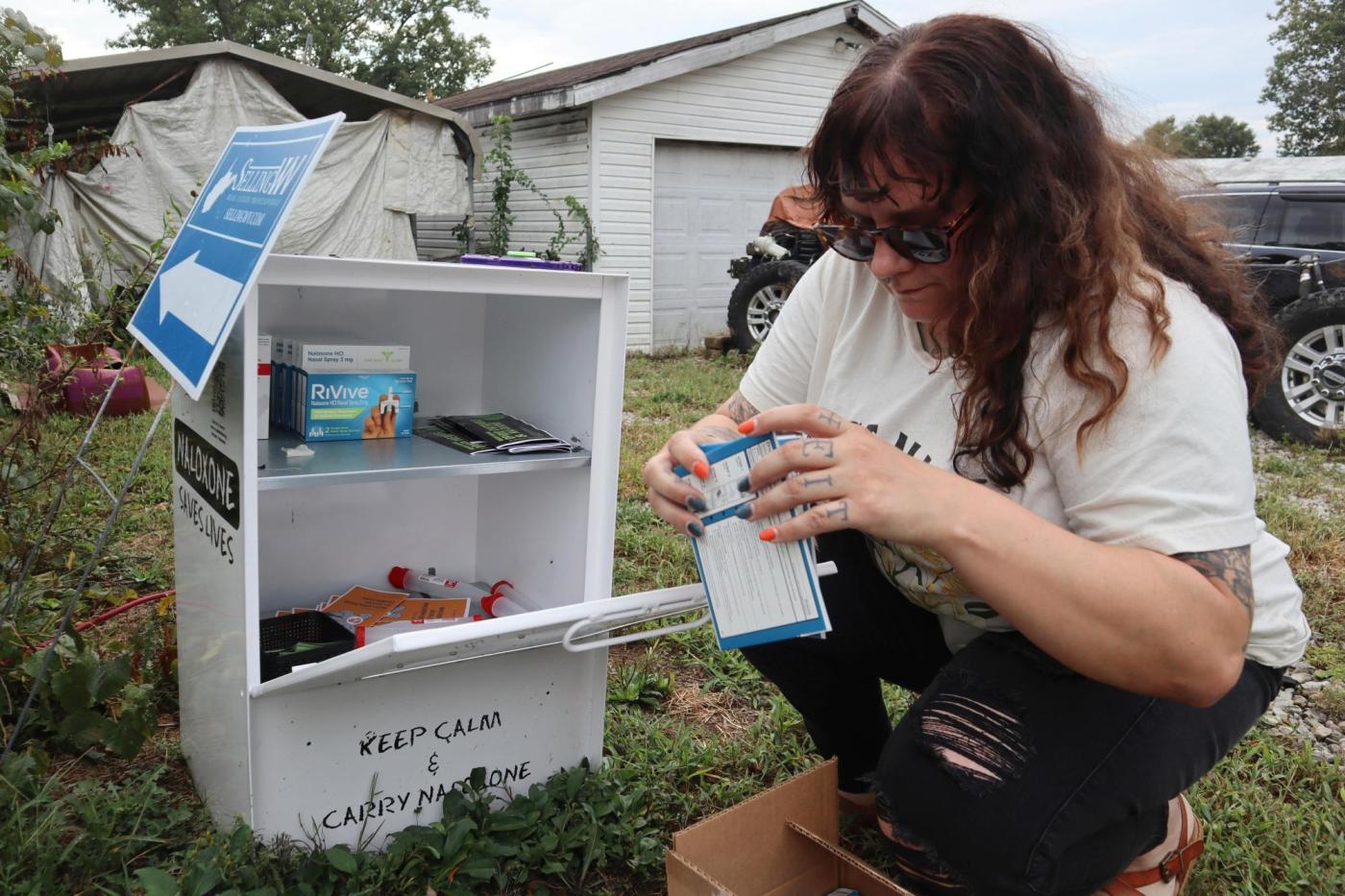
Tasha Withrow, a person in recovery and co-founder of harm reduction organization Project Mayday, refills a new naloxone distribution box in a residental neighborhood of Hurricane, W.Va. on Tuesday, Sept. 24, 2024. (AP Photo/Leah Willingham)

Such boxes — appearing in neighborhoods, in front of hospitals, health departments and convenience stores — are one way those supporting people with substance use disorder have sought to make Narcan, which can cost around $50 over the counter, accessible to those who need it most. Not unlike little free libraries that distribute books to anyone who wants one, the metal boxes used formerly as newspaper receptacles aren’t locked and don’t require payment. People can take as much as they think they need.

Advocates say the containers help normalize the medication — and are evidence of steadily reducing stigma around its use.

Sixty Narcan receptacles were distributed across 35 states in honor of Thursday’s “Save a Life Day” — a naloxone distribution and education event started by a West Virginia nonprofit in 2020. Containers were purchased from Card’s Texas-based Mechanism Exchange & Repair, which still serves newspaper customers but has expanded to manufacturing other products amid the newspaper industry’s decline.

“It’s fortunate and unfortunate,” said Card, who started making the Narcan containers over two years ago. “Fortunate for us that we’ve got something to build, but unfortunate that this is what we have to build, given how bad the drug problem is in America.”

A new naloxone distribution box sits in a residential neighborhood in Hurricane, W.Va. on Tuesday, Sept. 24, 2024. (AP Photo/Leah Willingham)

Opioid deaths were already at record levels before the coronavirus pandemic, but they skyrocketed when it hit in early 2020. The U.S. Centers for Disease Control and Prevention estimated there were about 85,000 opioid-related deaths in the 12 months that ended in April 2023. But since then, they fell. The CDC estimate for the 12 months that ended in April 2024 was 75,000 — still higher than any point before the pandemic.

The reasons for the decline are not fully understood. But it does coincide with Narcan, a medication that’s been hard to get in some communities, becoming available over the counter, as well as with the ramping up of spending of funds from legal settlements between governments and drugmakers, wholesalers and pharmacies.

The U.S. Food and Drug Administration approved use of Narcan to treat overdoses back in 1971, but its use was confined to paramedics and hospitals for decades. Narcan nasal spray was first approved by the FDA in 2015 as a prescription drug, and in March, it was approved for over-the-counter sales and started being available last September at major pharmacies.

“That took the barriers away. And that’s when we realized, ‘OK, now we need to increase access. How can we get naloxone into the communities?’” said Caroline Wilson, a West Virginia social worker and person in recovery who coordinated this year’s Save a Life Day.

Tasha Withrow, a person in recovery and co-founder of harm reduction organization Project Mayday, refills a new naloxone distribution box in a residental neighborhood of Hurricane, W.Va. on Tuesday, Sept. 24, 2024. (AP Photo/Leah Willingham)

Last year, all 13 states in Appalachia participated in the day spearheaded by West Virginia nonprofit Solutions Oriented Addiction Response. Community organizations in hundreds of counties table in parking lots, outside churches and clinics handing out Narcan and fentanyl test strips and training people on how to use it. They also work to educate the public on myths surrounding the medication, including that it’s unsafe to have in easily accessible places. Narcan has no effect on people who use it without opioids in their system.

This year, with the effort expanding to 35 states and a theme of “naloxone everywhere”, the group sent out 2,000 emergency kits containing one Narcan dose to be placed in locations like convenience store bathrooms or parks. The 60 tin newspaper boxes — which sell for around $350 apiece — were purchased with grants.

Aonya Kendrick Barnett’s harm reduction coalition Safe Streets Wichita installed one of the Kansas’ first Narcan receptacles — which she refers to as “nalox-boxes” — in February. The boxes, now sold by a few different companies, can look different, too. Some look like newspaper boxes, while others look like vending machines.

Since installing a vending machine Narcan container — which just requires a zip code be entered on the keypad to access the medication — it’s distributed around 2,600 packages a month.

“To say, ‘Hey, we have a 24-hour vending machine, come over here and come get what you need — no judgment,’ is so bold in this Bible belt state and it’s helping me break down the the stigma,” she said.

Tasha Withrow, a person in recovery and co-founder of harm reduction organization Project Mayday, refills a new naloxone distribution box in a residential neighborhood of Hurricane, W.Va. on Tuesday, Sept. 24, 2024. (AP Photo/Leah Willingham)

Kendrick Barnett said there’s no place for judgment when it comes to what she calls live-saving health care: “People are going to use drugs. It’s not our job to condemn or condone it. It’s our job to make sure that they have the necessary health care that they need to survive.”

The Save a Life Day box her organization received is going to go in front of their new clinic, scheduled to open in October.

In Eerie, Pennsylvania, 74-year-old stained glass artist Larry Tuite said he grew concerned seeing overdoses increasing in his city. He began leaving Narcan packages on the windowsills of 24-hour markets in town that sell products like pipes and rolling papers. He was shocked at how quickly they disappeared.

Related Articles

Health |


US health authorities need to play a larger role in cannabis policy, a new report says

Health |


Billions of people are missing these 7 key nutrients, study says

Health |


‘Living’ device that releases E. coli into bladder could treat UTIs, researchers say

Health |


It’s time to roll up sleeves for new COVID, flu shots

Health |


Suicidal ideation is terrifying and isolating. This survivor is ‘living proof’ recovery is possible.

“As many as I give out, I run through them really quickly,” said Tuite, who keeps cases of the drugs stacked along the walls of his studio apartment.

The Save a Life Day container, which he got permission to put outside one such store, has helped him to disperse even more Narcan. At least a dozen people have been saved by the medication he’s distributed, he said.

Tasha Withrow, a person in recovery who runs a harm reduction coalition based out of Putnam County, West Virginia, said Narcan wasn’t something she ever had access to when she was using opioids.

“People can just reach in and grab what they need — we didn’t have that back then,” she said, while stocking a container in a residential neighborhood earlier this week. “To actually see that there is some access now — I’m glad that we’ve at least moved forward a little bit in that direction.”

AP journalist Geoff Mulvihill contributed to this report.

Hoda Kotb is leaving NBC’s ‘Today’ show early next year

posted in: News | 0

By MARK KENNEDY

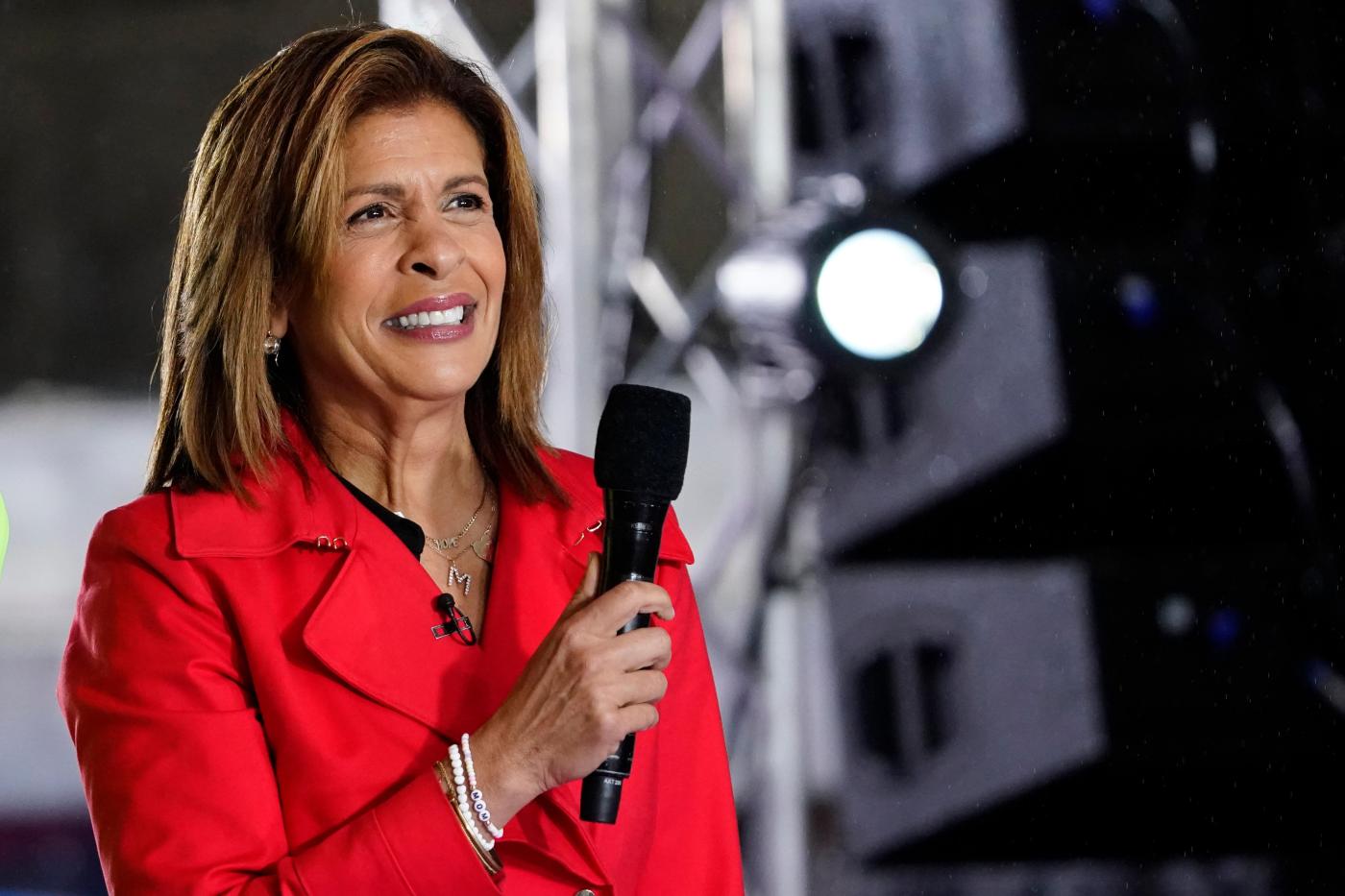
NEW YORK (AP) — Hoda Kotb, a fixture at NBC for more than two decades, says she will leave her morning perch on the “Today” show early next year, telling staffers “it’s time.”

In a memo to her team — and later in an emotional on-air reveal Thursday — Kotb said her 60th birthday this summer helped trigger the departure: “I saw it all so clearly: my broadcast career has been beyond meaningful, a new decade of my life lies ahead, and now my daughters and my mom need and deserve a bigger slice of my time pie.”

Kotb has co-anchored “Today” with Savannah Guthrie since 2018, filling in after Matt Lauer was fired amid sexual harassment allegations. She continued to co-host of the fourth hour of the morning show with Jenna Bush Hager, having previously hosted it alongside Kathie Lee Gifford. Kotb first joined NBC News as a correspondent for “Dateline” in 1998, and later joined “Today” in 2007.

Her daughters are Haley, 7, and Hope, 5.

Kotb was surrounded by her co-workers when she told viewers of her decision, saying, “This is the hardest thing in the world” and “I’ve been practicing so I wouldn’t cry, but anyway, I did.”

“We love you so much,” Guthrie, who has co-anchored “Today” with Kotb for more than five years, said with tears in her eyes. “And when you look around and see these tears, they’re love. You are so loved. We don’t want to imagine this place without you.”

Kotb’s goodbye note mentioned many of her co-workers, like Al Roker: “Savannah: my rock. Jenna: my ride-or-die. Al: my longest friend at 30 Rock.”

“Happily and gratefully, I plan to remain a part of the NBC family, the longest work relationship I’ve been lucky enough to hold close to my heart. I’ll be around. How could I not? Family is family and you all will always be a part of mine,” she wrote.

Related Articles

Movies & TV |


Column: Forget labels like ‘Dad TV,’ general audiences are broader than we think

Movies & TV |


‘The Penguin’ review: Colin Farrell takes on Gotham’s Scarface in HBO’s compelling gangland saga

Movies & TV |


Ready, set, bake: How to play your way through the next Great British Baking Show season

Movies & TV |


Happy 50th ‘SNL!’ Here’s a look back at the show’s very first cast

Movies & TV |


Swing-state TV viewership surged for the Trump-Harris debate