Tommies football running low on running backs

posted in: News | 0

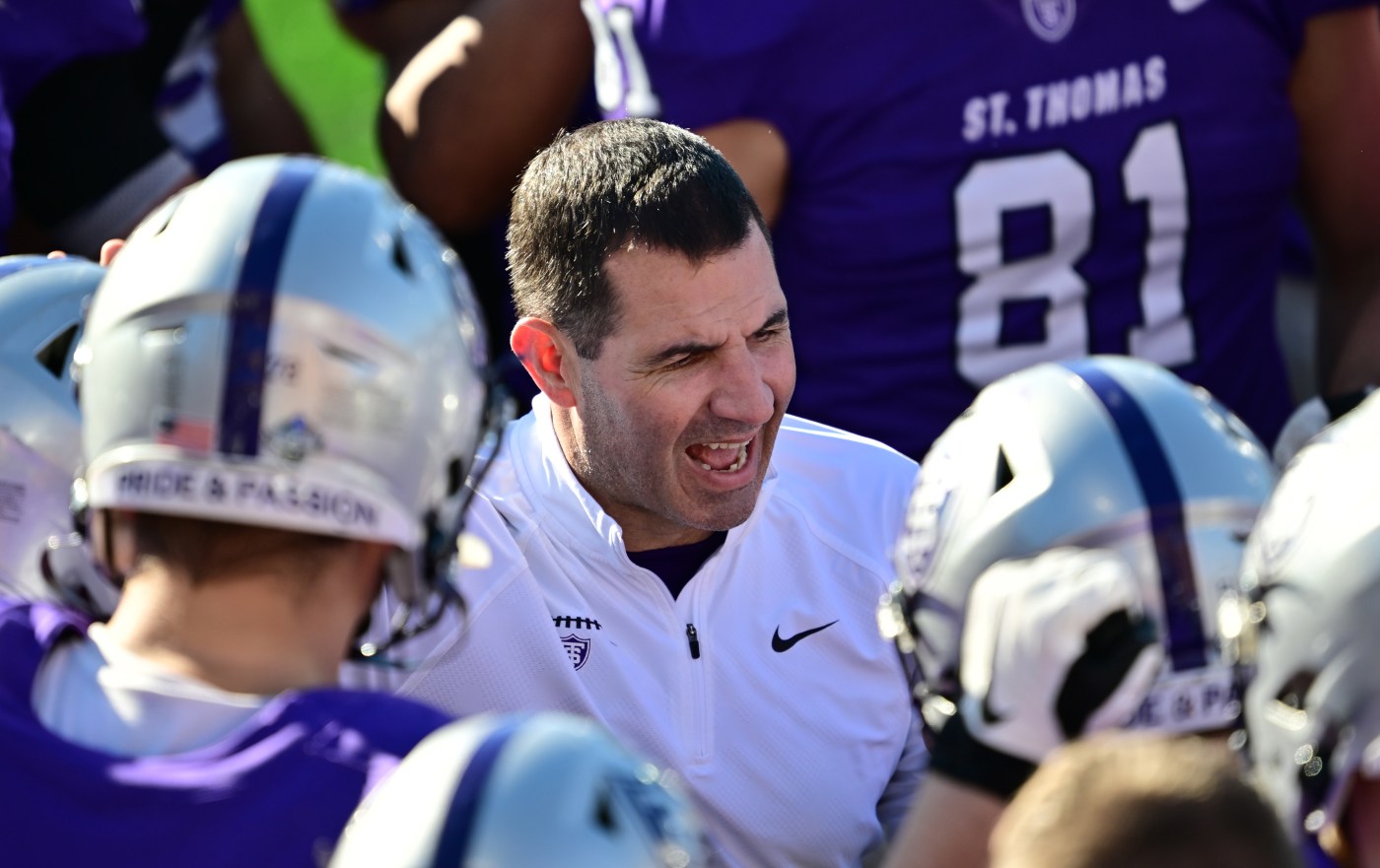
St. Thomas freshman running back Joe Koch was an unexpected hero last Saturday in the Tommies’ 24-14 victory over Black Hills State, stepping in for injured Gabe Abel and Hope Adebayo to rush for 95 yards in his first collegiate game.

His success did not come without a cost, however, and Tommies head coach Glenn Caruso said the 5-foot-11, 180 pound native of Menomonee Falls, Wis., was banged up in the game to the point that he’s not sure Koch will be available for Saturday’s game at Lindenwood (Mo.).

With Abel and Adebayo ruled out of the game, the Tommies (1-2) could be starting their fifth-string running back as they look to close out the nonconference portion of their scheduled.

The Tommies have sustained key injuries on both sides of the ball. Defensive tackle Emmanuel Olagbaju and cornerback Branden Smith are lost for the season. Wide receiver Jacob Wildermuth will miss his third consecutive game.

Freshman Marc Coy and junior Gus Theisen are the next two running backs on the depth chart. Caruso said the Tommies also could look at giving their fullbacks some carries from the halfback position.

The Tommies have a bye next week, and Caruso said he wasn’t sure if either Abel or Adebayo would be available when the Tommies open Pioneer Football League play at home against Stetson on October 5.

Speaking during the team’s media availability on Thursday, Koch talked as though he expected to start. With the Tommies struggling to throw the football, establishing the running game will be essential. Redshirt freshman Michael Rostberg will start his second consecutive game at quarterback. Caruso said he will have to play with a lot more consistency than he did last week.

“We need to be much more efficient with taking the Level 1 (short) routes when they’re giving them to us,” Caruso said. “And, being able to hit on the deep routes in a manner like we did two weeks ago against Northern Iowa.”

An effective running game will open things up in the passing game, and both Koch and Caruso are confident he can build on last week’s success.

“I felt like there were a couple of runs where I think I could have got it all,” Koch said. “But that’s where the coaching comes in, and that’s where I’ve got to do better.”

Noting that Koch did a good job of protecting the football in his first taste of collegiate action, Caruso believes Koch has a chance to emerge as a key contributor for the Tommies.

“Good speed and good lateral contact balance,” Caruso said. “It’s not just linear. Sometimes when young backs are fast, what’s sacrificed is their vision. On a couple of runs that he was able to pop to the edge, I was impressed with what he was able to see at that speed.”

Koch, who has dreams of one day playing in the NFL, mentioned New Orleans Saints running back Alvin Kamara (5-10, 215) as someone he tries to emulate on the field.

“He’s very twitchy — quick — and that’s what I try to resemble,” said Koch, who runs 4.47 in the 40-yard dash. “Just being quick on my feet, (use) my cutting ability.”

Koch tore the labrum in his right hip in the second game of his high school senior season. He managed to play through it before undergoing surgery after the season, but the injury limited his effectiveness.

Caruso believes the injury was the reason why Koch did not receive any other Division I offers.

“That’s been a calling card for us over the years — identifying a player that fits as a junior,” Caruso said. “So, when he’s injured his senior year, it doesn’t necessarily mean we’re not going to go on him.

“Over the years, we’ve had very good success with guys who weren’t able to play their senior years. We stayed on them when other schools dropped off.”

The intention entering the season was to redshirt Koch this season. It still could happen if his playing time is limited moving forward, but current circumstances suggest otherwise.

“If he continues to progress and we continue to need him, he could become one of those players who plays in every game,” Caruso said. “Even when other guys come back, you’re still going to need other running backs.

“On top of that, he does a really nice job on special teams, and that’s where we were able to see early that he was tough enough and athletic enough to play on this level.”

Tips to make your U.S. road trip less stressful

posted in: Adventure | 0

By Morayo Ogunbayo, The Atlanta Journal-Constitution

As the warm weekends begin to dwindle, there is no better way to finish up the season and explore a new part of the country than going on a road trip. A good drive can be an unforgettable experience where you grow closer to your fellow travelers and make memories in new places. A bad road trip, however, can be a time of confusion and bickering, leaving travelers wishing they had never left their house.

The difference between the two journeys comes from the planning. Whether you want to drive cross-country or just see a new part of your state, these tips can help your next trek go off without a hitch.

Book accommodations

During planning for the perfect road trip, the first step is picking all of the places where you would like to stop and planning accommodations.

It may seem like the smart move to book hotels day of, as to not contract yourself too tight of a schedule, but booking beforehand can be the difference between a smooth excursion and one that goes completely off the rails.

Related Articles

Travel |


Family travel 5: Now is the time to travel with toddlers, preschoolers

Travel |


Why cruise demand is even bigger now than pre-pandemic

Travel |


A siblings-only trip offers a way to expand adult relationships, but planning is key

Travel |


Travel: Palm Springs spa offers visitors a place rooted in tradition, healing and tranquility

Travel |


This California national park is ‘chill Yosemite,’ an outdoor wonderland without crowds

You can use BookingPriceline and Kayak to find the right hotels for your group.

Airbnb can be great also for finding more niche places to stay, especially in the less commercial areas you stop at. The website also has excursions put on by hosts that can be a great way to add some unexpected fun to your journey.

If your journey mostly involves camping or using an RV, do not think you can skip out pre-booking. Check out the RV sites and campsites you would like to stop at online, and book them before you leave if there is the option. If there is not a way to book before arrival, make sure to find a few similar options in the area in case your first choice is all booked.

Map out your route

It can be tempting to follow the country’s winding roads wherever they take you, but planning in advance the stops you would like to take and the routes you will take to get there is key to a good road trip.

Start by writing out all of the cities, parks and monuments you would like to see on the drive. Then, using a map, draw a loose route of the best ways to get from place to place. For the day of the actual drive, it is perfectly fine to use apps like Google Maps or Waze to get to your destinations, but it’s smart to plan a rough route in advance.

If paper maps are not your speed, use the Google Maps feature My Maps, which allows you to create your own route for a trip.

Stay safe

A road trip is a perfect time to get out of your comfort zone and have a real adventure. However, that does not mean safety can be thrown to the wayside.

Most important, stay safe while driving. Try to spend less than eight hours on the road each day, and if one day goes longer than expected, try to spend less than eight hours on the road the next day. If your driver wakes up one morning particularly tired, see if someone else can drive or delay your group’s start for the day. It can feel like you must stay on track to make the most of your time, however, safety on the road must always come first.

It is also important to maintain safety when in new areas. If the hotel you picked ahead of time looks different from the website, there is no shame in trying to find somewhere else to sleep.

Road trips are a time to try something completely different than the mundanity of work and home, and using these tips, your next adventure can be everything you dreamed it would be.

©2024 The Atlanta Journal-Constitution. Visit at ajc.com. Distributed by Tribune Content Agency, LLC.

Brian Flores has his fingerprints all over this Vikings defense

posted in: News | 0

The final seconds ticked off the game clock and the Vikings celebrated an improbable 2-0 start on the field at U.S. Bank Stadium. This time they had earned a 23-17 win over the San Francisco 49ers, proving without a doubt that that the 28-6 win over the New York Giants wasn’t a fluke.

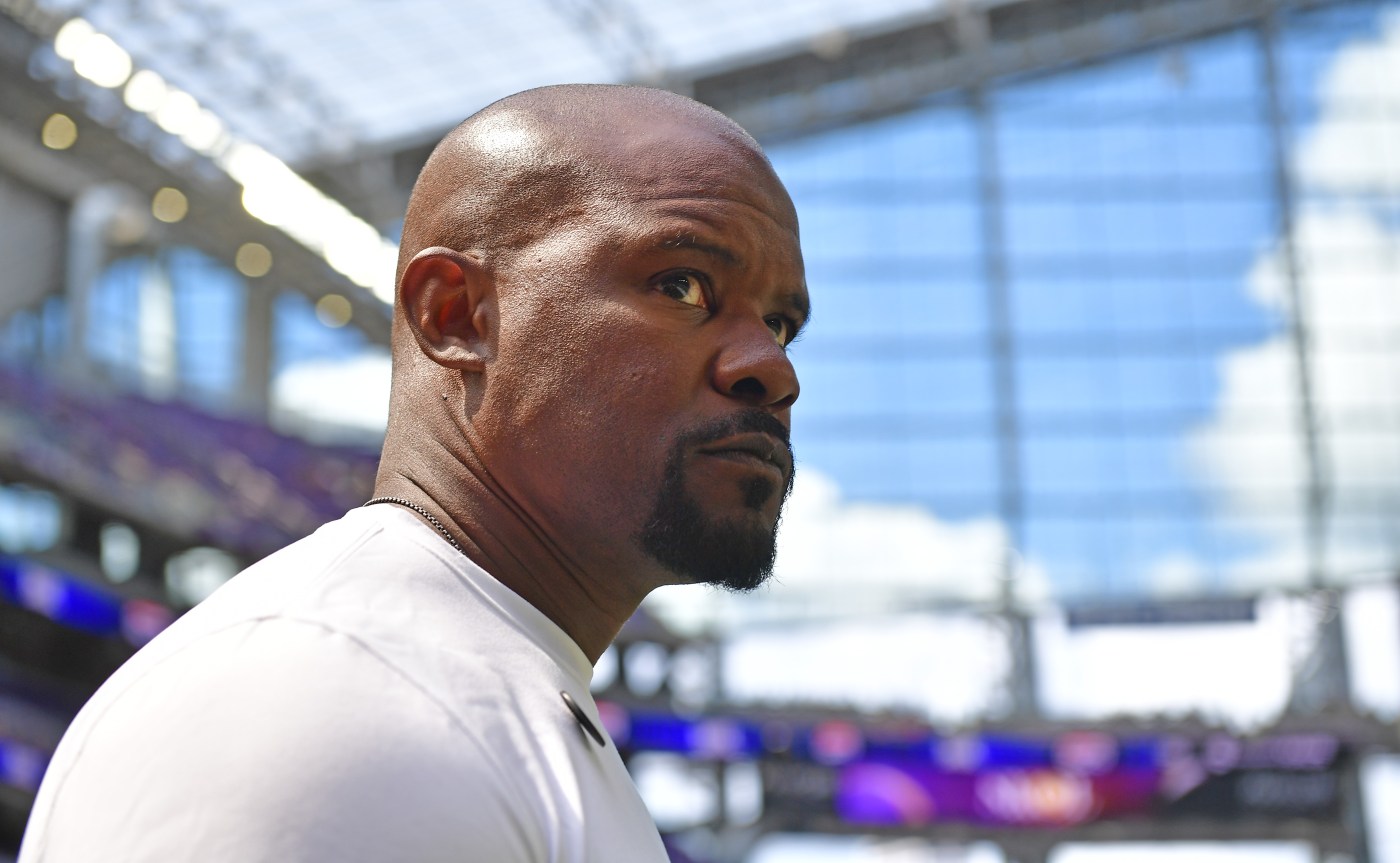
As players dapped up and swapped jerseys before heading their separate ways, 49ers quarterback Brock Purdy navigated the chaos before bumping into Vikings defensive coordinator Brian Flores. They shook hands and Purdy delivered a message to Flores, saying, “Your scheme is crazy.”

If it looked like he was seeing ghosts for prolonged stretches against the Vikings, Purdy’s comments to Flores postgame more or less provided confirmation. The different looks the Vikings presented on defense throughout the game made life miserable for him.

“The disguises and stuff can be tough,” Purdy said. “They just did a good job.”

The defensive dominance the Vikings have displayed during their 2-0 start is the personification of 1) the vision Flores put in place as soon as he arrived in Minnesota, and 2) the influence he has on roster construction as a whole.

His fingerprints are all over this Vikings defense.

After taking over an aging group in desperate need of a facelift, Flores entrusted some savvy veterans like ageless safety Harrison Smith to be an extension of him on the field, and the defense slowly started to show improvement.

All the while. Flores operated like a mad scientist on the sidelines for much of last season, experimenting with every part of the defense, fitting different pieces together to figure out what he felt he needed heading into this season.

The blueprint came into focus through various conversations between Flores and head coach Kevin O’Connell. There was also input from assistant head coach Mike Pettine, defensive backs coach Daronte Jones and a handful of others.

“We kind of build out this vision of what we would like our defense to look like,” Flores said. “We bring that vision to the personnel department, and obviously they’ve got a vision of their own, and we kind of collaborate from there.”

The results of that collaboration came in free agency as general manager Kwesi Adofo-Mensah went on a spending spree intended to help revamp the defense. In the first week alone, the Vikings made a big splash, signing edge rusher Jonathan Greenard, edge rusher Andrew Van Ginkel, linebacker Blake Cashman, defensive tackle Jerry Tillery and finally, cornerback Shaq Griffin.

“I knew it was going to be amazing,” Greenard said. “It was an easy decision for me.”

All of those additions have immediately stepped into starting roles for the Vikings, as has future Hall of Fame cornerback Stephon Gilmore, who signed late in the training camp largely because he wanted to play for Flores.

“I know the defense he coaches,” Gilmore said. “I wanted to be a part of that.”

Not that Flores is interested in taking credit for anything that happens on the field. Though his background in scouting has helped curate the specific pieces necessary to be successful, Flores always makes sure to defer credit to his players.

“It’s not my defense,” Flores said. “It’s their defense.”

That said, Flores is the designer of it all, and the genius exists in how the Vikings can so effortlessly create confusion. They can bluff an exotic blitz package at the line of scrimmage, for example, then drop into coverage without missing a beat.

Essentially, Flores can make it look like one thing before the snap, then have it turn into something completely different after the snap. The shapeshifting has been a hallmark of Flores throughout his career, and he has taken it to the next level with Vikings.

“The best part about it is seeing how it stresses out offenses,” Cashman said. “You can see it on their faces. They don’t know who’s coming on a blitz and who’s dropping into coverage. That’s what makes it fun for us.”

It takes a certain type of player to operate in the system, however, and that’s why Flores seems to value versatility above anything else. He loves that he can have safety Josh Metellus line up on the interior of the defensive line, while Van Ginkel drops into coverage and Smith serves as a rover in the middle of the field.

“I think we’re special,” Van Ginkel said. “We’ve got guys all over the place that can make plays. Just across the board we’ve got playmakers and we have depth. The sky is the limit for us.”

It’s a position-less defense in a lot of ways, and it could make the Vikings incredibly difficult to play against on a weekly basis.

“We just have the luxury,” O’Connell said. “We’ve got a bunch of guys that can all play. and I want to credit Flo for how he’s using them.”

As he reflected on what the Vikings have been able to do on defense so far, safety Cam Bynum said an underrated part of the operation is that Flores has targeted selfless players in free agency who don’t care about their individual stats.

“Nobody came in with an ego,” Bynum said. “They came in humble and ready to learn. That made it easy for them to show their talent. Now we’re seeing what it can look like.”

It was a similar sentiment from Metellus. It goes beyond the infusion of talent on defense.

“It’s like they knew exactly what this team was built on and they went and got guys that fit the exact mold,” Metellus said. “They were brothers instantly. The connection is ever growing. I’m excited to see what we can do with this.”

So is Flores.

“To watch it come to life has been pretty cool,” he said. “Now we’ve got to continue to build.”

Related Articles

Minnesota Vikings |


Vikings vs. Texans: What to know ahead of Week 3 matchup

Minnesota Vikings |


Texans at Vikings picks: We vote 3-0 for Vikings’ 3-0 start

Minnesota Vikings |


The Loop NFL Picks: Week 3

Minnesota Vikings |


Revisiting the Stefon Diggs era and the trade that helped the Vikings land Justin Jefferson

Minnesota Vikings |


Forget the Lambeau Leap. Vikings running back Aaron Jones has the Bank Vault.

The YIMBY push for multifamily housing hits a ‘nope’ from homeowners

posted in: News | 0

By Robbie Sequeira | Stateline.org

When Minneapolis, then Oregon, then other local and state governments began stripping away exclusive single-family-home zoning over the past five years to allow the construction of multifamily housing, many development advocates predicted the start of a pro-YIMBY revolution.

But the “yes-in-my-backyard” movement has stumbled even before it’s really gotten started.

In court challenges around the country, opponents have cited spikes in traffic, strains to infrastructure, displacement of low-income residents, hits on property values and changes to neighborhood character. Multifamily zoning advocates, however, counter that opponents are resisting changes that will yield broader societal benefits.

The debates are challenging elected leaders, planning specialists, homebuilders and advocates, pitting long-established homeowners against a system desperate to get a handle on the nation’s growing crisis of housing affordability and homelessness.

“People want to maintain their neighborhood character, but it should be about ensuring quality of life for everyone,” said Natali Fani-Gonzalez, a Democratic member of the Montgomery County Council in Maryland who has endorsed changes to zoning laws. “You’re part of a community … you don’t own it. We need to evolve with society.”

‘I dread the possibility’

The most recent ruling arrived this month, when the Montana Supreme Court issued a decision paving the way for a pair of state laws to take effect over the objections of homeowners.

In 2023, Montana lawmakers were lauded for a bipartisan effort dubbed the “Montana Miracle,” a collection of measures that overrode local zoning ordinances to encourage more multifamily homes and accessory dwelling units, or ADUs — smaller secondary cottages or in-law apartments within or on a lot of a single-family home. The laws, championed by Republican Gov. Greg Gianforte, were supposed to go into effect Jan. 1, 2024.

But in December, a consortium of single-family homeowners from across the state called Montanans Against Irresponsible Densification, or MAID, filed a complaint. The group argued that the state had unconstitutionally taken away homeowners’ property rights and would wrest local control from cities and counties. The lawsuit warned, in part, that the laws meant new construction could begin down the block without notice.

“I dread the possibility of waking up one morning and finding that one of my neighbors has sold her property to a developer who is then erecting a multi-unit building or a duplex, or an accessory dwelling unit right next to our nice and carefully maintained single-family dwelling,” wrote Glenn Monahan, a Bozeman resident and managing partner of MAID, in an affidavit filed with the initial lawsuit and quoted in the court’s ruling.

“If such development aimed at increasing density in my neighborhood happens, I believe it will seriously and adversely affect the economic value of my property,” Monahan wrote. “More important than economic value is the moral, aesthetic neighborhood values that my wife and I share with the neighbors …”

Representatives for MAID did not return calls for comment.

Wealthier and whiter

Berkeley, California, first established a residential zone exclusively for single-family homes in 1916 — just as racist covenants banning home sales to non-whites were gaining steam nationally and other workarounds to preserve neighborhood segregation were being tested.

Today, around 75% of residential land in the United States is zoned exclusively for single-family homes. These neighborhoods are typically wealthier and whiter, according to a 2023 research report by the Urban Institute.

In an aerial view, construction at a multifamily housing development is seen on Aug. 30, 2023, in Los Angeles. According to data from the California Association of Realtors, housing affordability dropped to a 16-year low in California in the second quarter of this year amid high-interest rates. According to the figures, just 16 percent of people in the state are able to afford to purchase an existing median-priced single-family home. (Mario Tama/Getty Images/TNS)

Minneapolis is credited as the first major U.S. city to enact substantial changes to increase density when it abolished single-family-only zoning citywide in 2019, allowing up to three dwelling units on any residential lot.

That same year, the Oregon legislature passed a law with two so-called upzoning provisions: allowing duplexes in single-family zoning areas of cities with at least 10,000 residents, and allowing townhouses, triplexes and fourplexes in cities of at least 25,000 residents.

Upzoning encompasses a range of policy tools — such as building more “missing middle” housing in the range between single-family homes and apartment buildings, focusing on transit-oriented development, lifting parking requirements, and increasing floor-to-area ratios. But researchers and planners told Stateline that it can take years for these policy changes to address current housing needs or undo the harms of restrictive zoning.

“The largest challenge is that zoning reform takes a really long time to implement. From the start of reform to actually seeing effects, it takes about 10 years,” said Stephen Menendian, assistant director and director of research at the University of California, Berkeley’s Othering & Belonging Institute.

“Even the Minneapolis reforms, which happened at warp speed, will take another four years to fully assess the effects,” Menendian said. “It’s been less a revolution and more of a slow shift.”

UC Berkeley’s Zoning Reform Tracker, last updated in November, provides an overview of municipal zoning reform efforts across the U.S., documenting 148 initiatives in 101 municipalities over a span of 17 years.

Other local governments have passed ordinances taking aim at single-family-only zoning in various ways, including Austin, Texas; the city of Alexandria and Arlington County in Virginia; Sacramento, California; and Portland, Oregon. Many have been challenged in court.

In Minneapolis, the 2040 plan, as the city’s long-term planning blueprint is known, was held up after its passage in 2019 by years of environmental lawsuits and back-and-forth rulings, delaying implementation.

Finally, state lawmakers in May passed a bill exempting comprehensive housing plans from environmental review, a measure aimed squarely at preserving the 2040 plan.

Even then, a county judge issued an injunction, forcing the city to halt parts of the plan and revise it.

Talking it out

Diana Drogaris, outreach coordinator for the National Zoning Atlas, a research organization that works to demystify zoning laws across the U.S., thinks city leaders are improving their communication with residents during public hearings and input sessions. However, she notes that leaders must balance transparency with managing valid fears of zoning changes.

“A zoning change is going to have an effect on the public. It will affect the store they go to, their commutes, what type of resources are available,” Drogaris said. “And I think community leaders are getting better at having these conversations.

“The public doesn’t need to know every nook and cranny of these outdated codes,” she said, “but enough to understand how that one zoning change is going to change how that land is being used in their community.”

Menendian argues that misconceptions on both sides — among housing advocates and concerned community members — fuel much of the anger. “There’s a lot of misnomers about zoning reform,” he said.

Homeowner groups also are expected to challenge a recent series of upzoning changes in Austin, approved at the end of 2023 and this spring. In 2022, a group of citizens successfully sued the city over a handful of ordinances designed to streamline housing development.

When a lawsuit is filed, work toward new housing developments may stop. California enacted a law in 2021 allowing property owners to split their lots and build two new homes in certain cities. In April, a Los Angeles judge ruled the law unconstitutional. In June, the state filed its notice of appeal.

Meanwhile, in Northern Virginia just outside the District of Columbia, the city of Alexandria and Arlington County, which also passed zoning changes last year, are facing their own legal challenges. The full impact of Alexandria’s zoning overhaul — even if it clears its legal challenges — may not do much to affect housing outcomes. According to the city manager’s estimates, allowing up to four units in zones that are currently limited to single-family dwellings would only create a net new 178 units over 10 years.

‘Absolutely … some sort of backlash’

This fall, both Montgomery County, Maryland, and Berkeley, California, will be considering upzoning proposals, following a summer filled with contentious public hearings.

Related Articles


US mortgage rates drop to two-year low ahead of Fed rate cut


Experts: How Harris and Trump’s plans could impact housing affordability


St. Paul on pace for worst residential construction season in more than a decade


Here’s a look at housing that opened this year in St. Paul — and what’s on hold


Troubled Lowry Apartments sold for $7 million to mortgage lender

Fani-Gonzalez, the Montgomery County councilmember, said that modernizing the county’s zoning, in conjunction with other policies such as rent stabilization, will help keep residents in their homes while creating new housing to accommodate the growth associated with being just outside Washington, D.C.

“We need more housing, but we cannot get stuck with building cookie-cutter houses that only certain folks can actually afford,” said Fani-Gonzalez.

In California, the city of Berkeley’s proposal to end exclusionary zoning in its neighborhoods is part of a broader effort to undo its racist legacy. The Berkeley City Council took its first steps in examining that legacy by denouncing the racist history of single-family zoning in 2021, a largely ceremonial move that gained steam when the city council asked the city for a report on missing-middle housing.

The city’s latest upzoning plan was scaled back this summer after a five-hour public hearing.

Lori Droste, a Berkeley councilmember from 2014 to 2022, told Stateline that she had been advocating for major upzoning changes since 2016 but struggled to get the votes. What changed, she said, was linking the need for zoning changes to the national consciousness raised by 2020 protests around systemic racism and racial injustice.

“Zoning reform is going to take time. It’s probably going to take 20 years before anyone notices real changes. But if we don’t start now, the housing crisis will only get worse,” she said.

When asked by Stateline if she expects any legal action if the upzoning proposal is successful, Droste responded, “I imagine there will be. I’m not in the city attorney’s office, but absolutely there’s going to be some sort of backlash.”

Stateline is part of States Newsroom, a national nonprofit news organization focused on state policy.