
FBI finds violent crime declined in 2023. Here’s what to know about the report

posted in: Politics | 0

By ALANNA DURKIN RICHER, Associated Press

WASHINGTON (AP) — Violent crime in the U.S. dropped in 2023, according to FBI statistics that show a continued trend downward after a coronavirus pandemic-era crime spike.

Overall violent crime declined an estimated 3% in 2023 from the year before, according to the FBI report Monday. Murders and non-negligent manslaughter dropped nearly 12%.

Violent crime has become a focal point in the 2024 presidential race, with former President Donald Trump recently claiming that crime is “through the roof” under President Joe Biden’s administration. Even with the 2020 pandemic surge, violent crime is down dramatically from the 1990s.

Here’s what to know about the FBI’s report and the state of crime in the U.S.:

_____

The numbers

Crime surged during the coronavirus pandemic, with homicides increasing nearly 30% in 2020 over the previous year — the largest one-year jump since the FBI began keeping records. The rise defied easy explanation, though experts said possible contributors included the massive disruption of the pandemic, gun violence, worries about the economy and intense stress.

Violent crime across the U.S. dipped to near pre-pandemic levels in 2022, according to the FBI’s data. It continued to tick down last year, with the rate falling from about 377 violent crimes per 100,000 people to in 2022 to about 364 per 100,000 people in 2023. That’s just slightly higher than the 2019 rate, according to Deputy Assistant Director Brian Griffith of the FBI’s Criminal Justice Information Services Division.

“Are we looking at crime rates at a return to pre-pandemic levels? I think a reasonable person would look at that and say, ‘Yes, that’s what has happened,’” Griffith said in an interview with The Associated Press.

Law enforcement agencies in the biggest municipalities in the U.S. — communities with at least 1,000,000 people — showed the biggest drop in violent crime last year — nearly 7%. Agencies in communities between 250,000 and 499,999 people reported a slight increase — 0.3%— between 2022 and 2023.

Rapes decreased more than 9% while aggravated assault decreased nearly 3%. Overall property crime decreased more than 2%, but motor vehicle theft shot up nearly 13%. The motor vehicle theft rate — nearly 319 per 100,000 people — was the highest last year since 2007.

The limitations of the FBI’s data

The FBI collects data through its Uniform Crime Reporting Program, and not all law enforcement agencies in the U.S. participate. The 2023 report is based on data from more than 16,000 agencies, or more than 85 percent of those agencies in the FBI’s program. The agencies included in the report protect nearly 316 million people across the U.S. And every agency with at least 1 million people in its jurisdiction provided a full year of data to the FBI, according to the report.

“What you’re not seeing in that number are a lot of very small agencies,” Griffith said.

Other crime reports

The FBI’s report is in line with the findings of the nonpartisan Council on Criminal Justice, which earlier this year analyzed crimes rates across 39 U.S cities, and found that most violent crimes are at or below 2019 levels. That group found there were 13 percent fewer homicides across 29 cities that provided data during the first half of 2024 compared the same period the year before.

On the campaign trail, Trump has cited another recent Justice Department survey to suggest the crime is out of control under the Biden administration.

That National Crime Victimization Survey, released earlier this month, shows that the violent crime victimization rate rose from about 16 per 1,000 people in 2020 to 22.5 in 2023. But the report notes that the rate last year was not statistically different from the rate in 2019 — when Trump was president. And the rate has declined dramatically overall since the 1990s.

The FBI’s report and the National Crime Victimization Survey use different methodologies and capture different things.

The victimization survey is conducted every year through interviews with about 240,000 people to determine whether they were victims of crimes. While the FBI’s data only includes crimes reported to police, the victimization survey also aims to capture crimes that were not.

Because it’s done through interviews with victims, the victimization survey doesn’t include data on murders. And it only captures crimes against people ages 12 and over.
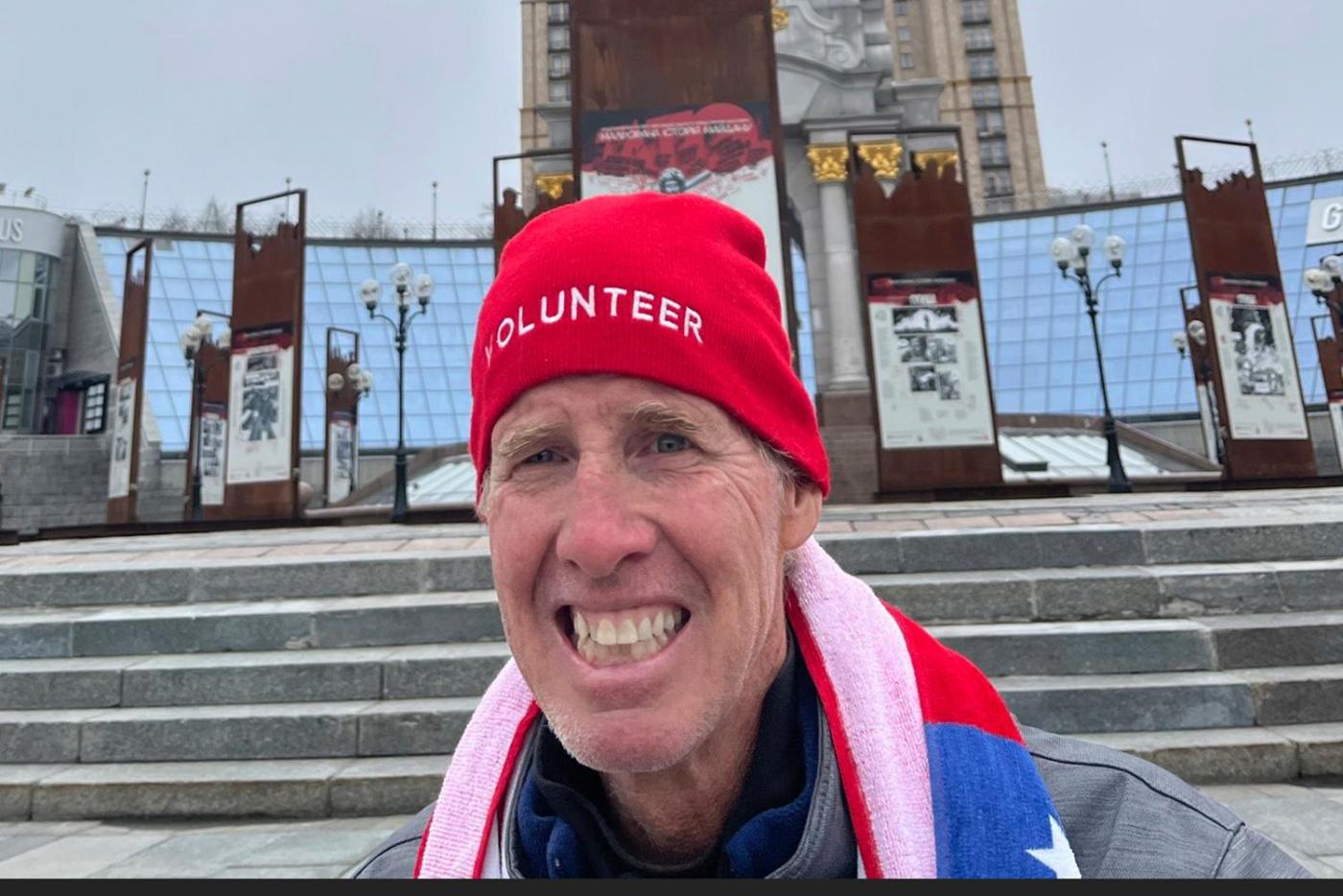

Feds: Man accused in apparent assassination attempt left note indicating he intended to kill Trump

posted in: News | 0

By ERIC TUCKER and ALANNA DURKIN RICHER, Associated Press

WASHINGTON (AP) — The man accused in the apparent assassination attempt of Donald Trump at a golf course in Florida left behind a note saying that he intended to kill the former president and kept in his car a handwritten list of dates and venues where Trump was to appear, the Justice Department said Monday.

The new allegations were included in a detention memo filed ahead of a hearing Monday at which the Justice Department was expected to argue that 58-year-old Ryan Wesley Routh should remain locked up as the case moves forward.

The details are meant to buttress prosecutors’ assertions that Routh is a threat to public safety with a premeditated plan to kill Trump — a plot officials say was thwarted by a Secret Service agent who spotted a rifle poking out of shrubbery on the West Palm Beach golf course where Trump was playing.

The note was placed in a box dropped off months earlier at the home of an unidentified person who did not open it until after last Sunday’s arrest. The box also contained ammunition, a metal pipe, building materials, tools, phones and various letters. The person who received the box and contacted law enforcement was not identified in the Justice Department’s detention memo.

One note, addressed “Dear World,” appears to have been premised on the idea that the assassination attempt would be unsuccessful.

“This was an assassination attempt on Donald Trump but I failed you. I tried my best and gave it all the gumption I could muster. It is up to you now to finish the job; and I will offer $150,000 to whomever can complete the job,” the note said, according to prosecutors.

An attorney for Routh didn’t immediately respond to an email seeking comment Monday morning.

Cellphone records cited by the Justice Department indicate Routh traveled to West Palm Beach from Greensboro in mid-August, and that he was near Trump’s golf club and the former president’s Mar-a-Lago residence “on multiple days and times” between August 18 and the day of the apparent attempted assassination.

He was arrested on Sunday afternoon after a Secret Service agent who was scoping the Trump International Golf Club for potential security threats saw a partially obscured man’s face, and the barrel of a semiautomatic rifle, aimed directly at him. The agent fired at Routh, who sped away before being stopped by officials in a neighboring county.

The Secret Service has said Routh did not fire any shots and never had Trump in his line of sight.

The Justice Department also said Monday that authorities who searched his car found six cellphones, including one that showed a Google search of how to travel from Palm Beach County to Mexico.

They also found a list with dates in August, September and October and venues where Trump had appeared or was scheduled to, according to prosecutors. A notebook found in his car was filled with criticism of the Russian and Chinese governments and notes about how to join the war on behalf of Ukraine.

The detention memo also cites a book authored by Routh last year in which he lambasted Trump’s approach to foreign policy, including in Ukraine. In the book, he wrote that Iran was “free to assassinate Trump” for having left the nuclear deal.

Routh is charged with illegally possessing his gun in spite of multiple felony convictions, including two charges of possessing stolen goods in 2002 in North Carolina, and with possessing a firearm with an obliterated serial number. More serious charges are possible in the weeks ahead.

Who is Anura Kumara Dissanayake, Sri Lanka’s new Marxist president?

posted in: News | 0

By BHARATHA MALLAWARACHI, Associated Press

COLOMBO, Sri Lanka (AP) — Marxist politician Anura Dissanayake won Sri Lanka’s presidential election over the weekend, dealing a blow to a political old guard that has been widely blamed for the unprecedented economic crisis that hit the South Asian island nation two years ago.

Dissanayake, whose pro-working class populist campaign won him youth support, secured victory over opposition leader Sajith Premadasa, the runner up; and incumbent President Ranil Wickremesinghe, who took over the country two years ago after its economy hit bottom.

Dissanayake is the leader of National People’s Power alliance, and of the Janatha Vimukthi Peramuna, or People’s Liberation Front, a Marxist political party that waged two unsuccessful armed insurrections in 1970s and 1980s to capture power through socialist revolution.

Early interest in politics

Born on Nov. 24, 1968 into an ordinary family in a paddy-growing central part of Sri Lanka, Dissanayake was politically active from his school days, taking part in student demonstrations against an agreement with India to grant a degree of self rule to Sri Lanka’s Tamil minority in an effort to resolve the demands for autonomy that later erupted into a decades-long civil war.

Dissanayake political involvement was further sharpened when he entered university to read for his science degree and joined the Socialist Students’ Union, the student wing of the JVP, which had already staged one armed insurrection in 1971 before giving up arms and entering politics.

In 1987, the JVP started its second armed insurrection after the government banned the movement, aiming at overturning the deal with India and overthrowing the government. Dissanayake went underground as the government stepped in to violently crush the insurrection, killing the group’s leader Rohana Wijeweera and nearly all of its top members.

Several thousands were killed by the JVP and government forces and their agents in the course of the insurgency and its suppression.

Parliamentary politics

Dissanayake entered public politics in 1993, working to rebuild the party under a new leader-in-exile, Somawansa Amarasinghe. The party won its first seat in Parliament in 1994, signalling its re-entry into democratic politics.

Dissanayake became national organiser of the Socialist Students’ Union in 1997 and the same year, he was added to to the Central Committee of the JVP. One year later, he joined the party’s politburo.

Dissanayake was elected to Parliament in 2000, and when the JVP entered an alliance with President Chandrika Kumaratunga, he briefly served as agriculture and irrigation minister.

That alliance was formed to oppose a cease-fire agreement signed between then-Prime Minister Ranil Wickremesinghe and the now-defeated Tamil Tiger rebels to resolve the separatist conflict that had blown into a full scale civil war.

Later, Dissanayake and the JVP backed former President Mahinda Rajapaksa to militarily defeat the rebels in 2009.

He was elected JVP leader in 2014, after a party schism in which a radical left wing broke off to form a new party.

A new coalition

Having realised that it was not possible to come to power through his party alone, Dissanayake formed the NPP in 2019, bringing together 21 groups including political parties, youth groups, women’s groups, trade unions and other civil society groups.

Since the formation of the coalition, Dissanayake has moved away from his far leftist stance. Although he remains head of a Marxist party, he now says that he supports a free market economy.

He ran for president as the head of the NPP for the first time in 2019, losing to Gotabaya Rajapaksa, who was forced to flee two years later because of protests driven by the country’s economic crisis.

Vows to end austerity and corruption

Dissanayake enters office with a raft of promises to improve standards of living and clean up government.

His main campaign theme was accountability, promising that politicians and officials will be held responsible for their actions. He’s also promised to end corruption and privileges for politicians and retired presidents.

But supporters are also counting on him to ease up on the punishing austerity imposed by the country’s deal with the IMF. He’s promised to keep the deal alive with changes, given its importance to the ongoing economic recovery. He’s also pledged to encourage local businesses instead of relying solely on foreign investments.

For the country’s Tamil minority, Dissanayake’s election offers little hope. During the campaign, he rejected devolving more power to the north and east, where most Tamils live, and investigating incidents during the civil war that U.N. investigators said could amount to war crimes. Tens of thousands of Tamil civilians were killed during the final months before the Tamil Tiger rebels’ defeat.

Readers and writers: Two poetry collections, and a biography to start your ‘Gatsby’ celebration

posted in: News | 0

Emilie Buchwald comes from the literary world. Mark Connor from the boxing ring. These two Minnesota poets from very different backgrounds debut their new collections this week. And we start celebrating the 100th anniversary in 2025 of F. Scott Fitzgerald’s novel “The Great Gatsby” with a look at a new book about one of St. Paul’s favorite sons.

(Courtesy of Nodin Press)

“Incandescent”: by Emilie Buchwald (Nodin Press, $17)

I dissolve aspirin in clean water/cut back last week’s flowers,/vibrant tenants of the purple vase,/offering them another day, or two or three.

And what might I cut back,/and what might I take in/to linger in sun and air?  — “Everything Wants to Live” from “Incadescent”

Emilie Buchwald (Courtesy of Milkweed Editions)

Emilie Buchwald has returned to poetry, one of her first loves, with “Incandescent,” taking readers from childhood to intimacy between mature couples. It is Buchwald’s first published collection since “The Moment’s Only Moment” in 2016.

Buchwald has been an editor, a teacher and an award-winning children’s author and nonfiction author as well as a poet. She had an outstanding career as co-founder/publisher of Milkweed Editions literary publishing house. During her years at Minneapolis-based Milkweed she received some of the highest literary awards, including the Minnesota McKnight Distinguished Artist Award, the Minnesota Book Awards Kay Sexton Award and the Ivan Sandrof Lifetime Achievement Award from the National Book Critics Circle. After retirement in 2003, Buchwald and her daughter Dana launched the Gryphon Press, dedicated to publishing picture books that help children understand the human-animal bond.

Minnesota poet Connie Wanek (“Rival Gardens: New and Selected Poems”) calls Buchwald’s collection “luminous” and writes that many of the poems are spare and beautifully crafted and “rich with soul-nourishing images and eternal themes.” She picks out the poem Motivation as one that will stick with readers always, in which a bird is perched on a fake branch of a fake tree on a balcony but is still singing. Buchwald writes: “the perch may not matter/only the desire to sing.” In “Making Bread” Buchwald condenses years of experience into seven short lines.

During her 24 years at Milkweed Editions, Buchwald published influential Minnesota nature poets such as Bill Holm, John Caddy and Paul Gruchow, so it’s not surprising nature runs through her new collection, from rosebud trees to ravens.

Buchwald’s collection “The Moment’s Only Moment” won a Benjamin Franklin award from the Independent Book Publishers Association and her poems have been published in national journals. She taught poetry at the Loft Literary Center and edited three poetry anthologies. Her award-winning children’s books are “Gildaen,” “Floramel and Esteban” and, through Gryphon Press, “Buddy Unchained.”

Nodin Press and the University of Minnesota Libraries Literary Archives are hosting Buchwald’s launch of “Incandescent” with a free reading at 2 p.m. Saturday at Elmer L. Andersen Library, 222 21st Ave. S., Mpls.

“It’s About Time (Millions of Copies Sold for Dad)”: by Mark Connor (Connemara Patch Press, $14.99)

Mark Connor (Courtesy of the author)

“He’s the last badass Irish boxer in St. Paul.”

That’s the way poet Danny Klecko describes Mark Connor and Connor’s debut book “It’s About Time.” Although this collection has poetry in it, Connor’s insightful and personal essays about growing up Catholic in St. Paul offer a mini-history of the days when local Irish-Americans described themselves by the parish in which they worshipped. Connor writes that he is the product of a “mixed marriage” since his dad belonged to the Irish parish of St. Columba in St. Paul and his mom was from Holy Rosary “over the border, in South Minneapolis.”

Connor is a poet pugilist who began boxing at 10. He is a former Upper Midwest Golden Gloves lightweight champion who has trained amateur, professional, competitive and recreational boxers since 2003 and works at the Element Gym in St. Paul. He’s also written articles about boxing and Minnesota boxers since the 1990s.

In this collection of poetry/essays Connor writes everything from tender tributes to lost loves and affectionate memories of his father. He had lots of jobs, including being a counselor at Ain Dah Yung, a facility for Native American youth that took him into friendships with people in the Native community, where he found a spirituality that matched his own.

Earlier this year Connor received the $1,000 Irish Network Minnesota Bloomsday Literary Award for this collection, from which he’ll read at 8 p.m. Tuesday at The Dubliner Pub, 2162 W. University Ave., hosted by Klecko and the Bards of St. Paul with poet Erica Christ. Its free and open to the public.

(Courtesy of University of Minnesota Press)

“F. Scott Fitzgerald: A Composite Biography”: edited by Niklas Salmose and David Rennie (University of Minnesota Press, $29.95)

If you are a devotee of F. Scott Fitzgerald’s writing you will find new and interesting perspectives about him and his work in this collection of 23 essays by writers and scholars who look at this complicated man’s career, his fraught marriage to Zelda, and his milieu in two-year chapters, giving a clear, linear picture of his life from birth in 1896 to his death in 1940. University of Minnesota Press calls this a new way of “grouping together” biographical materials and perspectives.

Minnesota Fitzgerald scholar Dave Page writes the chapter on 1908-1909, when Fitzgerald’s parents moved back to St. Paul from Buffalo, N.Y., and Scott made lifelong friends who lived in and around Summit Avenue. Brian Mangum, English professor at Virginia Commonwealth University, writes about 1922-1923, the year after the Fitzgeralds left St. Paul with their baby, Scottie. Magnum reminds us that the Jazz Age of flappers and gin, which Fitzgerald invented, peaked in ’22. He writes that this was the year of Fitzgerald’s early success, but it didn’t last, pointing out that in Fitzgerald’s 1931 retrospective essay “Echoes of the Jazz Age,” he noted that “though the Jazz Age continued, it became less and less an affair of youth.”

In the chapter 1924-1925, French professor of American literature Marie-Agnes Gay explores what should have been a happy period in Fitzgerald’s life because “The Great Gatsby’ was published. But he was despondent living in the south of France where Zelda may or may not have had an affair with an aviator. Gay quotes a letter Fitzgerald sent to his editor, Max Perkins: “I write to you from the depths of one of my unholy depressions.”

Scott Fitzgerald had fame and lost it, had money and spent it, had no money and cracked up. Loved St. Paul but left as an adult.  And he wrote “The Great Gatsby,” which will be celebrated in 2025. (See today’s Literary Events calendar for one of the first local discussions of “Gatsby” by Anne Margaret Daniel.)

If you are following the “Gatsby” centennial celebrations, you will want this enlightening book about a man who never forgot his Minnesota roots.

Related Articles

Books |


A pediatrician wrote the book on how climate change is making kids sick

Books |


Review: A new book chronicles the battle over AI, but fails to question whether AI is worth battling over

Books |


Author Jim Lammers headlines Washington County Historical Society meeting

Books |


Readers and writers: Poetry and memoir, plus some mystery

Books |


Literary pick for week of Sept. 15