Repairs underway on MN Highway 13 in Mendota Heights, set to reopen Nov. 1

posted in: Adventure | 0

A stretch of Minnesota Highway 13 in Mendota Heights near Lilydale Regional Park is estimated to be closed until Nov. 1 for repairs after the slope underneath the roadway failed due to heavy rains back in early June.

Repairs have officially started on the highway, which will include a subsurface drainage system and a retaining wall, according to Chris Hoberg, a maintenance operations engineer at the Minnesota Department of Transportation.

The slope failure happened June 3 and the highway was subsequently closed to traffic the same day. Hoberg said MnDOT had to study the area at first to figure out the root cause of the issue, but they ultimately determined that saturated soil caused by rainfall undermined part of the road.

“We had heavily saturated soils, water moving through the granular soils underneath the roadway, and that created more pressure than the slope was able to to handle and so that caused the failure.”

The drainage system being built will be able to drain the soil underneath the highway and divert water into a storm sewer system to prevent subsurface water from accumulating to that level of a failure again.

A 240-foot-long retaining wall will also be built.

“Just because of the terrain on site there, this is an area where the roadway needs to be built on an embankment. It needs to have a retaining structure to hold that soil in place so the roadway can sit on it,” Hoberg said.

Hoberg added that there have been failures before in the area, so MnDOT will be connecting this repair with adjacent ones to create a more robust system. He said this will stabilize this section of Highway 13 for the long term.

Contractors started mobilizing repair equipment and materials to the site on Sept. 9 and construction activities began Sept. 11. Hoberg said repairs are currently progressing well and they are on target for their November reopen date.

The roadway is currently closed between Wachtler Avenue and Sylvandale Road, and signed detours are in place.

Related Articles

Local News |


Burnsville park shooters likely targeted some people, police say as investigation continues

Local News |


Jury convicts man of murdering housemate at West St. Paul mental-health group home

Local News |


Former Eagan pastor found guilty of criminal sexual conduct with parishioner

Local News |


New tiger cubs, sea lions make first public appearance at Minnesota Zoo

Local News |


Planned Rosemount blending facility will funnel sustainable fuel to Delta

California sues ExxonMobil and says it lied about plastics recycling

posted in: News | 0

SAN FRANCISCO (AP) — California sued ExxonMobil Monday, alleging it deceived the public for half a century by promising that recycling would address the global plastic pollutions crisis.

Attorney General Rob Bonta’s office said that even with recycling programs, less than 5% of plastic is recycled into another plastic product in the U.S. even though the items are labeled as “recyclable.” As a result, landfills and oceans are filled with plastic waste.

ExxonMobil did not immediately respond to a request for comment.

Bonta, a Democrat, said a coalition of non-profit environmental organizations has filed a similar lawsuit against the oil giant, which is one of the world’s largest producers of plastics. The state’s lawsuit is a separate action. Both suits allege ExxonMobil misled the public through statements and slick marketing campaigns.

Bonta’s office said in a statement that the attorney general hopes to compel ExxonMobil to end its deceptive practices and to secure an abatement fund and civil penalties for the harm.

“For decades, ExxonMobil has been deceiving the public to convince us that plastic recycling could solve the plastic waste and pollution crisis when they clearly knew this wasn’t possible,” Bonta said in a statement.

“ExxonMobil lied to further its record-breaking profits at the expense of our planet and possibly jeopardizing our health,” he said.

On Sunday, California Democratic Gov. Gavin Newsom signed into law a ban on all plastic shopping bags at supermarkets.

ExxonMobil knew that plastic is “extremely costly and difficult to eradicate” and that plastic disintegrates into harmful microplastics, yet it promoted recycling as a key solution through news and social media platforms, according to the lawsuit.

At the same time, it ramped up production of plastics, the lawsuit states.

Lately ExxonMobil has been promoting “advanced recycling” — also known as “chemical recycling” — and saying it will better turn old plastics into new products, the lawsuit states.

Twins still in playoff picture, but odds worsening with six games left

posted in: News | 0

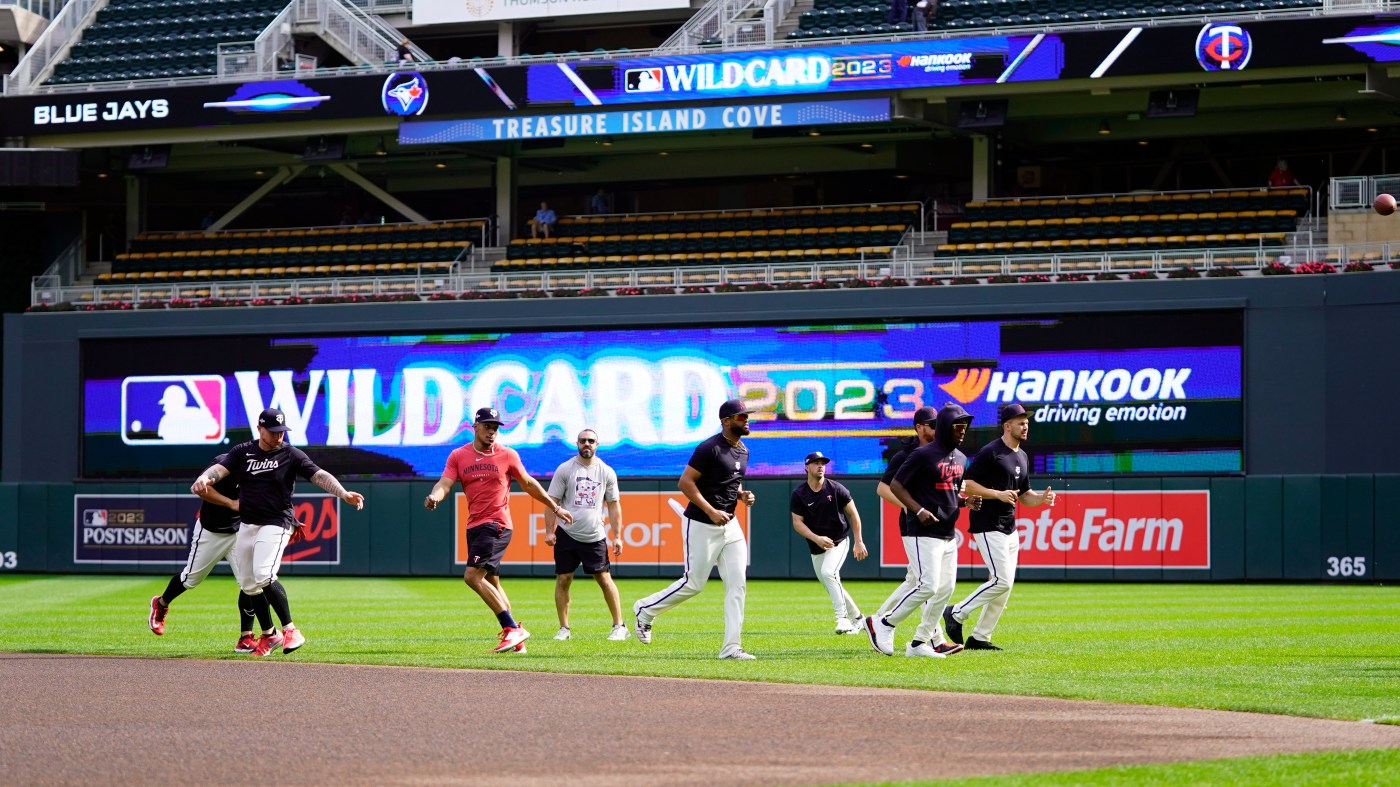
It all comes down to this, one final week of the season to decide the Twins’ postseason fate.

While the Twins’ odds to make the postseason at one point were around 95 percent, they now sit at 54.5 percent with six games left to play after a disastrous road trip to Cleveland and Boston during which they went 2-5.

The Twins currently sit a game behind the Kansas City Royals and Detroit Tigers, on the outside of the playoff picture for the first time since the early months of the season. They have a one-game lead on the Seattle Mariners. When all is said and done, two of those four teams will head to the postseason, nabbing the final two American League wild-card spots.

The Twins, Tigers and Royals were idle on Monday, while the Mariners played the Houston Astros.

“We’re going to try to make the best of (the) day off, come back fresh, ready to go with some enthusiasm,” Twins manager Rocco Baldelli said. “Our guys want it. They want what’s in front of them.”

With one week left in the regular season, here’s what you need to know:

What does the schedule look like?

After an off day Monday, the Twins finish off their regular season with a six-game homestand, playing host to the Miami Marlins and Baltimore Orioles.

The Marlins enter the series with the worst record in the National League and these three games should offer the Twins an opportunity to pick up some ground in the playoff race. The Twins will send Bailey Ober, Simeon Woods Richardson and David Festa to the mound against the Marlins.

They then finish off their regular season with three games against the Orioles, who at this point look to be locked into the first AL wild-card berth. With nothing expected to be on the line for them, the Orioles could opt to rest some of their regulars to prepare for the postseason. The second game of that series, Saturday night, was picked up by FOX on Monday and will be televised nationally, shifting the game time from 1:10 p.m. to 6:15 p.m.

The Tigers, meanwhile, end their season with a six-game homestand against the Tampa Bay Rays (78-78) and Chicago White Sox (36-120), who are perhaps the worst team in the modern era, which means the Tigers should have a good opportunity in front of them next weekend.

The Royals, who are on a seven-game slide, finish off their schedule at Washington (69-87) and then head to Atlanta (85-71) for a series that could have playoff implications for both teams.

The Mariners began a series against Houston, the AL West division leaders, on Monday, have an off day on Thursday and then finish their season against the Oakland Athletics (67-89) at home.

How is the tiebreaker decided?

The Twins needed 163 games to decide the AL Central division in both 2008 and 2009.

When the Twins and Tigers met in 2009, it was a 12-inning thriller, decided when Alexi Casilla’s single plated Carlos Gómez, sending the Twins to the playoffs.

“It was as intense as you can get because you know if you lose, you’re going home,” remembered Justin Morneau, who was on both the 2008 and ’09 Twins teams. “You’re hanging on every pitch. It’s unlike any baseball series you have where everything all year is two games, three games, four games and then, all of a sudden, it’s one game for everything.”

But the excitement of the win-or-go-home Game 163 has been replaced by a new tiebreaker system, implemented after the 2021 season where ties are now determined by head-to-head records.

Who holds the tiebreaker?

The Twins.

In all potential situations.

If you’re looking for a glimmer of hope as a Twins fan, this is it. Holding the tiebreaker means the Twins need to gain just one game over either AL Central foe in the next week.

The Twins went 7-6 this season against both the Tigers and Royals. They went 5-2 against the Mariners. That means that in a two-way tie or three-way tie (or the even unlikelier event of a four-way tie), they have the advantage.

Who would the Twins play if they made the playoffs?

The team that wins the second wild card is almost assuredly headed to Baltimore to take on the Orioles in the best-of-three Wild Card Series.

The team that wins the third wild card will likely face the Astros, who have not clinched the AL West but are unlikely to be caught by the Mariners. They’re also unlikely to catch the Cleveland Guardians to receive a first-round bye. That would also be a best-of-three Wild Card Series and would be contested entirely in Houston.

Related Articles

Minnesota Twins |


Pablo López roughed up in crucial start for Twins

Minnesota Twins |


Twins fall out of playoff position after two blowout losses to Red Sox

Minnesota Twins |


Twins washed out in Boston, to play two games on Sunday

Minnesota Twins |


Twins win hard-fought 12-inning game against Red Sox

Minnesota Twins |


Twins trying to remain loose in final push for playoffs

Is this war? The Israeli-Hezbollah conflict is hard to define — or predict

posted in: News | 0

By JOSEPH KRAUSS, Associated Press

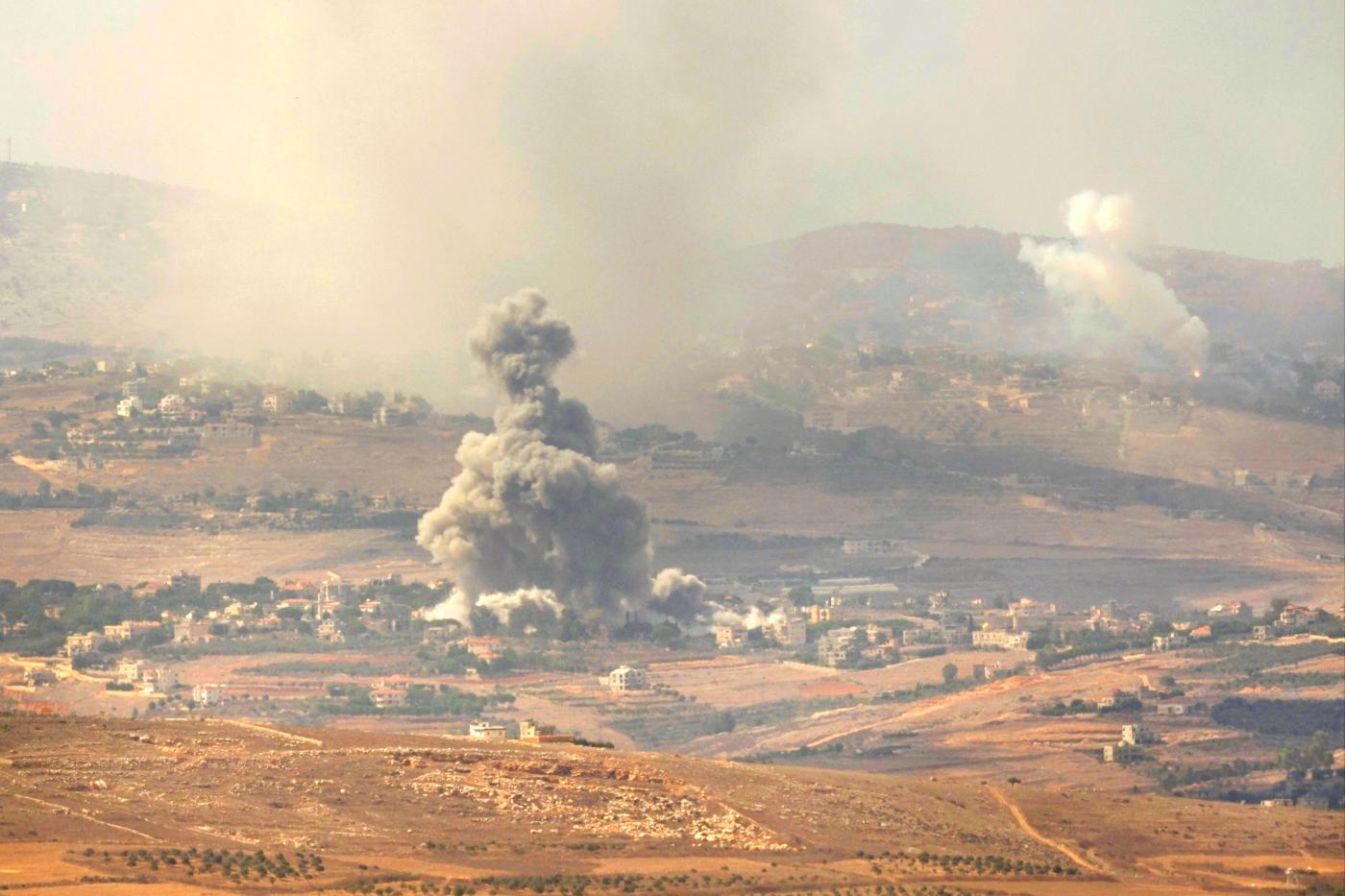
Israel is bombing targets across many parts of Lebanon, striking senior militants in Beirut and apparently hiding bombs in pagers and walkie-talkies. Hezbollah is firing rockets and drones deep into northern Israel, setting buildings and cars alight.

But no one is calling it a war — not yet.

Israeli officials say they are not seeking war with Hezbollah and that it can be avoided if the militant group halts its attacks and backs away from the border. Hezbollah also says it doesn’t want a war but is prepared for one — and that it will keep up the strikes on Israel that it began in the wake of ally Hamas’ Oct. 7 attack until there is a cease-fire in Gaza.

Israel and Hezbollah have repeatedly traded fire since then — but the intensity rose to another level Monday, when Israeli airstrikes killed more than 270 people, according to Lebanese officials. That would make it the deadliest day in Lebanon since Israel and Hezbollah last went to war in 2006.

“If someone had told me or most analysts in summer 2023 that Hezbollah is striking Israeli bases in Israel, and Israel is striking southern Lebanon and parts of southern Beirut, I would have said, okay, that’s an all-out war,” said Andreas Krieg, a military analyst at King’s College London.

The term hasn’t yet been applied to the current conflict because “there haven’t been any boots on the ground,” but that might be “the wrong metric,” he added.

Is there any agreed definition of war?

Merriam-Webster defines war as “a state of usually open and declared armed hostile conflict between states or nations.” Scholars generally expand that definition to cover large-scale violence involving insurgents, militias and extremist groups.

But any attempt at greater precision is difficult since armed conflicts run the gamut from states clashing with tanks and fighter jets to lower-level fighting.

Sometimes states officially declare war, as Israel did after Hamas’ attack last year.

It has not made a similar declaration with regard to Hezbollah, but it has linked its strikes against the group to the war in Gaza, saying last week that allowing tens of thousands of residents to safely return to the north is an objective in that conflict. Israel’s defense minister, Yoav Gallant, also frequently talks about an ongoing war with Iran and its allies along “seven fronts,” including Lebanon.

States often refrain from declaring war even when they are plainly engaged in one. Russia officially refers to its invasion of Ukraine as a “special military operation” and has banned public references to it as a war. The United States has not formally declared war since World War II, even as it took part in major conflicts in Korea, Vietnam, Iraq and Afghanistan.

Why does neither side want to call it a war?

Part of the reason neither Israel nor Hezbollah is using the word “war” is because they both hope to achieve their aims without setting off a more severe conflict — or being blamed for one.

“Though tensions are flaring, the situation in southern Lebanon is not that of a full-scale war as both Hezbollah and Israel hope to use limited means to pressure one another,” said Lina Khatib, a Middle East expert at Chatham House.

With its rocket and drone attacks, Hezbollah hopes to pressure Israel to agree to a cease-fire with Hamas — a fellow Iran-backed group — and to avoid being seen as bowing to Israeli pressure. Hamas has been designated as a terrorist group by the United States, Canada, and European Union.

Hezbollah has said it would cease the attacks if there were a truce in Gaza, but the prospects for such a deal appear remote.

Israeli Prime Minister Benjamin Netanyahu has vowed to do whatever is necessary to halt the attacks so that displaced Israelis can return to their homes.

“I think the Israelis are trying to either tell Hezbollah, you come to the negotiation table and we’ll settle this through diplomacy, or we’ll push you into a corner until you overreact,” Krieg said. “And that will be the all-out war.”

What might a full-scale war look like?

Until recently, experts generally agreed that any future war between Israel and Hezbollah would look like the war they fought in 2006 — but much, much worse.

For years, Israeli officials warned that in any future war with Hezbollah, the army would exact a punishing toll on Lebanon itself, destroying critical infrastructure and flattening Hezbollah strongholds. It came to be known as the Dahiyeh Doctrine, named for the crowded southern Beirut district where the militant group is headquartered, and that suffered heavy destruction in 2006.

Hezbollah, meanwhile, spent years expanding and improving its arsenal, and is believed to have some 150,000 rockets and missiles capable of hitting all parts of Israel.

The military build-up and threats created a situation of mutual deterrence that kept the border largely quiet from 2006 until October of last year. For most of the past year, the region has been braced for the worst, but both sides have showed restraint, and the talk of “all-out war” has been hypothetical.

That could change at any time.

“We’ve gone up a step, but we haven’t yet made it to the penthouse floor,” said Uzi Rabi, the director of the Moshe Dayan Center for Middle Eastern and African Studies at Tel Aviv University. “At the end, I don’t see there’s going to be any alternative to a ground operation.”

Is it definitely a war if there’s a ground invasion?

Any Israeli decision to send tanks and troops into southern Lebanon would mark a major escalation and lead many to categorize the conflict as a war. But the two don’t necessarily always go hand in hand.

Israel officially declared war in Gaza nearly three weeks before it sent any ground troops in. Israeli ground forces have been operating in the occupied West Bank for decades, and in recent months have routinely launched airstrikes against combatants, without anyone suggesting it’s a war.

A limited Israeli ground incursion might still leave room for both sides to back down.

Of course, Lebanon would likely see a ground invasion as a blatant violation of its sovereignty and an act of war. But Beirut already accuses Israel of routinely violating its airspace and of occupying disputed territory along the border.

In fact, the two countries are already officially in a state of war, and have been since 1948.

___

Associated Press writers Abby Sewell and Kareem Chehayeb in Beirut, and Melanie Lidman in Jerusalem contributed.