Trudy Rubin: Joe Biden’s foreign policy legacy will go through Ukraine

posted in: News | 0

As the election nears and tension builds between Donald Trump and Kamala Harris, many people may have forgotten that Joe Biden is still president until January.

In that limited time, he can still shape a lasting foreign policy legacy — one that I believe will be defined by the outcome of the war in Ukraine. How Biden approaches that conflict at the end of his term will resonate far beyond the battlefield.

Moscow and Beijing (along with Tehran and Pyongyang) are watching closely to see whether the president finally gives Kyiv the key weapons systems it needs to win — and a green light to use them wherever needed. That would include permission to use U.S.-made long-range ATACMS missiles to destroy military bases inside Russia from which planes fire glide bombs that have decimated Ukraine’s cities.

If Biden gives Ukraine this critical help, it will hedge against a possible Trump victory, since the former president has pledged to cut off aid if Kyiv doesn’t bow to Vladimir Putin’s version of “peace talks.” If Biden holds back, however, it will signal to Putin and Xi Jinping that Washington doesn’t have the will to stop territorial aggression and is intimidated by Putin’s nuclear bluster.

It will also put Harris on a foreign policy backfoot if she takes over the White House.

Biden’s decision may become clear this week as he meets with Ukrainian President Volodymyr Zelenskyy in New York City, where both will address the United Nations General Assembly. Zelenskyy will present his “victory plan” and spell out what Ukraine needs to beat back its invaders.

Escalation? That’s all on Russia

Zelenskyy believes Putin will only negotiate once he believes his war is unwinnable, which means Ukraine needs the weapons to convince him. And Kyiv has made clear it will only negotiate if the Russian leader is forced to adhere to the United Nations charter, which prohibits the use of force against the territorial integrity or political independence of any state. Again, weapons are key.

The issue of using ATACMS inside Russia has become central, since Ukraine has no other way to prevent the Russians from firing long-range glide bombs directly at its cities. The Ukrainian military wants to hit Russian aerodromes before the bombs are launched, but so far Biden has not given permission. Great Britain has given Ukraine the green light to use its Storm Shadow missiles inside Russia but prefers to act in tandem with Washington.

A big part of the problem is Putin’s nuclear saber-rattling. He has blared that using ATACMS would be a declaration of war by NATO. He and his propagandists issue constant warnings about using nuclear weapons if Russia’s sovereignty is threatened.

But unlike Moscow, Kyiv has never threatened the sovereignty of another country, only struck back against Putin’s effort to destroy Ukrainian independence. As for fears of “escalation,” it is Moscow that is escalating against Western democracies.

Putin’s suppliers: missiles from Iran, shells from North Korea

The Kremlin has just received short-range missiles from Tehran, and huge numbers of artillery shells from Pyongyang. In exchange, the United States believes Putin will help Tehran with nuclear weapons technology, which could advance Iran’s nuclear threats to Israel and elsewhere. No one is certain what the Russian leader is providing to North Korea as payment.

But what is certain is that Putin is part of a tightening network of aggressive states hostile to the U.S., and helping arm Moscow either directly or indirectly, including China, North Korea, and Iran.

Moreover, Ukraine has repeatedly crossed Putin’s red lines and nothing has happened, including the use of ATACMS against Russian bases in occupied Crimea, and the invasion of the Kursk region of Russia. The Kremlin’s nukes appear more useful as a bogeyman than as a weapon whose use would backfire on it.

While Putin’s nuclear bluster must be considered, the West shouldn’t be unduly intimidated. If the West bowed to every such threat, Putin could blackmail NATO allies to do anything he wants.

Echoing Russian propaganda

What is deeply disturbing is to watch Trump echo Russian propaganda, warning about World War III if Biden gives Ukraine the weapons it needs. The reverse is far more likely: A Western failure to push Putin back from Ukraine is more likely to lead to World War III, as Putin and Xi conclude they can seize territory without paying a price. Think Taiwan.

When Robert F. Kennedy Jr. and Donald Trump Jr. write in an op-ed in the Hill that “no vital American interest is at stake” in Ukraine, they reveal how ignorant they — and Junior’s dad — are of history. Think Neville Chamberlain’s “peace for our time” deal with Adolf Hitler when the Nazi leader seized the Sudetenland region of Czechoslovakia.

As Zelenskyy told me in a June interview in Kyiv, “A cease-fire (with Ukraine) is the best option for the Russians so they can prepare for taking even more.”

Taking lessons from Ukraine

Yet, Putin’s nuclear threats have repeatedly deterred Biden and NATO allies from providing Ukraine with vital systems when they were most needed. To protect its skies, Ukraine has been begging for Patriot air defense systems and F-16 fighter planes since the war started, yet only a tiny handful of each have arrived. The Europeans were willing to donate dozens of F-16s many months ago, but Washington denied them the green light until recently and delayed giving Ukrainian pilots priority slots for training.

Related Articles

Opinion |


Paul Krugman: Trump and Vance learned nothing from Obamacare

Opinion |


David French: MAGA wants transgression, and this is what comes with it

Opinion |


F.D. Flam: The first lyme disease vaccine failed. It’s time to try again.

Opinion |


Catherine Thorbecke: Social media age limits are too little too late

Opinion |


Daniel DePetris: The U.S. and China are talking again. Will it lead anywhere?

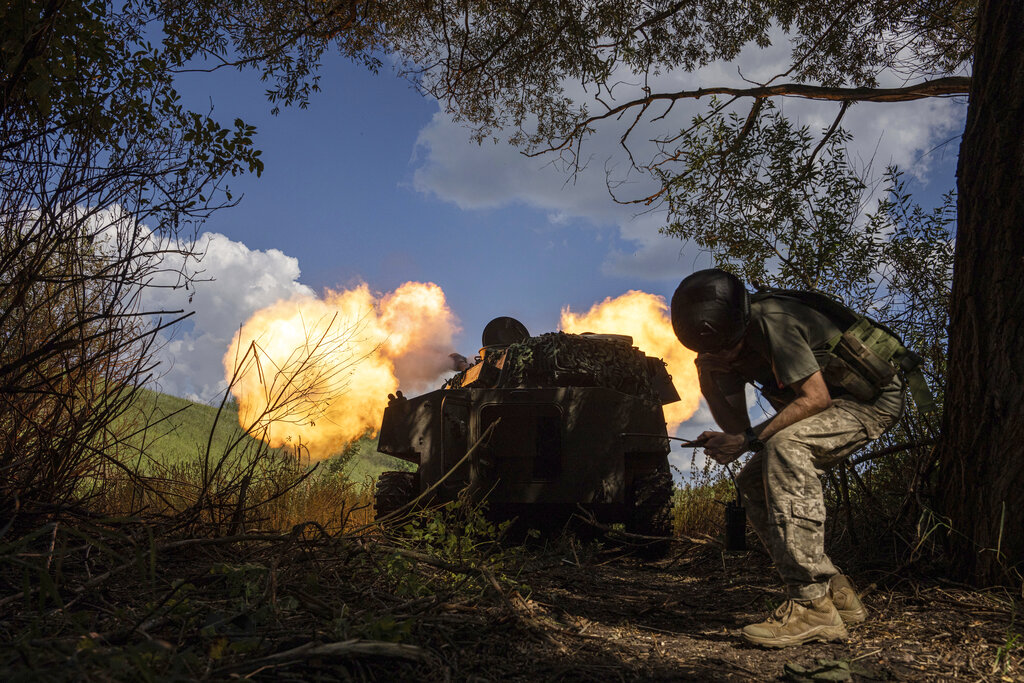
Then there is the tragic shortage of artillery shells, promised months ago by the United States and Europe, that is enabling Russian forces to advance in eastern Ukraine. Some frontline towns I visited on a trip to Ukraine in June have already been captured. That’s because, as I heard from Ukrainian troops, Russians have up to a 12-1 advantage in artillery shells in some areas.

Moreover, if ATACMS had been allowed months ago for use against Russian aerodromes, they could have prevented horrendous damage to Ukraine’s cities. By now, Russia has moved most of its planes out of ATACMS range, but there are still plenty of key targets that could be destroyed.

“It is really difficult to hear the same answer every time: ‘We are working on it,’” Zelenskyy told the Yalta European Strategy conference in Kyiv earlier this month. “Russian missiles and Iranian-supplied Shaheds unfortunately are also ‘working’ in our skies and against our people. And Putin doesn’t need any permissions or approvals.”

And yet, as I saw on my Ukraine trip, the country’s fighters are brilliant innovators who have developed technological devices — such as sea drones that drove the Russian fleet out of the Black Sea — that have so far prevented Russia from major advances. Indeed, the U.S. military is taking lessons from Ukraine in technological warfare.

Force Putin to the table

Still, to end this war, Ukraine needs Biden to instruct the Pentagon to treat Kyiv’s war as if it were our war. A war not of conquest, but of forcing an aggressor to abide by the U.N. charter and international law.

The aim is not to destroy Russia, but to force Putin to the table on Ukraine’s terms. By doing everything possible to fully arm Ukraine before he steps down, Biden can still give Ukrainians a fighting chance to overcome Putin’s aggression — and push back against any Trump effort to sell them out to the Kremlin.

That would be a legacy Biden could be proud of — and upon which a President Harris could build.

Trudy Rubin is a columnist and editorial-board member for The Philadelphia Inquirer, P.O. Box 8263, Philadelphia, Pa. 19101. Her email address is trubin@phillynews.com

Some Nevadans, facing obstacles to voting, have started casting ballots digitally

posted in: Society | 0

Jessica Hill | (TNS) Las Vegas Review-Journal

LAS VEGAS — The 2024 general election is still more than a month away, yet Nevadans have already started casting their votes, including Native Americans who historically face voting barriers.

Secretary of State Cisco Aguilar announced Tuesday the start of voting with the kickoff of the state’s digital voting application that allows for some Nevada voters to cast their ballots digitally.

Elections officials have also started sending out mail ballots to Nevadans overseas, and starting on Thursday mail ballots will be ready to send out to out-of-state voters. Early voting begins Oct. 19, and Election Day is Nov. 5.

More than 500 people cast votes through the state’s Effective Absentee System for Election, or EASE, which is available to active-duty members of the U.S. Armed Forces and their families, Nevada voters who are outside the country, voters with a disability and, for the first time, Native voters who live on a colony or reservation in Nevada.

Of the 577 ballots that have been submitted as of Tuesday afternoon via EASE, 75 were from active-duty military members, 35 were from their spouses, 409 were from overseas citizens and 56 were from voters with a disability.

While early voting pertains to the wider voting public, EASE is for people who don’t have easy access to vote in a traditional method.

Overcoming barriers

So far two tribal voters have cast ballots on EASE as of Tuesday, according to the secretary of state’s office, which also announced the launch of a new Tribal Voters web page to provide information to help Native voters, who have historically faced barriers to voting.

Some reservations don’t have traditional mailing addresses, and historically Native voters lived far away from a polling location, which meant they were forced to drive for hours to submit their ballots.

For instance, before the election in 2016, the Pyramid Lake Paiute Tribe had to sue the state to get a polling location on its reservation. That election was the first time a lot of its members were able to vote, according to the tribe’s chairman, Steven Wadsworth.

“When we look at access to the ballot box, we need to ensure we’re meeting Nevada voters where they are,” Aguilar said.

‘New set of barriers’ as many tribes lack internet access

Tribal land across the state will have 18 Election Day polling locations, 12 early voting locations and eight ballot drop boxes, thanks to legislation passed in the last legislative session providing automatic polling locations on reservations and requiring county clerks to communicate with tribes and expand the EASE System.

“They have a fundamental right to vote, and we need to ensure that we’re reaching a population that doesn’t necessarily have access to those traditional ways of casting their vote,” Aguilar said.

Requiring polling locations on reservations is a big help, Wadsworth said, as that is one less trip the 1,800 residents need to make in order to cast their vote. But there are still barriers to voting, he said.

“When you introduce something new like EASE, it opens up a new set of barriers,” he said.

Many tribes are rural and still lack internet access, Wadsworth said. In Pyramid Lake, two of the three towns have internet access and the third is a work in progress.

Still, initiatives such as EASE and the recent legislation passed helps get “the Native voice heard with their votes,” Wadsworth said.

“A lot of times we are just ignored, even though we do we carry a big voice,” he said.

_____

©2024 Las Vegas Review-Journal. Visit reviewjournal.com.. Distributed by Tribune Content Agency, LLC.

The chunkiest of chunks face off in Alaska’s Fat Bear Week

posted in: Adventure | 0

By GENE JOHNSON

An Alaska national park’s yearly celebration of the beefy, brown and bristly is getting underway as some of the chunkiest bears on the planet fatten up for their long winter slumber.

Fat Bear Week doesn’t officially start at Katmai National Park and Preserve until Oct. 2, when fans can begin voting online for their favorite ursine behemoths in tournament-style brackets.

But on Tuesday organizers revealed the four cub contestants in this week’s Fat Bear Jr. contest — with the “chubby champ charging on to face the corpulent competition” in the adult bracket, as Naomi Boak of the nonprofit Katmai Conservancy put it during the livestreamed announcement.

The annual contest, which drew more than 1.3 million votes last year, is way to celebrate the resiliency of the 2,200 brown bears that live in the preserve on the Alaska Peninsula, which extends from the state’s southwest corner toward the Aleutian Islands. The most dedicated fans watch the bears on live cameras at explore.org all summer long as they feast on sockeye salmon returning to the Brooks River.

This year’s contestants for Fat Bear Jr. include some familiar muzzles: Both the 2022 and 2023 junior champs are up for a repeat; they remain eligible because they still meet the criteria for being considered a cub, including remaining with a sow. Most cubs stay with their mother for about 2 1/2 years, but the 2022 Fat Bear Jr. winner, known as 909 Jr., who has remained with an aunt, is almost 4 years old.

There’s also an emotional favorite: a spring cub of Grazer, last year’s Fat Bear champ. The cub’s sibling died this summer after it slipped over a small waterfall on the Brooks River and was killed by a dominant adult male known as Chunk, or Bear 32 — an attack captured on the bear cams. Grazer fought Chunk in an effort to save the cub, but it later died.

Adult male brown bears typically weigh 600 to 900 pounds (about 270 to 410 kilograms) in mid-summer. By the time they are ready to hibernate after feasting on migrating and spawning salmon — each eats as many as 30 fish per day — large males can weigh well over 1,000 pounds (454 kilograms). Females are about one-third smaller.

The adult contestants for the Fat Bear Week tournament will be announced Sept. 30, with voting taking place Oct. 2-8.

NTSB engineer says carbon fiber hull from submersible showed signs of flaws

posted in: News | 0

By PATRICK WHITTLE and DAVID SHARP

The carbon fiber hull of the experimental submersible that imploded en route to the wreckage of the Titanic had imperfections dating to the manufacturing process and behaved differently after a loud bang was heard on one of the dives the year before the tragedy, an engineer with the National Transportation Safety Board said Wednesday.

Engineer Don Kramer told a Coast Guard panel there were wrinkles, porosity and voids in the carbon fiber used for the pressure hull of the Titan submersible. Two different types of sensors on Titan recorded the “loud acoustic event” that earlier witnesses testified about hearing on a dive on July 15, 2022, he said.

Hull pieces recovered after the tragedy showed substantial delamination of the layers of carbon fiber, which were bonded to create the hull of the experimental submersible, he said.

OceanGate co-founder Stockton Rush was among the five people who died when the submersible imploded in June 2023.

This June 2023 image provided by Pelagic Research Services shows remains of the Titan submersible on the floor of the Atlantic Ocean. (Pelagic Research Services via AP)

Kramer’s statements were followed by testimony from William Kohnen, a longtime submersibles expert and key members of the Marine Technology Society. Kohnen emerged as a critic of OceanGate in the aftermath of the implosion and has described the disaster as preventable.

On Wednesday, he pushed back at the idea the Titan could not have been thoroughly tested before use because of its experimental nature.

“We do have these test procedures. They are enshrined in law,” Kohnen said.

The Coast Guard opened a public hearing earlier this month that is part of a high level investigation into the cause of the implosion. Some of the testimony has focused on the submersible’s carbon fiber construction, which was unusual. Other testimony focused on the troubled nature of the company.

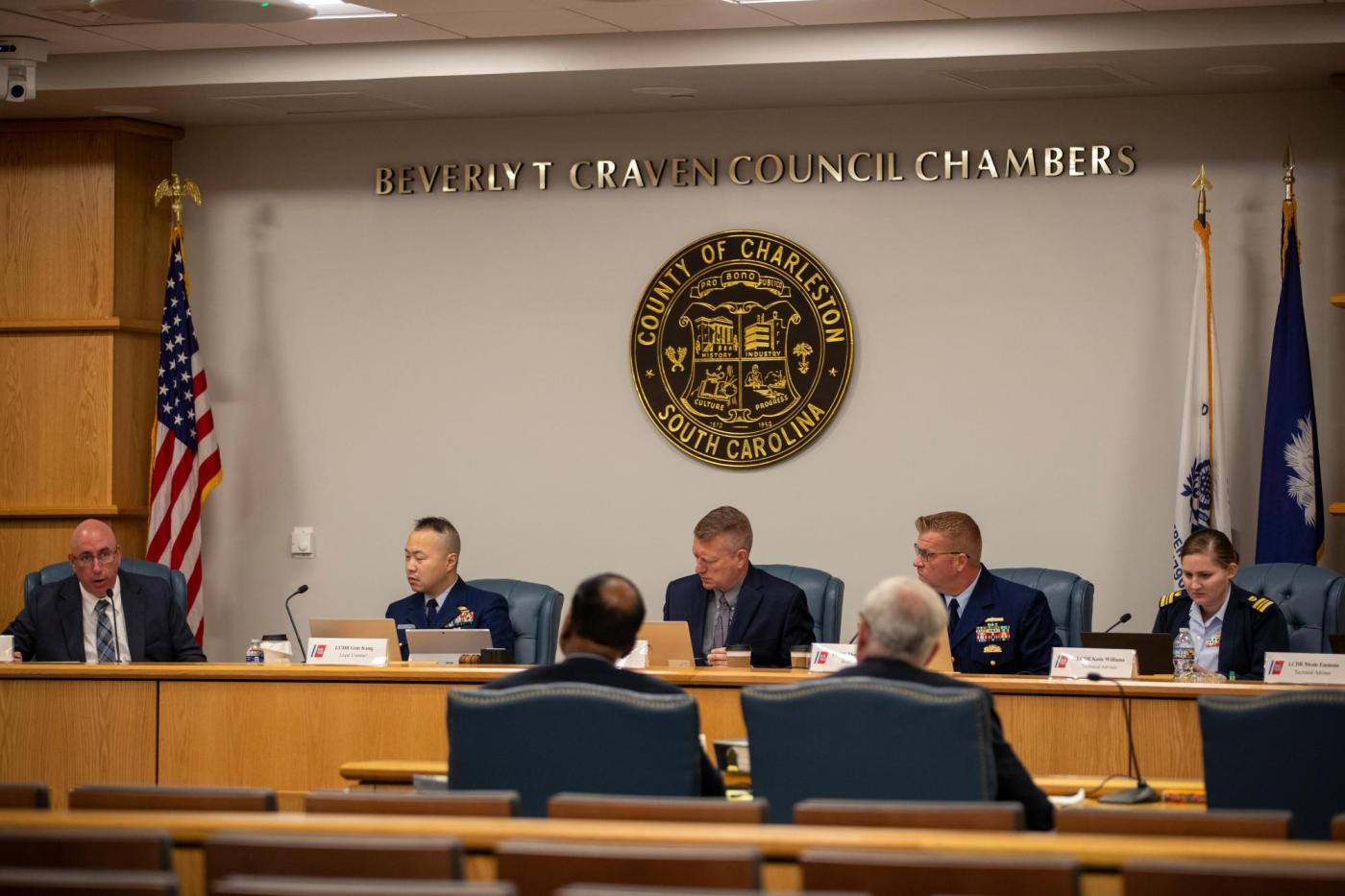
Gim Kang, special counsel for the Coast Guard’s Titan Submersible Marine Board of Investigation, listens during the formal hearing inside the Charleston County Council Chambers, Monday, Sept. 23, 2024, in North Charleston, S.C. (Laura Bilson/The Post And Courier via AP, Pool)

Coast Guard officials noted at the start of the hearing that the submersible had not been independently reviewed, as is standard practice. That and Titan’s unusual design subjected it to scrutiny in the undersea exploration community.

Earlier in the hearing, former OceanGate operations director David Lochridge said he frequently clashed with Rush and felt the company was committed only to making money.

Lochridge and other previous witnesses painted a picture of a company that was impatient to get its unconventionally designed craft into the water. The accident set off a worldwide debate about the future of private undersea exploration.

The hearing is expected to run through Friday and include several more witnesses, some of whom were closely connected to the company.

The co-founder of the company told the Coast Guard panel Monday that he hoped a silver lining of the disaster is that it will inspire a renewed interest in exploration, including the deepest waters of the world’s oceans. Businessman Guillermo Sohnlein, who helped found OceanGate with Rush, ultimately left the company before the Titan disaster.

OceanGate, based in Washington state, suspended its operations after the implosion. The company has no full-time employees currently, but has been represented by an attorney during the hearing.

During the submersible’s final dive on June 18, 2023, the crew lost contact after an exchange of texts about Titan’s depth and weight as it descended. The support ship Polar Prince then sent repeated messages asking if Titan could still see the ship on its onboard display.

One of the last messages from Titan’s crew to Polar Prince before the submersible imploded stated, “all good here,” according to a visual re-creation presented earlier in the hearing.

In a still from from a video animation provided by the United States Coast Guard an illustration of the Titan submersible, right, is shown near the ocean floor of the Atlantic Ocean, as June 18, 2023 communications between the submersible and the support vessel Polar Prince, not shown, are represented at left. (United States Coast Guard via AP)

When the submersible was reported overdue, rescuers rushed ships, planes and other equipment to an area about 435 miles (700 kilometers) south of St. John’s, Newfoundland. Wreckage of the Titan was subsequently found on the ocean floor about 330 yards (300 meters) off the bow of the Titanic, Coast Guard officials said. No one on board survived.