Legendary Vikings quarterback Tommy Kramer announces he has dementia

posted in: News | 0

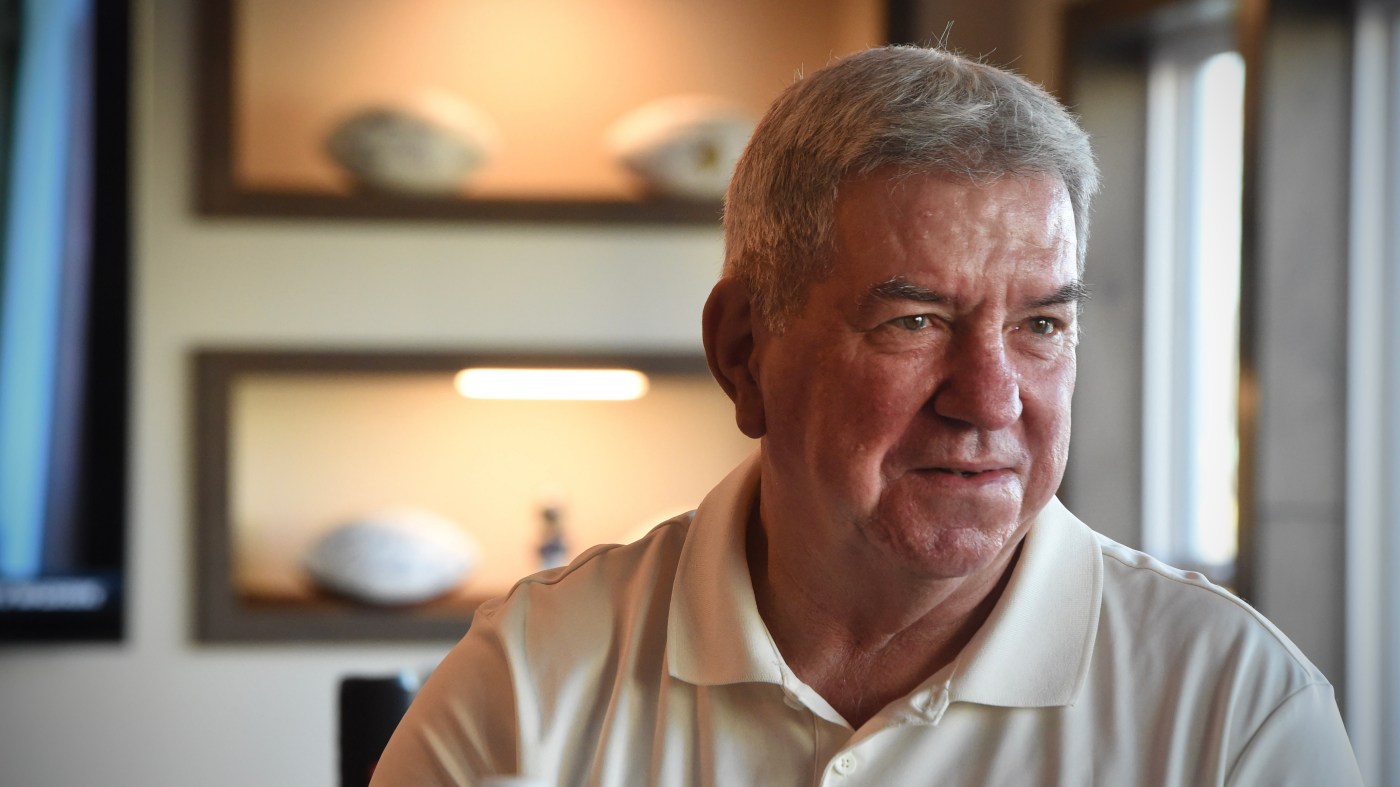
Legendary Vikings quarterback Tommy Kramer took to social media this week to announce that he has been diagnosed with dementia.

In a lengthy post on his X account, Kramer, 69, said he was officially diagnosed a little more than a year ago at the Cleveland Clinic. He said he recently had his annual checkup and the doctors told him his dementia hasn’t advanced. He added that he has stopped drinking alcohol.

“Please, no sympathy,” Kramer wrote.” I’ve lived a great life and wouldn’t change a thing.”

The announcement from Kramer came after Pro Football Hall of Fame quarterback Brett Favre, who starred for the Green Bay Packers and Vikings, announced that he has Parkinson’s disease earlier this week. That motivated Kramer to share his story with hopes of shedding light on other former players dealing with similar situations.

“I know there are players out there who I played with that need all the help they can get,” Kramer wrote. “I’m hoping to bring some awareness so the NFL will be able to help others and future players who are battling illnesses like myself.”

After being selected by the Vikings in the first round of the 1977 NFL Draft, Kramer went on to play more than a decade in Minnesota. He earned the nickname “Two-Minute Tommy” because of his propensity for leading comebacks.

In total, Kramer led 20 comeback victories during his time with the Vikings, which included the iconic Miracle at the Met. After erasing a 14-point deficit down the stretch in that particular game, Kramer completed a 46-yard Hail Mary to receiver Ahmad Rashad on the final play, which propelled the Vikings to an impossible 28-23 win over the Cleveland Browns.

“Nobody wanted to win more than me,” Kramer wrote. “I never gave up.”

Naturally, Kramer vowed to carry that same tenacity into his battle with dementia.

Related Articles

Minnesota Vikings |


Vikings list quarterback Sam Darnold as full participant in practice

Minnesota Vikings |


Just call him Speedy: Vikings receiver Jalen Nailor living up to his nickname

Minnesota Vikings |


Jordan Love or Malik Willis? Vikings preparing for both Packers quarterbacks

Minnesota Vikings |


Retired NFL quarterback Brett Favre says he has Parkinson’s disease

Minnesota Vikings |


Dane Mizutani: Sam Darnold has won over the Vikings fan base

Southwest Airlines spells out changes designed to boost profit and fend off a hedge fund

posted in: News | 0

By DAVID KOENIG

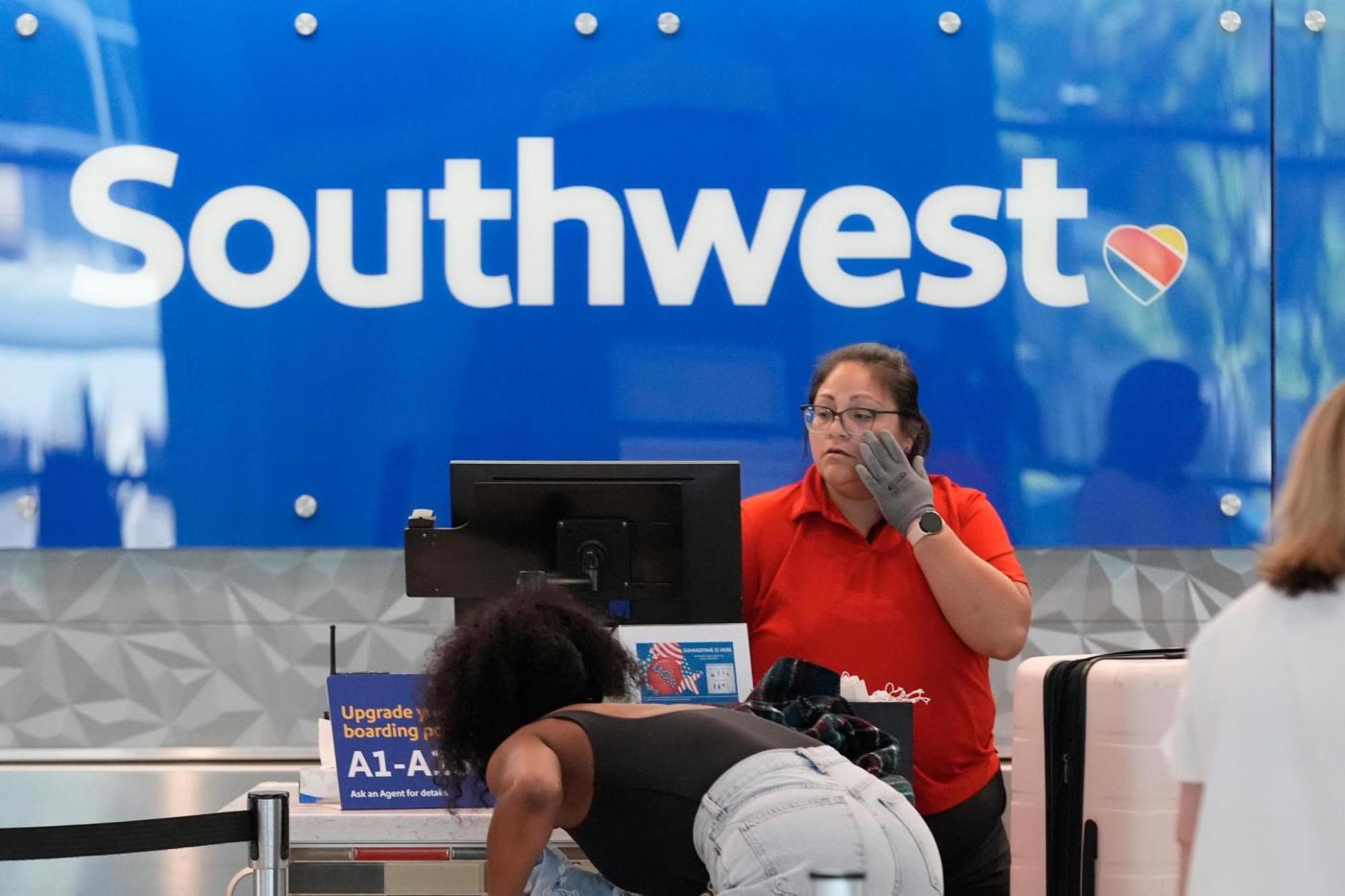
DALLAS (AP) — Southwest Airlines executives on Thursday unveiled their vision for Southwest 2.0, an airline that for the first time will give passengers assigned seats, charge them extra for more legroom and offer red-eye flights but bags still will fly free.

The airline announced that it plans to end the open-boarding system it has used for more than 50 years and start flights with assigned seats during the first half of 2026 as it responds to shifting consumer tastes and tries to reverse a three-year slump in profits.

CEO Robert Jordan and other Southwest executives outlined the future refresh during an investor meeting in Dallas where they tried to convince shareholders that they can increase revenue by winning over younger and more affluent customers.

The moves away from Southwest’s simple business model and quirky traditions come as airline management faces pressure from activist investor Elliott Investment Management. The hedge fund blames management for Southwest’s recent underperformance compared with its closest rivals, and wants to replace Jordan and most of the Southwest board.

Along with introducing assigned seats, the airline will make about one-third of them higher-priced premium seats with up to five inches of extra legroom. That will require removing a row of seats on some planes. Work to retrofit the fleet will start in the first half of next year and be completed by the end of 2026, executives said.

Southwest said those moves, along with changes to its network, will add about $1.5 billion in pretax earnings in 2027.

Before Thursday’s event started, Southwest announced a $2.5 billion share-buyback program designed to make existing shares more valuable. It also said that a third-quarter revenue ratio will rise by up to 3% instead of being between flat and down 2%.

Shares of Southwest Airlines Co. rose 8% in midday trading.

Southwest is trying to fend off a possible proxy fight as early as next week with Elliott, which is the airline’s second-largest shareholder.

“We do not support the company’s current course, which is being charted in a haphazard manner by a group of executives in full self-preservation mode,” the hedge fund said this week in a letter to other shareholders.

Jordan argued that the plan laid out Thursday should satisfy investors.

“We do not believe that a proxy fight is in the best interest of the company, and we remain willing to work with Elliott on a cooperative approach,” he said.

Jordan said the refresh plan had been in the works a long time. “For Elliott to call that plan rushed and haphazard, in my opinion, is inane.

Elliott did not immediately comment on Jordan’s remarks.

In dumping open seating, Southwest said its surveys show that 80% of its customers now want to know their seat before they get to the airport instead of having to search for open seats when they board the plane.

As part of the switch, the airline will have four airfare tiers, each offering more convenience and comfort. Southwest officials said the premium product will appeal to business travelers.

Southwest stopped short of changing another of its longtime characteristics: letting passengers check up to two bags for free, a break from fees that are charged by all other leading U.S. airlines. Executives said it’s the most important feature in setting Southwest apart from rivals.

U.S. airlines brought in more than $7 billion in revenue from bag fees last year, with American and United reaping more than $1 billion apiece. Wall Street has long argued that Southwest is leaving money behind.

Southwest, which has built years of advertising campaigns around bags-fly-free, estimated that bag fees would raise about $1.5 billion a year, but eliminating the perk could drive away passengers, costing the airline $1.8 billion, or a net loss of $300 million a year.

Southwest has been contemplating an overhaul for months, but the push for radical change became even more important to management this summer, when Elliott Investment Management targeted the company for its dismal stock performance since early 2021.

Company management headed into the investor day having angered an important interest group: its own workforce. The airline told employees Wednesday that it will make sharp cuts to service in Atlanta next year, resulting in the loss of 340 pilot and flight attendant positions.

Employee unions are watching the fight between Elliott Investment Management and airline management, but they are not taking sides. “That’s between Southwest and Elliott, and we’ll see how it plays out,” Alison Head, a flight attendant and union official in Atlanta, said.

However, the unions are concerned that more of their members could be forced to relocate or commute long distances to keep their jobs. Southwest’s chief operating officer told employees last week that the airline will have to make “difficult decisions” about its network to improve its financial performance.

Elliott seized on that comment, saying that Southwest leaders are now “taking any action – no matter how short-sighted – that they believe will preserve their own jobs.”

The hedge fund controlled by billionaire financier Paul Singer now owns more than 10% of Southwest shares and is the airline’s second-biggest shareholder. It wants to fireCEO Jordan and Chairman Gary Kelly and replace two-thirds of Southwest’s board. Elliott has a slate of 10 director candidates, including former airline CEOs.

Southwest gave ground this month, when it announced that six directors will leave in November and Kelly will step down next year. On Thursday, it named And it named a former AirTran and Spirit Airlines CEO to its board.

The airline is digging in to protect Jordan, however.

Shawn Cole, a founding partner of executive search firm Cowen Partners, whose firm has worked for other airlines but not Southwest, believes Southwest is too insular and should follow the recent examples of Starbucks and Boeing and hire an outsider as CEO. He thinks many qualified executives would be interested in the job.

“It would be a challenge, no doubt, but Southwest is a storied airline that a lot of people think fondly of,” Cole said. “If Boeing can do it, Southwest can do it.”

The vice presidential debate is coming up. Here’s how to watch, what to know

posted in: Politics | 0

Gromer Jeffers Jr. | (TNS) The Dallas Morning News

Minnesota Gov. Tim Walz and Sen. JD Vance of Ohio will clash Tuesday night in the only debate planned between the vice presidential candidates.

Here’s what you need to know about the first face-to-face clash of candidates who were little known before being selected as running mates for the Nov. 5 election.

Where to watch

The debate is set to start at 8 p.m. Central on CBS from the network’s broadcast studio in New York. In the Dallas area, it can be seen on Channel 11 and also will be livestreamed on all major platforms where CBS News 24/7 and Paramount+ are available.

CBS said the debate will be available to simulcast on other stations.

Who are the moderators?

CBS Evening News anchor Norah O’Donnell and Face the Nation moderator and foreign affairs correspondent Margaret Brennan will moderate the debate, which is scheduled for 90 minutes.

What are the rules?

CBS has not released the rules or format for the debate. Previous presidential debates hosted by CNN and ABC were staged without a studio audience, and microphones were on for one candidate at a time.

The 2024 season has been an unusual cycle for debates. The events were not coordinated by the Commission on Presidential Debates. Instead, the campaigns negotiated the debates and their rules with the hosting networks.

The role of the running mate

Running mates are traditionally called on to be campaign attack dogs, aggressively making the contrast between the tickets.

In addition to opportunities to attack, the debate will provide Vance and Walz with chances to promote the top of the ticket — Republican Donald Trump and Democrat Kamala Harris — and outline how they would perform as vice president.

Are VP debates memorable?

Most vice presidential debates are forgettable, but there are exceptions, notably the 1988 debate between Sen. Lloyd Bentsen, D-Texas, and Sen. Dan Quayle, R-Indiana.

When pressed about his youth (he was 41) and experience, Quayle compared himself to former President John F. Kennedy. Bentsen pounced.

“Senator,” he said with a Texas drawl. “I served with Jack Kennedy. I know Jack Kennedy. Jack Kennedy was a friend of mine. Senator, you’re no Jack Kennedy.”

“That was really uncalled for, senator,” Quayle responded.

That moment, seen by 50 million people during the broadcast, is etched in history, though it didn’t hurt the Republican ticket as then-Vice President George H.W. Bush easily defeated former Massachusetts Gov. Michael Dukakis. But it likely impacted Quayle’s career, which climaxed with his one term as vice president.

The most recent vice presidential debate also had a viral moment when Harris faced then-Vice President Mike Pence.

Harris landed the line “I’m speaking” when Pence interrupted her during the debate. At one point a fly landed on Pence’s head in view of the television audience, which led to a Saturday Night Live skit.

Will there be other debates?

Monday’s event is the only scheduled vice presidential debate. It’s likely the last debate of the season.

Harris has accepted an invitation for a second presidential debate on Oct. 23 on CNN, but Trump recently said he would not participate.

———

©2024 The Dallas Morning News. Distributed by Tribune Content Agency, LLC.

Zelenskyy visits Washington as election year divide grows over Ukraine war

posted in: Politics | 0

By CHRIS MEGERIAN

WASHINGTON (AP) — Ukrainian President Volodymyr Zelenskyy huddled with U.S. leaders on Thursday to shore up American support for his country’s fight against Russia as the war faces a partisan reckoning in this year’s presidential election.

Vice President Kamala Harris, the Democratic nominee for president, has pledged to continue sending military assistance to Ukraine if she’s elected. She’ll have her own meeting with Zelenskyy after the Ukrainian leader sits down with President Joe Biden, who announced billions of dollars more in missiles, drones, ammunition and other supplies. The weapons include an additional Patriot missile defense battery and a new shipment of glide bombs that can be deployed from Western fighter jets, increasing their strike range.

“The United States will provide Ukraine with the support it needs to win this war,” Biden said in a statement, pledging to ensure that all approved funding is disbursed before he leaves office. He also said he would convene a meeting with other world leaders focused on Ukraine’s defense during a visit to Germany next month.

Ukrainian President Volodymyr Zelenskyy, center, gestures with his hand over his heart after a closed meeting with lawmakers in the House of Representatives about the war effort against Russia, at the Capitol in Washington, Thursday, Sept. 26, 2024. (AP Photo/J. Scott Applewhite)

Meanwhile, Zelenskyy’s tumultuous relationship with former President Donald Trump, the Republican nominee, continued to deteriorate this week. Instead of meeting with Zelenskyy, Trump criticized him. As for U.S. support for Ukraine, Trump complained that “we continue to give billions of dollars to a man who refuses to make a deal” to end the war. His message dovetails with Russian propaganda that claims intransigence by Kyiv — not aggression from Moscow — has prolonged the bloodshed.

It’s the most politically treacherous landscape that Zelenskyy has encountered in Washington since Russia invaded nearly three years ago. Ukrainian officials are anxious to maintain good relations with whomever becomes the next president of the United States, which is its biggest and most important provider of arms, money and other support.

But the effort risks slipping into the political blender of the presidential campaign, polarizing the discussion around a war that used to be a bipartisan cause célèbre in Washington. About two thirds of Democrats and Democratic-leaning independents said the U.S. has a responsibility to help Ukraine, compared with one third of Republicans and Republican-leaning independents, according to a Pew Research Center poll conducted in July.

Related Articles

National Politics |


The vice presidential debate is coming up. Here’s how to watch, what to know

National Politics |


On campaign trail, Vance lays out ‘concept of a plan’ for health care

National Politics |


Trump’s rhetorical walkabouts: A sign of ‘genius’ or cognitive decline?

National Politics |


Americans are more likely to see Harris’ gender as a hurdle than they were for Clinton: poll

National Politics |


Hearing on Trump assassination attempts says Pennsylvania failure was with Secret Service

Americans are also split on which presidential candidate would do a better job handling the war. An AP-NORC poll from August found that about one-third of Americans said they trusted Harris more, while a similar share said the same about Trump.

Zelenskyy is expected to present Biden with a plan to push the war toward an endgame that would involve a negotiated settlement with Russia. He’s trying to secure leverage before Biden leaves office — including acquiescence to fire long-range Western weapons deeper into Russia — as a hedge against the possibility that American support erodes after the election.

On Thursday, Zelenskyy found some bipartisan support as he visited Capitol Hill, where he was greeted by Senate Majority Leader Chuck Schumer and Senate Minority Leader Mitch McConnell.

Sen. Lindsay Graham, a South Carolina Republican, said Zelenskyy asked to use long-range weapons, such as British-supplied Storm Shadow missiles or U.S.-made ATACMS, for “maximum benefit to bring (Russian President Vladimir) Putin to the table” and increase Ukraine’s negotiating position.

“If we don’t make that fundamental choice this week, I think the outcome for Ukraine is dire,” Graham said.

Administration officials have been skeptical of Zelenskyy’s request, believing the weapons could have limited benefits but increase the risk of escalating the conflict. Sen. Richard Blumenthal, a Connecticut Democrat, said senators gave Zelenskyy advice on how to persuade Biden to loosen restrictions.

Rep. Jim Himes, another Connecticut Democrat and the ranking member of the House Permanent Select Committee on Intelligence, said Zelenskyy wanted “more, faster.”

“He was politely frustrated,” Himes said, and specifically requested more Patriot missile defenses as Russia escalates strikes on Ukraine’s cities and energy grid before the winter.

Despite support from some Republicans on Capitol Hill, Zelenskyy faces a much more tense situation with Trump. The latest round of sniping started on Sunday, when The New Yorker published an interview with Zelenskyy in which he criticized JD Vance, Trump’s running mate, as “too radical” for suggesting that Ukraine needs to give up some territory to end the war. Zelenskyy also dismissed Trump’s boasts that he could quickly negotiate a solution, saying “my feeling is that Trump doesn’t really know how to stop the war even if he might think he knows how.”

Ukraine President Volodymyr Zelenskyy arrives to address the 79th session of the United Nations General Assembly, Wednesday, Sept. 25, 2024, at the UN headquarters. (AP Photo/Julia Demaree Nikhinson)

On the same day, Zelenskyy toured a Pennsylvania factory producing munitions for the war. He was joined by Democratic Gov. Josh Shapiro, a top surrogate for Harris, and Republicans criticized the visit as a political stunt in a political battleground state.

House Speaker Mike Johnson demanded that Zelenskyy fire the Ukrainian ambassador to the U.S., alleging that the tour was “designed to help Democrats and is clearly election interference.” The Louisiana Republican didn’t attend any of lawmakers’ meetings with Zelenskyy on Thursday.

Max Bergmann, director of the Europe, Russia and Eurasia program at the Center for Strategic and International Studies, said Zelenskyy is in a “no-win situation” where he “can’t even visit a U.S. weapons manufacturer to say thank you without being attacked.”

Zelenskyy’s trip to Washington coincides with the annual meeting of the U.N. General Assembly in New York, where the Ukrainian leader spoke on Wednesday. Last week, Trump said he would “probably” meet with Zelenskyy while he was in the U.S., but a senior campaign official said there was never a meeting on the books.

The official, who requested anonymity to discuss private conversations, said Trump had told Zelenskyy back in July that it would probably be better not to sit down together until after the election. A Zelenskyy aide did not respond to questions about the potential meeting.

Trump was impeached during his first term over asking Zelenskyy for help investigating Biden, then a candidate for the Democratic presidential nomination, at a time when the Ukrainian leader was seeking support from Washington.

Now there are fears that Trump would cut off or add strings to U.S. military assistance if he returned to the White House. Trump has also spoken admiringly about Putin, and this week he praised Russia’s record of winning wars.

Charles Kupchan, a senior fellow at the Council on Foreign Relations, said Trump is not wrong to want a negotiated end to the war. However, he said, Trump risks undermining Ukraine by enabling Putin to make more gains on the battlefield.

“Neither Ukraine nor Russia is going to win this war, and the sooner that the parties try to end this, the better,” Kupchan said. “Where Trump goes off course, and where Biden and Harris have a much stronger argument, is that we get to that point not by throwing Ukraine under the bus but by giving them sufficient support so they can block further Russian aggression.”

Zelenskyy can expect a far different tone from Harris, who met with him in Munich just days before Russia invaded.

During her debate with Trump earlier this month, Harris expressed pride in U.S. support for Ukraine’s “righteous defense.”

“If Donald Trump were president, Putin would be sitting in Kyiv right now,” she said.

Associated Press writers Aamer Madhani and Michelle Price in New York and Ellen Knickmeyer, Lisa Mascaro, Mary Clare Jalonick, Kevin Freking, Steven Groves and Amelia Thomson-Deveaux in Washington contributed to this report.