Vikings quarterback Sam Darnold is playing for $10 million on a one-year contract. If he continues his proficiency — and that will be hard to do — his next contract could be worth at least $50 million a season over three or four years, with at least $100 million guaranteed.
Minnesota Vikings quarterback Sam Darnold (14) celebrates his 23-17 victory over the San Francisco 49ers after a third a NFL football game at U.S. Bank Stadium in Minneapolis on Sunday, Sept., 15, 2024. (John Autey / Pioneer Press)
That’s the market these days for competent NFL quarterbacks.
Darnold, who has guided the Vikings to a surprising 3-0 start headed to Green Bay on Sunday, is just 27 years old.
— In 2019, Darnold also quarterbacked the Carolina Panthers to a 3-0 start. However, he finished 4-7 before a shoulder injury and was replaced by Cam Newton, who finished 0-5. The Panthers finished 5-12.
— The great unknown in any week in the NFL is injuries. They can change virtually everything week to week.
— The prudent move for Vikings owners Zygi and Mark Wilf is to wait until the end of the season to consider contract extensions for Darnold and coach Kevin O’Connell, who has 2025 remaining on his deal at $4 million a season. GM Kwesi Adofo-Mensah, after a devastating first-time draft in 2022, could need a superb draft in 2025 to warrant an extension.
Remember, Vikings coach Mike Zimmer had two years remaining on his contract when fired in 2022. The Wilfs fired coach Brad Childress in 2010 with two years left on his contract.
— Since O’Connell has been coach of the Vikings, the team has won every game when they’ve won the turnover battle or when the turnover battle was even. That amounts to nearly 20 victories.
— Football’s best play-by-play talent, Kevin Harlan, will work the Vikings-Packers game for CBS.
— The Twins’ Byron Buxton, who turns 31 in December, has four years remaining on his guaranteed $100 million contract. Teammate Carlos Correa, who turned 30 last week, has four years remaining on his $200 million contract.
Some baseball people wouldn’t be surprised if next season the Twins consider moving Buxton from center field to right to replace Max Kepler, the same way Kirby Puckett was moved from center to right in 1994.
A move of Correa, who has slowed at shortstop due to foot injuries, to third base or first base would also seem worth considering, with Royce Lewis, 25, a possible move to first base and Brooks Lee, 23, possibility moving to shortstop.
— Buxton has a full no-trade clause, but it wouldn’t surprise if he were to agree to a trade with home state Atlanta.
For the first time in seven seasons this year, Buxton played in more than 100 games, but he had just 384 plate appearances. For 502 PA, he would have received a $500,000 bonus.
— Those were members of Herb Brooks’ 1980 Olympic gold medal hockey champions golfing at Hazeltine National the other day. Among the 20 players who upset the Russians 44 years ago at Lake Placid. N.Y., two are deceased, Bob Suter and Mark Pavelich. The youngest player on the team — Mike Ramsey — is 63. Oldest — Buzz Schneider — just turned 70.
— Happy birthday: Twins hall of famer Rod Carew turns 79 on Tuesday.
— Golf hall of famer Davis Love III, in Minneapolis on Friday to help design an ancillary short course at Hazeltine, was an entertaining speaker at a Dunkers breakfast at Interlachen Country Club. Among anecdotes, he told of Tiger Woods’ absolute insistence that he play with Steve Stricker for the U.S. in the 2012 Ryder Cup that Love captained in Medinah, Ill.
— Simley grad Michael Busch of the Chicago Cubs, after going 11 for 23 with four home runs and 11 runs batted in on a recent six-game road trip, was named National League Player of the Week. The first baseman, 26 years old, for the season has 21 homers and 65 RBIs while hitting .250. Two of Busch’s homers traveled 468 feet and 453 feet.
— Attending the Twins-Miami Marlins series at Target Field last week was Erik Bremer, son of retired Twins broadcaster Dick Bremer. Erik, 29, a Rogers High grad, just completed his seventh season as a minor league broadcaster, recently the voice of the Marlins’ Class AA Pensacola Blue Wahoos.
Not at Target Field with the Marlins was former Gophers star Max Meyer, back in Florida recuperating from an inflamed biceps and throwing a bullpen session. The Woodbury grad who underwent Tommy John surgery two years ago finished 3-5 and will rest this winter.
— Jim Jaros, the 1964 Minnesota state high school golf champion at Minneapolis Edison and son of former Gophers-Lakers great Tony Jaros, died the other day at age 77.
— It was 58 years ago last week that Jim Kaat won his 25th game of the 1966 season against 13 losses for the Twins.
Kaat, 85 and now a member of the National Baseball Hall of Fame, was 27 years old and in his prime in 1966. His 25 victories, 41 starts, 19 complete games and 305 innings pitched with a 3.73 earned-run average led the American League.
For that season, Twins owner Calvin Griffith increased Kaat’s salary from $38,000 to $54,000.
Kaat, a former Twins teammate of mine, laughed when he recalled the contract, then said, “Camilo (Pascual) won 20 games back-to-back (1962-63).”
Disgruntled about Griffith’s ensuing contract offer, Kaat said, “Camilo cut the contract up in little pieces and sent it back. Calvin had his secretary tape it back together and send it back to Camilo.”
More laughs.
— Don Berry, 62, the head golf professional at Edinburgh USA and 17-time Minnesota PGA Professional of the Year, qualified for the PGA National Senior Club Pro tournament this weekend in Sunriver, Ore.
— Already 2,800 tickets have been sold for the Gophers men’s hockey game Oct. 11 against Air Force at 7,773-seat Orleans Arena in Las Vegas.
— Dave Metzen, the former Gophers hockey captain who went on to become superintendent of South St. Paul Public Schools and chairman of the University of Minnesota Board of Regents, on Thursday received the Forrest Glewwe Visions of Excellence business leader award from the River Heights Chamber of Commerce.
— Wishing the best for former Wild assistant general manager Tommy Thompson, who the other day required more than 100 stitches to his nose and mouth when attacked by a pitbull in Hastings.
Don’t print that
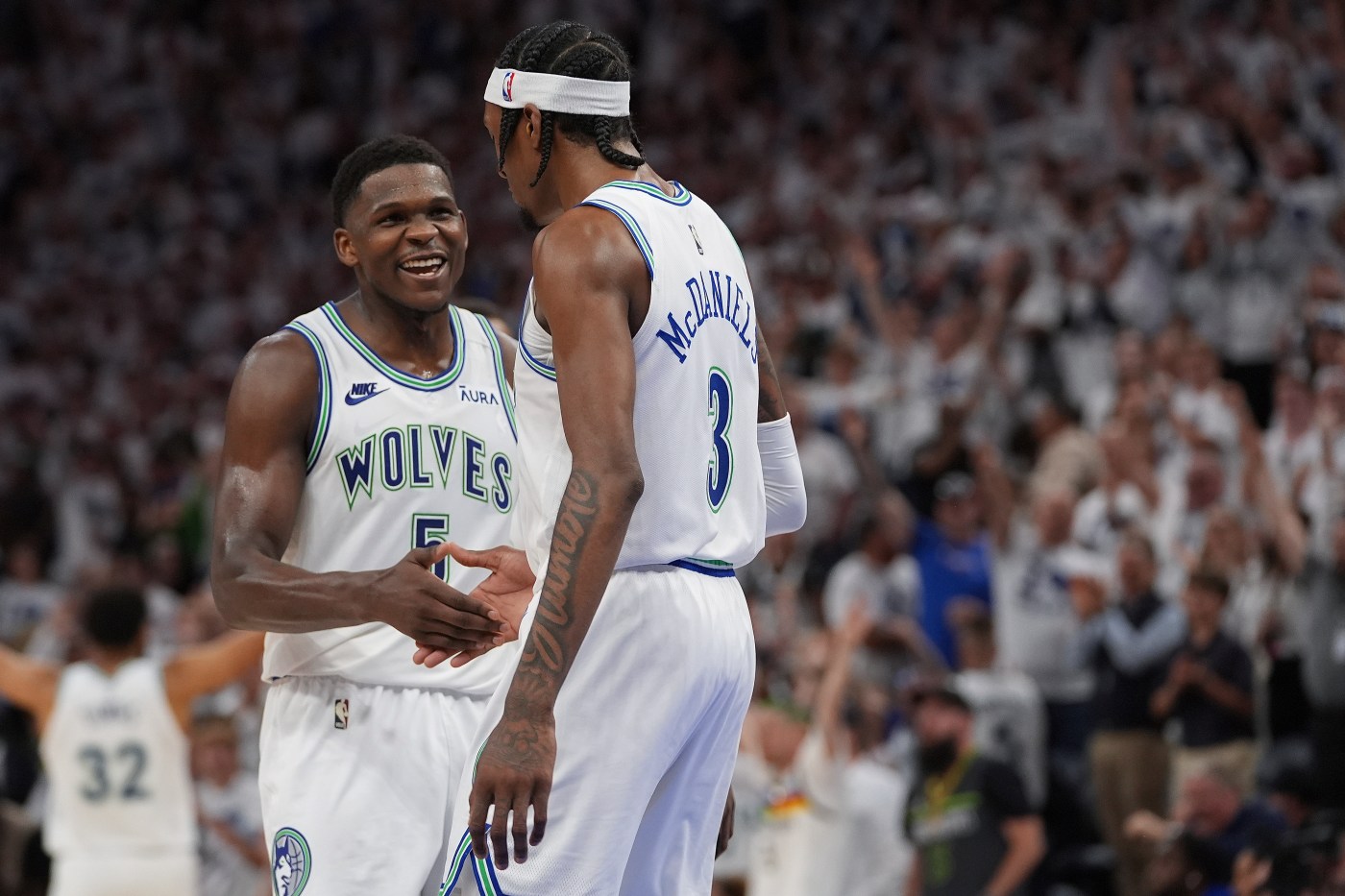
— Friday night’s Timberwolves trade of Karl-Anthony Towns to the New York Knicks had been anticipated for nearly two years. Reasons: Towns is from New Jersey. Knicks President Leon Rose used to be his agent. Gersson Rosas, who was the Wolves’ top basketball executive, now works for the Knicks. Towns is to make $49.3 million this season and is guaranteed $62.1 million in 2027, when he’ll be 32 years old.
A little birdie whispered Saturday it was the Knicks who initiated the trade only days before trading camp this week, asking if the Wolves would make Towns available. The deal came together quickly in the past few days, and the Wolves jumped on the opportunity.
Before moving Towns, the Wolves had a luxury tax bill of $105 million due next July. The trade will reduce that amount.
The Wolves have not been thrilled with Towns’ proneness to injuries, and he underperformed in last season’s playoffs.
The Wolves have a younger, much less expensive ($13.9 million this season) replacement for Towns in fan-favorite Naz Reid, who has a free-agent option after the coming season and will be re-signed. The team gave up four future first-round draft picks for Rudy Gobert in 2022 and, until Friday, had none until 2028.
Until last June, the Knicks owned eight first-round draft picks. Then they traded five of those picks to Brooklyn for Mikel Bridges, and signed forward Ogugua Anunoby to a $212.5 million, five-year contract.
The Anunoby signing, however, made it seem unlikely that Towns could be traded to the Knicks, at least for draft picks. But Wolves President whiz Tim Connelly was able to get a first-round draft pick plus Julius Randle and Donte DiVincenzo — two serviceable players — in the deal.
A 6-foot-8, 250-pound power forward, Randle, 29, will make $29 million this year and becomes a free agent after the season, so that will be a money saver. The 6-4 shooting guard DiVincenzo, 27, under contract for $11.5 million this season, wasn’t thrilled about limited minutes with the Knicks.
— The long-anticipated Timberwolves ownership dispute between Taylor and the Alex Rodriguez-Marc Lore-Michael Bloomberg group is to begin with arbitration on Nov. 4.
— It’ll be interesting to see how soon Towns sells his 19,000 square-foot Orono home and for how much. Peter Eckerline, a top Minnesota financial advisor, sold the home to Towns for $4.6 million in 2018, just months before Towns signed a $190 million contract with the Wolves. Towns financed it for two years before paying it off full in 2020. The home once belonged to ex-automobile mogul Denny Hecker and was bought through the bank by Eckerline for $3.5 million.
Meanwhile, Towns and girlfriend-model Jordyn Woods last week purchased a $14 million, 11,000 square-foot, 17-bathroom mansion in Los Angeles, TMZ reports.
— Twins executive management Derek Falvey and Thad Levine and field manager Rocco Baldelli seemingly will return for the 2025 season. At least it appears that way to Jim Pohlad.
“In my view, there’s nothing going on,” Pohlad told the Pioneer Press at Target Field last week.
But he cautioned.
“I have nothing to do with it anymore,” he said. “It’s Joe and Dave (president-chief executive officer St. Peter).”
Joe is Pohlad’s nephew Joe Pohlad, who became the team’s executive chairman when Jim Pohlad, still a co-owner, retired from his chief ownership role in 2022. Jim Pohlad still makes regular visits to his office.
— As for the Twins’ TV dilemma with Diamond-Bally Sports, Jim Pohlad suggested that MLB Network might be the club’s best option going forward.
“Maybe there’s a bit of a downturn for a little while, but there’s a lot of upside,” he said. “There’s no sugarcoating it — everybody’s frustrated. It’s not good. It’s bad.”
— The Twins this season cut payroll by $30 million.
Next year’s payroll?
“I don’t know what’s going to happen,” Jim Pohlad said. “I don’t talk to those people (club executives) that much, honestly. I wish they would come (for advice). I said to Joe I’m not going to step into your territory, but I’ll be happy to be of counsel for anything you want. So far, that hasn’t happened.”
As for the Twins’ lack of movement at last month’s trade deadline, Jim Pohlad said, “I love the trade deadline, and I want us to do more. But they didn’t do more. I get that — you always want it coming in, but you don’t want it going out. You don’t want to give up prospects.”
— Vikings owners Zygi and Mark Wilf, who fly to their teams’ games in separate private jets, will attend the game against the New York Jets next Sunday in London.
— It was 40 years ago that the Gophers hired Lou Holtz to coach football. Upon his hiring, Holtz quipped that the heart and soul of the Gophers team would have to come from Minnesota, but the arms and legs would have to come from somewhere else.
Apparently Holtz, now 87, was right. Among the 107 roster-listed Gophers players for the recent loss to Iowa, 33 are from Minnesota.
As for Iowa, among the Hawkeyes’ 134 roster-listed players, 57 are from Iowa.
— If P.J. Fleck is still Gophers’ football coach through Dec. 31, he’ll receive a $700,000 retention bonus to go with his $6 million salary. If he’s still coach through 2027, he’ll receive retention bonuses totaling another $2.7 million.
— The Gophers scored 17 points in their season-opening home loss to North Carolina. A week ago, James Madison scored 70 points against North Carolina in a 70-50 victory.
— The University of Lindenwood football team that defeated St. Thomas 64-0 a week ago will be the Gophers’ opponent in Minneapolis for a game on Sept. 18, 2027.
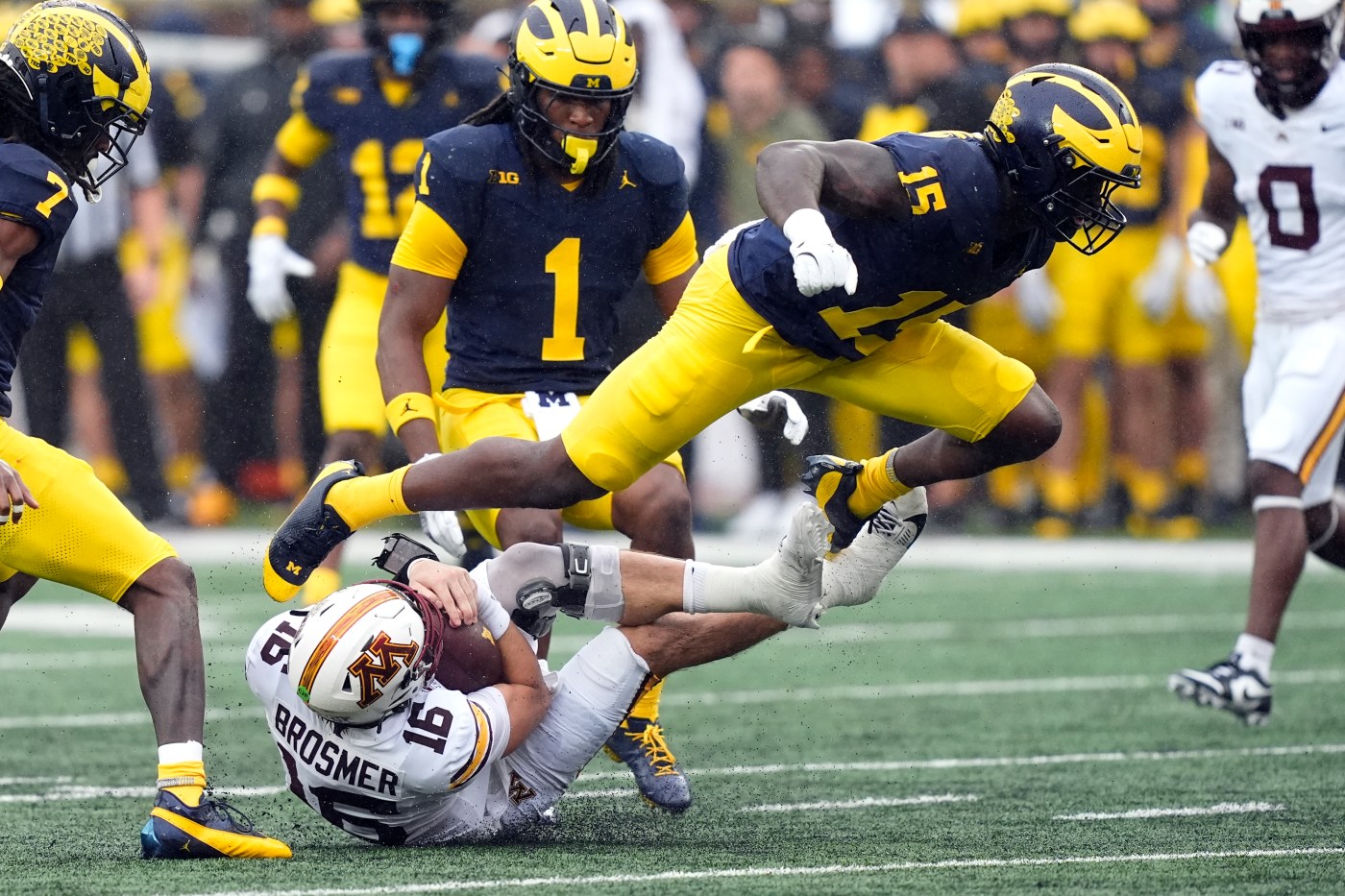
— Minnesota fell to 2-3 on Saturday when an overrated Michigan team escaped with a 27-24 victory in Ann Arbor.
“I’m not very happy with the performance,” first-year Michigan coach Sherrone Moore said.
— After four games, ex-Gophers QB Athan Kaliakmanis of Rutgers has completed 59 of 96 passing attempts, including seven TDs, with one interception.
Kaliakmanis’ successor at Minnesota, Max Brosmer, after five games has completed 102 of 154 passes, with six TDs and four interceptions.
— New York Yankees starting pitcher Luis Gil, the favorite for American League Rookie of the Year, in 2018 was traded by the Twins for outfielder Jake Cave. Gil, 26, is 15-6 with a 3.27 ERA. Today, Cave, 31, is hitting .253 with seven home runs for Colorado.
— Word is a prominent retired athlete is selling his suburban St. Paul home to a notable current Viking.
— Cretin-Derham Hall’s 6-10 Tommy Ahneman, the state’s top-recruited basketball player, has completed his official Iowa and Nebraska visits and this weekend is to be at Notre Dame. His Gophers visit is next weekend, completing his final four recruiting trips.
— Stillwater’s 6-3, 205-pound junior QB Nick Kinsey has offers from Miami, Mississippi, UNLV and Georgia Tech — but not the Gophers.
— The Gophers’ total men’s basketball name, image and license (NIL) budget last year, a little birdie says, was $422,000. It turns out that’s when Minnesota lost 6-9, 255-pound incoming junior Pharrel Payne to Texas A&M for a $660,000, one-year deal. Also-transferred Gophers guard Elijah Hawkins left for Texas Tech for $500,000 plus a luxury car.
— Don’t think Wild coach John Hynes wasn’t a little nervous when star Kirill Kaprizov headed back to Russia in the offseason to visit family.
“More Russian players went back this year,” Hynes said. “I’m happy for him, because it means a lot to him.”
—Sadly, before a large contingent of family and friends at Target Field for the Twins game on Thursday, Marlins second baseman rookie and Brooklyn Park native Connor Nobby struck out five times and was 0 for 6.
— Minnesota, which at one time had six NFL on-field officials, this season has two — side judge Dave Meslow from Mahtomedi and line judge Jeff Seeman from Chaska.
Overheard
— Retired Twins executive chairman Jim Pohlad, asked last week what it would mean if the Twins didn’t get into the playoffs: “It means we’re all disappointed.”
Karl-Anthony Towns #32 of the Minnesota Timberwolves warms up prior to Game Five of the Western Conference Finals against the Dallas Mavericks at Target Center on May 30, 2024 in Minneapolis, Minnesota. NOTE TO USER: User expressly acknowledges and agrees that, by downloading and or using this photograph, User is consenting to the terms and conditions of the Getty Images License Agreement. (Photo by Stephen Maturen/Getty Images)
In this image from video, Lou Holtz speaks from Orlando, Fla., during the third night of the Republican National Convention on Wednesday, Aug. 26, 2020.. (Courtesy of the Committee on Arrangements for the 2020 Republican National Committee via AP)
Twins owner Jim Pohlad smiles as the Minnesota Twins practice a day before the season opener at Target Field in Minneapolis, April 2, 2017. (Scott Takushi / Pioneer Press)
Charley Walters: Foreman nominated for Hall of Fame under seniors category
Charley Walters: J.J. McCarthy’s future as Vikings quarterback is far from certain
Charley Walters: Signs point to this being make-or-break season for Vikings’ Kwesi Adofo-Mensah, Kevin O’Connell
Charley Walters: Vikings could really use Adam Thielen now
Charley Walters: From start, Mauer had Cooperstown potential