The US could see shortages and higher retail prices if a dockworkers strike drags on

posted in: News | 0

By MAE ANDERSON and ANNE D’INNOCENZIO

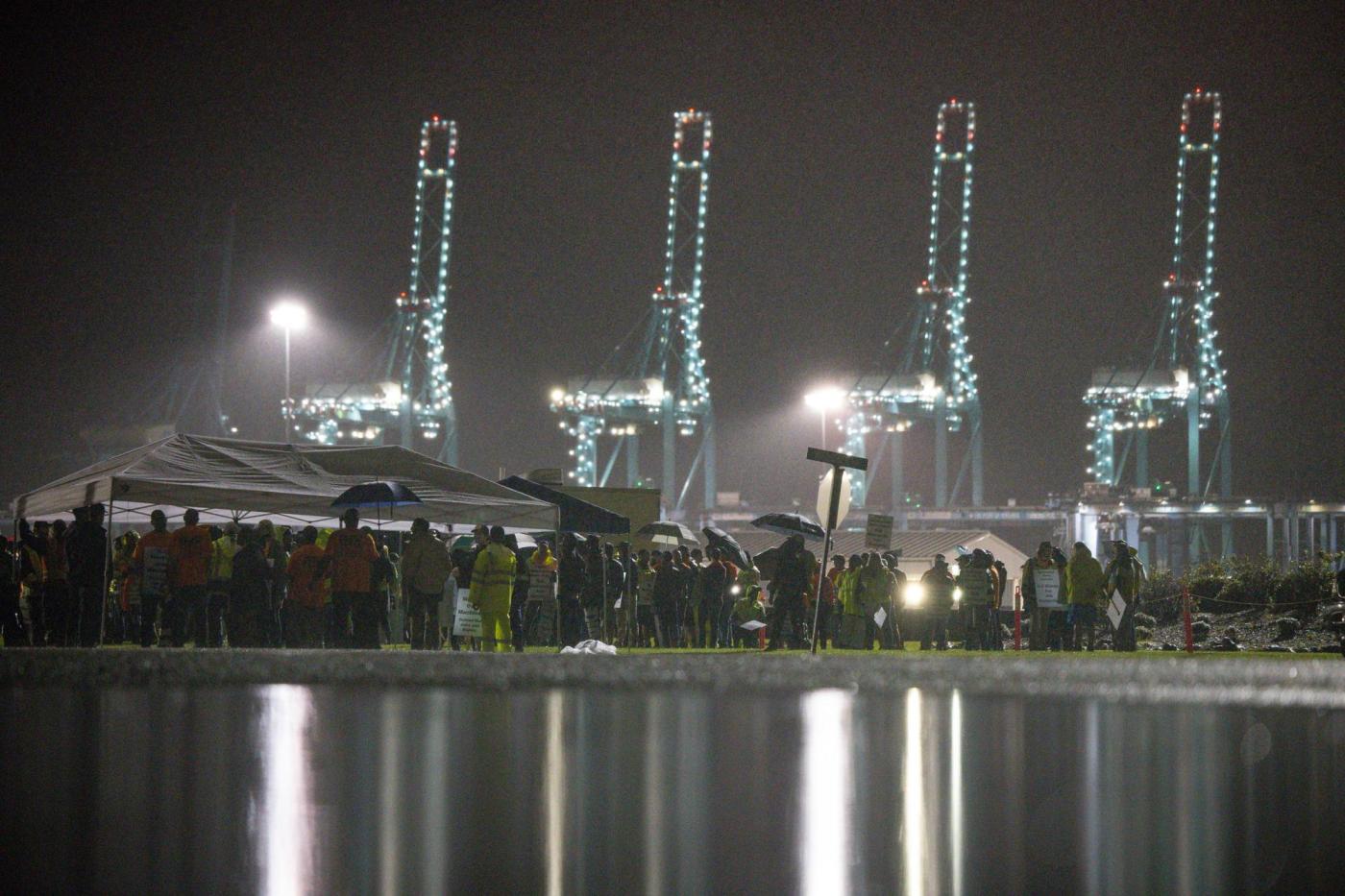
NEW YORK (AP) — U.S. ports from Maine to Texas shut down this week when the union representing about 45,000 dockworkers went on strike for the first time since 1977.

Workers began walking picket lines early Tuesday near ports all along the East and Gulf coasts.

A shutdown that lasts more than a few weeks has the potential to raise prices and create shortages of goods throughout the country as the holiday shopping season — along with a tight presidential election — approaches.

There have been some signs of movement in the talks, with the U.S. Maritime Alliance, which represents ports and shipping companies, saying that both sides have moved from their initial wage offers. But on Wednesday, the alliance called on the International Longshoremen’s Union to come to the bargaining table. “We cannot agree to preconditions to return to bargaining, but we remain committed to bargaining in good faith,” the group said in a statement.

Dockworker Meikysha Wright and others strike outside the Virginia International Gateway in Portsmouth, Va., Tuesday, Oct. 1, 2024. (Billy Schuerman/The Virginian-Pilot via AP)

Late Wednesday night, the ILA said that Harold Daggett, its president, and other union officers, had received death threats since the strike began. The union said the threats were reported to police.

President Joe Biden told reporters Thursday that he thought progress was being made in ending the strike. Asked how much, Biden said “We’ll find out soon.”

What are the issues in the dockworkers strike?

The union is demanding significantly higher wages and a total ban on the automation of cranes, gates and container-moving trucks that are used in the loading or unloading of freight at 36 U.S. ports. Those ports handle roughly half of the nations’ cargo from ships.

The contract between the ILA and the United States Maritime Alliance, which represents the ports, expired Tuesday.

The union’s opening demand was a 77% pay raise over the six-year life of the contract, with Daggett saying that it would make up for inflation and years of small raises. ILA members make a base salary of about $81,000 per year, but some can pull in over $200,000 annually with large amounts of overtime.

On Monday, before workers hit the picket lines, the alliance said it had increased its offer to 50% raises over six years, and it pledged to keep limits on automation in place from the old contract. The alliance also said its offer tripled employer contributions to retirement plans and strengthened health care options.

FILE – Ship to shore cranes work the container ship CMA CGM Laperouse at the Georgia Ports Authority’s Port of Savannah, Sept. 29, 2021, in Savannah, Ga. (AP Photo/Stephen B. Morton, File)

Which ports are affected?

While any port can handle any type of goods, some ports are specialized to handle goods for a particular industry. The ports affected by the shutdown include Baltimore and Brunswick, Georgia, the top two busiest auto ports; Philadelphia, which gives priority to fruits and vegetables; and New Orleans, which handles coffee, mainly from South America and Southeast Asia, various chemicals from Mexico and North Europe, and wood products from Asia and South America.

Other major ports affected include Boston; New York/New Jersey; Norfolk, Virginia; Wilmington, North Carolina; Charleston, South Carolina; Savannah, Georgia; Tampa, Florida; Mobile, Alabama; and Houston.

Can the government intervene?

If a strike were deemed a danger to U.S. economic health, President Joe Biden could, under the 1947 Taft-Hartley Act, seek a court order for an 80-day cooling-off period. This would suspend the strike.

But during an exchange with reporters on Sunday, Biden said “no” when asked if he planned to intervene.

“Because it’s collective bargaining, I don’t believe in Taft-Hartley,” Biden said.

How will this affect consumers?

If the strike is resolved within a few weeks, consumers probably wouldn’t notice any significant shortages or price hikes. But a work stoppage that persists for more than a month could be a different story, depending on what you’re shopping for. Most holiday retail goods have already arrived from overseas, so there is a buffer. Prices on everything from fruits and vegetables to cars may head higher, at least temporarily, if it drags on.

That would be unwelcome news after snarled supply chains sent prices jetting higher at the end of the pandemic, and could be potentially damaging politically with Election Day about a month away.

The “sell-by” clock never stops ticking

Container loads of highly perishable bananas are stuck at some ports and Agriculture Secretary Tom Vilsack told reporters Thursday that it will be hard to retrieve them due to the strike. Biden has urged shipping companies in particular to try harder to resolve the dispute, he said.

“That’s the most effective way of getting the bananas to wherever they need to go. And hopefully the shippers will come to the table,” Vilsack said. “The union will come to the table. Collective bargaining will work, and we’ll get this resolved quickly.”

Limiting the duration of this strike is the key to preventing shortages and higher prices, Vilsack said.

“Our assessment is if this lasts a couple of weeks, we’re not talking about a significant disruption,” he said. “If you get into months, then obviously that’s a different situation.”

Businesses are making contingency plans

Since the major supply chain disruption in 2021, retailers have adapted to supply chain disrupters being the new norm, said Rick Haase, owner of a mini-chain of Patina gift shops in and around the Twin Cities in Minnesota.

Related Articles

National News |


Doctor who helped supply Matthew Perry ketamine pleads guilty to drug charge

National News |


Many Verizon customers across the US hit by service outage

National News |


At least 64 dead and millions without power after Helene’s deadly march across the Southeast

National News |


Hurricane Helene kills at least 44 and cuts a swath of destruction across the Southeast

National News |


How to watch the vice presidential debate between Walz and Vance

“The best approach for Patina has been to secure orders early and have the goods in our warehouse and back rooms to ensure we are in stock on key goods,” Haase said.

Still, housing those goods for longer can have an inflationary impact at the register because retailers will need to recoup those storage costs, or absorb them.

Jay Foreman, CEO of Basic Fun, a Boca Raton, Florida, the maker of Care Bears and Lincoln Logs, has already shifted all of the toy company’s container shipments away from the East Coast to West Coast ports, primarily Los Angeles and Long Beach. That too, comes with a cost.

The maneuver added anywhere from 10% to 20% in extra costs that his company will have to absorb because Basic Fun’s prices for the next 10 months are locked in with retailers. But Foreman would consider raising prices during the second half of 2025 if the strike is prolonged.

Daniel Vasquez, who owns the import, export specialty company Dynamic Auto Movers in Miami, increased inventory, specifically for vehicles that take longer to ship, in anticipation of a strike.

He too stopped relying on one port or shipping partner and has expanded his relationship with smaller ports and shipping companies that can bypass congested areas.

How will a strike affect holiday shopping?

Jonathan Gold, vice president of the supply chain and customs policy at the National Retail Federation, the nation’s largest retail trade group, said the strike arrives with the supply network already facing challenges from Houthi attacks on commercial shipping that have essentially shut down the use of the Red Sea and Suez Canal.

Rising uncertainty over the supply chain arrives at the peak of the holiday shipping season for retailers, which traditionally runs from July through early November. Many big retailers, anticipating a strike, started shipping goods to U.S. distribution centers in June, and Gold said that the majority of those products are already in the U.S.

Yet on top of the cost of storing goods for longer, retailers will have a hard time replenishing their inventory should the strike drag on, and as Gold pointed out, carriers are already announcing surcharges on shipped containers due to potential disruptions.

Toy companies had ready diverted many shipments through Los Angeles in anticipation of a strike and inventories at stores are right now are healthy, said Greg Ahearn who leads The Toy Association, the nation’s leading toy trade group. He said Wednesday that the strike becomes more problematic with time, specifically in satisfying demand for popular toys as Christmas approaches.

As much as 60% of annual sales for toy companies occur during the current quarter, Ahearn said.

“The longer this goes on, the higher probability that toys that parents and caregivers want for their children will be scarce and with scarcity comes the potential for higher prices,” he said

AP Writers Tom Krisher, Stephen Groves and Colleen Long contributed to this report.
Amazon, Target and other retailers are ramping up hiring for the holiday shopping season

posted in: News | 0

By HALELUYA HADERO

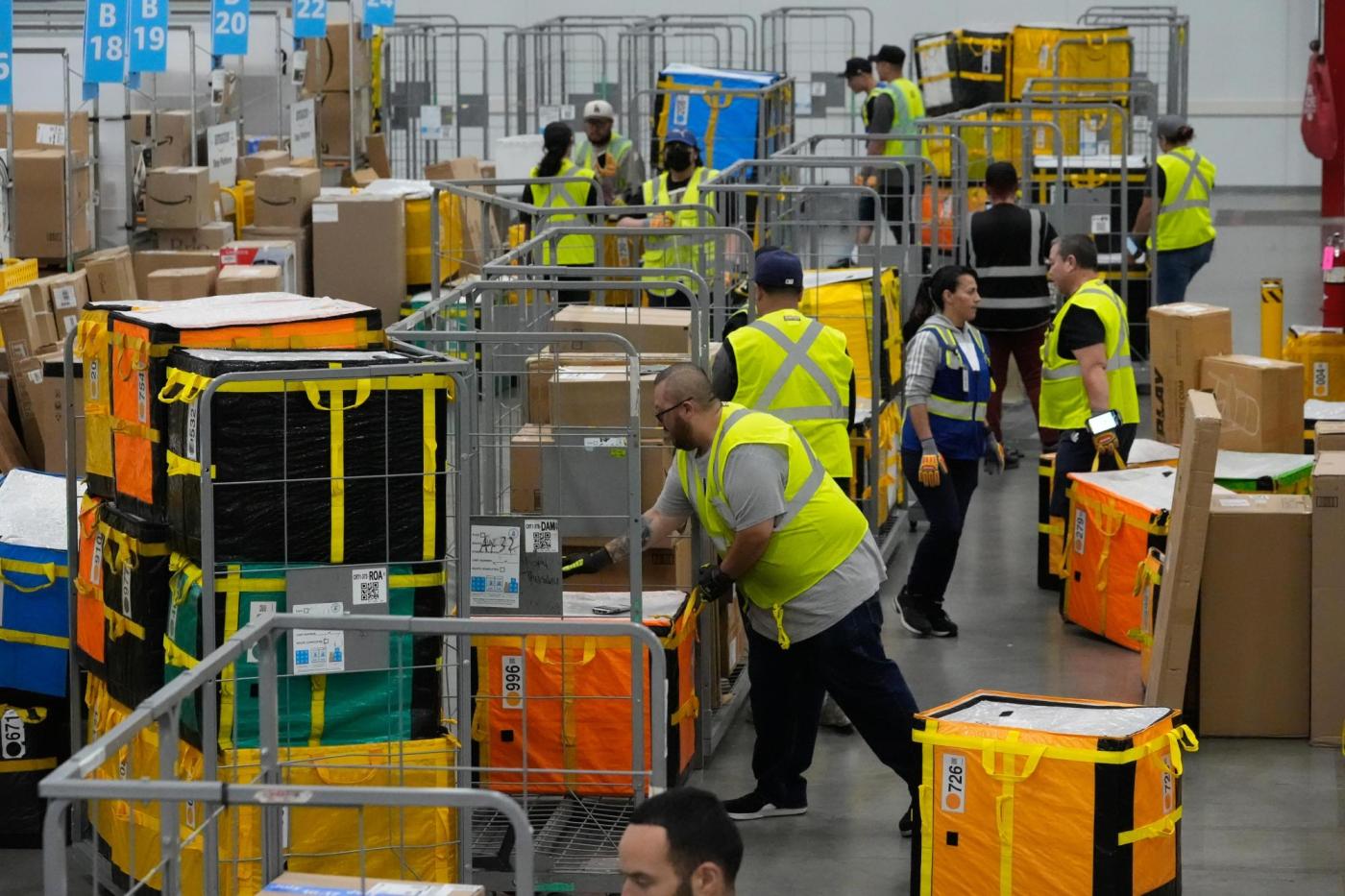
Retailers are ramping up hiring for the holiday season, but fewer seasonal employees are expected to be taken on this year to help customers in stores and assemble online orders in warehouses.

E-commerce giant Amazon said Thursday it will hire 250,000 full, part-time and seasonal workers for the crucial shopping period, rounding out a series of announcements made in recent weeks by the country’s top retailers.

Amazon is hiring the same number of employees it did last year, similar to Bath & Body Works and Target, which said in September it planned to bring in roughly 100,000 seasonal employees and offer current employees the option to work extra hours during the holiday shopping period.

Meanwhile, the department store Kohl’s encouraged people to apply for positions but stayed mum on its plans, mirroring Walmart, which said it’s been hiring store associates throughout the year and will tap into its own staff when needed during the busy season.

Others have indicated they will scale back their holiday hiring. Macy’s said it would add more than 31,500 seasonal positions this year across its Macy’s, Bloomingdale’s and Bluemercury stores, as well as its distribution centers. Last year, the company added 38,000.

This year’s demand for seasonal workers comes as economists are watching the U.S. job market for signs of a slowdown. Job openings have come down steadily since peaking at 12.2 million in March 2022. When the economy roared back with unexpected strength from COVID-19 lockdowns, companies scrambled to find enough workers to keep up with customer orders.

The holiday shopping period is the busiest time of year for online and brick-and-mortar retailers, some of which have already announced discount events to entice consumers planning to shop early for gifts.

The consulting firm Deloitte forecasts U.S. retail sales will increase 2.3% to 3.3% between November and January and reach a total of $1.59 trillion. EY-Parthenon, the consulting arm of Ernst & Young, forecasts a similar 3% jump in sales during the traditional November-December period.

However, EY Parthenon expects price increases due to inflation to account for a big chunk of that growth, saying real volume sales will only rise 0.5% year-over-year.

Online sales, a growing segment of retail, is expected to increase 8.4% and reach a record $240.8 billion, according to Adobe, which tracks e-commerce transactions.

“At the moment, retailers appear optimistic for a strong holiday shopping season, which is being reflected in the hiring plans of major retailers and warehouses,” said Andy Challenger, senior vice president at the outplacement firm Challenger, Gray & Christmas.

Related Articles

Business |


West St. Paul YMCA site eyed for mixed-use redevelopment

Business |


St. Paul zoning board rebuffs storage proposal for Lowertown’s Allen building

Business |


Bank of America outage blocks online accounts or shows zero balances

Business |


MN attorney general files fraud lawsuit against developer behind Lakeville housing project aimed at Somali-Americans

Business |


As Habitat for Humanity builds homes in St. Paul, other Habitat programs help people buy existing homes

Overall, U.S. retailers are expected to add 520,000 new jobs in the final quarter of this year compared to 564,200 in 2023, according to a report released last month by Challenger, Gray & Christmas. The firm, which analyzes non-seasonally adjusted data from the Bureau of Labor Statistics, says that’s more than the 509,300 seasonal jobs retailers added in 2022. But it represents the second-lowest total since 2009.

Generally, the labor market has gradually lost momentum since the Federal Reserve hiked its benchmark interest rate numerous times in 2022 and 2023 to combat high inflation. Last month, the Fed cut its key rate for the first time in more than four years. The move reflected its new focus on bolstering the job market.

The retail industry nevertheless may encounter challenges filling openings in the coming weeks and months “due to the demands of the job and pay,” Challenger said.

To scoop up employees, companies like Macy’s and JCPenney as well as sporting goods stores Bass Pro Shops and Cabela’s are recruiting workers through nationwide hiring events. JCPenney plans to hire more than 10,000 store associates, roughly the same as last year. Macy’s said it would offer on-the-spot interviews during its first event, which took place last week in its stores and warehouses. The company plans to hold three more events this year.

“We are finding strong application flow,” Macy’s said, adding that nearly a third of its recent hires were people who had worked at the company before.

Amid the growth in online shopping, the delivery giant UPS said it planned to hire 125,000 seasonal workers for the holiday rush, up from 100,000 last year.

Radial, an e-commerce company that powers deliveries for brands like Calvin Klein and Express, said it intended to hire fewer people but also planned to scale its staff based on real-time demand. That approach allows the company to meet customers’ needs “without overcommitting,” said Billy Peterson, a senior vice president at Radial.

On the buyer side, consumers have been resilient with their spending while also showing signs of stress, with credit-card debt rising and savings rates falling, trends that could weigh on spending in future months.

Retail sales ticked up from July to August, after jumping the most in a year and a half the previous month. At the same time, consumers have been more prudent about their purchases and pushing back against high prices by trading down to store brands or seeking out deals for products.

However, holiday shoppers could see even higher prices on products if a port workers’ strike that has shut down all the major dockyards on the Eastern seaboard of the U.S. and the Gulf coast persists for more than a month.

How Prepared Is New York City to Face the Next Big Storm?

posted in: News | 0

The comptroller’s office says some inroads have been made but “far more is needed to be fully prepared for heavy storms.”

Benjamin Kanter/Mayoral Photo Office

Rainy weather in Manhattan in 2018.

Since the news of Mayor Eric Adams federal corruption charges broke, government officials have questioned his ability to lead the city amid the turmoil.

And the city’s Comptroller Brad Lander, who is running against Adams for the mayoral seat in next year’s election, says the administration also can’t lose sight of the fact that hurricane season is underway.

Lander’s office published a fact sheet Thursday that zeros in on how prepared the city is to deal with extreme rain. The breakdown tracks the progress made on key hurricane preparedness efforts flagged in a more comprehensive report launched in April, and identified several areas for improvement.

“New Yorkers deserve a Mayoral administration that is laser focused on managing a more climate-prepared and resilient city,” Lander said in an email.

“Climate change continues to bring more and more devastating storms every hurricane season—and the City needs to improve the way it handles emergency outreach, storm operations, and resilient capital projects to be most prepared,” he noted.

June saw the earliest category five storm on record, Hurricane Beryl, make landfall in the Caribbean and bring heavy rainfall to New York.

The comptroller’s update, which spans from April to August of this year, found that only “modest progress” has been made in maintaining the city’s 153,000 catch basins or storm drains. And not enough New Yorkers, including residents in basement apartments,  are getting emergency notifications when a severe storm hits.

The city has made headway, however, in spending the federal dollars it received to address the damage brought on by hurricane Sandy 12 years ago.

“But far more is needed to be fully prepared for heavy storms,” the factsheet concludes.

NYC Comptroller’s Office

Lander’s office published a fact sheet Thursday that zeros in on how prepared the city is to deal with extreme rain.

Work in progress

When it comes to hurricane preparedness, the least progress has been made in replacing the specialized trucks used to unclog the litter that often makes its way into the city’s catch basins, the fact sheet notes. 

These need to be cleaned regularly so they can easily drain excess rainwater during a storm. 

The 51 catch basin trucks that the city has in its fleet, however, have “aged past their expected useful lives of 8-10 years,” the Comptroller’s April report highlights.  The Department of Environmental Protection (DEP) is working on replacing 32 of these, and told City Limits they expect the first batch of that allotment to be delivered “likely” within the “next few weeks.”

But the comptroller’s office warns that 18 remaining trucks in the fleet still need to be replaced and that “no timeline” had been provided for those.

“It was really alarming when we found out that a huge proportion of the catch basin cleaning truck fleet was out of service. They had broken parts, were in disrepair and were just waiting to be serviced,” said Louise Yeung, chief climate officer for the comptroller.

“So with such a diminished availability of these specialized catch basin cleaning trucks, It really begs the question of whether the city can actually clean those catch basins effectively in time for the next storm,” she added. 

To top it off, since April, the DEP only replaced 3.2 percent of the catch basins that needed to be swapped out, according to the report. In total, that’s 48 out of 1,500 that the comptroller’s office flagged as needing replacement.

The report also says that only 6.7 percent of catch basins that required new hardware, or 131 out of 1,927, got those replacements.

DEP, however, rebutted these claims, underscoring in an email that “less than 2 percent of the catch basins citywide need to be replaced, and a similar number require hardware upgrades.” 

“Any catch basin that needs to be cleaned is in fact cleaned,” a DEP spokesperson said in an email.

Michael Appleton/Mayoral Photography Office

A storm drain in Queens.

The department also notes that “catch basin maintenance as well as storm preparations are performed year-round” highlighting that they partner with other agencies to follow a city-wide flash flood emergency plan and evaluate chronic flooding locations annually.

But functioning catch basins aren’t the only problem flagged by the comptroller’s office. They claim not enough New Yorkers are being notified when severe storms hit. 

To get text or email alerts from the city about when a storm is on its way, New Yorkers can subscribe to Notify NYC. After signing up, users can opt to receive “basement alerts” that notify those who live in basement apartments, which are typically prone to flooding, about potentially life-threatening weather conditions.

There are over 1.2 million New Yorkers enrolled in the alert system, which Yueng warns is just  “a drop in the bucket” considering the Big Apple’s adult population is almost 7 million people. Between April and August, NotifyNYC subscribers have only increased by 2.7 percent. 

The New York City Emergency Management Department (NYCEM), which helps handle weather emergencies, doubled the number of people enrolled in basement alerts from 2,387 subscribers to 5,147 subscribers. But that still only makes up 1 to 2 percent of the estimated number of basement residents, the comptroller’s office notes.

A NYCEM spokesperson noted in an email that they rely “on multiple resources to inform New Yorkers of potential impacts for all emergencies.” These include agency partners, elected officials, community organizations and a volunteer group of over 700 members who help inform communities when a weather crisis is at large.

Still, environmental groups like We Act that have come up with their own plan to warn folks about what to do during an emergency say more could be done. Passing out emergency kits with tools like first aid supplies, hand crank radios and flashlights, as well as being more strategic about community partnerships the city makes, could go a long way.

“I think the information that the city has created to prepare people for storms and extreme rain events are really not permeating out into the community at the levels that it needs,” said Annie Carforo, the climate justice campaigns manager at WE ACT.

Still, there is some good news. The comptroller’s report found that improvements have been made on spending the federal dollars that poured in to fortify the city from storms after Hurricane Sandy tore through the Big Apple in 2012.

Of the money that came from the Federal Emergency Management Agency (FEMA), 75 percent has been spent, up from 66 percent in 2022.

And better yet, 97 percent of the funds that came from the disaster recovery program at the Department of Housing and Urban Development (HUD) has been invested.

The city’s Chief Climate Officer, Rohit Aggarwala, underscored in an email that billions have been invested since hurricane Sandy to prepare the city to weather another massive storm. But admitted that “even with this, the work is far from complete.” 

“The good news is that we have also invested huge amounts of money in resilience—which is not about preventing flooding but ensuring that we can withstand and bounce back from it,” Aggarwala said.

To reach the reporter behind this story, contact Mariana@citylimits.org. To reach the editor, contact Jeanmarie@citylimits.org

Want to republish this story? Find City Limits’ reprint policy here.

Yellowstone National Park to continue ‘limited search efforts’ for missing Minnesota man

posted in: News | 0

WINONA, Minn. — After extensive searching in Yellowstone National Park, Austin King, a Winona native and concession employee at the park, remains missing. The park said “limited search efforts” will continue as the search turns to recovery.

“I haven’t given up on the impossible,” Brian King-Henke, Austin’s father, wrote on the family’s GoFundMe page on Wednesday, Oct. 2. “Please stay strong for him and keep him in your prayers.”

Austin King last spoke with a family member on Sept. 17, from the top of Eagle Peak, which is in the park’s “remote southeast corner,” according to the park. Eagle Peak is the highest point in the park at 11,372 feet.

King, 22, is described as a white male who is 6 feet and 160 pounds with brown hair and hazel eyes. He was last seen wearing glasses, a black sweatshirt and gray pants.

“Despite significant search efforts over the past week and a half, we have not been able to locate Austin,” Yellowstone National Park Superintendent Cam Sholly said in a statement. “Although we will continue to hope for the best, I want to extend my deepest sympathies to Austin’s family, friends and colleagues. I also want to thank the teams from Yellowstone and Grand Teton national parks, and Park and Teton counties, Wyoming, who have all worked tirelessly to find Austin in some of the most difficult and remote terrain in Yellowstone.”

The searchers “have not found any definitive clues as to King’s current whereabouts,” the park said in a Facebook post on Wednesday. King had camped in the upper Howell Creek area.

On a planned seven-day hike to summit Eagle Peak, King noted fog, rain, sleet, hail and windy conditions on the summit. He was reported “overdue” to the Yellowstone Interagency Communications Center on Sept. 20, when he did not arrive for a boat pickup near Yellowstone Lake’s Southeast Arm.

The search efforts, which started on Sept. 21, have included more than 100 personnel and helicopters, a drone, ground searchers, and a search dog team near Eagle Peak, according to the park. The park described the area as “high-elevation, expansive and hazardous.” The searchers reported snow, ice and 6-foot drifts, the park said in a Facebook post on Sept. 24.

People with information about King’s whereabouts can contact the Yellowstone Interagency Communications Center at 307-344-2643.

“Each everyone who has opened their hearts to us we are eternally in your debt,” Brian King-Henke wrote. “I am honored by your kindness.”

Related Articles

Outdoors |


‘A Prairie Homeless Companion’ from zAmya Theater starts touring Friday in St. Paul

Outdoors |


‘Why did you shoot me?’: Body cam video released in Lowertown homicide suspect’s shooting

Outdoors |


40 domestic violence-related homicides in Minnesota last year are most on record, report shows

Outdoors |


September was the driest and warmest on record in the Twin Cities

Outdoors |


Final four: One last round of voting will determine the ‘Coolest Thing Made in Minnesota’