Here’s how to watch Biden’s news conference as he tries to quiet doubts after his poor debate

posted in: Politics | 0

By MEG KINNARD Associated Press

President Joe Biden will hold a news conference Thursday, the key event in a monumental week during which the Democratic incumbent is fending off calls for him to step aside as the party’s presumptive nominee following a shaky debate performance.

It’s just the type of event that many political watchers have said Biden needs to pull off successfully to turn back demands — including from within his own party — that he withdraw from his reelection battle against presumptive Republican nominee Donald Trump.

Biden has argued that he had a singularly bad night in Atlanta and that it wasn’t representative of his mental acuity. A strong performance Thursday could convince members of his party that he still has the ability both to win in November and to serve a second term. A weak effort — or stumbles similar to his debate performances — could make the calls for him to withdraw grow much louder.

Here are the details on what White House press secretary Karine Jean-Pierre has referenced as Biden’s “big boy” news conference:

When is the news conference?

Biden is scheduled to take questions from the White House press corps at 6:30 p.m. ET Thursday. It had initially been slated for 5:30 p.m., but the White House moved the time to an hour later.

Where is Biden speaking?

Biden will be speaking from the Walter E. Washington Convention Center, a short distance from the White House, where many events of the ongoing NATO summit are being held.

What channel is carrying it?

The White House streams much of its live content. Given the attention on this event, television networks could also break away from programming to carry Biden’s remarks live once he starts speaking.

The Associated Press will offer a livestream at apnews.com.

Related Articles

National Politics |


Presidential battle could play role in control of state capitols in several swing states

National Politics |


More states consider voter ID laws amid conflicting research on their impact

National Politics |


Nikki Haley releases delegates, urges them to back Trump at convention

National Politics |


Harris rallies in Las Vegas for Biden. Many Democrats agree, but some want her to face Trump

National Politics |


Pelosi sends signal to Biden: ‘Time is running short’

Who will be watching?

Probably a lot of people.

CNN reported that 51 million people watched the Atlanta debate, which was in primetime, while more than 8 million people tuned in to watch Biden’s ABC interview live. If networks break into their daily coverage or cable channels carry it live, that will guarantee a significant number of eyes on Biden.

Will Biden know the questions ahead of time?

Aside from some apparent exceptions — like incidents in which two Black radio hosts said Biden’s campaign sent them planned questions ahead of time — it’s not standard practice for the president to know precisely what will come up during interviews or news conferences.

His aides prepare him for a host of possibilities based off the headlines of the day, so they’re prepping him for the likelihood that journalists will want to ask about his fitness for office, the NATO summit or other topics.

How many questions will he take?

That’s not set in stone, and there’s not a ton of precedent.

Biden hasn’t held very many news conferences that aren’t tied to a foreign leader’s visit or trips abroad. Typically, those are what’s known in the business as a “2+2,” meaning two reporters from the U.S. and two foreign reporters ask questions.

What’s up next?

Biden returns to the campaign trail with a trip to Michigan Friday. He will also do an interview with NBC on Monday.

Associated Press writer Colleen Long in Washington contributed to this report.

Meg Kinnard can be reached at http://twitter.com/MegKinnardAP.

Shelley Duvall, star of ‘The Shining,’ ‘Nashville,’ dies at 75

posted in: News | 0

By JAKE COYLE

Shelley Duvall, the intrepid, Texas-born movie star whose wide-eyed, winsome presence was a mainstay in the films of Robert Altman and who co-starred in Stanley Kubrick’s “The Shining,” has died. She was 75.

Duvall died Thursday in her sleep at her home in Blanco, Texas, her longtime partner, Dan Gilroy, announced. The cause was complications of diabetes, said her friend, the publicist Gary Springer.

“My dear, sweet, wonderful life, partner, and friend left us last night,” Gilroy said in a statement. “Too much suffering lately, now she’s free. Fly away beautiful Shelley.”

Duvall was attending junior college in Texas when Altman’s staff members, preparing to film “Brewster McCloud,” encountered her as at a party in Houston in 1970. She would go on to become Altman’s protege.

Related Articles

Movies & TV |


Alec Baldwin’s involuntary manslaughter trial starts with witnesses recalling chaotic set shooting

Movies & TV |


Jason Matheson introduces new sidekick Falen Bonsett as Kendall Mark starts MyTalk job

Movies & TV |


Minneapolis offers $2 million a year to host the Sundance Film Festival

Movies & TV |


Alec Baldwin arrives at courthouse for pretrial hearing over fatal shooting of cinematographer

Movies & TV |


Delaware judge refuses to dismiss lawsuit in battle over Prince’s estate

Biden’s press conference today will be a key test for him. But he’s no master of the big rhetorical moment.

posted in: Politics | 0

WASHINGTON (AP) — President Joe Biden has a fresh opportunity Thursday to try to prove to the American public that he’s capable of serving another four years after his shocking debate flop threw the future of his presidency into doubt. But Biden is not known as a master of the big rhetorical moment and his recent cleanup efforts have proved inadequate.

Biden, 81, will close out the NATO summit in Washington — an event meant to showcase his leadership on the world stage — with a rare solo press conference. His stamina and effectiveness are under the microscope like never before and he’s struggling to quell the Democratic Party’s panic about his chances this November.

By many metrics, from job growth and major legislation to the expanded transatlantic alliance, Biden can point to successes during his tenure in office. But where he has sometimes failed — spectacularly, in the case of the debate — is at a defining part of the role that isn’t in the official job description: delivering inspiring oratory that commands the attention and respect of the nation.

Biden has tried to step up his performance since the debate but his follow-up interview on ABC last week was disappointing. Nothing he’s tried seems to be stopping the bleeding, with more lawmakers calling for him to bow out in the face of concerns that he could hand the White House back to Republican former President Donald Trump.

Americans tend to regard their leaders less for what they do than how they make them feel, and Biden’s debate disaster has shaken his party to its core.

“The debate was a reminder that you can have as many policies as you want, but what the public sees and hears might matter more,” said Julian Zelizer, the Princeton presidential historian.

Rhetoric is intertwined with the modern presidency, from Franklin D. Roosevelt’s “The only thing we have to fear is fear itself” to Ronald Reagan’s “Mr. Gorbachev, tear down this wall!”

It can inspire in the wake of tragedy, like George W. Bush’s bullhorn speech on the smoky rubble at Ground Zero and help a war- and recession-weary country recover its sense of self, like Barack Obama’s “Yes we can!” Even Donald Trump’s “Make America Great Again” cry echoed the temperament of the agitated nation.

“People saw Trump as a reflection of a more turbulent, chaotic and angry country,” Zelizer said. “Voters may see Biden’s frailty as a symbol of weakness or its own kind of instability.”

Biden can give a good speech — his State of the Union address earlier this year helped quiet doubters about his viability as a candidate. But his strength as a president and politician has been how his humanity in intimate settings resonated with voters, and the power of his personal narrative and down-to-earth roots.

Yet those moments, in private or before small crowds, even if amplified on social media as Biden’s team hopes, are certain to reach fewer people than the tens of millions who watched his bout with Trump.

Despite a drumbeat of calls from some in his party to step aside, Biden has dug in, insisting he’s the best Democrat to defeat Trump, whose candidacy he’s called an existential threat to democracy.

His press conference will be closely watched for his ability to think on his feet, to demonstrate dynamism and to articulate both that he is still capable of doing the job and of winning it once more.

Even before the debate, Biden’s victories as president have often come despite his inability to sell them to a skeptical public. Heading into his face-off with Trump he has historically low job approval ratings for an American leader. And he’s been unable to overcome voters’ pessimism over the direction of the country and a majority of voters in his own party had already believed him too old to effectively lead the country.

The debate, rather than helping Biden reset the race against Trump, confirmed voters’ preestablished fears about him, said Allison Prasch, a professor of rhetoric who researches presidential communications at the University of Wisconsin, Madison.

“The president is a symbol,” she said, adding that Americans often look to the president as a mirror to reflect on their hopes and their fears.

“You could argue that when you see a president that appears infirm, has difficulty doing some basic tasks of the presidency, you have questions about the state of the nation,” she said.

She contrasted his recent halting public comments with his message from the campaign four years ago.

“In 2020 he was promising to demonstrate confidence in the face of chaos. He was saying, ‘I’m this steady force,’” Prasch said. “If that’s how you branded yourself and you do the opposite thing in this debate, that’s exactly why this was so jarring for the public.”

Biden aides and allies responded to the debate with a series of public pronouncements defending Biden’s mental state and fitness for the job, notably focused on the big decisions of the Oval Office, rather than his ability to articulate them to the masses.

“I have not seen any reason whatsoever to question or doubt his lucidity, his grasp of context, his probing nature, and the degree to which he is completely in charge of facts and figures,” White House National Security spokesman John Kirby said Monday.

Brett McGurk, the White House coordinator for the Middle East and North Africa and a veteran of four administrations, said he has never been concerned about Biden’s decision-making.

Speaking of Biden, he told The Associated Press: “I have never seen a president who is not prepared, who is not deliberate, who is not asking rigorous questions of those in the room or of a foreign leader,” adding that Biden “makes decisions sometimes which are often difficult decisions, and then actually follows up.”

While Biden and his team have made a concerted effort since the debate to increase his public visibility — which had been limited by aides worried about Biden’s penchant for gaffes or missteps — he has proven to be uneven and at times underwhelming.

Campaigning in Pennsylvania on Sunday, Biden delivered remarks for less than 10 minutes at a Philadelphia church and a Harrisburg rally, but spent three times as long taking selfies and hugging kids — the sort of feel-good content that has always bolstered his political fortunes.

A call-in interview with MSNBC’s “Morning Joe” showcased Biden’s defiance and distaste of party “elites” as he pledged to stay in the race. In his opening remarks at the NATO summit, Biden was forceful in defense of the alliance.

“The more he gets out there to campaign with voters, the starker the contrast and easier the choice will be for these voters: between Joe Biden, a decent man fighting for the middle class and an unhinged billionaire like Trump who wants to terminate the ACA and turn our country into a dictatorship,” said campaign spokesman Kevin Munoz, referring in part to the Affordable Care Act.

But asked in the ABC interview about how he would feel if his candidacy handed the White House back to Trump, he offered a mangled and less-than-inspiring response: “I’ll feel as long as I gave it my all and I did the good as job as I know I can do, that’s what this is about.”

___

AP writer Colleen Long contributed to this report.

Related Articles

National News |


Letters: We need more politicians (Democrat and Republican alike) with courage

National News |


Pelosi sends signal to Biden: ‘Time is running short’

National News |


Biden’s candidacy faces new peril, including first Senate Democrat saying he should exit race

National News |


Jennifer Schwab: President Joe Biden’s student debt relief is another blow to meritocracy and personal responsibility

National News |


Biden’s low-profile doctor has been thrust into the spotlight after the president’s debate disaster

‘Tech Doesn’t Just Stay at the Border’: Petra Molnar on Surveillance’s Long Reach

posted in: Adventure | 0

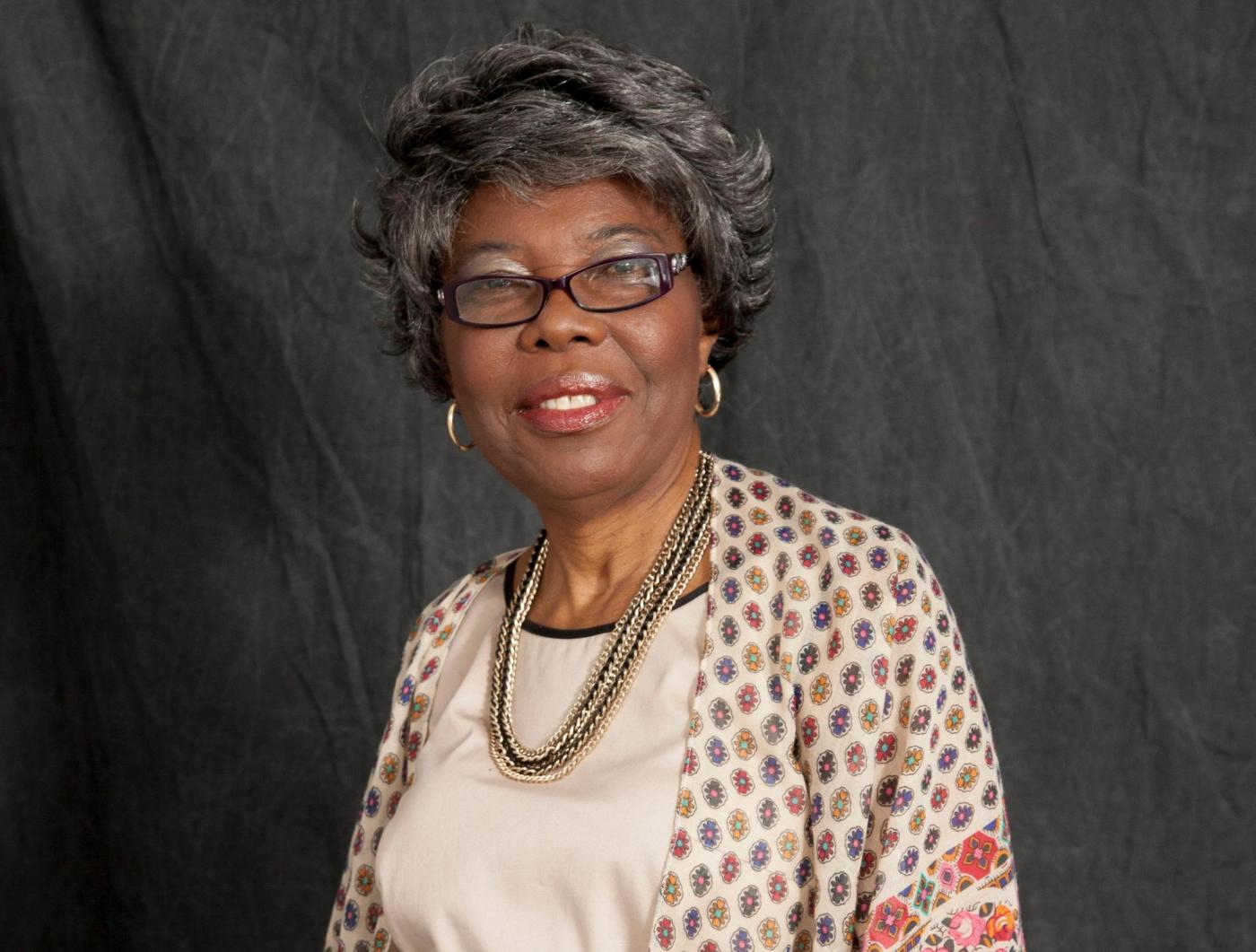
Petra Molnar is an anthropologist and attorney focused on human rights and migration. Molnar, who is based in Toronto, serves as the associate director of York University’s Refugee Law Lab and as a faculty associate at Harvard University’s Berkman Klein Center for Internet and Society. She has worked on migrant justice causes since 2008, first assisting directly with families resettling in Canada and now as a lawyer and researcher. She is the author of The Walls Have Eyes: Surviving Migration in the Age of Artificial Intelligence, a book published by The New Press in May exploring surveillance technology along borders across the world, including at the U.S.-Mexico divide. Molnar spoke with the Texas Observer about surveillance tech and borders as a testing ground. 

Petra Molnar (Courtesy)

TO: Could you tell me a little bit about the different places you visited for your new book?

This book first started in Canada, but then I ended up traveling and living in Greece for three years, trying to understand how different refugee camps are getting more technology and how biometrics are used. Then I also did some work at the Polish-Belarusian border and other parts of Europe, but I broadened it out to trying to understand the kind of data colonialism in the Kenya-Somalia border, in the occupied Palestinian territories, and also the U.S.-Mexico border. Specifically, I’ve been working in Arizona out of Tucson, but then also in places like Nogales and Sasabe, and working closely with search-and-rescue groups there. 

What is data colonialism?

That’s one of the underpinnings behind this whole story—the fact that our world is built on data now. An amazing colleague of mine, Mariam Jamal, a digital rights activist in Kenya, had this great phrase—“Data is the new oil.” That is precisely what we’ve been seeing. The fact that Western nations like the United States, Canada, Europe, need a lot of data subjects to power the way that technology is developed and deployed, it kind of replicates colonial power. So countries on the African continent or in the Middle East end up being subjects on whom technologies are tested or data is extracted from.

What does that testing of technology look like on the U.S.-Mexico border?

The U.S.-Mexico border is an interesting case study because it is one of the crucial sites where smart border tech is being tested out. The border itself is already a really interesting and an important place to look at, because legally speaking, it’s very opaque, very discretionary. Officers can make all sorts of decisions. This is the kind of zone where new technologies of surveillance are being tested without public scrutiny, accountability, or even knowledge. We’re talking about traditional surveillance, like drones, cameras, sensors in the ground, but also draconian projects like the robot dogs that were announced in 2022 by the Department of Homeland Security that are now kind of joining the global arsenal of migration management tech. 

What happens at the border is this kind of laboratory where things are tested out and then it proliferates into other spaces—even with these robot dogs. A year after they were announced, the New York City Police Department proudly unveiled that they’re going to be using robo-dogs on the streets of New York. One even had black spots on it, like a Dalmatian. 

You said that there isn’t a lot of oversight of border tech. Could you talk about that more in the context of technologies being tested at the U.S.-Mexico border?

One project that comes to mind is the CBPOne facial recognition application that has been rolled out the last few years for the purposes of what officials say is streamlining the system. If a person arrives, they have to download this application that uses facial recognition technology, data collection, etc. on their phone to then be able to enter the system and get an appointment. 

It sounds like an application on paper, but people have been documenting its discriminatory effects on people with darker skin. It crashes people’s phones. People don’t know where their data is going. 

So much of these technologies are rolled out without any kind of discussion. It’s unclear what kind of human rights impact assessments have been done. Have they talked to human rights lawyers or refugee lawyers about what is actually needed on the border? It again highlights that the border is like a free-for-all, this frontier zone that is a perfect laboratory for tech experimentation, because it’s hard to know what happens. 

For you as a journalist, for me, as a human rights lawyer, we find out about things after the fact, or once they’ve already been rolled out. There isn’t this commitment to oversight and accountability in these spaces at all—because there doesn’t have to be. 

Could you talk more about how surveillance plays into what some people call the border-industrial complex? Who are the major players, and who benefits? 

That’s such an important piece to the puzzle here—the proliferation of what people have called a very lucrative global border-industrial complex. We’re talking billions of dollars being spent on border technologies and also military grade technologies that are then repurposed for the border, like the robot dogs. The private sector is a major player in this whole story, because they’re the ones who set the agenda on what we innovate on, and why—especially if there’s money to be made in this kind of securitization of the border. 

It’s no accident that we’re developing robo-dogs, AI lie detectors and surveillance to test out on people crossing borders and not using AI to audit immigration decision making or root out racist border guards. That’s a particular set of decisions that a powerful set of actors is making, because there’s a bottom line to meet, and money to be made. 

There’s the kind of companies that maybe readers are aware of: Palantir, Cellebrite, and Elbit Systems, an Israeli company that has put up surveillance towers in the [Sonoran Desert] that were first tested out in Palestine. But there’s also a whole host of other tiny and medium-sized companies that proliferate in this space as well. From a legal perspective, we’re also dealing with a complication where, when you have these public-private partnerships, a public entity and a private entity operate in different legal spheres. A company that develops a product and sells it off to a state agency can say, “It’s not our problem that people are being hurt by it because we just developed the product. We’re not the ones using it.”

On the other hand, the public sector can say, well, “We didn’t develop it.” This is the private sector problem. Then you end up with this kind of vacuum in the middle where people’s rights are being violated, but the responsibility isn’t exactly clear. Who’s actually responsible for when things go wrong? There’s no incentive to regulate this technology if you make a lot of money out of it; that’s really the bottom line here.

Does surveillance in border communities along the U.S.-Mexico border impact people in the interior of the country?

This tech doesn’t just stay at the border. Not only does it then become normalized and used in other areas of public life, like the robot dogs now patrolling streets of New York City, but also there are things like facial recognition in public spaces—including in sports stadiums and surveillance of protesters

A lot of this technology is first developed and deployed for border purposes, normalized and then repurposed in other spaces. There’s also surveillance that happens inland, of course. There’s all sorts of license plate reader technology, different types of facial recognition tools, carceral technologies, that are used both in the criminal justice system and in the immigration detention system. It is this kind of surveillance dragnet that extends further and further inland and ensnares entire communities.

Could you talk a little bit about how surveillance tech plays a role in the so-called externalization of borders from the Global North to the Global South? How does that apply at the U.S.-Mexico border?

Externalization is a really important piece to this puzzle, too. This is the phenomenon where the border stops being a physical location, and then it is extended further, kind of disaggregated from its actual physical location—not only vertically into the skies through drones and surveillance but also horizontally. The U.S. has for years been pushing its border farther and farther south. The whole logic behind this right is that if a country can prevent people from even reaching its territory, then the job is done, right? If the whole point is to strengthen borders or close the borders, then externalization does that job for you because people can’t even arrive in your territory. 

The tension here is a lot of Western states like to present themselves as being very like human rights forward. They are the ones who ratified and signed all the agreements like the Refugee Convention. But in order for that to work, the international refugee protection regime has to allow for people to be able to leave their country and arrive in a country of refuge where they can then claim asylum. If you close the border and then you push the border away to make it even more difficult for people to come, that actually infringes on this fundamentally protected right to asylum. That is illegal under international refugee law. The U.S. is a signatory to the Refugee Convention, and closing a border and preventing people from seeking asylum is in direct contravention of these principles and laws that supposedly the U.S. holds. 

What do you foresee for the future of border surveillance, for borderlands across the world?

I’ll give you the pessimistic answer first, and then the optimistic one. I think the trend is more surveillance, sharper technology, insufficient regulation. This past time period was a really crucial one. For example, the European Union put out its big AI Act to regulate artificial intelligence. There’s talks about regulation at the U.S. level, Canada, other countries—but a lot of these instruments are very weak. When it comes to border surveillance, some of us were hoping that there would be some really strict guidelines and maybe even bans or moratoria on some of the really draconian technology. But unfortunately, that’s not the case. There’s a lot of money to be made. The likelihood is that there’s no incentive to regulate. The incentive is to create more technology, more algorithms, more AI. 

The optimist in me, though, has seen that there are more and more conversations being had that are also led by affected communities about what this is really doing on the ground—and finding ways to kind of break through these silos that we all work in and find common ground and say, “No, this is not the society we want to live in.” We want to actually have a world that is not led by technocrats or the private sector, but [we want to] actually maybe use technologies to empower communities for psychosocial support, social support, support for information sharing, and really push governments to think about the human impact of this. I do see that trend as well.

This interview has been edited for length and clarity.