It’s a mixed bag of good reading today, with collections from experienced Minnesota poets plus a debut from a chef-turned-poet (all published late last year and still in print). Our fiction is a thriller set in the land of the Navajo and there’s nonfiction from a man recalling his boyhood experiences before Jacob Wetterling was abducted.
Poetry
“Messages from the Nile”: by Philip S. Bryant (Nodin Press, $17)
The poems in this love letter to place, the fifth collection by a retired professor from Gustavus Adolphus College, are not from Egypt but from St. Peter, Minn., where he lives. The title comes from a quote by Langston Hughes: “I looked upon the Nile and raised the pyramids above it.” Bryant’s topics include baseball, campfire smoke, a farm repair sign along the highway, and the true meaning of a liberal arts education. He can be both humorous and serious as shown in “The Greasy Grass Blues: Coda for the Battle of the Little Bighorn,” dedicated to the late Native American writer Jim Welch: “Just over the far horizon of those fateful hills, which just goes/To show, when push comes/To shove and it’s up against the wall,/White folks really don’t listen to us…”
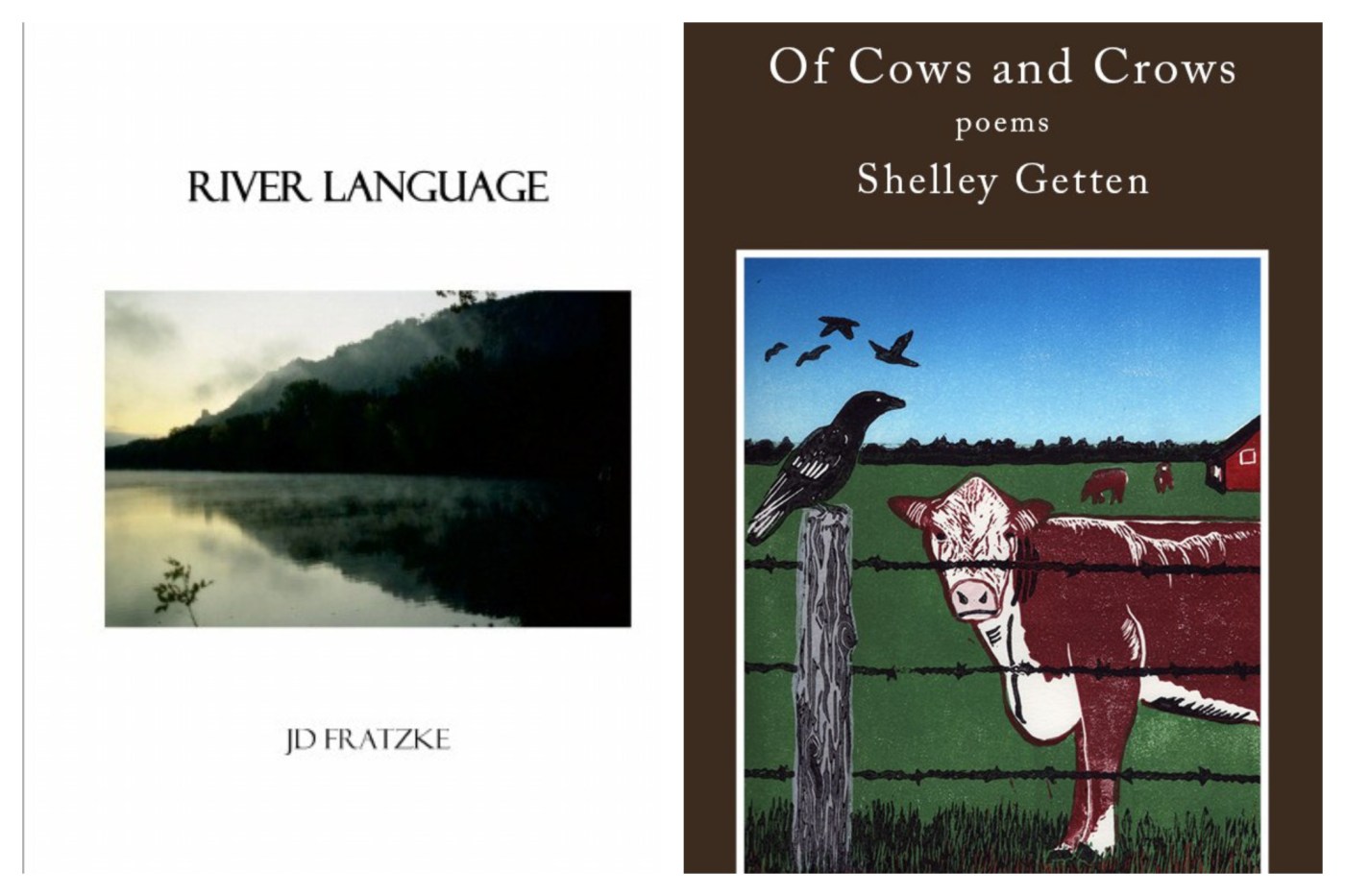
“River Language”: by JD Fratzke (Liquid North Publishing, $16)
Fratzke is familiar to focal foodies as a corporate chef, culinary director and restaurant innovator for 30 years, earning him an appearance on Bravo’s “Top Chef” show. A native of Winona, Fratzke wrote columns for hospitality publications but he is also a wilderness enthusiast, and his autobiographical debut poetry collection shows his way with words matches his culinary skills. In a note to the Pioneer Press, Fratzke calls the collection “a sort-of memoir in poetry; missives of gratitude and assessment to the Mississippi River and Minnesota’s wild places for having seen me through the turmoil and pressure of culinary culture as well as the dark places that live in my own heart.” But this is not poetry of dark places; it’s filled with the joys of nature and the place we live. This is a gorgeous collection that got far too little attention. For example, here is part of the title poem: “Rivers birth a certain cadence/that loves to play on strings./They tend to call/ On spirits/long-limbed and earth-colored/that rise/from seams of sand and clay /in the roots/at the foot of a bluff…They move dream-slow/with copper eyes; ravenous to detour /hearts in sorrow.”
“Of Cows and Crows”: by Shelley Getten (Nodin Press, $17)
Minnesota native Getten lives in a log cabin home on the Knife River and maintains Getten Creative studio with her life partner, not far from the shores of Lake Superior. She has spent the past 12 summers teaching art and writing at Summerblue Theatre Arts Camp in Two Harbors and at the Duluth Folk School. In “Of Cows and Crows,” Getten evokes living for 10 years on a hardscabble farm in central Minnesota in a coming-of-age collection in which the narrator navigates the emotional turmoil of her teen years. Her poems show how such a childhood can foster a deep love of the land. In segments titled The Farm, Creatures of Comfort, Word and Refuge, Deep Freeze and In the End, she moves from memories of a cat named Bandit and a cottonwood tree to circus money and farm work: “Under a broiling sun, Deb and I heave heavy rocks onto the front-end loader. When boulders are too big to lift alone, we work together to raise and shuffle fieldstones to the ‘bucket’ in front of the tractor…”
“In the Evening”: by William Reichard (Broadstone Books,$26.25)
In his eighth poetry collection, St. Paul-based Reichard divides his poems into four parts, with topics ranging from Dry Summer to What Love Is. Among his intriguing titles are “The Melancholy Cry of a Bird in the Night” and “Finding Beauty Amid the Wreckage of the Soul.” In a section titled America’s Saints he honors Matthew Shepherd and Harvey Milk, both killed for being gay. In the poem “Two Pandemics” he compares AIDS and COVID, referring to the diseases as “different but the same.” From the title poem: “The night singers are loud/proclaiming themselves/every evening until they run/out of nights and die in/ the cold, or burrow down into/the mud to dream away the winter…”
“Home Words”: by Joyce Sutphen (Red Dragonfly Press, $20)
(Courtesy of Red Dragonfly Press)
Sutphen, aormer Minnesota poet laureate and Minnesota Book Award winner, and a retired professor from Gustavus Adolphus College, completes with “Home Words” her trilogy focused on the changing rural landscape in our state. Her poetry has been published in a variety of literary journals and she was twice a guest on Garrison Keillor’s “A Prairie Home Companion.” In “Home Words” her topics range from memories of her mother as well as early rhubarb, Aunt Betty’s cake and the Children’s Theatre. Here’s an excerpt from “After We Are Gone”: “No one will remember the same things/about this place you will remember/a wagon piled high with wood/and how our father and our uncle/took out a basement window and threw/wood down a chute, and how the sound/was the promise of winter and warmth…” This is accessible poetry for people who think they don’t like poetry.
“Rings of Heartwood: Poems on Growing”: by Molly Beth Griffin, illustrations by Claudia McGehee (Minnesota Historical Society Press, $18.95)
“I’ve been writing stories and poems abut how animals grow for decades,” Molly Beth Griffin writes in her book that blends 12 poems with art and facts. “But it wasn’t until my 6-year-old daughter broke into tears over outgrowing a favorite dress that I realized I wanted to work on a whole collection of poems for kids and their grown-ups on this topic.”
Griffin’s message is that pain and joy are part of the growth process for all living things. With an illustrated poem on one page and scientific information and fun facts on the opposite page, Griffin delves into growth rings in trees that tell its age, how tadpoles become frogs, bat mothers that create communal nurseries, baby opossums who are born in their mother’s pouch, and the unfurling ferns that have been on the Earth 300 million years. Together the poems and artwork show young readers that we all grow, change and adapt as do the woodland, wetlands, and prairie dwellers, helping children understand it’s a natural process.
Minnesotan Griffin is the author of “Ten Beautiful Things” and “Rhoda’s Rock Hunt,” among other books for young readers. Iowa-based artist Claudia McGehee’s muscular, vivid scratchboard and watercolor illustrations make the creatures and their surroundings come alive.
Fiction and nonfiction
“Rabbit Moon”: by Jan E. Payne (Rabbit Hole Publishing, $18)
Payne, who lives in the Leech Lake area in northern Minnesota, draws on her years of experience in the Four Corners of the Navajo Nation in the American southwest to give us an exciting thriller that melds kidnap, murder and intrigue involving end-of-life doula Marin Sinclair. Her dad taught at the Bureau of Indian Affairs school near Flagstaff, Ariz., and Marin is one of the few Anglo students among the Dinetah (Navajo Nation) students. After caring for her father for years and then for a smart man she admired, Marin gets a strange invitation to a high school reunion from her estranged best friend. But something is wrong. There is no reunion on the date mentioned and her friend signs her full name and not a nickname. As Marin drives to the supposed reunion, she’s followed by men she’s never seen before. She experiences scary vehicle encounters on back roads, she’s grabbed and nearly forced into a car, and the men chasing her seem to know all about her. The story moves between Marin’s dangerous dilemma and her childhood during which a friend died, for which she blames herself. The author also shows us some of Navajo culture, including stories of Skin Walkers, witches and haunted mesas. When Marin finds herself alone in total darkness in a deep uranium mine she fears she will never see daylight again. This involving fiction is as as good as any published by the big legacy houses.
“Pain in Paynesvlle”: by Kris A. Bertelsen (Kirk House Publishers, $16.95)
(Courtesy of Kirk House Publishers)
Before 11-year-old Jacob Wetterling was abducted and murdered in 1989 near his home in St. Joseph, Minn., Kris Bertelsen and his friends were terrorized 30 miles away in Paynesville by a masked man who jumped out of bushes and molested some of them from September 1986 to September of the following year. The boys, who called themselves the Misfits, spent their days biking, fishing, swimming and building forts when they were younger. They referred to the masked man whose face they never saw as Chester the Molester, and they lived in fear of him. Bertelsen was with friends twice when Chester attacked and the second time young Kris thought he was the man’s target. Bertelsen reported the attacks, but the assailant was never found. When news of Jacob’s disappearance made national headlines, Bertelsen and some of his former gang were sure Jacob’s killer, Danny Heinrich, was the man who attacked them. Bertelsen contacted authorities and even Jacob’s father, but nothing came of it. The boys, now grown men, felt they weren’t being listened to although Bertelsen acknowledges law enforcement investigations were going on.
That year of terror in Paynesville left Bertelsen with emotional pain and trauma. In his book, subtitled “My Firsthand Encounters with Terror and the Search for Jacob Wetterling,” Bertelsen recounts his experiences through the 27 years of the Paynesville attacks to Heinrich’s confession and his information about where Jacob’s body could be found. Bertelsen tries to be fair to local law enforcement but he was frustrated at the seeming inability to connect the dots between Paynesville and St. Joseph. He tried to keep a happy face as the years wore on with no news about Jacob, but the trauma seethed in his head and affected his behavior. He writes of the growing recognition now of the necessity of improving communications and services to those affected by crimes. Bertelsen also compliments Patty and Jerry Wetterling for staying strong and gracious through their years without their son. (For insight into the Wetterlings’ thoughts and feelings, read Patty’s memoir “Dear Jacob: A Mother’s Journey of Hope,” Minnesota Historical Society Press, 2023.)
Bertelsen is an award-winning economic educator, therapist and advocate for survivors who has published articles, lesson plans and videos for educators in economics and personal finance.
Related Articles
Literary calendar for week of February 23
How George E. Johnson made millions in the hair care industry while following the Golden Rule
Eastern Europe’s traditional ingredients get star treatment in the new cookbook ‘Kapusta’
Readers and writers: Three strong novels with Minnesota ties to add to your list
Literary calendar for week of Feb. 16