A mix of hope and fear settles over Venezuela after US-imposed government change

posted in: All news | 0

By REGINA GARCIA CANO, Associated Press

CARACAS, Venezuela (AP) — Time in Venezuela feels like it’s moving both too fast and too slow. The pillars of the country’s self-proclaimed socialist government are falling at a dizzying pace or not quickly enough. Economic relief is finally on the horizon or already too late.

Thirty days after the U.S. raid and capture of then-President Nicolás Maduro upended Venezuela, adults and children alike are still unsure of what exactly is happening around them. And as the initial shock gives way to a mix of uncertainty, hope and disappointment, a pervasive fear of another attack or more government repression continues to hang over them.

In the capital, Caracas, where government-sponsored billboards and graffiti demand that the U.S. free Maduro, many residents wonder whether his successor, acting President Delcy Rodríguez has any autonomy or is capitulating to White House demands; whether she is Maduro by another name, and — crucial to their immediate needs — whether to believe, as indicated by her, that a long-sought wage increase is on the horizon. Meanwhile, long-silent opposition leaders have finally emerged to speak publicly.

Venezuela’s acting President Delcy Rodriguez, center, smiles flanked by Interior Minister Diosdado Cabello, right, and National Assembly President Jorge Rodriguez after making a statement to the press at Miraflores presidential palace in Caracas, Venezuela, Wednesday, Jan. 14, 2026. (AP Photo/Ariana Cubillos)

“It’s an important change, certainly, but everything is the same, everything,” retiree Julio Castillo, 74, said of the removal of Maduro from office. “I feel as if nothing much has happened.”

‘We are acting under coercion’

Venezuela’s government and its supporters consider the capture of Maduro and first lady Cilia Flores a kidnapping. Rodríguez and senior officials have pledged to fight for the couple’s freedom since U.S. President Donald Trump first announced their seizure in the early hours of Jan. 3.

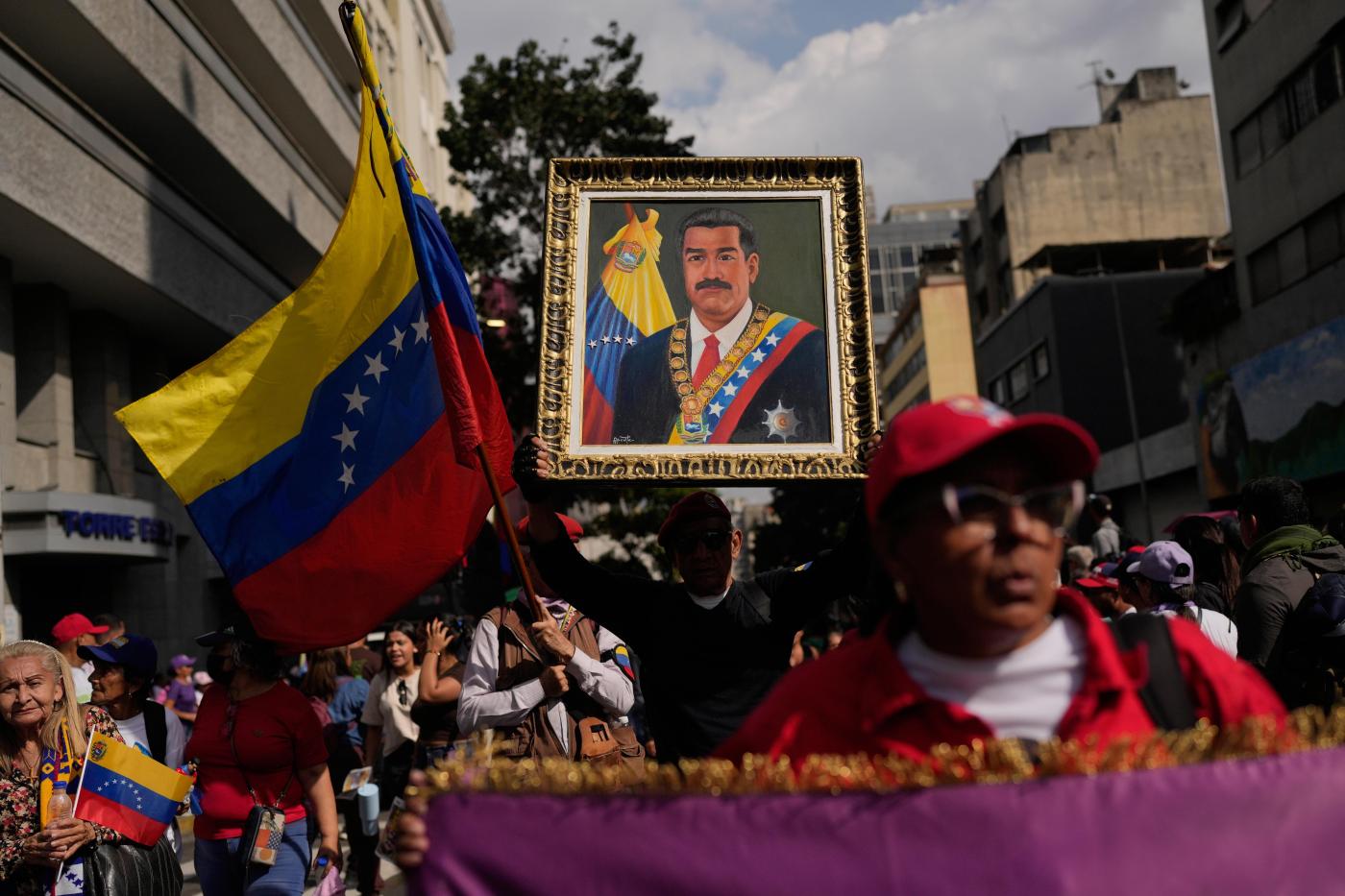
The ruling party has organized demonstrations to show their loyalty to Maduro, whom the fiery Hugo Chávez anointed as his self-proclaimed socialist revolution’s torchbearer before dying in 2013. It has also adjusted its messaging from threatening a Vietnam-like war with the U.S. to admitting being militarily outmatched and needing to transform the relationship with Goliath.

Supporters — a minority compared to the crowds during Chávez’s presidency — see Rodríguez as lacking free will but trust that she can carry Chavismo, their political movement, through the next diplomatic battle.

“The Venezuelan state, and Venezuelans, are accepting this new situation in which we are acting under coercion,” José Vivens, a Maduro loyalist, said of Rodríguez’s decision to allow the Trump administration to control Venezuela’s oil money, the country’s engine. “They kidnapped our commander. And we have to give in because we have to live for another battle.”

Relatives of people they consider to be detained for political reasons kneel in front of police guarding the Zona 7 Bolivarian National Police detention center in Caracas, Venezuela, Tuesday, Jan. 20, 2026. (AP Photo/Ariana Cubillos)

Vivens, a justice of the peace, was in his apartment’s parking lot in Caracas when he heard a loud whistle, then a deafening explosion the night of the attack. He ducked behind his car, and when he looked up, helicopters were flying unnervingly close to his building.

“They’ve invaded us,” was Vivens’ immediate thought. Not exactly, but he would learn a few hours later that the U.S. military’s elite had captured Maduro at a nearby compound and loaded him onto a helicopter.

Abandoning a pillar of Chavismo

Rodríguez has used public events and gatherings with Venezuela’s private sector to assure anyone listening that she, not the Trump administration, is governing the South American country, even if she later acknowledges having a mutual agenda with the U.S., which was unthinkable weeks earlier.

“The people of Venezuela do not accept orders from any external factor,” she said during a meeting with oil executives to discuss an overhaul of the country’s energy law. “The people of Venezuela have a government, and this government obeys the people.”

Her proposed overhaul, which lawmakers swiftly approved and she signed into law Thursday, opens the nation’s oil sector to privatization, abandoning a pillar of Chavismo.

She introduced it following Trump’s assertion that his administration would take control of Venezuela’s oil exports and revitalize the ailing industry by luring foreign investment.

A woman who lives near the Cardon refinery hangs clothes to dry in Punto Fijo, Venezuela, Wednesday, Jan. 14, 2026. (AP Photo/Matias Delacroix)

Testing the waters

Many within the opposition had long expected that Maduro’s ouster, especially if led by Trump, would immediately result in one of their own taking the reins of the country. Trump’s decision to work with Rodríguez, instead of opposition leader and Nobel Peace Prize laureate María Corina Machado, continues to leave them baffled.

But as Machado’s supporters keep looking for signs that the White House will incorporate her meaningfully into its plans for their country, Venezuelans have begun testing Rodríguez’s commitment to what she has called “a new political moment” for Venezuela.

For days, dozens of people have kept vigil outside prisons demanding the release of loved ones they believe were detained for political reasons, including journalists, human rights advocates and members of the military. A handful of opposition leaders who had not been seen in public in Venezuela or made any statements for more than a year have spoken out.

“I believe that Venezuela’s destiny cannot be an oil agreement and a dictatorship headed by Delcy Rodríguez, because we could simply define that as a continuation of the dictatorship,” opposition leader Andrés Velásquez told reporters, reemerging after more than a year in hiding.

A privately owned television channel with national reach on Wednesday even aired a clip of Machado addressing reporters in Washington. Neither public nor private media outlets had shown a similar segment in years.

Still, many Venezuelans continue to self-censor as they remain deeply fearful of government repression. Their social media posts make no mention of politics. Written or audio messages on WhatsApp do not criticize the government. Some video calls involve writing and erasing information on whiteboards as an extra layer of protection.

There have been no large demonstrations calling for a new government or a presidential election. Nor has anyone dared to publicly celebrate Maduro’s capture — even if many had long hoped to see him handcuffed.

Many opposition leaders remain in exile. Wanted posters of Edmundo González, the opposition’s candidate during the 2024 presidential election, are still on display at airports and government offices.

Balancing hope and fear

Margaret García’s son could not sleep for days after Jan.3. He also did not want to go back to school fearful of not knowing what to do if another attack happened.

Related Articles


Son of Norway’s crown princess arrested on new allegations ahead of his rape trial


A Kremlin official confirms that U.S.-brokered Russia-Ukraine talks are resuming this week


China criticizes decision to award a Grammy to the Dalai Lama


Today in History: February 2, ‘American Sniper’ Chris Kyle killed


Today in History: February 1, space shuttle Columbia destroyed during re-entry

“We thought we were going to die,” she said of the moment her family heard a helicopter open fire near their 15-story apartment building near where Maduro was captured.

Her son’s fear was far from unique. Some Venezuelans still fear a second attack if Rodríguez’s government does not meet U.S. expectations — even as Washington has indicated it has no plans for further escalation.

“I can tell you right now with full certainty, we are not postured to nor do we intend or expect to have to take any military action in Venezuela at any time,” U.S. Secretary of State Marco Rubio told a U.S. Senate committee on Wednesday.

García, a teacher, said she could not understand how anyone could find satisfaction in the U.S. operation that killed dozens. Still, she said she believes that under Rodríguez’s watch, the country could see the lasting economic improvements that workers have hoped for more than a decade.

Like García, many public sector workers survive on roughly $160 per month, while the average private sector employee earned about $237 a month last year. Venezuela’s monthly minimum wage of 130 bolivars, or $0.35, has not increased since 2022, putting it well below the United Nations’ measure of extreme poverty of $2.15 a day.

“We see that a negative moment has brought us positive things,” she said of the potential changes that Rodríguez has signaled will come with an envisioned oil boom.

This story is part of an ongoing collaboration between The Associated Press and FRONTLINE (PBS) that includes an upcoming documentary.
Trump administration to create a strategic reserve for rare earths elements

posted in: All news | 0

By JOSH BOAK, Associated Press

WASHINGTON (AP) — The Trump administration plans to deploy nearly $12 billion to create a strategic reserve of rare earth elements, a stockpile that could counter China’s ability to use its dominance of these hard to process metals as leverage in trade talks.

Related Articles


Speaker Johnson faces tough choices on partial government shutdown and debate over ICE


Kennedy Center will close for 2 years for renovations in July, Trump says, after performers backlash


Music’s biggest stars use the Grammys stage to protest Trump’s immigration crackdown


Johnson says no quick House vote to end partial shutdown and blames Democrats for their ICE demands


Trump says feds won’t intervene during protests in Democratic-led cities unless asked to do so

The White House confirmed on Monday the start of “Project Vault,” which would initially be funded by a $10 billion loan from the US Export-Import Bank and nearly $1.67 billion in private capital. The minerals kept in the reserve would help to shield the manufacturers of autos, electronics and other goods from any supply chain disruptions.

During trade talks last year spurred by President Donald Trump’s tariffs, the Chinese government restricted the exporting of rare earths that are needed for jet engines, radar systems, electric vehicles, laptops and phones.

China represents about 70% of the world’s rare earths mining and 90% of global rare earths processing. That gave it a chokehold on the sector that has caused the U.S. to nurture alternative sources of the elements, creating a stockpile similar to the national reserve for petroleum.

The loan would be for a period of 15 years. The U.S. government has previously taken stakes in the rare earths miner MP Materials, as well as providing financial backing to the companies Vulcan Elements and USA Rare Earth.

Bloomberg News was the first to report the creation of the rare earths strategic reserve.

Trump is scheduled on Monday to meet with General Motors CEO Mary Barra and mining industry billionaire Robert Friedland.

Son of Norway’s crown princess arrested before his trial on rape and other charges

posted in: All news | 0

By KOSTYA MANENKOV and GEIR MOULSON, Associated Press

OSLO, Norway (AP) — The eldest son of Norway’s crown princess has been arrested, just before his trial opens on charges including rape in a case that has been an embarrassment to the royal family, police said Monday.

Related Articles


A Kremlin official confirms that U.S.-brokered Russia-Ukraine talks are resuming this week


China criticizes decision to award a Grammy to the Dalai Lama


Today in History: February 2, ‘American Sniper’ Chris Kyle killed


Today in History: February 1, space shuttle Columbia destroyed during re-entry


Today in History: January 31, first Black quarterback plays and wins the Super Bowl

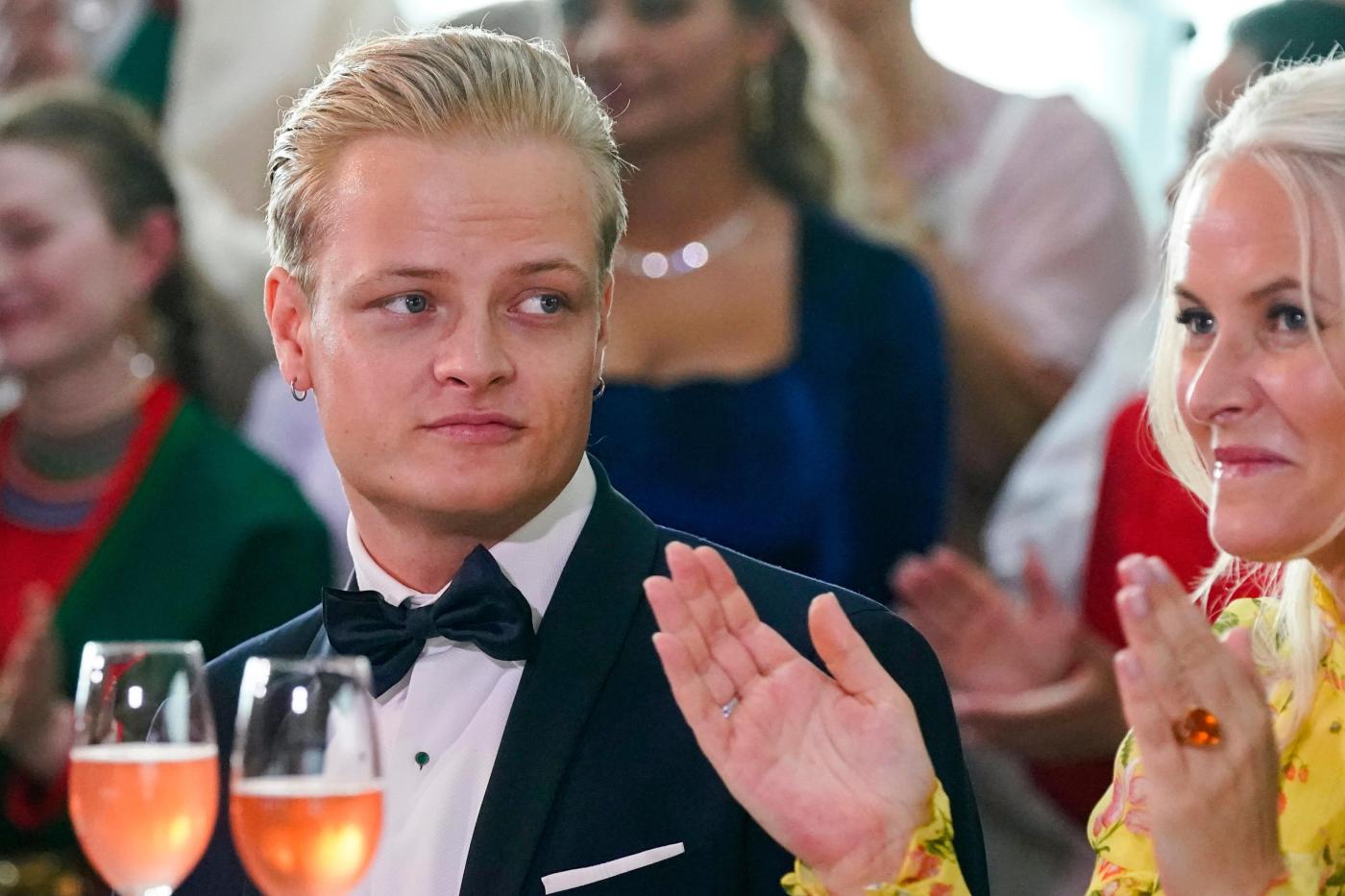
Marius Borg Høiby was arrested on Sunday evening and is accused of assault, threats with a knife and violation of a restraining order, police said in a statement. They requested four weeks’ detention on grounds of risk of reoffending. His lawyers couldn’t immediately be reached for comment.

On Tuesday, he’s due to go on trial at the Oslo district court. The indictment includes 38 counts, including rape, abuse in a close relationship against one former partner, acts of violence against another and transporting 3.5 kilograms (7.7 pounds) of marijuana. Other charges include making death threats and traffic violations.

Høiby has been under scrutiny since he was repeatedly arrested in 2024 on various allegations of wrongdoing. He was indicted in August, but had been free pending trial until Sunday.

Høiby is the son of Crown Princess Mette-Marit from a previous relationship and stepson of the heir to the throne, Crown Prince Haakon. He has no royal title or official duties.

The indictment centers on four alleged rapes between 2018 and November 2024; alleged violence and threats against a former partner between the summer of 2022 and the fall of 2023; and two alleged acts of violence against a subsequent partner, along with violations of a restraining order.

Høiby’s defense team has said that he “denies all charges of sexual abuse, as well as the majority of the charges regarding violence.”

Haakon said last week that he and Mette-Marit don’t plan to attend court and that the royal house doesn’t intend to comment during the proceedings.

He emphasized that Høiby isn’t part of the royal house and that, as a citizen of Norway, he has the same responsibilities and rights as all others. He said that he’s confident that all concerned will make the trial as orderly, proper and fair as possible.

While the royals are generally popular in Norway, the Høiby case has cast a shadow on their image. And the trial is opening just as his mother faces renewed scrutiny over her contacts with Jeffrey Epstein.

Friday’s release of the latest batch of documents from the Epstein files shone an unflattering spotlight on Mette-Marit. They contained several hundred mentions of the crown princess, who already said in 2019 that she regretted having had contact with Epstein, Norwegian media reported.

The newly released documents, which include email exchanges with Epstein, showed that Mette-Marit borrowed a property of Epstein’s in Palm Beach, Florida, for several days in early 2013, and the royal house confirmed that she did so through a mutual friend, broadcaster NRK reported.

In a statement emailed by the royal house, Mette-Marit said that she “must take responsibility for not having investigated Epstein’s background more thoroughly, and for not realizing sooner what kind of person he was.”

“I deeply regret this, and it is a responsibility I must bear. I showed poor judgment and regret having had any contact with Epstein at all,” she said. “It is simply embarrassing.”

She expressed her “deep sympathy and solidarity” with the victims of Epstein’s abuse.

Mette-Marit’s contacts with Epstein and the Høiby trial aren’t the only source of negative publicity for Norway’s royals. The business ventures of Haakon’s sister, Princess Märtha Louise, have drawn repeated criticism. In 2024, around the same time Høiby’s case was making news, she married an American self-professed shaman, Durek Verrett.

Geir Moulson reported from Berlin.

Black History Month centennial channels angst over anti-DEI climate into education, free resources

posted in: All news | 0

By TERRY TANG, Associated Press

For academics, historians and activists, the past year has been tumultuous in advocating the teaching of Black history in the United States.

Despite last year proclaiming February as National Black History Month, President Donald Trump started his second term by claiming some African American history lessons are meant to indoctrinate people into hating the country. The administration has dismantled Black history at national parks, most recently removing an exhibit on slavery in Philadelphia last month. Black history advocates see these acts and their chilling effect as scary and unprecedented.

“States and cities are nervous about retribution from the White House,” said DeRay Mckesson, a longtime activist and executive director of Campaign Zero, an organization focused on police reform. “So even the good people are just quieter now.”

In the 100th year since the nation’s earliest observances of Black History Month — which began when scholar Carter G. Woodson pioneered the first Negro History Week — celebrations will go on. The current political climate has energized civil rights organizations, artists and academics to engage young people on a full telling of America’s story. There are hundreds of lectures, teach-ins and even new books — from nonfiction to a graphic novel — to mark the milestone.

FILE – Levis Martin, left, and his brother Daniel dance with fans during a Juneteenth celebration in Portsmouth, N.H, on June 19, 2025. (AP Photo/Michael Dwyer, File)

“This is why we are working with more than 150 teachers around the country on a Black History Month curriculum to just ensure that young people continue to learn about Black history in a way that is intentional and thoughtful,” Mckesson said about a campaign his organization has launched with the Afro Charities organization and leading Black scholars to expand access to educational materials.

New graphic novel highlights history of Juneteenth

About three years ago, Angélique Roché, a journalist and adjunct professor at Xavier University of Louisiana, accepted a “once-in-a-lifetime” invitation to be the writer for a graphic novel retelling of the story of Opal Lee, “grandmother of Juneteenth.”

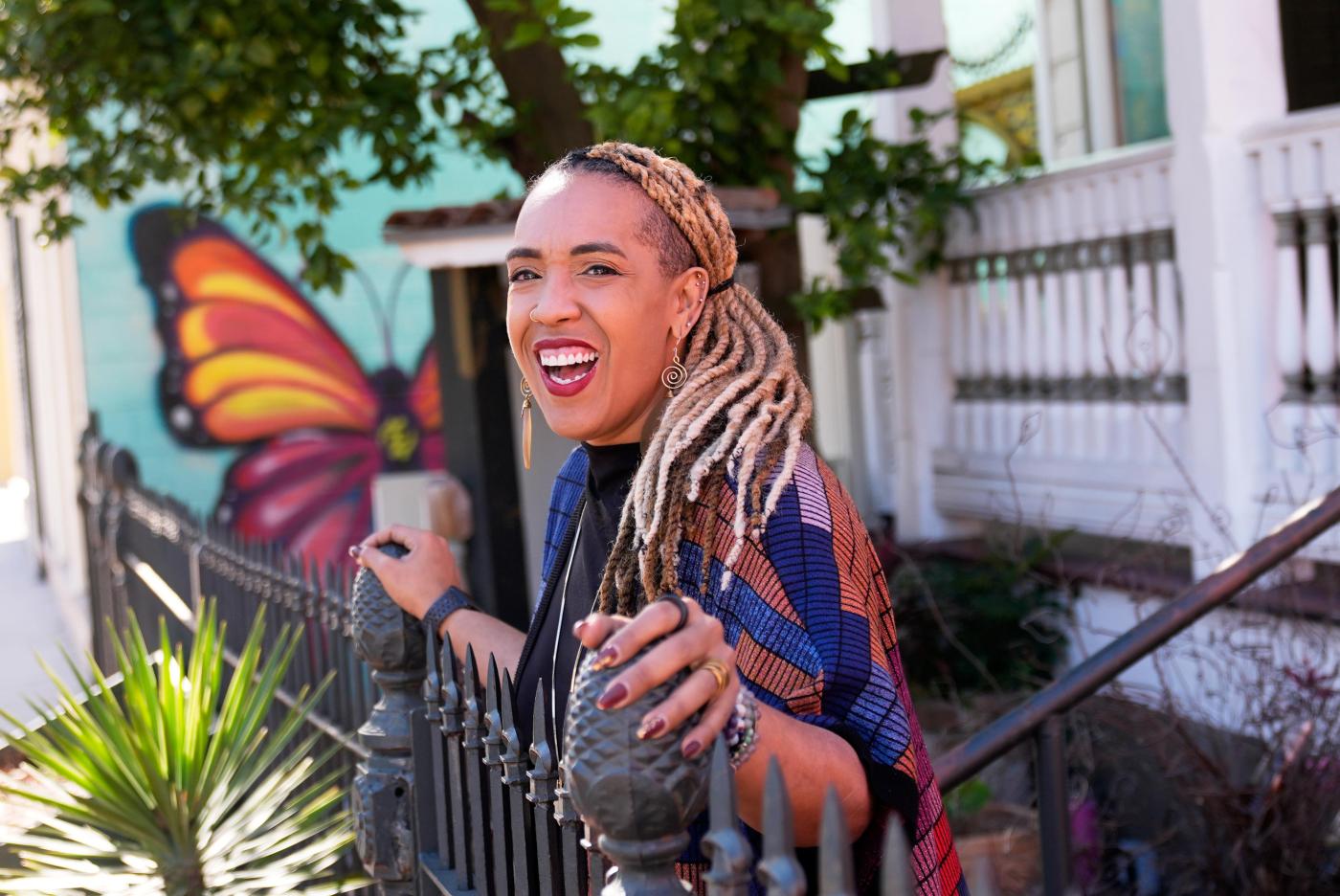
Angelique Roche holds a printout of her upcoming Book “First Freedom: The Story of Opal Lee and Juneteenth,” at the Ashe Cultural Arts Center, Thursday, Jan. 29, 2026, in New Orleans. (AP Photo/Gerald Herbert)

Lee, who will also turn 100 this year, is largely credited for getting federal recognition of the June 19 holiday commemorating the day when enslaved people in Texas learned they were emancipated. Under Trump, however, Juneteenth is no longer a free-admission day at national parks.

Juneteenth helped usher in the first generation of Black Americans who, like Woodson, was born free. “First Freedom: The Story of Opal Lee and Juneteenth,” the graphic novel, comes out Feb. 10. It is the culmination of Roché’s assiduous archival research, phone chats and visits to Texas to see Lee and her granddaughter, Dione Sims.

“There is nothing ‘indoctrinating’ about facts that are based on primary sources that are highly researched,” said Roché, who hopes the book makes it into libraries and classrooms. “At the end of the day, what the story should actually tell people is that we’re far more alike than we are different.”

While Lee is the main character, Roché used the novel as a chance to put attention on lesser known historical figures like William “Gooseneck Bill” McDonald, Texas’ first Black millionaire, and Opal Lee’s mother, Mattie Broadous Flake.

She hopes this format will inspire young people to follow Lee and her mantra — “make yourself a committee of one.”

Angelique Roche, author of an upcoming Book “First Freedom: The Story of Opal Lee and Juneteenth,” poses for a portrait at the Ashe Cultural Arts Center, Thursday, Jan. 29, 2026, in New Orleans. (AP Photo/Gerald Herbert)

“It doesn’t mean don’t work with other people,” Roché said. “Don’t wait for other people to make the changes you wanna see.”

Campaign aims to train new generation of Black historians

When Trump’s anti-DEI executive orders were issued last year, Jarvis Givens, a professor of African and African American Studies at Harvard, was thousands of miles away teaching in London, where Black History Month is celebrated in October. He had already been contemplating writing a book for the centennial.

Related Articles


Did artificial intelligence really drive layoffs at Amazon and other firms? It can be hard to tell


Punxsutawney Phil is said to have seen his shadow, forecasting 6 more weeks of wintry weather


What to know about Groundhog Day’s traditions and Punxsutawney Phil


US futures slide as worries over Trump’s pick to lead Federal Reserve, AI weigh on markets


Today in History: February 2, ‘American Sniper’ Chris Kyle killed

Watching Trump’s “attack” cemented the idea, Givens said.

“I wanted to kind of devote my time while on leave to writing a book that would honor the legacy that gave us Black History Month,” Givens said.

The result is “I’ll Make Me a World: The 100-Year Journey of Black History Month,” a book with four in-depth essays that comes out Tuesday. The title is a line from the 1920s poem “The Creation” by James Weldon Johnson, whose most famous poem, “Lift Ev’ry Voice and Sing,” is known as the “Black National Anthem.”

Givens examines important themes in Black history and clarifies misconceptions around them.

The book and the research Givens dug up will tie into a “living history campaign” with Campaign Zero and Afro Charities, Mckesson said. The goal is to teach what Woodson believed — younger generations can become historians who can discern fact from fiction.

“When I grew up, the preservation of history was a historian’s job,” Mckesson said, adding his group’s campaign will teach young students how to record history.

How the ‘father of Black history’ might feel today

Born in 1875 to formerly enslaved parents, Woodson was among the first generation of Black Americans not assigned to bondage at birth. He grew up believing that education was a way to self-empowerment, said Robert Trent Vinson, director of the Carter G. Woodson Institute at the University of Virginia in Charlottesville, Virginia.

The second Black man to earn a doctorate at Harvard University — W.E.B. Du Bois was the first — Woodson was disillusioned by how Black history was dismissed. He saw that the memories and culture of less educated Black people were no less valuable, Vinson said.

When Woodson established Negro History Week in 1926, he was in an era where popular stereotypes like blackface and minstrelsy were filling in for actual knowledge of the Black experience, according to Vinson. This sparked the creation of Black history clubs and Woodson began inserting historical lessons “on the sly” in publications like the “Journal of Negro History” and the “Negro History Bulletin.”

“Outside the formal school structure, they’re having a separate school like in churches or in study groups,” Vinson said. “Or they’re sharing it with parents and saying, ‘you teach your young people this history.’ So, Woodson is creating a whole educational space outside the formal university.”

In 1976, for the week’s 50th anniversary, President Gerald Ford issued a message recognizing it as an entire month. There was pushback then over the gains the Civil Rights Movement had made, Givens said.

As for today’s backlash over Black and African American studies, Vinson believes Woodson would not be surprised. But, he would see it as a sign “you’re on the right track.”

“There’s a level of what he called ‘fugitivity,’ of sharing this knowledge and being strategic about it,” Vinson said. “There are other times like in this moment, Black History Month, where you can be more out and assertive, but be strategic about how you spread the information.”

Resistance to teaching Black history is something that seems to occur every generation, Mckesson said.

“We will go back to normalcy. We’ve seen these backlashes before,” Mckesson said. “And when I think about the informal networks of Black people who have always resisted, I think that is happening today.”

Tang reported from Phoenix.