My favorite recipes to cook at home aren’t the showiest or the most elaborate. They’re the simple ones that have something I think of as a “lightbulb moment” — an idea, technique or ingredient that makes a dish distinctive, maybe even brilliant. You know a recipe has a lightbulb moment when you make it and you can’t get over how good it is, how excellent its ratio of effort to flavor.
Take these roasted chicken thighs with hot honey and lime. You brush the chicken with a mixture of butter and hot sauce while it’s still in the oven, for glossy heat. And this pepper steak with celery stir-fry is perked up with sunny strips of lemon peel and a big squeeze of lemon juice to serve. Those extra touches help these dishes shine.
Those recipes and more are below for your cooking pleasure.
1. Roasted Chicken Thighs With Hot Honey and Lime
Roasted chicken thighs with hot honey and lime. Speedy and simple to make; spectacular to eat. Food Stylist: Cyd Raftus McDowell. (Armando Rafael/The New York Times)
These sweet and spicy chicken thighs pack enormous flavor using only a handful of pantry ingredients. Generously seasoned with salt, pepper, and onion and garlic powders, they’re roasted at a high temperature to maximize the crispiness of the skin. Halfway through cooking, the chicken is brushed with a butter-and-hot-sauce blend. Finally, honey and lime zest are whisked into the remaining hot sauce butter to coat the fully baked chicken thighs. A squirt of tangy lime juice provides balance and the perfect finishing touch. Serve with a simple and refreshing cucumber salad or coleslaw.
By Vallery Lomas
Yield: 4 servings
Total time: 35 minutes
INGREDIENTS
3 pounds bone-in, skin-on chicken thighs
Salt and black pepper
1/2 teaspoon onion powder
1/2 teaspoon garlic powder
2 tablespoons butter (unsalted or salted), melted
2 tablespoons hot sauce (see tip)
1 lime
2 tablespoons mild honey
DIRECTIONS
1. Heat the oven to 450 degrees. On a foil-lined rimmed baking sheet, season the chicken all over with salt, pepper, onion powder and garlic powder. Arrange the chicken skin side up then roast until browned, 20 minutes.
2. While the chicken is roasting, combine the melted butter and hot sauce and whisk to combine; transfer half to a separate bowl and set aside for later. After the chicken has roasted for 20 minutes, brush the chicken all over with the remaining butter mixture. Continue roasting until the chicken is golden brown and cooked through, 10 to 15 minutes more. Remove the chicken thighs from the oven.
3. Zest the lime, then cut it in half. Add the honey and 1 teaspoon lime zest to the reserved butter-hot sauce mixture and whisk to combine, then brush over the chicken thighs and squeeze the lime juice on top. Serve immediately.
TIP: Different hot sauces have different levels of heat; choose one that suits your heat tolerance. Tabasco will be quite spicy, while a brand like Louisiana will yield a milder result.
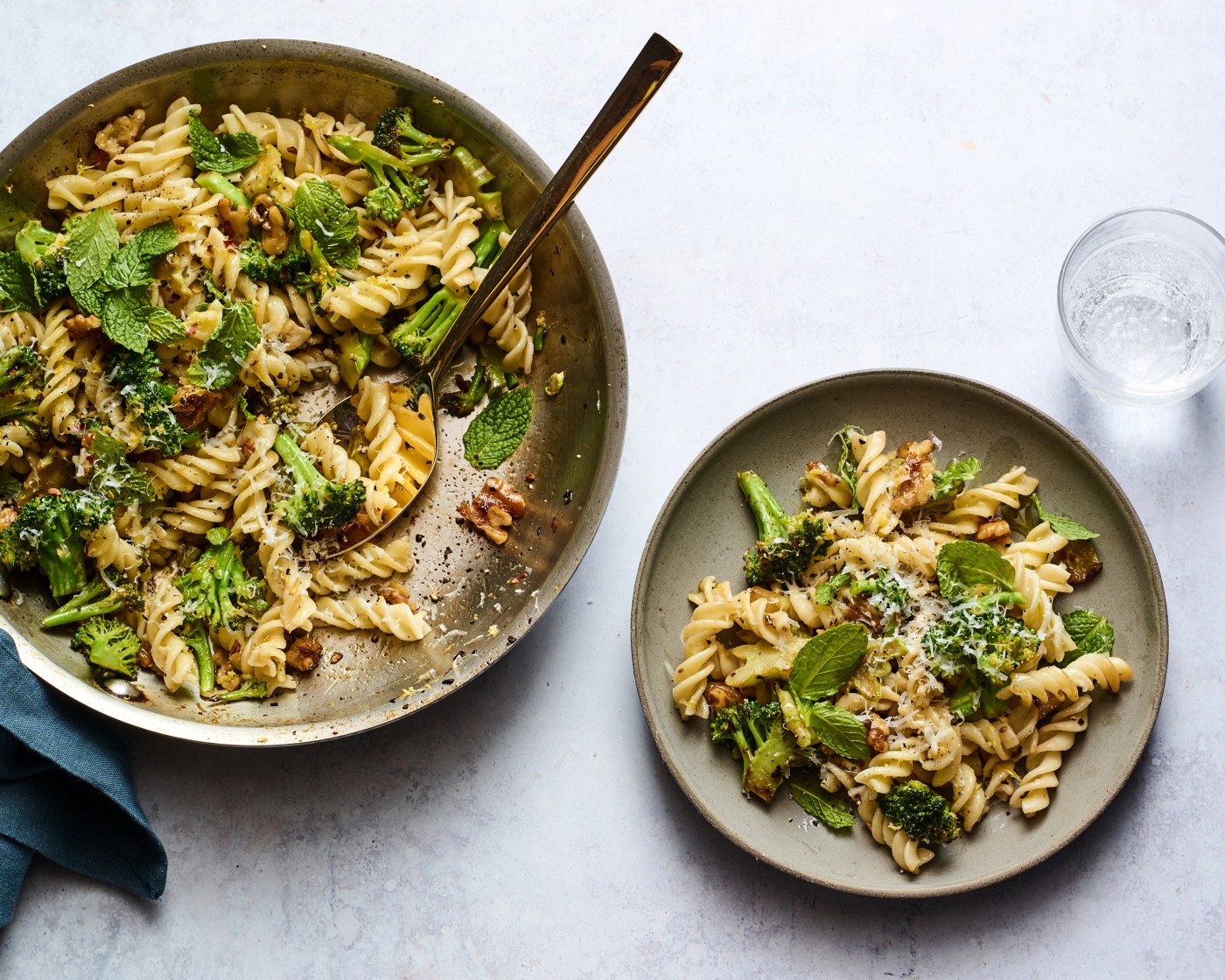
2. Blistered Broccoli Pasta With Walnuts, Pecorino and Mint
The trick to creating deeply browned, pan-seared broccoli involves two things: high heat and no touching. Allowing your florets and stems to sear in an even layer, undisturbed, gives them time to blister without cooking all the way through, so they retain some crunch. While many pasta sauces are finished with starchy pasta water, this one isn’t, since the hot water would strip the broccoli of that color and crunch you worked so hard to achieve. Instead, toss the cooked pasta in the skillet with the broccoli, walnuts and cheese. A drizzle of olive oil and a squeeze of lemon will provide any additional moisture you need.
By Dawn Perry
Yield: 4 servings
Total time: 15 minutes
INGREDIENTS
Kosher salt and black pepper
12 ounces riccioli, fusilli or other short pasta
1/2 cup olive oil, plus more for drizzling
1/2 cup walnuts or pecans, chopped
1/4 to 1/2 teaspoon red-pepper flakes (optional)
1 bunch broccoli or cauliflower (about 1 1/2 pounds untrimmed), florets roughly chopped and stalks peeled and sliced 1/4-inch thick
1 lemon, zested (about 1 teaspoon) then quartered
1/2 cup grated Pecorino Romano or Parmesan, plus more for serving
1 cup packed fresh mint leaves or parsley leaves
DIRECTIONS
1. Bring a large pot of salted water to a boil. Add the pasta and cook according to package instructions until al dente.
2. Meanwhile, heat the oil in a large skillet over medium-high. Add the walnuts and red-pepper flakes, if using, and cook, stirring, until golden and fragrant, about 1 minute. Using a slotted spoon, transfer walnuts and red-pepper flakes to a small bowl. Season walnuts with a little salt and pepper.
3. Add the broccoli to the skillet and toss to coat in the oil. Shake the skillet so broccoli settles in an even layer. Cook, undisturbed, 2 minutes. Toss and shake to arrange in an even layer again and cook, undisturbed, another 2 to 3 minutes; season with salt and pepper and remove from heat.
4. Drain pasta and add to the skillet along with the lemon zest, cheese, toasted walnuts and half the mint; toss to combine. Divide among plates or bowls and top with remaining mint, more cheese and a drizzle of olive oil. Serve with lemon wedges, squeezing juice on top, if desired.
3. Pepper Steak and Celery Stir-Fry With Lemon
Pepper Steak and Celery Stir-Fry With Lemon. Speedy and simple to make; spectacular to eat. Food Stylist: Barrett Washburne. (Kerri Brewer/The New York Times)
Lemon is the star of this quick weeknight stir-fry. Using both the peel and juice of the lemons gives this dish a wonderful scent and tangy finish. As with any stir-fry, you’ll want to have all your ingredients sliced and measured before you start cooking, since the meal comes together quickly once you start cooking. The celery softens just slightly, so it retains its herbal brightness plus a crisp-tender bite. Although you can opt for a leaner cut of meat like sirloin for the beef, fattier cuts like skirt or hanger will be more tender and boast richer beef flavor.
By Andy Baraghani
Yield: 4 servings
Total time: 30 minutes
INGREDIENTS
1 pound sirloin, skirt or hanger steak, set in the freezer for 10 minutes until firm
Salt and pepper
1 tablespoon cornstarch
1 teaspoon light brown or granulated sugar
1 lemon
2 tablespoons vegetable, canola or peanut oil
5 celery stalks, trimmed and thinly sliced on a bias
3 garlic cloves, finely grated
3 scallions, thinly sliced, green and white parts separated
2 tablespoons soy sauce
2 tablespoons unsalted butter, cut into pieces
DIRECTIONS
1. Using your chef’s knife, slice the chilled beef against the grain into 1/4-inch-thick strips about 2 inches long; set aside.
2. Place the beef in a medium bowl and season with salt and 2 teaspoons pepper. Add cornstarch and sugar and toss until the beef is thoroughly coated.
3. Using a vegetable peeler, remove the peel from the lemon in wide strips; set the peels aside then cut the lemon in half.
4. Set a large cast-iron or stainless-steel skillet over medium-high. When the pan is very hot, add 1 tablespoon oil. Using tongs, add half the beef to the pan in a single layer and cook, without stirring or tossing, until deeply brown around the edges, about 2 minutes. The pieces at the edges of the pan will brown faster than the ones in the center, so flip those first. Flip and cook on the other side until no longer pink, about 20 seconds. Transfer the beef to a plate and repeat with the remaining pieces.
5. After transferring the second batch of browned beef to the plate, pour the remaining 1 tablespoon oil into the pan and add the celery, garlic, scallion whites and reserved lemon peels. Season lightly with salt and cook, stirring often, until the scallions have slightly softened, about 1 minute.
6. Return the beef and any juices to the pan and add the soy sauce and butter. Cook, tossing until you have a smooth sauce that coats the steak, about 30 seconds. Turn off the heat, squeeze in the juice from 1 lemon half and toss once more.
7. Transfer stir-fry to a platter and top with scallion greens; serve with remaining lemon half.
4. Baked Cod
Baked Cod. Speedy and simple to make; spectacular to eat. Food Stylist: Simon Andrews. (Christopher Testani/The New York Times)
This is a very simple method for baking cod, with an ingredient list both short and mighty. Minced herbs, garlic and scallions give the mild, flaky fish lots of flavor — but you can feel free to substitute whatever fresh or dried herbs you happen to have on hand, since cod takes well to a range of herbs and flavors. As the fish bakes, the lemon juice mixes with the olive oil and seasonings, resulting in a bright and savory sauce. Spoon it over the hot fish and serve directly from the baking dish, with roasted potatoes and a green salad on the side.
By Lidey Heuck
Yield: 4 servings
Total time: 30 minutes
INGREDIENTS
4 (4- to 6-ounce) skinless cod fillets
Salt and black pepper
3 tablespoons extra-virgin olive oil
1 tablespoon minced fresh parsley or dill (or 1 1/2 teaspoons dried)
1 tablespoon minced scallions or chives
1 medium garlic clove, minced, or 1/2 teaspoon garlic powder
1 small lemon
DIRECTIONS
1. Heat the oven to 400 degrees.
2. Pat the cod fillets dry with a paper towel and place them in a baking dish large enough to hold them without crowding. Season all over with salt and a few grinds of pepper.
3. In a small bowl, combine the olive oil, parsley, scallions and garlic. Zest the lemon over the bowl (1 to 2 teaspoons) and mix well with a fork.
4. Brush the herb mixture all over the fillets, turning to coat on both sides. Squeeze half the zested lemon over the dish, then cut the remaining lemon half into wedges.
5. Bake until the fish is cooked through and flakes easily with a fork, 14 to 18 minutes, depending on the size and thickness of the fillets. Spoon the juices over the fish and serve hot, with the lemon wedges alongside.
5. Creamy Butternut Squash and Coconut Noodle Soup
Creamy butternut squash and coconut noodle soup. Speedy and simple to make; spectacular to eat. Food Stylist: Barrett Washburne. (Kerri Brewer/The New York Times)
Sweet, savory, and full of flavor, this easy weeknight noodle soup takes a cue from the warmly comforting northern Thai dish khao soi, with a curry-spiced coconut broth and toppings that offer crunch and contrast. First, the butternut squash is simmered in the fragrant broth until very tender. Then the squash is mashed, becoming one with the coconut milk before stock and sweet and savory seasonings are added (to keep the soup vegetarian, use soy sauce instead of fish sauce). You can use any type of egg noodles here, from wide dried egg noodles to flat fresh egg noodles (sometimes labeled as wonton noodles). Ladle the flavorful squash broth over the noodles and garnish with as much garnish as your heart and stomach desires. Those toppings can be — but are not limited to — a lot of lime juice to cut the richness, cilantro, sliced fresh shallots, crispy shallots, fried noodles, chile oil or pickled mustard greens.
By Christian Reynoso
Yield: 4 servings
Total time: 35 minutes
INGREDIENTS
3 tablespoons vegetable oil
1 to 1 1/4 pounds peeled butternut squash, cut into 1-inch chunks
Salt
2 tablespoons red or yellow curry paste
1 (3-inch) piece ginger, grated (about 3 tablespoons)
1 teaspoon ground turmeric
2 (13-ounce) cans full-fat coconut milk
2 to 3 cups vegetable or chicken stock
2 teaspoons fish sauce or 1 tablespoon soy sauce
2 tablespoons brown sugar
8 ounces fresh or dried egg noodles (wide or thin)
Lime wedges, cilantro, thinly sliced shallots and chile oil, for serving
DIRECTIONS
1. Bring a pot of water to a boil for the noodles. Meanwhile, in a large pot or Dutch oven, heat the vegetable oil over medium-high. Add the squash, season with salt and cook, stirring occasionally until slightly softened and lightly golden in spots, 5 to 7 minutes. Stir in the curry paste, ginger and turmeric. Cook, stirring often, until very fragrant, about 1 minute, lowering the heat if necessary to keep from scorching.
2. Add the coconut milk and bring to a simmer. Cover and cook, stirring occasionally, until squash is tender enough to mash, 10 to 12 minutes. Uncover and use a wooden spoon or potato masher to crush the squash into small pieces. Add 2 cups of the stock, fish sauce and brown sugar. Bring to a boil, then turn the heat off. Add more stock for a brothier soup. Season with salt and adjust other seasonings to taste.
3. While the squash simmers, cook the noodles per the package directions.
4. To serve, divide the noodles into bowls, ladle the soup over, very generously squeeze lime over, and top with cilantro, shallots and chile oil.
Harissa brings complex chili heat to this meaty Libyan soup during Ramadan
Starbucks is cutting some ‘less popular’ drinks from its menu. Here’s what will be removed next week
Recipes: 3 easy and delicious dishes you can make with canned beans
Use two types of paprika for the best Hungarian chicken paprikash
Fermented foods: The winter blues cure hiding in your fridge