CDC report adds to evidence that HPV vaccine is preventing cervical cancer in US women

posted in: All news | 0

By CARLA K. JOHNSON, Associated Press

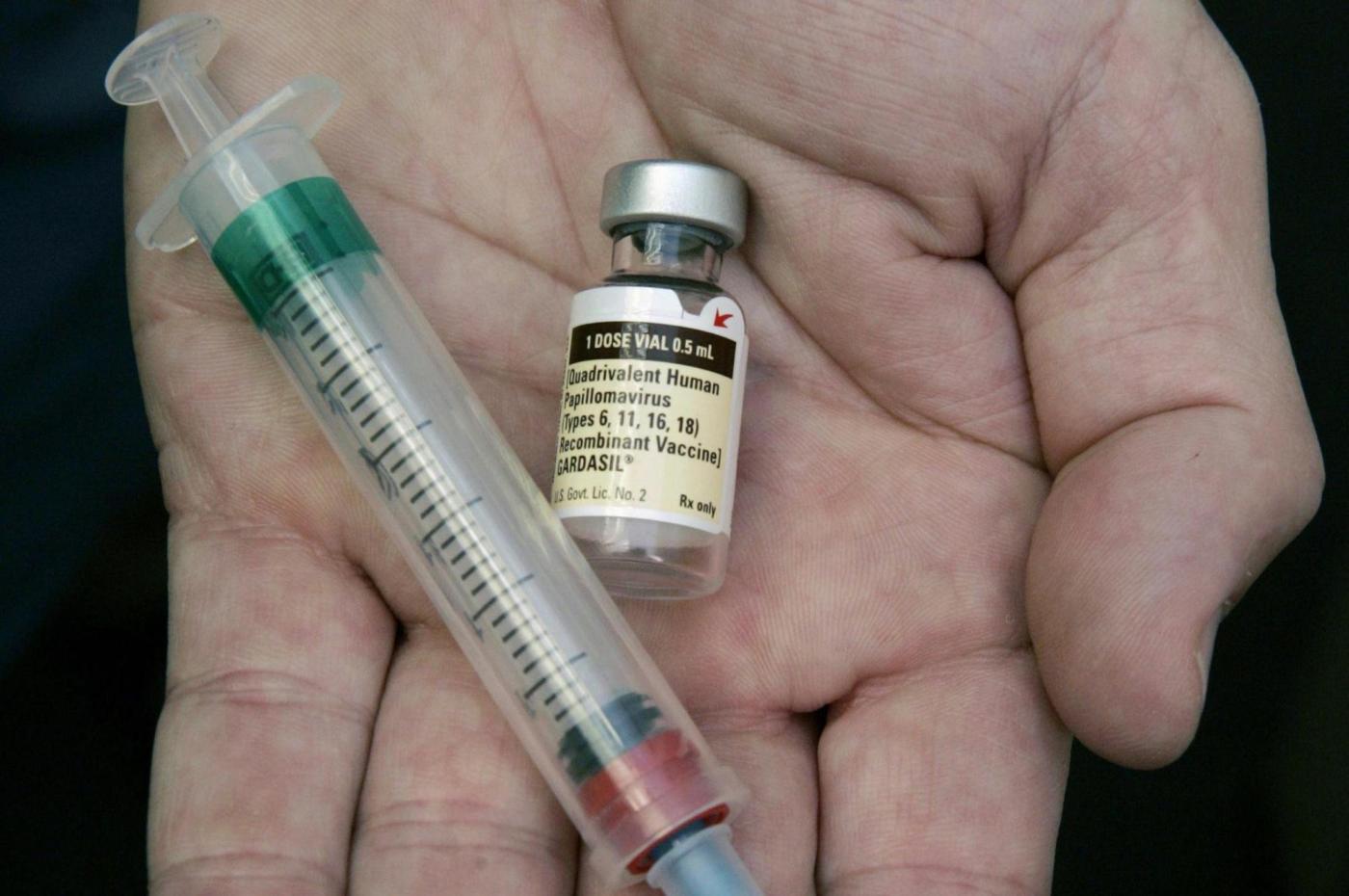
A new government report adds to evidence that the HPV vaccine, once called dangerous by Health and Human Services Secretary Robert F. Kennedy Jr., is preventing cervical cancer in young women.

The report comes after Kennedy pledged to give a family member any fees he might earn from HPV vaccine litigation. In a 2019 video posted on the anti-vaccine nonprofit Children’s Health Defense website, Kennedy called Gardasil “the most dangerous vaccine ever invented.”

Related Articles

Health |


How to practice healthy fasting during Ramadan

Health |


The COVID ‘contrarians’ are in power. We still haven’t hashed out whether they were right

Health |


Texas says doctor illegally treated trans youth. He says he followed the law

Health |


As bird flu spreads, feds might undercut states by firing scientists, removing data

Health |


With RFK Jr. in charge, supplement makers see chance to cash in

The new report found that from 2008 to 2022, rates for precancerous lesions decreased about 80% among 20- to 24-year-old women who were screened for cervical cancer. The estimates were published Thursday by the Centers for Disease Control and Prevention.

HPV, or human papillomavirus, is very common and is spread through sex. Most HPV infections cause no symptoms and clear up without treatment. Others develop into cancer, about 37,000 cases a year, according to the CDC.

Women in their 20s are the group most likely to have been given the HPV vaccine, which has been recommended in the U.S. since 2006 for girls at age 11 or 12 and since 2011 for boys the same age. Catch-up shots are recommended for anyone through age 26 who hasn’t been vaccinated.

Jane Montealegre of MD Anderson Cancer Center in Houston, who was not involved in the study, called the decline dramatic and said it can be attributed to the increasing use of the safe and effective HPV vaccine.

“This should reassure parents that they’re doing the right thing in getting their children vaccinated against HPV,” said Montealegre, a cancer-prevention researcher.

Other countries also have reported declining rates of cervical precancer in younger and more vaccinated cohorts, she said. The U.S. doesn’t have a national registry but estimates what’s happening across the country by monitoring five sites.

Kennedy’s financial relationship with litigation against the maker of the HPV vaccine came under scrutiny during his confirmation hearings. The health secretary has since told lawmakers that he has referred hundreds of clients to the law firm suing vaccine-maker Merck in an arrangement where he would be entitled to 10% of contingency fees awarded.

One of Kennedy’s sons, Conor, is an attorney at that law firm, WisnerBaum. In an amended ethics agreement, Kennedy said he will give any fees he earns from litigation over the HPV vaccine to “a nondependent adult family member.”

The Associated Press Health and Science Department receives support from the Howard Hughes Medical Institute’s Science and Educational Media Group and the Robert Wood Johnson Foundation. The AP is solely responsible for all content.

Trey Smith is off the market. Which guards will the Vikings target in free agency?

posted in: All news | 0

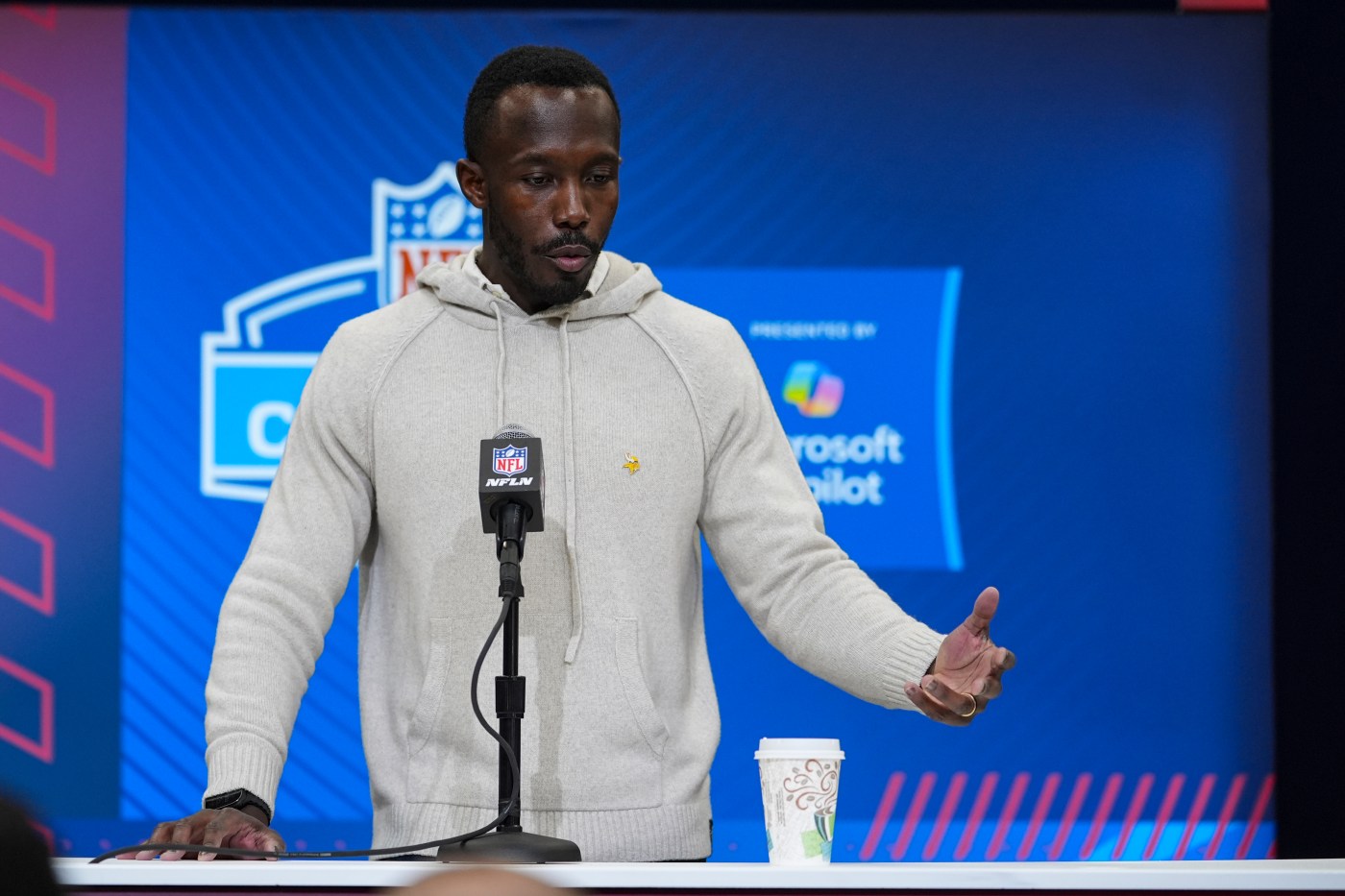
INDIANAPOLIS — It’s no secret that head coach Kevin O’Connell wants to improve the interior of the offensive line.

After the Vikings got manhandled up front in their playoff loss to the Los Angeles Rams, O’Connell momentarily let the emotions get the best of him as he reflected on the performance in real time.

“We’ve got to find a way to solidify the interior of the pocket,” he said after a 29-9 loss on Jan. 14. “It’s the foundation of the interior of the pocket that we’re going to have to take a long look at.”

Though he tried to walk back the intensity of those comments this week at the 2025 NFL Combine, O’Connell didn’t back down from the fact that the Vikings desperately need to get better in the trenches.

“It was more an emphasis on how I believe we need to play,” O’Connell said. “We need to be able to have a level of execution and a level of physicality that holds up.”

Now, arguably the best player in the upcoming free agent class is off the market.

According to multiple reports, the Kansas City Chiefs intend to place the franchise tag on star guard Trey Smith, which means the Vikings will need to pivot with free agency looming next month.

Here are the best guards available in free agency:

Will Fries

After being selected by the Indianapolis Colts in the seventh round of 2021 NFL Draft, Fries developed from a depth backup into a bona fide starter.

He has started 31 games in his career and was well on his way to establishing himself among the best guards in the NFL last season before suffering a fractured right tibia. He was placed on injured reserve on Oct. 7, 2024, which limited his most recent sample size.

That shouldn’t hurt Fries, 26, from garnering interest from many teams. He still appears to be on an upward trajectory, so the Vikings are going to have to pay up if they want his services.

Teven Jenkins

Originally selected by the Chicago Bears as a tackle in the second round of the 2021 draft, Jenkins has taken the next step since switching to guard. Though he has struggled with injuries at difference points in his career, Jenkins, 26, has still started 38 games.

The biggest issue with Jenkins for the Vikings is the fact that the Bears might be more motivated to re-sign him after missing out on the opportunity to negotiate with Smith.

Kevin Zeitler

A veteran of the trade, Zeitler was selected by the Cincinnati Bengals in the first round of the 2012 Draft. He has started 197 games in his career and would bring a well of knowledge to the Vikings.

Most recently, Zeitler balled out for the Detroit Lions, playing a key role on an offensive line that many believed to be the best in the NFL. Not only would signing Zeitler, 34, be a viable option for the Vikings, it would weaken an NFC North rival.

Mekhi Becton

It looked as if Becton might never pan out after being selected by the New York Jets in the first round of the 2020 NFL Draft.

He battled through a major injury and was on the verge of being considered a bust before signing with the Philadelphia Eagles ahead of last season. That decision helped him revitalize his career.

After making the switch from tackle to guard, Becton, 25, was named a starter for the Eagles, and he served in that role all the way to a Super Bowl victory.

Now, will Becton have interest in the Vikings? That remains to be seen.

James Daniels

After being selected by the Bears in the 2018 NFL Draft, Daniels has most recently made a name for himself with the Pittsburgh Steelers.

He has started 84 games in his career while playing various position on the interior of the offensive line. The most concerning part about Daniels, 27, is that he’s coming off a torn Achilles tendon, so he will need some time to work himself back to 100 percent.

That might be enough to scare the Vikings away.

Related Articles

Minnesota Vikings |


Will Vikings hand keys over to J.J. McCarthy? Intel from the NFL Combine

Minnesota Vikings |


Here’s how the Vikings compared to their peers in annual NFLPA report cards

Minnesota Vikings |


Vikings left tackle Christian Darrisaw on track with his recovery

Minnesota Vikings |


What’s next for Sam Darnold? Vikings weighing options at NFL Combine

Minnesota Vikings |


Five questions the Vikings must answer at the 2025 NFL Combine

Economic Blackout: Will a 24-hour boycott make a difference?

posted in: All news | 0

By ANNE D’INNOCENZIO and HALELUYA HADERO

NEW YORK (AP) — A grassroots organization is encouraging U.S. residents not to spend any money Friday as an act of “economic resistance” to protest what the group’s founder sees as the malign influence of billionaires, big corporations and both major political parties on the lives of working Americans.

The People’s Union USA calls the 24 hours of spending abstinence set to start at midnight an “economic blackout,” a term that has since been shared and debated on social media. The activist movement said it also plans to promote weeklong consumer boycotts of particular companies, including Walmart and Amazon.

Other activists, faith-based leaders and consumers already are organizing boycotts to protest companies that have scaled back their diversity, equity and inclusion initiatives, and to oppose President Donald Trump’s moves to abolish all federal DEI programs and policies. Some faith leaders are encouraging their congregations to refrain from shopping at Target, one of the companies backing off DEI efforts, during the 40 days of Lent that begin Wednesday.

Here are some details about the various events and experts’ thoughts on whether having consumers keep their wallets closed is an effective tool for influencing the positions corporations take.

Who’s behind the ‘24-hour Economic Blackout?’

The People’s Union USA, which takes credit for initiating the no-spend day, was founded by John Schwarz, a meditation teacher who lives near the Chicago area, according to his social media accounts.

The organization’s website said it’s not tied to a political party but stands for all people. Requests for comment sent to the group’s email address this week did not receive a reply.

The planned blackout is scheduled to run from 12 a.m. EST through 11:59 p.m. EST on Friday. The activist group advised customers to abstain from making any purchases, whether in store or online, but particularly not from big retailers or chains. It wants participants to avoid fast food and filling their car gas tanks, and says shoppers with emergencies or in need of essentials should support a local small business and try not to use a credit or debit card.

People’s Union plans another broad-based economic blackout on March 28, but it’s also organizing boycotts targeting specific retailers — Walmart and Amazon — as well as global food giants Nestle and General Mills. For the boycott against Amazon, the organization is encouraging people to refrain from buying anything from Whole Foods, which the e-commerce company owns.

What other boycotts are being planned?

There are a number of boycotts being planned, particularly aimed at Target. The discounter, which has backed diversity and inclusion efforts aimed at uplifting Black and LGBTQ+ people in the past, announced in January it was rolling back its DEI initiatives.

A labor advocacy group called We Are Somebody, led by Nina Turner, launched a boycott of Target on February 1 to coincide with Black History Month.

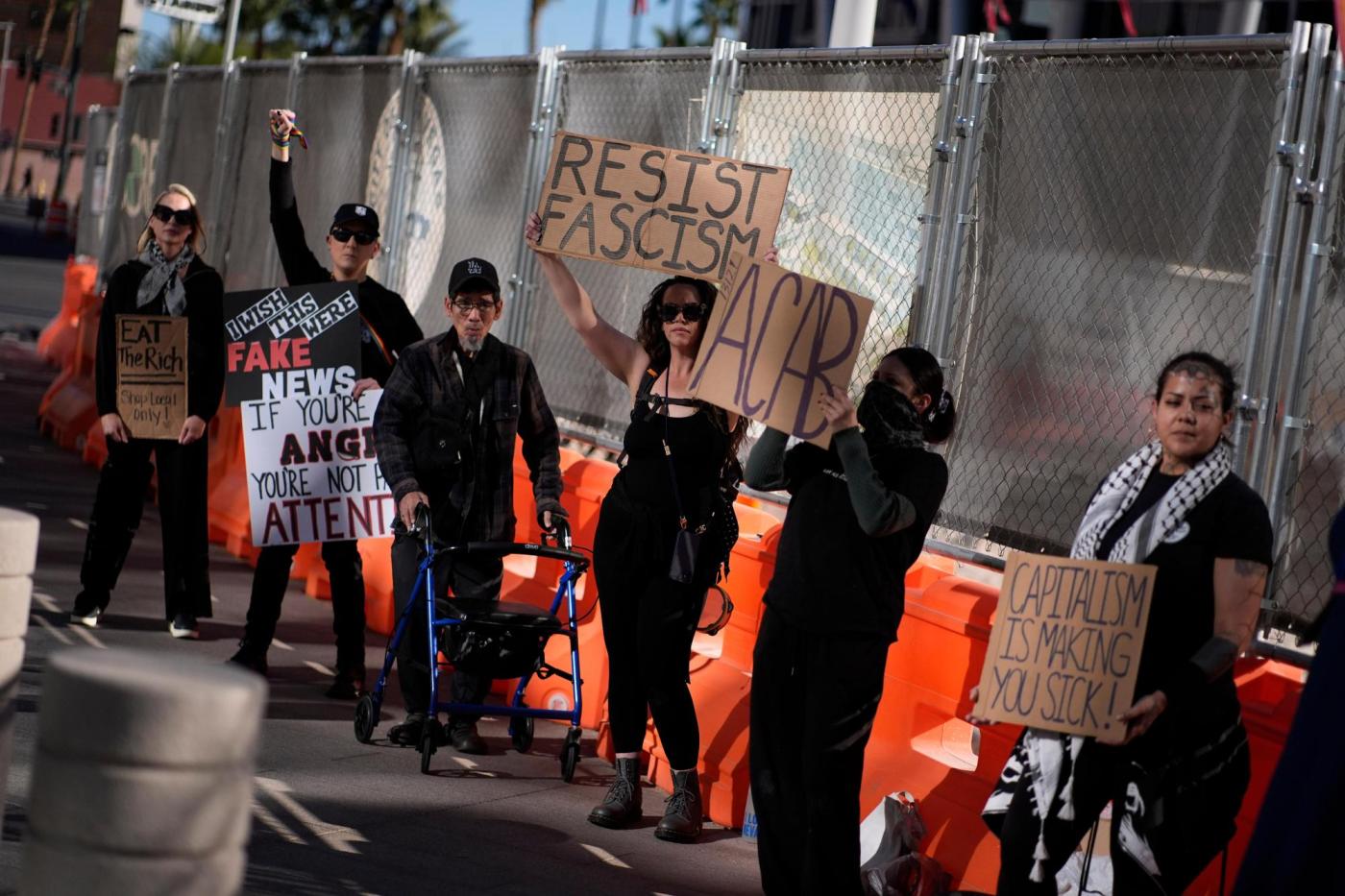
Protestors hold signs during a rally for a nationwide economic blackout Wednesday, Feb. 26, 2025, in Las Vegas. (AP Photo/John Locher)

Meanwhile, an Atlanta-area pastor, the Rev. Jamal Bryant, organized a website called targetfast.org to recruit Christians for a a 40-day Target boycott starting March 5, which marks Ash Wednesday, the beginning of Lent. Other faith leaders have endorsed the protest.

The Rev. Al Sharpton, founder and president of the National Action Network, a civil rights organization, announced in late January it would identify two companies in the next 90 days that will be boycotted for abandoning their diversity, equity and inclusion pledges. The organization formed a commission to identify potential candidates.

“Donald Trump can cut federal DEI programs to the bone, he can claw back federal money to expand diversity, but he cannot tell us what grocery store we shop at,” Sharpton said in a statement posted on the National Action Network’s website.

Will the events have any impact?

Some retailers may feel a slight pinch from Friday’s broad “blackout,” which is taking place in a tough economic environment, experts said. Renewed inflation worries and Trump’s threat of tariffs on imported goods already have had an effect on consumer sentiment.

“The (market share) pie is just so big,” Marshal Cohen, chief retail advisor at market research firm Circana, said. “You can’t afford to have your slices get smaller. Consumers are spending more money on food. And that means there’s more pressure on general merchandise or discretionary products.”

Still, Cohen thinks the overall impact may be limited, with any meaningful sales declines more likely to surface in liberal-leaning coastal regions and big cities.

Protestors hold signs during a rally for a nationwide economic blackout Wednesday, Feb. 26, 2025, in Las Vegas. (AP Photo/John Locher)

Anna Tuchman, a marketing professor at Northwestern University’s Kellogg School of Management, said she thinks the economic blackout will likely make a dent in daily retail sales but won’t be sustainable.

“I think this is an opportunity for consumers to show that they have a voice on a single day,” she said. ”I think it’s unlikely that we would see long-run sustained decreases in economic activity supported by this boycott.”

Other boycotts have produced different results.

Target saw a drop in sales in the spring and summer quarter of 2023 that the discounter attributed in part to customer backlash over a collection honoring LGBTQ+ communities for Pride Month. As a result, Target didn’t carry Pride merchandise in all of its stores the following year.

Tuchman studied the impact of a boycott against Goya Foods during the summer of 2020 after the company’s CEO praised Trump. But her study, based on sales from research firm Numerator, found the brand saw a sales increase driven by first-time Goya buyers who were disproportionately from heavily Republican areas.

However, the revenue bump proved temporary; Goya had no detectable sales increase after three weeks, Tuchman said.

It was a different story for Bud Light, which spent decades as America’s bestselling beer. Sales plummeted in 2023 after the brand sent a commemorative can to a transgender influencer. Bud Light’s sales still haven’t fully recovered, according to alcohol consulting company Bump Williams.

Tuchman thinks a reason is because there were plenty of other beers that the brand’s mostly conservative customer base could buy to replace Bud Light.

Afya Evans, a political and image consultant in Atlanta, said she would make a point of shopping on Friday but will focus on small businesses and Black-owned brands.

Evans is aware of other boycotts but she said she liked this one because she believes it could have some effect on sales.

“It’s a broader thing,” she said. “We want to see what the impact is. Let everybody participate. And plan from there.”

AP Business Writer Dee-Ann Durbin in Detroit contributed to this report.

‘The White Lotus’ review: Three seasons in, there’s little beneath the gleaming surface

posted in: All news | 0

There’s a certain type of prestige TV that appeals to the gawker in all of us, and it increasingly functions as a sign of the times: The rich may have all the power and Hollywood is all too happy to reinforce that status quo. What about something punchier? A lampoon of boorish behavior will have to suffice. Which brings us to the third season of HBO’s “The White Lotus,” in which the wealthy are messy and miserable, but you cannot deny the appeal of their surroundings.

Perhaps more than ever, audiences are desperate for a break from reality and willing to grab at the vicarious pleasures of a television series that unfolds within the world of luxury hotels. No one on screen even breaks a sweat, despite the temperatures hitting over 100 degrees during filming. The unreality is presumably the point. Nothing can puncture the visual fantasy.

As with previous outings, death is foreshadowed before flashing back one week earlier to the guests’ arrival at the elite five-star White Lotus resort. This time, the setting is a wellness-themed getaway on the island of Koh Samui in Thailand. By now you know the drill. All that money and sumptuous trappings, and they’re still unhappy.

The resort itself (which one guest snidely, but not inaccurately, calls “Disneyland for rich bohemians from Malibu”) is lovingly filmed, and the Four Seasons (which doubles as the fictitious White Lotus) could not have asked for a better showcase of its exclusive villa accommodations, which can run $10,000+ a night.

Creator Mike White assembles a tantalizing cast each season, even if he rarely gives them opportunities to do something unexpected. Carrie Coon, Michelle Monaghan and Leslie Bibb play a trio of middle-aged friends who are on an upscale girls’ trip. White has a real ear for the way women talk about mutual friends behind their back, with its mixture of performative empathy and barely concealed judgment.

Natasha Rothwell returns for Season 3 of “The White Lotus.” (Fabio Lovino/HBO/TNS)

Walton Goggins plays a man in a bad mood from the start, whose derisive energy is forever butting up against that of his cheery girlfriend, played by Aimee Lou Wood. Jason Isaacs and Parker Posey are a couple from North Carolina traveling with their three painfully dull children, played by Patrick Schwarzenegger, Sarah Catherine Hook and Sam Nivola. (This is the second time Nivola is in a role with this distinction, coming on the heels of Netflix’s “The Perfect Couple.”) Returning from seasons past are Natasha Rothwell’s spa manager (visiting as part of a vaguely explained White Lotus exchange/training program) and Jon Gries’ mystery man, to whom Jennifer Coolidge’s heiress was married before she drowned last season.

The hotel staff includes a sweet, easily distracted security guard who works at the hotel’s front gate (Tayme Thapthimthong) and the equally sweet health mentor upon who he has a crush (Lalisa Manobal). They are strangely two-dimensional, and even in private they abstain from mocking or simply blowing off steam about these entitled Americans to whom they must offer permanent smiles. It’s the show’s consistent flaw. People always have something to grumble about at work and it’s an obvious way to augment and complicate this fictional world. That all-important contrast is missing (as are any employees who do the manual labor of cleaning up after the guests), which is why the show feels like a deflated satire that never had the courage of its convictions to begin with.

Related Articles


‘Running Point’ review: A lot like ‘Entourage,’ minus the bro-y energy


At 62, Alton Brown seeks fresh, creative recipes in life


Want to be prescribed a new hospital drama? These TV doctors are ready to treat you


Michelle Trachtenberg found dead in NYC apartment, starred in ‘Gossip Girl,’ ‘Harriet the Spy’


Carolyn Wiger on her time on ‘The Traitors’: ‘It was like a dream’

You could argue the show’s intent versus impact, but that requires actually parsing its intent. Upscale resorts are an illusion of ease and comfort. Exploring the reality behind the lie would have been one way to deepen the storytelling layers, or at least give us a Greek chorus.

The show’s narrow scope means it ends up recycling the same tropes of seasons past. The hotel guests aren’t people so much as stock characters with one or two defining traits: young women paired with older men; toxic finance bros who throw their weight around and the wives who look past their faults because (gestures at their deluxe lifestyles); family members who can barely stand one another. There are only so many variations on a theme.

There’s an aimlessness that can come to define the vacation experience. That’s also true of the stories to which White is drawn, resulting in uneven performances (Isaacs’ Southern accent sometimes slips into an Australian accent). Posey is the one to watch as a woman zonked on benzos. This is an actress attuned to how a person checked out of her own life might comport herself. It’s very detailed and very funny. But it’s not enough to carry the season.

The stories Hollywood pumps out have a way of shaping perceptions about whose lives, and concerns, are worthy of being front and center. “One way to rebalance the power between a billionaire troll and regular people,” a recent piece argued, “is to make sure everyone sees who they really are.” In other words, when you expose how uncool they are, the results are embarrassing enough to curb at least a modicum of bad behavior. That may be true. I’m unconvinced the same principle applies to fiction. Real-world counterparts never see themselves in these depictions. The delusion remains intact.

“The White Lotus” — 1.5 stars (out of 4)

Where to watch: 8 p.m. Sundays on HBO (streaming on Max)

Nina Metz is a Tribune critic.