Oscar-winner Gene Hackman and wife Betsy Arakawa may have been dead for days or weeks, sheriff says

posted in: All news | 0

By SUSAN MONTOYA BRYAN and JOHN SEEWER, Associated Press

SANTA FE, N.M. (AP) — Authorities investigating the deaths of Oscar-winner Gene Hackman and his wife are waiting for the results of the autopsies, and carbon monoxide and toxicology testing to determine how they died.

Hackman and his wife, Betsy Arakawa, apparently had been dead for days or even a couple of weeks when investigators found their bodies while searching the couple’s Santa Fe home on Wednesday. Investigators are trying to figure out the last time anyone saw or spoke to them, Santa Fe County Sheriff Adan Mendoza told NBC’s “Today” show on Friday.

“That is a challenge because they were very private individuals,” the sheriff said, noting that the autopsy results could take months.

Law enforcement officials talk outside the home of actor Gene Hackman on Thursday, Feb. 27, 2025 in Santa Fe, New Mexico. Hackman, his wife Betsy Arakawa and their dog were found dead in the home a day earlier. (AP Photo/Roberto Rosales)

Hackman, 95, was found Wednesday in an entryway of the home and Arakawa, 65, was found lying on her side in the bathroom. A dead German shepherd was found in a kennel near Arakawa, Mendoza said Thursday.

There was no indication of foul play, according to the sheriff’s office. Detectives wrote in a search warrant affidavit that investigators thought the deaths were “suspicious enough in nature to require a thorough search and investigation.”

No gas leaks were discovered in and around the home, but a detective noted in the affidavit that people exposed to gas leaks or carbon monoxide might not show signs of poisoning.

A space heater was next to Arakawa and may have fallen when she abruptly fell to the floor, according to the affidavit. The sheriff’s office planned a Friday afternoon news conference to provide updates.

A maintenance worker who showed up to do routine work at the house discovered their bodies, investigators said. The worker said he was unable to get inside when a 911 operator asked whether the people in the house were breathing.

“I have no idea,” the subdivision’s caretaker said on the call. “I am not inside the house. It’s closed. It’s locked. I can’t go in. But I can see she’s laying down on the floor from the window.”

He and another worker later told authorities that they rarely saw the homeowners and that their last contact with them had been about two weeks ago.

Mendoza told “Today” there were several conflicting stories about which doors were locked at the house. Several were unlocked and a rear door was open, which allowed two dogs that survived to go in and out. He also said he thought the front door was closed but unlocked.

Hackman was among the most accomplished actors of his generation, appearing as villains, heroes and antiheroes in dozens of dramas, comedies and action films from the 1960s until his retirement in the early 2000s.

He was a five-time Oscar nominee who won best actor in a leading role for “The French Connection” in 1972 and best actor in a supporting role for “Unforgiven” two decades later. He also won praise for his role as a coach finding redemption in the sentimental favorite “Hoosiers.”

He met Arakawa, a classically trained pianist, at a California gym in the mid-1980s. They moved to Santa Fe by the end of the decade. Their Pueblo revival home, sits on a hill in a gated community with views of the foothills of the Rocky Mountains.

In his first couple of decades in New Mexico, Hackman was often seen around the state capital and served on the board of trustees for the Georgia O’Keeffe Museum from 1997-2004.

In recent years, he was far less visible. Aside from appearances at awards shows, he was rarely seen in the Hollywood social circuit and retired from acting about 20 years ago.

Hackman had three children from a previous marriage. He and Arakawa had no children but were known for having German shepherds.

Seewer reported from in Toledo, Ohio. Associated Press writers Felicia Fonseca in Flagstaff, Arizona; Jacques Billeaud in Phoenix; and Hallie Golden in Seattle contributed.

Trump to sign order Friday designating English as the official language of the US

posted in: All news | 0

By MICHELLE L. PRICE, Associated Press

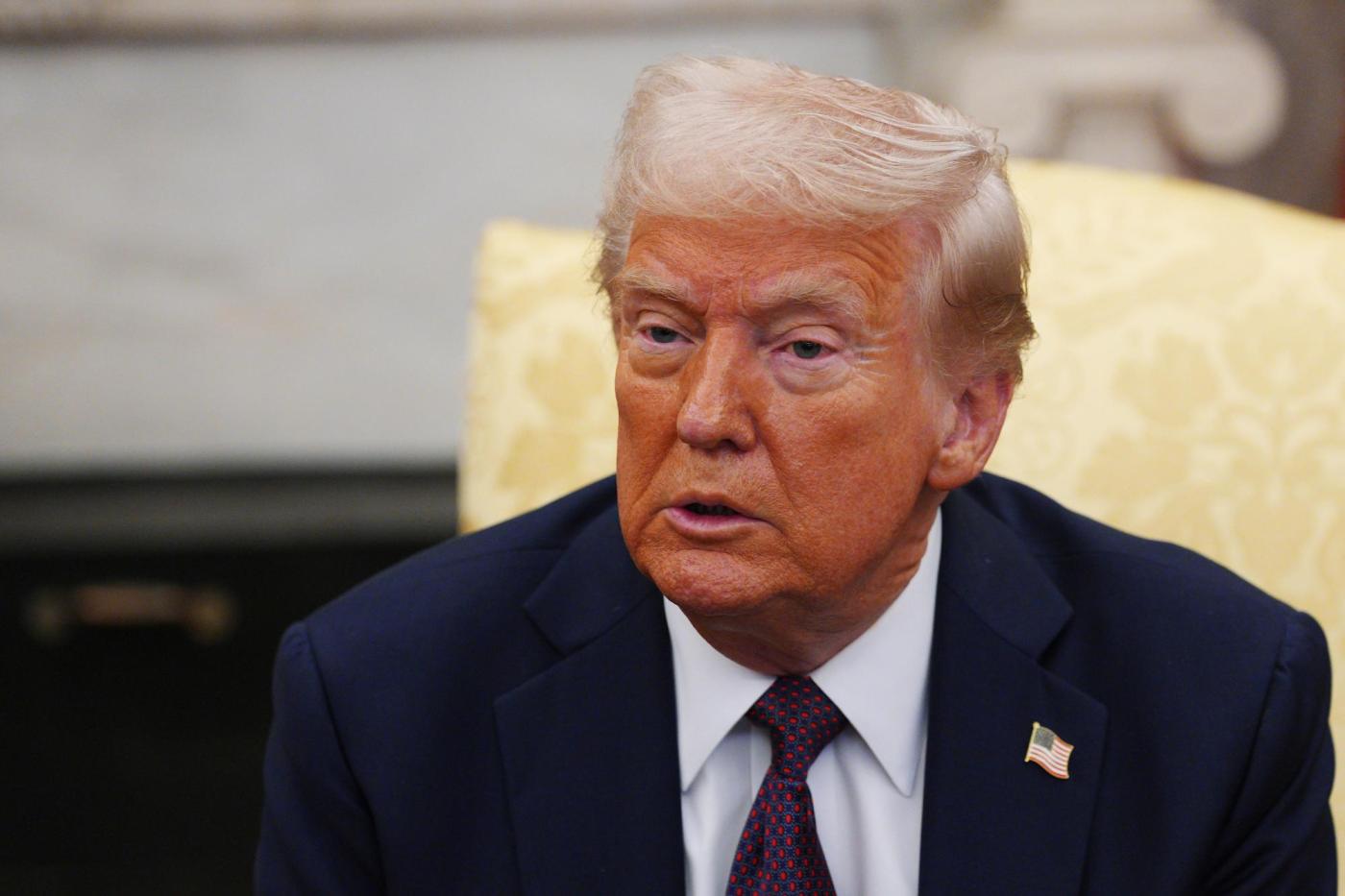
President Donald Trump is expected to sign an executive order on Friday designating English as the official language of the United States, according to the White House.

Related Articles

National Politics |


Social Security Administration could cut up to 50% of its workforce

National Politics |


Hundreds of weather forecasters fired in latest wave of DOGE cuts

National Politics |


At meeting with Trump, Zelenskyy will seek security assurances against future Russian aggression

National Politics |


Mexico sends drug lord Caro Quintero and 28 others to the US as officials meet with Trump team

National Politics |


Judge finds mass firings of federal probationary workers were likely unlawful

The order will allow government agencies and organizations that receive federal funding to choose whether to continue to offer documents and services in language other than English, according to a fact sheet about the impending order.

It was not immediately clear when on Friday that Trump planned to sign the order.

The executive order will rescind a mandate from former President Bill Clinton that required the government and organizations that received federal funding to provide language assistance to non-English speakers.

Designating English as the national language “promotes unity, establishes efficiency in government operations, and creates a pathway for civic engagement,” according to the White House.

More than 30 states have already passed laws designating English as their official language, according to U.S. English, a group that advocates for making English the official language in the United States.

For decades, lawmakers in Congress have introduced legislation to designate English as the official language of the U.S., but those efforts have not succeeded.

Within hours of Trump’s inauguration last month, the new administration took down the Spanish language version of the official White House website.

Hispanic advocacy groups and others expressed confusion and frustration at the change. The White House said at the time it was committed to bringing the Spanish language version of the website back online. As of Friday, it was still not restored.

The White House did not immediately respond to a message about whether that would happen.

Trump shut down the Spanish version of the website during his first term. It was restored when President Joe Biden was inaugurated.

The Wall Street Journal first reported on the order Friday.

Twins pitcher Pablo López lends his time to young prospects

posted in: All news | 0

The third week of January was shaping up to be a special one at the Twins’ academy in the Dominican Republic.

It was the beginning of the international signing period, and a handful of teenagers were realizing a big part of their dreams, putting ink to paper and marking the official start to their journeys in professional baseball. At the same time, a group of young ballplayers was graduating from high school. Celebrations were scheduled.

And then, Pablo López showed up.

In the coastal town of Boca Chica, about 25 miles east of Santo Domingo, López served as a beacon for the teenagers gathered. If he could do it, if he could make it to the majors and be a star, maybe someday they could, too.

“(It’s) just a really cool opportunity for them to get to spend that time (together), and hopefully they can fully appreciate that,” said Twins general manager Jeremy Zoll, who also was in the Dominican Republic that week. “It’s not common to have someone of Pablo’s caliber and character just be willing to dedicate time in the offseason for that.”

The Twins’ ace had thought about visiting the team’s academy over the past couple of years, but he was hesitant to travel in January, so close to the start of spring training, for fear it negatively affect impact his preparation.

But this wasn’t a trip just anywhere. This was a baseball complex that would have everything he’d need to continue training for the upcoming season. After finding out that it was the international signing period and graduation day, López had a little bit extra motivation to hop on a plane and make it work.

“When you are that early in your career, or about to start, you’re not really exposed to who you want to be,” López said. “It’s also one of those things, if you see it, you can become it. The more you see it, the more real it could be.”

López stayed at the academy for five days. When the staff invited him out to dinner, he declined, saying he’d rather spend the time playing cards with the young ballplayers.

One Twins minor leaguer, Victor Leal, who signed with the organization in 2024, thanked López for coming to visit on the major leaguer’s Instagram post about the trip — and then reminded López to practice his card playing so he could beat him the next time around.

López shot some pool, too, and played video games with the prospects. He observed their bullpens, and them his — all eyes locked on López when he threw, Zoll, said. He participated in a Q&A where players asked him questions about his journey and offered words of advice and motivation.

“You could tell everyone was really dialed in on every word that he had to offer all their players and their families,” Zoll said. “It was really special.”

López himself was once much like these teenagers, though he signed at 16 with the Seattle Mariners out of Venezuela, not the Dominican Republic. He didn’t have an experience when he was younger like the one he provided last month, but he did recall an “Erasmo Ramírez Award,” when he played in the Venezuelan Summer League named after the veteran reliever with whom he now shares a clubhouse.

“It was kind of like a fantasy thing, someone that’s so good, someone that’s about to make it to the majors actually did go through here,” López said.

Getting to this point, López wanted the next generation to know, was not easy. The journey they are about to embark on requires time away from family, missing birthdays, weddings and other celebrations. But the end result has been gratifying.

“You want to do right for the people that did it before you, and you want to do right by those that are about to go into their journey or those going to come after you,” López said. “After the graduation, they asked me to say a couple things. And I’m like, ‘Well, hopefully all of you, but if not, the few that in 12 years from now are hopefully able and blessed to be where I am today, you can look back into this and think that it helped you in any shape or form.’”

Florida ups the stakes for crimes by immigrants in the US illegally

posted in: All news | 0

By DAVID A. LIEB and KATE PAYNE, Associated Press

TALLAHASSEE, Fla. (AP) — For most people in Florida, misdemeanor theft can result in up to a year in jail and a $1,000 fine. For an immigrant illegally in Florida, that same crime now carries a felony punishment of up to five years behind bars and a $5,000 fine.

The new laws in Florida come as President Donald Trump cracks down on illegal immigration. They impose harsher penalties for offenses committed by people illegally in the U.S. than for everyone else. The consequences are particularly stiff for first-degree murder, which now carries an automatic death sentence for anyone who is in the U.S. illegally.

While Florida is more aggressive than most, there are other states considering similar measures to enhance criminal penalties based on immigration status.

A deterrence, but is it constitutional?

Republican Gov. Ron DeSantis says “Florida will be safer and securer,” and a model for other states, because of its sweeping immigration laws.

Florida Gov. Ron DeSantis speaks during a press conference on immigration enforcement at a U.S. Customs and Border Protection hangar on Homestead Air Force Base, Wednesday, Feb. 26, 2025, in Homestead, Fla. (AP Photo/Rebecca Blackwell)

The stiffer penalties are meant to be a deterrent, Republican state Rep. Lawrence McClure said.

“Don’t come to the state of Florida illegally,” he said. “That’s the premise.”

Some civil rights advocates and legal experts are raising alarm.

The laws are “leading into a head-on collision with the constitutional guarantee of equal protection to everyone who is in the United States,” said César Cuauhtémoc García Hernández, a law professor at Ohio State University who specializes in immigration and criminal law.

Are mandatory death sentences allowed?

On his first day in office, Trump ordered a renewed emphasis on the death penalty. His executive order highlighted two particular grounds for it: murdering a law enforcement officer or committing any capital offense while in the U.S. illegally. But jurors and federal judges would still decide whether to impose the death sentence.

The U.S. Supreme Court in 1976 ruled North Carolina’s mandatory death sentence for first-degree murder violated the Constitution’s prohibition on cruel and unusual punishment. States since then have generally used court proceedings in which jurors first decide guilt, then weigh aggravating and mitigating factors when deciding whether defendants should be sentenced to death.

“There is longstanding precedent making clear that mandatory death penalty laws are unconstitutional,” said Kara Gross, legislative director and senior policy counsel for the American Civil Liberties Union of Florida.

But Florida’s new laws eliminate judicial discretion in certain cases. They require courts to impose a death sentence on defendants in the U.S. illegally who are found guilty of capital offenses such as first-degree murder or child rape.

Republican state Sen. Randy Fine acknowledged the legislation he co-sponsored will likely face a legal challenge, but he expects the Supreme Court to overturn its prior ruling.

“It’s almost 50 years later,” Fine said, adding, “The Supreme Court changes its mind on things.”

More time for the same crime

Last year, DeSantis signed a law enhancing penalties for people who commit state felonies after being previously deported and convicted of illegal reentry under federal law. The measure increased sentences by one classification, meaning someone convicted of a third-degree felony typically punishable by up to five years in prison and a $5,000 fine would instead be sentenced for a second-degree felony punishable by up to 15 years in prison and a $10,000 fine.

The latest Florida laws apply similar sentencing enhancements to anyone in the U.S. illegally, regardless of any convictions for reentering, and apply the enhanced penalties to misdemeanors.

A U.S. Customs and Border Protection agent walking past is reflected in the window of a helicopter at Homestead Air Force Base ahead of a press conference by Florida Gov. Ron DeSantis, Wednesday, Feb. 26, 2025, in Homestead, Fla. (AP Photo/Rebecca Blackwell)

If the new laws get challenged, García Hernández said, a court would likely look to a 1982 U.S. Supreme Court ruling. The justices said Texas failed to show a substantial state interest for a law barring state school funding for children not “legally admitted” to the U.S. The high court cited the Constitution’s 14th Amendment, which says a state shall not “deny to any person within its jurisdiction the equal protection of the laws.”

To defend Florida’s law, state attorneys would probably have to answer a similar question: “What is your compelling justification for treating individuals who are accused of a crime — the same crime — differently based solely on their citizenship status?” García Hernández said.

Other states may follow Florida’s lead

Legislation pending in several states — including Alabama, Idaho, Indiana, Minnesota, South Carolina and Texas — would allow enhanced penalties for some state crimes committed by immigrants illegally in the U.S., according to an Associated Press analysis using the bill-tracking software Plural.

A bill by Texas state Sen. Pete Flores would raise penalties one notch for most felonies committed by people in the U.S. illegally.

Flores, who is chair of the Senate Criminal Justice Committee and co-founder of the Texas Hispanic Republican Caucus, described the legislation as “a common-sense, tough-on-crime response to enforce the rule of law and better protect Texans.”

Legislation that passed the Utah Senate and is now pending in the House takes a more narrow approach focused on theft and drug dealing. It would impose mandatory jail sentences, without the potential for early release, for repeat offenders who are lawful U.S. residents or for any offenders who were previously deported and then convicted in federal court of illegally reentering the U.S.

Republican state Sen. Cal Musselman said his legislation targets “a small group of individuals.” Law enforcement officers have told him they see “a clear connection between being deported multiple times, coming in, and committing crimes within the state.”

Lieb reported from Jefferson City, Missouri.

Payne is a corps member for The Associated Press/Report for America Statehouse News Initiative. Report for America is a nonprofit national service program that places journalists in local newsrooms to report on undercovered issues.