PODCAST: ¿Qué se sabe sobre las condiciones en “Alligator Alcatraz”, el centro de detención para inmigrantes?

posted in: All news | 0

Dos antiguos detenidos en el Centro de Detención del Sur de Florida, conocido como “Alligator Alcatraz”, declararon la semana pasada como parte de una demanda que alega castigo por buscar asesoramiento legal y violaciones al debido proceso. Así que para hablar de las condiciones en el centro de detención y la demanda, invitamos a Mary Kapron, investigadora de Amnistía Internacional.

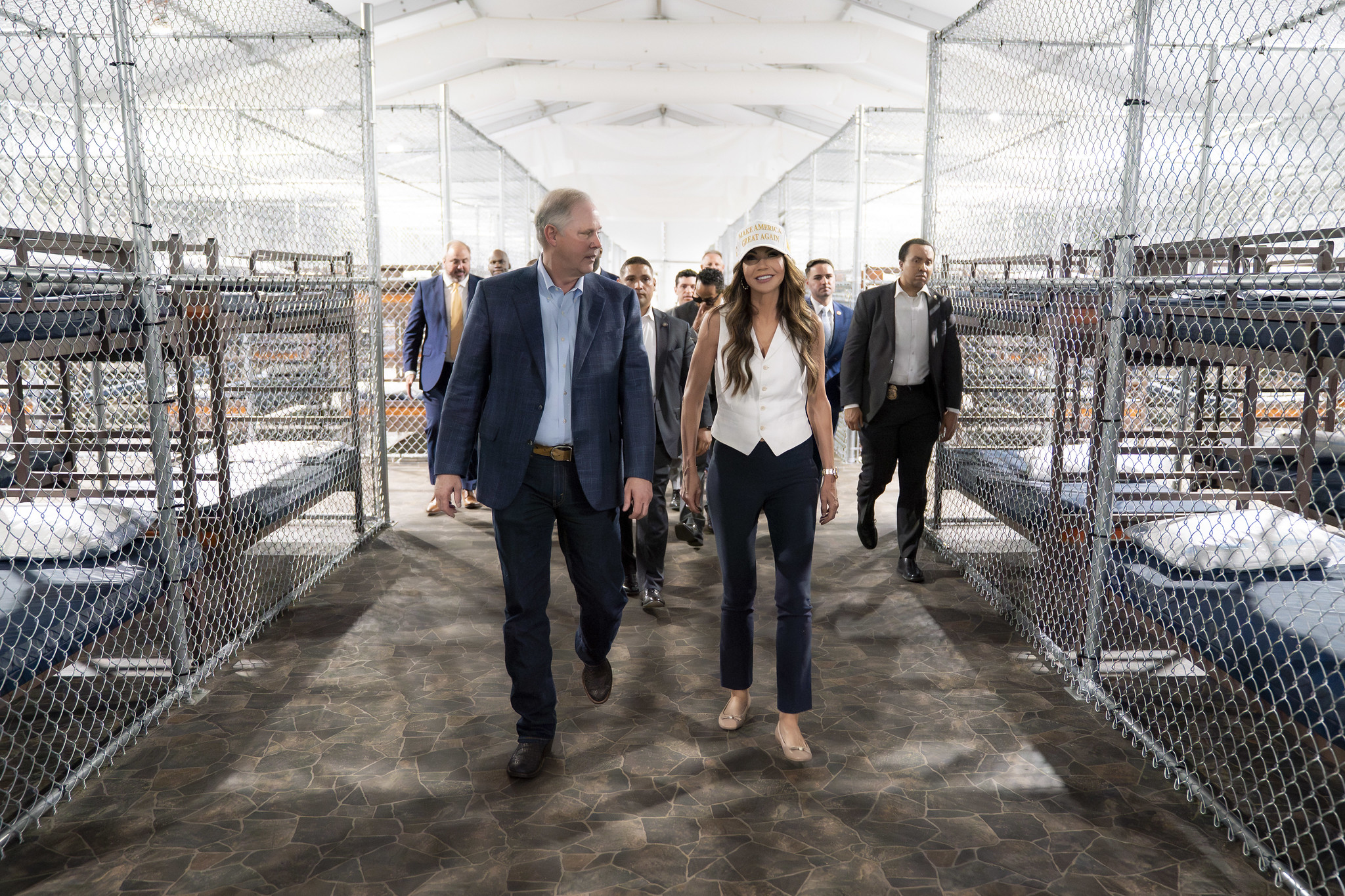
La secretaria del Departamento de Seguridad Nacional, Kristi Noem, y otros funcionarios en el Centro de Detención del Sur de Florida, conocido como “Alligator Alcatraz”, en julio. (Departamento de Seguridad Nacional/ Tia Dufour)

Dos antiguos detenidos en el Centro de Detención del Sur de Florida, conocido como “Alligator Alcatraz”, declararon la semana pasada como parte de una demanda que alega castigo por buscar asesoramiento legal y violaciones al debido proceso.

Durante una audiencia de dos días, los abogados que representan a los antiguos detenidos solicitaron a la jueza federal Sheri Polster Chappell una orden judicial temporal que garantizara que los detenidos en este centro de detención de la Florida tuvieran el mismo acceso a sus abogados que los detenidos en los centros de detención federales.

La demanda, presentada por la American Civil Liberties Union (ACLU por sus siglas en inglés) y Americans for Immigrant Justice, cuestiona las operaciones llevadas a cabo por el centro de detención, las cuales se realizan a través de la cooperación entre los estados y el gobierno federal.

Este centro de detención, ubicado en una remota pista de aterrizaje en los Everglades, se ha presentado como único, ya que fue financiado con fondos federales y es gestionado por el estado de la Florida, bajo el mando del gobernador Ron DeSantis.

Desde su apertura, en el verano de 2025, este centro ha enfrentado varias demandas de ecologistas, de organizaciones de libertades civiles y la tribu indígena Miccosukee, y buena parte de las críticas se han centrado en las condiciones inhumanas de los detenidos.

Los detenidos que testificaron por video desde sus países de origen en Colombia y Haití dijeron que no podían acceder a sus abogados como en otros centros de detención de inmigrantes, donde pueden ir sin cita, y fueron puestos bajo presión para firmar órdenes de deportación.

A menudo, a los detenidos los llevan a otros centros antes de que los abogados puedan verlos

El año pasado, Amnistía Internacional realizó un informe en el que condenaba las condiciones de los detenidos, describiendo las políticas de inmigración y asilo del estado de Florida como factores contribuyentes a la generación de temor generalizado entre las comunidades de migrantes, solicitantes de asilo y personas con estatus mixto. 

Así que para hablar de las condiciones en el centro de detención y la demanda, invitamos a Mary Kapron, investigadora de Amnistía Internacional.

Más detalles en nuestra conversación a continuación.

Ciudad Sin Límites, el proyecto en español de City Limits, y El Diario de Nueva York se han unido para crear el pódcast “El Diario Sin Límites” para hablar sobre latinos y política. Para no perderse ningún episodio de nuestro pódcast “El Diario Sin Límites” síguenos en Spotify, Soundcloud, Apple Pódcast y Stitcher. Todos los episodios están allí. ¡Suscríbete!

The post PODCAST: ¿Qué se sabe sobre las condiciones en “Alligator Alcatraz”, el centro de detención para inmigrantes? appeared first on City Limits.

Hundreds pack an Ohio church to back extending protected status for Haitians in the US

posted in: All news | 0

By LUIS ANDRES HENAO, Associated Press

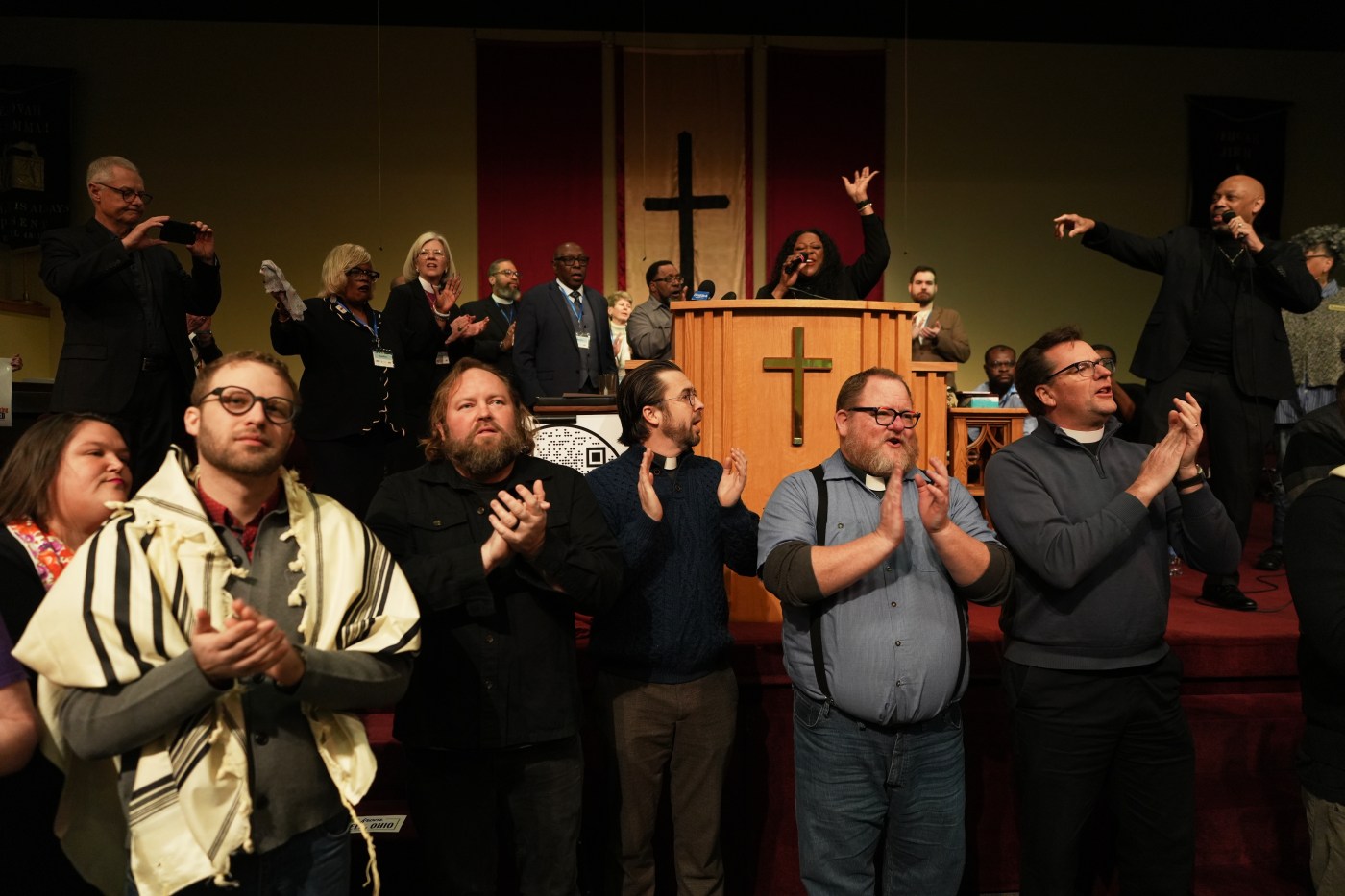
SPRINGFIELD, Ohio (AP) — In a church crowded to overcapacity, two-dozen faith leaders and their audience of hundreds sang and prayed together in unity Monday as a sign of support for Haitian migrants, some of whom fear their protected status in the United States may be ended this week.

Religious leaders representing congregations from across the United States attended the event at Springfield’s St. John Missionary Baptist Church, demanding an extension of the Temporary Protection Status that has allowed thousands of Haitian migrants to legally arrive in Springfield in recent years fleeing unrest and gang violence in their homeland. The TPS designation for Haiti is set to expire Tuesday, and those gathered were hoping that a federal judge might intervene and issue a pause.

“We believe in the legal system of this country of ours, we still believe. We believe that through the legal ways, the judge hopefully will rule in favor of current TPS holders today that will allow them to stay while we continue to fight,” Guerline Jozef, executive director of the Haitian Bridge Alliance, told the packed church.

“We have been called for such a time as this to protect those who have nowhere else to go. They cannot go back to Haiti,” she said.

So many people turned up for the church event that a fire marshal had to ask 150 to leave because the building had exceeded its 700-person capacity.

Hundreds joined a choir clapping and singing: “You got to put one foot in front of the other and lead with love.”

They also observed a moment of silence for people who have died in federal immigration detention and for Alex Pretti and Renee Good, who were shot and killed by federal officers in Minneapolis. Some of the speakers evoked biblical passages while appealing for empathic treatment of migrants.

Federal immigration crackdown and TPS

The Department of Homeland Security announced last June that it would terminate TPS for about 500,000 Haitians who were already in the U.S., including some who had lived in the country for more than a decade. DHS said conditions in the island nation had improved enough to allow their safe return.

“It was never intended to be a de facto asylum program, yet that’s how previous administrations have used it for decades. The Trump administration is restoring integrity to our immigration system to keep our homeland and its people safe,” DHS spokesperson Tricia McLaughlin said in a statement, noting there were no new enforcement operations to announce.

A federal judge in Washington is expected to rule any day on a request to pause the TPS termination for Haitians while a lawsuit challenging it proceeds.

TPS allows people already in the U.S. to stay and work legally if their homelands are deemed unsafe. Immigrants from 17 countries, including Haiti, Afghanistan, Sudan and Lebanon, had the protective status before President Donald Trump’s second term started.

The uncertainty over TPS has deepened worries for an already embattled Haitian community in Springfield.

Trump denigrated the community while campaigning in 2024 for a second term, falsely accusing its members of eating their neighbor’s cats and dogs as he pitched voters  on his plans for an immigration crackdown. The false claims exacerbated fears about division and anti-immigrant sentiment in the mostly white, working class city of about 59,000 people.

In the weeks after his comments, schools, government buildings and the homes of elected officials received  bomb threats.

Since then, the Springfield’s Haitians have lived in constant fear that has only been exacerbated by the federal immigration crackdowns happening in Minneapolis and other cities, said Viles Dorsainvil, leader of Springfield’s Haitian Community Help and Support Center.

“As we are getting close to the end of the TPS, it has intensified the fear, the anxiety, the panic,” Dorsainvil said.

Related Articles


Justice Department says it’s taken down Epstein-related files that may have had victim information


2-month-olds see the world in a more complex way than scientists thought, study suggests


Here’s what to know about the partial government shutdown


A crisis emerges across the US as ‘forever chemicals’ quietly contaminate drinking water wells


Sheriff says ‘we do in fact have a crime scene’ in search for ‘Today’ host Savannah Guthrie’s mom

Sunday church service

Some of Springfield’s estimated 15,000 Haitians also sought comfort and divine intervention in their churches on Sunday.

At the First Haitian Evangelical Church of Springfield, its pastor estimated that half of the congregants who regularly attend Sunday service stayed home.

“They don’t know the future; they are very scared,” said the Rev. Reginald Silencieux.

Flanked by the flags of Haiti and the United States, he advised his congregation to stay home as much as possible in case of immigration raids. He also offered a prayer for Trump and the Haitian community and reminded congregants to keep their faith in God.

“The president is our president. He can take decisions. But he is limited,” he said. “God is unlimited.”

After the service, Jerome Bazard, a member of the church, said ending TPS for Haitians would wreak havoc on his community.

“They can’t go to Haiti because it’s not safe. Without the TPS, they can’t work. And if they can’t work, they can eat, they can’t pay bills. You’re killing the people,” he said.

Many of the children in the Springfield Haitian community are U.S. citizens who have parents in the country illegally. If they are detained, Dorsainvil said some parents have signed caregiver affidavits that designate a legal guardian in hopes of keeping their kids out of foster care.

“They’re not sending their kids to school,” he said.

Volunteers from nearby towns and from out of state have been calling the Haitian community center offering to deliver food for those afraid to leave home, Dorsainvil said. Others have been stockpiling groceries in case immigration officers do flood the community.

Some, he said, have been receiving desperate calls from family members abroad asking them to leave. “They keep telling them that Springfield is not a safe place now for them to stay.”

Associated Press reporter Julie Carr Smyth in Columbus, Ohio, contributed to this report.

Associated Press religion coverage receives support through the AP’s collaboration with The Conversation US, with funding from Lilly Endowment Inc. The AP is solely responsible for this content.

Stillwater chamber officials apologize for response regarding snow sculpture’s removal

posted in: All news | 0

Greater Stillwater Chamber of Commerce officials have apologized for the way the organization handled the removal of Team USA’s snow sculpture from the World Snow Sculpting Championship display.

Chamber officials removed the sculpture, “A Call to Arms,” because they said it included anti-Immigration and Customs Enforcement symbols that violated competition rules.

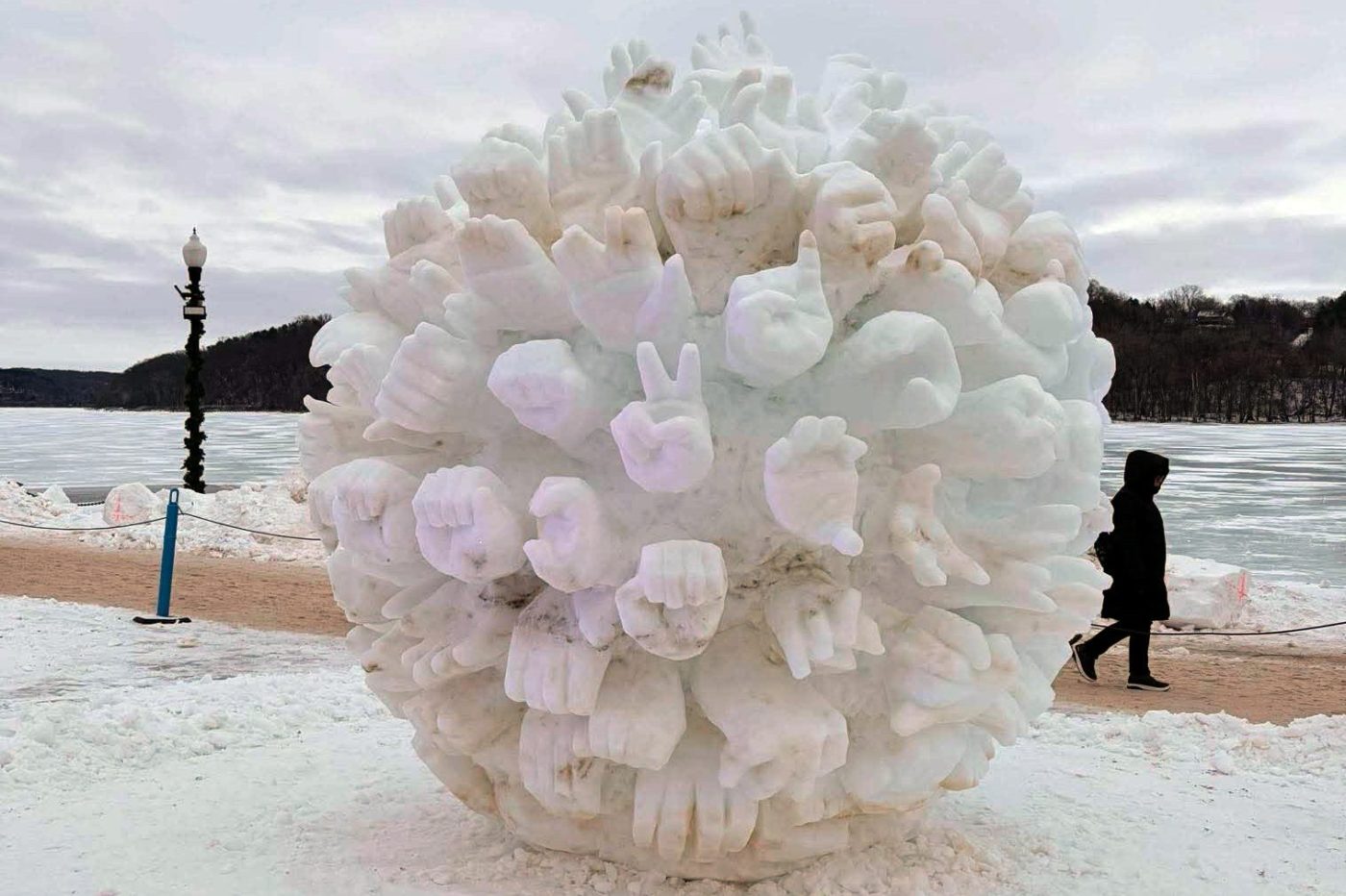
The sculpture, which was a sphere of outstretched hands, included peace signs and hand gestures using American Sign Language. Among the messages spelled out in ASL: “ICE out,” “love,” “unity” and “resist.”

“We want to acknowledge this clearly and collectively: in a fast-moving and emotionally charged moment, our response did not fully reflect our shared values,” Chamber officials wrote in a statement shared on social media. “Leadership is not about perfection. It is about the humility to pause, reflect, and adjust when something does not land as intended.”

The removal of the sculpture made national news.

The original design submitted for competition did not include hand gestures of symbols. The decision to change the sculpture was made on Jan. 14, the first day of the competition — just one week after Renee Macklin Good, 37, was shot and killed by an ICE agent in Minneapolis, according to St. Paul artist and Team USA member Dusty Thune.

“Upon digging into the snow block, we found the snow pack to be so poorly packed and full of debris that the outstretched arms we were carving kept crumbling and falling off,” Thune told the Pioneer Press. “We made the choice to focus on bigger hands and shorter arms to try and salvage our piece. Sometimes the medium (snow) decides the way a piece is going to be created. Sometimes external events also have a hand in shaping what a piece will become.”

Officials discovered the modifications to Team USA’s sculpture after they had completed the judging process of the competition, which consisted of 16 teams from around the world. Team Canada won the event; Team USA did not place.

The World Snow Sculpting Championship rules state that “teams must adhere to their original submitted sketch” and “sculptures must respect cultural and social values, and avoid offensive, controversial, political, or inappropriate themes,” Robin Anthony-Evenson, president of the Greater Stillwater Chamber of Commerce & Foundation, told the Pioneer Press.

The hand gestures in the sculpture “did not align with these pre-established rules and policy,” she said.

‘Emotionally heavy’

In the statement posted over the weekend, Chamber officials said the past several weeks have been “emotionally heavy for many people in Minnesota and across the country.”

“In moments like these, fear, grief, anger, and uncertainty rise quickly to the surface,” according to the statement. “As leaders and as neighbors, we feel that weight too.”

Art “has always reflected the times we live in,” Chamber officials wrote. “It gives shape to emotion and creates space for connection. That role deserves respect. At the same time, shared community spaces depend on shared understanding. Events like the World Snow Celebration are built on shared expectations that enable people from diverse backgrounds, including our international friends, our community, including families and children, to gather in a spirit of welcome. Maintaining that balance between empathy and responsibility is not easy and requires ongoing care and communication.”

Chamber officials said they are “committed to learning from this moment and turning reflection into action.”

“The Chamber will be engaging more intentionally with artists and community members, inviting their voices into ongoing conversations about how we host, communicate, and steward the World Snow Celebration,” according to the statement. “We strongly believe that collaboration strengthens trust, and that trust strengthens the future of this event. … Stillwater has always been at its strongest when we choose steadiness over defensiveness and humanity over haste. That spirit is shared by the many partners who care deeply about this community. Moments like this do not define Stillwater. How we respond, learn, and lead together does. We hope you will join us as we all learn and grow together.”

Permanent sculpture?

Thune said he learned about the removal of “A Call to Arms” from someone who went to Lowell Park to view it.

Related Articles


Woman treated for smoke inhalation after Hugo fire


Minnesota’s 2025 domestic abuse homicide victims honored


Woodbury man with rare skin condition ‘scared to go out’ after ICE detention


Duck, Duck, what? Washington County ‘Name a Snowplow’ contest winners announced


Team USA snow sculpture in Stillwater removed over ‘ICE out’ messaging

Thune spent this weekend working on a snow sculpture called “Ice Out 4 Good,” a memorial for Alex Pretti and Renee Good, at the Lake of the Isles in Minneapolis. Pretti was a 37-year-old ICU nurse who was shot and killed on Jan. 24 by federal law enforcement agents in Minneapolis.

Thune said he also hopes to make a permanent “A Call to Arms.” A GoFundMe online fundraiser to help with that effort (gofund.me/69441a094) had raised $6,700 as of Monday morning.

“I think it is time to make this sculpture live forever,” he told the Pioneer Press last week. “We’d like to recreate it in iron, the lifeblood of Minnesota, and have it on permanent display in Minneapolis as a memorial to those who can no longer speak up.”

Programs aim to diversify winter sports, but gaps persist at Winter Olympics

posted in: All news | 0

By FERNANDA FIGUEROA

Whether it’s on indoors halfpipes in New Jersey or the Rocky Mountains slopes of Colorado and Wyoming, there seems to be plenty of programs aimed at developing a diverse new generation of skiers, skaters and snowboarders. Yet that work is not often reflected with the athletes seen at the Winter Olympics.

Related Articles


Freeskier Eileen Gu takes another wild ride to the Olympics, invites the world to tag along


A luge love story: These Olympics have a lot of meaning for Emily and Dominik Fischnaller


Ledecka going for glory again on snowboard and skis at the Milan Cortina Olympics


Olympic program review opens path to relax Winter Games mandate for only sports on snow and ice


Athletes bring Milan Olympic Village to life, complete with Italian bidets and 4-story US banners

A year before the last Winter Games in Beijing, former Canadian figure skater Elladj Baldé started the Skate Global Foundation, a group he says was inspired by his own experiences dealing with adversity as a skater of color.

As athletes prepare to gather next month for global competition at the Milan Cortina Games, organizations like the foundation and the National Brotherhood of Snowsports say they are creating accessibility to the slopes for underserved communities with a charge to develop from recreational-level participation to an Olympic path.

Wealth and access to ski resorts make a significant difference in one’s ability to progress. An athlete’s chance of making an Olympic team increases significantly with intensive training at elite boarding schools or academies that can costs tens of thousands of dollars.

“If there were more organizations like this doing this type of work, I think we would have a lot more funding available for skaters of color to be able to access support and the technical background that they need in order to continue to evolve in the sport,” Baldé said.

The majority of Team USA athletes are white even though the roster is more diverse than some at the Winter Games. The U.S. Alpine skiing team in Milano-Cortina is predominantly white. The U.S. figure skaters competing this year are also include Asian American athletes, but none who are Black or Hispanic. Laila Edwards is a rising star of the powerhouse U.S. women’s hockey team and will be the first Black woman to wear the American sweater on the Olympic stage.

Still, there will be many athletes of color competing next month, the majority from African and Caribbean nations.

Financial grants helping diverse athletes break into winter sports

Baldé, 35, grew up being told he couldn’t skate to hip-hop music, wear his hair out because it was nappy or that he looked like a monkey. Hearing things like that, Baldé said, he would have benefited from more support or ice skaters to look at who may have experienced similar things and could offer ways to overcome the noise.

His foundation is focused on creating more diversity in figure skating, offering $3,000 grants to skaters of color in Canada who are close or on a path to competing at the Olympics.

Baldé said the biggest struggle for him was the lack of representation, but receiving similar grants when he was younger helped him to break into competitions at a higher level.

“To be able to have skaters competing internationally and competing at the Olympics that are Black, Indigenous or skaters of color can really inspire generations of athletes to come into a sport where they might feel like don’t belong without that representation,” he said.

The Canadian Ski Council, which also represents the nation’s snowboarding industry, has created a “go skiing, go snowboarding” initiative designed to help families feel at home on the slopes.

“We have been characterized, somewhat rightfully, as a largely male, largely Caucasian activity,” said Paul Pinchbeck, president of the organization. “But nothing could be further from the truth. I’m really happy to say that in my lifetime we are going to dispel that and we’re going to see a lot more diversity of interest in our slopes.”

Recreational affinity groups stepping up to DEI mission

With about 7,000 members across 62 National Brotherhood of Snowsports clubs in the United States, the group is working to promote and help athletes of color excel, Henri Rivers, the organization’s president, told the Associated Press.

Whether it be Alpine skiing, snowboarding or Nordic skiing, NBS’s mission is to “identify, develop and support athletes of color that are going to win international and Olympic competitions and represent the United States,” Rivers said.

Cost is one of the largest obstacles for those looking to get into winter sports. A single day of skiing can well over $100, not including travel and equipment rental; owning your own gear costs even more. Rivers said NBS provides scholarships athletes can use to cover their coaching, tuition, competition, travel and lodging fees.

“We pretty much cover almost everything you can imagine that can help assist them get into the competitions they need to be represented in,” Rivers said.

Lack of diverse representation still seen as barrier for athletes of color

With Benin, Guinea-Bissau and the United Arab Emirates making their Winter Olympic debut, the Games are also expected to be more diverse and showcase athletes of color.

Rivers said for more representation in any sports, kids need to be able to see themselves in the athletes and coaches.

“I think what you are going to get to witness on a global scale is that athletes of color can compete,” Rivers said. “They can compete in any sport as long as they’re given that type of training and allow to work at it.”

FILE – Erin Jackson of United States competes during the women’s 500 meters at the World Cup speedskating event in Inzell Germany, Jan. 25, 2026. (AP Photo/Matthias Schrader, File)

U.S. speedskater Erin Jackson, whose championship in the 500 meters in 2022 made her the first Black woman to win an individual gold medal at a Winter Olympics, is aware of the impact representation can have and that for many young girls she will be a reason they compete.

“It helps to see someone like you achieving something, and we haven’t typically had that in winter sports and speedskating specifically,” she said. “So I really take on the responsibility with pride of being a face that others can look to and maybe get out and try the sports.”

Jackson, who is from Florida, has made increasing diversity in her sport a priority; when she retires, she wants to start an organization to help provide funding for that. She already has worked with Edge Outdoors, a nonprofit based in Washington state that tries to bring women of color to winter sports, helping review scholarship applications.

DEI efforts are having impact on winter sports, study shows

The work NBS, Skate Global Foundation and others are doing to increase diversity is having an impact in snow sports, according to research done by Snowsports Industries America.

Its study, which looked at participation across various snow sports during the 2024-25 season, found that participation amongst all demographics has increased. Participation from Hispanics increased by 4.1% and from Asian Pacific Islanders by 6.1%.

“It is great that the numbers are rising, but I wish they were rising faster,” SIA President Nick Sargent said.

According to the study, the increase in participation from the Hispanic community has helped to mitigate the decline in participation from white communities.

During the 2024-25 season, the number of white skiers declined from 9 million in 2023 to 8.7 million, yet the number of Hispanic skiers remained unchanged at 1.8 million. In snowboarding, white participants declined from 5.8 million to 5.3 million while Hispanic participation has increased from 1.8 million to two million.

“If you are thinking about skiing and snowboarding, it’s a primarily white competitive landscape but they are plenty of people of color that are involved in the space and contributing,” Sargent said.

Olympics Committee offers financial aid to neediest athletes

The task is getting those people of color into an Olympic track if the skills and desire are there.

The International Olympic Committee, through its Olympic Solidarity program, offers scholarships to athletes with the greatest need. The monthly grants help cover costs for training, equipment, travel and participation in qualification events.

At the Winter Olympics in Beijing, 429 scholarships were awarded to athletes. Of those, 236 athletes qualified for the Games and 10 won medals.

FILE – Spain’s Ana Alonso Rodriguez competes during the women’s mixed relay race at the Ski Mountaineering World Cup event in Bormio, Italy, Feb. 23, 2025. (AP Photo/Antonio Calanni, File)

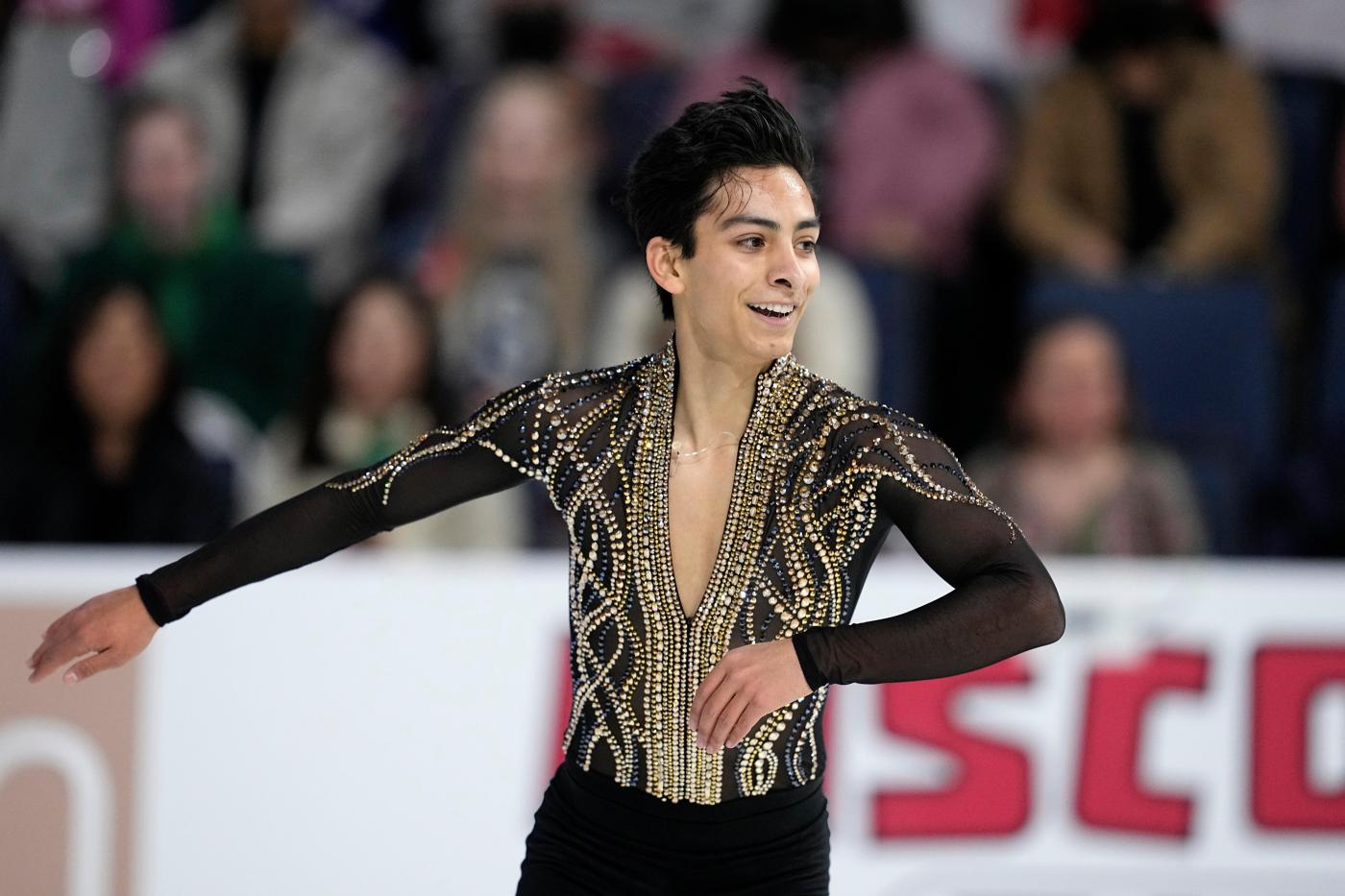
For this year’s Games, 447 athletes have received scholarships including, figure skater Donovan Carrillo of Mexico, skeleton athlete Nicole Silveira of Brazil and Ana Alonso Rodriguez, who represents Spain in ski mountaineering.

Carrillo told the IOC that the grants from the IOC helped him to “compete more, attend summer camps and learn from the best coaches,” which ultimately helped him qualify for the Beijing Games after years of limited resources.

“The IOC’s policy is that every athlete regardless of race or anything should be able to access sports free from any barriers,” IOC solidarity program director James Macleod said. “Every athlete should have access to be able to have the possibility to be able to access winter sports.”

FILE – Nicole Silveira, of Brazil, slides during women’s skeleton run 1 at the 2022 Winter Olympics, Feb. 11, 2022, in the Yanqing district of Beijing. (AP Photo/Dmitri Lovetsky, File)

AP Olympics: https://apnews.com/hub/milan-cortina-2026-winter-olympics