LOS ANGELES — I’ll let you in on a secret: I lose my play-along Oscar ballot every year. Hey, I’m a critic who can’t help voting her heart while championing what should have been nominated instead. This Sunday, I’ll be rooting for these contenders — and elbowing my watch party to catch up with one of these overlooked never-rans as soon as the teleprompters chase the last winners offstage.
The 97th Academy Awards will be held on March 2 at the Dolby Theatre at Ovation Hollywood. The show will kick off at 6 p.m. CT.
The 2025 Oscars telecast will air live on ABC and stream live on Hulu. Those with cable subscriptions also can use their credentials to access the livestream on abc.com and the ABC app.
This is the first year that the Oscars, which Conan O’Brien will host, will stream live on Hulu. In prior years, cord-cutters needed subscriptions to platforms with live TV tiers such as Hulu + Live TV, YouTube TV or FuboTV to catch the show.
Best picture
“Anora”
“The Brutalist”
“A Complete Unknown”
“Conclave”
“Dune: Part Two”
“Emilia Pérez”
“I’m Still Here”
“Nickel Boys”
“The Substance”
“Wicked”
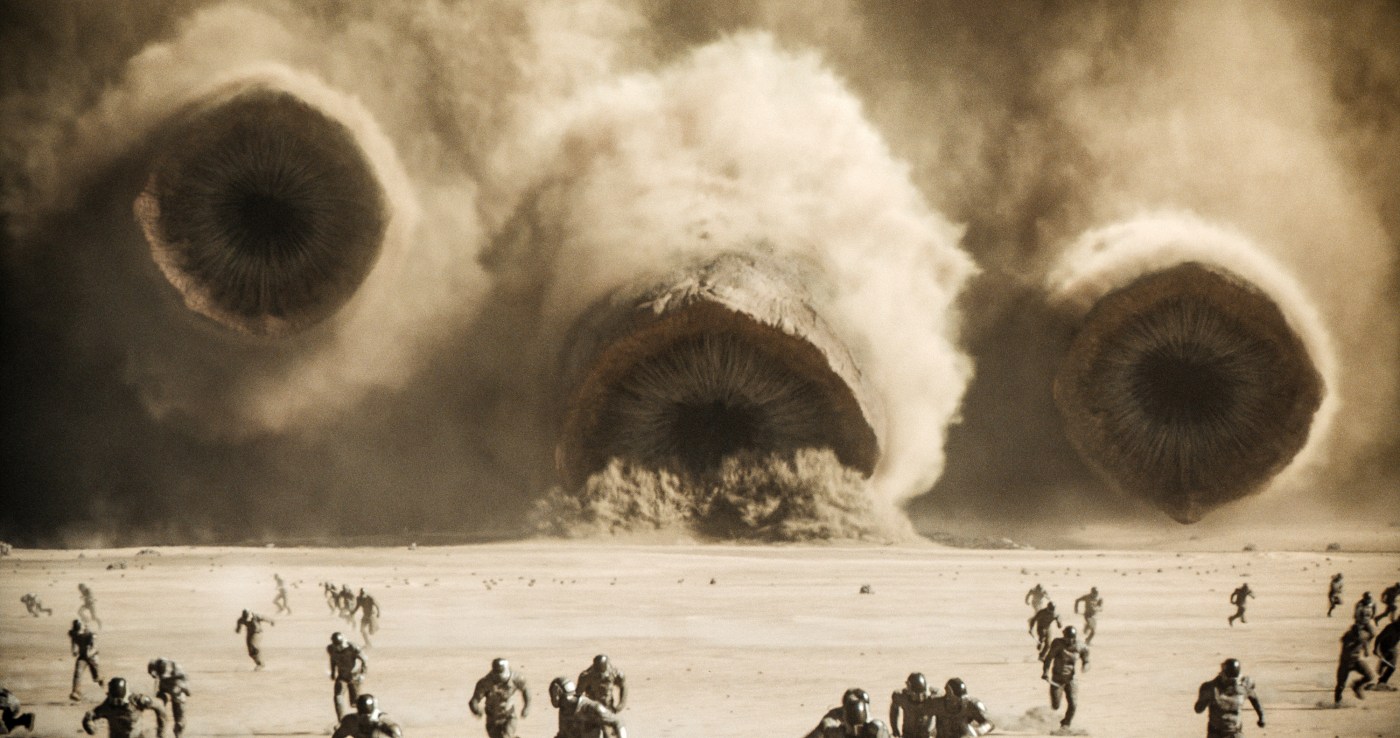
Should win: “Dune: Part Two.” Last March, it didn’t take a snort of spice to see visions of Denis Villeneuve clutching multiple Oscars for his follow-up to 2021’s “Dune: Part One.” The first “Dune” earned 10 nods and won six. Shockingly, this superior sequel only snagged four nominations — best picture plus three technical categories — when it deserved to gobble them up like a Shai-Hulud. “Part Two” boasts every quality you’d want in a best picture. It’s an ambitious, intelligent, grand-scale masterpiece, an immaculately crafted crowd-pleaser that never backs down from making its audience squirm. While Villeneuve clearly adores Frank Herbert’s original 1965 novel, his clever tweaks have rejiggered its 60-year-old themes to fit exactly this moment in time, dialing up the book’s female strength and the shivers we get as Timothée Chalamet’s Paul Atreides convinces a land of zealots that he alone can save them. This year’s awards for director and adapted screenplay should have been locks, plus supporting actress for Zendaya and lead actor for Chalamet, who delivers a performance with twice the octave range of his Bob Dylan while riding backward on a sandworm screaming in fictional Fremen-ese. I like most of this year’s nominees just fine — I even love a few — but I’m convinced that decades from now, we’ll consider “Dune: Part Two” the movie of the year.
Should’ve been a contender: “Better Man.” The academy has expanded its international ranks and it still couldn’t find enough voters to get behind the Robbie Williams monkey movie. What do you think America will witness first: a female president or our begrudging acknowledgment of Britain’s cheekiest pop icon? (C’mon, guys — Williams has sold more than 75 million records.) While perfectly decent, “A Complete Unknown” is the kind of routine rock biopic that’s begun to sound as wheezy as a junk-shop accordion. “Better Man” takes the genre electric. Irreverent and relentlessly entertaining, it boasts more imagination in a single number than most musicals manage in their entire running time. If you need to feel that cinema is alive and singing, that energy is here in both the big swings and tiny details. How about we make a deal? Just pretend that it’s a fictional biopic a la “The Brutalist” and go see the darned thing already.
Director
Sean Baker, “Anora”
Brady Corbet, “The Brutalist”
James Mangold, “A Complete Unknown”
Jacques Audiard, “Emilia Pérez”
Coralie Fargeat, “The Substance”
Should win: Baker. The director of “Tangerine,” “The Florida Project” and “Red Rocket” excels at thrusting subcultures onto the screen, the dicier, the better. Now it’s Baker’s turn to hoist a prestige statuette. “Anora” is arguably his most mainstream film: a screwball comedy welded onto the class struggle between a Brighton Beach stripper and her Russian oligarch in-laws who want to dispose of her like an empty magnum of champagne. Momentum is on Baker’s side: After his recent wins at the Directors and Producers Guild Awards, he delivered a barn burner of an acceptance speech at the Indie Spirits on behalf of “all the indie-film lifers who are holding on and fighting the good fight.” Baker is the advocate independent cinema needs — an auteur who’s not ashamed to entertain. I’d love to see him command center stage again on Sunday.
Should’ve been a contender: Molly Manning Walker, “How to Have Sex.” “Anora” fans must catch up with Manning Walker’s debut posthaste. Set at a party hotel in Crete, “How to Have Sex” is another dramedy that feels like modern anthropology framed in neon, a madcap tale of drinking, debauchery and reckless decisions. Sixteen-year-old Tara (Mia McKenna-Bruce, fantastic) has gone on holiday to cut loose. Her insistence that she’s having fun — no really, so much fun! — becomes its own hangover. Baker needed eight films to land his first Oscar nomination. Hopefully Manning Walker can get there sooner.
Lead actress
Cynthia Erivo, “Wicked”
Karla Sofía Gascón, “Emilia Pérez”
Mikey Madison, “Anora”
Demi Moore, “The Substance”
Fernanda Torres, “I’m Still Here”
Demi Moore stars in “The Substance.” (Christine Tamalet/Mubi/TNS)
Should win: Moore.”The Substance” is a proud mess. I don’t love this Grand Guignol about a Hollywood actor literally killing herself to stay gorgeous, but I’m thrilled that this year’s best picture montage might include a shot of a blood-spattered Walk of Fame. The film itself is a simple idea with the sensationalist impact of the very first bikini. (Heaven help us if writer-director Coralie Fargeat puts her skills into political commercials). Still, Moore deserves every ounce of this award. By sheer force of will, she makes us believe that “The Substance” has substance.
Should’ve been a contender: Andra Day, “The Deliverance.” Another great performance in a go-for-broke horror flick about a woman well over the verge of a nervous breakdown. (And like “The Substance,” she’s the main reason to watch it.) Day’s first leading role in 2021’s “The United States vs. Billie Holiday” earned her an Academy Award nomination. “The Deliverance,” also directed by Lee Daniels, is only her second big part, and proves Day has the talent to be up here every year. Based on a real-life episode of alleged demonic possession, it stars Day as an exhausted single mother who comes to believe that Satan is controlling her kids. Ellen Burstyn was nominated for a similar part in “The Exorcist,” although “The Deliverance” is no “The Exorcist.” With Day’s co-star Glenn Close having a catty blast in a leopard-print pushup bra, the film starts goofy and stays that way. But Day muscles through her scenes with conviction.
Lead actor
Adrien Brody, “The Brutalist”
Timothée Chalamet, “A Complete Unknown”
Colman Domingo, “Sing Sing”
Ralph Fiennes, “Conclave”
Sebastian Stan, “The Apprentice”
Should win: Brody. After “The Pianist” made him the youngest lead actor winner in history, Brody learned that skill doesn’t guarantee success, especially not in a business where financiers have final say on what gets green-lit. For over a decade, his career path has included detours into forgettable international action-dramas — the kind of paychecks artists accept when their opportunities aren’t measuring up to their ambitions. This time, he seems to understand fictional Hungarian architect László Tóth as thoroughly as if they were shadow twins sticking up for each other’s ferocious talent.
Should’ve been a contender: Cillian Murphy, “Small Things Like These.” Sure, Murphy just took home the award for grappling with the shortsighted calculations of nuclear physicist J. Robert Oppenheimer. He’s even better as Irish coal-seller Bill Furlong, another man forced to fight his conscience when he discovers that his local convent doubles as a labor camp for unwed moms. Emily Watson plays the manipulative mother superior who slips Bill an envelope of cash to buy his complicity. For this broke father, it’s an offering he can’t afford to refuse.
Supporting actress
Monica Barbaro, “A Complete Unknown”
Ariana Grande, “Wicked”
Felicity Jones, “The Brutalist”
Isabella Rossellini, “Conclave”
Zoe Saldaña, “Emilia Pérez”
Should win: Saldaña. Between “Avatar” and “The Avengers,” Saldaña has spent the last decade painted blue and green. Now, she’s poised to claim gold. I’ll be honest: I didn’t know she had “Emilia Pérez’s” Rita in her. But Saldaña is terrific as the Mexican lawyer who undergoes her own metamorphosis during the film, transforming from a harried wallflower to a swaggering activist who accuses cartel thugs of corruption while dancing the Roger Rabbit. Parts like this have a way of changing an actor’s trajectory. I’m curious to see how Saldaña seizes her moment.
Should’ve been a contender: Aubrey Plaza, “Megalopolis.” People were befuddled by Francis Ford Coppola’s decades-in-the-making passion project, a rococo take on the collapse of an empire. One person who wasn’t: Aubrey Plaza. She often seemed like the only actor onscreen who knew exactly what movie she was in. Abrasive, shallow and giddily watchable, her Wow Platinum — what a name! — twiddles her clawed fingers like a femme fatale dead certain she can charm her way to the top. Still having a hard time trying to pin down the film’s tone? Just look at her.
Supporting actor
Yura Borisov, “Anora”
Kieran Culkin, “A Real Pain”
Edward Norton, “A Complete Unknown”
Guy Pearce, “The Brutalist”
Jeremy Strong, “The Apprentice”
Should win: Culkin. Let’s get blunt: Kieran Culkin couldn’t lose this award if he tried. Which befits his “A Real Pain” character, Benji, an extrovert who insults his way into winning over a Polish tour group. Benji is caustic, needling and selfish — the kind of guy who hogs the window seat, the shower and everyone’s attention. Smashing through social norms like a rampaging bull, he forces us to question whether life might be more meaningful when you stop being polite and start getting real. I’ve thought about his performance every day since I saw the movie. Even if the Dolby Theatre gets swallowed by a sinkhole before Culkin can claim his trophy, Benji will stay superglued in my mind.
Nicole Kidman, left, and Harris Dickinson in “Babygirl.” (A24/TNS)
Should’ve been a contender: Harris Dickinson, “Babygirl.” Everyone came out of “Babygirl” talking about Nicole Kidman’s fearsome performance as Romy, a CEO in a sub-dom affair with her intern. But Dickinson’s Samuel is every bit as good, plus he’s got the added challenge that her character never bothers to ask his about his life. As a result, we don’t learn much about Samuel ourselves. What we do glean comes only from studying Dickinson’s face: Samuel’s probing eyes, his amused half-smile, his hesitance before he dares to order his boss to get on her knees. He’s taking his own baby steps toward domination — and that’s true for Dickinson too.
Adapted screenplay
James Mangold and Jay Cocks, “A Complete Unknown”
Peter Straughan, “Conclave”
Jacques Audiard, “Emilia Pérez”
RaMell Ross and Joslyn Barnes, “Nickel Boys”
Greg Kwedar and Clint Bentley, “Sing Sing”
Ethan Herisse, left, and Brandon Wilson in “Nickel Boys.” (Orion Pictures/Zuma Press/TNS)
Should win: “Nickel Boys.” Ross and Barnes did more than rework Colson Whitehead’s award-winning novel. They reworked how scripts are written. Ross, who rose up out of documentaries with the 2018 Oscar-nominated feature “Hale County This Morning, This Evening,” recently admitted he’d only ever read one screenplay before adapting this inspired-by-a-true-story tragedy about an abusive reform school in the Jim Crow-era south. Freed from convention, he and Barnes filled their pages with descriptions of sounds and smells, plus dialogue that often pipes in from offscreen. The result is an astounding first-person memory play that unspools like a waking dream (and nightmare).
Should’ve been a contender: Vera Drew, “The People’s Joker.” Speaking of rule breakers, how wonderful to watch Drew slap her own brand over the bat signal. “The People’s Joker” takes Drew’s autobiography as a struggling comic and hurtles it into the DC universe like a bat-grenade filled with mescaline. Half-prank, half-pastiche and 100% punk rock, the film’s mishmash aesthetics are due to the many artists who volunteered to build out Drew’s gender-bending Gotham City by any means necessary, from animation to stop-motion to miniatures. A film this visually chaotic should collapse, if not for the steel in Drew’s script. She’s costumed like a clown, but her screenplay is as confident as an antihero’s cleverest heist.
Original screenplay
Sean Baker, “Anora”
Brady Corbet and Mona Fastvold, “The Brutalist”
Jesse Eisenberg, “A Real Pain”
Moritz Binder and Tim Fehlbaum, “September 5”
Coralie Fargeat, “The Substance”
Should win: “A Real Pain.” Eisenberg’s mousy David is as well-acted as Culkin’s crank. How apt that despite his character’s eagerness to please, Oscar voters still left his performance in the cold. Hopefully, they’ll balance out that snub here as “A Real Pain” puts every groan in exactly the right place. A pitch-perfect combination of pathos, pique and comedy, Eisenberg’s screenplay doesn’t allow any note to get pounded louder than the others. And while he nails David and Benji’s conflict in a single line — “You light up a room and then you s— on everything inside of it” — Eisenberg also allows his script space to breathe, like that quick insert of David quizzing his son about the height of the Burj Khalifa.
Julianne Nicholson, left, and Zoe Ziegler in “Janet Planet.” (Courtesy of A24/TNS)
Should’ve been a contender: Annie Baker, “Janet Planet.” Baker has a Pulitzer and a MacArthur genius grant and by all rights she should have an Oscar nomination too. “Janet Planet,” the saga of a grouchy preteen (Zoe Ziegler) and her bohemian mother (Julianne Nicholson) over one slow-burning summer, feels so organic you might think it scarcely has a script at all. Baker knows just how long to pause so that the audience will fill in her gaps with their own answers. As Nicholson’s lovelorn codependent shifts personalities as she changes from partner to partner, Baker asks how headstrong girls grow up to become malleable women. It’s a great question, even if her screenplay never says it out loud.
Animated feature
“Flow”
“Inside Out 2”
“Memoir of a Snail”
“Wallace & Gromit: Vengeance Most Fowl”
“The Wild Robot”
Should win: “Flow.” A cat, a bird and a dog walk into a boat. Sounds like the makings of a joke, but when the waters start to rise, this simple, wordless tale deepens into a warm-blooded epic about teamwork and survival. Latvian director Gints Zilbalodis has an intuitive understanding of film language that harks back to the silent greats like Charlie Chaplin and Mary Pickford. They knew how to tell a story that would make ’em weep from Burbank to Bangkok. Zilbalodis speaks meow, chirp and woof. More importantly, he’s fluent in human.
Should’ve been a contender: “Transformers One.” No one was asking for a “Transformers” prequel and no one could have predicted that it would be this good. The cartoon ditches Michael Bay’s greasy hormonal Earthlings to zoom back to the robots’ home planet of Cybertron, gorgeously rendered in the perfectly lighted pastels of an old Soviet sci-fi movie. The script nearly lives up to the visuals. A surprisingly affecting study of the rise-and-fall friendship between two bipedal machines who aspire to be cars voiced by Chris Hemsworth and Brian Tyree Henry, “Transformers One” accomplishes the impossible: It convinces you these spark plugs have a soul.
Documentary feature
“Black Box Diaries”
“No Other Land”
“Porcelain War”
“Soundtrack to a Coup d’Etat”
“Sugarcane”
Should win: “No Other Land.” Of every film, this is the vital nominee that audiences have struggled to see. A partnership between four filmmakers (two from Israel, two from Palestine), “No Other Land” documents the Israeli government’s demolition of a small West Bank village over four years. The directors once struggled to hide their footage from seizure by the military who confiscated five cameras and a computer; now, absurdly, they’re finding it tricky to get their film out of the region as no U.S. distributor is willing to give it a theatrical run despite unanimous critical acclaim and an impressive streak of awards. You can catch one-off screenings of “No Other Land” in scattered cinemas this week. I highly suggest you do. You’ll clap twice as loud on the very good chance it captures a hard-earned Oscar win.
Should’ve been a contender: “Daughters.” Hold on to your hankies. “Daughters,” by directors Natalie Rae and Angela Patton, is about a daddy-daughter dance with more emotional buildup than every prom movie combined. The men are in prison. The children haven’t held their fathers’ hands in years. Ranging in age from toddlers to teens, these girls speak with a moral clarity that cuts through any defense of this country’s carceral fetish. Tender, honest and evocatively photographed, this documentary sticks to you like a boutonniere on a lapel.
International feature
“Emilia Pérez”
“Flow”
“The Girl With the Needle”
“I’m Still Here”
“The Seed of the Sacred Fig”
Should win: “I’m Still Here.” In 1970s Brazil, democracy is devolving into a dictatorship. The clues are there, but the citizens can’t convince themselves the threat is real. One parent waves off their teenager’s sudden interest in politics as a fad, like eating macrobiotics. “I’m Still Here’s” ascension into the best picture and lead actress races may be due to its overnight relevance. Yet, the combination of director Walter Salles’ fastidious craft with Fernanda Torres’ phenomenally layered performance more than merits its surprise nominations. I caught Torres’ turn as as a rich housewife who combats sorrow with a smile early last fall and can confirm it felt just as strong even before we started waking up to our own alarming headlines.
Should’ve been a contender: “Universal Language.” This powder-dry dramedy introduces itself as a presentation of the Winnipeg Institute for the Intellectual Development of Children and Young People. Like everything else in the movie, it’s artifice that feigns at being fact. Matthew Rankin, a Canadian historian and prankster, has concocted a starkly enchanting Winnipeg where Farsi is the main language of storefronts, guided tours and everyday grievances, like the woman who gripes about sharing a bus with a live turkey. “‘How am I supposed to relax with all this gobbling?” she moans. Community, even human-avian fellowship, is the theme, with Rankin playing the stranger who learns that belonging isn’t a privilege — it takes participation.
Make your Oscars predictions — and see how they compare to expert picks
How to watch the 2025 Oscars on Sunday
Everything to know about the 2025 Oscars on Sunday
Gene Hackman and his wife tested negative for carbon monoxide, sheriff says
Movie review: ‘The Accidental Getaway Driver’ a meditative take on kidnapping saga