Man pleads guilty to murder and attempted murder in shooting at suburban Chicago July 4 parade

posted in: All news | 0

By SOPHIA TAREEN

WAUKEGAN, Ill (AP) — An Illinois man pleaded guilty Monday to killing seven people and injuring dozens more when he opened fire on a 2022 Independence Day parade in a Chicago suburb, a stunning development moments before opening statements in his trial on charges of murder and attempted murder.

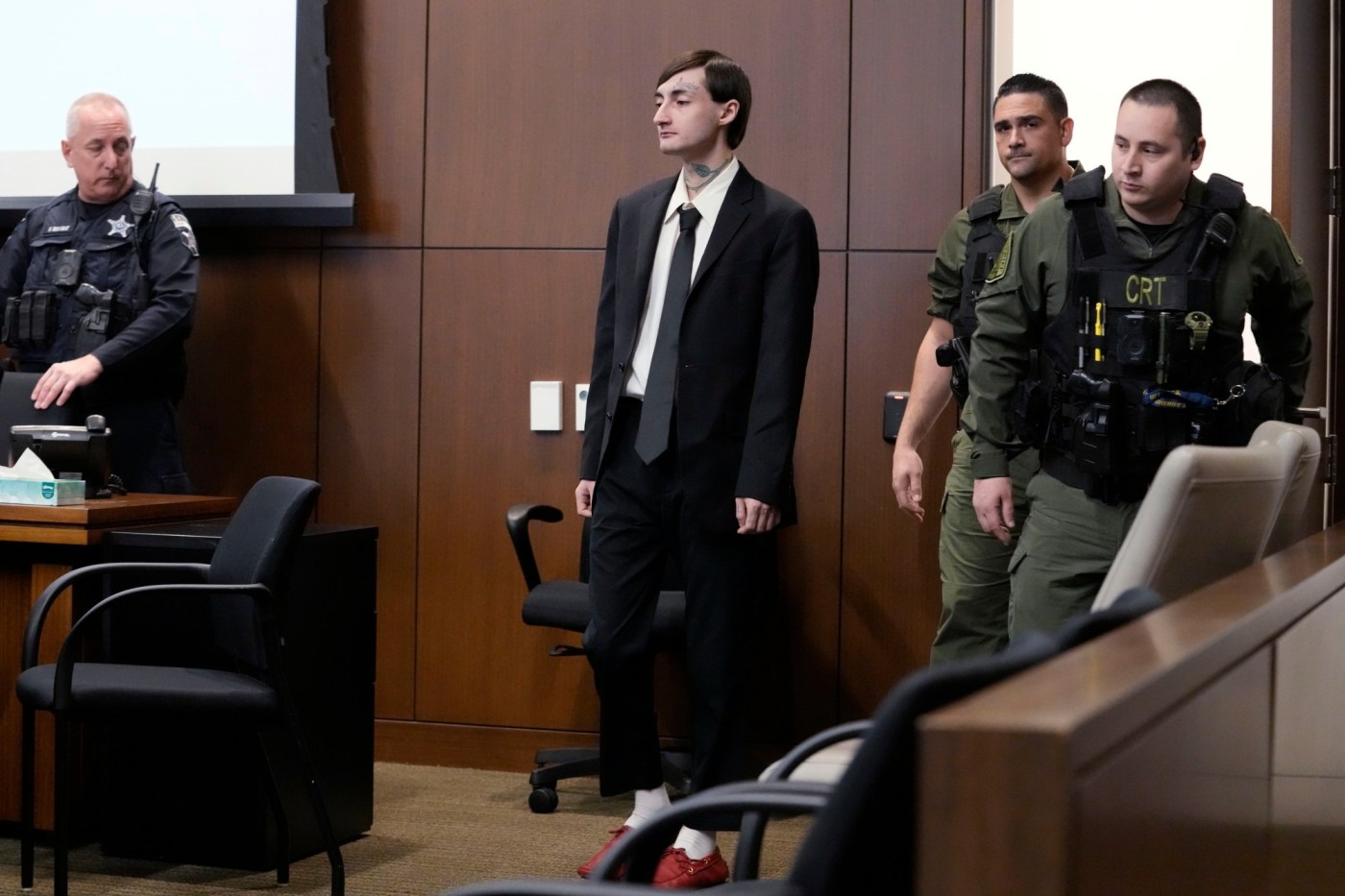
Appearing in a Lake County circuit courtroom, Robert E. Crimo III, 24, withdrew his earlier not-guilty plea in the Highland Park shooting.

Prosecutors initially charged him with 21 counts of first-degree murder — three counts for each person killed — as well as 48 counts of attempted murder. Prosecutors dropped 48 less serious counts of aggravated battery before jury selection last week.

On Monday, Judge Victoria Rossetti read the charges to Crimo and asked questions to be sure he understood before any open plea was read to the court. He was sitting next to his lawyers wearing a dark suit.

“Is that what you went over with your attorneys?” Rossetti asked.

“Yes,” Crimo replied to the judge.

He gave one-word answers, indicating he understood the charges. His mother, Denise Pesina, had a brief outburst at the news and was called up to the judge for a warning.

“We’re going to move forward,” the judge said to her. “You are not a party to this proceeding. If you would like to stay in the courtroom please have a seat and be quiet.”

She was allowed to stay.

The judge said with the plea change, there would be no trial or further motions on the case.

“He has knowingly and voluntarily waived those rights and pleaded guilty,” Rossetti said.

Lake County prosecutors read the names of all those killed in the shooting and of those injured, with the judge stopping to ask questions to make sure Crimo understood.

They went over the substantial evidence, including his prints on the gun used in the crime, and statements to police admitting to the mass shooting.

Sentencing will come April 23, but Crimo is certain to spend the rest of his life behind bars. Each count of first-degree murder carries a natural life prison sentence.

Crimo did not further address the court or ask questions before leaving the courtroom.

His defense attorneys declined comment ahead of the trial.

Ashley Beasley, who attended the parade with her son, said the guilty plea was a huge relief. She and her son were among the paradegoers who had to run for their lives and even though they weren’t injured, they have had to heal.

“Every single time I see him, it’s stressful. It’s upsetting for everyone in our community,” she told reporters after the hearing. “We all just wanted this to be over.”

Security was very tight for the proceedings at the courthouse in Lake County, with multiple bag checks and observers required to lock up their phones. The crowd expecting to hear opening statements included survivors and their family members.

Jurors, who were chosen last week, had not even been let into the courtroom yet when the plea change happened.

The trial was expected to last about a month with testimony from survivors and police. Prosecutors had submitted thousands of pages of evidence, as well as hours of a videotaped interrogation during which police say Crimo confessed to the shooting.

Dozens of people were wounded in the shooting in the suburb about 30 miles (50 kilometers) north of Chicago. The wounded ranged in age from their 80s down to an 8-year-old boy who was left partially paralyzed.

Witnesses described confusion as the shots began, followed by panic as families fled the downtown parade route, leaving behind lawn chairs and strollers to find safety inside nearby businesses or homes.

Authorities said Crimo perched on a roof and fired into crowds assembled for the annual Fourth of July parade in downtown Highland Park.

The criminal case proceeded slowly for months, partly due to Crimo’s unpredictable behavior. In June 2024, when he was expected to accept a plea deal and give victims and relatives a chance to address him publicly, Crimo showed up to court in a wheelchair and rejected the deal, surprising even his lawyers.

He also fired his public defenders and said he would represent himself. Then he abruptly reversed himself.

As potential jurors were questioned last week, he sporadically appeared in court, at times refusing to leave his jail cell.

The trial came almost two years after his father faced separate charges connected to how Crimo obtained a gun license.

In 2019, at age 19, Crimo was only allowed to apply for a gun license with the sponsorship of a parent or guardian. His father agreed, even though a relative had reported to police that his son had a collection of knives and had threatened to “kill everyone.”

His father, Robert Crimo Jr., a onetime mayoral candidate, was charged in connection with how his son obtained a gun license. He pleaded guilty in 2023 to seven misdemeanor counts of reckless conduct and served less than two months in jail.

He has attended his son’s hearings, sometimes making eye contact with him during court. He declined to discuss the case in detail ahead of the trial.

“As a parent, I love my son very much,” he said. “And Bobby loves this country more than anyone would ever know.”

Residents in the wealthy Highland Park community of roughly 30,000 set along Lake Michigan have mourned the losses deeply. Some potential jurors were excused because of their connections to the case.

City leaders canceled the usual parade in 2023, opting for a “community walk.” The parade was reinstated last year on a different route and with a memorial for the victims.

“Our community is once again reminded of the immense pain and trauma caused by the Highland Park shooting,” Highland Park Mayor Nancy Rotering said in a statement ahead of jury selection. “Our hearts remain with the victims, their families, and all those whose lives were forever changed by that devastating day.”

The victims killed in the shooting included Katherine Goldstein, 64; Jacquelyn Sundheim, 63; Stephen Straus, 88; Nicolas Toledo-Zaragoza, 78; Eduardo Uvaldo, 69; and married couple Kevin McCarthy, 37, and Irina McCarthy, 35.

Survivors and their families have filed multiple lawsuits, including against the maker of the semiautomatic rifle used in the shooting and against authorities they accuse of negligence.
Treasury ends enforcement of business ownership database meant to stop shell company formation

posted in: All news | 0

By FATIMA HUSSEIN

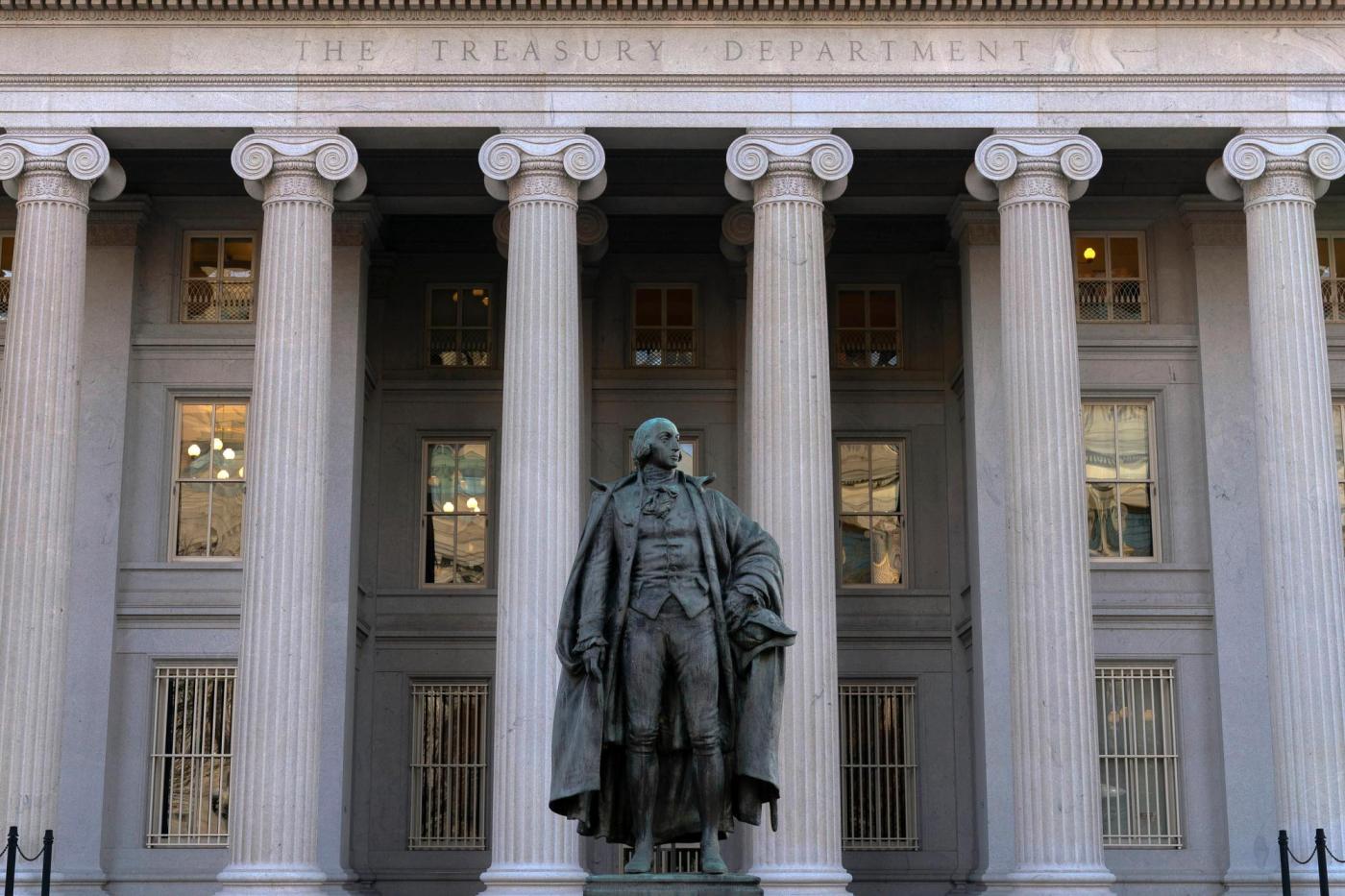
WASHINGTON (AP) — The U.S. Treasury Department announced it will not enforce a Biden-era small business rule intended to curb money laundering and shell company formation.

Related Articles

Business |


Kroger Chairman and CEO resigns following investigation into personal conduct

Business |


Musk’s embrace of right-wing politics risks turning off car buyers and sinking Tesla’s stock

Business |


Business People: Andrew Rosendorf to head Six Points Theater’s Wellsprings program

Business |


Real World Economics: Playing chicken with egg prices

Business |


Guide to no-down-payment mortgages: Am I eligible?

In a Sunday evening announcement, Treasury said in a news release that it will not impose penalties now or in the future if companies fail to register for the agency’s beneficial ownership information database that was created during the Biden administration.

Despite efforts by small businesses to undue the rule in the courts, it remains in effect.

On Sunday, President Donald Trump on his Truth Social media site praised the suspension of enforcement of the rule and said the database is “outrageous and invasive.”

“This Biden rule has been an absolute disaster for Small Businesses Nationwide,” he said. “The economic menace of BOI reporting will soon be no more.”

In September 2022, the Treasury Department started rulemaking to create a database that would contain personal information on the owners of at least 32 million U.S. businesses as part of an effort to combat shell company formations and illicit finance.

The rule required most American businesses with fewer than 20 employees to register their business owners with the government as of Jan. 1, 2024. Small businesses are targeted because shell companies, often used to hide illegally obtained assets, tend to have few employees.

Treasury officials, including former Treasury Secretary Janet Yellen, said the regulatory burden would be small, costing about $85 per business, but would offer benefits to law enforcement officials seeking to track down money launderers and other criminals. She said in January 2024 that more than 100,000 businesses had filed beneficial ownership information with Treasury.

The rule and its legislative authority — the Corporate Transparency Act, an anti-money laundering statue passed in 2021 — have been mired in litigation. In 2022, a small business lobbying group sued to block the Treasury Department’s requirement that tens of millions of small businesses register with the government. On Feb. 27, Treasury’s Financial Crimes and Enforcement Network said it would not take enforcement actions against companies that do not file beneficial ownership data with the agency.

Business leaders cite privacy and security concerns about the database and say it is duplicitous to other government agencies that maintain corporate databases.

“This is a victory for common sense,” said U.S. Secretary of the Treasury Scott Bessent on Sunday. “Today’s action is part of President Trump’s bold agenda to unleash American prosperity by reining in burdensome regulations, in particular for small businesses that are the backbone of the American economy.”

Mexico makes case to avoid US tariffs as it awaits Trump’s decision

posted in: All news | 0

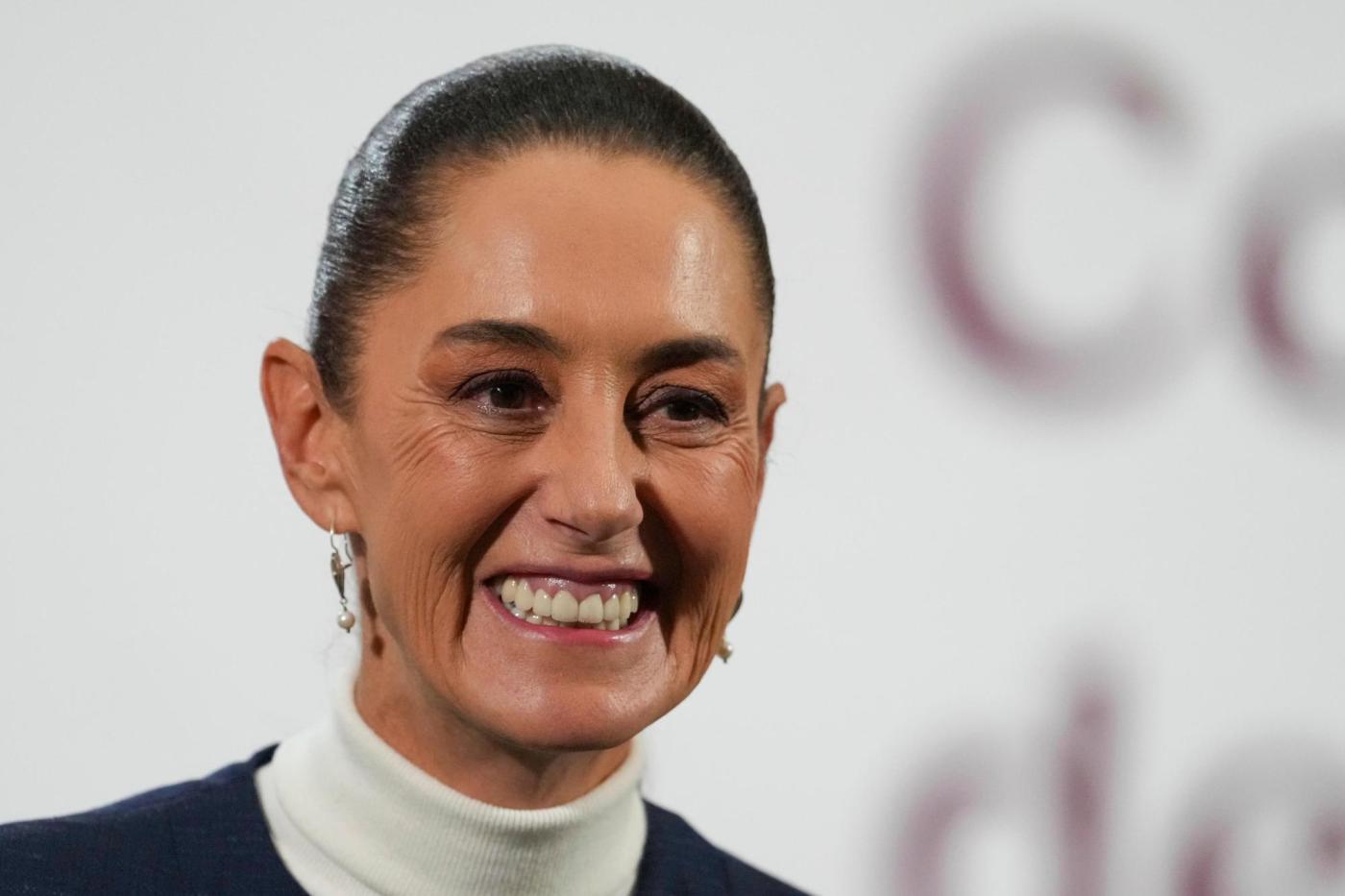
MEXICO CITY (AP) — Mexico President Claudia Sheinbaum said Monday that her administration is waiting to see if U.S. President Donald Trump makes good on his threat to impose 25% tariffs on Mexican imports.

Her Cabinet secretaries for security and trade among others have been in constant communication with their U.S. counterparts and she said there was still the possibility she and Trump would speak Monday.

Trump had threatened to impose tariffs in February before suspending them at the last minute, when Mexico sent 10,000 National Guard troops to their shared border to crack down on drug trafficking and illegal immigration.

“It’s a decision that depends on the United States government, on the United States president,” Sheinbaum said. “So whatever his decision is, we will make our decisions and there is a plan and there is unity in Mexico.”

Mexico believes it has made a strong case.

The number of migrants arriving at the U.S. border is the lowest it has been in years.

Related Articles

World News |


With the Gaza ceasefire in limbo, Israel tries to impose an alternative plan on Hamas

World News |


Ukraine’s Zelenskyy says end of war with Russia is ‘very, very far away’

World News |


Pope appears to be overcoming a setback in his recovery from pneumonia

World News |


Today in History: March 3, Rodney King beaten by Los Angeles police

World News |


Today in History: March 2, Wilt Chamberlain’s 100-point game

Last week, Mexico sent 29 drug cartel figures, including the man involved in the 1985 killing of a DEA agent, to the United States.

Security forces have dismantled more than 100 synthetic drug labs in Sinaloa, and systematically weakened the two main factions of the cartel by the same name.

U.S. Treasury Secretary Scott Bessent said on Sunday that Mexico had offered to match the tariffs the U.S. will impose on China.

“It’s very important that the people know that we have made a very important effort of coordination, of collaboration, but it depends on the United States,” Sheinbaum said. “We have to respond to this decision.”

With the Gaza ceasefire in limbo, Israel tries to impose an alternative plan on Hamas

posted in: All news | 0

By JOSEPH KRAUSS, Associated Press

Israel this week introduced what it said was a new U.S. ceasefire plan — different from the one it agreed to in January — and is trying to force Hamas to accept it by imposing a siege on the Gaza Strip.

Prime Minister Benjamin Netanyahu referred to it as the “Witkoff proposal,” saying it came from U.S. President Donald Trump’s Mideast envoy, Steve Witkoff. But the White House has yet to confirm that, saying only that it supports whatever action Israel takes.

Netanyahu’s remarks came a day after the first phase of the negotiated ceasefire ended, with no clarity on what would come next since the agreement’s second phase has not yet been hammered out.

The new plan would require Hamas to release half its remaining hostages — the group’s main bargaining chip — in exchange for a ceasefire extension and a promise to negotiate a lasting truce. Israel made no mention of releasing more Palestinian prisoners — a key component of the first phase.

Hamas has accused Israel of trying to sabotage the existing agreement, which called for the two sides to negotiate the return of the remaining hostages in exchange for more Palestinian prisoners, a full Israeli withdrawal from Gaza and a lasting ceasefire. But no substantive negotiations have been held.

On Sunday, Israel halted all food, fuel, medicine and other supplies to Gaza’s population of some 2 million people and vowed “additional consequences” if Hamas did not embrace the new proposal.

Arab leaders are meanwhile finalizing a separate plan for postwar Gaza to counter Trump’s suggestion that its population be relocated so it can be transformed into a tourist destination.

But all bets are off if the war resumes.

The existing agreement is in limbo

The ceasefire reached in January, after more than a year of negotiations mediated by the United States, Egypt and Qatar, laid out a three-phase plan to return all the hostages taken by Hamas on Oct. 7, 2023, and ending the war triggered by the terrorist attack.

Hamas killed some 1,200 people that day, mostly civilians, and took 251 hostage. More than 100 were released in an earlier ceasefire. Israeli forces rescued eight and recovered dozens of bodies before the current ceasefire took hold.

Palestinians sit at a large table surrounded by the rubble of destroyed homes and buildings as they gather for iftar, the fast-breaking meal, on the first day of Ramadan in Rafah, southern Gaza Strip, Saturday, March 1, 2025 (AP Photo/Abdel Kareem Hana)

During the first, six-week phase, Hamas released 25 living Israeli hostages and the bodies of eight more in exchange for nearly 2,000 Palestinian prisoners. Israeli forces withdrew from most of Gaza and allowed an influx of desperately needed humanitarian aid. Each side accused the other of violations, but the deal held.

Phase 2 was always going to be far more difficult because it would force Israel to choose between securing the return the hostages and annihilating Hamas — two of Netanyahu’s main war goals.

Hamas, which remains in control of Gaza, has said it will only release the remaining hostages if Israel ends the war. But that would leave the group intact and with major influence over the territory, even if it hands over formal power to other Palestinians, as it says it is willing to do.

The new plan favors Israel

Hamas still has 59 hostages, 35 of whom are believed to be dead. Under the so-called Witkoff plan, it would release half the hostages on the first day — apparently without getting anything new in return.

The sides would then have around six weeks — through the Muslim holy month of Ramadan and the Jewish Passover holiday ending April 20 — to negotiate a permanent ceasefire and the return of the remaining hostages.

But with fewer hostages, Hamas’ hand would be weakened, and Israel and the United States are already speaking about new conditions — like the disarmament of Hamas or the exile of its leadership — that were not part of the original agreement.

A political lifeline for Netanyahu

Netanyahu’s narrow coalition is beholden to far-right allies who want to eliminate Hamas, depopulate Gaza through what they refer to as “voluntary emigration” and rebuild Jewish settlements in the territory. Finance Minister Bezalel Smotrich has threatened to bring down the government if Netanyahu enters Phase 2 of the existing agreement and does not resume the war.

Israelis take part in a protest against Israeli Prime Minister Benjamin Netanyahu’s government, and the release of the hostages held in the Gaza Strip by the Hamas group, in Jerusalem,Sunday, March 2, 2025. (AP Photo/Ohad Zwigenberg)

The new plan would buy Netanyahu six weeks of breathing room and enough time to pass a budget by the end of the month — something he must do to keep his government from automatically falling. If it falls, elections would be held roughly a year and a half ahead of schedule and could see him removed from power.

Opposition parties say they would ensure Netanyahu’s government is not brought down over a deal that returns the rest of the hostages. But that would still weaken him politically.

The American position is unclear

Netanyahu says his government has “fully coordinated” its approach with the Trump administration, which has publicly endorsed Israel’s war goals, including the eradication of Hamas. But Witkoff has not said a word in public about the plan that supposedly bears his name, and U.S. officials did not immediately respond to requests for comment on Monday.

Trump himself has sent mixed signals about Gaza.

As a candidate, he pledged to end wars in the Middle East, and he took credit for pushing the ceasefire agreement past the finish line just before his inauguration.

But he has also expressed revulsion at Hamas’ treatment of the captives and suggested that “all hell” should break loose if they are not immediately returned, while leaving that decision to Israel.

An Arab counterproposal to Trump’s Gaza plan

Trump has also floated the idea of relocating Gaza’s roughly 2 million Palestinians to other countries so the U.S. can rebuild it as a tourist destination. Netanyahu welcomed that proposal, which was universally rejected by Palestinians, Arab countries and human rights experts, who warn it could violate international law.

It’s hard to see how Trump’s Gaza plan would be carried out without Israel resuming the war and launching an even bloodier offensive than the last one, which left much of Gaza in ruins and killed over 48,000 Palestinians, according to local health authorities. They say more than half of those killed were women and children but do not specify how many of the dead were combatants.

Egypt has developed a counterproposal expected to be endorsed at an Arab summit in Cairo on Tuesday. Under its plan, Palestinians would remain in Gaza and relocate to “safe zones” while cities are rebuilt. Hamas would hand over power to a transitional authority of political independents while the international community works to empower the Western-backed Palestinian Authority.

But Israel, which has ruled out any role for the Palestinian Authority in postwar Gaza, is unlikely to accept such a plan. And while Trump has called on Arab countries to come up with their own proposal, it’s unclear whether he would go for it either.

Associated Press writers Tia Goldenberg in Tel Aviv, Israel, and Samy Magdy in Cairo contributed. Follow AP’s war coverage at https://apnews.com/hub/israel-hamas-war