Doctors share the best ways to get the most from a bidet

posted in: All news | 0

By ANNE D’INNOCENZIO

NEW YORK (AP) — Once considered an oddity in American homes, bidets are becoming increasingly common as more people seek a hygienic and sustainable alternative to toilet paper or a hand managing certain physical conditions.

Related Articles


2-month-olds see the world in a more complex way than scientists thought, study suggests


Planned Parenthood drops lawsuit against Trump administration’s Medicaid cuts


Woodbury man with rare skin condition ‘scared to go out’ after ICE detention


Llamas are big pharma’s secret weapon to find new drugs


Boston University researchers say CTE is a cause of dementia

Toilet paper shortages during the COVID-19 pandemic helped demystify the devices for U.S. consumers, although Italy, Japan and some other countries where bidets are standard bathroom features also saw runs on TP. Environmental awareness, less expensive bidet options and the development of smart toilets that perform multiple functions have given further momentum to the idea of rinsing instead of wiping.

Bidets even earned a moment in the national spotlight last month when Zorhan Mamdani, New York City’s new mayor, said he hoped to have them installed in the bathrooms of Gracie Mansion, the 18th century Manhattan home that serves as the official residence of the city’s chief executive.

Medical professionals sometimes recommend bidets for patients with hemorrhoids, in recovery from surgery, or who have limited mobility due to age or disabilities. But experts say bidets are not best for everyone and need to be used properly to prevent other problems.

Here are some of the ins and outs to consider.

Bidets for every budget

Bidets use a jet of water to clean the genitals and anal area after someone goes to the bathroom. They originally existed mainly as standalone fixtures separate from toilets.

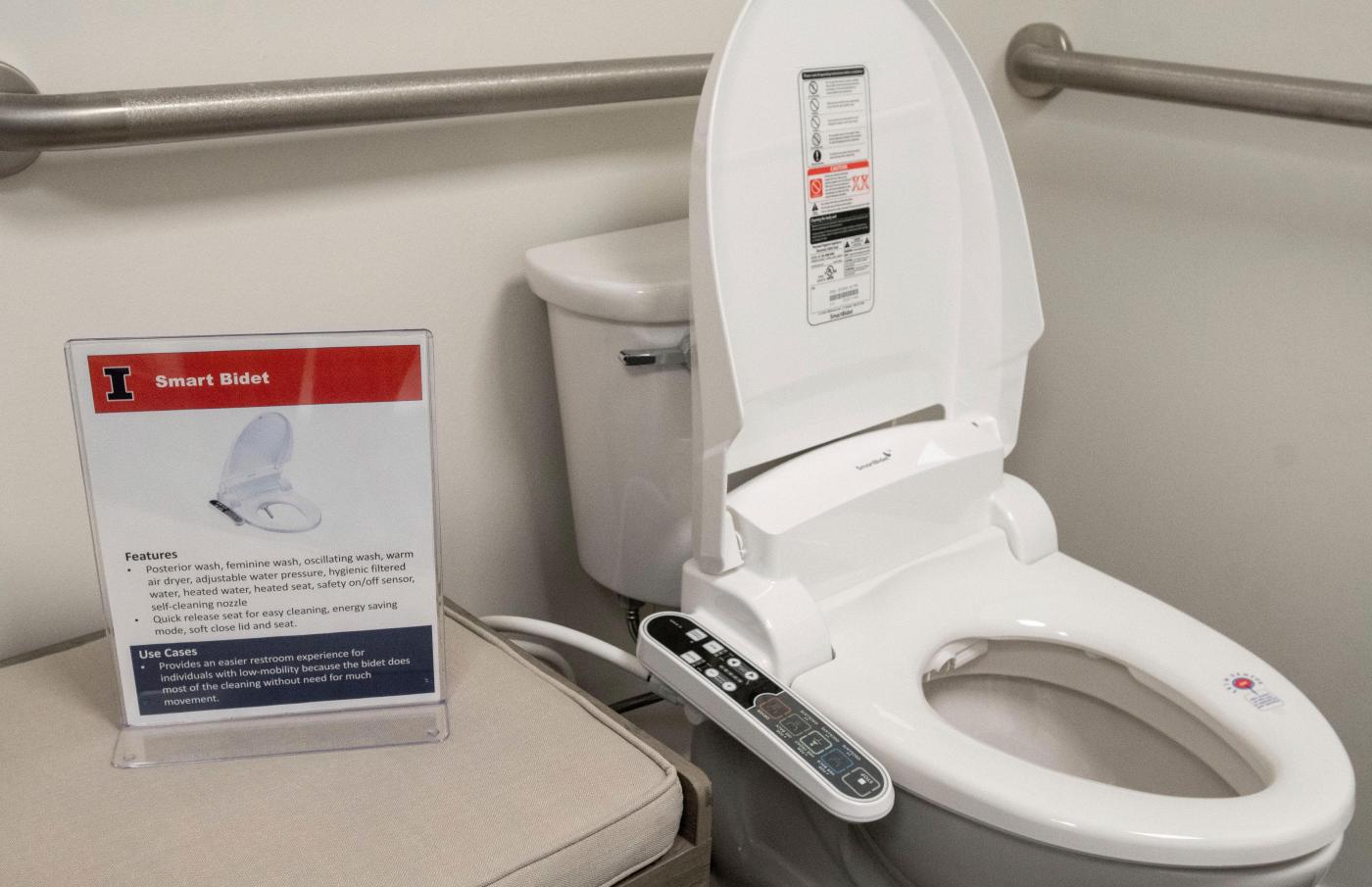
These days, the options include toilet seat attachments and hand-held versions that resemble detachable shower heads. Many of the latest “smart” toilets come with integrated bidets and feature heated seats, adjustable water pressure and air dryers.

On YouTube and other social media platforms, there are videos demonstrations of how to make a portable bidet with a plastic soda bottle.

Proper bidet etiquette

Bidet converts tend to rave about how much cleaner the appliances leave them feeling. Since all toileting activity involves delicate body parts and bacteria, experts stress that correct bidet use is required to make the activity as sanitary as possible.

When using standalone bidets and ones installed on toilets, it’s best, especially for women, to turn on the faucet while facing the controls so the washing is done from front to back, according to Dr. David Rivadeneira, a colorectal surgeon with the Huntington Hospital in Huntington, New York.

That position prevents the transfer of bacteria from the anal area to the urethra, Rivadeneira said.

Most doctors recommend using warm water at low pressure for up to a few minutes, avoiding any extreme temperatures. You can also try a gentle soap if desired, but it’s usually not necessary for regular bidet users.

Rivadeneira cautions patients against trying to inject water into the anus since the devices are not meant for internal use.

“You’re not supposed to be substituting it for a colonic or an enema,” he said.

After washing, pat dry with toilet paper or a dedicated cotton towel to remove any remaining stool and to prevent yeast infections, experts say.

Bidets can be used every day but are most appropriate after a bowel movement. Overuse may cause skin irritation, according to medical experts.

Proper bidet maintenance also matters, said Dr. Neal H. Patel, a family physician with the Providence St. Joseph Hospital in Orange County, California. Make sure to wipe down the nozzle every week or two with disinfectant wipes to remove bacteria, he said.

Some benefits of bidets

Dr. Danielle Antosh, a urogynecologist in Houston, said some studies have showed that a bidet leaves less bacteria on a user’s hand compared to toilet paper, but the research remains too limited to know for sure.

However, doctors who are in favor of bidets think the devices are less harsh on sensitive skin than toilet paper.

“The texture of toilet paper can cause irritation and itching, while the gentle water stream of a bidet is less abrasive and healthier for the skin,” Dr. George Ellis, a urologist in Orlando, Florida, said.

Bidets therefore may benefit people with chronic diarrhea or other conditions that necessitate a lot of wiping, as well as those who are prone to urinary tract infections, medical experts said. They also may help relieve discomfort from hemorrhoids, fistulas and anal fissures, they said.

Three dermatologists from the University of Tennessee Health Science Center wrote in a 2023 editorial in the International Journal of Women’s Dermatology that their peers should be “aware of the commonality of bidet use outside of American culture” and comfortable recommending bidets because skin conditions such as eczema, psoriasis and contact dermatitis can occur in the perianal region.

They also argued that by helping people with physical limitations clean themselves independently after using the toilet, bidets can reduce the workload of caregivers, most of whom are women.

When to turn away from a bidet

Bidets are another example where it’s possible to get too much of a good thing. Some doctors in Japan have advised patients who reported rashes or difficulty controlling their bowels after frequent bottom cleansing to stop using bidets until the conditions cleared up.

Antosh recommends checking with a doctor before using a high-pressure bidet right after childbirth or if you have genital ulcers because powerful streams of water may be irritating.

Dr. Jenna Queller, a dermatologist and founder of Boca Raton, Florida-based DermWorks, said the same was true for people with genital eczema or psoriasis. She recommends moisturizing the areas after using a bidet to prevent irritation..

And while bidets may offer relief for an itchy bottom, always consult a doctor if there’s persistent bleeding from fissures or hemorrhoids because you could have a more serious condition, Rivadeneira advises.

The green factor

Bidets generally are recognized as a greener choice than toilet paper by most environmental groups and scientists. The non-profit Natural Resources Defense Council said in a recent report that the devices “significantly cut down on the use of toilet paper, helping to lessen the environmental impacts associated with tissue production.”

Gary Bull, a professor emeritus of forestry at the University of British Columbia told The Associated Press in a recent interview that while it makes sense and is agreed bidets are more sustainable, truly knowing the environmental impact of a product requires calculating all the carbon emitted and energy used in making the products and through the end of their life cycles.

Fancier bidets, for example, use electricity to heat the water and seat, he noted.

“I was working out in my own house last night putting in a Japanese bidet because I just came back from Japan, and I went, ‘OK, so this is good,’” Bull said. “But then if I look at that bidet, if I’m doing an honest assessment cradle to cradle, then I have to look at the water consumption, the energy consumption, a whole bunch of other things, to know whether or not that is a better choice for me as a consumer versus toilet tissue.”

Andrea Hicks, a professor of civil and environmental engineering at the University of Wisconsin, suggested thinking about how dry or wet a climate you live in before making a decision.

In a “water-stressed” state like Arizona, toilet paper may be the more sustainable choice, while a bidet might more sense in a place where water is abundant, Hicks said.

This story replaces the 27th paragraph to correct the name of the organization to the Natural Resources Defense Council.

AP Writer Isabella O’Malley in Philadelphia contributed to this report.

Big expenses ruining your budget? Try a sinking fund

posted in: All news | 0

By Kurt Woock, NerdWallet

The holiday shopping season happens every year. So why can it still be so tough to be financially prepared? Thirty-one percent of 2024 holiday shoppers who used credit cards to buy gifts still hadn’t paid off the balances nearly one year later, according to NerdWallet’s 2025 Holiday Spending Report.

One reason behind the budgeting-spending disconnect could be the assumption that planning ahead looks the same for all expenses. It doesn’t. For large, predictable expenses, like holiday expenses, one solution is a sinking fund — money saved and earmarked for specific purchases.

The three types of expenses

Thinking about how frequent and predictable an expense is can help you decide how to plan for it.

1. Groceries, rent and other recurring expenses are both frequent and predictable. Typically, you’d pay for these with your regular income using your checking account (or with a credit card that you pay off each month). These expenses make up most of your budget, and are relatively easy to account for.

2. Emergencies are chaos agents. They’re infrequent and unpredictable: a trip to the emergency room or storm damage to your home, for example. It wouldn’t make sense to budget specific amounts for different potential emergencies. Instead, you prepare for these by building an emergency fund — a single sum dedicated for these surprise expenses. There’s no single amount everyone needs. Three to six months of your typical spending is ideal, but even a few hundred dollars can make a difference.

3. Finally, there are the expenses that can wreck your budgeting process. They are generally more predictable than emergencies but less so than recurring spending, and they don’t occur often. Examples include:

Replacing a roof, a furnace or another major component of a home.
Buying a new vehicle when your current vehicle no longer works for you.
Going on vacation.

Because the actual purchase may be many months or years away, it’s easy for these expenses to sneak up on you. But taking advantage of this time is crucial as they tend to be costly.

Missing your window to save for big-ticket purchases is a common oversight. Thirty-five percent of Americans say their 2025 holiday spending was financially irresponsible (e.g., they took on debt or overspent), according to a NerdWallet survey conducted online by The Harris Poll in January 2026.

Sinking funds are the centerpiece of one savings strategy that can counteract this problem.

How sinking funds work

A sinking fund is another name for money you save a little bit at a time for a specific purchase in the future.

Instead of thinking of these expenses as large one-time purchases, translate them into a monthly expense — a money cadence most people are more accustomed to. Breaking it into smaller chunks also minimizes the intimidation that may come with focusing on a large dollar amount, transforming it into something more manageable.

To stay organized, keep your sinking fund in an account separate from your primary checking account. If you’ll have multiple sinking funds, look for a savings account that lets you create subaccounts, or “buckets,” to organize funds for each goal. Choosing a high yield savings account is a smart way to put your savings to work.

Sinking funds in action

Here’s what using a sinking fund might look like: Say you replace your vehicle about every eight years, and you want to spend $20,000 on your next car. If you save $200 per month for eight years into a sinking fund, you’ll have that amount ready to go when you need it. If you take out a loan instead, you’ll pay more due to fees and interest.

Related Articles


How to buy a house in the winter


Allison Schrager: Raiding your 401(k) to buy a house should be an option


Job titles are out and skills are in, Wharton expert says. Here’s what employers want to see


6 clever ways I’ve saved money (that weren’t as scary as I thought)


Here’s when you’ll get your tax refund from the IRS

For holiday expenses, start with what you spent last year and divide it by the time you have to save. If you spent $1,500 and start saving for next year in February, you’ll need to save $136 each month for 11 months to reach that savings goal.

Starting a sinking fund has an added benefit: The planning process can alert you to potential overspending before it happens. If you discover your monthly budget can’t accommodate contributions to a sinking fund, you certainly won’t be able to afford the purchase later without using debt.

Delaying, downsizing or rethinking future purchases well ahead of time allows you to make financial decisions with confidence. If you discover you lack the savings when you’re already in the checkout line, your emotions may overwhelm you to spend money you don’t have.

The complete survey methodology is available in the original article, published at NerdWallet.

Kurt Woock writes for NerdWallet. Email: kwoock@nerdwallet.com.

Seeking shelter from Trump’s fury, U.S. trade partners reach deals with each other

posted in: All news | 0

By PAUL WISEMAN, JOSH BOAK and ELAINE KURTENBACH, Associated Press

WASHINGTON (AP) — Bullied and buffeted by President Donald Trump’s tariffs for the past year, America’s longstanding allies are desperately seeking ways to shield themselves from the president’s impulsive wrath.

Related Articles


Paris prosecutors raid X offices as part of investigation into child abuse images and deepfakes


Today in History: February 3, Commuter train slams into SUV near New York City, killing 5


Turkey seeks to broker US-Iran talks by week’s end


Cuban diplomat tells the AP there’s no dialogue with the US but the island is open to one


Epstein victims want former Prince Andrew to testify before lawmakers. He’s unlikely to do so

U.S. trade partners are cutting deals among themselves —- sometimes discarding old differences to do so — in a push to diversify their economies away from a newly protectionist United States. Some European governments and institutions are reducing their use of U.S. digital services such as Zoom and Teams.

Central banks and global investors are dumping dollars and buying gold. Together, their actions could diminish U.S. influence and mean higher interest rates and prices for Americans already angry about the high cost of living.

Last summer and fall, Trump used the threat of punishing taxes on imports to strong-arm the European Union, Japan, South Korea and other trading partners into accepting lopsided trade deals and promising to make massive investments in the United States.

But a deal with Trump, they’ve discovered, is no deal at all.

The mercurial president repeatedly finds reasons to conjure new tariffs to impose on trading partners that thought they had already made enough concessions to satisfy him.

Just months after reaching his agreement with the EU, Trump threatened new tariffs on eight European countries for opposing his attempts to seize control of Greenland from Denmark – though he quickly backed down. And last month, he said he’d slap 100% tariffs on Canada for breaking with the United States by agreeing to reduce Canadian tariffs on Chinese electric vehicles.

“Our trading partners are discovering that the largely one-sided deals they concluded with the U.S. provide little protection,’’ said former U.S. trade negotiator Wendy Cutler, senior vice president at the Asia Society Policy Institute. “As a result, trade diversification efforts by our partners are on turbo charge, looking to reduce dependence on the U.S.’’

Trump supporters such as Paul Winfree, who was deputy director of the White House Domestic Policy Council during Trump’s first term, are wary of the relative decline in U.S. Treasury note holdings by foreign central banks and view the national debt as a vulnerability rivals would like to exploit.

Winfree, CEO of the Economic Policy Innovation Institute, a think tank, said that some of Trump’s advisers do not feel America has fully benefited from the dollar’s status as the world’s dominant currency.

“But the fact remains that every other country is jealous of our status, and many of our adversaries would love to challenge the U.S. dollar and Treasuries,” he said.

White House spokesman Kush Desai insists America’s standing on the global stage has not been diminished.

“President Trump remains committed to the strength and power of the U.S. Dollar as the world’s reserve currency,” he said.

India and the EU clinch a long-awaited deal

The most eye-opening deal so far has been the pact announced last week between the 27-country EU and India, the world’s fastest growing major economy. Negotiators had been at it for nearly two decades before they closed the agreement.

Likewise, an EU trade deal announced two weeks ago with the Mercosur nations of South America took a quarter century of negotiation. It will create a free-trade market of more than 700 million people.

“Some of these deals have been in the works for quite some time,’’ said Maurice Obstfeld, a senior fellow at the Peterson Institute for International Economics and former chief economist at the International Monetary Fund. “The pressure from Trump made them more eager to accelerate the process and reach agreement.’’

EU exporters were jubilant over the India deal. VDMA, a group of European machinery and plant engineering companies, welcomed lower Indian tariffs on machinery.

“The free trade agreement between India and the EU brings much needed oxygen to a world increasingly dominated by trade conflicts,” VDMA’s executive director, Thilo Brodtmann, said in a statement. “With this agreement, Europe is sending a clear signal in favor of rules-based trade and against the law of the jungle.”

‘We have all the cards’

On Monday, Trump went on social media to announce his own deal with India. The U.S., he posted, would reduce tariffs on Indian imports after India agreed to stop buying oil from Russia, which has used the sales to fund its four year war in Ukraine.

The president said that India would reduce its tariffs on American products to zero and buy $500 billion worth of American products. Trade lawyer Ryan Majerus, a partner at the King & Spalding and a trade official in the Biden administration and during Trump’s first term, said that businesses and legal analysts were awaiting official White House documents spelling out details of the deal.

Trump is banking on there being limits to other countries’ ability to pull away from the United States. America has the world’s biggest economy and consumer market. “We have all the cards,’’ Trump told Fox Business this month.

Countries like South Korea, dependent on America’s market and military protection, can’t afford to ignore Trump’s threats. On Monday, for example, the president said he was increasing tariffs on South Korea goods because the country’s legislature has been slow to approve the trade framework announced last year. On Tuesday, the country’s Finance Ministry responded by saying its chief, Koo Yun-cheol, would push lawmakers to quickly approve a bill to invest $350 billion as promised in the agreement.

“The U.S was trying to identify a counterpart that would find it difficult to refuse U.S. demands outright, given the depth of its economic and security ties,” said Cha Du Hyeogn, an analyst at South Korea’s Asan Institute for Policy Studies.

Or consider Canada, which sends 75% of its exports to its southern neighbor. “Canada and U.S. will always be tightly linked through international trade,” said Obstfeld, a professor at the University of California, Berkeley. “We’re talking about adjustments more or less on the margin.’’

But the world’s growing rejection of Trump’s policies is already having an impact, driving down the value of the dollar, long the currency of choice for global commerce, to its lowest level since 2022 last week versus several competing currencies.

Syracuse University political scientist Daniel McDowell, author of the book “Bucking the Buck: U.S. Financial Sanctions and the International Backlash against the Dollar,” sees a vibe shift under Trump: Foreign countries and investors want to reduce their exposure to the United States, which has moved from a source of security and stability to a driver of instability and unpredictability under Trump.

“Trump has shown that he is willing to use foreign countries’ economic dependence on the U.S. as leverage against them in negotiations,” McDowell said. “As global perceptions of the US are changing, it is only natural that investors — public and private alike — are reconsidering their relationship with the dollar.”

Kurtenbach reported from Bangkok. Associated Press videographer Yong Jun Chang in Seoul and AP Business Writer Kelvin Chan in London contributed to this report.

Disney parks chief Amaro named to succeed Bob Iger as CEO

posted in: All news | 0

By MICHELLE CHAPMAN, Associated Press Business Writer

Disney has named its parks chief Josh D’Amaro to succeed Bob Iger as the entertainment giant’s top executive.

Related Articles


Don Lemon says a dozen agents were sent to arrest him even though he offered to turn himself in


Today in History: February 3, Commuter train slams into SUV near New York City, killing 5


U.S. troops told to stand down on a possible Minnesota deployment


Eddie Bauer to close all North American stores, file for bankruptcy


Musk Inc.? Billionaire combines his rocket and AI businesses before an expected IPO this year

D’Amaro has been Disney Experiences Chairman, spearheading efforts for the company’s theme parks, cruises and resorts.

The decision on the next chief executive at Disney comes almost four years after the company’s choice to replace Iger went badly, forcing Iger back into the job.

Only two years after stepping down as CEO, Iger returned to Disney in 2022 after a period of clashes, missteps and a weakening financial performance under his hand-picked successor, Bob Chapek.

Chapek had been viewed by many as too gruff and buttoned up, focusing intently on business and not taking enough care with the creative and imaginative elements that have helped Disney flourish over decades.

Iger had strengthened the Disney brand through his acquisitions of Pixar, Marvel and Lucasfilm, oversaw the expansion of the company in China and India and had a laser-like focus on technology that both made the Disney product better, and more accessible. Iger, at the same time, is approachable, media savvy and has deftly managed a company that is like no other.

Disney meticulously and methodically sought out its next CEO this time. The company created a succession planning committee in 2023, but the search began in earnest in 2024 when Disney enlisted Morgan Stanley Executive Chairman James Gorman to lead the effort. That still gave it ample opportunity to vet candidates, as Iger agreed to a contract extension that keeps him at Disney through the end of 2026.

While external candidates were considered, it was widely expected that Disney would choose an internal candidate to become its next CEO. Internal candidates were mentored by Iger, interacted with the company’s 15 board members (including Iger) and received external coaching.

Attention soon focused on D’Amaro and Disney Entertainment Co-Chairman Dana Walden as the front runners among Disney’s internal candidates.

D’Amaro, who has been with Disney since 1998, has been leading the charge on Disney’s multiyear $60 billion investment into its cruise ships, resorts and theme parks. He also oversees Walt Disney Imagineering, which is in charge of the design and development of the company’s theme parks, resorts, cruise ships, and immersive experiences worldwide. In addition, D’Amaro has been leading Disney’s licensing business, which includes its partnership with Epic Games.

There had been speculation that Disney might go the route of naming co-CEOs, a move that has started to become more popular with companies. Oracle and Spotify are among those who named co-CEOs in 2025.

D’Amaro’s appointment is effective on March 18.

Disney shares rose more than 1% in early trading.