Trump plane heading to Montana rally was diverted but landed safely nearby, airport staff says

posted in: News | 0

By MATTHEW BROWN and AMY BETH HANSON, Associated Press

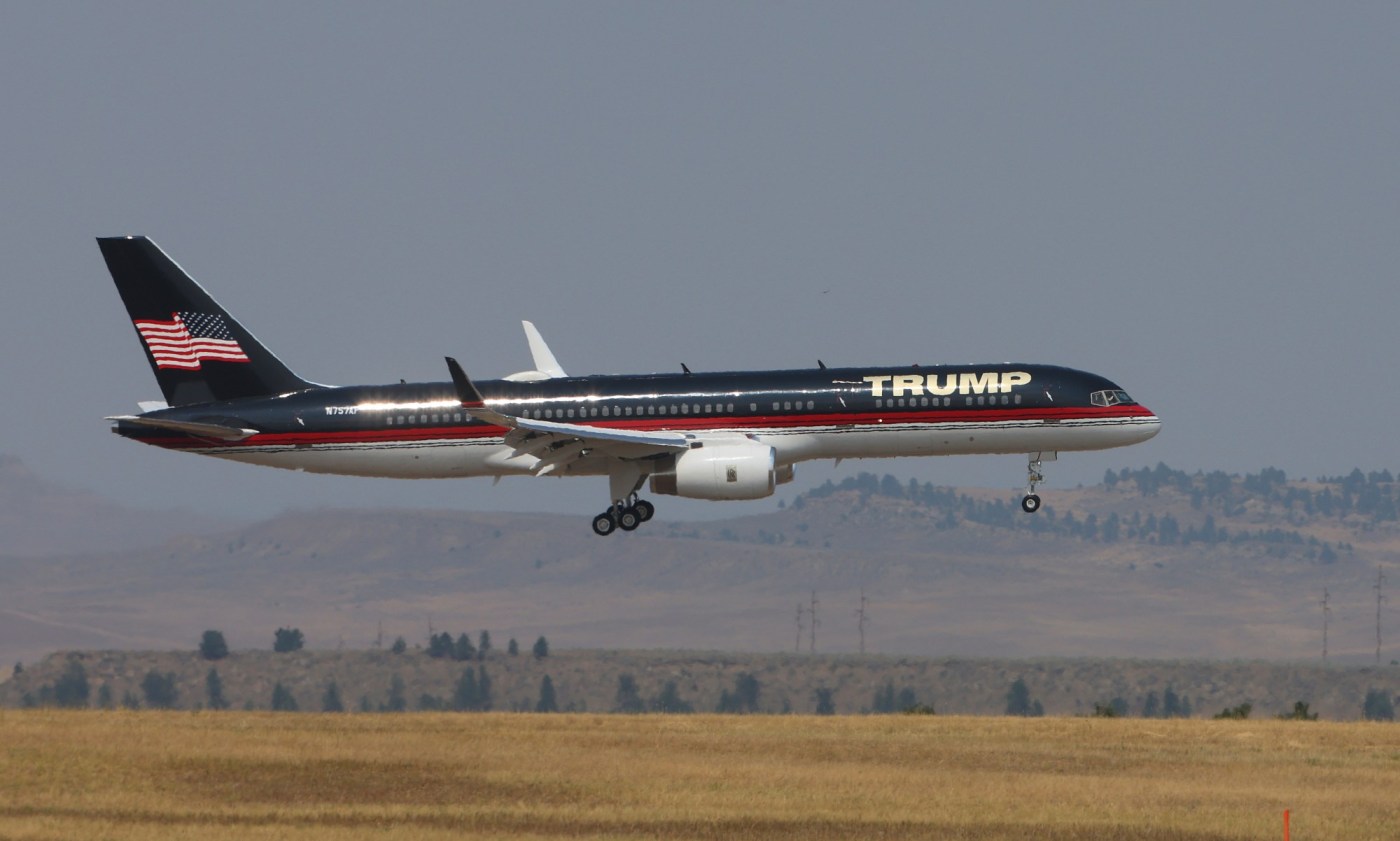
BOZEMAN, Mont. (AP) — Former President Donald Trump headed to Montana for a Friday night rally in hopes of ousting the state’s Democratic senator, but his plane first had to divert to an airport on the other side of the Rocky Mountains because of a mechanical issue, according to airport staff.

Trump’s plane was en route to Bozeman, Montana, when it was diverted Friday afternoon to Billings, 142 miles to the east, according to Jenny Mockel, administrative assistant at Billings Logan International Airport. Mockel said the former president was continuing to Bozeman via private jet.

Trump’s campaign posted a video of him upon landing in which he said he was glad to be in Montana but did not mention anything about the landing.

The former president came to Montana hoping to remedy some unfinished business from 2018, when he campaigned repeatedly in Big Sky Country in a failed bid to oust incumbent Democratic Sen. Jon Tester.

Tester has tried to convince voters he’s aligned with Trump on many issues, mirroring his successful strategy from six years ago. While that worked in a non-presidential election year, it faces a more critical test this fall with Tester’s opponent, former Navy SEAL Tim Sheehy, trying to link the three-term incumbent to Democratic presidential candidate Kamala Harris.

Harris has benefitted nationally from a burst of enthusiasm among core Democratic constituencies, who coalesced quickly around her after President Joe Biden withdrew from the campaign last month. She’s drawn big crowds in swing states, touring this week with Minnesota Gov. Tim Walz, her choice to be her vice presidential nominee.

Trump’s only rally this week, meanwhile, will be in a state he won by 16 percentage points four years ago rather than a November battleground. Facing new pressure in the race from a candidate with surging enthusiasm, Trump on Thursday called questions about his lack of swing state stops “stupid.”

“I don’t have to go there because I’m leading those states,” he said. “I’m going because I want to help senators and congressmen get elected.”

He will add on fundraising stops in Wyoming and Colorado.

Trump could be decisive in Montana’s Senate race

Friday’s rally at Montana State University, which is scheduled to start at 8 p.m. Mountain time, is expected to draw thousands of GOP supporters. Yet the former president’s bigger impact could be simply having his name above Sheehy’s on the ballot in November, said University of Montana political analyst Rob Saldin.

“There is a segment of the electorate that will turn out when Trump is on the ticket,” Saldin said. And that could benefit Sheehy, a Trump supporter and newcomer to politics who made a fortune off an aerial firefighting business.

Republicans have been on a roll in Montana for more than a decade and now hold every statewide office except for Tester’s.

Tester won each of his previous Senate contests by a narrow margin, casting himself as a plainspoken farmer who builds personal connections with people in Montana and is willing to break with his party on issues that matter to them. He’s also become a prolific fundraiser.

The race has drawn national attention with Democrats clinging to a razor-thin majority in the Senate and defending far more seats than the GOP this year. Tester is considered among the most vulnerable Democratic incumbents.

For him to win, large numbers of Trump supporters would have to vote a split ticket and get behind the Democratic senator.

Trump’s drive to oust Tester traces back to the lawmaker’s work in 2018 as chairman of the Senate Committee on Veterans’ Affairs. Tester revealed past misconduct by Trump’s personal physician, Ronny Jackson, that sank Jackson’s nomination to lead the Veterans Affairs Department

Then-President Trump took the matter personally and came to Montana four times to campaign for Republican Matt Rosendale, who was then the state auditor. Rosendale lost by 3 percentage points.

Tester has positioned himself apart from national Democrats

Before Trump’s latest visit, Tester has sought to insulate himself against charges that he’s part of the Democratic establishment by rolling out the names of Republicans who support him, including former Montana Gov. Marc Racicot. His campaign highlighted more than 20 pieces of legislation, many dealing with veterans’ issues, that Tester sponsored and Trump signed.

Tester also was the sole Democratic delegate from Montana to withhold a vote backing Harris as the party’s presidential candidate in the wake of Biden’s withdrawal. And when the Democratic National Convention takes place later this month in Chicago, Tester will be back in Montana “farming and meeting face to face with Montanans,” campaign spokesperson Harry Child said.

The last time Tester attended the Democratic National Convention was in 2008. That’s also the last time a Democratic presidential candidate came anywhere near winning Montana, with President Barack Obama losing by just over 2 percentage points.

A similar situation is developing in Ohio, where three-term Democratic Sen. Sherrod Brown faces a tough race in a state expected to vote for Trump.

Harris visited Ohio when the two were Senate colleagues to raise money for Brown’s 2018 campaign, but Brown has said he has no plans to campaign with her this year. Like Tester, Brown has highlighted legislation he worked on that Trump signed into law.

Friday’s rally takes place in Gallatin County, which Tester has become increasingly reliant on over the course of his political career.

He lost the county in his first Senate race, in 2006, but his support has since grown. A substantial margin of victory in Gallatin in 2018 helped push him ahead of Rosendale.

Republican Don Seifert, a former Gallatin County commissioner, said he voted for Tester that year and plans to do so again this year.

Seifert backed Trump in 2016 and said he has continued to support other Republicans, including Montana Gov. Greg Gianforte and Sen. Steve Daines.

“Montanans tend to vote for the person over the party,” Seifert said. “For the state of Montana, Jon is the one that can do what we need.”

But Sheehy says Tester has lost touch with his home state and fallen into step with Democrats in Washington. The Republican said in a message this week to supporters that Tester was “responsible for the rise of Kamala Harris” because he served as chairman of the Democratic Senatorial Campaign Committee from 2015 to 2017, when she was elected to the Senate from California.

Tester has outraised Sheehy by more than three-to-one in campaign donations reported to the Federal Election Commission. However, outside groups supporting Sheehy have helped the Republican make up much of that gap. Spending in the race is on track to exceed $200 million as advertisements from the two sides saturate Montana’s airwaves.

__

Associated Press reporter Julie Smyth contributed from Columbus, Ohio.
FDA rejects psychedelic MDMA as treatment for PTSD, calling for additional study

posted in: News | 0

By MATTHEW PERRONE

WASHINGTON (AP) — Federal health regulators on Friday declined to approve the psychedelic drug MDMA as a therapy for PTSD, a major setback for groups seeking a breakthrough decision in favor of using mind-altering substances to treat serious mental health conditions.

Drugmaker Lykos Therapeutics said the FDA notified the company that its drug “could not be approved based on data submitted to date,” and requested an additional late-stage study. Such studies generally takes several years and millions of dollars to conduct. The company said it plans to ask the agency to reconsider.

Lykos and other psychedelic companies had hoped that MDMA would be approved and pave the way for other hallucinogenic drugs to enter the medical mainstream. If the FDA had granted the request, MDMA, also known as ecstasy or molly, would have become the first illegal psychedelic to become a federally approved medicine.

The FDA’s decision was expected after a panel of government advisors voted overwhelmingly against the drug’s use for post-traumatic stress disorder in June. The negative vote came after an all-day meeting in which experts scrutinized Lykos’ study data, research methods and possible risks of the drug, including heart problems, injury and abuse.

FDA said Friday the MDMA application had “significant limitations” that “prevent the agency from concluding that the drug is safe and effective for the proposed indication.” The agency said it will continue encouraging “innovation for psychedelic treatments and other therapies to address these medical needs.”

Lykos said the issues FDA raised in what’s called a complete response letter echoed the concerns during the June meeting.

“The FDA request for another study is deeply disappointing,” Lykos CEO Amy Emerson said Friday in a statement. “Our heart breaks for the millions of military veterans, first responders, victims of sexual and domestic abuse and countless others suffering from PTSD who may now face more years without access to new treatment options.”

Lykos is essentially a corporate spinoff of the nation’s leading psychedelic advocacy group, the Multidisciplinary Association for Psychedelic Studies, or MAPS, which funded the initial studies of MDMA by raising millions of dollars from wealthy backers.

The group has been a pioneer in researching the medical use of psychedelics, which major pharmaceutical companies have been unwilling to fund. Two small studies submitted to the FDA suggested combining MDMA with talk therapy led to significant easing of PTSD symptoms.

Antidepressants are now the only FDA-approved drugs for PTSD, which is closely linked to depression, anxiety and suicidal thinking and is more prevalent among women and veterans.

In recent years, MDMA research has been widely publicized by combat veterans, who say the lack of treatments options for the condition has contributed to higher rates of suicide among military personnel. Last month, veterans supporting psychedelic therapy rallied on Capitol Hill in support of the drug. And more than 80 House and Senate lawmakers have signed letters to the FDA in recent weeks urging MDMA’s approval.

But FDA’s review brought new scrutiny to the research. The vast majority of patients in Lykos’ studies correctly guessed whether they had received MDMA or a dummy pill, making it “nearly impossible” to maintain the “blinding” which is considered essential for medical research, according to FDA internal staffers.

In recent months, separate allegations of misconduct have emerged, including that some researchers involved in the studies coached patients to suppress negative results or inflate positive ones.

Despite the setback, many experts say other psychedelics may fare better before the agency.

MDMA is the first in a series of psychedelics that are expected to be reviewed by the FDA in coming years as part of a resurgence of interesting into their therapeutic potential.

The idea of using psychedelics to enhance psychotherapy is not new. A handful of therapists in California used MDMA during the 1970s and 1980s — when it was still legal — to facilitate couples therapy sessions. MAPS was founded in 1986 to oppose a federal decision placing MDMA in the same ultra-restrictive drug category as heroin, LSD and other illegal psychedelics.

MAPS’ studies of MDMA began more than a decade ago. Since then, dozens of small, startup drugmakers have entered the field, studying other substances like psilocybin and LSD for conditions including depression, addiction and anxiety. Those studies are generally larger and more rigorous than the MDMA studies submitted to the FDA.

Two drug developers, Compass Pathways and Usona Institute, are conducting late-stage studies of psilocybin — the active ingredient in magic mushrooms — for severe depression.

___

The Associated Press Health and Science Department receives support from the Howard Hughes Medical Institute’s Science and Educational Media Group. The AP is solely responsible for all content.

2024 Olympics schedule Aug. 10: Steph Curry leads US men in gold medal game against Wemby and France

posted in: News | 0

The United States men’s basketball team is seeking a thrilling finish to its Paris Olympics run when it plays France in a gold-medal showdown. Numerous other sports are wrapping up with the 2024 Olympics nearing its end.

See the full schedule of events and read more on what to watch below:

U.S. men’s basketball seeks thrilling Paris finish

The men’s basketball tournament ends with the U.S. taking on host France in a showdown at Bercy Arena.

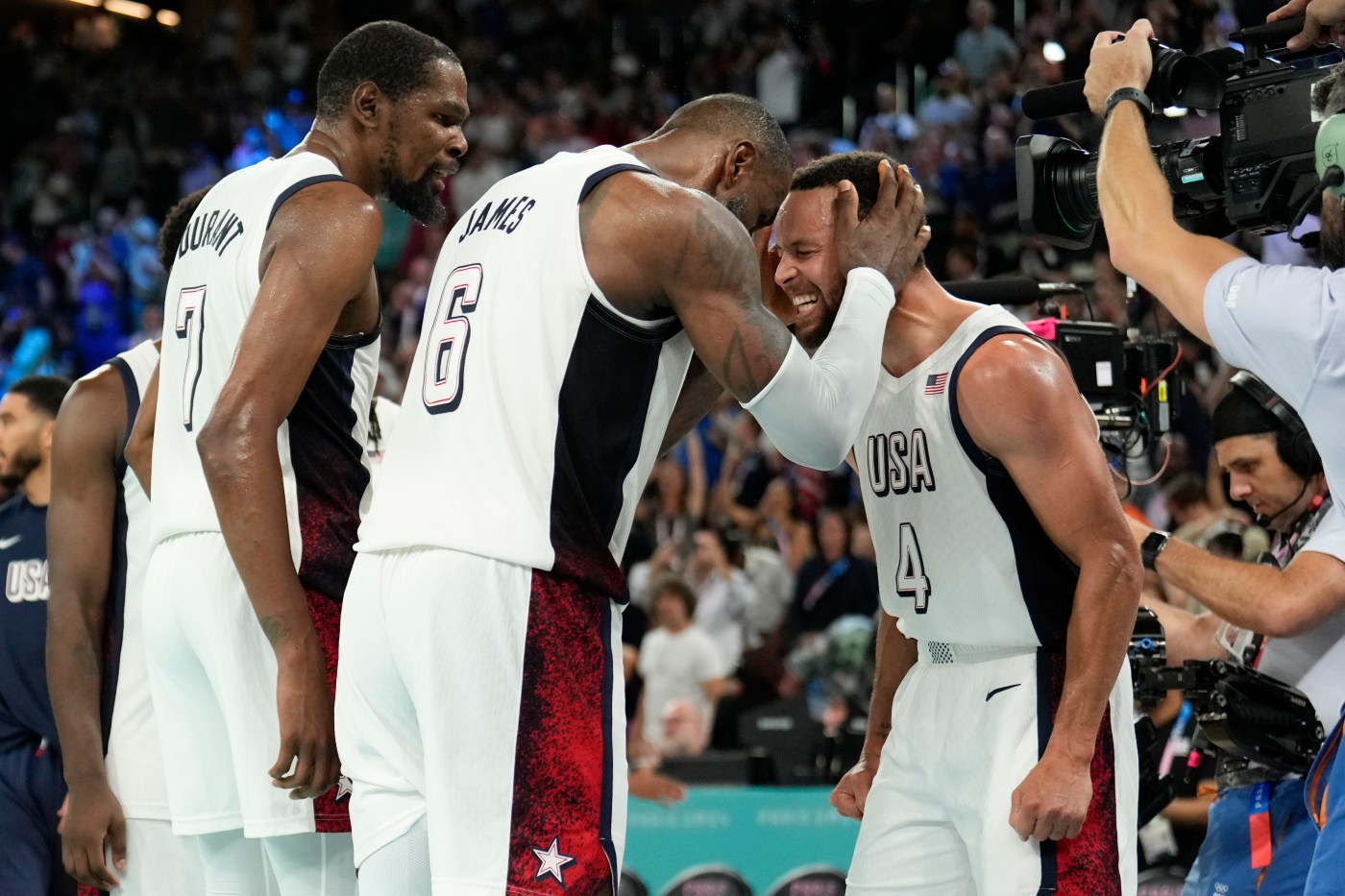
The U.S. men rallied to beat Serbia 95-91 in a compelling semifinal. Stephen Curry had 36 points.

Now Curry, Kevin Durant and LeBron James will lead the team as it seeks a fifth consecutive gold medal and 17th overall.

The French, led by phenom Victor Wembanyama, are seeking their first gold after settling for silver at the 1948, 2000 and 2020 Olympics, losing the final to the Americans in each of those tournaments. France held off World Cup champion Germany 73-69 to advance to Saturday’s final.

The game, a rematch of the final in Tokyo three years ago, is set to start at 9:30 p.m. CEST/3:30 p.m. EDT. The bronze-medal game between Germany and Serbia will take place at 11 a.m. CEST/5 a.m. EDT.

Many track and field events wrap up

Olympic track and field wraps up most of its competitions, with gold medals to be won in nine events.

The day gets started with the men’s marathon final at 8 a.m. CEST/2 a.m. EDT at Invalides. Then the evening session at the Stade de France gets underway with the men’s high jump at 7:05 p.m. CEST/1:05 p.m. EDT, followed by the men’s 800, women’s 100-meter hurdles, men’s 5,000 and women’s 1,500.

Sixteen-year-old American sprinter Quincy Wilson will look to redeem himself after a poor outing in the first round of the 4×400-meter relay. He became the youngest American male to compete in track at the Olympics but left the U.S. needing to make up significant ground after his opening lap.

The Americans needed a rally from Christopher Bailey on the final lap to qualify for the final in third place. The 4×400 relay gold-medal race starts at 9 p.m. CEST/3 p.m. EDT.

The women’s 4×400 follows at 9:14 p.m. CEST/3:14 p.m. EDT. The U.S. team of Quanera Hayes, Shamier Little, Aaliyah Butler and Kaylyn Brown won their heat by more than 3 seconds over Britain, but both groups finished with season-best times to advance.

Lin Yu-ting fights for gold

Lin Yu-ting fights Julia Szeremeta of Poland in the gold-medal bout in the women’s featherweight division.

Lin has won three consecutive bouts while dealing with widespread scrutiny regarding misconceptions about her gender at the Paris Olympics.

Lin and fellow boxer Imane Khelif have excelled despite the massive distractions stemming from the banned International Boxing Association’s decision last year to disqualify both fighters from the world championships for allegedly failing eligibility tests for women’s competition.

Both fighters have received ample support and cheers at their bouts.

Lin is a two-time Olympian who did not medal in Tokyo in 2021. She has made little public comment about those attempting to involve her in the controversy, but she has spoken of her goal to win a gold medal.

Her bout is scheduled for 9:30 p.m. CEST/3:30 p.m. EDT.

USWNT looking for Paris gold

The U.S. will face Brazil in the gold-medal match of the women’s soccer tournament. The Americans are seeking a fifth Olympic gold medal.

Brazil great Marta can end her international career with a gold medal after being suspended for the quarterfinals and semifinals. The 38-year-old Marta has said her sixth Olympics will be her last major tournament with the national team.

The match starts 5 p.m. CEST/11 a.m. EDT at Parc des Princes.

Beach Volleyball

The men’s bronze-medal match starts at 9 p.m. CEST/3 p.m. EDT at Eiffel Tower Stadium, followed by the men’s gold-medal match at 10:30 p.m. CEST/4:30 p.m. EDT.

Breaking

The b-boys bronze-medal battle is scheduled for 9:19 p.m. CEST/3:19 p.m. EDT at La Concorde, followed by the b-boys gold-medal battle at 9:29 p.m. CEST/3:29 p.m. EDT.

___

AP Summer Olympics: https://apnews.com/hub/2024-paris-olympic-games

Meet the press? Hold that thought. The candidate sit-down interview ain’t what it used to be

posted in: News | 0

By DAVID BAUDER, AP Media Writer

During Kamala Harris’ thrill ride that has upended the 2024 presidential campaign, journalists for the most part have been on the outside looking in. The vice president hasn’t given an interview and has barely engaged with reporters since becoming the Democratic choice to replace Joe Biden.

That’s about to change, now that it has become a campaign issue. But for journalists, the larger lesson is that their role as presidential gatekeepers is probably diminishing forever.

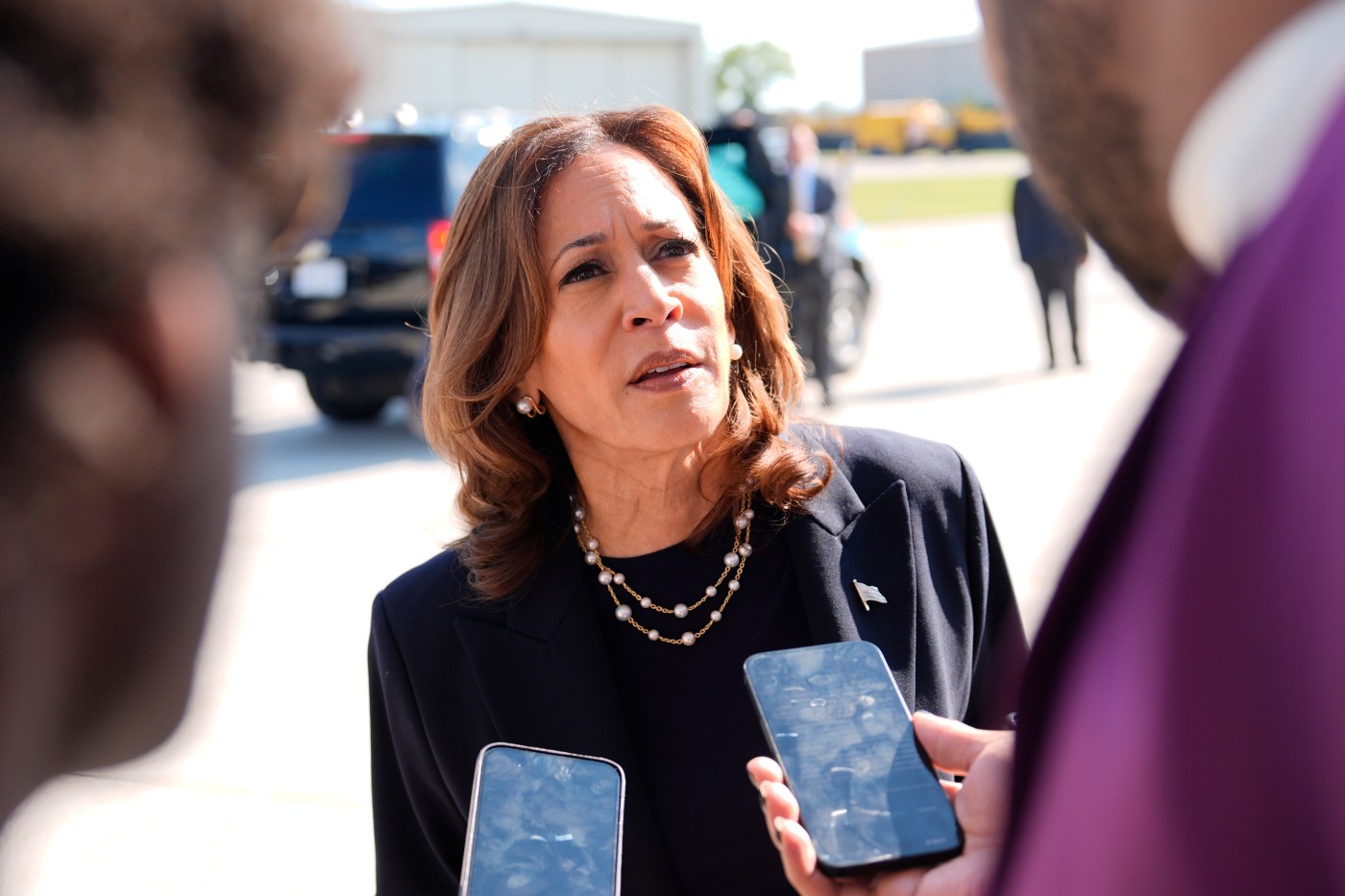
Harris travels with reporters on Air Force Two and frequently talks to them, but her campaign staff insists the conversations are off the record. Outside of the plane on Thursday, she approached cameras and notebooks to publicly answer some questions, and one of them was about when she would sit down for an in-depth interview.

“I’ve talked to my team,” she said. “I want us to get an interview together by the end of the month.”

She spoke on the same afternoon that her Republican opponent, former President Donald Trump, gave a news conference at his Mar-a-Lago resort, in part to draw a contrast with Harris. “She’s not smart enough to do a news conference,” Trump said. His vice presidential candidate, JD Vance, posted a comment on social media to point out that Trump was doing something that Harris hadn’t.

The landscape for candidate interviews has changed

Given that modern presidential campaigns are essentially marketing operations, Harris’ stance is not surprising. For the teams behind candidates, “the goal is to control the message as much as possible,” said Kevin Madden, a Republican communications strategist who was senior adviser to Mitt Romney’s campaigns in 2008 and 2012.

Related Articles

National Politics |


Microsoft says Iranian hackers targeted US political campaigns

National Politics |


‘Our lives are on the line’: Why many LGBTQ+ people hope for a Harris win

National Politics |


Trump wants presidents to have some say over interest rates

National Politics |


Tim Walz’s net worth trails the other candidates

National Politics |


Candidates for Ramsey, Washington, Dakota county board seats square off in Tuesday’s primary

Interviews and news conferences take that control away. Candidates are at the mercy of questions that journalists raise — even if they try to change the subject. News outlets decide which answers are newsworthy and will be sliced and diced into soundbites that rocket around social networks, frequently devoid of the context in which they were uttered.

In such an environment, the value and perception of the sit-down interview has changed — for journalists and candidates alike.

When Trump appeared last month in an interview format before the National Association of Black Journalists, his aides almost certainly didn’t want the main headline to be about their candidate suggesting Harris had misled voters about her race.

Between Instagram, Tik-Tok, televised rallies, emails or texts, campaigns have so many other ways of getting their message across to potential voters today. This lessens the need to directly engage with journalists, Madden said.

“Presidential campaigns increasingly are conducted as performances before a sympathetic audience, one that is invited to watch and listen but not to question or respond,” The New York Times wrote in a recent editorial.

Harris’ unusual late entry into the race means she bypassed vetting by voters, with journalists often as their surrogates, that takes on a more important role in the early stages of a nomination fight where a more intimate form of retail politics varies from state to state. That makes it all the more important that she be available to speak about her record and plans, the newspaper argued.

“Americans deserve the opportunity to ask questions of those who are seeking to lead their government,” the editorial said.

The Times’ editorial board has requested an interview with Harris and hasn’t received an answer, a spokesman said. The same was true of Biden before he dropped out.

A sympathetic interview — or none at all

Harris and her team may be taking lessons from her boss; Biden has lagged behind previous presidents in the number of interviews granted and press conferences held. That changed after the June debate with Trump that sent his re-election effort into a death spiral; televised interviews with ABC’s George Stephanopoulos and NBC’s Lester Holt did little to change that trajectory.

Trump has been more available, but often he talks with people unlikely to challenge him. Since July 5, he’s given interviews to Fox News personalities Maria Bartiromo, Laura Ingraham, Jesse Watters, Harris Faulkner, Brian Kilmeade and Sean Hannity. He’s also appeared twice on the “Fox & Friends” morning show.

Between those interviews — frequently clipped and run on other networks — and an endless stream of posts on his Truth Social site, Trump is “a content machine,” Madden said.

Trump’s news conference was telecast live on CNN, Fox News Channel and MSNBC, although CNN and MSNBC both cut out before it was finished to fact check some of the claims.

Fox has also frequently pointed out the issue of Harris’ lack of access. “Trump Takes Questions as Harris Dodges Media,” said one of the network’s onscreen messages as Trump talked.

“We can’t be the only media company that talks about it,” Fox’s Bill Hemmer said on Tuesday, making reference to the upcoming Democratic national convention. “Sixteen days she has gone without a significant interview. Is it possible that she could run out the clock until Chicago? That would be extraordinary. then you’d have to ask yourself. What are you hiding? What is your team hiding from?”

Madden said that while interviews carry less importance than they used to, there are still some undecided voters who want to see them to help make their choices. That’s why he expects they will happen.

“You want to control it as long as possible as much as possible,” he said. “They have had so much momentum over the last couple of weeks, they haven’t had to really sit down and make their case directly to reporters yet. The day is surely coming.”

___

Associated Press reporters Seung Min Kim and Will Weissert in Washington and Darlene Superville in Romulus, Michigan, contributed to this report. David Bauder writes about media for the AP. Follow him at http://twitter.com/dbauder.