NASA delays astronauts’ lunar trip until March after hydrogen leaks mar fueling test

posted in: All news | 0

By MARCIA DUNN

CAPE CANAVERAL, Fla. (AP) — NASA’s long-awaited moonshot with astronauts is off until at least March because of hydrogen fuel leaks that marred the dress rehearsal of its giant new rocket.

Related Articles


NASA hit by fuel leaks during a practice countdown of the moon rocket that will fly with astronauts


NASA delays the first Artemis moonshot with astronauts because of extreme cold at the launch site


It’s one storm after another for much of the US, but the next one’s path is uncertain


Video shows flames flying from NASA plane that touched down without landing gear


Frost quakes cause loud booms, light shaking when bitterly cold temperatures persist

It’s the same problem that delayed the Space Launch System rocket’s debut three years ago. That first test flight was grounded for months because of leaking hydrogen.

NASA announced the news Tuesday, shortly after the critical fueling test ended at Kennedy Space Center. Until the exasperating hydrogen leaks, the space agency had been targeting as soon as this weekend for humanity’s first trip to the moon in more than half a century.

“As always, safety remains our top priority,” NASA’s new administrator Jared Isaacman said via X. “We will only launch when we believe we are as ready to undertake this historic mission.”

Officials said the monthlong delay will allow the launch team to conduct another fueling test before committing the four astronauts — three U.S. and one Canadian — to a lunar fly-around.

The leaks cropped up early in Monday’s loading operation and again hours later, ultimately halting the countdown clocks at the five-minute mark. Launch controllers had wanted to get all the way down to a half-minute in the countdown.

NASA interrupted the flow of hydrogen several times in an attempt to warm up the area between the rocket and fuel lines and, hopefully, reseat any loose seals. But that didn’t work and neither did altering the flow of the hydrogen — adjustments that allowed the first SLS rocket to finally soar without a crew in 2022.

With their launch now off until at least March 6, commander Reid Wiseman and his crew were given the all-clear to emerge from quarantine in Houston. They will reenter it two weeks before the next launch attempt.

NASA has only a handful of days any given month to send them around the moon — the first time astronauts will have flown there since 1972. They won’t land on the moon or even go into lunar orbit during the nearly 10-day mission, but rather check out life support and other vital capsule systems ahead of a moon landing by other astronauts in a few years.

NASA sent 24 astronauts to the moon during the 1960s and 1970s Apollo. The new Artemis program is aiming for new territory — the moon’s south polar region — and looking to keep crews on the lunar surface for much longer periods.

The Associated Press Health and Science Department receives support from the Howard Hughes Medical Institute’s Department of Science Education and the Robert Wood Johnson Foundation. The AP is solely responsible for all content.

Lindsey Vonn vows to ski through major knee damage

posted in: All news | 0

CORTINA D’AMPEZZO, Italy — Lindsey Vonn is “confident” she can compete at the Milan Cortina Winter Olympics beginning this week with a torn ACL from a crash four days ago.

Vonn said on Tuesday the damage to her left knee was a “completed ruptured” ACL, plus bone bruising and “meniscal damage.”

United States’ Lindsey Vonn ahead of an alpine ski, women’s World Cup downhill, in Crans Montana , Switzerland, Friday, Jan. 30, 2026. (AP Photo/Pier Marco Tacca)

After three days of physical therapy and doctors’ advice, Vonn skied on Tuesday. She did not appear to be limping as she entered and exited a news conference.

“My knee is not swollen, and with the help of a knee brace, I am confident that I can compete on Sunday,” Vonn said.

“So, this is not obviously what I had hoped for. I know what my chances were before the crash and I know my chances aren’t the same as it stands today. But I know there’s still a chance, and as long as there’s a chance, I will try.

“I will do everything in my power to be in the starting gate.”

Vonn, 41, crashed in a World Cup downhill in Crans-Montana, Switzerland, on Friday and ended up in the safety nets. After skiing to the bottom of the course she was taken to a hospital.

Vonn, whose skiing career started at Buck Hill in Burnsville, was expected to be one of the biggest stars of the Winter Games, which start Friday with the opening ceremony. Her first race comes two days later in the women’s downhill on Sunday. Then Vonn was also planning on competing in super-G and the new team combined event.

The opening women’s downhill training session is scheduled for Thursday.

Teammate Bella Wright said Vonn has what it takes — a strong mental state — to ski through her injuries.

“If anyone can do it, it’s Lindsey,” Wright said.

Vonn has had numerous other crashes and injuries in her career.

“This would be the best comeback I’ve done so far,” she said. “Definitely the most dramatic.”

Vonn made a stunning comeback last season at age 40 after nearly six years away from ski racing. Skiing with a partial titanium implant in her right knee, she has been the circuit’s leading downhiller this season with two victories and three other podium finishes in five races.

Including super-G, Vonn completed eight World Cup races and finished on the podium in seven of them. Her worst finish was fourth.

Women’s skiing during the Games will be in Cortina, where Vonn holds the World Cup record with 12 wins.

Vonn has won three Olympic medals: Gold in downhill and bronze in super-G in 2010 and bronze in downhill in 2018.

Associated Press writer Jennifer McDermott contributed.

Related Articles


Vonn ‘confident’ she will race at Olympics despite ‘completely ruptured’ ACL in left knee


Speedskater Erin Jackson, bobsledder Frank Del Duca picked as US flagbearers for Winter Olympics


Programs aim to diversify winter sports, but gaps persist at Winter Olympics


Freeskier Eileen Gu takes another wild ride to the Olympics, invites the world to tag along


A luge love story: These Olympics have a lot of meaning for Emily and Dominik Fischnaller

Letters: The surge isn’t about immigration or fraud, and some protests hurt the cause

posted in: All news | 0

Only gives Trump what he wants

I am a Democrat who is appalled at the ICE activities associated with “Metro Surge.” This operation is clearly political theater with the intent of punishing and antagonizing a blue urban area and state. If the Trump Administration really wanted to round up many undocumented immigrants, they would prioritize Texas and Florida, who have far more of these individuals than Minnesota. If this really were about cleaning up social services-related corruption, they would have sent accountants and other white-collar investigators, not masked and poorly trained thugs.

Donald Trump and his lieutenants wish to provoke violent responses which he can throw as red meat to his supporters. For the most part, Minnesotans have admirably denied him this type of reaction. However, Trump got what he wanted when violence recently broke out at a Minneapolis hotel where ICE agents were staying. As reported in the Jan. 27 edition of the Pioneer Press, protesters attempted to enter this hotel, clashing with a Minneapolis police officer and federal personnel and causing significant property damage during the overall incident. This sort of activity is performative and counterproductive. It is probably gratifying to the participants but only gives Trump what he wants.

Another story in the Jan. 27 edition of the Pioneer Press covered the primary individuals who entered a church service at Cities Church on Summit Avenue in St. Paul to protest ICE activities; this church was targeted because the acting Minnesota field office manager of ICE works as a pastor for the church. While not nearly as problematic as the violence shown at the hotel referenced above, this also is an example of performative actions which are counterproductive, in my opinion. Yes, the actions got the participants significant media coverage, but it provided more red meat for the MAGA base without achieving corresponding gains for the anti-ICE cause. Peaceful protest for a just cause is a noble activity, but to take it inside an active house of worship is inappropriate.

Peter Langworthy, St. Paul


We all care

I appreciated Richard Powell’s letter to the editor (“Compassion to go around”) in this past Sunday’s newspaper.

Specifically, his comments about compassion. Liberal Democrats have not cornered the market on compassion and empathy.  I would like to think and believe that everyone, no matter their political views, are horrified, dismayed and sickened by the recent tragedies unfolding in Minneapolis. Compassion, empathy and concern for immigrants, all people, really, is not limited to members of one political party. We ALL care. Border control is necessary for our country to give safety to all Americans, immigrants included.

Lois Isaacson, Lakeland


Punishing local businesses

It seems rather ironic that people protesting the presence of ICE chose to punish businesses and restaurants by putting social pressure on them to close and to encourage boycotts of businesses that remain open. I believe that this is rather counterproductive in that the economic impact will be felt on local economies and the state of Minnesota and not on the federal government. It may make the people protesting feel better but the feds might be relishing that Minnesota seems to be shooting itself in the foot and that that protest will do little to influence the federal government.

Bill Filler, South Saint Paul


‘Asinine conclusions’

Our own Minnesota representative Tom Emmer said local and state leaders had “empowered criminals” and would not jump to “asinine conclusions” over the killing of Alex Pretti. I have a question for Rep. Emmer: When it comes to asinine conclusions what do you think of Greg Bovino’s assertion that Pretti was a domestic terrorist? Or Kristi Noem saying, “he brandished a gun and attacked agents”? Or Steven Miller stating “a would-be assassin tried to massacre law enforcement agents”? Can Mr. Emmer please define what he means by “asinine conclusions”?

Steve Larson, Minneapolis

Related Articles


Man found fatally shot in vehicle in St. Paul’s West Seventh neighborhood


Dave Chappelle to headline Grand Casino Arena in support of ‘communities in crisis’


Man fatally shot in St. Paul’s Payne-Phalen ID’d as 25-year-old


Minnesota’s 2025 domestic abuse homicide victims honored


Mark Glende: How much do I love ‘I Love To Read Month’? Well …


Trump’s $45 billion expansion of immigrant detention sites faces pushback from communities

posted in: All news | 0

By DAVID A. LIEB, HEATHER HOLLINGSWORTH and MORGAN LEE

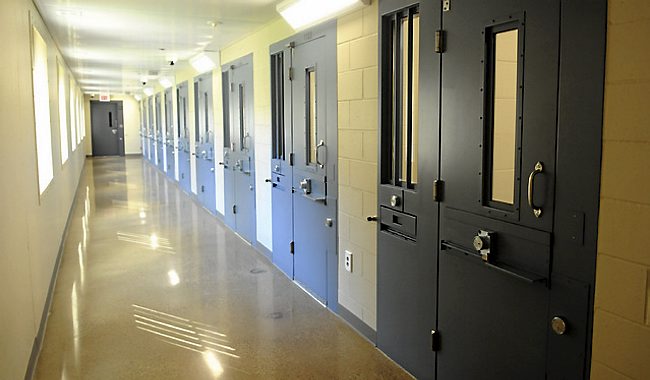
With tensions high over federal immigration enforcement, some state and local officials are pushing back against attempts by President Donald Trump’s administration to house thousands of detained immigrants in their communities in converted warehouses, privately run facilities and county jails.

Related Articles


Trump hosts Colombia’s Petro just weeks after insulting him as a ‘sick man’ fueling the drug trade


Seeking shelter from Trump’s fury, U.S. trade partners reach deals with each other


Don’t tune into the Super Bowl hoping for a break from politics


GOP leaders sound increasingly confident they can pass a spending package and end partial shutdown


MAHA has reshaped health policy. Now it’s working on environmental rules

Federal officials have been scouting cities and counties across the U.S. for places to hold immigrants as they roll out a massive $45 billion expansion of detention facilities financed by Trump’s recent tax-cutting law.

The fatal shootings of Renee Good and Alex Pretti during immigration enforcement actions in Minnesota have amplified an already intense spotlight on U.S. Immigration and Customs Enforcement, increasing scrutiny of its plans for new detention sites.

A proposed ICE facility just north of Richmond, Virginia, drew hundreds of people last week to a tense public hearing of the Hanover County Board of Supervisors.

“You want what’s happening in Minnesota to go down in our own backyard? Build that detention center here, and that’s exactly what will happen,” resident Kimberly Matthews told county officials.

As a prospective ICE detention site became public, elected officials in Kansas City, Missouri, scrambled to pass an ordinance aimed at blocking it. And mayors in Oklahoma City and Salt Lake City — after raising concerns about building permits — announced last week that property owners won’t be selling or leasing their facilities for immigration detention.

Meanwhile, legislatures in several Democratic-led states pressed forward with bills aimed at blocking or discouraging ICE facilities. A New Mexico measure targets local government agreements to detain immigrants for ICE. A novel California proposal seeks to nudge companies running ICE facilities out of the state by imposing a 50% tax on their proceeds.

The number of ICE detention sites has doubled

More than 70,000 immigrants were being detained by ICE as of late December, up from 40,000 when Trump took office, according to federal data.

In a little over a year, the number of detention facilities used by ICE nearly doubled to 212 sites spread across 47 states and territories. Most of that growth came through existing contracts with the U.S. Marshals Service or deals to use empty beds at county jails.

Trump’s administration now is taking steps to open more large-scale facilities. In January, ICE paid $102 million for a warehouse in Washington County, Maryland, $84 million for one in Berks County, Pennsylvania, and more than $70 million for one in Surprise, Arizona. It also solicited public comment on a proposed warehouse purchase in a flood plain in Chester, New York.

Federal immigration officials have toured large warehouses elsewhere, without releasing many details about the efforts.

“They will be very well structured detention facilities meeting our regular detention standards,” ICE said in a statement, adding: “It should not come as news that ICE will be making arrests in states across the U.S. and is actively working to expand detention space.”

Detention site foes face legal limitations

State and local governments can decline to lease detention space to ICE, but they generally cannot prohibit businesses and private landowners from using their property for federal immigrant detention centers, said Danielle Jefferis, an associate law professor at the University of Nebraska who focuses on immigration and civil litigation.

In 2023, a federal court invalidated a California law barring private immigrant detention facilities for infringing on federal powers. A federal appeals court panel cited similar grounds in July while striking down a New Jersey law that forbade agreements to operate immigrant detention facilities.

After ICE officials recently toured a warehouse in Orlando, Florida, as a prospective site, local officials looked into ways to regulate or prevent it. But City Attorney Mayanne Downs advised them in a letter that “ICE is immune from any local regulation that interferes in any way with its federal mandate.”

Officials in Hanover County also asked their attorney to evaluate legal options after the Department of Homeland Security sent a letter confirming its intent to purchase a private property for use as an ICE processing facility. The building sits near retail businesses, hotels, restaurants and several neighborhoods.

Although some residents voiced concerns that an ICE facility could strain the county’s resources, there’s little the county can do to oppose it, said Board of Supervisors Chair Sean Davis.

“The federal government is generally exempt from our zoning regulations,” Davis said.

Kansas City tries to block new ICE detention site

Despite court rulings elsewhere, the City Council in Kansas City voted in January to impose a five-year moratorium on non-city-run detention facilities. The vote came on the same day ICE officials toured a nearly 1-million-square-foot (92,903-square-meter) warehouse as a prospective site.

Manny Abarca, a county lawmaker, said he initially was threatened with trespassing when he showed up but was eventually allowed inside the facility, where a deputy ICE field office director told him they were scouting for a 7,500-bed site.

Abarca is trying to fortify Kansas City’s resistance by proposing a countywide moratorium on permits, zoning changes and development plans for detention facilities not run by the county or a city.

“When federal power is putting communities on edge, local government has a responsibility to act where we have authority,” he said.

Kansas City is looking to follow a similar path as Leavenworth, Kansas, which has argued that private prison firm CoreCivic must have an operating permit to reopen a shuttered prison as an ICE detention facility.

As other ICE proposals have surfaced, officials in Social Circle, Georgia, El Paso, Texas, and Roxbury Township, New Jersey, all have raised concerns about a lack of water and sewer capacity to transform warehouses into detention sites.

Nationally, it remains to be seen whether local governments can effectively deter ICE facilities through building permits and regulations.

“We’re currently in a moment where it is being tested,” Jefferis said. “So there is no clear answer as to how the courts are going to come down.”

New Mexico targets existing ICE facilities

The Democratic-led New Mexico House on Friday passed legislation banning state and local government contracts for ICE detention facilities, sending it to the Senate. Similar bills are pending in Hawaii, Massachusetts, New York and Rhode Island.

The Otero County Processing Center, 25 miles (40 kilometers) from downtown El Paso, Texas, is one of three privately run ICE facilities that could be affected by the New Mexico legislation. The facility includes four immigration courtrooms and space for more than 1,000 detainees. The county financed its construction in 2007 with the intent to use it as a revenue source, and plans to pay off the remaining $16.5 million debt by 2028.

Otero County Attorney Roy Nichols said the county is prepared to sue the Legislature under a state law that prevents impairment of outstanding revenue bonds.

Republicans warned of job losses and economic fallout if the legislation forces immigrant detention centers to close.

But Democratic state Rep. Sarah Silva, who voted for the ban, and said her constituents in a heavily Hispanic area view the ICE facility as a burden.

“Our state can’t be complicit in the violations that ICE has been doing in places like Minneapolis,” Silva said. “To me that was beyond the tipping point.”