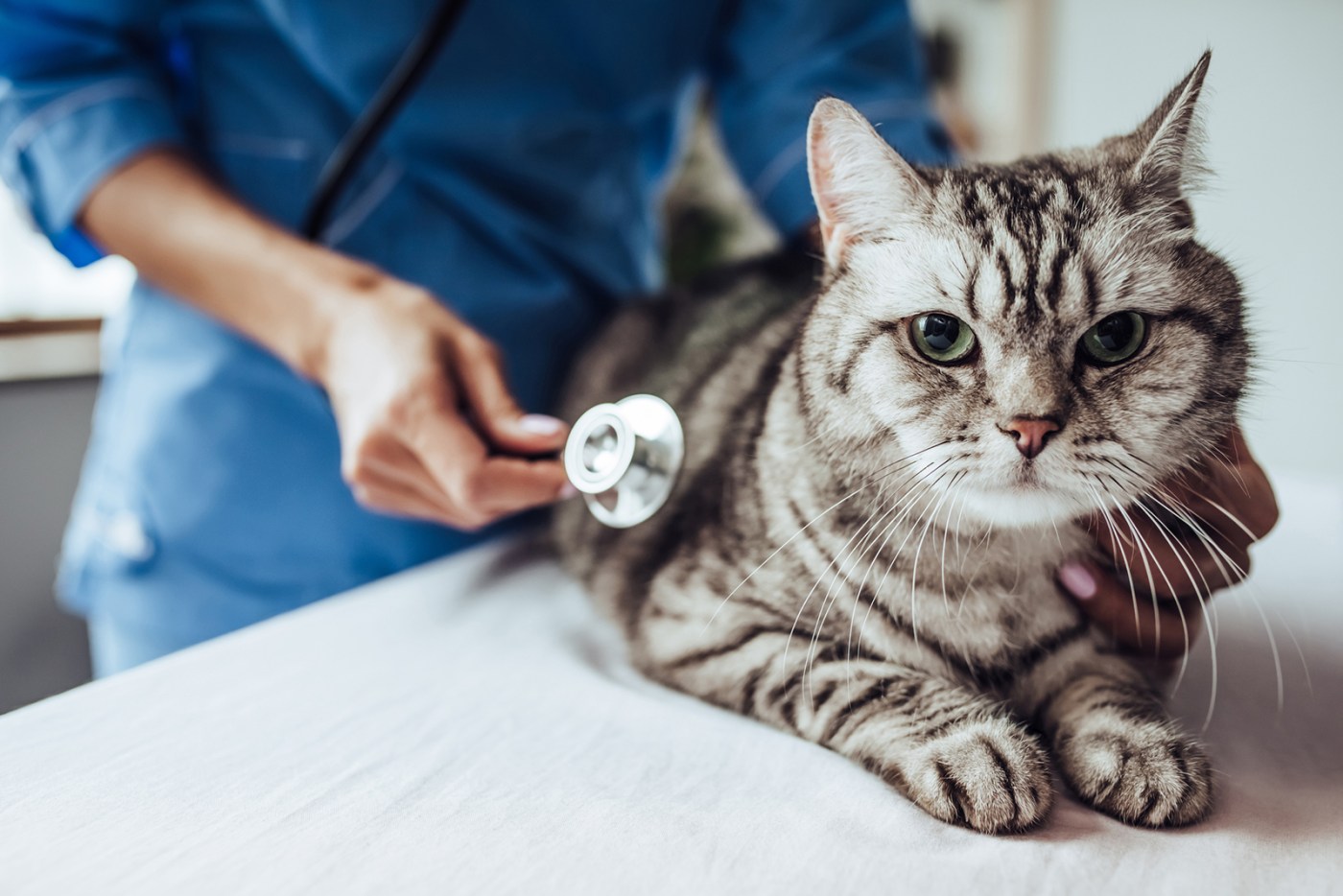
What is the difference between pet insurance and wellness plans?

posted in: Society | 0

Lezanne Winshaw | Bankrate.com (TNS)

Pet owners want the best for their furry friends, which often involves making decisions about their health care. One common dilemma is whether to invest in pet insurance or a pet wellness plan. In many cases, pet owners may want both.

Both pet insurance and wellness plans offer ways to manage your pet’s health expenses, but they serve different purposes. Understanding these differences will ensure you choose the right option for your pet’s needs.

What pet insurance is and how it works

Pet insurance is a financial product designed to cover unexpected veterinary costs that arise from accidents, illnesses and other unforeseen health issues. Like human health insurance, it provides a financial safety net for high-cost medical expenses.

How pet insurance works

Pet insurance policies typically involve paying a monthly premium in exchange for coverage of various medical expenses.

When your pet requires veterinary care, you pay the bill upfront and then submit a claim to the insurance company for reimbursement. The reimbursement amount depends on your policy’s coverage details, such as deductibles, copays and coverage limits.

Some insurers, like Trupanion, have a VetPay facility, meaning your insurance company pays the covered portion of your bill directly to the vet.

Pet insurance usually covers:

— Accidents and injuries (broken bones, swallowed objects)

— Diagnostic tests (blood tests, X-rays)

— Illnesses (cancer, diabetes, infections)

— Prescription medications

— Surgeries and hospitalizations

Some policies may also offer optional wellness care add-ons.

What pet wellness plans are and how they work

A pet wellness plan is designed to cover routine and preventive care. These plans help manage the cost of regular veterinary services that keep your pet healthy. Preventive care may help detect issues early before they become serious problems.

How pet wellness plans work

Pet wellness plans are offered as pet insurance add-ons or as stand-alone financial assistance.

They function on a subscription basis, where you pay a monthly or annual fee in exchange for a set of covered services. Unlike pet insurance, wellness plans usually do not involve filing claims and waiting for reimbursement. Instead, you receive discounted or fully covered services during your visit.

Not all pet insurance providers have wellness plans or preventive care add-ons. Some vet clinics offer wellness programs to help pet owners budget for routine pet healthcare. These may only be utilized at their clinic or network of animal hospitals.

Pet wellness plans typically cover:

— Dental cleanings

— Flea, tick and heartworm prevention

— Microchipping

— Routine blood work

— Routine check-ups and physical exams

— Spay/neuter procedures

— Vaccinations

These plans are ideal for budgeting regular veterinary care and ensuring your pet receives consistent preventive treatments.

Pet insurance vs. pet wellness plans

While pet wellness plans help to budget for routine pet care, pet insurance focuses on the unexpected.

When deciding between pet insurance and wellness plans, consider the following:

— Age and health: Young, healthy pets might benefit more from wellness plans focusing on preventive care, while older pets or breeds prone to health issues may need the comprehensive coverage of pet insurance.

— Budget: Evaluate your financial situation. Pet insurance can save you from unexpected, high medical bills, while wellness plans help manage routine care costs.

— Risk tolerance: If you prefer financial predictability, a wellness plan might suit you. Pet insurance could be the better option if you’re more concerned about potential high costs from accidents or illnesses.

— Vet visits: Consider how often you visit the vet. Regular visits for preventive care may justify the cost of a wellness plan, whereas infrequent visits might not.

Pet insurance pros

— Comprehensive coverage: Pet insurance provides extensive protection against unexpected and often costly medical emergencies.

— Financial safeguard: It helps manage large, unplanned for expenses that arise from serious illnesses or injuries.

— Peace of mind: Knowing you have a plan for crises can reduce stress and worry about your pet’s health.

Pet insurance cons

— Cost: Monthly premiums can add up, and there may be deductibles and copays to consider.

— Exclusions and waiting periods: Not all conditions are covered, and certain types of coverage may have waiting periods.

— Reimbursement process: You usually need to pay the vet bill upfront and wait for reimbursement, which can be a hassle.

Wellness plan pros

— Budget-friendly: Wellness plans allow you to spread out the cost of routine care over time, making it easier to manage your budget.

— Immediate benefits: There is usually no need to file claims or wait for reimbursement; covered services are provided during the visit.

— Preventive focus: These plans emphasize regular check-ups and preventive care, which can lead to early detection of health issues.

Pet wellness cons

— Limited coverage: Some wellness plans only cover a portion of the preventive care costs or only pay a maximum value per treatment or per year.

— Not customizable: Wellness plans often come as packages, which may include services you don’t need.

— Overlapping costs: If you already have pet insurance, adding a wellness plan might result in overlapping coverage and increased overall costs.

When to consider pet insurance

Pet health insurance is valuable for pet parents seeking financial protection and peace of mind in the event of unexpected accidents or illnesses. It covers emergency situations that demand immediate and often expensive veterinary care.

Some dog breeds have a higher chance of developing chronic illnesses such as diabetes or cancer. If you sign your pet up for insurance before signs of these develop, your pet’s policy can go a long way to helping cover the significant expenses that stack up for chronic medications and surgeries.

If you are one of the lucky ones whose four-legged friend gets through life without serious incident, paying monthly insurance premiums may seem like a waste of money. Contributing to a medical emergency fund may be a better use of your money. If something unexpected happens, you can always draw from your emergency account to cover vet bills.

When to consider a pet wellness plan

Pet wellness plans are ideal for pet owners who wish to prioritize preventive care and budget for routine veterinary services throughout the year.

Related Articles


Best volatility ETFs: Use these funds to profit when the market falls


How to choose a short-term vacation rental with a group


15-year vs. 30-year mortgage: Which is right for you?


Social Security spousal benefits: Here’s what spouses can get


When do airlines give vouchers for delays?

“Routine veterinary check-ups and preventive care can substantially lower the risk of expensive treatments for severe injuries and illnesses in the future,” says Melissa Meyer, veterinarian at Boksburg Animal Hospital, South Africa. “As a veterinarian, I understand how daunting a diagnosis can be, but I have seen significantly higher success rates when conditions are detected early. If a wellness plan can help you achieve this level of care for your pets, it is certainly a worthwhile consideration.”

A wellness plan can help puppies and kittens who undergo several vaccinations and other routine procedures in their first year or two of life manage these expenses. However, a wellness policy with these specific benefits may be excessive for older pets who have been microchipped, spayed or neutered.

With a little research, it is easy to budget for routine veterinary costs like vaccinations and annual check-ups.

However, if some of these happen in a short space of time, it may be challenging to have that amount of cash on hand. In this case, paying smaller, more regular amounts as a monthly wellness plan premium may be more manageable.

Next steps

Pet insurance is a financial safety net for unforeseen illness and injury that can lead to hefty vet bills.

The cost of pet insurance varies depending on your pet’s age, breed and location, as well as which policy parameters you select (reimbursement percentage, deductibles, maximum coverage). Plans for pet wellness help pet owners budget for routine pet care such as vaccinations, teeth cleanings and annual check-ups.

Deciding between pet insurance and a pet wellness plan depends on your pet’s specific needs and your financial situation. Pet insurance might be the right choice if you are concerned about covering the cost of unexpected emergencies.

On the other hand, if you want to ensure consistent preventive care and manage routine veterinary expenses, a wellness plan could be more suitable.

By understanding the differences between pet insurance and wellness plans, you can make an informed choice that best suits your pet’s health needs and your financial situation. Remember, the goal is to ensure your pet receives the best care possible, keeping them happy and healthy for years to come.

Frequently asked questions

— Can I have both pet insurance and a wellness plan? Yes, many pet owners choose to have both. Pet insurance covers emergencies and serious illnesses, while a wellness plan covers routine and preventive care. This combination can provide comprehensive coverage for your pet.

— What does pet insurance typically not cover? Pet insurance often excludes pre-existing conditions, routine and preventive care (unless added as an optional rider), and certain hereditary conditions. Be sure to read the policy details to understand the exclusions.

— How do I choose the right pet insurance policy? Consider factors such as coverage options, deductibles, reimbursement rates and customer reviews. Compare multiple providers to find a policy that fits your budget and meets your pet’s needs.

— Are pet wellness plans worth it? If you regularly take your pet for check-ups and preventive care, a wellness plan can be a cost-effective way to manage those expenses. Evaluate the services included in the plan and compare them to your pet’s needs to determine if it’s worth it for you.

— Can I switch from a wellness plan to pet insurance? Most pet insurance providers will allow you to switch from a wellness plan to an accident and illness policy or vice versa. However, be aware that switching may involve new waiting periods and potential exclusions for pre-existing conditions. It’s essential to time the switch carefully to avoid gaps in coverage.

(Visit Bankrate online at bankrate.com.)

©2024 Bankrate.com. Distributed by Tribune Content Agency, LLC.

Ice rink fumes have sent kids to the hospital. Still, few states require tests

posted in: News | 0

Alex Brown | Stateline.org (TNS)

Last December, dozens of young hockey players were rushed to hospitals in the Buffalo, New York, area — some vomiting, lethargic and suffering from headaches.

The skaters had been exposed to high levels of carbon monoxide at an indoor ice rink, a problem that is far from uncommon. Most rinks use ice resurfacing machines — often known by the brand name of Zamboni — and edgers that often run on propane or other fuels. Some use gas-powered heaters above seating areas. Without proper ventilation, the fumes from that equipment can build up high levels of poisonous gases such as carbon monoxide and nitrogen dioxide.

“It’s almost akin to running the car in the garage with the door closed,” said New York Democratic Assemblymember Monica Wallace, whose district includes the ice rink where the poisoning incident occurred. “And it’s in rinks that are used frequently by children, where people are breathing heavily when they’re playing.”

While the young skaters in New York all recovered, Wallace learned that they were far from the first to suffer from a mass poisoning event at an ice arena. Within the past decade, similar incidents have sent handfuls to scores of ice rink visitors to the hospital in DelawareIllinoisOhio and Wisconsin. Some state health officials say many more incidents don’t make the news. And as families around the country begin hockey training camps and wrap up registration for fall leagues, health experts note that many ice rink visitors may be unknowingly suffering from lower-level exposures that can cause long-term damage.

As Wallace researched previous incidents across the country, the former hockey mom was even more surprised to find only three states require their rinks to test air quality and meet certain safety thresholds.

“It seems pretty surprising that this is such an issue,” she said. “Until it happened in my district, I had no idea.”

Earlier this year, Wallace drafted a bill that would require New York ice rink owners to monitor their air quality. At certain thresholds, they would be required to increase ventilation, notify state officials, or evacuate the rink. In many rinks, especially in older structures, ventilation occurs near the top of the building, so as not to pull warmer outside air near the ice surface. But that can allow gases to settle into the skating area unless they are cleared out by exhaust fans.

The bill is modeled on existing standards in Massachusetts, Minnesota and Rhode Island. Leaders in those states say regulations have helped to reduce emergencies and lower the long-term exposures that can cause respiratory problems such as asthma.

While some rink owners initially expressed skepticism about the rules, industry officials in those states say they’ve learned how to comply. Now, they say the standards are a key framework for helping them provide a safe environment for skaters and staff.

“It doesn’t benefit anyone to have something on the nightly news of 15 kids getting loaded onto ambulances at an ice rink,” said Ed Peduto, a board member with the North East Ice Skating Managers Association and the general manager of an ice arena in Reading, Massachusetts. “People don’t want to be regulated, but this has made rinks in Massachusetts exponentially more safe.”

Promoting safety

National ice rink industry groups already recommend air quality testing and safety thresholds. They haven’t openly opposed bills such as Wallace’s to make that testing mandatory. But the New York bill did not advance before the legislature adjourned this session; Wallace intends to bring the proposal back next year. Still, it seems there’s been little traction at the state or federal level to adopt such rules for the nation’s roughly 2,000 indoor ice rinks.

“I do see the reports of incidents in various states, which does suggest that in the absence of regulations there’s an increased risk of severe acute poisoning,” said Dan Tranter, supervisor of the Indoor Air Unit at the Minnesota Department of Health. “It’s a pretty reasonable way to protect public health.”

Related Articles

Health |


Native American public health officials are stuck in data blind spot

Health |


Urgent care or ER? With ‘one-stop shop,’ hospitals offer both under same roof

Health |


Lackluster investigations may perpetuate high Native infant mortality rate

Health |


Olympians say conversations on sports, mental health are changing

Health |


Meet Beacon the therapy dog, bringing joy from Pasadena to Team USA

Minnesota became the first state to enact air quality rules for ice rinks in 1973. Over time, testing results have shown a decline in carbon monoxide and nitrogen dioxide levels as rink owners have fixed ventilation issues or switched to electric machines. The state has not seen a severe hospitalization incident in more than 20 years, Tranter said.

Massachusetts passed its standards in 1997. Suzanne Condon, former associate commissioner of the state Department of Public Health, helped draft the regulations. In addition to the mass poisoning events, state leaders were concerned about high rates of childhood asthma and other respiratory conditions. They cited emerging evidence that long-term lower-level exposures could worsen such problems.

“I remember watching the team bench during school hockey games and almost every other kid was using an inhaler,” she said. “You really want to prevent exposures in order to prevent disease and ultimately make life better for kids.”

Current agency officials did not grant a Stateline interview request.

Peduto, the Massachusetts ice arena manager, said the agency backed up its rules with a stringent inspection regime that initially angered rink owners. Over time, though, as they were forced to comply, the owners came to see their improved air quality as a selling point, Peduto said.

“Skating rink operators in Massachusetts are really proud of the air quality of their rinks,” added Condon. “It’s been so many years since there’s been any incident related to carbon monoxide or nitrogen dioxide. It’s testament to the fact that it worked.”

Industry response

Rhode Island also has enacted standards, while Connecticut, New Hampshire and Wisconsin have issued nonbinding guidelines. The U.S. Environmental Protection Agency has issued detailed guidance for rink operators, but it is voluntary.

The U.S. Ice Rink Association recommends that its members voluntarily test their air and take corrective actions at certain thresholds. The trade group did not respond to a request for comment.

Given the number of high-profile poisoning incidents, and the lack of visible industry pushback, some officials are surprised that more states haven’t established their own regulations. Some speculate that it stems from a lack of awareness, or the fact that the issue is limited to a single industry.

At least one local government has taken matters into its own hands. Roughly a decade ago, firefighters in Evendale, Ohio, grew alarmed at how often they were called over several years to a local ice arena to help sickened skaters.

“We started to measure carbon monoxide whenever we were in that facility, and we kept getting alarms,” said Michael Hauck, chief of the village’s fire department. “That tipped us off that we had a potential issue with the equipment being used in the ice arena.”

As local leaders looked into the issue, they heard from Ohio health officials that no statewide regulations would be forthcoming. In 2017, the village council passed a set of air quality testing requirements and standards, modeled on Minnesota’s regulations. Soon after it passed, the rink that had caused the fire department’s concerns discovered that it had problems with its ventilation units. Once fixed, its air quality improved dramatically.

Eventually, both rinks in town switched to electric ice resurfacers. Officials at the state and local level say they have seen many rink owners switch to electric equipment after the passage of testing regulations. By switching to models that don’t emit fumes, they can exempt themselves from testing requirements and save money on fuel in the long run.

“The regulation does incentivize going all electric,” said Tranter, with the Minnesota agency. “Now it’s rare to see a corrective action level reached, and that has a lot to do with the switch to electric.”

©2024 States Newsroom. Visit at stateline.org. Distributed by Tribune Content Agency, LLC.
Minneapolis family opens new fully accessible resort near Ely

posted in: Society | 0

ALONG BIRCH LAKE — In an era when many small resorts are sold off for their waterfront land values and developed into condos or lake homes — Minnesota has fewer than half the “ma and pa” resorts it did 50 years ago — Sean and Jill Leary are bucking the trend.

The Learys are building North of North, a three-cabin resort on 11 acres of raw land at 12265 State Highway 1, 10 miles east of Ely, from scratch.

The first cabin was ready for guests last week, the other two were just about finished and their website went live this week to accept reservations.

“It’s taken a little longer than we expected, but we’re almost there,” Jill Leary said as she unpackaged steak knives from a box for one of the cabin kitchens. “There was nothing here before. No driveway. … The first time we came to the property, we had to come by boat.”

It’s been exhausting work and many trips back and forth from their home in Minneapolis. They cut a path from Highway 1 into the property and slowly figured out how the cabins would fit onto the landscape.

North of North Resort is located on Birch Lake near Ely, Minn. Sean Leary and his wife, Jill, are building the three-cabin resort on 11 acres of raw land, with 1,100 feet of shoreline, from scratch. It is designed to accommodate people with disabilities and gives them access to outdoor recreation. (Courtesy of North of North Resort)

North of North is an all-new destination for lovers of the Ely experience, the Superior National Forest and the Boundary Waters Canoe Area Wilderness — just a stone’s throw up the Kawishiwi River. But it’s also perhaps unique in the Northland woods for being built, from the ground up, to be fully accessible for many people with disabilities.

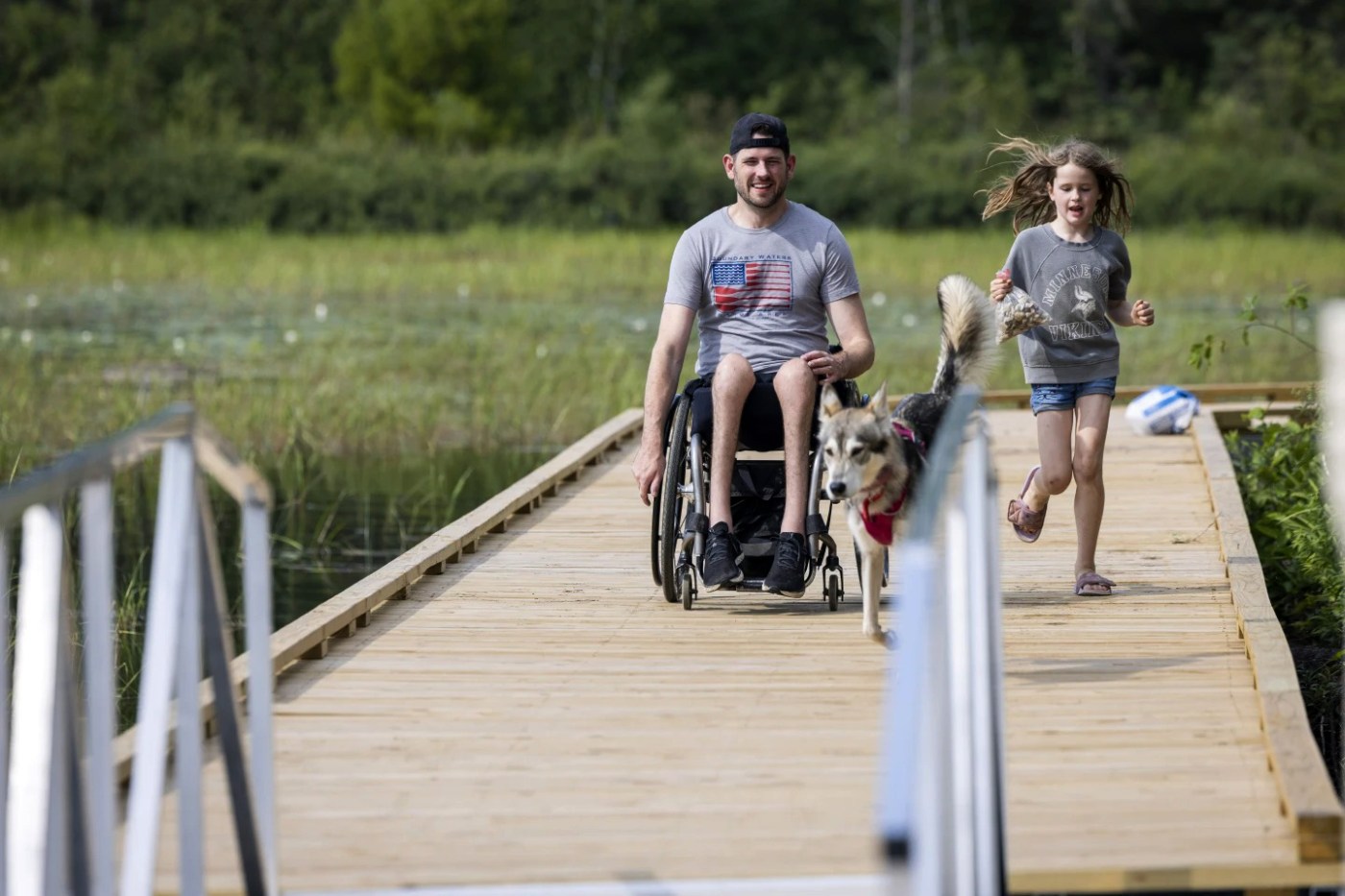
It hasn’t just been Sean and Jill Leary on the job. It’s been a family affair with daughters Annika,10, and Britta, 7, helping along with the family’s sled dog, Freya.

The idea sprouts

The Learys were on their first post-pandemic family vacation to the Yellowstone National Park region a few years ago when they decided they wanted their own destination in the northwoods of their home state. Moreover, they wanted a place where others with disabilities — Jeff has been using a wheelchair for 23 years — could enjoy Minnesota’s “up north” like everyone else.

They had an idea to build a small resort using accessible design principles so people at any stage of their lives, from the elderly to families with infants and strollers, could get around. Even the waterfront lot they chose was picked because of its relatively flat topography, with easy access to the lake.

Britta Leary, 7, asks her mom, Jill Leary, to help open a box as they stock supplies in one of the new cabins at their resort, North of North. (Clint Austin / Forum News Service)

From the gentle slopes between the driveway to the cabins, and paths to the lakes, to the height of the cabin counters and tables, to the wheel-in showers and the 425-foot boardwalk and floating dock on the lake, everything about North of North is designed to be accessible under guidelines in the Americans with Disabilities Act.

Little things, like lower light switches and shower controls, and an opening under the sink so a wheelchair-bound person can wash dishes, are icing on the cake.

Even the doors to the barrel-style saunas have been widened to make way for wheelchairs.

Related Articles

Outdoors |


Fort Snelling State Park reopens after June closing for floodwaters

Outdoors |


Minnesota farmers may need to ‘suck it up and sell’ in difficult market outlook, officials say

Outdoors |


Populist conservative and ex-NBA player Royce White shakes up US Senate primary race in Minnesota

Outdoors |


Tim Walz depicted as rural champion at Farmfest by Heidi Heitkamp and Peggy Flanagan

Outdoors |


Northbound I-35E closed this weekend at I-694; southbound closed next weekend

“People throw around ‘accessible’ pretty easily,” Sean said. “Everyone has a different definition. … Hopefully, we are there for most people.” He’s also been visiting Ely restaurants and other attractions to take note of accessibility and offer tips for his future guests.

It’s all about removing barriers, from thresholds of cabin and sauna doors to getting into a kayak on the lake. It’s the Learys’ goal to create a place that is not only welcoming and accessible for anyone to stay but also opens access to the great outdoors to people who haven’t always been able to get out.

“It really doesn’t take that much more thought to do this in a way that works for people in chairs,” said Sean, 41. “Yet, most of the time, people still don’t think of it when they are building something.”

Access to outdoor adventure

Sean Leary was 18 when he was driving home from a long day of work one night during his summer before college. He drifted to sleep and his truck left the road. The accident cost him the use of his legs and he has been in a wheelchair ever since.

But it didn’t take long for Sean to move on. An avid wilderness paddler and snowboarder before the accident, he adapted his outdoor pursuits to his newly defined abilities, including off-road hand bikes. He traveled across the U.S. and Europe and tried scuba diving and adaptive wilderness canoe trips. He met Jill when she was a canoe guide, and the St. Cloud natives married in 2010.

Sean’s theory is that if you build it right, they can and will come — meaning anyone with accessibility issues.

Building it right for people with accessibility issues also makes access easier for others, Leary notes. He calls it “the curb-cut effect.” Curb cuts on sidewalks allow people in wheelchairs to cross streets, but they also allow kids on bikes and trikes to cross, parents pushing strollers, senior citizens and people with other, less noticeable physical impairments.

Jill sees the resort as a destination for family reunions and group trips.

“We hope this becomes a place where families can bring grandma and grandpa back to the lake again,” Sean added. “But anyone can come here. … Do you think disabled people only want to be around other disabled people?”

The Learys have had to correct some confusion about the resort. Since they have more than $1 million tied up in a mortgage with their name on it, the resort itself is for-profit and has to pay the bills and at least break even.

“We don’t expect to make money off this,” said Jill, 39. “It (the resort) has to make it on its own, but we’re both going to keep our day jobs.” Jill is a teacher in the Minneapolis school system; Sean is an environmental project consultant.

“We’ve put everything we have into this,” Sean said.

The 1,100-square-foot cabins are not inexpensive. At $550 per night, they are competitive with the region’s nicer resorts and VRBO rentals.

One of the fully accessible cabins at North of North Resort. Each of the three cabins can sleep eight people and has a screen porch, deck and sauna. (Courtesy of North of North Resort)

And, they are first-class, including panoramic views of the forest and scenic Birch Lake; individual saunas (with lake views) for each unit; sleeping arrangements for up to eight people; screened-in porches; a deck with barbecue grill and campfire pit; a dishwasher, washer and dryer; televisions, high-speed internet and Wi-Fi.

Through the Learys’ nonprofit, Adaptive Wilderness Within Reach, they hope to set up people with physical disabilities in the cabins while they participate in various wilderness experiences like kayaking, canoeing, fishing, cycling, dog sledding and more.

To that end, AWWR (say it fast to sound like a wolf howling) already has received $16,000 from the Department of Iron Range Resources and Rehabilitation — with additional state money expected soon — to buy accessible kayaks and build an accessible kayak launch at the end of their unusually long boardwalk/dock, which is also fully accessible. Canoes and kayaks can be rented, and Sean said he hopes to go into accessible BWCAW outfitting in the future.

Motorboats and other watercraft can be docked at the resort for free and can also be rented and delivered to the resort by Ely outfitters.

Making local connections

The Learys are working with local guides and businesses such as Ely-based Piragis Northwoods (kayaking and canoeing) and Wintergreen (dog sledding) to provide instructional and guided opportunities for participants.

They’ve also arranged for a wild rice harvesting demonstration early this autumn by a member of the local Bois Forte Band of Ojibwe, noting their waterfront is packed with manoomin.

The Learys made an early choice to buy local as they built. Their general contractor, Reed Alan, has a place on Snowbank Lake nearby. Most of the contractors have been local. The Learys hired Dave Sugg, of Ely, to run the daily operations. Much of the wood was sourced from northern Minnesota sawmills.

When Jill needed an indoor place to stain wood paneling that would be going up in the cabins, their plumbing contractor offered his shop for free.

The effort has received financial backing from several sources, including Minnesota-based Sunrise Bank, the Northland Foundation, Lake Country Power and the Entrepreneur Fund.

“A lot of people are invested in this now. … We’ve had such great cooperation and buy-in from just about everyone in and around Ely,” Jill said. “I’m in the hardware store at least once every trip now. … They know me by name.”

Sean said the new resort and nonprofit’s missions have been just as accepted by the local community as the money they spend in town.

“People with accessibility issues really haven’t been able to take full advantage of the natural resources we have up here, the Boundary Waters, the lakes,” Sean said. “And I think people here are really behind the fact we’re trying to open that up, bring in new people who haven’t had the chance to experience all this.”

For more information on North of North Resort, or to make reservations, go to northofnorthresort.com. To find out more about the nonprofit Adaptive Wilderness Within Reach, go to awwr.org.

Related Articles

Outdoors |


Fort Snelling State Park reopens after June closing for floodwaters

Outdoors |


Skywatch: Cat’s eyes of the summer skies

Outdoors |


Weekend blues festival in St. Paul is free and open to the public

Outdoors |


Postcards from Alaska: Escape Florida’s sweltering summer for the last frontier

Outdoors |


Kayaking in unusual places gives a unique perspective to sightseeing

Native American public health officials are stuck in data blind spot

posted in: Adventure | 0

Jazmin Orozco Rodriguez | (TNS) KFF Health News

It’s not easy to make public health decisions without access to good data. And epidemiologists and public health workers for Native American communities say they’re often in the dark because state and federal agencies restrict their access to the latest numbers.

The 2010 reauthorization of the Indian Health Care Improvement Act gave tribal epidemiology centers public health authority and requires the federal Department of Health and Human Services to grant them access to and use of data and other protected health information that’s regularly distributed to state and local officials. But tribal epidemiology center workers have told government investigators that’s not often the case.

By July 2020, American Indians and Alaskan Natives had a COVID-19 infection rate 3½ times that of non-Hispanic whites. Problems accessing data predated the pandemic, but the alarming infection and death rates in Native American communities underscored the importance of making data-sharing easier so tribal health leaders and epidemiologists have the information they need to make lifesaving decisions.

Tribal health officials have repeatedly said data denials impeded their responses to disease outbreaks, including slowing contact tracing during the pandemic and an ongoing syphilis outbreak in the Midwest and Southwest.

“We’re being blinded,” said Meghan Curry O’Connell, the chief public health officer for the Great Plains Tribal Leaders’ Health Board and a citizen of the Cherokee Nation. The sharing of data has improved somewhat in recent years, she said, but not enough.

Federal investigators and tribal epidemiologists have documented a litany of obstacles keeping state and federal public health information from tribes, including confusion about data-sharing policies, inconsistent processes for requesting information, data that’s of poor quality or outdated, and strict privacy rules for sensitive data on health issues like HIV and substance misuse.

Limiting the ability of tribes and tribal epidemiology centers to monitor and respond to public health issues makes historical health disparities difficult to address. Life expectancy among American Indians and Alaskan Natives is at least 5½ years shorter than the national average.

Sarah Shewbrooks and her colleagues at the Great Plains Tribal Epidemiology Center are among those who’ve found themselves blinded by bureaucratic walls. Shewbrooks said the data dearth was particularly evident during the COVID pandemic, when her team couldn’t access public health data available to other public health workers in state and local agencies. Her team was forced to manually record positive cases and deaths in the 311 counties of North Dakota, South Dakota, Nebraska, and Iowa — the region the center serves.

Shewbrooks, director of the center’s data-coordinating unit and its lead epidemiologist, estimates staffers spent more than a year’s worth of their time during the pandemic scraping together their own datasets to steer information to tribal leaders making decisions about closing down reservations and asking residents to isolate at home.

She said the process was frustrating and stressful, especially since it robbed her team of hours they could’ve spent trying to save lives in the communities they serve. The tribes in their region were doing “incredible things,” she said, by providing food and shelter for people who needed to quarantine.

“But they were having to do it all without being given real-time understanding of what’s going on around them,” Shewbrooks said.

Contact tracers who work for state governments cover Native American populations, but it’s important to have people from within the community take the lead, Shewbrooks said. Tribal workers are better equipped to move around within their communities and meet people where they are.

Shewbrooks said state contact tracers relied on calling and texting patients, which is often not the most effective method. Tribal members can be a hard-to-reach community for state workers whose protocol is to move on to the next case if they don’t get a response.

“So many cases were just getting closed,” Shewbrooks said.

In 2022, the Government Accountability Office published a report that confirmed concerns raised by tribal health officials, including at the Great Plains tribal epidemiology center. Federal investigators found that health officials working to address public health issues in Native American communities dealt with federal agencies lacking clear processes, policies, and guidelines for sharing data with tribal officials.

In one example, officials said that as of November 2021, 10 of the 12 tribal epidemiology centers in the U.S. had access to Centers for Disease Control and Prevention COVID data, but not all had full data. Some centers had access to case surveillance data that included information on positive cases, hospitalizations, and deaths. Only half said they also had access to COVID vaccination data from HHS.

The GAO report also found that staffers responding to data requests at HHS, the CDC, and the Indian Health Service did not consistently recognize tribal epidemiology centers as public health authorities. Center officials told federal investigators that they’d sometimes been asked to request data they needed as outside researchers or through the Freedom of Information Act.

The report recommended agencies make several corrections, including responding to tribal epidemiology centers as required by law and clarifying how agency staffers should handle requests from epidemiology centers.

HHS officials agreed with all the recommendations. The agency consulted with tribal leaders in fall 2022 and, this year, published a draft policy that clarifies what data centers can access.

Some tribal leaders say the proposal is a step in the right direction but is incomplete. Jim Roberts, senior executive liaison in intergovernmental affairs at the Alaska Native Tribal Health Consortium, a nonprofit organization that provides care and advocacy for Alaskan tribes, said the GAO report focused on tribal epidemiology centers, which operate separately from tribal governments, each serving dozens of tribes divided into regions. The report left out tribes, which he said have a right to their data as sovereign nations.

HHS officials declined an interview request, but Samira Burns, principal deputy assistant secretary for public affairs, said the agency is reviewing feedback and recommendations it received from tribal leaders during consultation on the draft policy and will continue to consult with tribes before it’s finalized.

Stronger federal policy on tribal data sharing would help with relationships with states, too, Roberts said. Tribal officials say problems they’ve experienced at the federal level are often worse in states, where laws might not recognize tribes or tribal epidemiology centers as authorities that can receive data.

At the Northwest Tribal Epidemiology Center, which works on behalf of tribes in Washington, Oregon, and Idaho, forging a data-use agreement with state governments in Washington and Oregon before the pandemic helped their response by providing immediate access to near real-time data on emergency room and other health care facility visits. The center’s staff used this data to monitor for suspected COVID-related visits that could be shared with tribal leaders.

It took seven months for the center to get access to COVID surveillance data from the CDC, said Sujata Joshi, director of the Northwest center’s Improving Data and Enhancing Access project, and about nine months for HHS vaccination data after vaccinations became available. Even after getting the information, she said, there were concerns about its quality.

___

(KFF Health News is a national newsroom that produces in-depth journalism about health issues and is one of the core operating programs of KFF — the independent source for health policy research, polling and journalism.)

©2024 KFF Health News. Distributed by Tribune Content Agency, LLC.