PepsiCo plans price cuts as demand for its drinks and snacks slips

posted in: All news | 0

By DEE-ANN DURBIN

PURCHASE, NY (AP) — PepsiCo is cutting prices on Lay’s, Doritos, Cheetos and Tostitos chips this year to win back customers exasperated by years of price hikes.

Related Articles


The wealthy ramp up spending while other Americans tread water, new study finds


Tech stocks pull Wall Street lower as gold and silver prices bounce back


Labor Department delays January jobs report because of partial shutdown


Some companies tie AI to layoffs, but the reality is more complicated


US stocks climb as gold and silver prices keep falling

“For some consumers, low- and middle-income consumers, the biggest friction they have today in our category… is affordability,” PepsiCo Chairman and CEO Ramon Laguarta said Tuesday during a conference call with investors. “So we have been testing multiple ways to give them affordability.”

PepsiCo has leaned on price increases as the cost of packaging, ingredients and transportation rose. In the fourth quarter, PepsiCo hiked prices by 4.5% globally. Prices for PepsiCo beverages rose 7% in North America, while prices for the company’s snacks ticked up 1%.

That has pumped up revenue, including in the most recent quarter. PepsiCo said its net revenue rose 5.6% to $29.3 billion in the October-December period. That was higher than the $28.9 billion Wall Street was expecting, according to analysts polled by FactSet.

But the price hikes have also weakened demand, and consumers have begun swapping out brands they are familiar with for cheaper versions or cutting back altogether.

Volumes for PepsiCo snacks like Doritos and Cheetos fell 1% in the most recent quarter. North American beverage volumes dropped 4%. Globally, PepsiCo said beverage volumes rose 1% while food volumes fell 2%.

SAN ANSELMO, CALIFORNIA – APRIL 23: Packages of Doritos chips are displayed on a store shelf on April 23, 2025 in San Anselmo, California. Health and Human Services Secretary Robert F. Kennedy Jr. announced plans to phase out all artificial dyes from the food supply by the end of 2026. The Food and Drug Administration is directing the food industry to replace petroleum-based synthetic dyes with natural alternatives. (Photo by Justin Sullivan/Getty Images)

Laguarta said PepsiCo began testing price cuts in some markets in the second half of last year and found that they helped boost sales.

“Volume return is pretty good, and that’s what the category needs,” Laguarta said.

PepsiCo said in December that it planned to cut prices and trim nearly 20% of its product offerings as part of a deal with activist investor Elliott Investment Management.

Elliott, which took a $4 billion stake in PepsiCo in September, has been prodding the company’s board to make changes, saying PepsiCo was being hurt by slowing growth and lower profits in its North American food and beverage business.

In addition to price cuts, PepsiCo plans to accelerate the introduction of new offerings with simpler and healthier ingredients, including Gatorade Lower Sugar and Simply NKD Cheetos and Doritos, which contain no artificial flavors or colors. Lay’s potato chips will soon introduce versions made with avocado oil and olive oil.

Bottles of Mountain Dew are displayed for sale at Hawthorne Market on Tuesday, Jan. 6, 2026, in Portland, Ore. (AP Photo/Jenny Kane)

Laguarta said younger households, in particular, love PepsiCo’s products but won’t shop the category unless the company offers versions without artificial ingredients.

PepsiCo is also responding to growing demand for functional ingredients like protein and fiber. Among its new products are Doritos Protein and Pepsi Prebiotic, which it said sold out within 30 hours after its introduction on Black Friday. PepsiCo said the soda will soon be available across the U.S.

Adjusted for one-time items, PepsiCo earned $2.26 per share in the fourth quarter. That was also higher than analysts expected. Net income attributable to the company of $2.54 billion, or $1.85 per share, is up from $1.52 billion, or $1.11 per share, during the same period last year.

Shares rose 2.5% in morning trading Tuesday.

Family of fallen St. Paul firefighter receives $50,000 donation

posted in: All news | 0

The family of a fallen St. Paul firefighter received a $50,000 donation on Tuesday so they will have “one less thing to worry about.”

The MN 100 Club wanted to help with lost wages and funeral expenses for the family of Timothy Bertz, said the nonprofit formed to provide emergency financial assistance to the families of first responders killed or critically injured in the line of duty.

Bertz, 52, graduated from the St. Paul Fire Department academy on Dec. 17, worked at the training facility on Dec. 19, and had a sudden and major medical event at home on Dec. 20, according to the fire department. He died at the hospital on Dec. 22.

Another nonprofit, the Front Line Foundation, also gave money to his family last month saying, “Bertz dedicated his life to protecting others with courage, humility and an unwavering sense of duty.”

““First Responders need us now. Every day they leave behind families to go to work to protect us, and sometimes they don’t come home. We need to stand in the financial gap and help protect those families as they navigate after a loss,” said Dave Moran, president of the MN 100 Club.

The MN 100 Club has given more than $500,000 to first responders and their families since it was formed in 1972, according to treasurer DeeDee Jankovich.

“We know that it can take weeks or even months for death benefits to be realized,” said MN 100 Club Board Member and former State Fire Marshall Tom Brace. “Our purpose is to make sure that families have one less thing to worry about.”

For more information on how to support Minnesota First Responders, please visit www.mn100club.org.

Related Articles


Skull found in New Brighton identified as remains of woman missing since 2015


Immigration agents draw guns, arrest activists following them in Minneapolis


Woman treated for smoke inhalation after Hugo fire


Minnesota’s 2025 domestic abuse homicide victims honored


Woodbury man with rare skin condition ‘scared to go out’ after ICE detention

Collar cams offer a bear’s eye view into the lives of grizzlies on Alaska’s desolate North Slope

posted in: All news | 0

By MARK THIESSEN

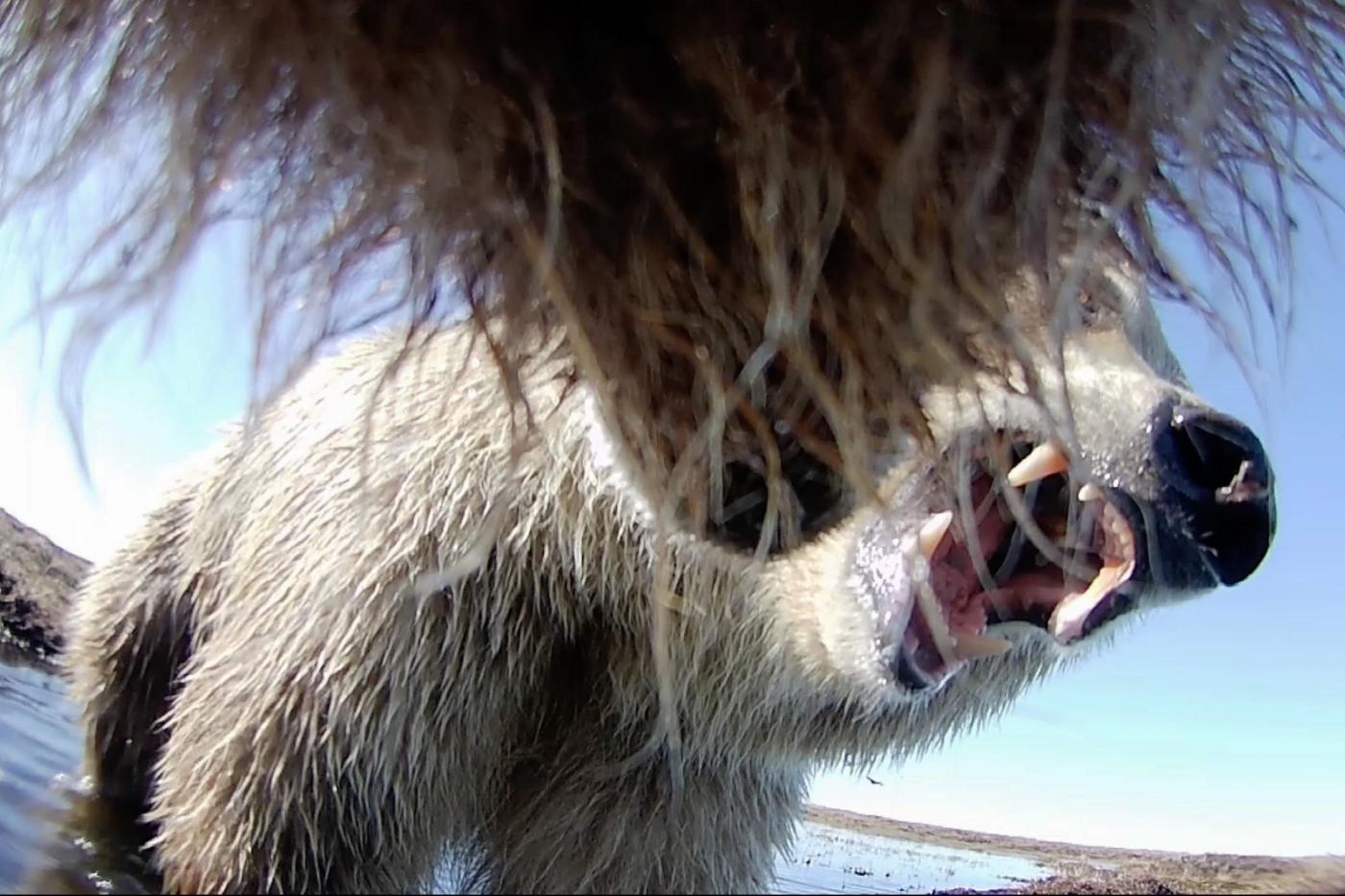
ANCHORAGE, Alaska (AP) — The life of one of the most remote grizzly bear populations in the world is being documented by the animals themselves, with collar cameras that provide a rare glimpse of how they survive on Alaska’s rugged and desolate North Slope.

Related Articles


NASA delays astronauts’ lunar trip until March after hydrogen leaks mar fueling test


NASA hit by fuel leaks during a practice countdown of the moon rocket that will fly with astronauts


NASA delays the first Artemis moonshot with astronauts because of extreme cold at the launch site


It’s one storm after another for much of the US, but the next one’s path is uncertain


Video shows flames flying from NASA plane that touched down without landing gear

Twelve of the 200 or so grizzlies that roam the frigid, treeless terrain near the Arctic Ocean have been outfitted with the cameras as part of a research project by Washington State University and the Alaska Department of Fish and Game.

The videos they record — many partially obscured by the undersides of whiskery muzzles — show the bears playing or fighting with companions, gnawing on a caribou, snarfing up berries, napping on a beach, and swimming in a pond looking for fish.

Packing on the pounds for winter

The bears hibernate about eight months of the year.

“They really have a really short window to obtain enough food resources to pack on enough fat to survive that period,” said Washington State doctoral student Ellery Vincent, who is leading the project with state wildlife biologist Jordan Pruszenski.

“We’re interested in looking at kind of a broad scale of how they’re obtaining the food that allows them to survive through the year and what exactly they’re choosing to eat,” Vincent said.

Among other things, the state is interested in learning to what extent the bears hunt musk oxen. There are about 300 of the shaggy ice-age survivors on the North Slope, according to Pruszenski, but the population is not flourishing.

Eating carcasses, caribou calves and berries

Videos from the first year of the project show that after emerging from hibernation, the bears eat the carcasses of caribou or musk ox that have died over the winter. Then they attack caribou calves. As soon as the tundra greens up, the bears shift their menu toward vegetation, especially blueberries and soapberries, also called buffaloberries.

They don’t fatten up the way salmon-eating bears do. Those bears can reach up to 1,000 pounds. These Arctic grizzlies are small in comparison, reaching up to 350 pounds, Vincent said.

To initially fit the bears with the collar cams, the researchers tracked them through the snow by helicopter last May. Pruszenski fired tranquilizer darts from the air, with Vincent keeping track of injection times and helping determine when the bear was safe to approach on the ground.

They placed the collars on the bears, keeping them loose enough that the bears could grow into them as they put on weight, but not so loose that they would fall off as the bears go about their rough-and-tumble lives.

“It is not difficult, but there is a lot of thought that goes into making sure the collar is adjusted properly,” Vincent said.

The researchers darted the bears again in August to replace the collars and in September to download data. The researchers also measured the bears’ weight gain and body fat.

When those collars came off, the state wildlife department replaced them with GPS collars.

That data could determine how oil-field development is impacting bears and help identify where they den during the winter, areas that oil companies must avoid when they build winter roads between drill sites.

Short clips, but deep insight into bear life

The cameras can record up to 17 hours of video. In the spring and summer, they took a short video clip — four to six seconds — every 10 minutes. In the fall, due to the encroaching darkness, they recorded clips every five minutes during daylight.

Despite their brevity, the clips provide a rare perspective of how the bears thrive on the desolate North Slope, an area that covers about 94,000 square miles but is home to only about 11,000 people. Nearly half of the residents live in Utqiagvik, the nation’s most northern community, formerly known as Barrow.

“One thing that’s really nice about these bears is that when they’re foraging on a particular food they tend to do that one thing for a long period of time, so these bears will spend pretty much their entire day eating, so the chances of us actually seeing what they’re doing are pretty high,” Vincent said.

The cameras also caught an encounter between a bear and pack of wolves.

It occurred after the bear had emerged from hibernation in May. He was not eating yet, so there was no adverse interaction with the wolves over food, she said. There were no wolves visible in the next clip, indicating it was a peaceful exchange.

“I think they both decided that it wasn’t worth it, so they just looked at each other, then moved on,” Vincent said.

The study will continue for another two years, with plans to add collars to 24 more bears.

Timberwolves trade Mike Conley to Chicago. Is there more to come?

posted in: All news | 0

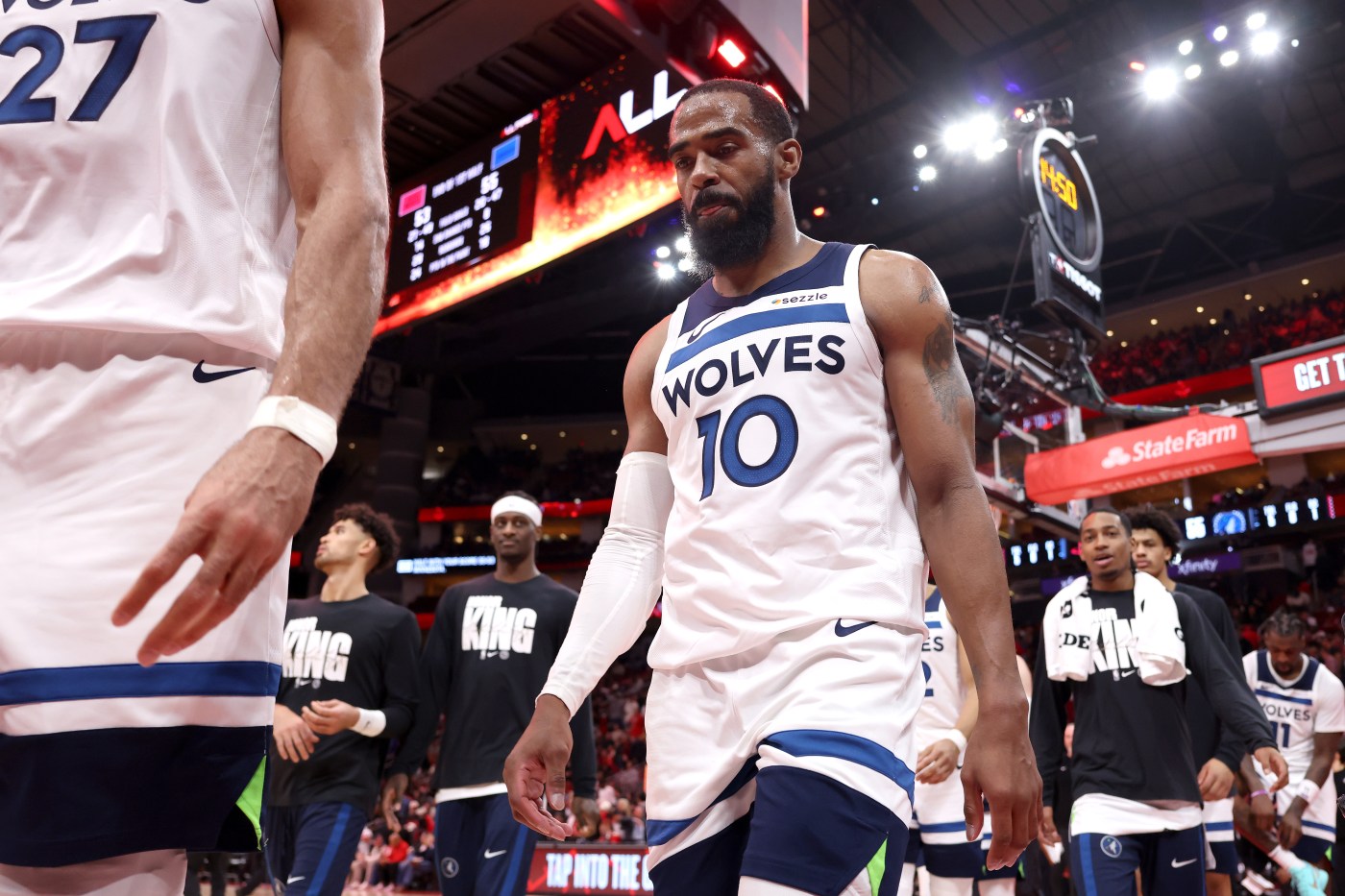
The Timberwolves made their first trade of the deadline season Tuesday afternoon, and have nothing to show for it.

Minnesota traded veteran guard Mike Conley to Chicago as part of a three-team deal in which the Wolves also give secondary pick swap rights for their 2026 first-round draft selection to Detroit. A source confirmed the move, which was first reported by ESPN.

In return, Minnesota gets nothing more than cash considerations.

The move will currently be billed as a flexibility producer that opens up a roster spot and moves the Timberwolves below the first apron of the salary cap. Those traits make Minnesota’s legitimate pursuit of acquiring Giannis Antetokounmpo a touch easier.

But should no such move come to fruition, Conley’s departure will serve as nothing more than a cost cutter. The Timberwolves are now less than $4 million away from getting underneath the luxury tax entirely, which would serve as a major financial boon for new majority owners Alex Rodriguez and Marc Lore.

ESPN’s Bobby Marks reported Minnesota’s luxury tax bill dropped from $24 million to $3.8 million with Tuesday’s move.

Conley was on the books for north of $10 million this season but his play had declined in his 38-year-old campaign. While the floor general was still careful with the ball on offense and a strong team defender, he didn’t score in either of Minnesota’s last two games in Memphis. And his 3-point shooting has fallen off a cliff in recent months.

Yet Conley still possessed value as an on-floor leader for Minnesota, a team sometimes deficient in the decision-making department.

It was Conley’s arrival amid the 2022-23 campaign that truly turned around the Rudy Gobert era in Minnesota, both in that season and, more notably, in the two years that followed. He fast-tracked the center’s assimilation into the Timberwolves’ scheme and locker room.

Conley is a major reason the Wolves reached consecutive Western Conference Finals.

ESPN’s Brian Windhorst reported Minnesota could have received Chicago guard Coby White in the trade and didn’t. White is the type of scoring threat Minnesota could desperately use off the bench, and would have filled in nicely as the Timberwolves’ No. 7 man in their rotation — a spot vacated by Conley.

A thin roster just got thinner, with more onus now falling on the likes of Jaylen Clark, Bones Hyland and potentially even second-year wing Terrence Shannon Jr. upon his return from injury. All three of those players have shown promise but struggled with consistency.

Conley may potentially be bought out by the Bulls, at which point he can sign with another contender of his choosing and chase the NBA title that has long eluded him.

As for Minnesota, sending Conley to Chicago without making a roster improvement will only make sense if the Timberwolves use the ensuing 48 hours to make the team better. Acquiring Antetokounmpo from Milwaukee would certainly fit that bill.

If no such move takes place, the motivations behind Tuesday’s maneuver will require further examination.

Related Articles


Timberwolves provide relief to lowly Grizzlies


A big star? A seventh man? Days dwindling for Timberwolves to improve roster


Anthony Edwards, Julius Randle lead Timberwolves to a 131-114 victory over the Grizzlies


Anthony Edwards suggests he’s ready to sacrifice scoring for defense, and Timberwolves wins


Timberwolves players wear ‘Stand with Minnesota’ warm-up shirts, release statement