Judge: Deal reached to protect identities of Epstein victims in documents release

posted in: All news | 0

By MICHAEL R. SISAK and LARRY NEUMEISTER

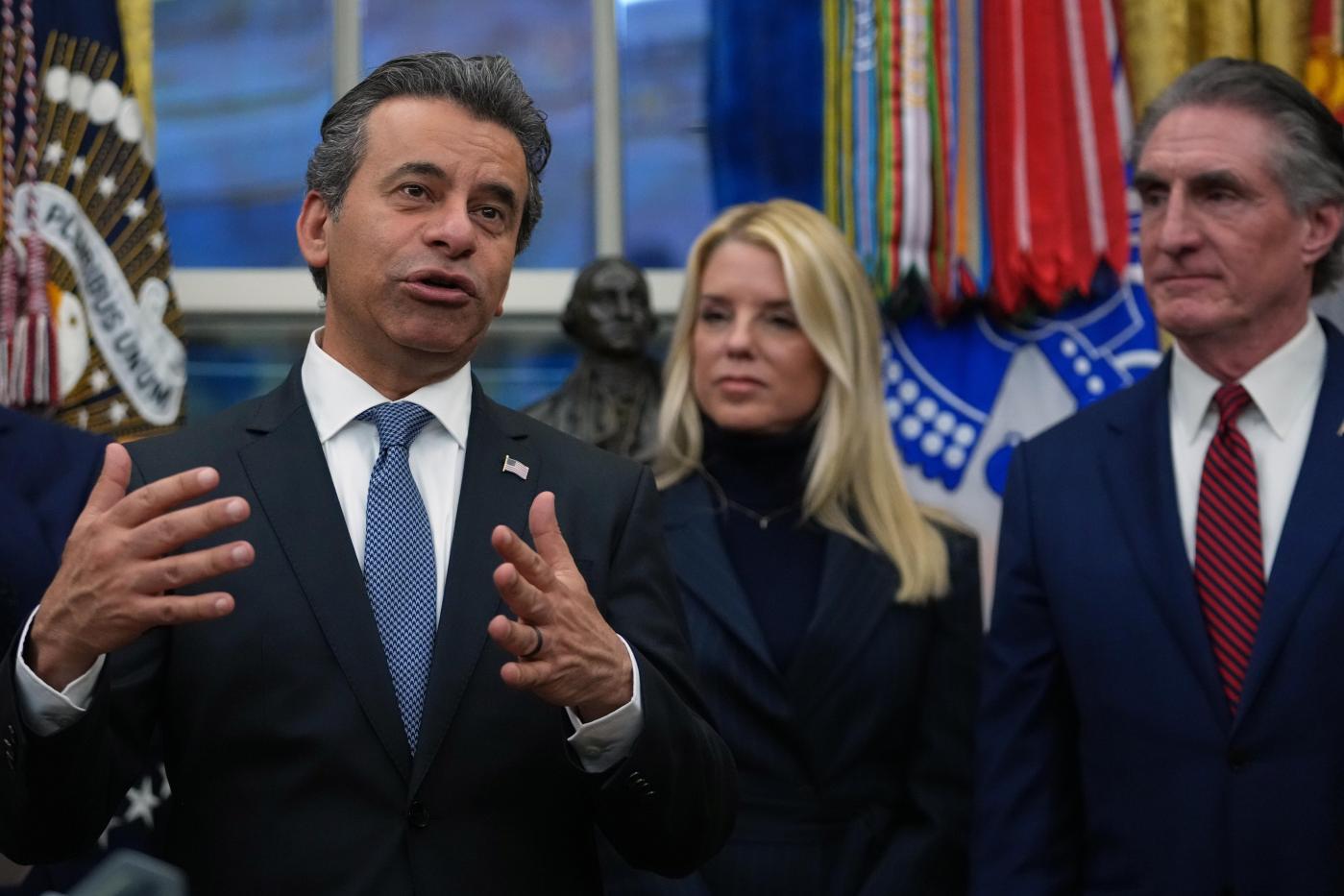
NEW YORK (AP) — A deal was reached between lawyers for victims of Jeffrey Epstein and the Justice Department to protect the identities of nearly 100 women whose lives were allegedly harmed after the government began releasing millions of documents last week, a lawyer told a federal judge on Tuesday.

Related Articles


Federal agents must limit tear gas for now at protests outside Portland ICE building, judge says


House lawmaker raises new concerns over FDA’s ultra-fast drug review program


Judge seems skeptical of legal justification for Pentagon’s punishment of Sen. Mark Kelly


Minnesota athletes head into the Winter Olympics with concerns about turmoil back home


Clintons finalize agreement to testify in House Epstein probe, bowing to threat of contempt vote

Judge Richard M. Berman in Manhattan cancelled a hearing scheduled for Wednesday after he was notified by Florida attorney Brittany Henderson that “extensive and constructive discussions” with the government had resulted in an agreement.

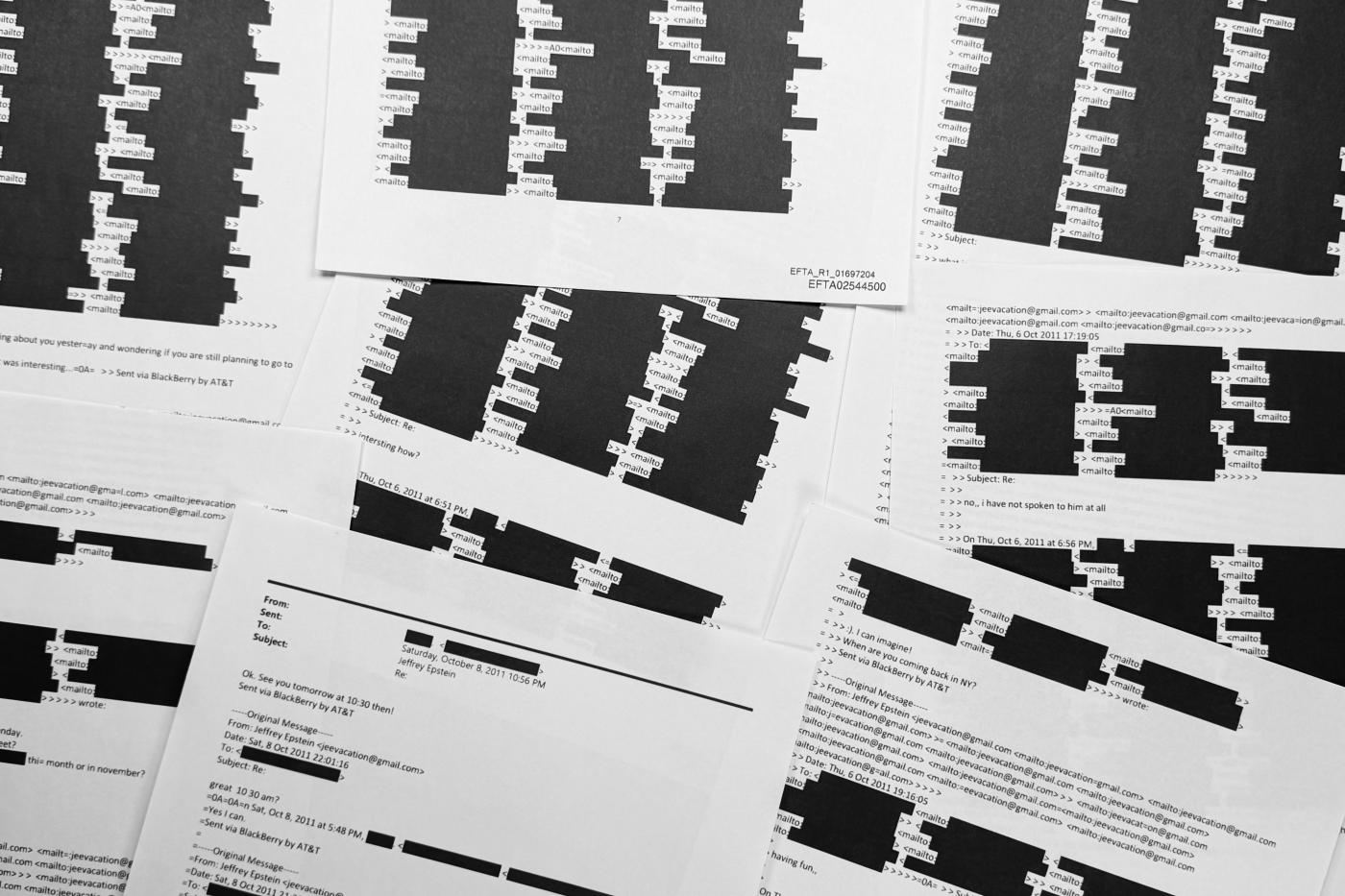
Henderson and attorney Brad Edwards had complained to Berman in a letter Sunday that “immediate judicial intervention” was needed after there were thousands of instances when the government had failed to redact names and other personally identifying information of women sexually abused by Epstein.

Among eight women whose comments were included in the lawyers’ Sunday letter, one said the records’ release was “life threatening” while another said she’d gotten death threats and she was forced to shut down her credit cards and banking accounts after their security was jeopardized.

The lawyers had requested that the Justice Department website be temporarily shut down and that an independent monitor be appointed to ensure no further errors occurred.

Henderson did not say what government lawyers said to ensure identities would be protected going forward or what the agreement consisted of.

“We trust that the deficiencies will be corrected expeditiously and in a manner that protects victims from further harm,” she wrote to the judge.

The Justice Department did not immediately respond to a request for comment.

The judge wrote in an order cancelling the Wednesday public hearing that he was “pleased but not surprised that the parties were able to resolve the privacy issues.”

On Monday, U.S. Attorney Jay Clayton in Manhattan wrote in a letter filed in Manhattan federal court that errors blamed on “technical or human error” occurred on redactions during the document release.

He said the Justice Department had improved its protocols to protect victims and had taken down nearly all materials identified by victims or their lawyers, along with many more that the government had found on its own.

Mistakes in the largest release of Epstein documents yet included nude photos showing the faces of potential victims as well as names, email addresses and other identifying information that was either unredacted or not fully obscured.

Most of the materials that were released stemmed from sex trafficking probes of Epstein and his former girlfriend, British socialite Ghislaine Maxwell, who is serving a 20-year prison sentence after she was convicted in December 2021 at a New York trial.

Epstein took his life in a federal jail in New York in August 2019 while awaiting trial on sex trafficking charges.

Former leader of St. Paul faith-based nonprofit sentenced to probation for possessing child pornography

posted in: All news | 0

A 67-year-old former executive director of a St. Paul faith-based nonprofit who had child sexual abuse material at his Roseville home has been spared prison time.

Drew Michael Brooks (Courtesy of the Ramsey County Sheriff’s Office)

At Faith Partners, Drew Michael Brooks provided “leadership, administration and training” to “people of faith to serve with an informed, compassionate response to the risk and prevalence of addiction,” according to a now-deleted webpage.

In May, Brooks was charged in Ramsey County District Court with 12 counts of possession of child pornography after investigators — following tips to the National Center for Missing and Exploited Children — executed a search warrant at his home in 2024 and found 36 printed images of child sexual abuse material and more on his computer.

Brooks told police he is “not necessarily” sexually attracted to children and “described an attraction/repulsion dynamic along with novelty (that) makes him seek the material out,” the criminal complaint read.

Brooks pleaded guilty to three of the dozen counts after reaching a plea deal with the prosecution, which agreed to a downward departure to five years of probation and no additional jail time beyond the day he had served after his arrest and before posting bond.

Judge Thomas Gilligan Jr. followed the plea deal and gave Brooks a five-year stayed prison sentence on Jan. 27, while citing his amenability to probation and sex offender treatment, and his remorse.

Related Articles


St. Paul man gets 7-year prison term for daytime carjacking and armed robbery


Hennepin County Attorney’s Office demands evidence in Renee Good investigation


Resignations in U.S. Attorney’s Office could slow MN fraud cases


Judge says she won’t halt the immigration enforcement surge in Minnesota as a lawsuit proceeds


Journalists Georgia Fort, Don Lemon among 4 more arrested in St. Paul church protest

Federal agents must limit tear gas for now at protests outside Portland ICE building, judge says

posted in: All news | 0

By CLAIRE RUSH

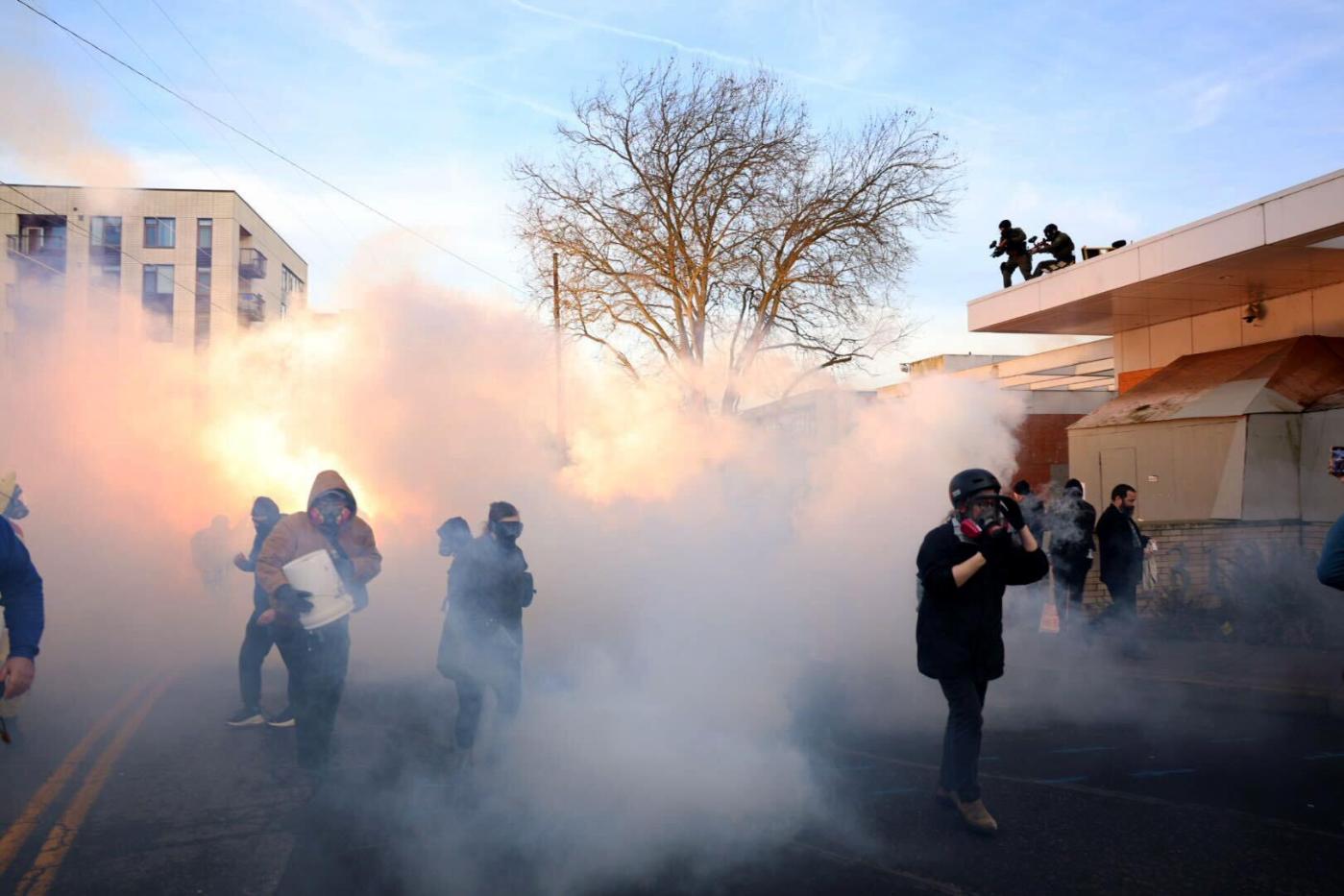
PORTLAND, Ore. (AP) — Federal officers are temporarily restricted from using tear gas at protests outside a Portland immigration building, a judge in Oregon ruled Tuesday, just days after agents fired gas into a crowd of demonstrators that local officials described as peaceful and which included young children.

Related Articles


House lawmaker raises new concerns over FDA’s ultra-fast drug review program


Judge seems skeptical of legal justification for Pentagon’s punishment of Sen. Mark Kelly


Minnesota athletes head into the Winter Olympics with concerns about turmoil back home


Clintons finalize agreement to testify in House Epstein probe, bowing to threat of contempt vote


US-based Haitians are buoyed but wary after a judge stops Trump from ending their protections

U.S. District Judge Michael Simon ordered federal officers to not use chemical or projectile munitions unless the person targeted poses an imminent threat of physical harm. Simon also limited federal officers from firing munitions at the head, neck or torso “unless the officer is legally justified in using deadly force against that person.”

The temporary restraining order will be in effect for 14 days.

The ruling came in response to a lawsuit filed by the ACLU of Oregon on behalf of protesters and freelance journalists covering demonstrations at the flashpoint U.S. Immigration and Customs Enforcement building.

The suit names as defendants the Department of Homeland Security and its head Kristi Noem, as well as President Donald Trump. It argues that federal officers’ use of chemical munitions and excessive force is a retaliation against protesters that chills their First Amendment rights.

The Department of Homeland Security did not immediately respond to a request for comment.

Courts elsewhere have also considered the issue of federal agents’ use of chemical munitions against protesters, as cities across the country have seen demonstrations against the Trump administration’s surge in immigration enforcement.

Last month, a federal appeals court suspended a decision that prohibited federal officers from using tear gas or pepper spray against peaceful protesters in Minnesota who aren’t obstructing law enforcement. An appeals court also halted a ruling from a federal judge in Chicago that restricted federal agents from using certain riot control weapons, such as tear gas and pepper balls, unless necessary to prevent an immediate threat. A similar lawsuit brought by the state is now before the same judge.

The Oregon complaint describes instances in which the plaintiffs — including a protester known for wearing a chicken costume, a married couple in their 80s and two freelance journalists — had chemical or “less-lethal” munitions used against them.

In October, 83-year-old Vietnam War veteran Richard Eckman and his 84-year-old wife Laurie Eckman joined a rally that peacefully marched to the ICE building. Once there, federal officers launched chemical munitions at the crowd, hitting Laurie Eckman in the head with a pepper ball and causing her to bleed, according to the complaint. With bloody clothes and hair, she sought treatment at a hospital, which gave her instructions for caring for a concussion. A munition also hit her husband’s walker, the complaint says.

Jack Dickinson, who frequently attends protests at the ICE building in a chicken suit, has had munitions aimed at him while posing no threat, according to the complaint. Federal officers have shot munitions at his face respirator and at his back, and launched a tear-gas canister that sparked next to his leg and burned a hole in his costume, the complaint says.

Freelance journalists Hugo Rios and Mason Lake have similarly been hit with pepper balls and tear gassed while marked as press, according to the complaint.

“Defendants must be enjoined from gassing, shooting, hitting and arresting peaceful Portlanders and journalists willing to document federal abuses as if they are enemy combatants,” the complaint says. “Defendants’ actions have caused and continue to cause Plaintiffs irreparable harm, including physical injury, fear of arrest, and a chilling of their willingness to exercise rights of speech, press, and assembly.”

Local officials have also spoken out against the use of chemical munitions. Portland Mayor Keith Wilson demanded ICE leave the city after federal officers used such munitions Saturday at what he described as a “peaceful daytime protest where the vast majority of those present violated no laws, made no threat, and posed no danger to federal forces.”

“To those who continue to work for ICE: Resign. To those who control this facility: Leave,” Wilson wrote in a statement Saturday night. “To those who continue to make these sickening decisions, go home, look in a mirror, and ask yourselves why you have gassed children.”

The protest was one of many similar demonstrations nationwide against the Trump administration’s immigration crackdown in cities like Minneapolis, where in recent weeks federal agents killed two residents, Alex Pretti and Renee Good.

Associated Press writers Steve Karnowski in Minneapolis and Sophia Tareen in Chicago contributed.

House lawmaker raises new concerns over FDA’s ultra-fast drug review program

posted in: All news | 0

By MATTHEW PERRONE

WASHINGTON (AP) — A Democratic lawmaker raised new concerns about a Food and Drug Administration program designed to drastically shorten the review of certain drugs, including whether senior officials involved in the effort are complying with federal ethics rules.

Related Articles


Federal agents must limit tear gas for now at protests outside Portland ICE building, judge says


Judge seems skeptical of legal justification for Pentagon’s punishment of Sen. Mark Kelly


Minnesota athletes head into the Winter Olympics with concerns about turmoil back home


Clintons finalize agreement to testify in House Epstein probe, bowing to threat of contempt vote


US-based Haitians are buoyed but wary after a judge stops Trump from ending their protections

In a letter sent Tuesday, Rep. Jake Auchincloss of Massachusetts took issue with the lack of transparency in FDA’s handling of the program and questioned its legal underpinnings, noting that Congress did not sign off on the plan.

Under the Commissioner’s National Priority Voucher program, drugmakers are promised expedited reviews of one to two months for new medicines that support “ national interests.” It’s at the center of FDA Commissioner Marty Makary’s stated goal of “cutting red tape” at the agency.

But Auchincloss says details about the program have been “shrouded in secrecy,” in part because the FDA has not responded to multiple congressional inquiries.

“The public must have transparency about the ‘voucher’ program, under which drug approvals have been made almost wholly and in an unprecedented manner by the FDA’s political leadership,” states Auchincloss, who is a member of a House subcommittee on health.

The new scrutiny came on the same day that the FDA held an employee town hall on the program, according to three agency staffers who spoke to The Associated Press on condition of anonymity to discuss confidential agency matters. Much of the debate surrounding the program involves concerns that drug decision-making is being taken away from agency scientists.

But FDA leaders used Tuesday’s event to stress that final approval decisions continue to be made by drug center staffers, not political appointees.

“The approval decision remains with the relevant product center, using the center’s normal processes,” stated a slide presented at the meeting and shared with the AP.

In his letter, Auchincloss asserts that the FDA has failed to publish or release financial disclosure forms for eight senior FDA officials who vote on which drugs should receive priority vouchers. Membership of group, which was first reported by Stat News, is mostly comprised of officials closely aligned with Health Secretary Robert F. Kennedy Jr., including Deputy FDA Commissioner Dr. Sara Brenner, Dr. Vinay Prasad, who oversees vaccines, and Dr. Tracy Beth Hoeg, FDA’s drug center director.

The forms, which are collected annually by the Office of Government Ethics, list investments, outside income and other financial details for senior government officials and their spouses. Such disclosures are considered critical to avoiding potential conflicts of interest at the FDA, where staffers are often involved in regulating multibillion-dollar, publicly traded companies.

A Department of Health and Human Services spokesperson didn’t immediately respond to AP’s questions about the letter.

Elsewhere in his letter, Auchincloss questions whether the FDA had the legal authority to establish the voucher program without action from Congress, which typically legislates such programs into law. His letter states that the FDA’s legal office “was not consulted nor provided findings to support the agency’s claim,” that it could independently establish the program.

Several senior FDA staffers have declined to sign off on drug approvals going through the program due to legal concerns, as previously reported by the AP.

Auchincloss also notes that FDA officials did not respond to two letters he sent last year requesting information. In the new letter, the lawmaker instructs the agency to “affirm or refute,” his findings.

In November, Sen. Bernie Sanders of Vermont and Rep. Frank Pallone of New Jersey sent a letter seeking answers to 15 questions about the FDA’s voucher program. Pallone is the top Democrat on the House Energy and Commerce Committee, which oversees health agencies.

The agency did not respond to the letter, according to a committee staffer.

The Associated Press Health and Science Department receives support from the Howard Hughes Medical Institute’s Department of Science Education and the Robert Wood Johnson Foundation. The AP is solely responsible for all content.