
Michael McGuire, ‘the most influential architect in the St. Croix Valley,’ dies at 95

posted in: News | 0

Architect Michael McGuire, known as an apostle of Frank Lloyd Wright, believed that buildings should be designed to fit their sites, whether steep slopes or prairie or downtown city blocks.

Among his notable projects in and around Stillwater: the Dock Café, a former car wash that McGuire transformed into a restaurant with views of the St. Croix River; the Brick Alley building, a former Northern States Power substation that McGuire converted into a space for shops, artists and craftspeople; and the Commander Grain Elevator, a 1898 building that McGuire saved from demolition and recast as his office and studio and a retail space that featured an indoor rock-climbing wall.

McGuire died Aug. 4 after a brief illness at his home, which he designed in 1962 overlooking the St. Croix River in the Town of St. Joseph, Wis. He was 95.

Architect Rosemary McMonigal, a longtime colleague, called McGuire “the most influential architect in the St. Croix Valley.”

Architect Mike McGuire died Aug. 4, 2024, after a brief illness at his home, which he designed in 1962, overlooking the St. Croix River in the Town of St. Joseph, Wis. He was 95. (Courtesy of Sally McGuire-Huth)

The Eastbank townhouses in North Hudson, Wis., McMonigal’s favorite McGuire project, were built in the mid-1980s. “The open living plans were forward-thinking for the time period, with natural light throughout,” McMonigal said. “The vaulted ceilings give some volume, and the low slope keeps it comfortable. Light and views were special to Mike, and his buildings are a joy to be in, with windows wrapping corners and decks that connect inside and outside. All of his projects had phenomenal attention to detail.”

McGuire also designed the Desch Office Building in downtown Stillwater, the Wild River State Park Visitor Center in Center City, and the St. Croix River Watershed Research Station in May Township.

But McGuire’s highest talent was residential design, said Kelly Davis, a retired architect who worked with McGuire for two decades at McGuire/Engler/Davis Architects in Stillwater.

“They were the perfect reflection of the man – of Mike and his beliefs, his outlook on the world,” Davis said. “No matter if the houses were grand or modest, they were humble. They avoided ostentation. They were honest. They had integrity of natural materials, and they were highly respectful of land. Mike always felt that his best buildings were the ones that could barely be glimpsed through the vegetation. He felt that architecture should be subservient to the natural landscape, rather than dominant.”

Prairie School design

McGuire specialized in Prairie School design, the architectural style pioneered by Wright, and designed many private residences in Minnesota, Wisconsin, New Mexico, California and Hawaii. He knew how to employ “architecture to blur the line between man and nature,” according to a profile on McGuire published in Mother Earth Living: “He’s a master at expressing Wright’s concept of ‘continuous space,’ an idea that espouses that the inside and outside of a home are coherent, seamless, one.”

McGuire was often involved in projects at the earliest stage, even going so far as to help clients decide on a piece of land, said John McGuire, his son. “His idea was not to design a house and put it on a piece of land,” he said. “His idea was to design the house to the piece of land.”

McGuire, an accomplished painter, “approached architecture as an artist,” said daughter Sally McGuire-Huth. “He had this uncompromising ideal about how important beauty is – that it’s as important as almost anything else. To do anything less than what is beautiful is just really unacceptable. In Stillwater, he fought for years to do what he thought was beautiful work.”

McGuire almost single-handedly spurred Stillwater’s push for historic preservation, said Brent Peterson, executive director of the Washington County Historical Society, who called the Commander Grain Elevator “one of the great symbols of architectural reuse in the city.”

“He changed the thinking around historic buildings – from demolition to reuse,” Peterson said. “His work in that area marked the turnaround in Stillwater to thinking more about preservation of the historic character of our community.”

Studied art in Chicago, architecture in Minneapolis

McGuire grew up in Mankato and St. Cloud and studied art at the University of Chicago. “The story goes that he was studying art there, and one day one of his professors pulled him aside and said, ‘Mike, I think you should look for a profession you can make a living at,’” John McGuire said.

Related Articles

Local News |


Obituary: Karen Hubbard, longtime St. Croix River Valley matriarch, dies

Local News |


As VP candidate, Gov. Tim Walz is getting national attention. So is Minnesota.

Local News |


Why is Alix Kendall leaving Fox 9? She wants to be a screenwriter.

Local News |


Independent bookstore is newest addition to Union Depot in downtown St. Paul

Local News |


Washington County to present design concepts for Scandia City Center

McGuire returned to Minnesota to study architecture at the University of Minnesota School of Architecture, graduating in 1954. He served in the U.S. Army in Germany, and then moved to New York City, “where he threw himself into the vibrant 1950s art and music scenes – cementing his lifelong love of folk, blues, and jazz,” according to his obituary.

In New York, he reconnected with Juliann Halvorson, whom he had met while studying at the University of Minnesota. The couple married in 1957 in Tuxedo, N.Y., and then moved back to Minnesota; they divorced in 2001. They had three children.

McGuire was working for an architecture firm in St. Paul when he got a commission in 1959 to design a house for Sue Warren, who worked in the same office, McGuire-Huth said. That house, an A-frame structure in Houlton, Wis., overlooking the St. Croix River, “got a lot of attention,” she said. “It was featured in House Beautiful. That kind of put him on the map.”

McGuire started looking for a nearby property where he could design and build a house for his growing family. “He bought the property just down the street and then started designing the house he moved us into in 1962,” McGuire-Huth said.

Started his own firm

McGuire, who helped design many of the Pemtom townhouse developments around the metro area and several houses in the University Grove neighborhood in Falcon Heights, started his own architectural firm in Stillwater, which later became McGuire/Engler/Davis Architects. It was initially located in the old Joseph Wolf Brewery building on Main Street, now the Lora Hotel, and later moved across the street to the Brick Alley Building.

The Brick Alley building in downtown Stillwater on July 25, 2020. (Nancy Ngo / Pioneer Press)

Davis said he decided he wanted to work for McGuire when he was a student at Stillwater High School and took a tour of the Warren House.

“It was radically different from any other house I had experienced,” Davis said. “It was built of stone and redwood and glass, and it had a glass skylight that ran from one side of the roof to the other. I walked into this very comforting, very nurturing living space, and it literally took my breath away. This was the first house that showed me what the power of architecture could be. It made me feel like I was being held in the palm of somebody’s hand.”

McGuire never sought the limelight or bragged about his projects, Davis said. “You had to pry information from him about his own work,” he said. “He was a very humble man.”

Davis once asked McGuire what he thought his best building was, and McGuire “didn’t hesitate to answer,” he said. “He said, ‘It’s my own house.’ I think as an architect that is often true because you are the architect, but at the same time you are the client. You are providing a shelter for your family, a home that should embody your ideals. It should affect the way you feel when you get up in the morning and go to bed at night. It should be nurturing and comforting, and, in my mind, Mike’s house is a supreme example of that.”

Experimented with design

McGuire wasn’t afraid to experiment with design, John McGuire said. His father designed the Clark-Nelson House in River Falls, Wis., nicknamed the “Hobbit House,” a bermed, earth-sheltered house, and the Noel Bennett House in Jemez Springs, N.M., which was made out of straw bales.

The Bennett House was featured on the cover of “Living Homes: Sustainable Architecture and Design,” a book written by Suzi Moore McGregor and Nora Burba Trulsson and published in 2001.

The book details how Bennett and her late husband decided to hire McGuire. “It wasn’t long before they realized that architect Michael McGuire would be the best choice for creating the sustainable, energy-efficient, minimum-impact home they desired,” the authors write. “Of all the architects they had met during the research, McGuire was most well-versed in building in wild places. During the course of his career, he had built State Park buildings, an environmental research center, and buildings for a wilderness camp, and had experimented with passive and active solar systems and new materials since the 1960s.”

Related Articles

Local News |


Obituary: Karen Hubbard, longtime St. Croix River Valley matriarch, dies

Local News |


Washington County: 2,600 votes not uploaded to the Secretary of State’s results website

Local News |


Police were justified in shooting man during Woodbury Target standoff, prosecutor finds

Local News |


Amazon to build second warehouse in Woodbury

Local News |


Candidate lineups set for Washington County municipal races

McGuire’s plan for the house followed “hemicycle designs” favored by Wright, “an early proponent of solar architectural strategies, and one of McGuire’s major influences,” according to the book. “Particularly in the winter, the sun warms the concrete floors in the master bedroom first, then moves through the gallery until it reaches the living quarters towards the end of the day.”

The last house McGuire designed was in Inverness, Calif., near Point Reyes National Seashore, and completed in the mid-2000s, when he was around 80, McGuire-Huth said. But McGuire continued working as an architect until he was 93, finishing a second apartment in the Commander Grain Elevator in 2022, she said.

McGuire is survived by his children, Sally McGuire-Huth, John McGuire and Kate McGuire, and four grandchildren.

A celebration of McGuire’s life will be held from 1 to 5 p.m. Aug. 25 at Bradshaw Funeral Home in Stillwater.
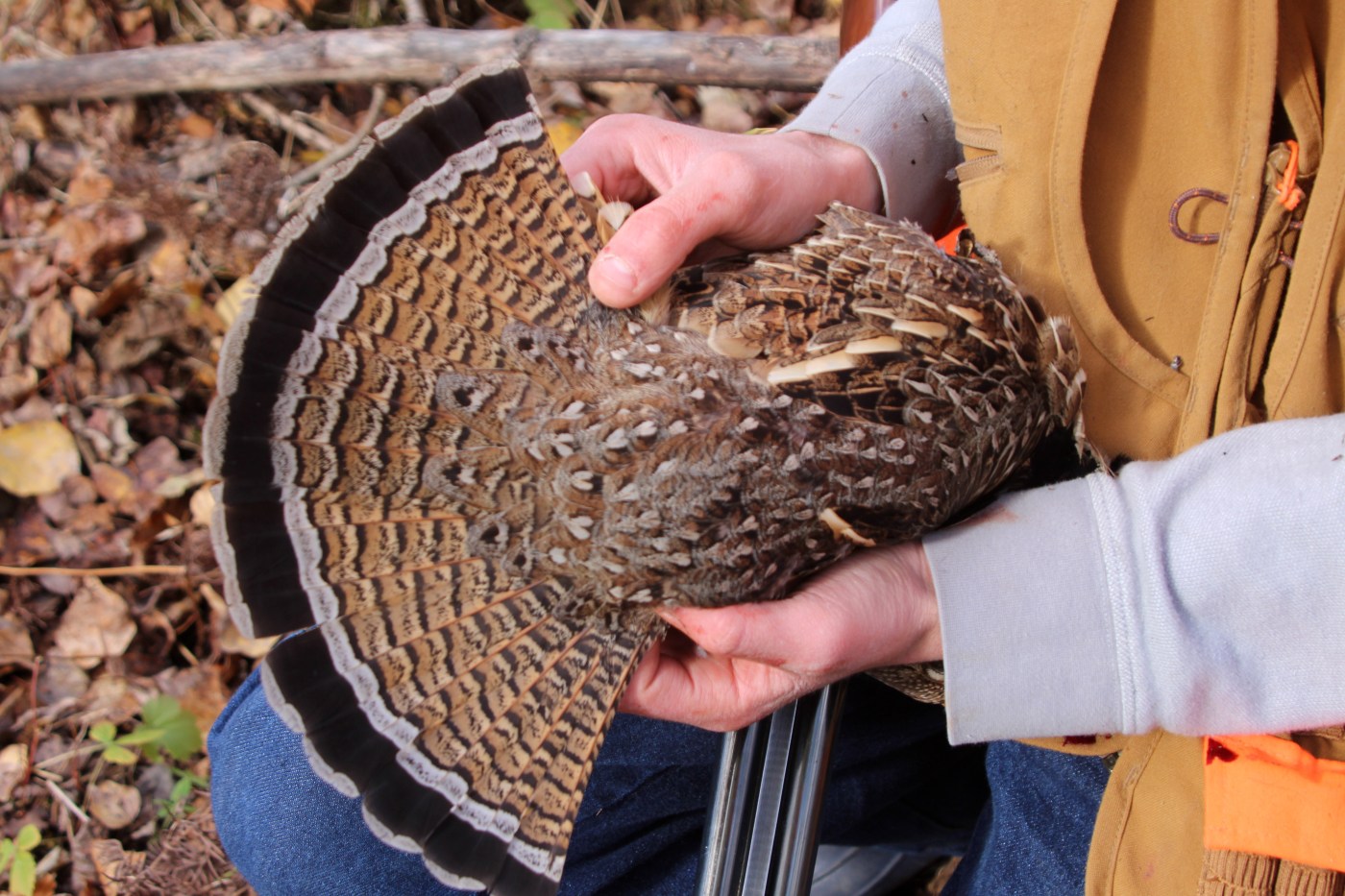

Upland bird hunters: The Minnesota DNR wants a diary of your hunts

posted in: Society | 0

BRAINERD — Minnesota upland bird hunters, the Minnesota Department of Natural Resources wants you to keep a diary this autumn of each of your hunts, keeping track of when and where you hunt, how many birds you see along the way and how many birds you bag.

And then they want you to hand over all that information to them online.

Don’t worry, no one is going to reveal or steal your favorite pheasant field or grouse woods. Instead, DNR wildlife biologists want to use the data collected from thousands of hunters to find out more about upland birds.

For many species, a single survey once a season — or in some cases, no survey at all — is the only thing wildlife managers have in hand to track the size and trend of bird populations.

Bailey Petersen and her Llewellin setter, Hatchet, with a grouse the dog pointed, flushed and retrieved in the woods northwest of Two Harbors, Minn. Petersen is part of a team of DNR wildlife biologists who have instigated an online hunter diary for upland bird hunters, hoping to gain new insights on bird populations and trends. (John Myers / Forum News Service)

“The new hunter diaries will allow upland hunters in Minnesota to provide more details into their experiences in the field, including sightings/flushes, hunt logistics as well as number of birds in the bag during the season,” Bailey Petersen, an avid upland hunter and DNR wildlife biologist in Two Harbors who helped organize the effort, told the News Tribune.

“We are hopeful this opportunity could help to better inform how upland game birds are doing beyond just our annual index surveys, as well as learn more about public perception of game bird pursuits. And it’s also just going to be fun for folks to participate in, I think.”

The DNR is asking for hunters to submit the location of where they parked their vehicle to begin their hunt, either distance and direction of the nearest town or exact GPS coordinates, said Nathaniel Huck, DNR Brainerd-based bird biologist who headed the effort.

“We aren’t going to give away anyone’s favorite spot. We can keep that private. But for this to be meaningful in any real way, we have to have a pretty precise location,” Huck said. “And we need as many hunters to participate as we can get.”

The DNR also wants to know if you were on public or private land, walking on a designated hunter walking trail, whether you had a dog along, how many hours you hunted each trip, what species you were after, how many total flushes you had (no matter why they flushed) and how many birds you bagged.

If you’re able, the DNR also wants hunters to age the birds they shoot, usually distinguishable by feathers on grouse or by the size of the spurs on a rooster pheasant, and also to determine the sex of the grouse (also using feather markings.)

Ruffed grouse are surveyed each spring by counting how often the males are heard drumming along predetermined routes in the woods. This gives a general indication of their abundance in April and May. However, the DNR has found little correlation between drumming counts and how successful hunters are months later during the hunting season.

“We really need more data on upland birds, and hunters are a great way for us to get it,” Huck said.

Related Articles

Outdoors |


Grouse drumming up again, but downpours in June likely hurt young chicks

Outdoors |


To save spotted owls, US officials plan to kill hundreds of thousands of another owl species

Outdoors |


Longtime Minnesota DNR Fish and Wildlife director to retire; new director named

Outdoors |


Minnesota, Wisconsin fall hunting seasons set — time to plan ahead

Outdoors |


Here’s what outdoors bills passed in Minnesota this session

For example, it’s believed heavy spring rains this year may have cut into grouse and pheasant chick production. But wildlife managers have no way to confirm that until hunters step into the field.

“One of the big things we’d like to nail down is the timing of woodcock migration. We know it varies, but we don’t have good data on when it happens each year,” Huck said. “Hunters can nail that down for us pretty well.”

This is the first effort by the Minnesota DNR to capture detailed information from upland bird hunters, but Huck noted Pennsylvania and New York have used similar surveys for years.

Minnesota has about 75,000 pheasant hunters and about 60,000 grouse hunters — there is likely considerable overlap among them — down to half of those numbers at their peak a half-century ago.

The DNR is asking participants to go online after each hunt — pheasant, woodcock, ruffed grouse, sharp-tailed grouse and other upland birds — while the information is still fresh in their memory and submit a diary for that day’s efforts. If that’s not possible, you can also download a diary form and fill it out manually, then submit the data online at the end of the season. There is no provision for hunters to mail in paper diaries.

You can submit upland hunter diary reports on the 123 Survey app, which is free, or do it online. The upland hunter diary is available to the public at rb.gy/s7slxr.

Related Articles

Outdoors |


Zebra mussels found in Lake Byllesby, Minnesota DNR says

Outdoors |


Skywatch: Perseid meteor pleasure

Outdoors |


Minneapolis family opens new fully accessible resort near Ely

Outdoors |


Fort Snelling State Park reopens after June closing for floodwaters

Outdoors |


Skywatch: Cat’s eyes of the summer skies

Today in History: August 17, Clinton admits to Lewinsky affair

posted in: Politics | 0

Today is Saturday, Aug. 17, the 230th day of 2024. There are 136 days left in the year.

Today in history:

On August 17, 1998, President Bill Clinton gave grand jury testimony via closed-circuit television from the White House concerning his relationship with Monica Lewinsky; he then delivered a TV address in which he admitted his relationship with Lewinsky was “wrong” but denied previously committing perjury (Clinton was subsequently impeached by the House of Representatives, but acquitted in the Senate).

Also on this date:

In 1807, Robert Fulton’s North River Steamboat made its first voyage, heading up the Hudson River on a successful round trip between New York City and Albany.

Related Articles


Today in History: August 16, American music loses two legends


Today in History: August 15, Woodstock music festival begins


Today in History: August 14, FDR signs Social Security Act


Today in History: August 13, East Germany closes Berlin border


Today in History: August 12, Charlottesville car attack

In 1863, federal batteries and ships began bombarding Fort Sumter in Charleston harbor during the Civil War, but the Confederates managed to hold on despite several days of shelling.

In 1915, a mob in Cobb County, Georgia, lynched Jewish businessman Leo Frank, 31, whose death sentence for the murder of 13-year-old Mary Phagan had been commuted to life imprisonment. (Frank, who’d maintained his innocence, was pardoned by the state of Georgia in 1986.)

In 1945, Sukarno and Mohammad Hatta proclaimed independence for Indonesia, setting off the Indonesian National Revolution against Dutch rule.

In 1945, the George Orwell novel “Animal Farm,” an allegorical satire of Soviet Communism, was first published in London by Martin Secker & Warburg.

In 1959, trumpeter Miles Davis released “Kind of Blue,” regarded as one of the most influential jazz albums of all time.

In 1978, the first successful trans-Atlantic balloon flight ended as Maxie Anderson, Ben Abruzzo and Larry Newman landed their Double Eagle II outside Paris.

In 1988, Pakistani President Mohammad Zia ul-Haq and U.S. Ambassador Arnold Raphel (RAY’-fehl) were killed in a mysterious plane crash.

In 1999, more than 17,000 people were killed when a magnitude 7.4 earthquake struck the Kocaeli Province of Turkey.

Today’s Birthdays:

Computer scientist Margaret Hamilton is 88.
Actor Robert DeNiro is 81.
Businessman Larry Ellison is 80.
Film director Martha Coolidge is 78.
Filmmaker/author Julian Fellowes is 75.
Tennis Hall of Famer Guillermo Vilas is 72.
Singer Belinda Carlisle is 66.
Author Jonathan Franzen is 65.
Actor Sean Penn is 64.
Singer/actor Donnie Wahlberg is 55.
College Basketball Hall of Famer and retired NBA All-Star Christian Laettner is 55.
Rapper Posdnuos (PAHS’-deh-noos) (De La Soul) is 55.
Tennis Hall of Famer Jim Courier is 54.
Soccer great Thierry Henry is 47.
Rock climber Alex Honnold is 39.
Actor Austin Butler is 33.
Singer-songwriter Phoebe Bridgers is 30.

Concert review: Metallica tight and intense on first of two nights at U.S. Bank Stadium

posted in: Politics | 0

More than four decades into their career, Rock and Roll Hall of Famers Metallica are invested in making their concerts more than just another rock show.

That was certainly the case Friday night, when the foursome tore through the first of two nights at U.S. Bank Stadium in front of a near-capacity crowd. The band played on a massive racetrack-style stage, complete with a pit in the center for the most devoted (and deep-pocketed) fans and eight looming towers that held both speakers and video screens. (In a recent Pioneer Press interview, bassist Robert Trujillo said it took physical training to perform on the stage and after seeing it in person, well, he clearly wasn’t kidding.)

On their current tour, which hits just 22 cities around the world over the course of 18 months, Metallica are offering completely different set lists each night, with the idea fans would attend both shows. Friday, they touched on various parts of their long career, with a focus on their most recent album, last year’s “72 Seasons.”

Metallica was the first rock band to play the then-new Vikings stadium in 2016 and cranked up the volume so high, civilians from up to a mile away reported hearing it inside their homes. They returned to Minneapolis two years later for a more traditional show at Target Center.

Friday, they managed to capture both the nervous energy of their USBS debut (which was only one of a handful of shows they played that year) and the more polished professionalism of the 2018 follow-up. Lead singer James Hetfield was already red-faced and sweating two songs in and, later, only semi-jokingly said he was “grumpy.”

But if there were any real tensions among the famously fractious bunch, they weren’t obvious Friday night. They sounded terrific from the show-opening “Creeping Death” and beyond, and hit a particularly heavy groove during the likes of “King Nothing” and the Grammy-winning title track of their latest record. (Hetfield’s voice tended to get swallowed up by the noise early on, but the sound crew had figured out a better balance a few numbers in.)

The band’s age — the members are between 59 and 61 years old — did hang over the proceedings, with Trujillo calling the band “senior citizens” while introducing an instrumental jam with guitarist Kirk Hammett and Hetfield noting the “100 years” the guys have been together.

To be clear, they have slowed down a bit, and the show had several built-in breaks with ominous instrumentals booming as drummer Lars Ulrich’s drum kit disappeared into the stage, with another appearing farther down the way. That allowed him to play in front of each part of the crowd that surrounded the in-the-round stage, but it also gave the rest of the guys the chance to catch their breath.

But, really, the only real issue was that with two nights, that meant fans heard big ones like “Seek and Destroy,” “Nothing Else Matters” and “Sad but True,” but not “Enter Sandman,” “One” and “The Unforgiven” unless they show up Sunday night.

Related Articles

Music and Concerts |


Not-so-Forbidden Festival gets the go-ahead for music outside St. Paul’s Allianz Field

Music and Concerts |


Musicians to perform up in trees in Belwin Conservancy concerts

Music and Concerts |


Minnesota Yacht Club Festival will return in 2025 with an added third day of music

Music and Concerts |


Bassist Robert Trujillo talks about life as the newest member of Metallica

Music and Concerts |


Green Day, Def Leppard and Journey to play Target Field the days between and after Metallica