Blinken visits Gaza mediators in pursuit of cease-fire deal as Hamas, Israel signal challenges

posted in: News | 0

By JULIA FRANKEL and MATTHEW LEE Associated Press

JERUSALEM (AP) — U.S. Secretary of State Antony Blinken was visiting fellow mediators Egypt and Qatar as he pressed ahead Tuesday with the latest diplomatic mission to secure a cease-fire in Gaza, even as Hamas and Israel signaled that challenges remain.

Hamas in a new statement called the latest proposal presented to it a “reversal” of what it agreed to previously, and accused the U.S. of acquiescing to what it called “new conditions” from Israel. There was no immediate U.S. response. Hamas has been designated as a terrorist organization by the United States, Canada and the European Union.

Israeli Prime Minister Benjamin Netanyahu, meanwhile, told families of fallen soldiers and hostages in Gaza that a key goal is to “preserve our strategic security assets in the face of great pressures from home and abroad.” The right-wing groups of families, who oppose a cease-fire deal, said Netanyahu told them Israel will not abandon two strategic corridors in Gaza whose control by Israel has been an obstacle in talks. Netanyahu’s office did not comment on their account.

The meeting came as Israel’s military said it recovered the bodies of six hostages taken in Hamas’ Oct. 7 attack that started the war, bringing fresh grief for many Israelis who have long pressed Netanyahu to agree to a cease-fire that would bring remaining hostages home.

Blinken’s meetings in Egypt and upcoming ones in Qatar come a day after he met Netanyahu and said the prime minister had accepted a U.S. proposal to bridge gaps separating Israel and Hamas. Blinken called on Hamas to do the same. But there still appear to be wide gaps between the two sides.

Pressure to seal a cease-fire deal has been especially urgent after the recent targeted killings of leaders of Hamas and Hezbollah in Iran and Lebanon, both blamed on Israel, and vows of retaliation that have sparked fears of a wider regional war.

Israel’s military said its forces recovered the six bodies in an overnight operation in southern Gaza, without saying when or how they died. Hamas says some captives have been killed and wounded in Israeli airstrikes, though returning hostages have talked about difficult conditions including lack of food or medications.

The recovery of the remains is also a blow to Hamas, which hopes to exchange hostages for Palestinian prisoners, an Israeli withdrawal and a lasting cease-fire.

The military said it had identified the remains of Chaim Perry, 80; Yoram Metzger, 80; Avraham Munder, 79; Alexander Dancyg, 76; Nadav Popplewell, 51; and Yagev Buchshtav, 35. Metzger, Munder, Popplewell and Buchshtav had family members who were abducted but freed during a November cease-fire.

Munder’s death was confirmed by Kibbutz Nir Oz, the farming community where he was among around 80 residents seized. It said he died after “months of physical and mental torture.” Israeli authorities previously determined the other five were dead.

Netanyahu said “our hearts ache for the terrible loss.” There were no immediate reports of any casualties among Israelis or Palestinians in the recovery operation.

Hamas is still believed to be holding around 110 hostages captured on Oct. 7. Israeli authorities estimate around a third are dead.

Related Articles


Blinken says Israel OKs a plan to break the cease-fire impasse and urges Hamas to do the same


What is the latest on the high-stakes negotiations over a cease-fire in Gaza?


US official says Mideast mediators are preparing for implementation of cease-fire deal in advance


US colleges revise rules on free speech in hopes of containing anti-war demonstrations


More than 40,000 Palestinians have been killed in Gaza, the territory’s Health Ministry says

Hamas-led terrorists burst through Israel’s defenses on Oct. 7 and rampaged across the south, killing some 1,200 people, mostly civilians, and taking around 250 people hostage. Over 100 hostages were released in exchange for Palestinians imprisoned in Israel during last year’s cease-fire.

Israel’s retaliatory offensive has killed over 40,000 Palestinians, according to Gaza’s Health Ministry, which does not distinguish between civilians and combatants in its count. The air and ground offensive has caused widespread destruction and forced the vast majority of Gaza’s 2.3 million residents to flee their homes, often multiple times. Aid groups fear the outbreak of diseases like polio.

An Israeli airstrike on Tuesday killed at least 12 people at a school-turned-shelter in Gaza City. The Palestinian Civil Defense, first responders operating under the Hamas-run government, said around 700 people had been sheltering at the Mustafa Hafez school. Israel’s military said the strike targeted Hamas fighters who had set up a command center inside the school.

“We don’t know where to go … or where to shelter our children,” said Um Khalil Abu Agwa, a displaced woman at the site.

An Israeli airstrike in Deir al-Balah hit people walking down the street and seven were killed, including a woman and two children, according to an Associated Press journalist who counted the bodies. More than 20 others were wounded.

Another airstrike in central Gaza killed five children and their mother, according to nearby Al-Aqsa Martyrs Hospital, where an AP journalist counted the bodies.

Lee reported from el-Alamein, Egypt. Associated Press reporters Wafaa Shurafa in Deir al-Balah, Gaza Strip; Samy Magdy in Cairo and Melanie Lidman in Jerusalem contributed to this report.

Opinion: Heat Waves Show Why NYC Needs More Trees

posted in: News | 0

“How do we keep people safe from extreme heat in an age of ever-increasing temperatures? One solution may be right in front of us: we need to plant more trees in the most heat-vulnerable areas and take better care of the ones we’ve got.”

Michael Appleton/Mayoral Photography Office

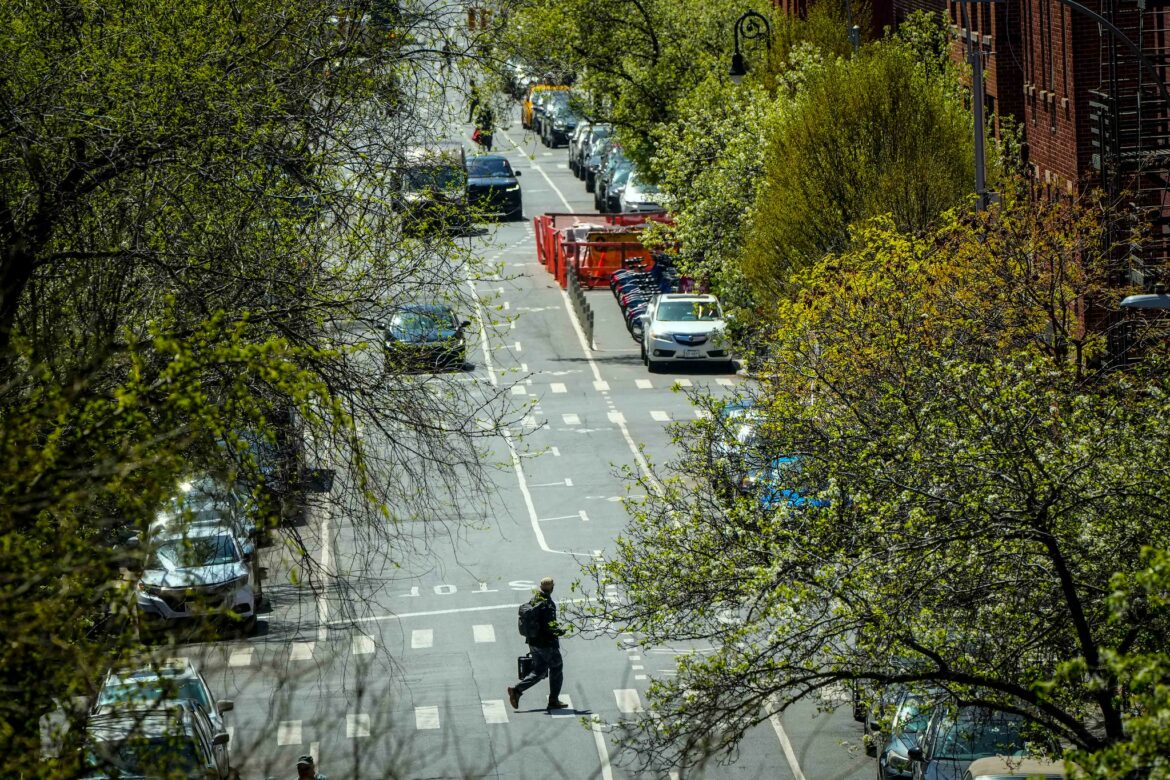
Trees along Greenwich Street in Manhattan.

CityViews are readers’ opinions, not those of City Limits. Add your voice today!

The summer of 2024 has seen the hottest days the world has ever seen, and much of New York City swelter through several heat waves.

Heat waves result in the most deaths compared to any weather event. Extreme heat can cause or intensify a wide range of health problems, like heart disease, respiratory illness, mental illness, and heat sickness—problems that are only likely to worsen in the future as climate change makes these events more likely.

This fact is alarming for all of us but particularly for those most vulnerable to extreme heat—babies, young children, older adults, people with low income, people who are already sick, and people who are a minoritized race/ethnicity. 

In New York City, the neighborhoods that are most vulnerable to extreme heat are generally hotter and have more Black residents and low-income residents, and less green space and air conditioning access—all made worse by the urban heat island effect, where heat is trapped in paved areas and buildings.

Although we know who is most vulnerable to extreme heat, our public health systems have been limited to advisories to their impact. So, how do we intervene? How do we keep people safe from extreme heat in an age of ever-increasing temperatures?

One solution may be right in front of us: we need to plant more trees in the most heat-vulnerable areas and take better care of the ones we’ve got. Recent reports on extreme heat reinforce the relationship between green space and heat: when there is more green space, heat decreases. In one example in the summer of 2021, the surface of a tree-lined sidewalk in Central Park West was 31 degrees cooler than a treeless lot in East Harlem

Trees provide cooling in two ways: shade and evapotranspiration (a.k.a tree sweat). They also are just great to have around—studies have shown that trees are also associated with better physical and mental health outcomes.

For these reasons and more, cities around the U.S., including New York City, have begun to prioritize expanding and maintaining the urban forest—and they should continue to do so with a focus on extreme heat.

The current tree canopy distribution in New York City is unequal. Linking the realities of environmental injustice and public health will help us build better plans for our urban trees—best done through community-based decision-making and prioritizing the experiences of those who will have to live with the trees.

Combating heat with trees also means caring for the ones we already have. Planting new trees can feel glamorous, picture-worthy, and provide a few hours of healthy fun. But these trees need care to survive, and older trees are also essential for cooling, but they also need consistent care and well-funded support for their maintenance. Those mature trees with expansive canopies play an outsized role cooling our city during heat waves. 

As the climate changes, we also want to ensure that the trees we plant today can survive and mature in the climates of tomorrow. Where tree species thrive is changing as temperatures warm.

Trees alone are not the answer to extreme heat, but they are a key part of a long-term solution. Other vital efforts to keep people safe in the immediate future, like the recent call for FEMA to declare extreme heat a disaster, are also important to ensuring that people have sufficient access to cooling centers, medical care, water, electricity, and other crucial needs during heat waves. Implementing the Extreme Heat Policy Agenda and a national framework for urban forestry would also be great steps forward. 

We need improved emergency preparedness, communications, and resources for affected communities and we also need more equitable landscapes to help all New Yorkers better weather extreme heat. To that end, as New York City embarks on developing its first legally required citywide urban forest plan, we have a unique global leadership opportunity to advance public health and tackle extreme heat by working in partnership with communities to improve our cityscape with more and better protected and cared for trees and canopy. 

These actions will set the stage for our health, and the health of future generations. We hope they can reap the benefits of the seeds we sow today.

Arnab K. Ghosh is an assistant professor of medicine at Weill Cornell Medicine and the the 2024 NIH Climate and Health Scholar. Olivia J. Keenan is a climate and health researcher at Weill Cornell Medicine. Emily Nobel Maxwell is founder and principal of Nobel Cause Consulting, and former New York Cities director of The Nature Conservancy.   

Motorist charged in Lake Elmo crash that killed St. Paul girl, 5

posted in: News | 0

A St. Paul man was charged Monday with criminal vehicular homicide for plowing his SUV into the back of a family’s car that was stalled on Minnesota 36 in Lake Elmo, killing a 5-year-old girl.

Morgan Rae Petersen, of St. Paul, was a back-seat passenger in her father’s 2006 Ford Focus, which had stalled from a mechanical issue in the left lane of eastbound 36 at Lake Elmo Avenue around 8:45 p.m. Jan. 20.

Witness statements and video showed that 47-year-old Jeffrey Dean Alexander Jr. struck the Ford from behind after another vehicle changed lanes to avoid the stalled Ford, the criminal complaint says. Morgan died the next day at Regions Hospital in St. Paul.

Alexander’s speed and impairment were also factors that caused the crash, according to the complaint.

Minnesota State Patrol crash reconstruction data showed Alexander’s 2013 Nissan Pathfinder was traveling 62-63 mph at the point of impact, but had been traveling 81 mph five seconds prior to the crash and 75 mph four seconds prior to the crash. The posted speed limit there is 65 mph.

A blood draw of Alexander taken at nearly two hours later showed a blood alcohol concentration of .056, under Minnesota’s 0.08 legal limit to drive. It also showed the presence of Clonazepam, a sedative he was prescribed, the complaint says.

According to a Jan. 23 search warrant affidavit, a trooper could smell alcohol coming from Alexander, who “admitted to drinking two beers earlier.” Neither field sobriety tests nor a preliminary breath test were done at the scene “due to the ambulance wanting to leave” to take Alexander to Regions Hospital.

Morgan’s father, Christopher Scott Petersen, 43, of St. Paul, and a 10-year-old passenger, Mason Scott Ries, also were taken to Regions Hospital in St. Paul for treatment, but their injuries were not considered life-threatening, the State Patrol said.

Other factors that led to the crash, according to the complaint: Alexander failing to recognize the hazard created by the stalled Ford prior to him changing lanes into the left lane, and failing to drive with “sufficient distance between his vehicle and those in front of him to react to hazards within the roadway.”

State Patrol reconstruction experts noted the roadway was clear and dry, and that the flashing lights of the stalled vehicle were visible for approximately a quarter-mile in the distance.

Morgan was wearing a seatbelt at the time of the crash; Chris Petersen and Mason were not, according to the State Patrol.

Morgan suffered a broken neck and serious brain injuries in the accident, according to a post on GoFundMe.

“Morgan was the brightest light in every room,” the GoFundMe fundraiser says. “At 5 years old, she was the boss of everyone, and she knew it. She loved to sing, dance, play with her dolls, and was very spunky, outgoing, funny, and energetic. She was one of a kind.”

According to the GoFundMe post, Chris Petersen tried to move his car after it stalled “knowing his kids were inside, but he couldn’t.”

Alexander was charged by summons with two counts of criminal vehicular homicide for operating in a grossly negligent manner and operating with negligence under the influence of a combination of alcohol and a controlled substance.

Alexander has a first court appearance scheduled for Oct. 2. An attorney is not listed in his court file.

Alexander’s criminal history includes two convictions for driving after suspension, both in 2009. In May of last year, St. Paul police cited him for following too close to a car in his Nissan Pathfinder. According to the citation, when the driver ahead of him stopped for a stoplight, Alexander struck the back of the car.

Related Articles

Crime & Public Safety |


Inver Grove Heights man fatally shot in Minneapolis

Crime & Public Safety |


Man shot Sunday morning on Arlington Avenue has life-threatening injuries

Crime & Public Safety |


Lakeville college hockey player charged in 2023 crash that killed Gustavus teammate

Crime & Public Safety |


St. Paul woman charged in fatal Maplewood hit-and-run

Crime & Public Safety |


4-year-old witnessed father’s South St. Paul shooting, mom says at killer’s sentencing

FROM OMEGAPRO TO GO-GLOBAL AND NOVATECH, DUBAI HAS BECOME HEAVEN FOR CRIMINALS

posted in: News | 0

City of Dubai – The United Arab Emirates (UAE), a major player in
regional and global markets, is famed for its exponential economic
growth and strategic location. Sitting alongside seven other emirates,
Dubai is the most prominent member, managing to break free from
the oil rich dependent roots, for which it is historically known, to now
being a dynamic international business hub.

Dubai charms global firms and the very wealthy alike, all enticed by
the nation’s luxurious lifestyle and diversified economy. Political
stability and futuristic infrastructure compound its appeal, making it a
much-favoured destination for elite business investors looking for
lucrative opportunities.

The UAE’s appeal as a financial safe haven has made it particularly
popular among African political officials and businessmen, as revealed
in the relatively recent ICIJ report titled ‘United Arab Emirates a go-
to offshore haven for Africa’s political and business elite, leaked
records show’. Dubai offers intriguing mechanisms like offshore
accounts and lucrative property investments, all music to the ears of

those individuals desperately seeking to evade international sanctions
and prying eyes, as well as those who are involved in crypto currency.
In the last seven years, records have shown that Ponzi Schemers like
OMEGAPRO, NOVATECH and others chose Dubai as their city of
operation.

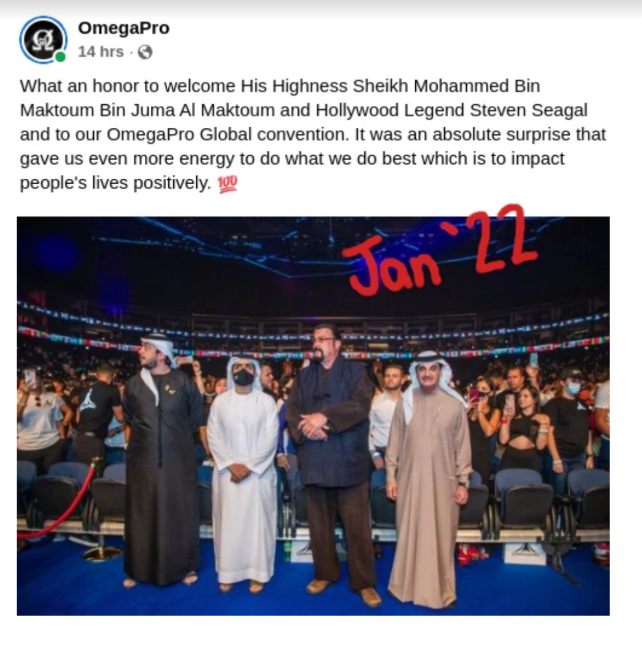
In the case of OMEGAPRO, a Ponzi Scheme, the Prince of Dubai
endorsed the company by making several public appearances and
attending several private meetings with principals of OMEGAPRO
giving them an air of legitimacy.

Although the city has a reputation for intense surveillance using
sophisticated CCTV systems, many drug traffickers and other
criminal elements have settled in the country over the last decade.

In 2018, Nour El Fath Azali, son of Comoros President, Azali
Assoumani, returned to Moroni and founded Olifants Ltd., a UAE-
based shell company providing consultancy services. He was then
appointed as his father’s personal adviser encouraging Emirati to
invest in Comoros, islands that are known for corruption by global
observers. Nour, a former bank auditor and US business school
alumnus, is reported to have said that he sees the UAE as “a crucial
financial hub, reflecting a common trend among African political
figures and their associates.”

The Pandora Papers, another ICIJ investigation, revealed that
business elites and politicians from 17 African nations had obscure
financial interests in the UAE. This intel came from the leaked
documents of 14 firms that specialise in forming shell companies and
bank accounts. The list of specialist firms providing these services
included SFM Corporate Services, formed in 2006 in Dubai.

University of Oxford professor, Ricardo Soares de Oliveria, stated that
“the UAE tacitly allows dubious financial activities that are shunned
by more reputable centres, requiring only that wealthy Africans avoid
local politics and abide by local laws”.

Another example is one Tindi Mwale, a Kenyan MP who, following
being elected in 2018, requested that SFM in Dubai create a company
and a bank account in Mauritius for US$2,641. Prior to his political
career, Mwale managed to build a diverse business empire. He told
SFM that the new company would be handling infrastructure projects.
Although Kenyan laws strictly requires that officials declare their
assets, when recently asked, Mwale denied owning any offshore
company and dismissed the claims as lies.

Isabel dos Santos, a dual citizen of Angola and Russia and the eldest
daughter of a former Angolan president, resided in Dubai with her
late husband. The 2020 Luanda Leaks investigation revealed their
connections to ten UAE-based companies. ICIJ’s Pandora Papers
went on to divulge that dos Santos had dealings with a UAE services
company that managed funds from Unitel, Angola’s largest mobile
operator. She denies all claims of wrongdoing. Dos Santos, who has

previously been charged in Angola with money laundering,
embezzlement and tax fraud, had her properties frozen in several
countries, and is now barred from entering the US. She is reportedly
still living in Dubai following her husband’s death in 2020. Her
husband, Sindika Dokolo, died in a free-diving accident in Dubai at
the age of 48. Reports state that foul play was not suspected.
The nation’s practices are creating problems for global financial
regulation and raise concerns surrounding the monitoring and
enforcement of internationally sanctioned entities and individuals.
Dubai’s intricate network of financial and legal services permits
discreet management of wealth and financial affairs, which can
obfuscate international operations looking to monitor financial
transactions.

The assertion that Dubai is primarily operating as a refuge for
fugitives and sanction evaders looking to hoard ill-gotten gains is
challenged by its track record in international enforcement
collaboration. The research conducted in ‘Dubai Unlocked’ – an
analysis report produced by the Organized Crime and Corruption
Reporting Project (OCCRP) cites several occasions where Dubai has
not only contributed to but has actively supported legal proceedings.
These actions highlight Dubai’s compliance with extradition
agreements and a greater commitment to maintaining international
legal standards. In co-operating, Dubai sends the message that it is
clearly aligning with global law enforcement agencies, in contrast to
previous accusations that it is just a haven for nefarious corporate
activity.

The OCCRP suggest that the legal framework in the emirate has been
designed to find an equilibrium between client confidentiality and the
stipulations of international law. Moreover, the nation’s efforts to
collaborate and enforce international law have resulted in some high-
profile cases, making some question how safe Dubai really is for the
unruly. British citizen Sanjay Shah who was extradited to Denmark
(detained in Dubai, 2022), and Christian Michel to India (detained in
Dubai, 2021) are just two of many extraditions over the past several

years. Although these successful extraditions are encouraging, analysts
note that Dubai does not always comply with international law orders.
Professor of Corruption and Illicit Finance at Georgetown University,
Jodi Vittori, described Dubai’s authoritarian justice system as opaque.
She adds “It is unclear why the UAE will work with some law
enforcement in some cases to arrest criminals located in the UAE and
in other cases, they do not. The UAE is a law enforcement black
hole”. In one example, Professor Vittori recalls the India-born Gupta
brothers, both accused of stealing vast amounts of South Africa’s
public funds via close links to the country’s former President, Jacob
Zuma. Although an extradition treaty exists between these two
countries, it was reported that last year the UAE decided to discreetly
dismiss South Africa’s order to extradite Atul and Rajesh Gupta.
South Africa was outraged and stated that the UAE failed to issue any
satisfactory responses to its rejection.

Despite concerted efforts to comply with global law enforcement and
noteworthy successes in extradition cases, Dubai’s multifaceted legal
and financial framework does provide sanctuary for myriad criminal
actors wanting to evade scrutiny. This emirate is somewhat of a
paradoxical environment where intense surveillance and confidential
financial services collides with opaque legal processes. This stark
contrast reveals that while Dubai contributes to the global legal
system, it also acts as a safeguard for those knowledgeable enough to
navigate its intricate policies.

The battle remains in finding ways to balance economic attraction
with international law enforcement, and this ultimately raises
questions about the real benefit and effectiveness of global governance
in this world of intricate international relationships.
For more information about Class action lawsuit against
OMEGAPRO please click here: www.wilmorrislaw.com