We’ve made it, Chicago. The politicians and delegates are packing up, as are out-of-town protesters, journalists, and TV hosts. Road closures are opening back up and the United Center will soon be back to its regularly scheduled programming. Beyoncé fans hopeful about a surprise performance put their mirrored cowboy hats away.
Talk now turns to how the city performed, and possibly, whether the Democratic National Convention may return.
Pressure was on both demonstrators to deliver numbers and make their message go national and law enforcement to protect the city and not violate any protesters’ constitutional rights. The Tribune’s protest team checked in on both Thursday.
Gov. JB Pritzker, who has embraced his role as dutiful host and unabashed basher of former President Donald Trump, was “relentless” in pushing national Democrats to bring the DNC to Chicago. “I’m a competitor,” he told Politico’s Jonathan Martin on Tuesday. He seems ready to do it again.
Though back-to-back conventions are unusual in the modern era, Pritzker noted that there was precedent: the 1940 and 1944 conventions, where Franklin Roosevelt was nominated, both took place at the old Chicago Stadium (so was Roosevelt’s first nomination in 1932). The same happened in 1952 and 1956, when native son Adlai Stevenson won the nomination at the International Amphitheatre (formerly at 42nd and Halsted).
Madison Square Garden in New York City also hosted back to back conventions to nominate Jimmy Carter.
“I know there are local press here who are going to say, ‘Oh, we’re bidding on 2028 already.’ But I – it has happened,” he said. “It hasn’t happened in recent history, the back-to-back in one city hasn’t occurred, but it could. And as you all can see, Chicago’s a great city to have a convention in.”
Party officials will gather for a post-convention wrap-up meeting later this morning.
Here’s what happened yesterday
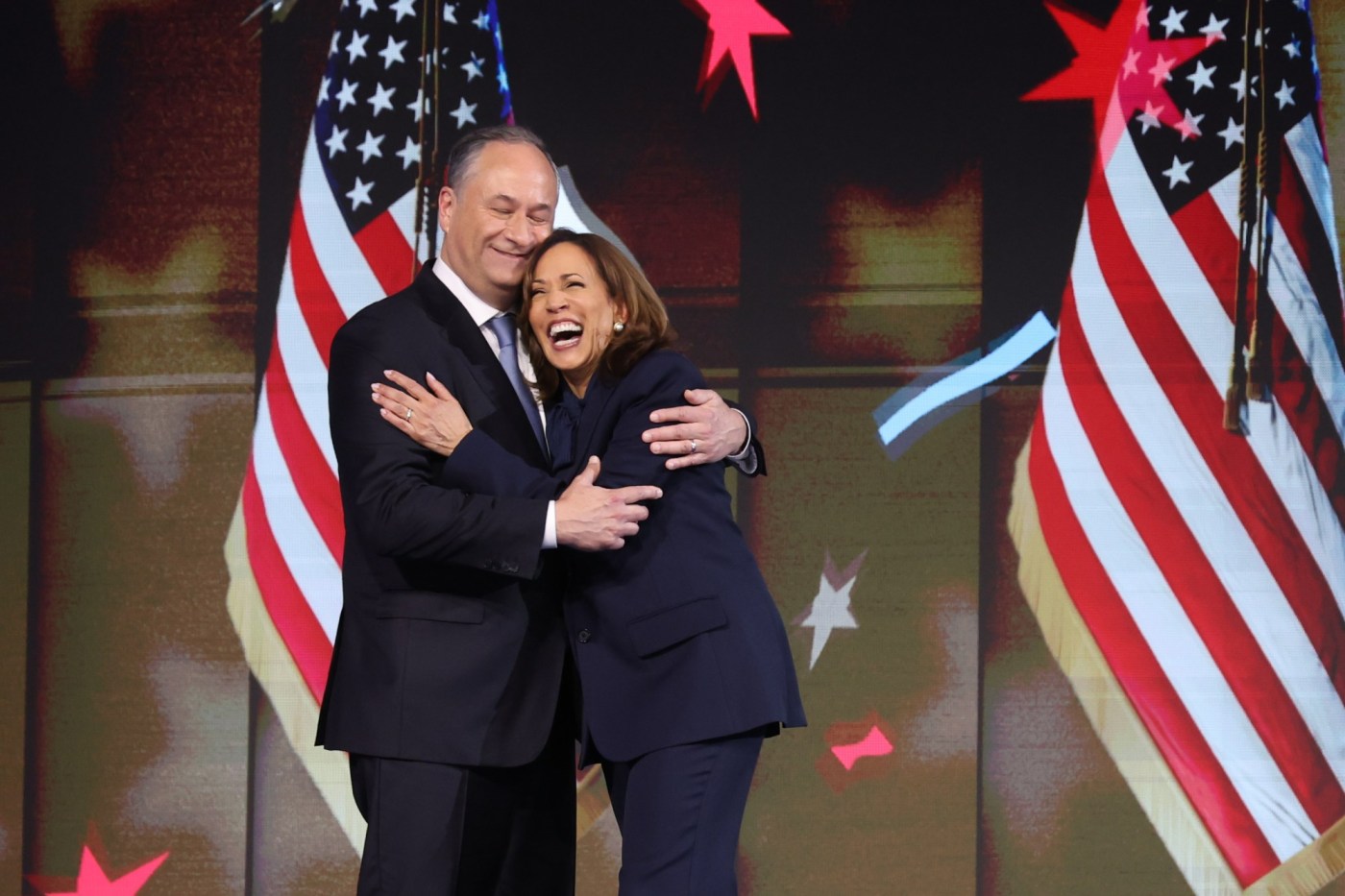
Kamala Harris formally accepted the nomination to become the Democrats’ presidential pick.
Unlike nominees before her, Harris did not run the primary gauntlet, starving many Americans of the chance to learn her story or the priorities that could shape her presidency. Her acceptance speech — and many of the interstitial videos that have played through the last four days inside the United Center — introduced her life story.
Balloons fall after Democratic presidential nominee Vice President Kamala Harris accepts the nomination at the conclusion of the Democratic National Convention at the United Center, Aug. 22, 2024. (E. Jason Wambsgans/Chicago Tribune)
For Democrats, the good vibes of the week will fade and hard work will begin. “This is not going to be easy,” Pritzker told fellow Democrats earlier Thursday. “It’s a lot of fun over at the United Center, and we feel the momentum of it all, but it’s going to take a lot of work. Seventy-five days. Seventy-five days, not too many.”
Despite the support of Mayor Brandon Johnson and several Illinois legislators, at the conclusion of the night, a pressure campaign from uncommitted delegates to get a Palestinian American a speaking slot on Thursday was unsuccessful. During the portion of Harris’ speech about Gaza, a few attendees yelled “Free Palestine!”
Illinoisans got multiple speaking slots during the convention’s final night: Congressman Raja Krishnamoorthi addressed Trump’s foreign policy stance, former Illinois Attorney General Lisa Madigan joined several other prosecutors who worked with Harris to praise her efforts to protect homeowners during the foreclosure crisis. Former Congressman Adam Kinzinger, a Republican and never-Trumper, defended Democrats as patriots and said Trump “suffocated the soul” of his party.
Other Tribune must reads from the convention
Zareen Syed and Shanzeh Ahmad spoke with young Black and Indian women about Harris’ nomination. For some, the presidential ticket is historic and emotional. Others are at a crossroads with what they say are Harris’ unclear intentions on a cease-fire in Gaza.
Chris Borrelli took a look behind the curtain of the first-ever “Creator” lounges set aside for social media influencers inside the United Center.
Sylvan LeBrun checked out the city’s designated free speech stage, where audiences — and speakers — were often absent this week.
Karina Atkins headed to a voter registration drive hosted by a brand new political action committee led by former contestants of RuPaul’s Drag Race.
The kinetic energy powering Kamala Harris ’ whirlwind presidential campaign carries the hopeful aspirations of history and the almost quaint idea of electing the first woman to the White House. But inside it, too, is the urgent and determined refusal of many Democratic female voters to accept the alternative — again.
“Serious.” “Unapologetic.”
Listen to the women cheering “We’re not going back!” at the Harris campaign rallies. See them singing along during the dance party roll call at the Democratic National Convention in Chicago. Understand the mothers and daughters and sorority sisters and, yes, the men, brothers and boys who have watched and waited and winced as the country tried eight years ago to break the glass ceiling — and failed.
“Overdue.”
This time, this year, facing Donald Trump again, a certain and influential swath of the electorate is not messing around. “It’s our time,” said Denise Delegol, 60, a retired postal worker from West Bloomfield Township, Michigan.
Ashbey Beasley holds up her son Beau, 8, both of Highland Park, Ill., as he makes a heart with his hands, as Democratic presidential nominee Vice President Kamala Harris speaks at the Fiserv Forum during a campaign rally in Milwaukee, Tuesday, Aug. 20, 2024. They were caught in a mass shooting at a parade in Highland Park in 2022 and are now involved in gun violence prevention efforts. (AP Photo/Jacquelyn Martin)
Monique LaFonta, of Milwaukee, dances while watching the roll call of the DNC on a jumbotron at a campaign rally with Democratic presidential nominee Vice President Kamala Harris at the Fiserv Forum in Milwaukee, Tuesday, Aug. 20, 2024. (AP Photo/Jacquelyn Martin)
People watch Democratic presidential nominee Vice President Kamala Harris speak at Democratic National Convention on the big screen during a watch party at Soldier Field Thursday, Aug. 22, 2024, in Chicago. (AP Photo/Frank Franklin II)
Mississippi delegate Kelly Jacobs wears a hat during the Democratic National Convention, Monday, Aug. 19, 2024, in Chicago. (AP Photo/Brynn Anderson)
1 of 4
Ashbey Beasley holds up her son Beau, 8, both of Highland Park, Ill., as he makes a heart with his hands, as Democratic presidential nominee Vice President Kamala Harris speaks at the Fiserv Forum during a campaign rally in Milwaukee, Tuesday, Aug. 20, 2024. They were caught in a mass shooting at a parade in Highland Park in 2022 and are now involved in gun violence prevention efforts. (AP Photo/Jacquelyn Martin)
The promise of a Harris presidency is shaking a sizable segment of the nation out of a political funk, reviving the idea of a milestone election and an alternative to repeating the Trump era. It’s putting the country on the cusp of what Michelle Obama, in her convention speech to Democrats, called a “brighter day.”
Once President Joe Biden bowed out of the race and embraced his vice president at the top of the ticket, some found hope where before they had felt mostly dread.
“Overnight it went from doom-scrolling to hope-scrolling,” said Lisa Hansen of Wisconsin, who led an early Trump resistance group in 2017 as her first foray into political activism.
Lori Goldman of Michigan, who founded Fems for Dems to elect Hillary Clinton two presidents ago, said, “I’m too old to not ever have seen a president that’s female in the United States.” She’s 65.
And Shannon Nash, an attorney from California and, like Harris, a fellow member of the historic Alpha Kappa Alpha Sorority Inc., said from the convention hall Thursday night, “The joy is coming back to politics.”
Women have been here before, in 2016, when they donned matching pantsuits, poured champagne and settled in on election night, some with friends and daughters by their side, expecting Clinton to win the White House only to be shaken by Trump’s victory.
As one woman said at the time, she threw up the next morning.
FILE – Republican presidential candidate former President Donald Trump greets supporters after speaking at a campaign rally, Feb. 23, 2024, in Rock Hill, S.C. (AP Photo/Chris Carlson, File)
FILE – A supporter waits for the start of Republican presidential candidate former President Donald Trump’s campaign rally in Doral, Fla., July 9, 2024. (AP Photo/Rebecca Blackwell, File)
1 of 2
FILE – Republican presidential candidate former President Donald Trump greets supporters after speaking at a campaign rally, Feb. 23, 2024, in Rock Hill, S.C. (AP Photo/Chris Carlson, File)
To be sure, some voters had a different first female president in mind. Nikki Haley lifted Republican hopes during the GOP primary, but her moment faded after rival Trump branded his former ambassador to the United Nations “birdbrain.”
Lisa Watts, a retired business owner from Hickory, North Carolina, who was attending her fifth Trump rally this week, had little interest in Harris. “I don’t think that her record proves that she is ready to run this country,” Watts said.
The thousands of women who pack Trump rallies, and tens of millions more who are expected to cast ballots for him in November, are participating on the other side of the potential history-making.
The former president, convicted in a hush-money case and still facing a pending federal indictment for conspiring to overturn the 2020 election ahead of the Jan. 6, 2021, Capitol attack, would become the first felon to win the White House.
Republican National Committee co-chair Lara Trump rejected as “insulting” the idea that Americans should vote for a woman for president because it would make history.
“If you ever give me a job because … of the fact that I’m a woman and not based on any merit or qualification, guess what? I’m turning that job down all day long,” the former president’s daughter-in-law said on her podcast in July.
Abortion, immigration and the war in Gaza
For those voting for Harris, this election feels more joyful, but also more necessary and urgent.
“We need to do this, be serious about it this time,” said Monique LaFonta, a mother of two twin girls, after attending a Harris rally in Milwaukee.
Female delegates at the DNC are wearing white to honor women’s suffrage on night of Harris’ speech
Trump’s creation of a conservative Supreme Court majority that overturned a woman’s right to abortion access produced outrage among many women who powered that year’s midterm election — and are a potentially influential force in this one.
“We are living in just such a wildly different situation,” said Jessica Mackler, the president of Emily’s List, which works to elect pro-choice women. She said Harris is “unapologetic” when it comes to reproductive rights.
Harris herself carries this potentially history-making moment not as a campaign feature but a matter-of-fact representation of who she is and has always been, much the way Barack Obama often left his race merely implied to voters. Rather than reminding voters that the nation’s 47th president could become the first in its more than two-century history to not be a man, Harris is running instead on what she would do in the job and how she would do it.
In her speech Thursday night accepting the nomination at the Democratic National Convention, Harris acknowledged that she’s “no stranger to unlikely journeys,” but she did not specifically mention the historic nature of her candidacy.
Many receive her style as a brand of American optimism rooted in the generations who came before her, a Black and South Asian woman, the daughter of immigrants — a Jamaican father and Indian mother — who dared to dream in this country. She is blaring Beyonce’s “Freedom” as her campaign theme song along the way.
And yet among demonstrators calling for a cease-fire in the Israel-Hamas war outside the Democrats’ convention in Chicago, pharmacist Fedaa Ballouta said that while having the first female president would mean a lot, she expects more. “I wish that that woman was pro-life when it matters regarding Palestinians.”
Clinton’s defeat paved the way for this moment
So much has changed in the American political landscape since Trump entered that scene almost a decade ago with his braggadocio and electoral momentum.
“Such a nasty woman,” he called his 2016 Democratic rival Clinton, a former U.S. senator and secretary of state. “Horseface,” he labeled a Republican primary rival, a woman. “Fat pig,” he bullied a famous female comedian. He once bragged that as a celebrity he could “grab” women by their private parts — and get away with it.
More than 1 million people in the United States and around the world filled city streets in protest the day after Trump’s 2017 inauguration. Many wore pink “pussy” hats. “The Resistance,” they called it.
Trump himself has stayed the course, deriding Harris as “Laffin’ Kamala,” mocking her laugh or mispronouncing her name, which means “lotus flower” in Sanskrit.
In many ways, Clinton’s defeat eight years ago set the stage for this moment. It was a crushing setback that dashed women’s hopes for bringing the U.S. into alignment with leading democracies around the world that have had a female in charge.
Angie Gialloreto of Pittsburgh was disappointed then. But the 95-year-old, attending her 13th presidential convention, is still at it, ready and waiting for the country to try again. “It’s time,” she said.
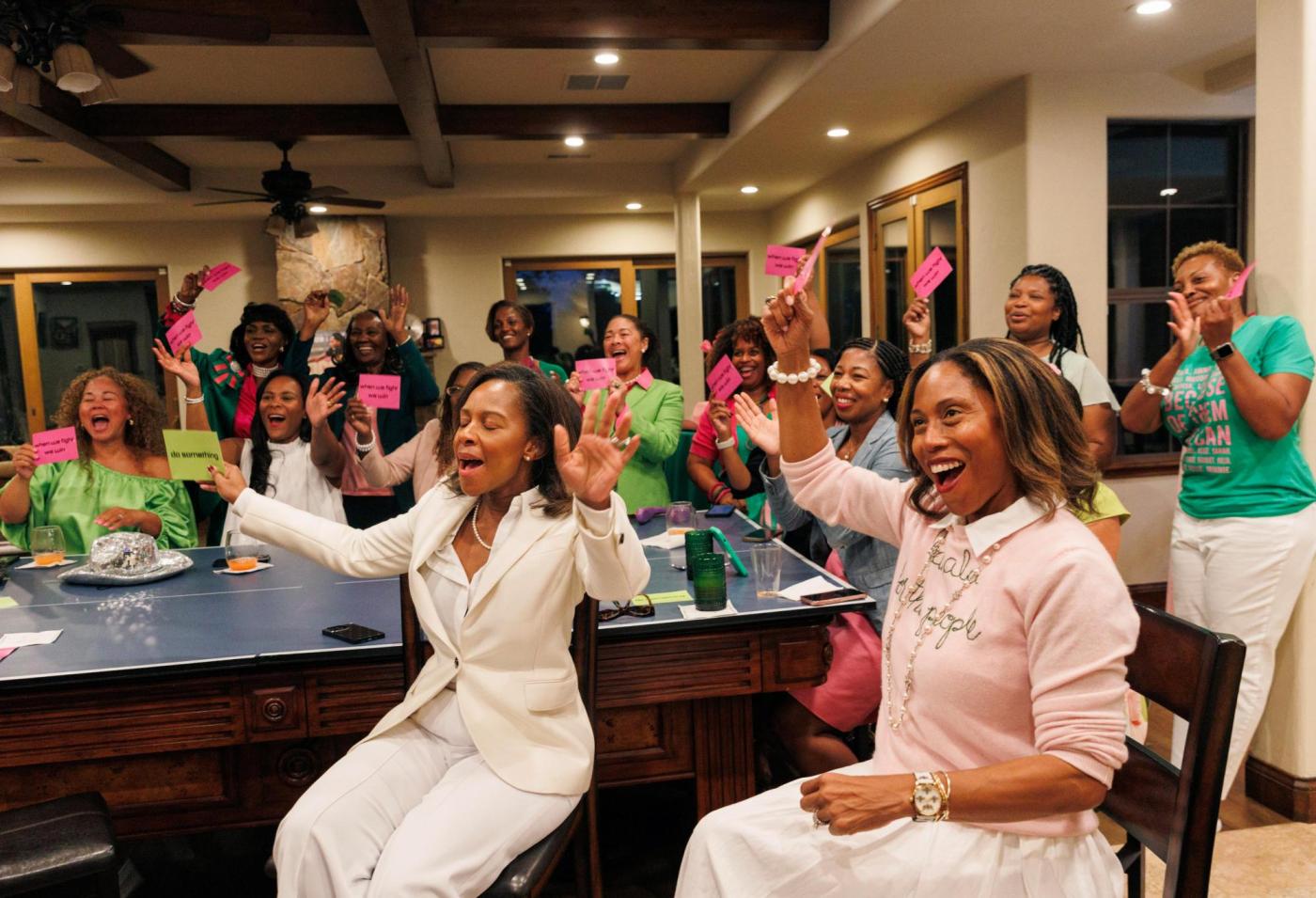
Carla Wicks the Rho Delta Omega Chapter of Alpha Kappa Alpha (AKA) Sorority, Inc., wears an embroidered “Kamala for the people” sweater during a watch party for fellow AKA member Vice President Kamala Harris’ speech at the Democratic National Convention on Thursday, Aug. 22, 2024, in Pleasanton, Calif. (AP Photo/Juliana Yamada)
Sorors of the Rho Delta Omega Chapter of Alpha Kappa Alpha (AKA) Sorority, Inc., Sharisse Kimbro, Tracy Fields, and Renee Thierry-Jones applaud during a watch party for fellow AKA member Vice President Kamala Harris’ speech at the Democratic National Convention, Thursday, Aug. 22, 2024, in Pleasanton, Calif. (AP Photo/Juliana Yamada)
Angie Gialloreto, 95, of Pittsburgh, Pa., right, who is attending her 13th convention since President Jimmy Carter, and other delegates applaud during the first day of Democratic National Convention, Monday, Aug. 19, 2024, in Chicago. (AP Photo/Jacquelyn Martin)
Seen in the glow of stage lighting, Angie Gialloreto, 95, of Pittsburgh, left, who is attending her 13th convention since President Jimmy Carter, and Lisa Baldis, also of Pittsburgh, listen to speakers during the first day of the Democratic National Convention, Monday, Aug. 19, 2024, in Chicago. The women wore T-shirts that said “Joe’s Girls,” on front, and “Love Kamala,” on the back. (AP Photo/Jacquelyn Martin)
1 of 4
Carla Wicks the Rho Delta Omega Chapter of Alpha Kappa Alpha (AKA) Sorority, Inc., wears an embroidered “Kamala for the people” sweater during a watch party for fellow AKA member Vice President Kamala Harris’ speech at the Democratic National Convention on Thursday, Aug. 22, 2024, in Pleasanton, Calif. (AP Photo/Juliana Yamada)
Many of the women interviewed by The Associated Press this week are eager for what’s next. Listen to what they have to say.
MONIQUE LAFONTA, 41, Milwaukee, health care consultant and mother of twin daughters:
“Why can’t a woman be president? Why has it taken us so long to get to this point?” LaFonta wondered the day after a Harris rally in Milwaukee. “Are we going to make the same mistake again?” LaFonta remembers celebrating election night 2016 at a birthday party with friends when Clinton lost to Trump. “It was unintentionally the worst birthday party I ever went to — everyone was crying at the end of the night,” she said. As a mother now, she said what’s happened with the overturning of Roe v. Wade and the threats posed by the Project 2025 agenda are “scary.” “I have two 6-year-old daughters who have less rights than I did,” she said.
Originally from Louisiana, she recalls her parents living through the Jim Crow era in the South. “I never even thought we would see a Black president in my lifetime,” she said. “To have another glass ceiling like that in my lifetime, it’s really so special.” At the Harris rally in Milwaukee this week, it was “so electric, so contagious,” she said. “Just joy.”
ASHBEY BEASLEY, 48, Highland Park, Illinois, stay-home mother
“We’re overdue,” Beasley said. She remembers watching one state after another fall to Trump on election night eight years ago. “I just started crying,” she said. “We turned the TV off.” The difference between then and now? “We’ve had a Trump presidency. We’ve seen the kind of chaos.” The Jan. 6, 2021, attack on the Capitol was a “turning point” she said. “The MAGA culture came out of the closet,” and a lot of people “were like, I’m not OK with this.”
Having survived a 2022 mass shooting in her city with her son, she has become a gun safety advocate and worries Trump is too close to gun rights groups. “What I want people to know whatever you see out in the world — whatever horrific terrible tragedy — that can be you,” she said from the Democratic National Convention in Chicago. “Just because you don’t need an abortion right now, doesn’t mean you won’t.”
LORI GOLDMAN, Michigan, founded Fems for Dems in 2016 to elect Hillary Clinton
At 65, she said, “I’m too old to not ever have seen a president that’s female in the United States.” On Election Day 2016, Goldman had about 30 people to her house and they canvassed until the afternoon, all the while thinking it unnecessary. She said she’s less naïve now.
For Goldman and chair of Fems for Dems Marcie Paul, the difference between organizing in 2016 and now is knowing the impacts of a Trump administration. Both are mothers, and they cited their daughters’ futures as a reason to vote Harris, both for her policy on reproductive rights and for her potential to be the first female president. Paul said it’s the most important election of a lifetime. “But really — this time it is.”
ANNE HATHAWAY, Indiana, the state’s Republican National Committeewoman
She dismissed the potential history-making milestone as been there, done that. “We had Hillary Clinton as a candidate in 2016 so this is not a new phenomenon,” said Hathaway, who was in charge of the arrangements committee at the Republican convention. She said she is focused on the candidates’ visions, not their genders. “This is a race between two presidential candidates who have very different opinions and views and where they think this country should go.”
HOLLY SARGENT, York, Maine
She had spent the months leading up to the 2016 presidential election campaigning for Hillary Clinton in her quiet Maine beach town, watching the rise of Trump “with horror.” But she said the despair she felt at that year’s election defeat was healed with Clinton’s speech to the Democratic convention this week. Sargent teared up as she sat with Maine delegates thinking of all that has transpired, and could yet. “We’re going to do it this time. And when we do it, we do it for Hillary and for Shirley Chisholm and for Geraldine Ferraro and for all of the extraordinary women who have gone before.”
JENNIFER RICHARDSON, 44, Albany, New York, attorney
She said as a Black woman, and an attorney, having Harris atop the party’s ticket resonates so much. “I see myself in her,” she said from the Democratic convention. “I see all my friends in her.” Added Richardson, “For her to win, it’s like we all won.”
DENISE DELEGOL, 60, West Bloomfield Township, Michigan, retired postal worker
Delegol was decked out in pearls, a purple Harris “When We Fight We Win” T-shirt and purple high-tops decorated with the word “WIN” on the toes outside the convention hall. “It’s a beautiful thing that she can lead a country that was predominantly led by old white men who think they know what’s best for all, all people, including women and our bodies,” she said. Harris, she said, “is going to change all that.”
She wants her fellow Americans to understand how important the election is, and that “this is just a time for all Americans to come together because we have more in common than not in common.” Her conversations with family and friends are all about what’s happening. “Now it’s our time,” she said. “And I don’t think nothing can stop us now, as far as women breaking the glass ceiling.”
FEDAA BALLOUTA, Chicago pharmacist, attending a demonstration against the Israel-Hamas war outside the Democratic convention
She said it means a lot to have a female nominee for president, and as a pharmacist who finds it heartbreaking to see people struggle to afford medication she is eager for what Harris could do to help lower the costs of prescription drugs. “I really want to support our candidate of the same gender category,” she said. But what she really wants to see from Harris is a cease-fire in the war. “Pro-Life doesn’t just refer to abortion and pregnancy,” she said. “What about the killing of innocent civilians? That’s also pro-life.”
She believes this election will be meaningful for the country. “I was just in New York City, and I’m looking at the Statue of Liberty, and I’m thinking, ‘Are we a nation that provides liberty or takes it away from others?’”
LIZ SHULER, president, AFL-CIO union
Schuler recalls breaking out the champagne and popcorn with friends on election night 2016, before “people left, of course, heartbroken.” This time around, she said, “we are protecting our hearts.”
“I think every woman you talked to probably feels the same way. But I think we, as union women, pick ourselves up, dust ourselves off and just keep up the fight.”
ANGIE GIALLORETO, 95, Pittsburgh, attending her 13th presidential nominating convention
Gialloreto said she was disappointed by Clinton’s loss eight years ago, but she’s excited with Harris in place to try again. “It’s time,” she said from the convention hall. Gialloreto has attended every Democratic convention since Jimmy Carter was nominated for president in 1976. She said it’s an exciting time, “not for me, I’ve lived my life — for the short time I have, I’m going to celebrate — but it’s the young ones.
“Reality is here.”
Associated Press writers Isabella Volmert in Michigan, Mike Householder and Farnoush Amiri in Chicago, Michelle Price in North Carolina, Ali Swenson and Aaron Morrison in New York, video journalists Martha Irvine, Serkan Gurbuz and Teresa Crawford in Chicago and photojournalist Jacquelyn Martin in Milwaukee and Chicago contributed to this report.
St. Paul Mayor Melvin Carter has worn many hats in the political arena, from state employee to city council and, for the past six years, capital city mayor.
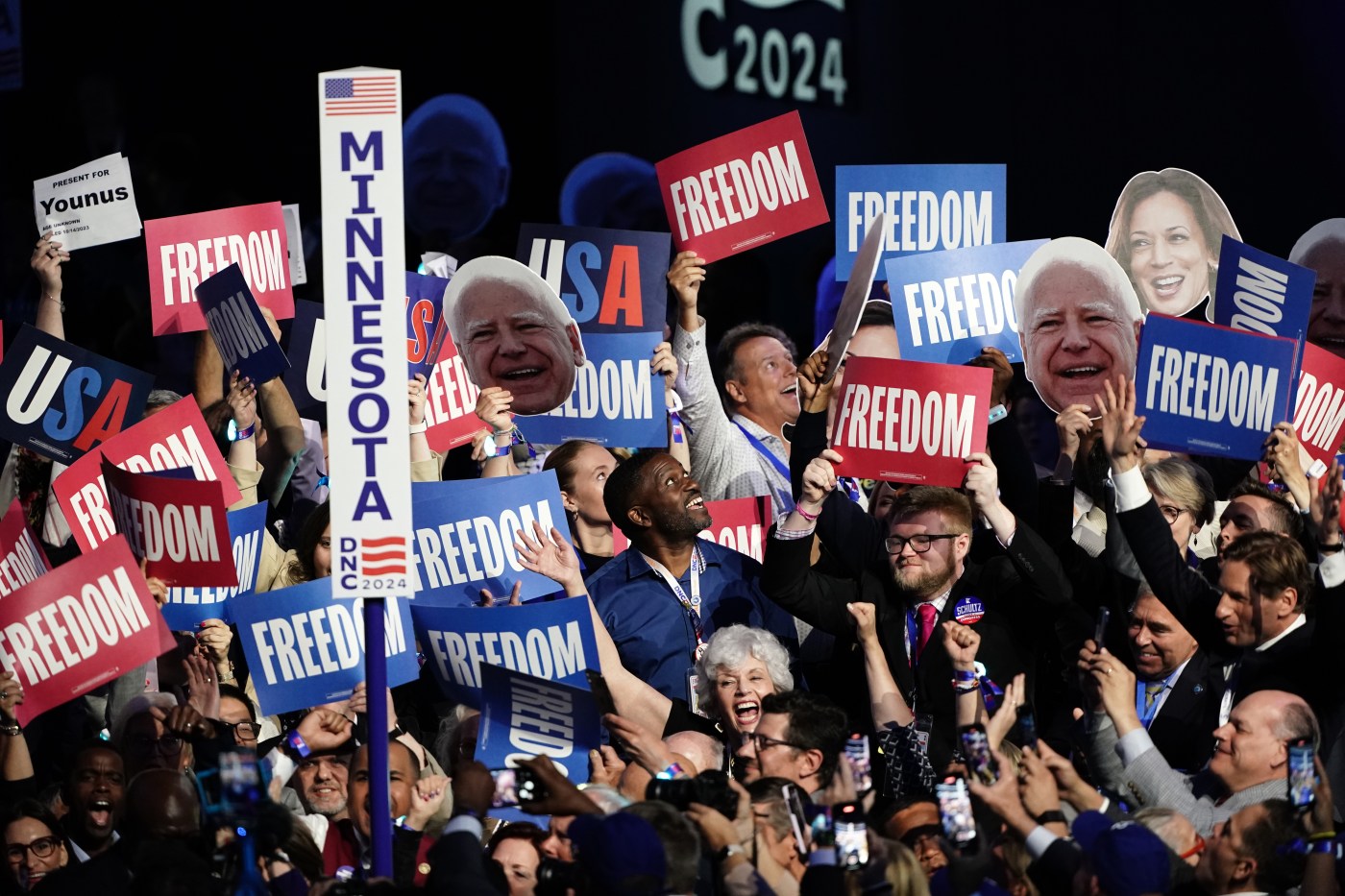
During the Democratic National Convention in Chicago this week, he added one more title to his political resume — that of chant leader. The mayor’s image has been captured by more than one media outlet, in pictures and videos, making a joyful noise for Gov. Tim Walz, who was chosen as running mate this month by Vice President Kamala Harris in her bid for the White House.
“I am happy to report I made it out of the Minnesota delegation alive,” wrote MSNBC political analyst Jacob Soboroff on the social media platform X on Wednesday, rebroadcasting video of Minnesota delegates shouting “Walz! Walz!,” “Coach!” and “Minnesota!” under Carter’s direction as the mayor led chanting and high-fived delegates in front of the camera.
The Walz selection hasn’t just elevated the governor’s profile on the national stage. It’s also placed an unusual media spotlight on Minnesota and Minnesotans, including the governor’s political allies, family and fans. Carter is no exception. The mayor has been sharing clips of the delegation — and himself — in high-energy mode through his personal X account, @melvincarter3.
“All the other delegations have left the floor — but Minnesota is still here chanting,” wrote Kaitlan Collins, a CNN anchor, on X shortly after 11 p.m. Wednesday. In the center of her photo was Carter himself, looking exuberant and, if pictures could talk, a bit loud.
“The United Center turned the lights off on us chanting for our Gov. Tim Walz last night & (the) Minnesota Delegation only cheered louder!” wrote Carter the next morning. “It felt like ‘Miracle On Ice’ in there!”
Carter also shared video of the governor Thursday morning. “A surprise visit from our Gov. Tim Walz sent the Minnesota Delegation energy right back through the roof this morning!” said the mayor on X.
The four-day convention, which featured Walz on Wednesday night, was scheduled to wrap Thursday night with speeches from Harris and others. The presidential election is Nov. 5.
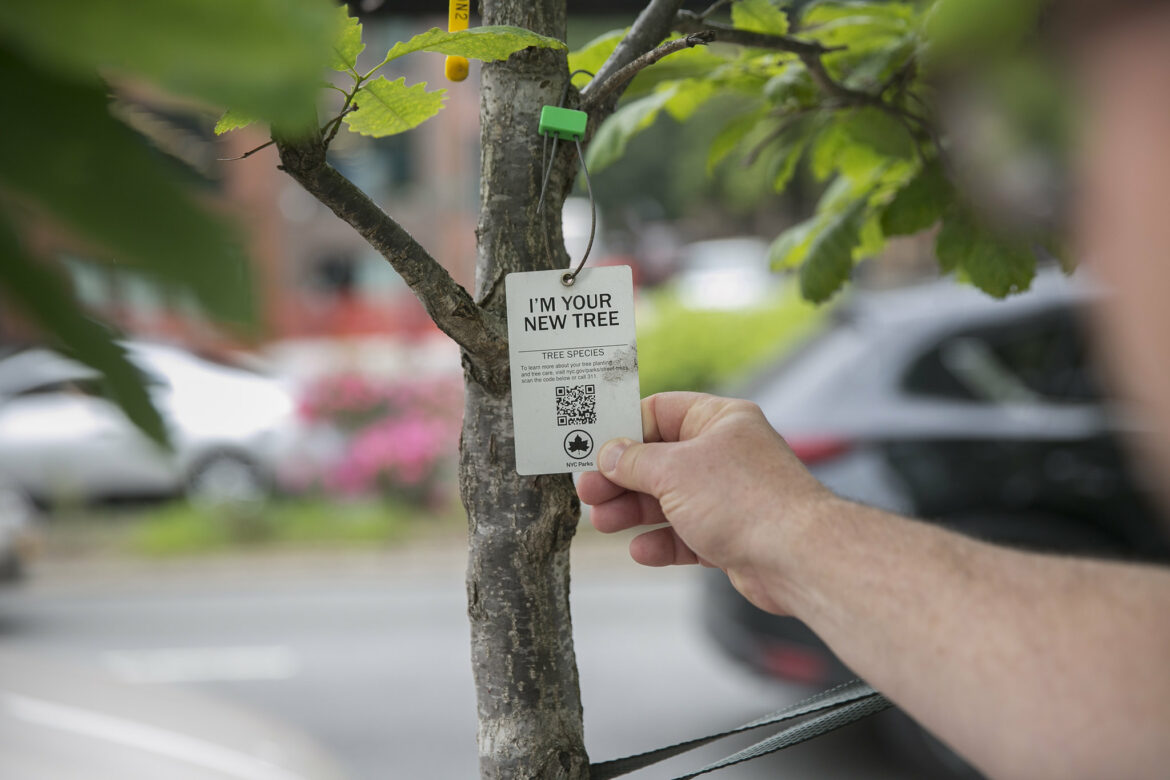
Species like oaks and sweetgums, which make up a large share of the city’s treescape, emit a chemical that generates a toxic gas when it comes into contact with fossil fuel pollution, researchers say.
Caroline Willis/Mayoral Photography Office
Home to a myriad of cars and buildings that run on fossil fuels and generate more than half of the state’s greenhouse gas emissions, pollution in New York City can feel overpowering.
While planting trees helps curb pollution by absorbing these gasses, certain species can actually make it worse, a recent study published in the Environmental Science & Technology journal reveals.
Species like oaks and sweetgums emit a chemical called isoprene that is harmless to humans on its own. But when it interacts with pollutants generated from fossil fuel combustion, they create a toxic gas called ground-level ozone that can irritate the throat, inflame airways and increase the frequency of asthma attacks.
“What we plant, from an air quality perspective, is really only a problem because of the amount of fossil fuels that we burn in New York City,” said Andrew Reinmann, an ecologist and CUNY professor who helped author the report.
And that is especially worrisome when the Big Apple’s landscape is also populated by a sizable portion of oaks and sweetgums.
Of the five million trees that make up the city’s parks and forests, more than half are oaks (37 percent) and sweetgums (17 percent), according to the study. When it comes to the over 666,000 street trees that line many sidewalks, that number is a lot less. Only 18 percent are oaks, and sweetgums comprise an insignificant amount left out by the study.
But if the city maintains its current tree planting patterns, isoprene production in Manhattan in coming decades will increase by about 140 percent, the report warns. Emissions of isoprene tend to increase exponentially with heat, so ozone levels are also projected to go up as much as 30 percent on hot summer days.
To come up with these figures, a team of scientists looked at the New York City Park Department’s tree census from 2016 to 2018 and combined it with satellite imagery of the city’s tree canopy. They also used a model created by the study’s lead and postdoctoral researcher at Stony Brook University, Dandan Wei, to uncover how trees interact with vehicle exhaust and building emissions.
To curb pollution, city officials need to be very strategic about what kinds of trees they plant, Wei says, “especially when we are pushing for new trees.”
The Parks Department has been on a quest to plant 1 million new trees in the Big Apple. And last year all five borough presidents began drumming up support to follow through with the commitment by 2030.
“What we really need to do is focus on reducing [pollution] from human activities,” Wei said. “But until then, we need to understand what are the best tree species to plant in terms of air quality.”
In the past, sweetgum and oaks, in their many variations, were a favorite pick for New York City’s treescape because they are native to many forests across the northeast. There are nearly 20,600 sweetgums in the city’s treescape, according to the Parks Department’s Tree Map. In the oak category, the pin oak variation is a popular pick, with nearly 75,000 spread throughout the boroughs.
But when it comes to selectively picking trees to avoid ground level ozone, the Parks Department told City Limits that one study alone will not change their overall planting strategy. The agency said it is committed to providing a “healthy and successful urban forest” and noted that oaks and sweetgums comprise a small amount of the overall tree population: 6 percent and 2.3 percent, respectively.
“Thanks to our consistent work with local nurseries to procure unique and diverse trees, we now plant from a palate of over 130 different species of trees, up from only 29 species twenty years ago”, Deputy Commissioner for Environment and Planning at NYC Parks, Jennifer Greenfeld, said in an emailed statement.
“We aim to continue planting and growing a diverse population of trees across the city that can tolerate all the challenges that the urban landscape provides,” she added.
Still, picking the right kind of tree to plant can be crucial at a time when New York lags behind on curbing fossil fuel induced pollution, experts say.
The pace at which New York has reduced air pollution’s most prominent gasses, nitrogen oxides, has been extremely slow, according to the study. At current rates of 2 percent to 5 percent a year, it would take 30 to 80 years for the city to cut back on these gasses to a point where emissions from trees no longer play a role in ozone formation.
The ultimate solution is to invest in electrification and cleaner sources of energy, Reinmann says. New York, however, is still very much dependent on fossil fuels as only 28 percent of the state’s electricity is generated by renewable sources.
“If we were able to get to a point where we’ve largely electrified our automobile fleet, and we greatly reduced nitrogen oxide emissions from power plants and other forms of burning fossil fuels in the city, then it wouldn’t really matter what trees we planted,” Reinmann said.
To reach the reporter behind this story, contact Mariana@citylimits.org. To reach the editor, contact Jeanmarie@citylimits.org
Want to republish this story? Find City Limits’ reprint policy here.