Traveling over Labor Day weekend? Have a back-up plan for cancellations and delays

posted in: News | 0

By DAVID KOENIG

Many children have gone back to school in the U.S., and the days are getting shorter, but there is still one more excuse to use the swimsuits and beach towels before packing them up: Labor Day.

Airports, highways, beaches and theme parks are expected to be packed for the long holiday weekend as a lot Americans mark the unofficial end of summer the same way they celebrated the season’s unofficial start: by traveling.

The Transportation Security Administration anticipates screening more than 17 million people between Thursday and next Wednesday — a record for the Labor Day period.

FILE – Travelers pass through Salt Lake City International Airport on July 3, 2024, in Salt Lake City. (AP Photo/Rick Bowmer, File)

AAA says bookings for domestic travel are running 9% higher than last year for the holiday weekend, while international trips are down 4%.

American Airlines plans to have its largest Labor Day weekend operation ever and expects a 14% increase in passengers compared to last year.

If you are traveling to get a last blast of summer, here is a rundown of what you need to know.

Why Labor Day?

“Not everyone travels for Labor Day, not compared to July 4th or Thanksgiving — those are the most popular ones,” says Aixa Diaz, a spokesperson for AAA. “But certainly Labor Day offers people a way to get away for a final weekend of the summer. You’ve got people who are either taking the three-day weekend or perhaps taking off the whole week before Labor Day.”

What are prices like?

Motorists are getting a break on gasoline compared with last year. The nationwide average was recently $3.44 per gallon, compared to $3.86 a year ago, according to AAA.

For electric vehicles, the average price for a kilowatt of power at an L2 commercial charging station is about 34 cents. The average is under 25 cents in Kansas and Missouri but tops 40 cents in several states, including New Hampshire, Tennessee and Kentucky. Hawaii is the costliest, at 56 cents.

Average airfares in July were down 7.1% from June and 2.8% from July 2023, according to the government’s consumer price index. The trend appears to be accelerating as the peak summer-vacation season comes to an end.

“Now we’re falling into that traditional fall season when demand slumps, and you’re also seeing that in airfares,” said Steve Hafner, CEO of the travel metasearch site Kayak. “Airfares are down from the summer about 26% already, and they’re down even from the previous fall, about 4%.”

When is the best time to hit the road?

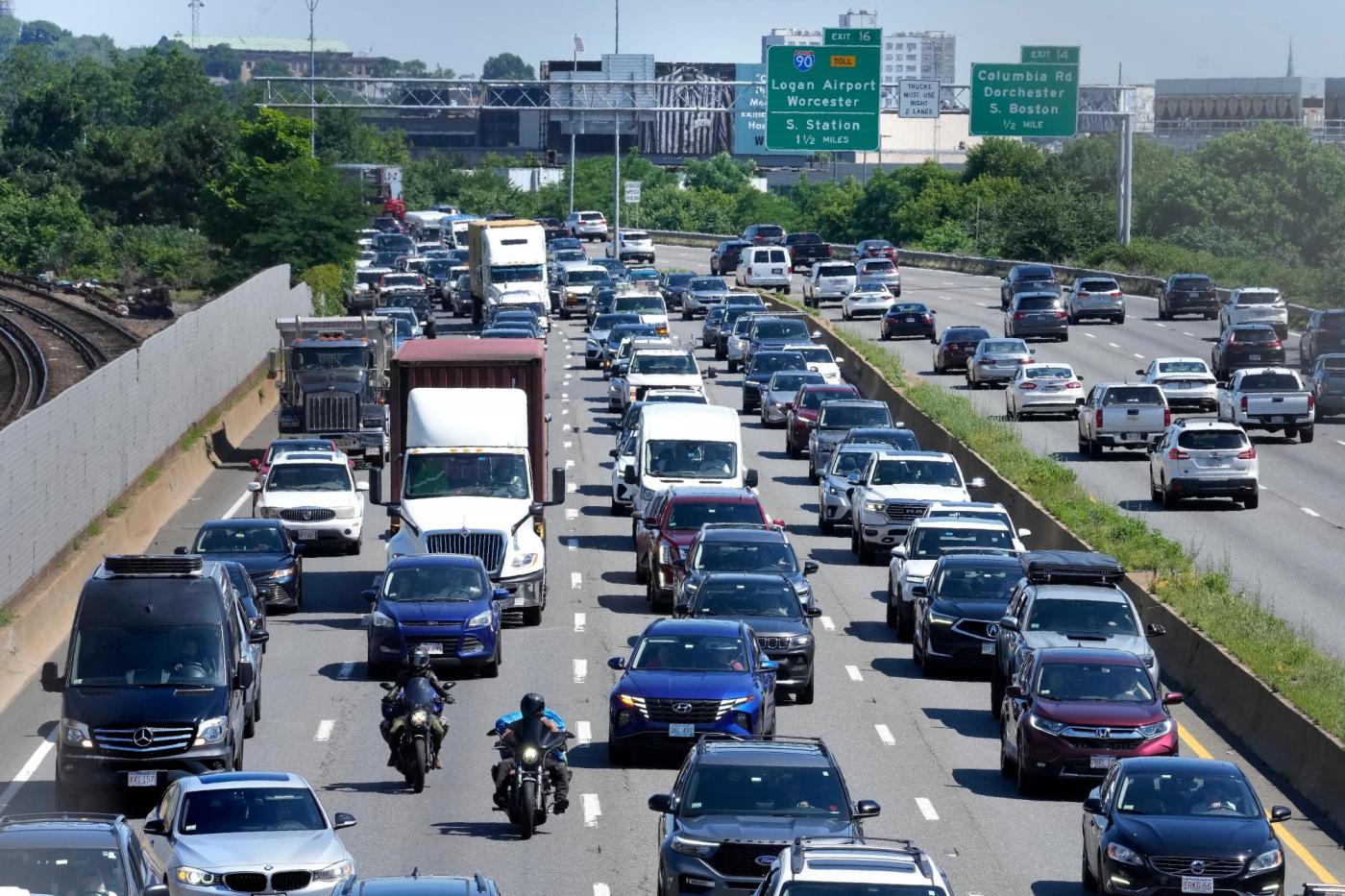
If you plan to start your drive on the Thursday or Friday before Labor Day, you will be sharing the road with commuters. You might want to leave before morning rush hour or even in the evening to avoid jams.

Transportation-data provider INRIX says the worst time to travel by car on Thursday will be between 1 p.m. and 7:30 p.m., and on Friday between 2 p.m. and 6 p.m. That flips on Saturday, when you’ll want to avoid driving between 8 a.m. and 11 a.m.

For the return trip, pretty much all day Monday — from 11 a.m. to 8 p.m. — will be a slog, according to INRIX.

And watch out for risky drivers. New data from Arity, part of insurance giant Allstate, indicates that speeding over 80 mph is up 83% and “very high speeding” — faster than 100 mph — is up more than 50%.

In a surprising twist, however, Arity says distracted driving has dropped on the last three Labor Days.

When will airports be busiest?

Friday, according to the TSA. The agency expects to screen 2.86 million people that day. While an impressive number, it would not even rank in the top 15 days in TSA’s history. The single-day record of 3.01 million was set on July 7, the Sunday after Independence Day.

TSA says it has enough screeners to keep the time it takes to get through regular lines to 30 minutes or less and to no more than 10 minutes for PreCheck lines.

Related Articles

Travel |


Why some residents of European hot spots just want tourists to stay away

Travel |


How not to be a terrible tourist: What Europeans want travelers to know

Travel |


North Korea will soon begin welcoming tourists again

Travel |


Here’s the airport the FAA says led the nation in flight delays

Travel |


Wisconsin is serious about its history, playful for its visitors

American Airlines says Thursday and Friday will be its busiest days, with 6,400 flights per day, followed by Labor Day itself, when the carrier has 6,300 scheduled flights.

Officials at Seattle-Tacoma International Airport worked Monday to restore full service after what they called an apparent cyberattack over the weekend. Alaska Airlines and Delta Air Lines reported no flight disruptions, but airlines warned passengers not to check bags because the bag-sorting system was affected. AAA named Seattle the top Labor Day destination based on bookings.

What should I do if my flight is delayed or canceled?

First, check your itinerary before leaving for the airport. It’s better to be stuck at home than stranded at the airport.

If your flight is canceled, the airline might automatically rebook you. That might not be the best option.

“Get on the phone (to the airline’s help center), get in front of an agent, reach out to the airline via social media if you have to, but find out what the other options are,” says Julian Kheel, the founder and CEO of Points Path, a browser extension that lets users compare fares with deals available using frequent-flyer points. “You can almost always find another option that may work better than the one offered by the airline.”

Kheel said agents at the airport have more leeway to help, but they might be inundated if there are many canceled flights. DIY rebooking on the airline website or app might be faster, he said.

Phone tip: Some experts say if the airline has international help numbers, call one of those to get through more quickly than on the U.S. line.

What about refunds and reimbursement?

Airlines are required to provide refunds — including for extra fees paid — to passengers whose flights are canceled for any reason. However, they are not required to pay cash compensation, and no major U.S. airlines do. Only Alaska, Southwest and JetBlue even promise travel vouchers if the cancellation is their fault.

If you’re stuck overnight, ask the airline about covering the costs of a hotel, meals and ground transportation. All major U.S. airlines except Frontier promise to help with all three for “controllable” disruptions, according to the Transportation Department’s airline-policy dashboard. However, those commitments don’t apply to cancellations caused by weather.

Keep receipts for all out-of-pocket expenses in case you can file a claim later.

A few final tips

Leave early. Everything will take longer than you expect, including getting through airport security. If you plan to park at the airport, make sure there will be spaces available when you arrive — many airports now post that information online.
Watch the weather. Even if skies are clear at home, there could be storms at your flight’s destination or along your road route. Have a backup route.
Be nice. Flight cancellations and bumper-to-bumper traffic are frustrating, but you won’t be the only one who is stuck. Customer-service agents are busy during peak travel periods, so it’s important to be patient and respectful while they try to help you.

Koenig reported from Dallas. Business Writer Wyatte Grantham-Philips in New York and video journalist Rick Gentilo in Washington contributed to this report.
Woodbury, Cottage Grove, Newport candidate forums planned for September

posted in: News | 0

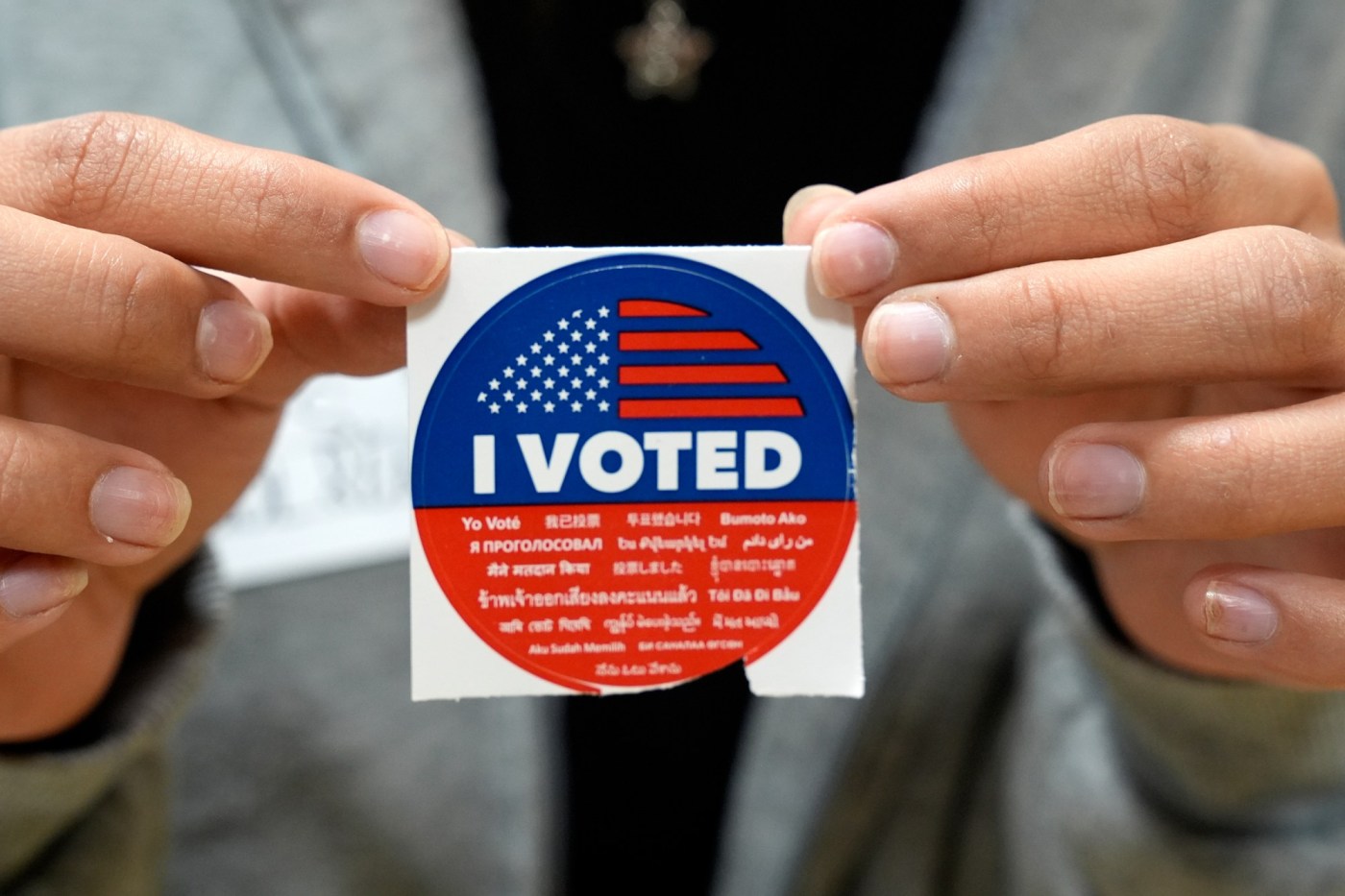
Voters in southern Washington County will have a chance to hear from candidates at a series of forums in September.

The League of Women Voters of Woodbury-Cottage Grove Area is sponsoring six forums, which will be aired live on government access Channel 18 or high-definition Channel 859 (Comcast). They also will be aired live on South Washington County Telecommunications Commission’s website – swctc.org – and recorded for later viewing on Channel 18 (Comcast HD Channel 859) or on SWCTC’s YouTube channel.

On Sept. 3, candidates for Minnesota House District 41A and House District 41B will meet at 7 p.m., and candidates for Cottage Grove City Council and mayor will meet at 8:15 p.m.

On Sept. 12, candidates for Minnesota House District 47A and House District 47B will meet at 7 p.m., and candidates for Woodbury City Council will meet at 8:15 p.m.

On Sept. 17, candidates for Minnesota House District 53B will meet at 7 p.m., and candidates for Newport City Council and mayor will meet at 8:15 p.m.

There will be no in-person audience at the forums; viewers will be able to call or text their questions to a phone number that will be displayed on the screen. They can also submit questions in advance to lwvwcg.forums@gmail.com.

SWCTC also is inviting candidates to record a 2 1/2-minute candidate profile video; videos will be released by Sept. 20 on government access Channel 18 or Comcast high-definition Channel 859 and online at swctc.org.

Related Articles

Elections |


Fireworks in August? Why not? Stillwater reschedules Fourth of July celebration for Saturday

Elections |


A Cottage Grove man raises — and tracks — monarch butterflies from eggs on milkweed leaves to flights to Mexico

Elections |


Over a century and four generations later, Stillwater Motors officially changes hands

Elections |


Taylor Swiffer? Sweep Dogg? Help name Woodbury’s new street sweeper

Elections |


Stillwater Lift Bridge to close Wednesday for electrical work

Going local: A new streaming service peeks into news in 2024 election swing states

posted in: Politics | 0

By DAVID BAUDER

NEW YORK (AP) — Fans of politics have another way to keep track of what’s happening in the most competitive states in the country through a new service that collects and streams local newscasts.

Swing State Election News, which began operation Monday, lets streamers choose from among 37 local television stations in Arizona, Georgia, Michigan, Nevada, North Carolina, Pennsylvania and Wisconsin. They are primarily local affiliates of CBS, NBC, ABC and Fox.

Democratic presidential nominee Vice President Kamala Harris and second gentleman Doug Emhoff during the Democratic National Convention Thursday, Aug. 22, 2024, in Chicago. (AP Photo/Charles Rex Arbogast)

Those are the states that pollsters have concluded will most likely decide the presidential contest between Kamala Harris and Donald Trump. The service will allow people to test the maxim of “all politics is local” by closely following how the campaigns are being waged there.

“Nobody knows local politics better than the journalists in the local communities,” said Jack Perry, CEO of Zeam Media.

Viewers can choose between live and archived programming

Swing State Election News is an outgrowth of Zeam, a free streaming service affiliated with Gray Television that began last winter. Zeam caters to people who have given up cable or satellite television subscriptions by offering hundreds of local market broadcasts. The bulk of its users follow their local markets but a significant number check in on other areas where they may have had ties in the past, the service said.

Zeam doesn’t reveal how many people use the service.

Related Articles

National Politics |


Judge to hear arguments over whether to dismiss Arizona’s fake elector case

National Politics |


How women of color with Christian and progressive values are keeping the faith — outside churches

National Politics |


Vance says Trump would veto abortion ban; Warren says women know better

National Politics |


Behind the rhetoric, a presidential campaign is a competition about how to tell the American story

National Politics |


Trump tries to connect Harris to the chaotic Afghanistan War withdrawal on anniversary of attack

Swing State Election News allows users to choose between live programming or archived newscasts. A quick click Monday on a tab, for instance, calls up the morning newscast on WMGT-TV in Macon, Georgia.

As the campaign goes on, Perry said the newscasts will offer a window into rallies and other events held in those states, along with details in local House and Senate races that may impact control of those chambers.

It contrasts with national newscasts, Perry said, because “at the local level, you’re going to get a different feel. It’s the people actually living in these communities.”

You won’t see local political commercials, though

One important indicator of how the campaigns are going will be missing, however. A local newscast in the swing states this fall is expected to be filled with commercials for the presidential candidates, which can illustrate some of the campaign strategies and issues they feel are resonating.

Swing State Election News sells its own advertising, however, and will not show what is being seen in the local advertising breaks, Perry said.

In another effort aimed at boosting election news for swing states, The Associated Press said last month it is offering its campaign coverage to a series of small, independent news organizations that can’t otherwise afford it.

David Bauder writes about media for the AP. Follow him at http://twitter.com/dbauder.

Deadly bacteria is a growing threat to beach vacations across the US

posted in: News | 0

Alexander Battle Abdelal | (TNS) Bloomberg News

Beating the heat in the U.S. is a little harder this summer than it used to be: E. coli and cyanobacteria are causing widespread beach closures at lakes and rivers. It’s a problem exacerbated by climate change-fueled warmer waters and more prolific downpours, which are creating perfect conditions for bacteria to flourish.

Bacteria tend to grow in warm conditions and between 1985 and 2009, lakes and ponds warmed at a rate of roughly 0.6F (0.3C) per decade. That shift is increasing the risk of blooms in historically cold places. The bacteria can cause a host of symptoms, including blisters, rashes, diarrhea, muscle weakness and liver damage, to name a few. Outbreaks can also tax ecosystems.

All that comes at a price: In the U.S. alone, preventing and treating harmful cyanobacterial blooms cost more than $1 billion between 2010 and 2020, and the figure is likely to rise due to global warming.

Heavy rain often provides the “fuel and supplies” for bacterial spikes, according to Kaitlin Reinl, a limnologist at the National Oceanic and Atmospheric Administration. Stormwater drives bacterial growth by washing phosphorus and nitrogen into lakes and rivers, where heat waves can drive bacteria and algae growth.

“Basically, temperature speeds up everything,” says Hans-Peter Grossart, professor of aquatic microbial ecology and biodiversity at Potsdam University. “The carbon dioxide equilibrium in the water has been changed because we have higher atmospheric CO2 concentrations now. The greenhouse (effect) increases nutrient concentration (e.g. phosphorus and nitrogen presence in the water) and CO2 concentration.”

One of the most common bacterial threats to water quality is diarrheagenic E. coli, which thrives in warmer conditions: Each 1C increase in monthly average temperature raises its incidence by 8%.

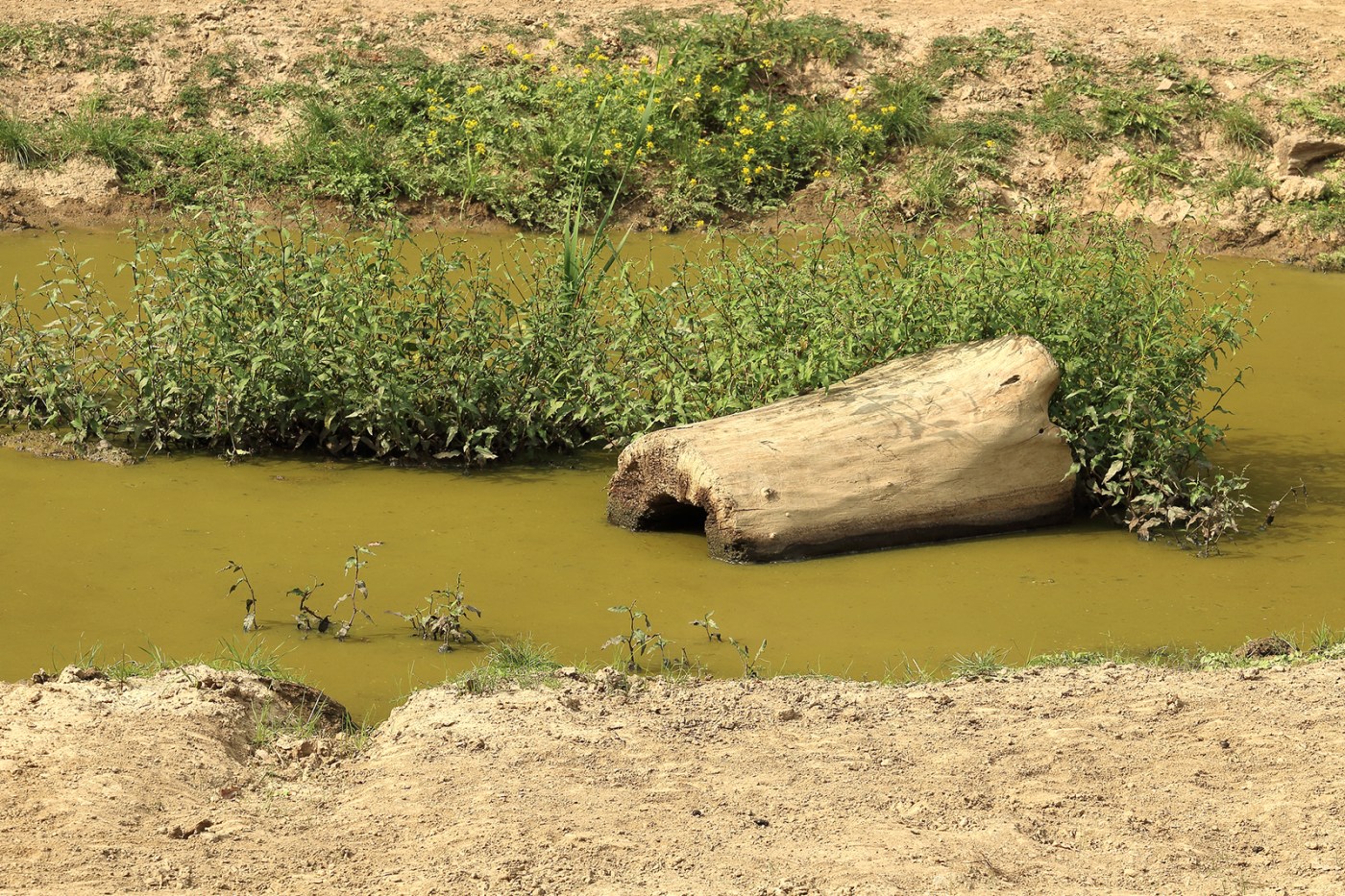
Cyanobacteria — dubbed blue-green algae — also blooms in the high heat. When the algae decomposes, it releases harmful toxins that cause respiratory and gastrointestinal issues as well as skin and eye irritation. More extreme impacts include seizures and liver damage, and the algae can even kill pets and wildlife, according to the US Centers for Disease Control and Prevention.

In historically hot climates like Florida, precipitation is the largest factor driving cyanobacterial blooms. But rising temperatures are impacting waterways in cooler climates that typically aren’t associated with cyanobacterial blooms. Massachusetts reached a season record with 55 beach closures as of Aug. 16, 87% of them due to bacterial spikes, according to the state’s Interactive Beach Water Quality Dashboard. Vermont’s cyanobacteria tracker currently lists more than 40 active alerts.

Even Lake Tahoe, famous for its pristine waters, showed signs warning of toxic algal blooms earlier this summer. While those concerns were a false alarm, the risk of a real outbreak hangs over the lake. Algal blooms have become a growing issue in recent years, and dangerous toxins were detected in a pond on Lake Tahoe’s Nevada shores, though it wasn’t connected to the lake.

“The 1.4 degree rise in annual water temperature is having an impact on parts of the lake that we thought would never be a problem,” says Jeff Cowen, a public information officer at the Tahoe Regional Planning Agency.

That’s also threatening Tahoe’s $5.1 billion in yearly tourism revenue, which makes up 60% of the area’s economy, according to Cowen. While Tahoe can blunt any would-be summer issues with its prolific winter skiing season, many lakeside economies depend on visitors flocking there to take a dip on hot days.

Adam Gufarotti, community support manager for the city of Lake Elsinore, says harmful algae blooms are a major concern. As the largest freshwater lake in Southern California, Elsinore draws visitors from around the region. But in 2022, the lake shut down for six months due to a dangerous bacterial bloom. The city lost $300,000 in lake use fees alone. Gufarotti noted that the toll was even higher for local retailers dependent on tourism revenue.

To avert a repeat, Lake Elsinore in February kickstarted a $2 million investment to pilot what’s known as nanobubble technology, from Moleaer Inc. By injecting the lake with pure oxygen, Moleaer’s nanobubble barges increase lake levels of the element and limit the release of phosphorus that allows bacteria to thrive. The lake purchased two more barges in June.

But technological solutions for large bodies of water remain few and far between. Gufarotti says he is constantly being pitched on new water-quality solutions, but many can’t handle a lake of Elsinore’s size. “A lot of the time, the largest body of water they’ve cleaned up is one acre or 50 acres. Lake Elsinore is 3,000 acres,” he says. The cost of using these technologies at that scale can be prohibitively high, with some startups asking for tens of millions of dollars.

Ultimately, the best strategies for reducing the risk of harmful bacterial blooms are reducing nitrogen and phosphorus pollution to cut off the fuel algae need, and lowering emissions. Failing to do so could leave tourism-dependent communities up a creek.

“The lake’s beauty, scenic quality, blueness and clarity are what attract people in the first place,” Tahoe’s Cowen says. “But it goes beyond that: Here, the economy is the environment and the environment is the economy.”

___