ABC’s rules for the Harris-Trump debate include muted mics when candidates aren’t speaking

posted in: News | 0

NEW YORK — Next month’s debate between Vice President Kamala Harris and former President Donald Trump won’t have an audience, live microphones when candidates aren’t speaking, or written notes, according to rules that ABC News, the host network, shared this week with both campaigns.

A copy of the rules was provided to the Associated Press on Thursday by a senior Trump campaign official on condition of anonymity ahead of the network’s announcement. The Harris campaign on Thursday insisted it was still discussing the muting of mics with ABC.

The parameters now in place for the Sept. 10 debate are essentially the same as they were for the June debate between Trump and President Joe Biden, a disastrous performance for the incumbent Democrat that fueled his exit from the campaign. It is the only debate that’s been firmly scheduled and could be the only time voters see Harris and Trump go head to head before the November general election.

Republican presidential nominee former President Donald Trump, left, speaks with a supporter during a stop at a campaign office, Monday, Aug. 26, 2024, in Roseville, Mich. (AP Photo/Carolyn Kaster)

The back-and-forth over the debate rules reached a fever pitch this week, particularly on the issue of whether the microphones would be muted between turns speaking.

Harris’ campaign had advocated for live microphones for the whole debate, saying in a statement that the practice would “fully allow for substantive exchanges between the candidates.”

Biden’s campaign had made microphone muting condition of his decision to accept any debates this year, a decision some aides now regret, saying voters were shielded from hearing Trump’s outbursts during the debate.

“It’s interesting that Trump’s handlers keep insisting on muting him, despite the candidate himself saying the opposite,” Harris spokesman Ian Sams said. “Why won’t they just do what the candidate wants?”

Related Articles

Elections |


The Latest: Kamala Harris, Tim Walz sit-down interview with CNN airs tonight

Elections |


Trump is visiting swing districts in Michigan and Wisconsin as battleground campaigning ramps up

Elections |


Woodbury, Cottage Grove, Newport candidate forums planned for September

Elections |


Takeaways from the AP’s review of Tim Walz’s descriptions of his military record

Elections |


MN U.S. Senate race: Republican Royce White faces steep climb against 3-term Democratic U.S. Sen. Amy Klobuchar

Representatives for Trump — who initially scoffed at the substitution of Harris into a debate arrangement he initially made with Biden in the race — had claimed that Harris sought “a seated debate, with notes, and opening statements,” specifications her campaign denied.

According to ABC News, the candidates will stand behind lecterns, will not make opening statements and will not be allowed to bring notes during the 90-minute debate. David Muir and Linsey Davis will moderate the event at the National Constitution Center in Philadelphia.

AP White House Correspondent Zeke Miller in Savannah, Georgia, contributed to this report. Kinnard reported from Chapin, South Carolina, and can be reached at http://x.com/MegKinnardAP

Tim Walz is a car guy — and works on his own 1979 Scout SUV. Will it help him with voters?

posted in: News | 0

In 2007, when Tim Walz was a freshman congressman, he told a reporter that his dream car was a 1973 Chevrolet Camaro, noting, “I’m kind of a muscle-car guy.” What he was actually driving was a more staid choice: a Dodge minivan.

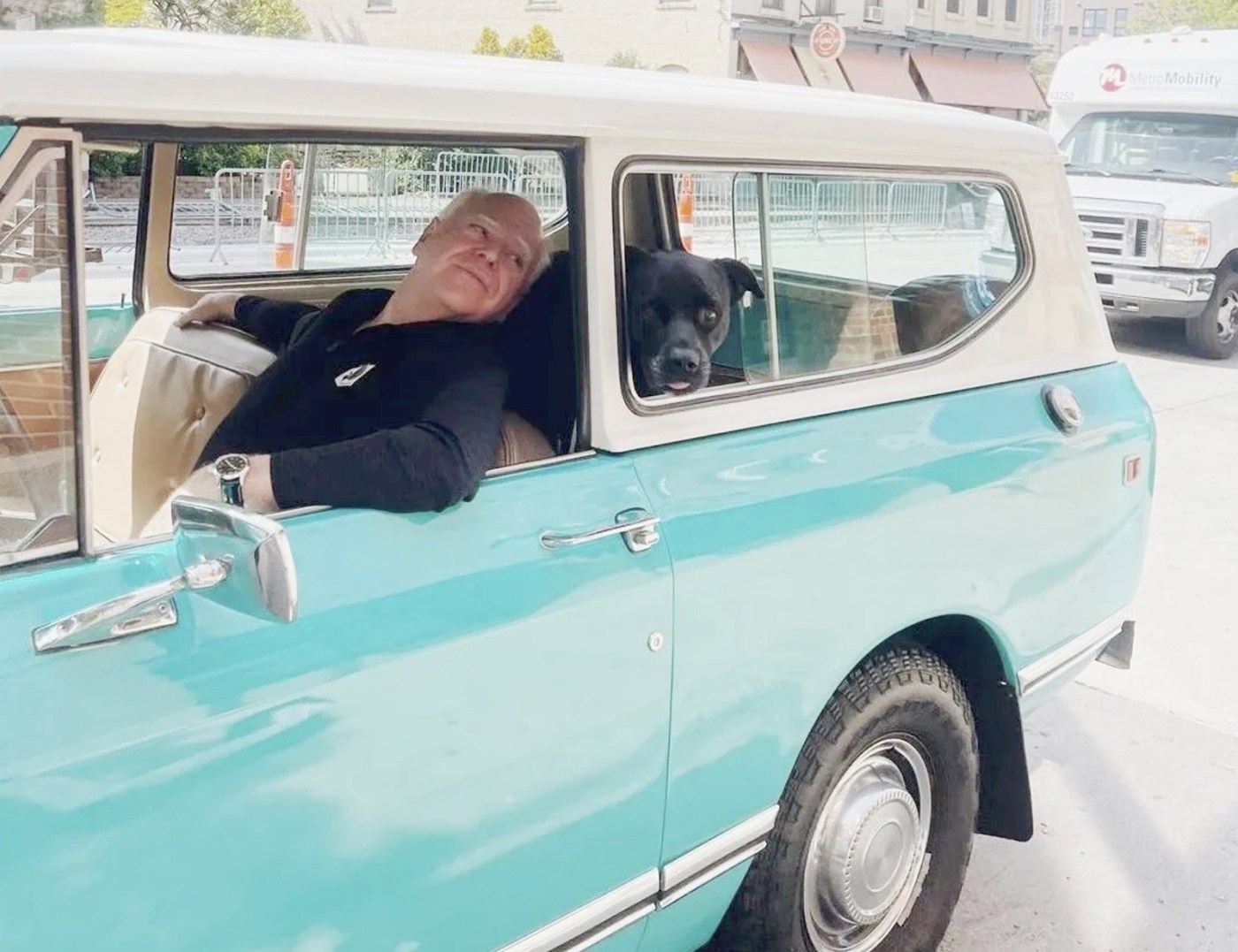
But a year after that interview with the Hill, the self-professed car guy bought a vehicle that is now making headlines and has come to define the vice presidential candidate’s I’m-from-a-small-town, Minnesota-dad vibe: a 1979 International Harvester Scout II.

The choice impresses people like Brandon Ray, a 48-year-old fellow Scout II owner from Phoenix. As Ray tells it, he’d just gone through a divorce 15 years ago when a “bad-ass” yellow Scout II caught his eye. The SUV bore two decals: One said, “Face your fears,” the other, “Live your dream.” He bought the Scout.

“It did what it said it was gonna do,” Ray said. “I faced my fears and lived some of my dreams in that truck.”

News that Walz owns a 1979 Scout II came as a surprise to Ray. “I just don’t picture a blue guy driving a f— Scout,” he said, referencing Walz’s Democratic affiliation.

Cars and politics have long mixed. With exhortations to “buy American,” presidents have almost always favored rides from U.S. automakers. That includes President Biden, who cherishes his 1967 Chevrolet Corvette Stingray.

Amid Walz’s whirlwind journey to the national political stage, his car credentials have become part of his story. Notably, a 2018 video of Walz admonishing Ford over a low-quality headlight harness has resurfaced to the delight of gearheads.

Minnesotans talk vintage cars with the governor, right, over the engine of a 1978 Ford Pinto in 2022. (Tim Walz/TNS)

The teacher-turned-Minnesota governor wrenches on cars and goes to classic auto shows, too. But the most obvious part of his pistons-and-pushrods persona is his Scout.

For years, Walz, 60, has taken to social media to share photographs of his Scout, which is painted an arresting glacier blue and sports a license plate that reads “ONE MN,” an apparent reference to his “One Minnesota” political slogan. Of the many American classics still roaming the roads, the Scout is one imbued with particular meaning.

The Scout was produced in Fort Wayne, Ind., by International Harvester from 1960 to 1980 in multiple guises spread across two generations, known as I and II. It is among the quirkiest of the vintage SUVs that have become popular in recent years. The Scout wasn’t made by a familiar automotive brand: International Harvester was a Chicago-based farm equipment company that shut down about 40 years ago.

That has made the Scout less recognizable to the Instagram set — and more appealing to enthusiasts looking for a deal at a time when vintage Ford Broncos often sell for more than $100,000. The Scout, said Randy Nonnenberg, cofounder of the automotive auction platform Bring a Trailer, has “always been an underdog.”

With its boxy body, chrome grille, round headlights and removable or soft top, it is practical, charming and not too flashy. “Scouts are very Midwest, which is very on-brand” for Walz, said Nonnenberg, whose company has auctioned 285 Scout IIs at an average price of about $38,000. “It’s kind of like the vehicle version of him.”

Some other Scout owners agree.

“Anyone who wants to maintain and keep a ’79 Scout is not your average person,” said Gary Brown, an Orange County software engineer who has restored and sold about 10 Scouts over three decades. “It takes someone with a retro or somewhat older mindset … [who] knows how to tinker.”

“I like guys like that — guys who can fix things,” he said.

As for Ray, who is selling another Scout — a rare 1978 version priced at $59,999 — he didn’t want to talk politics, which he called “a tough topic.”

But, in a nod to the unifying power of cars, Ray imagined a trip he and Walz might take into the wilds of the Southwest: “Maybe he and I can go out in the dunes one of these days?”

No ‘garage queen’

Walz appears to have a genuine passion for cars, but he also seems to possess a finely calibrated understanding of how his actions may play with voters, said Matt Hardigree, publisher of the Autopian, which has written about the politician.

Just take the governor’s social media posts featuring his Scout and another Scout — his dog. That, Hardigree said, “is an unhateable image.”

“It is Norman Rockwell transported 50 years into the future,” he said.

This International Harvester Scout II was restored by Gary Brown, an Orange County resident who is impressed that Tim Walz maintains one of his own. (Allen J. Schaben/Los Angeles Times/TNS)

Then there’s Minnesota’s right-to-repair law, one of several such measures passed by states in recent years. Signed by Walz in 2023 and called the Digital Fair Repair Act, it directs makers of electronics and other items to give consumers access to information and parts so that they can repair their own devices.

Although the law doesn’t cover cars, Hardigree said it shows that Walz subscribes to a fix-it ethos that many vintage car owners can appreciate.

In the case of the Scout, maintaining one is no small feat, because parts are hard to come by. Still, Hardigree, who reviewed images of Walz’s ride, approved of the politician’s upkeep: “It’s clean, but it’s clearly driven. It’s not a garage queen.”

Being a motorhead is such a part of Walz’s political persona that it became the subject of a joke during this month’s Democratic National Convention. TV producer Ben Wexler, whose credits include “Arrested Development,” posted on X, “If Tim Walz walks out onstage wiping his hands on a greasy rag because he just fixed the transmission on the campaign bus, we win all 50 states.”

Scouting for votes

When Ray expressed surprise over Walz’s ownership of a 4×4, he was tapping into a stereotype: Trucks are for Republicans. It’s a notion that former President Trump has leaned into, singing the praises of beefy American rides, even saying in 2019, “I love trucks of all types.”

“Even when I was a little boy at 4 years old my mother would say, ‘You love trucks,’” Trump continued. “I do. I always loved trucks.”

Hardigree, a former Texas political consultant, said that a truck has long been a requirement to get elected in that state.

“The sense [in Texas] was you couldn’t get elected as a Democrat or a Republican if you didn’t own a pickup truck,” he said. “But the Republicans never had to prove they drove a truck, and the Democrats always did.”

Nonnenberg said that Walz’s Scout — and his ability to work on it — could help him find common ground with voters.

“It shows his connection to reality,” said Nonnenberg, who spoke with The Times from the wheel of his Rivian R1S electric SUV, whose styling calls to mind the Scout. “This guy is not out of touch with normal Americans.”

Elana Scherr, a senior editor at Car and Driver, took it a step further: “Having a hobby and being genuinely into it is charming.”

Could Walz’s ownership of a Scout convince some Republican car cognoscenti to vote for Kamala Harris? Nonnenberg is doubtful, believing it’s little more than an “interesting contextual addition” that would hardly change minds. It could, however, raise the profile of a new breed of Scout at an auspicious moment.

Related Articles

Elections |


ABC’s rules for the Harris-Trump debate include muted mics when candidates aren’t speaking

Elections |


Kamala Harris and Tim Walz will sit down for first major television interview of their presidential campaign

Elections |


Ballot measures in 41 states give voters a say on abortion and other tough questions

Elections |


Arlington National Cemetery worker was ‘pushed aside’ in Trump staff dispute but won’t seek charges

Elections |


The Latest: Kamala Harris, Tim Walz sit-down interview with CNN airs tonight

In a twist, the Scout is coming back, with a new model expected by 2026. The 4×4 is being revived by Volkswagen, which acquired its trademark in 2021.

The new car will feature styling that harks back to the original. But it won’t be like the Scout that Walz drives in one important way, adopting technology whose proponents Trump has urged to “ROT IN HELL.”

It’ll be electric.

___

©2024 Los Angeles Times. Visit at latimes.com. Distributed by Tribune Content Agency, LLC.

Gophers football: U anticipates huge crowd for UCLA game at Rose Bowl Stadium

posted in: Society | 0

P.J. Fleck has worked on how best to put his tongue firmly in his cheek.

The Gophers football coach first told this joke to kick off spring practices in March and refined it for when he shared it again at Big Ten Media Days in July.

“I told our fans from Day 1: We are going to go to the Rose Bowl … so, they can’t call me a liar because we are going to the Rose Bowl this year,” Fleck teased in Indianapolis last month. “(We’re) playing UCLA at UCLA — before we got to the Rose Bowl (Game). But we did that.”

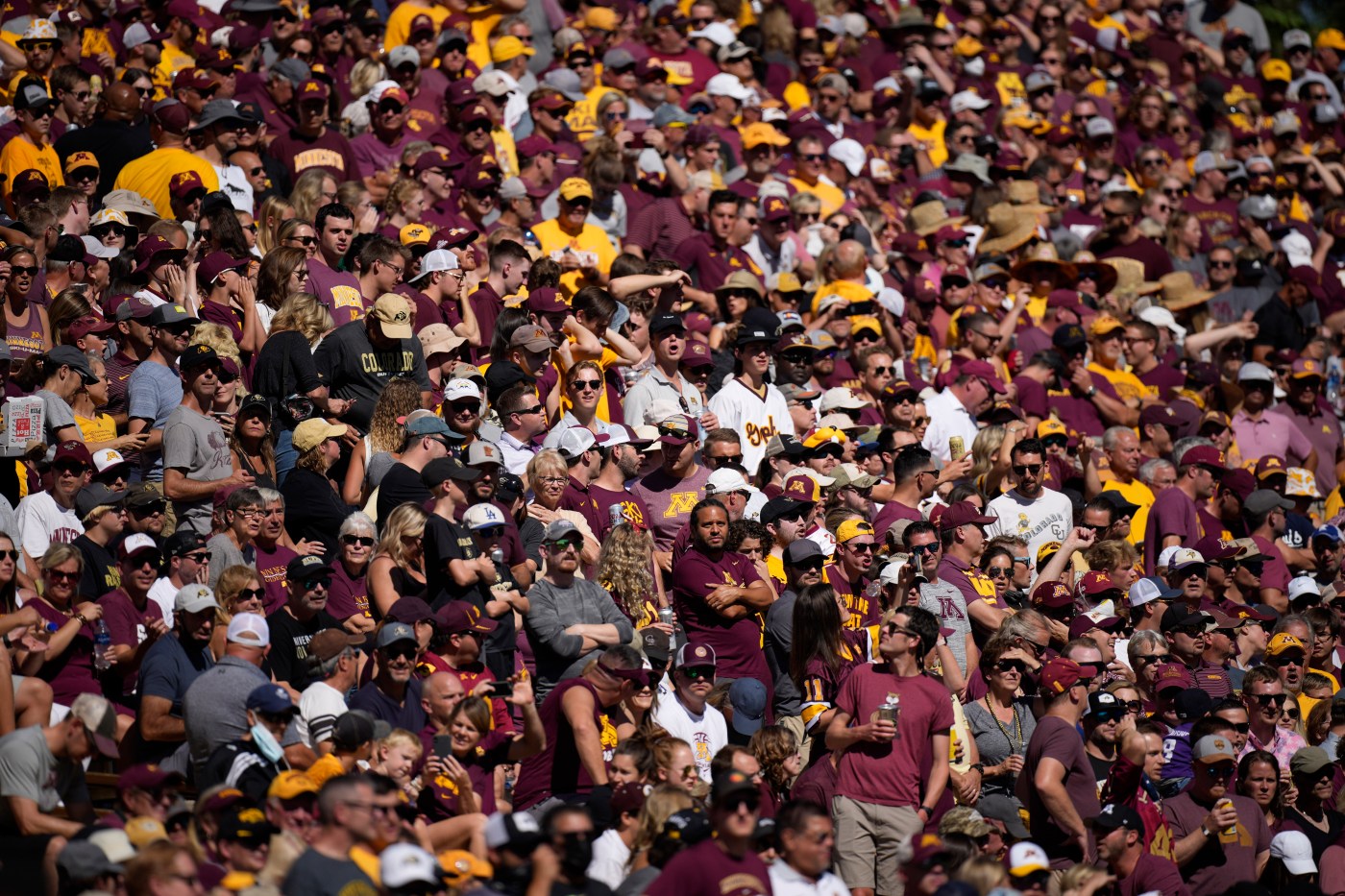
The Gophers, who open the 2024 season against North Carolina on Thursday, will technically play a Big Ten regular-season road game against the Bruins — one of the four new conference members this year — on Oct. 12 at the Rose Bowl Stadium in Pasadena, Calif. It will be the U’s third distinctive road game over the past four seasons, and the athletics department anticipates its best crowd yet.

“Our fans have great memories of playing games in Pasadena, so I think the opportunity to go back out there with the Rose Bowl, and the history and the tradition to play a new Big Ten member, we expect that to be our best road travel game of the season,” Mike Wierzbicki, senior associate athletics director for external affairs, told the Pioneer Press this week.

The Gophers estimated 10,000 fans were in Boulder, Colo., for the 30-0 win over Colorado in September 2021; and the U had approximately 6,000 to 8,000 supporters in Chapel Hill, N.C. for the 31-13 loss to North Carolina in September 2023.

“There’s tons of energy and excitement” about playing in the Rose Bowl Stadium, Wierzbicki said. “For road games, we have seen fans travel well, whether it’s Boulder, bowl games or some of these marquee new destinations. Sometimes I say nonconference, but it’s great to have UCLA in the conference. It’s unique getting used to that.”

The Gophers project around 10,000 to 15,000 fans will travel from Minnesota for the UCLA game — or drive from residences in Southern California, where the U has a “good” alumni base, Wierzbicki said. The estimate comes from anecdotal evidence such as internal ticket inquires, questions from fans and responses to events planned for L.A. that weekend, including those for the U foundation and a tailgate party.

The Gophers will have a standard 3,000-ticket allotment from the Big Ten for the UCLA game, but fans will, of course, also be able purchase tickets from other marketplaces. “You can tell there is a lot of interest for what I think will be north of that 10,000 number,” Wierzbicki said.

University leadership is planning to come to L.A. that weekend — from members of the Board of Regents to new president Rebecca Cunningham and representatives in her office. “It’s more of what we do for a small bowl game compared to traditional regular-season games,” Wierzbicki said.

The Gophers last played in the New Year’s Day Rose Bowl in 1961, beating UCLA 21-3 in front of an announced crowd of 98,214. Over the next 62 years, Minnesota has played in 22 total bowl games, but has not made it back to the Rose Bowl, the oldest postseason game nicknamed the “Grandaddy of Them All.”

The U last played UCLA in Pasadena in 1978. In 2011, Minnesota played USC at the L.A. Coliseum. The Trojans will come to Minnesota on Oct. 5.

Season ticket sales down

The amount of Gophers football season tickets has decreased 1,810 from 2023 to 2024, according to U data requested by the Pioneer Press this week. The U said it had 25,396 non-student season tickets last season, and as of Wednesday, 23,586 for this season.

Related Articles

College Sports |


Check out Huntington Bank Stadium’s new food and drink items

College Sports |


Gophers football: Big opportunity awaits the U in season opener

College Sports |


Gophers football vs. North Carolina: Keys to game, how to watch and who has the edge

College Sports |


Gophers expect a ‘violent’ defense, but how much blitzing should fans expect?

College Sports |


Gophers football: Former player Casey O’Brien has cancer relapse, asks for help

Minnesota math, reading scores still much lower than pre-pandemic levels, state test scores show

posted in: News | 0

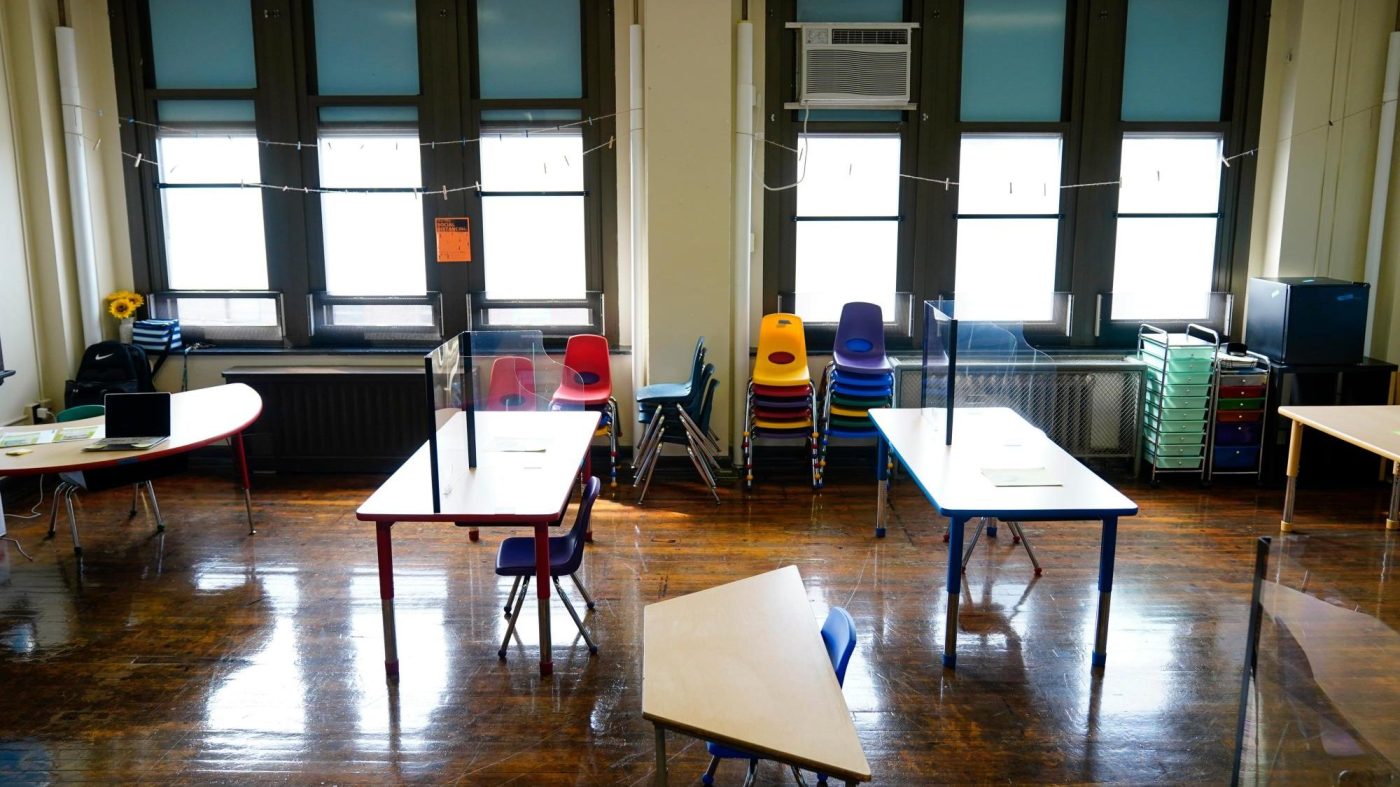
Minnesota students’ reading and math scores on state proficiency tests aren’t dropping anymore, but they still haven’t recovered from a huge drop from the pandemic, newly released data from the state education department show.

As was the case last year, fewer than half of public school students met grade standards in reading, math and science, according to Minnesota Comprehensive Assessment results for 2024 released Thursday by the state Department of Education.

This year’s MCA results show that 45.5% of Minnesota students reached grade-level standards in math, the same as the year before. Reading scores also remained stable in 2024, with 49.9% of students testing as proficient.

Science, the lowest-scoring category at 39.6%, was up 0.4 percentage points from 2023. Last year it had dropped 2.1 percentage points.

In St. Paul, students’ overall scores had little change from those of last year. About 26% of students scored proficient in math, 34.1% were proficient in reading and 25.4% in science. The largest improvement from last year’s proficiency scores came in science at an increase of 1.4%.

Statewide, scores are down significantly since the beginning of the pandemic, which education officials say presented a challenge for students and teachers as schools closed and students shifted to remote or hybrid learning. Reading and math are both down 8.4 percentage points from 2019.

Scores had already been sliding before the pandemic. On the 2014 MCA, 63% of students grades three through eight were proficient in math and 59% were proficient in reading.

Education Department officials say they think a major state funding increase from the 2023 legislative session, which boosted state funding by more than $2 billion and tied the formula to inflation, as well as other measures like new reading instruction standards and teacher recruitment, will turn around flagging schools.

“We’re working hard to put these new measures into place, and I think it’s going to be the long term measures, many of which involve the large scale and systemic changes, that’s going to positively impact students for years to come,” said Education Commissioner Willie Jett. ”Schools all across the country have faced some unprecedented challenges the last few years, and I just believe we’ve made some progress.”

Jett said testing data is just one measure his department uses to measure school success. While scores have remained at lows reached during the pandemic, education officials said they were encouraged by the decline leveling out, as well as rising consistent attendance rates.

This year, statewide consistent attendance grew to 74.5% from 69.8% the year before. But the rate remains significantly below where it sat before the pandemic.

Consistent attendance means students attending at least 90% of the time. Before the pandemic in 2019, around 85.4% of students were consistently attending school statewide.

Achievement gap

Minnesota still has an achievement gap between students of different ethnicities, even as the state works to address the issue. In past years, white students were about twice as likely to be proficient in math and reading than Black, Hispanic and American Indian students. Results this year only changed slightly, according to the state education department.

Students take the reading and math tests in third through eighth grades and once in high school so state education officials can gauge the success of schools. Science testing happens in fifth and eighth grades and once in high school.

They’re also used as part of a federal education accountability system that’s required under the 2001 No Child Left Behind Act.

The test isn’t mandatory. This year nearly 93% of students took the math test and nearly 95% took the reading tests. And in 2020 the state did not have the MCA as the coronavirus pandemic shut down schools.

Other measures of school performance include academic progress, attendance and graduation rates in what’s called the “North Star Accountability System.” The state of Minnesota gives additional aid to schools that do poorly on those metrics.

Check back for updates on this developing story.

Related Articles

Education |


University of Minnesota regents reject call to divest financial stakes in Israel

Education |


Stillwater starts school year with a familiar issue: bus headaches

Education |


Trees down, schools canceled, State Fair delayed in storm’s aftermath on Tuesday

Education |


South Washington County Schools board votes to give themselves a raise

Education |


Other voices: More schools should ban student cellphones