We were snowed in over the weekend, like millions of others, and cooking anything quickly was very far from my mind.
Instead, I loaded up my shopping list with the ingredients for chili made with dried beans, a long-burbling pork ragù, skillet chicken with harissa and dates, buttermilk waffles. It brought to mind something I think often about both cooking, the act, and Cooking, the New York Times app: There’s a place for recipes for rushed cooks on a busy Tuesday and for leisurely cooks on a languid Sunday, and sometimes that’s the same person, just on different days.
You shouldn’t eat less well just because you have stuff to do. But don’t forget about that gentle weekend-cooking energy, the dog-eared cookbooks, the waffle iron that may or may not be gathering dust in its sticky pockets. I’ve got great recipes for you below.
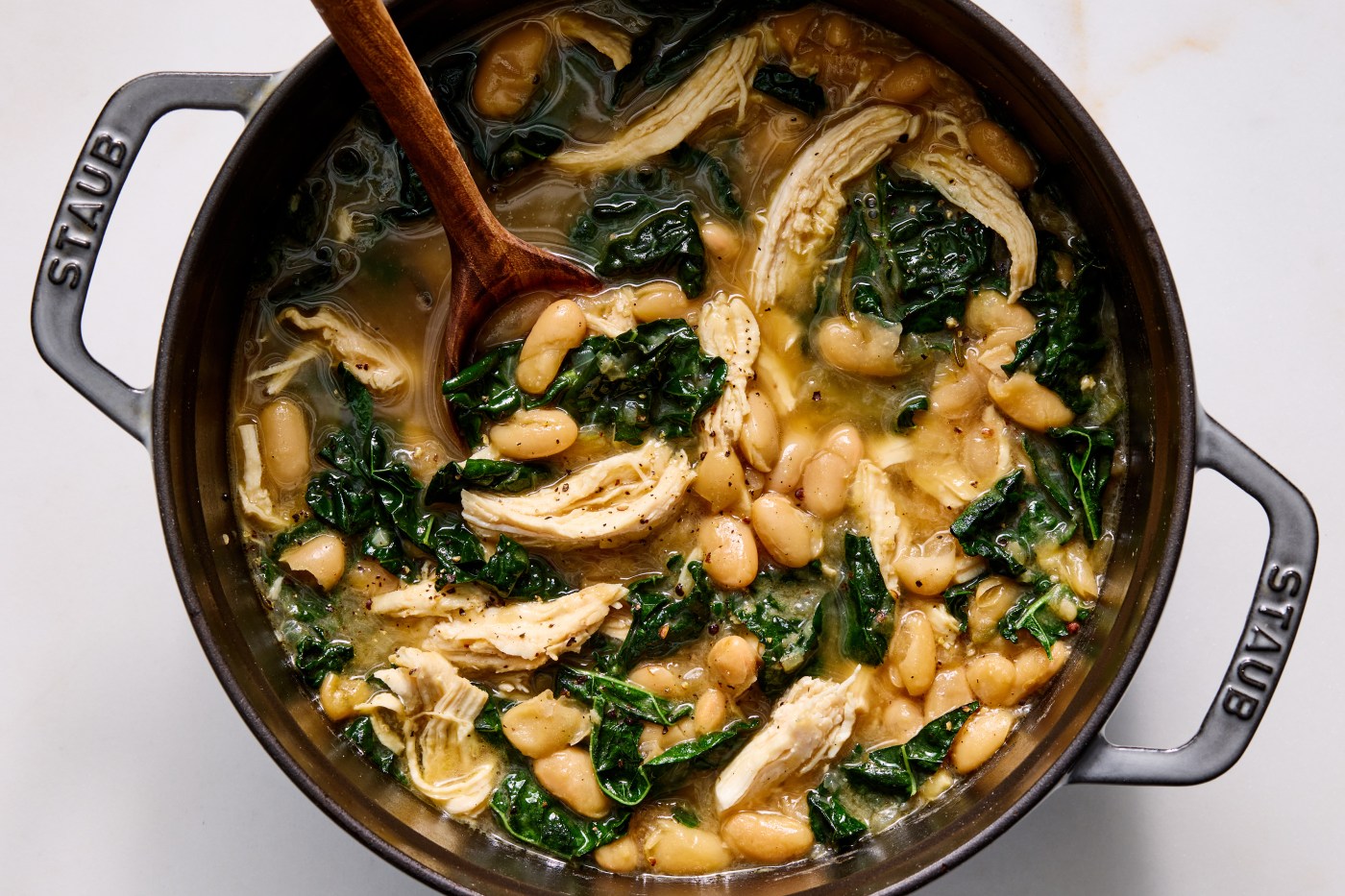
1. Chicken and White Bean Stew
As gentle to make as it is to eat, this soup brings together the soothing properties of chicken soup and braised beans and greens. The soup is sweet and smooth from onions, garlic and herbs softened in butter, chickeny from poaching boneless breasts in chicken broth and silky from smashed beans. Feel free to top bowls with a squeeze of lemon, grating of Parmesan or slice of crusty bread. You could also add cooked rice or pasta to bowls. This is a soup that’s there for you.
By Ali Slagle
Yield: 4 servings
Total time: 45 minutes
INGREDIENTS
3 tablespoons unsalted butter
1 yellow onion, finely chopped
5 garlic cloves, smashed and peeled
1 rosemary or 2 sage sprigs
Salt and black pepper
1 pound boneless, skinless chicken breasts
4 cups chicken broth
2 (15-ounce) cans white beans, such as cannellini, drained
1 bunch kale, escarole or another dark leafy green, stems removed and leaves coarsely chopped
DIRECTIONS
1. In a large pot or Dutch oven, melt the butter over medium. When foaming, add the onion, garlic and herb sprig and season with salt and pepper. Cook, stirring often, until softened and golden, 8 to 10 minutes. Remove the herb sprig.
2. Add the chicken, broth and white beans. Bring to a simmer over medium, then reduce heat to low, cover the pot and simmer until the chicken is cooked through (165 degrees in the thickest part), 10 to 14 minutes.
3. Transfer the chicken to a bowl and smash some of the beans on the side of the pot. Stir the greens into the soup. Increase heat to medium and simmer, uncovered, while you shred the chicken.
4. Use two forks to shred the chicken. Stir the chicken back in the soup and season to taste with salt and pepper.
2. Ravioli With Roasted Red Pepper Sauce
Ravioli with roasted red pepper sauce. Inspired by the base flavors of jollof rice, Kiano Moju swaps out standard tomato sauce for a slightly fruitier version made with roasted red bell peppers, and finishes the ravioli with a dollop of tangy goat cheese. Food styled by Brett Regot. (Armando Rafael/The New York Times)
Sometimes the best pasta sauces do start with a jar. Inspired by a classic flavor combination found in Nigerian jollof rice (red bell peppers, habanero, stock and tomato), this recipe starts off with a jar of roasted red bell peppers, and blends them with habanero and stock until creamy. The chile is used more for its flavor than its heat. By removing the seeds and the white membrane, the spice level drops significantly, leaving you with a wonderful fruity pepper note. The pasta, tomato paste and a topping of creamy goat cheese bring everything together. As with any prominent ingredient, be sure to taste the cheese first. Some goat cheese brands can be more tangy than others, so you may need to use less.
By Kiano Moju
Yield: 4 to 6 servings
Total time: 25 minutes
INGREDIENTS
1 (16-ounce) jar roasted red peppers, drained
1 cup chicken or vegetable broth
1 habanero chile, halved and seeded
3 tablespoons olive oil, plus more to serve
3 garlic cloves, thinly sliced
3 tablespoons tomato paste
Kosher salt and black pepper
2 (9-ounce) packages cheese ravioli (or tortelloni)
4 ounces mild goat cheese
DIRECTIONS
1. Using a blender or an immersion blender, blend the drained roasted red peppers, broth and habanero until smooth. Set aside.
2. Coat the bottom of a large (12-inch) skillet with the olive oil. Add the garlic and set over medium heat. Once the garlic becomes fragrant and sizzles in the pan, add the tomato paste, stirring until it darkens to a brick red, 1 to 2 minutes.
3. Pour in the blended pepper mixture and stir until combined. Bring to a simmer and let cook for 2 to 3 minutes, until slightly reduced. Season with salt and black pepper to taste.
4. Add the ravioli and stir until coated. Shake the pan so that it’s in a flat layer, then spoon the goat cheese on top. Let cook for 2 to 3 minutes, until the pasta is cooked to your liking and the cheese is slightly melty. Finish with more black pepper if you like. (For a golden cheesy top, once the pasta is cooked, you can broil the dish on high for 4 to 5 minutes, until lightly browned.) Drizzle with a bit of olive oil before serving.
3. Spicy Roasted Shrimp and Broccoli Raab
Spicy roasted shrimp and broccoli rabe. Melissa Clark’s shrimp with broccoli rabe roasts in 10 minutes flat. Food styled by Spencer Richards. (Rachel Vanni/The New York Times)
By Melissa Clark
Yield: 2 to 3 servings
Total time: 20 minutes
INGREDIENTS
3/4 pound broccoli raab, tough bottom stems removed
3 tablespoons extra-virgin olive oil
1/2 teaspoon toasted sesame oil, optional
1/2 teaspoon coarse kosher salt
1/4 teaspoon crushed red chile flakes, or to taste
3/4 pound large shrimp, peeled
1 teaspoon orange zest
Orange wedges, for serving
DIRECTIONS
1. Heat oven to 425 degrees. In a large bowl, toss broccoli with 2 tablespoons olive oil, the sesame oil if using, 1/4 teaspoon salt and 1/8 teaspoon chile flakes. In a separate bowl, combine shrimp, remaining 1 tablespoon oil, the orange zest, remaining 1/4 teaspoon salt and remaining 1/8 teaspoon chile flakes.
2. Spread broccoli and shrimp in a single layer on a baking sheet. Roast, tossing once or twice halfway through, until shrimp are just opaque and broccoli is tender and golden around the edges, about 10 minutes. Serve with orange wedges.
4. Huevos Enfrijolados (Eggs in Spicy Black Beans)
Huevos enfrijolados (eggs in spicy black beans). You simmer and smash beans with garlic and chipotle chiles in adobo to make Rick Martinez’s recipe for this beloved egg dish, a true any-time-of-day, any-time-of-year meal. Food styled by Barrett Washburne. (Ghazalle Badiozamani/The New York Times)
Eggs nestled in a spicy, smoky black bean sauce, huevos enfrijolados are a staple of Mexican home cooking. It’s a quick way to make a meal from what’s already in the kitchen: leftover frijoles de olla, chiles and fresh eggs. In this version, canned black beans are cooked with chipotles and garlic until rich and creamy, then eggs are gently dropped into the simmering beans to poach. Served with crunchy tostadas, queso fresco and avocado, it’s a deeply comforting, pantry-friendly meal that comes together in under 45 minutes — perfect for a weeknight dinner or a quick and hearty brunch.
By Rick Martinez
Yield: 4 servings
Total time: 40 minutes
INGREDIENTS
3 tablespoons vegetable oil
1/2 medium white onion, chopped (about 1/2 cup)
3 garlic cloves, crushed
3 to 5 canned chipotle chiles in adobo (to taste), chopped, plus 2 tablespoons adobo sauce
2 (15-ounce) cans black beans, rinsed and drained
1 1/4 cups vegetable or mushroom broth
Kosher salt
6 to 8 large eggs
3 ounces queso fresco or cotija cheese, crumbled
Cilantro leaves with tender stems and sliced avocado, for serving
8 corn tostadas
DIRECTIONS
1. Heat oil in a large skillet over medium and add half of the onion, all of the garlic and the chopped chipotles, and cook, stirring occasionally, until tender and beginning to brown, 6 to 8 minutes. Add the beans, adobo sauce and broth and bring to a boil. Cook, stirring occasionally, until liquid has reduced slightly, about 5 minutes. Off the heat, use a potato masher to smash beans until no whole beans remain. Taste and season with salt.
2. Return the pan to medium-high.Use a spoon to make wells in the beans, gently crack the eggs into the simmering bean mixture and season each with salt. Reduce heat to medium and cook until the eggs are just set, 5 to 7 minutes. If you prefer hard-cooked eggs, cover the skillet and cook for 8 to 10 minutes.
3. Serve huevos enfrijolados with the queso, cilantro and remaining chopped onion sprinkled over the top, with sliced avocado and tostadas alongside.
5. Pork Schnitzel With Quick Pickles
Pork schnitzel with quick pickles. Schnitzel is a perfect dinner when paired with quick pickles. (Andrew Scrivani/The New York Times)
When most people think of schnitzel, they default to veal. But pork has its merits. Pork schnitzel is not only more economical than veal, it’s also richer in flavor and easier to cook (you’ve got a bigger margin of error when it comes to timing because pork isn’t as apt to dry out). This recipe calls for panko, which are fluffy Japanese-style breadcrumbs that make the coating particularly light. But any breadcrumbs will work. If you don’t want to make the quick pickles, serve this with a sliced up cucumber or two and/or fennel bulb with some lime wedges on the side. And if you happen to have lingonberry jam on hand, this is a great time to use it.
By Melissa Clark
Yield: 4 servings
Total time: 30 minutes
INGREDIENTS
For the pickles:
2 limes
3 small Kirby cucumbers or 1 large cucumber, peeled if you like and thinly sliced
1/3 cup very thinly sliced fennel bulb (save the fronds for garnish)
1 large shallot or 1/2 small red onion, thinly sliced
1 tablespoon light brown sugar
1/2 teaspoon kosher salt
For the pork cutlets:
1/2 cup flour
1/8 teaspoon cayenne
1/8 teaspoon freshly grated nutmeg
2 eggs, beaten
1 1/2 cups panko or other unseasoned breadcrumbs
1 1/4 pounds boneless pork cutlets, pounded to 1/8-inch thick
Coarse kosher salt and ground black pepper
Safflower, peanut or vegetable oil, for frying
1 scallion, thinly sliced, including greens
Lingonberry jam, for serving (optional)
DIRECTIONS
1. Prepare the pickles: Grate the zest from one of the limes and juice them both. Add zest and juice to a shallow bowl along with the remaining pickle ingredients and toss well. Let sit for at least 30 minutes and up to 3 days. Chill if letting them sit for longer than 4 hours.
2. Meanwhile, prepare the pork: Mix flour with cayenne and nutmeg. Place flour mixture in one shallow dish, place eggs in a second dish, and place breadcrumbs in a third dish. Season pork cutlets generously with salt and pepper.
3. Heat 1/8 inch oil in a large skillet over medium-high heat. While oil heats, dip cutlets one by one into flour (shake off any excess), then into eggs (ditto) and finally into the breadcrumbs, taking care not to handle pork more than necessary (hold meat by ends).
4. When oil sizzles when a pinch of breadcrumbs is thrown in, add as many cutlets as comfortably fit in one layer, leaving plenty of room around them. Swirl and tilt pan so oil cascades over top of cutlet in waves. When bottom is golden brown, 3 to 4 minutes, flip and brown the other side, swirling pan (swirling helps create air pockets, giving you lighter schnitzel). Transfer to a paper-towel-lined baking platter or baking tray and sprinkle with more salt. Repeat with remaining pork.
5. Serve pork sprinkled with scallion and drizzled with a little of the pickle juice, accompanied by the pickles and the lingonberry jam, if you like.
AND TO DRINK: Think Austrian. Either grüner veltliner or good dry Austrian riesling will go beautifully with schnitzel. If you prefer red, you could try a fresh, lithe zweigelt. Beyond Austria, many dry whites with substance and body will do: chardonnay, as long as it’s not oaky; Savennières, herbal sauvignon blancs, Soave, ribolla gialla from northeast Italy, a godello from Spain. And don’t forget sparkling wines, particularly Champagne, great with many fried foods. — ERIC ASIMOV