MN State Fair: Here’s what you need to know about hours, deals, parking and more

posted in: News | 0

The 2024 Minnesota State Fair starts on Thursday, Aug. 22 and runs through Labor Day on Monday, Sept. 2.

Here’s what you need to know:

Hours

• Fairground hours are from 7 a.m. to 11 p.m. except for Labor Day, when hours are from 7 a.m. to 7 p.m.

• Other hours of operations within the Fairgrounds: Find specific hours for different events, barns and activities at mnstatefair.org/general-info/hours-of-operation/.

Tickets

Pre-Fair discount gate admission tickets cost $15 through Wednesday; starting Thursday, general admission prices are $18 for ages 13-64; $16 for seniors ages 65+ as well as kids ages 5-12; children four and under get in free.

Discounts

On Thursday — opening day of the 2024 Minnesota State Fair — there are discounted admission prices at the entrance gates: $16 for ages 13-64 and $13 for seniors (65+) and kids (5-12).

Other discounts:

• Seniors Day: Discounted admission ($13 for 65+) at the Fair entrance and deals on merchandise and food for all Fair guests on Monday, Aug. 26 and Thursday, Aug. 29.

• Military Appreciation Day: Discounted admission ($13) on Tuesday, Aug. 27 at the entrance gates for active military, their spouses and kids; retired military and their spouses; and military veterans and their spouses (requires valid documentation of service). Also, deals on merchandise and food for all Fair guests.

• Kids Day: Discounted admission ($13) for kids ages five to 12 at the entrance gates on Wednesday, Aug. 28 and Monday, Sept. 2 (Labor Day).

• Mighty Midway and Kidway: There are also special ride and game promotions throughout the Fair for both the Midway and Kidway, including early-bird pricing. Get the dates and hours at mnstatefair.org/deals-and-discounts/.

From Jared Kaufman, here’s more about free stuff.

Getting there

The Minnesota State Fair operates a free Park & Ride bus service from approximately 30 locations around the Twin Cities, including sites in St. Paul, Roseville and at the University of Minnesota. Find all locations and hours at mnstatefair.org/get-here/free-park-and-ride/.

From Imani Cruzen, here’s more about transit and parking options.

Weather

It looks like the rain will hold off for opening day on Thursday. Here’s the 12-day forecast, including air quality and weather history.

Grandstand

Last summer, the Minnesota State Fair Grandstand offered one of its most star-studded lineups in recent memory. While this year’s offerings aren’t quite as spectacular, ticket prices are more reasonable than 2023.

Here’s a preview of the acts from Ross Raihala.

Food

Earlier, the Fair announced 33 official new foods for 2024 including Buffalo cheese curd and chicken tacos, deep-fried ranch dressing and banh mi eclairs.

Six new vendors include St. Paul’s El Burrito Mercado, Kosharina Egyptian Cuisine and Midtown Market’s Indigenous Food Lab.

From Jess Fleming, here’s the list of 33 items.

Beverages

There are 63 new beverages to choose from at the Fair. As usual, there’s a heavy emphasis on sweet stuff and fruited beers, including lingonberry options.

From Jess Fleming, here’s the list of 63 new drinks, grouped by location and including some non-alcoholic options.

What’s new

From a redesigned crop art exhibition hall to deep-fried ranch dressing to a temporary no-go on live cow births at the CHS Miracle of Birth Center, Jared Kaufman has the highlights of what’s changing, what’s new, and what’s gone at this year’s Fair.

First aid

Regions Hospital Emergency Medical Services will be the official first aid provider for the 16th year in a row. From Angeline Patrick Pachec, here’s a list of safety tips and reminders from Regions to help visitors avoid needing medical care while at the Fair.

Related Articles

Entertainment |


Jennifer Lopez files for divorce from Ben Affleck after 2 years of marriage

Entertainment |


‘Jackpot!’ stars Awkwafina and John Cena discuss dystopian LA lottery comedy

Entertainment |


Minnesota State Fair 2024: What’s new, what’s changing, and what’s gone from the Fairgrounds

Entertainment |


‘Bad Monkey’ review: Comedic crime caper stars Vince Vaughn as a motormouth detective

Entertainment |


What to watch: A Laci Peterson ‘bombshell’? No, but ‘American Murder’ is a solid look at infamous case

New lines of attack form against the Affordable Care Act

posted in: News | 0

Julie Appleby | (TNS) Kaiser Health News

WASHINGTON — The Affordable Care Act is back under attack. Not as in the repeal-and-replace debates of yore, but in a fresher take from Republican lawmakers who say key parts of the ACA cost taxpayers too much and provide incentive for fraud.

Several House Republican leaders have called on two watchdog agencies to investigate, while Sen. Chuck Grassley, R-Iowa, fired off more than half a dozen questions in a recent letter to the Centers for Medicare & Medicaid Services.

At issue are the ACA’s enhanced subsidies, put in place during the COVID-19 pandemic as part of economic recovery legislation. Grassley said in a recent news release that the subsidies “left Obamacare, a program already riddled with problems, wide open to new waste, fraud and abuse.”

While potential fraud in government programs has always been a rallying cry for conservatives, the recent criticisms are a renewed line of attack on the ACA because repealing it is unlikely, given that more than 21 million people enrolled in marketplace plans for this year.

“I see what’s happening right now as laying the groundwork for the big fight next year,” said Debbie Curtis, a vice president at consulting firm McDermott+.

The enhanced subsidies are set to expire in late 2025. Without them, millions of Americans would likely see their premiums go up.

But the debate will also likely draw in other issues, including Trump-era tax cuts, which also must be addressed next year. Also potentially in play are other aspects of the ACA, including a special year-round enrollment period and zero-premium plans for low-income consumers.

Much of what eventually happens will depend on the makeup of the Senate and House, as well as control of the White House, after the November elections.

“The fate of the enhanced tax credits is dependent on the Democrats holding some majority in Congress and/or winning the presidency and is also tied inextricably to the Trump tax cut expiration,” said Dean Rosen, a partner at Mehlman Consulting and a former senior Republican congressional staffer. That’s because both sides have incentive to extend all or part of the tax cuts, but each will want some kind of compromise on other issues as well.

The growing outcry by Republicans about the subsidies goes hand in hand with a controversial recent report from a conservative think tank that estimates millions of people — or their brokers — may be misstating their incomes and getting the most generous ACA subsidies.

The Paragon Health Institute report estimates that the number of people who enrolled in ACA coverage for this year who projected they would earn between 100% of the federal poverty level and 150% — amounts that qualify them for zero-premium plans and smaller deductibles — likely exceeds the number of people with that level of income, particularly in nine states.

It recommends several changes to the ACA, including letting the enhanced subsidies expire, increasing repayment amounts for people who fail to project their incomes correctly, and ending the Biden-backed initiative that allows very low-income people to enroll in ACA coverage year-round rather than having to wait for the once-a-year general open enrollment period.

The Paragon report was cited by both Grassley and the House GOP lawmakers in their letters to government overseers. It also notes what they consider a related concern: ongoing problems of unscrupulous, commission-seeking agents enrolling people in ACA coverage or switching their plans without their permission, often into highly subsidized plans. KFF Health News uncovered the enrollment and switching schemes in the spring.

Some critics, though, question how the Paragon analysis was done.

For instance, Paragon’s findings rely on two unrelated data sets from different years. Combining them makes many people who are eligible for subsidies appear to be ineligible, said Gideon Lukens, a senior fellow and director of research at the Center on Budget and Policy Priorities. “The analytic approach is not careful or sophisticated enough to provide accurate or even meaningful results.”

Paragon President Brian Blase, a former senior Trump administration official and a co-author of the report, said it used publicly available data that others could use to confirm its results.

Paragon’s recommendations also drew mixed reactions.

Sabrina Corlette, a co-director of the Center on Health Insurance Reforms at Georgetown University, said they “would make coverage less affordable, disproportionately affecting low-income people, and that’s the opposite of the goals of the ACA.”

Another ACA expert, Joseph Antos of the conservative American Enterprise Institute, agrees with one of the recommended fixes: changing the structure of the subsidies to limit zero-premium plans.

“Giving health insurance away is the problem,” said Antos, who said it is probably contributing to the unauthorized switching by some rogue brokers, who know if they sign someone up for a free plan without their permission, they’re unlikely to get caught for a while because the person won’t get monthly bills.

Another potential solution to people misstating their income is that “the seven or eight states that still haven’t expanded Medicaid should do that,” Antos said. The expansion would open Medicaid eligibility to more people who earn less than the poverty level, reducing the incentive to overestimate their income to qualify for ACA subsidies.

Among other things, the subsidies are larger now for low-income enrollees. For example, families at the poverty level or just above it ($30,000 to $45,000 for a family of four) can currently qualify for coverage with no monthly premium, whereas before they would have had to pay 2% to 4% of their annual income toward such a plan.

President Joe Biden has pushed to make the subsidies permanent and has often touted the record enrollment in ACA plans under his watch. Across all income groups, nearly 20 million people out of 21 million ACA enrollees this year got at least some subsidy, according to a KFF report.

Subsidies, also called premium tax credits, are generally paid directly to health insurers, and applicants must estimate their income for the coming year to qualify.

Those who incorrectly project their incomes — possibly because they work irregular retail hours, are self-employed and give a best guess of business, or get an unexpected raise or a new job — must pay back all or part of the subsidy, on a sliding scale linked to income.

The cost of the enhanced subsidies has been sharply criticized by some GOP leaders after the Congressional Budget Office recently estimated that making them permanent would add $335 billion to the federal budget deficit over 10 years.

Democrats have pointed to another recent CBO report estimating extending the Trump-era tax cuts would add $4.6 trillion to the deficit over 10 years.

The enhanced subsidies “cost a lot less than that and it’s actually helping people,” Curtis said.

Ultimately, “every health care debate comes down to money,” said Larry Levitt, executive vice president for health policy at KFF, a health information nonprofit that includes KFF Health News. “There is a trade-off here. Millions of people have gotten coverage and more affordable premiums due to these enhanced subsidies, but extending them would cost the government a lot of money.”

Despite the attention paid by some GOP lawmakers to the fraud concerns, many political observers say they don’t think they will play a direct role during the election campaigns of either party.

“For Republicans, they’ll stay away from health care period. It is not a winning campaign issue for them,” Curtis said. “With Harris’ campaign, we will see a continued drive for affordable coverage being key, particularly drug costs. In neither party will you hear much about the importance of extending the enhanced subsidies. It’s too complicated.”

_____

(KFF Health News is a national newsroom that produces in-depth journalism about health issues and is one of the core operating programs of KFF — the independent source for health policy research, polling and journalism.)

___

©2024 Kaiser Health News. Visit khn.org. Distributed by Tribune Content Agency, LLC.

The FDA calls them ‘recalls,’ yet the targeted medical devices often remain in use

posted in: News | 0

David Hilzenrath | (TNS) Kaiser Health News

In 2016, medical device giant Abbott issued a recall for its MitraClip cardiac device — “a Class I recall, the most serious type,” the FDA said.

“Use of this device may cause serious injuries or death,” an FDA notice about the recall said.

But neither the manufacturer nor the FDA actually recalled the device or suspended its use. They allowed doctors to continue implanting the clips in leaky heart valves in what has become a common procedure.

In a notice, the manufacturer explained, “Abbott is not removing product from commercial distribution.” Rather, Abbott revised instructions for use and required doctors who implant the clips to undergo training.

When it comes to medical devices, recalls can include not only “removals,” in which the device is removed from where it is used or sold, but also “corrections,” which address the problem in the field — for instance, by repairing, adjusting, relabeling or inspecting a device.

“It’s very oxymoronic,” said Rita Redberg, a cardiologist at the University of California, San Francisco and former editor in chief of the journal JAMA Internal Medicine. “A recall makes it sound like it’s recalled. But that is not actually what it means.”

Though the FDA and federal regulations call these actions recalls, they might be described more aptly as “non-recalls.” And they have happened repeatedly in recent years. For instance, in addition to other Abbott devices, products made by Medtronic, Abiomed and Getinge have had recalls that left them in use.

Safeguarding the Public

Recalls that leave what the FDA identifies as potentially dangerous products in the marketplace can raise the question: Do they do enough to protect the public?

There are other ways to handle recalls. In announcements about products as varied as crib bumpers, pool drain covers, bicycle helmets and coffee mugs, the Consumer Product Safety Commission routinely alerts consumers to stop using recalled products and contact the manufacturers for refunds, repairs or replacements. The National Highway Traffic Safety Administration regularly advises consumers to bring recalled cars back to the dealer to have them fixed. When the U.S. Department of Agriculture and the FDA announce food recalls, they routinely tell consumers to return or discard the food.

In some cases, a medical device that is the subject of a recall can be kept on the market safely because there is a simple fix, said Sanket Dhruva, a cardiologist and an associate professor at UCSF who has studied FDA oversight of devices. In other cases, recalls that don’t remove devices from the market can provide unwarranted reassurance and leave the public at risk, Dhruva said.

From 2019 through 2023, there were 338 Class I medical device recalls, 164 of which were corrections and 174 of which were removals, FDA spokesperson Amanda Hils said.

Some products undergo recall after recall while they remain on the market. Products in the MitraClip line have been the subject of three rounds of recalls, none of which removed devices from use.

“When deciding whether a recall warrants device removal from the field, the FDA considers the frequency and severity of adverse events, effectiveness of the corrective actions that have been executed, and the benefits and risks of preserving patient access to the device,” FDA spokesperson Audra Harrison said.

Where recalled devices have already been implanted, “removal” doesn’t necessarily mean removing them from patients’ bodies. “When an implanted device has the potential to fail unexpectedly, companies often tell doctors to contact their patients to discuss the risk of removing the device compared to the risk of leaving it in place,” the FDA website says.

The FDA allowed the recalled MitraClip devices to remain in use “because the agency believed that the overall benefits of the device continued to outweigh the risks and the firm’s recall strategy was appropriate and adequate,” Harrison said.

The FDA reviews the recall strategies that manufacturers propose and often provides input to ensure the public will be protected, Hils said. The agency also monitors the effectiveness of recalls and, before terminating them, makes sure the strategy was carried out, Hils said.

Abbott, the maker of MitraClip, said the device has been proven safe and effective “based on more than 20 years of clinical evidence and has profoundly improved the lives of people living with mitral regurgitation,” a condition in which blood flows backward through the heart’s mitral valve. The condition can lead to heart failure and death.

“With MitraClip, we’re addressing the needs of people with MR who often have no other options,” company spokesperson Brent Tippen said.

Speaking of the MitraClip recalls, Redberg said, “So hard to imagine these are effective actions in protecting patients.”

In 2021, for Medtronic’s StealthStation S7 cranial software, the company and the FDA sent a different message.

StealthStation is an elaborate system of screens and other equipment that guides neurosurgeons using instruments in the brain — for instance, to biopsy or cut out tumors. Drawing from CT scans, MRIs, and other imaging, it’s meant to show the location of the surgical instruments.

In connection with a Class I November 2021 recall, the FDA website said potential inaccuracies in a biopsy depth gauge could result in “life-threatening injury (such as hemorrhage, unintended tissue damage, or permanent neurological injury), which could lead to death.”

The FDA website explained what Medtronic was doing about it.

“The recalling firm will provide a warning and instructional placard to be applied to impacted systems,” the website said. “Until a software update is available, ensure you are following the instructions below to prevent the issue from occurring,” it advised doctors.

In a statement to KFF Health News, Medtronic spokesperson Erika Winkels said the safety and well-being of patients is the company’s primary concern, and certain issues “can be safely and effectively remedied with a correction on site.”

Richard Everson, a neurosurgeon and an assistant professor at UCLA, noted that the 2021 recall allowed doctors to continue using unaffected StealthStation features, a benefit for patients and facilities depending on them.

“But, I mean, then you could ask, ‘Well, why don’t they just disable the view (of the brain) that’s bugged?’” Everson said. “Why would they give you the option of looking at an inaccurate one?”

“That’s kind of a strange solution,” he said.

The FDA lists the 2021 recall as still open, explaining “not all products have been corrected or removed.”

That recall was not the last word on problems with StealthStation. Since then, the manufacturer has submitted adverse event reports to the FDA describing trouble in cases involving various versions of StealthStation.

In a September 2022 case, guidance provided by a StealthStation device was allegedly off the mark, a procedure was aborted, and, when the patient awoke, they “had almost no speech for two days,” according to a Medtronic report. In the report, Medtronic said there was “insufficient information to determine the relationship of the software to the reported issue.”

In a February 2024 case, after brain surgery, an MRI found that the operation “missed the tumor” and that other tissue was removed instead, according to a report Medtronic submitted to the FDA. In the report, Medtronic said that when a company representative tested the system, it performed as intended.

In March 2024, Medtronic recalled versions of StealthStation S8 without removing them from hospitals. The company said at the time that it would provide a software update.

“Software updates are available to correct the anomalies identified in the 2021 S7 and 2024 S8 recalls and are actively being deployed,” Medtronic’s Winkels told KFF Health News in a July email. “While the software updates for the 2021 S7 recall are complete in the U.S., they remain ongoing in some international regions.”

In June 2023, Abiomed issued an urgent medical device correction for its Impella 2.5 intravascular micro axial blood pump, which supports the heart. In patients with a certain type of replacement heart valve, there was a risk of “destruction of the impeller blades,” which could cause “low flow” and “embolization of the fractured impeller material,” an entry on the FDA website said.

“Clinicians are cautioned to position the Impella system carefully in patients,” the FDA website said, among other instructions.

The updated instructions “provide technical guidance to mitigate the risk of rare complications,” Abiomed spokesperson Ryan Carbain said. There were no product removals and no reports of adverse events “related to product design or manufacturing,” Carbain said.

Another set of medical devices, Cardiosave Hybrid and Rescue Intra-Aortic Balloon Pumps made by Getinge of Sweden, have failed persistently, according to FDA records.

The devices — which are placed in the aorta, a major artery, to assist the heart — were the subject of eight Class I recalls from December 2022 to July 2023. All were corrections rather than removals, a KFF Health News analysis found.

In a May 2024 letter to health care providers, the FDA said that, in the previous 12 months, it had received almost 3,000 adverse event reports related to the balloon pumps. It was referring to reports of malfunctions and cases in which the products might have caused or contributed to a death or injury. Of those, 15 reportedly involved serious injury or death, the FDA said.

During the summer of 2023, the FDA noted that “alternative treatments are limited” and said the devices could continue to be used.

But, in May, the FDA changed its stance. The agency advised health care facilities to “transition away from these devices and seek alternatives, if possible.”

“These recommendations are based on our continued concerns” that the manufacturer “has not sufficiently addressed the problems and risks with these recalled devices.”

Getinge sent KFF Health News written answers from Elin Frostehav, the company’s president of Acute Care Therapies.

“There is no question that we would have liked to have solved these issues in full much earlier,” she said.

As a result of the FDA’s May action, the company “immediately paused proactive marketing” of the balloon pumps in the United States, and it is selling them only to customers who have no alternatives, Frostehav said.

“We are working with the agency to finalize remediation and product update solutions,” Frostehav said.

‘Known Possible Complications’

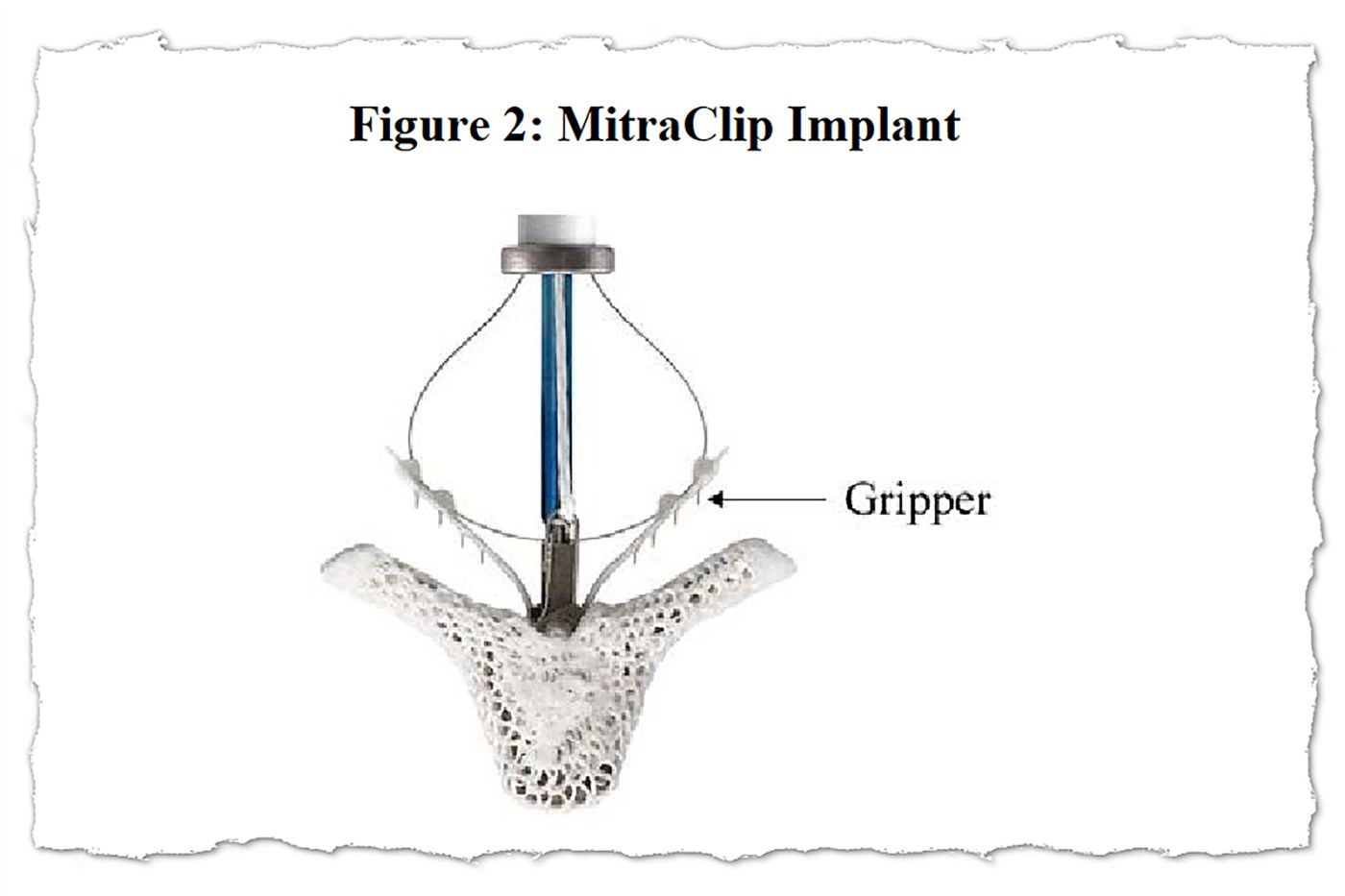
Abbott’s MitraClip system includes tiny clips implanted in the heart’s mitral valve and the equipment used to implant them. The apparatus features a steering mechanism with hand controls and a catheter that is threaded through a major vein, typically from an incision in the groin, to place one or more clips in the heart.

Worldwide, more than 200,000 people have been treated with MitraClip, according to an Abbott website.

The 2016 MitraClip recall described cases in which “the user was unable to separate the implantable Clip from the delivery system.”

In a news release at the time, Abbott said it had “received a small number of reports” in which that happened.

Those cases “resulted in surgical interventions to remove the delivery system or replace the mitral valve, and it is expected that any future similar incidents would also require surgery to correct the problem,” the FDA said in a 2016 notice. “There was one patient death in these cases as a result of severe comorbidities following surgery.”

Years later, something similar happened.

In February 2021, a clip was implanted in an 81-year-old patient but the doctor couldn’t separate the clip from the delivery system, according to a report Abbott filed with the FDA. The patient was transferred to surgery, where the delivery system “had to be cut down in order to detach the clip.”

The patient then underwent an operation to replace the mitral valve, and, hours later, the patient was brought back to surgery to address bleeding, the report said.

The patient “coded” the next day and died from an aortic bleed, the report said.

In the report to the FDA, the manufacturer blamed “case-specific circumstances.”

“Cardiac arrest, hemorrhage and death are listed” in the device instructions “as known possible complications associated with mitraclip procedures,” the company said. “There is no indication of a product issue with respect to manufacture, design or labeling.”

The third MitraClip recall, initiated in September 2022, cited an “increase in clip locking malfunctions.”

Most of the reported malfunctions were not associated with adverse outcomes, the FDA said then. Treatment with MitraClip “remains within the anticipated risk levels,” the company told customers.

As with the two earlier recalls, the third advised doctors to follow the device’s instructions. But the 2022 recall identified a contributing factor: the way the device was made.

“Abbott has identified a contributing cause … as a change in the material properties of one of the Clip locking components,” the company said in a 2022 letter to customers.

“Abbott is working on producing new lots with updated manufacturing processing and raw material,” the company wrote. In the same letter, Abbott told doctors that, in the meantime, they could use the devices they had in stock.

Six days later, a clip opened while locked and a patient died, according to a report the manufacturer submitted to the FDA.

“There is no evidence that death was related to the device but it was likely related to the procedure,” Abbott wrote.

Now, almost two years later, the 2022 recall remains open, according to the FDA website, and “not all products have been corrected or removed.”

_____

(KFF Health News data editor Holly K. Hacker contributed to this report.)

_____

(KFF Health News is a national newsroom that produces in-depth journalism about health issues and is one of the core operating programs of KFF — the independent source for health policy research, polling and journalism.)

___

©2024 Kaiser Health News. Visit khn.org. Distributed by Tribune Content Agency, LLC.

Ana Zamora: Voters don’t want to hear Trump and Harris fight over crime. They want to hear actual solutions

posted in: Politics | 0

In the weeks since President Joe Biden dropped out of the presidential race, a new narrative about the election has taken shape.

In one corner, there’s presumptive Democratic presidential nominee Kamala Harris — the former chief legal officer for California who says she’s here to “prosecute the case” against Republican presidential nominee Donald Trump. In the other is Trump, the self-proclaimed candidate of law and order who wants to “make America safe again.” Crime was already on voters’ minds. Now it sits squarely at the center of the debate — and both candidates will work strenuously to win voters’ trust on the issue of safety.

As they do, they’d be wise to remember that Americans aren’t interested in overheated rhetoric or petty name-calling. What people want are real solutions to make our communities safer and more just.

A debate on those terms — constructive and future-focused — would be a departure from the historical norm. Too often, our political discourse about crime and safety has become a war of constant escalation, in which candidates go to extreme lengths to claim the mantle of “tough on crime.” This dynamic hasn’t done anything to advance public safety. Instead, it’s given us the war on drugs and the highest incarceration rate in the world.

Is that really a mistake we want to repeat?

The polling data says no. Last year, Gallup showed that when you ask Americans whether the criminal justice system is “too tough” or “not tough enough,” most say it should be tougher. But then the pollsters went a level deeper and asked people what should actually be done. The top answer wasn’t to hire more police. It was to address the social and economic problems that drive crime in the first place — by a margin of 2 to 1.

Absent leadership from the top, people have spent the last decade developing those solutions from the ground up. Their movement travels under the broad banner of “criminal justice reform.” But really, the work is better understood as a process of democracy unfolding in big cities and small towns across the country — red, blue and purple.

Reformers are ordinary people working to center safety and justice in a way that’s specific to where they live. Together, they seek to understand what’s driving crime in their communities, from family instability to the absence of mental health services. They design policies to address those issues. They build political power and support networks. And they work with elected officials to get better laws on the books.

The reform movement has notched remarkable wins, beginning with the fact that 3 in 4 Americans– Democrats and Republicans — now believe in its aims, according to a report from the bipartisan group FWD.us.

Many of its solutions enjoy broad political appeal — among voters and legislators alike. States have passed laws to give police the resources they need while improving oversight and accountability. They’ve also pushed ahead on other fronts — strengthening the public defense system, ending mandatory minimum sentencing and juvenile life without parole, creating deflection and diversion programs, funding education and workforce development in prisons, expanding access to parole, sealing criminal records and making sure people who leave the prison system have the support they need to reenter society successfully.

Now the prison population is shrinking in many places, and crime rates are plummeting.

We have to protect those precious gains. And we can’t let the overheated rhetoric of a presidential election keep us from making more.

The way to start is by throwing a spotlight on progress. The bright-red state of Oklahoma, for example, just passed a law to help survivors of domestic abuse who were imprisoned because they committed a criminal act while defending themselves. Their sentences will now be reduced, thanks to a politically diverse group of advocates, legislators, funders and community members who spent two years working to right an obvious wrong.

Stories like this remind us that “tough on crime” policies aren’t the only option. Even in an era of profound political division — and a moment when the presidential election will pry us even further apart — we are still capable of crossing party lines to make change.

It’s only when we lose sight of that that we end up with laws such as the Safer Kentucky Act, which promises to sweep even more people into the state’s bulging prison system, some for life, while doing nothing to prevent crime.

People seeking elected office — Trump, Harris and everyone down-ballot — ought to take note. Voters might be willing to back a bad policy if it’s the only thing on the menu. But if you actually listen to what they’re asking for and give them a choice between senseless punishment and pragmatic solutions that deliver safety, accountability and justice, they’ll pick the better option. Sometimes, good policy really is good politics.

If we can manage to remember that, I’m optimistic about what November will bring for public safety measures across the country — regardless of who wins the White House.

No matter what, I urge everyone who cares about these issues, and especially the donors who sustain this movement, to stay committed. Politics is transient. Candidates come and go. But as we’ve proved together over the past decade, the criminal justice reform movement is durable.

If we keep investing in smart policies that the majority of Americans want, this work can remain an evergreen, bipartisan focus that can win in every state.

Trump and Harris may have the loudest megaphones. But it’s voters’ voices that matter most, and they’ve made their wishes clear.

Ana Zamora is founder and CEO of The Just Trust, which advocates for bipartisan criminal justice reform. Previously, she worked at the California Appellate Project and later served as director of criminal justice reform at the American Civil Liberties Union. She wrote this column for the Chicago Tribune.

Related Articles

Opinion |


Other voices: More schools should ban student cellphones

Opinion |


Sally Pipes: Free tuition won’t fix America’s shortage of doctors

Opinion |


David French: Colleges can’t say they weren’t warned

Opinion |


Lisa Jarvis: Bizarre raw milk trend puts kids at risk

Opinion |


F.D. Flam: The oldest Olympians might hold the key to slowing aging