In El Paso, a Migrant Death Crisis Emerges amid Extreme Heat

posted in: Society | 0

One May afternoon, the temperature was already approaching 99 degrees fahrenheit when the first call came. The calls kept coming, and they wouldn’t stop. In the span of several hours, the fire department of Sunland Park, a small community in New Mexico nestled between El Paso and the border wall, was overwhelmed with heat injury calls. All around town, calls were coming in about migrants collapsing in the midday heat. As Fire Chief Daniel Medrano recounted, his department sprung into action, splitting up his small crew to respond to the emergencies. Only a single paramedic was on duty that day—the rest of the crew were certified as EMT basics, not able to do much more than chest compressions. He only had two fire engines and a single ambulance available. 

Crews responded to a call involving two migrants suffering from heat exhaustion, stable enough to be transported to the hospital. Amid the chaos, another call came in about a critically ill migrant who was found unresponsive and without a pulse. The lone firefighter that responded to this patient frantically performed chest compressions for 20 minutes until a paramedic arrived at the scene. As they were pronouncing the patient dead, yet another call: nearby construction crews had found another woman collapsed at the edge of town, where Sunland Park empties into the vast Chihuahuan Desert. Her husband was beside her, in better shape but hysterical. The construction workers carried her body, burning with the heat of the desert, onto a driveway in the shade of a house and called for help. By the time Chief Medrano arrived on scene, she was unconscious. 

Her breathing came in short, ragged gasps, her chest rising and falling erratically. A firefighter slid a thin tube down her nose into her airway to help her breathe. He placed a mask over her face, pumping air into her lungs. Another unfurled a white body bag. Together, they maneuvered her inside the bag and began packing it with pounds of ice. Suddenly, dark and thick vomit erupted from her mouth. Chief Medrano had the sinking realization that no more ambulances were available for transport. They were less than 20 minutes from the nearest hospital, but they would have to wait for a helicopter. 

An hour later, I was walking into my shift in the emergency department as the dull thump-thump of a departing helicopter cut through the summer heat. Two ambulances, a firetruck, and several Border Patrol vehicles were crowding the ambulance bays. A cool whoosh of air greeted me as the bay doors parted. The ER was buzzing more than normal. All the rooms in the trauma zone were full, nurses with blood-splattered gloves were racing to triage patients as Border Patrol agents and police officers lingered outside of rooms. 

I had barely stepped into the department when Dr. Adams, the day doctor I was taking over for, got up from his seat. “Follow me,” he said. “I want to do this one bedside.”

He led me into a trauma bay where an intubated female patient lay on a gurney covered in ice and wet towels. She was intubated, blood oozing from her mouth. “She was found down in Sunland Park,” he said. “She had just crossed the border. Intubated on scene. Her temperature was 107 on scene, she was unresponsive.” 

As he explained the care she had received so far, I opened her eyelids and shined a light in them. No response. “She’s off sedation, completely unresponsive,” Dr. Adams said. Her temperature was still high, at 103 degrees, and her heart rate was through the roof. 

I turned my attention to her belongings placed next to her bed. For critical patients, it is often necessary to completely undress them to expose any hidden injuries. In this process, it is common to find the few belongings a migrant patient brought with them. In this final stage of the journey, the coyote would have told them to drop everything that they had carried with them for the thousands of miles up to this point—to only bring what they could carry on their body. And at this moment, when everything unessential is left in the desert, it is often only faith that remains—as was the case for this patient.

There was a book of prayers. A necklace with an icon of the Virgin Mary. A charm bracelet with crosses, the Virgin Mary again, and little airplanes. A card with the icon of Saint Toribio, who is known as the patron saint of migrants and is said to appear to those crossing the desert in distress. I wonder if he appeared to her. 

The patient was quickly transferred to the ICU soon after my shift started. I followed her progress for several days, until there was nothing left to follow. She died, having never regained consciousness. Her husband, released from custody, was able to be by her side when she passed away. She was my first heat death in what would become a particularly deadly summer. 

The death of my patient that day underscores the increasingly deadly risk that migrants take in crossing the southern border near El Paso. Last year, the Border Patrol documented a record 149 migrant deaths in the El Paso sector, which includes southern New Mexico and Far West Texas. This year’s toll has already surpassed last year’s, according to Border Report. Many of these deaths come from the unrelenting heat. 

As a border physician, I have encountered all of the macabre ways in which border policies lay waste to migrant bodies: heat injuries, wall falls, drownings, motor vehicle accidents after reckless pursuits by overzealous officers. All of these deaths are avoidable, perpetuated by the cruelty of our policies. But the heat deaths in particular seem so senseless. For the migrants who cross the border wall outside of Sunland Park, the desert in many places only stretches a few hundred yards before blending into the residential neighborhoods of Sunland Park. El Paso, with its highways and hospitals, is only a short drive away. They’re reached the promised land, but they’re struck down in sight of help. “They barely got their feet wet”, Chief Medrano says of the migrants who cross the wall into Sunland Park. “And then they drown.” 

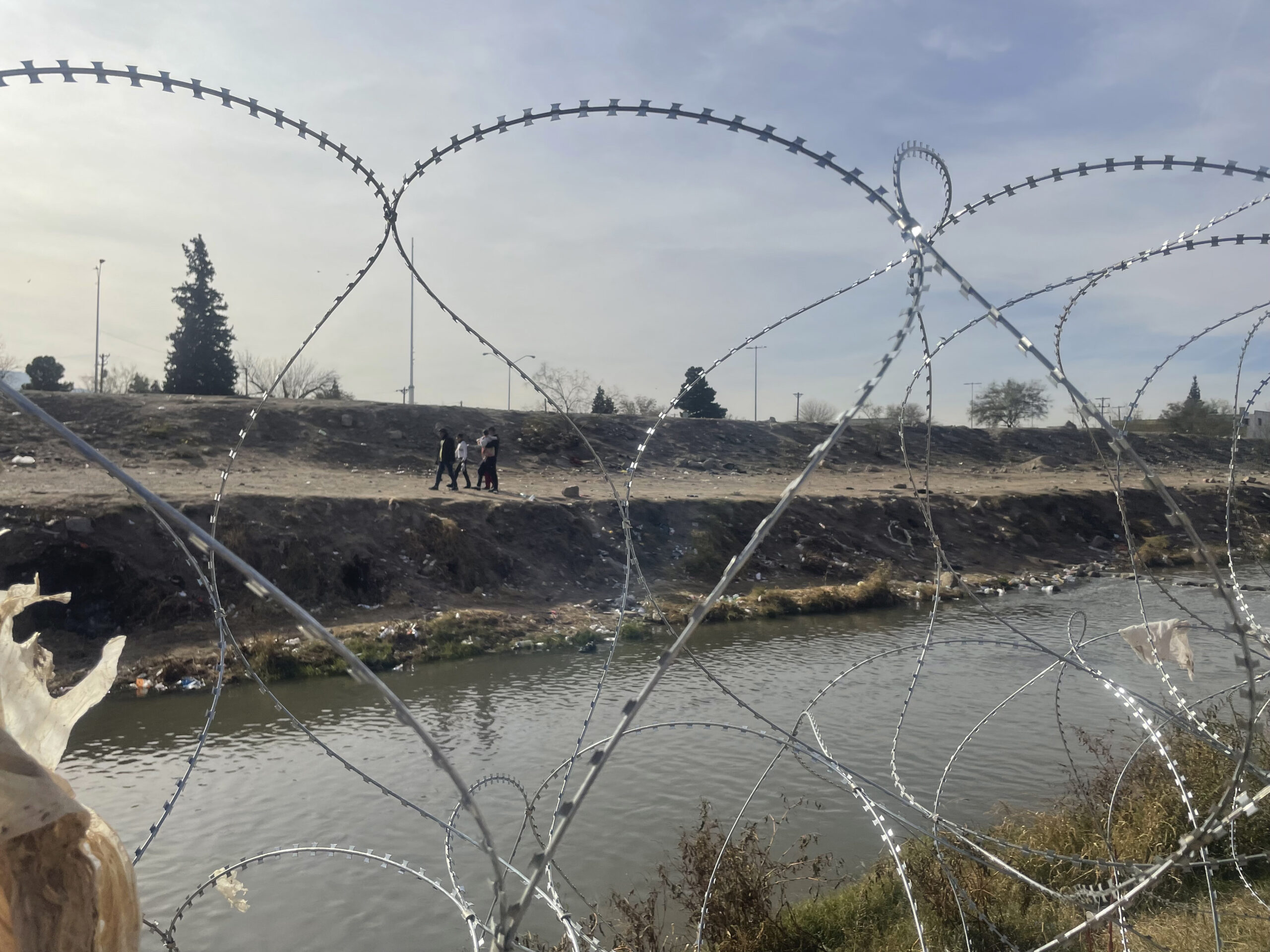
A family is seen on the Mexican side of the Rio Grande through concertina wire placed by Texas National Guard troops in El Paso. (AP Photo/Giovanna Dell’Orto)

On Mount Cristo Rey, where a 29-foot cross towers over the borderlands, nine migrants were found dead last year. For me and many other El Pasoans, it is a popular spot for hiking, biking, and running. Along the border, a site of recreation can conceal a graveyard. 

As deaths from heat injuries seem to have increased, crossings have declined. Border Patrol apprehensions in the El Paso area were 30 percent lower this July—the most recent month available—than last July. This could be because El Paso is witnessing the convergence of two deadly trends: climate change and border militarization. In 2023, El Paso experienced 44 consecutive days of over 100 degree heat, shattering a decades-old record. June of 2024 was the hottest June recorded in El Paso, and the second hottest month in El Paso’s recorded history, only surpassed by July of last year. The Sunland Park Fire Department has measured ground temperatures as high as 156 degrees. At 162 degrees, human skin is destroyed. 

As the heat rises, it has become harder to safely cross the border. Since late 2022, Texas National Guard soldiers deployed under Operation Lone Star have installed miles of concertina wire along the Rio Grande in an attempt to prevent migrants from crossing the river to seek asylum. Without any other option, migrants are forced into more dangerous areas to cross, often under the control of criminal organizations in Mexico. In 2024, an executive order by President Biden curtailed the right to seek asylum along the border. 

Desperation breeds dangerous crossings. Under the scorching heat of a warming earth, decisions to cross in the desert can be fatal, even if the journey to shade is a few hundred yards. Desperation also breeds innovation. 

A few weeks after my migrant patient’s death from heat exposure, I was sitting in the office of Sunland Park’s Fire Chief Medrano to discuss his department’s response. The body-bag ice bath that the woman had arrived in at the hospital was one of Medrano’s innovations.

On a whiteboard behind him was a tally of migrant deaths his department had responded to over the summer—28 as of late July. Next to this tally was the number of ice baths his department had used to treat migrants suffering from heat injuries this year. 

Last year, when heat deaths first soared, Chief Medrano was frustrated. “This isn’t working”, he remembers, recalling the then-standard treatment of placing ice-packs under patients’ arm-pits and groin. The ice-packs would rapidly melt. “We were taking them off, and they were freaking hot. Looking outside of the box, what can we do?” he said. He found a solution after stumbling upon a paper from a fire department in Arizona detailing the use of body bags for whole-body immersion in the field, expediting the treatment the patient would receive in the hospital. 

Medrano starkly remembers the first migrant patient he treated with this new technique. She presented similarly to my patient; unresponsive and hyperthermic. Her temperature was 107.7 in the field. By the time she was being loaded onto an ambulance, her temperature was down to 104. In the emergency department, she started opening her eyes. By the next day, she was talking again. While the ice bath didn’t save my patient, it’s likely that it gave her husband enough time to be by her side when she died. Chief Medrano has already had to purchase two more orders of body bags to keep up with the amount of heat injuries this summer.

A Sunland Park firefighter named Luis Marquez took me into the desert to show where they had performed rescues and found bodies. As we drove along the Rio Grande, he recounted stories of pulling the dead bodies of migrants from the river. Marquez pointed towards bushes and ravines, the stories of patients found there etched into his memory. 

It is in this environment that ordinary citizens have organized to leave water in the desert for parched migrants. For years, groups like No Mas Muertes in Arizona have been leaving water for migrants in the Sonoran desert. Similar efforts in the deserts around El Paso have begun recently, driven by the soaring death rates. Faith leaders have also rallied their flocks in a mission to leave water in the desert. “Whatever our position on immigration, I don’t think anybody can agree that the death of people is a fitting response, a solution,” El Paso Catholic Diocese Bishop Mark Seitz told Border Report. Seitz recently led a group on a water drop on Cristo Rey. 

Seitz and his compatriots may be putting themselves in a precarious position. In 2018, a member of No Más Muertes was charged with multiple felonies for providing humanitarian aid for migrants in the desert, including leaving water. These charges were ultimately dismissed. However, these water drops occur in the context of a new effort by Attorney General Ken Paxton to criminalize humanitarian aid from migrants. Paxton’s effort to shut down Annunciation House, a Catholic-affiliated migrant shelter in El Paso, was recently thrown out by a lower court. Paxton has announced he’s appealing. Another Catholic-affiliated shelter in the Rio Grande Valley has been similarly targeted. 

I recently led a group of volunteers up Cristo Rey. Each of us filled our bags up with bottles of water and began the trek up the mountain. It is one of the most beautiful areas of the borderlands, cut through by deep ravines and brown mottled cliffs. The faithful will stop at the various crosses that interrupt the trail, marking the Stations of the Cross. The crosses bring to mind a cemetery. Along the way, we left water in shaded and conspicuous stops, replacing them in our bags with empty bottles to carry back down. We met small groups of migrants, skittish but grateful for the water that we handed over to them. A Border Patrol helicopter circled in the sky above, lazily surveilling us. 

From the top of the mountain, in the shadow of the statue, you have views of the entire Paso del Norte region. The scar that runs through the landscape, the border wall, ends abruptly in the mountainous terrain behind Cristo Rey. From the top of the mountain, you can look down and almost imagine that no border exists. 
Other voices: Harris needs to fill in the blanks for undecided voters

posted in: Politics | 0

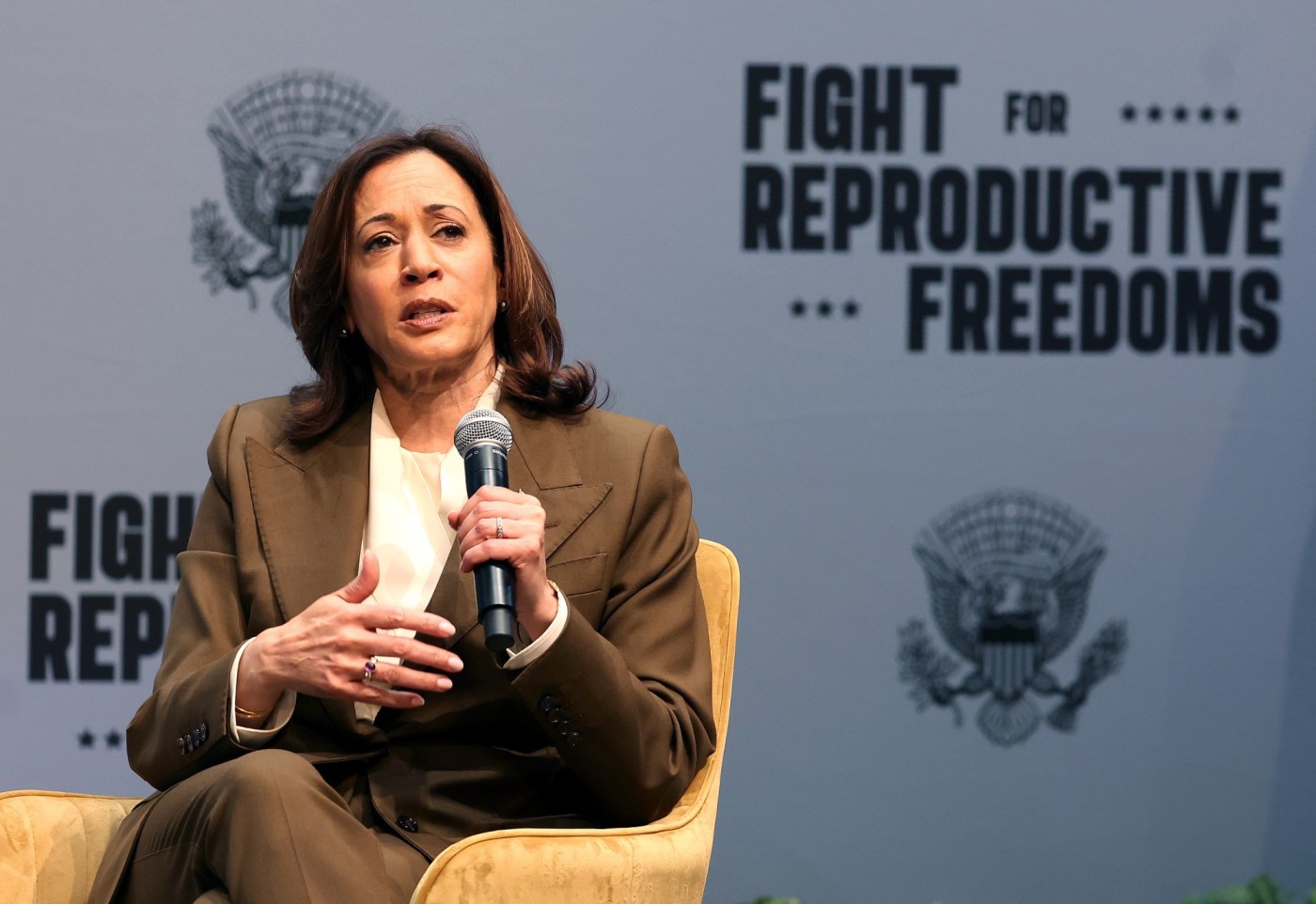
Since President Joe Biden ducked out of the presidential race last month, Vice President Kamala Harris has made steady gains against Donald Trump in most polls.

If she wants that lead to endure past a honeymoon phase, she’ll need to articulate an agenda that appeals to persuadable but as-yet-undecided voters. The positions that will work most effectively just happen to be exactly those the country needs.

No doubt, Harris has reason to hesitate before adopting any such approach. As ever, Trump is his own worst enemy. The vice president might be tempted to let his divisive rhetoric, reflexive dishonesty, personal grievance and flamboyant displays of ignorance do all the work. Setting out where she stands on policy will also mean clarifying — and often contradicting — things she’s said in the past.

Despite the risks, Harris must offer a program. It’s partly a matter of principle: Voters are entitled to no less. But she also needs to convert those who might choose a known quantity over a silent one.

Many of the policies advanced by the Biden administration have been admirable. On foreign policy, the president has been more responsible and coherent than Trump. His commitment to fighting climate change was correct on the merits. The main themes of Bidenomics — the push for good jobs, rising wages and broader prosperity — are well worth supporting.

But Biden too often allied himself with his party’s less enlightened elements. Many of his regulations have made economic progress harder, and his rhetoric has been needlessly hostile to business. Harris she should avoid these errors by emphasizing practical results over party-line ideology.

Some examples: The transition to clean energy will go much faster if new investments aren’t bogged down by union-labor and domestic-content requirements. The country is short of workers and needs more immigrants; it also needs a secure border and an orderly process for choosing the people it admits. As a former prosecutor, Harris might offer support for effective policing and insist that criminals are held accountable for their crimes while promising to confront the economic and social conditions that drive criminality. (“Tough on crime, tough on the causes of crime,” as an election-winning politician once said.)

This Harris wouldn’t accuse firms of “price gouging.” She’d call for stronger competition without declaring war on America’s most successful companies. She’d say control of inflation and fiscal responsibility go together, that supporting the Federal Reserve means paying for additional public spending with taxes, not borrowing. She wouldn’t rule out entitlement reform. She’d oblige the better off to pay their fair share but say there’s a limit to what can be squeezed from corporations and the rich without wounding the economy. And she wouldn’t pander, which dispels trust. Promising to exempt tips from income tax, as she has, is a good example of what not to do. (Voters know this creates a gaping new loophole, surrenders revenue they’ll have to pay for and does little to help its intended beneficiaries.)

Many voters are dismayed by the prospect of Trump’s second term and would require no more than a competent, intelligible, moderate alternative.

It shouldn’t be beyond Harris to deliver.

— Bloomberg Opinion

Related Articles

Opinion |


Robert Burgess: The Harris economic agenda has two gems worth mining

Opinion |


Lynn Schmidt: Harris’ about-face on border issues is classic flip-flopping. Will voters care?

Opinion |


Ana Zamora: Voters don’t want to hear Trump and Harris fight over crime. They want to hear actual solutions

Opinion |


Other voices: More schools should ban student cellphones

Opinion |


Sally Pipes: Free tuition won’t fix America’s shortage of doctors

Democratic convention ends Thursday with the party’s new standard bearer, Kamala Harris

posted in: News | 0

CHICAGO — Vice President Kamala Harris closes out the Democratic National Convention Thursday night when she accepts her party’s historic presidential nomination and seizes one of her few remaining opportunities to appeal to an audience of millions.

Harris will lay out her vision for the country and prosecute her case against Republican Donald Trump, capping a whirlwind month that began when President Joe Biden ended his reelection bid and endorsed her to replace him atop the Democratic ticket.

Harris has three objectives for her speech, according to a campaign official who spoke on condition of anonymity to discuss sensitive speech preparations. She’ll share her background rising from a middle-class family to protect others as a prosecutor, contrast her “optimistic” vision with Trump’s “dark” agenda and evoke a sense of patriotism, the official said.

Harris spoke briefly to the convention on Monday, when she thanked Biden and celebrated his record as president, and again on Tuesday, when the beginning of her rally in Milwaukee was streamed into the convention hall after Democrats reaffirmed their nomination of her with a state-by-state roll call.

Among others who will speak before Harris on Thursday are Michigan Gov. Gretchen Whitmer, North Carolina Gov. Roy Cooper, civil rights leader Al Sharpton and Randi Weingarten, president of the American Federation of Teachers. The singer Pink also will perform.

Harris will be the first Black woman and the first person of South Asian descent to accept a major party’s presidential nomination. She’ll speak a day after Minnesota Gov. Tim Walz, her choice for running mate, thanked the packed Chicago arena for “ bringing the joy ” to the election.

“We’re all here tonight for one beautiful, simple, reason: We love this country,” Walz said as thousands of delegates hoisted vertical placards reading “Coach Walz” in red, white and blue.

Many Americans had never heard of Walz until Harris made him her running mate, and the speech was an opportunity to introduce himself. He leaned into his experiences as a football coach, his time in the National Guard and his recounting of his family’s fertility struggles — all parts of his biography that Republicans have questioned in the days since Harris picked him.

While it’s unclear if the speech will attract new voters, he further charmed Democratic supporters with his background and helped to balance Harris’ coastal roots as a cultural representative of Midwestern states whose voters she needs this fall.

Gus Walz, the governor’s 17-year-old son, openly wept throughout the speech, wiping his eyes with tissues while watching from the front row of the convention hall directly in front of the governor.

Through tears he mouthed, “That’s my dad.”

___

Cooper reported from Chicago.

Related Articles

National Politics |


Walz’s night, Bill Clinton’s dig at Trump, influencers flexing clout. DNC Day 3 takeaways

National Politics |


RFK Jr. to speak Friday, fueling speculation he could drop out and support Trump

National Politics |


Rep. Matt Gaetz wins Florida primary easily; Sen. Rick Scott to face Debbie Mucarsel-Powell

National Politics |


Trump speaks from behind bulletproof glass at first outdoor rally since his attempted assassination

National Politics |


Fact check: Harris did not vote to ‘cut Medicare,’ despite Trump’s claim

Mary Ellen Klas: Trump’s allies create potential for more election chaos in Georgia

posted in: Politics | 0

The Georgia Board of Elections — which is dominated by election deniers — approved a rule change Monday that will sow chaos into the state’s election process and guarantee that if the November vote is close, we may not know the results of the presidential race for weeks.

They’re playing with fire. By tipping the scales in the swing state to benefit former President Donald Trump, Georgia officials risk creating an election crisis even more turbulent than what we witnessed four years ago.

The rule, made by an unelected panel of citizens, will undoubtedly face legal challenges. But unless blocked by the courts, a disputed presidential election seems inevitable. Polls show that Georgia will be a key battleground state this year, as it was in 2020 when President Joe Biden narrowly defeated Trump. The action taken by the Board of Elections changes the way votes are certified, giving challengers new ways to introduce significant delays and potentially change the results of the final precinct tallies.

The rule bars counties from certifying the vote tallies until officials investigate whether there are discrepancies between the number of ballots cast and the number of people who voted in each precinct. Minor inconsistencies between these numbers aren’t unusual in elections, which are locally controlled, and rarely affect the outcome of a race. But the new rule is an open invitation to Trump-supporting officials to introduce delays that could subvert the presidential election.

The resulting tangle of legal disputes could also jeopardize Georgia’s ability to submit its presidential election results to the federal government by the Dec. 11 deadline. And it would make the recount of the 2000 presidential results in Florida in the race between George W. Bush and Al Gore seem tranquil by comparison.

A disputed election in Georgia is a haunting thought, not just because the prospect of violence is more potent now than it was 24 years ago when the US Supreme Court intervened in Bush v. Gore, but because reaching an unbiased and fair judicial remedy with today’s court seems even further out of reach.

There are fewer than 80 days to go before Election Day and nearly all of Georgia’s elections officials, including Republican Secretary of State Brad Raffensperger, say the rule is a bad idea that will result in confusion and chaos.

But none of that matters to the majority on the five-member citizens board. With the help of the Georgia Republican Party, which orchestrated two board appointments, the little-known panel has become a tool for the Trump machine.

The board includes three of the former president’s allies — Janelle King, a conservative podcast host and former deputy director of the state party; Janice Johnston, who has backed proposals sought by the right-wing Election Research Institute and was greeted like a celebrity at a recent Trump rally; and Rick Jeffares, who has made it known that he would be interested in being appointed regional director of the EPA if Trump wins.

They are “on fire,” Trump exclaimed as he name-checked the three at a rally in Atlanta this month. “Pitbulls fighting for honesty, transparency and victory.”

Three days later, we learned why they drew such accolades. They had introduced a rule change that would allow Trump to raise doubts about the legitimacy of results in November.

The rule is bad idea born out of unfounded conspiracy theories. But it’s only the beginning for Trump’s troops in Georgia. The board will vote Sept. 20 on another rule to interfere with vote counting. This one would require precinct workers to break the seal securing the machine-tabulated ballots after they are cast, and then assign three separate poll workers to hand count all ballots. Their task: to make sure they match the number of ballots recorded by the voting machines.

It’s just another opportunity to revive the false theories of rigged voting machines and USB drives disguised as breath mints.

Promoting all these dangerous changes is the same cast of unsavory characters who have both advised Trump in the past, and who have repeatedly shown they have no respect for the rule of law.

According to reporting by ProPublica, the idea for the certification rule came from Cleta Mitchell, the election attorney who was central to the effort to stop the certification of the Georgia results in 2020 and who was on the call with Raffensperger when Trump urged him “to find” 11,780 more votes for Trump to win the state.

Mitchell has spent the last four years working to engender doubt in election systems in Georgia and other states, so that if Trump loses again, he can declare the vote illegitimate.

Mitchell didn’t make an appearance at the Monday meeting of the Georgia Board of Elections but two of her sidekicks did — Ken Cuccinelli, the former acting deputy secretary for Homeland Security who advised Trump on election policy, and Hans von Spakovsky, manager of election law reform at the Trump-aligned Heritage Foundation who has made a career out of stoking fears about election integrity.

They and other proponents told the board Monday that restricting certification was “common sense” and said — without any evidence — that electronic tabulation machines can be manipulated and that hand-counting ballots is no different than counting cash in a till at the close of the day.

It’s a quaint image, but there’s a reason we replaced error-prone human counting of cash — and ballots — with machines.

Unfortunately, the Georgia board’s idea is gaining traction among election deniers across the country — although the state is still an outlier. At least 19 election-denying county election officials have objected to certifying elections in Georgia since 2020, according to a statewide survey by The Atlanta Journal-Constitution. Fortunately, the Georgia Supreme Court has repeatedly ruled that local officials don’t have a choice and that certifying elections is a mandatory duty, not a discretionary one.

But that’s little consolation in an election year where the results in a close presidential race could hinge on a half-dozen swing states. Georgia could be this year’s Florida.

Mary Ellen Klas is a politics and policy columnist for Bloomberg Opinion. A former capital bureau chief for the Miami Herald, she has covered politics and government for more than three decades.

Related Articles

Opinion |


Robert Burgess: The Harris economic agenda has two gems worth mining

Opinion |


Lynn Schmidt: Harris’ about-face on border issues is classic flip-flopping. Will voters care?

Opinion |


Ana Zamora: Voters don’t want to hear Trump and Harris fight over crime. They want to hear actual solutions

Opinion |


Other voices: More schools should ban student cellphones

Opinion |


Sally Pipes: Free tuition won’t fix America’s shortage of doctors