Supreme Court rejects GOP push to block 41K Arizona voters, but partly OKs proof of citizenship law

posted in: News | 0

By LINDSAY WHITEHURST and JACQUES BILLEAUD

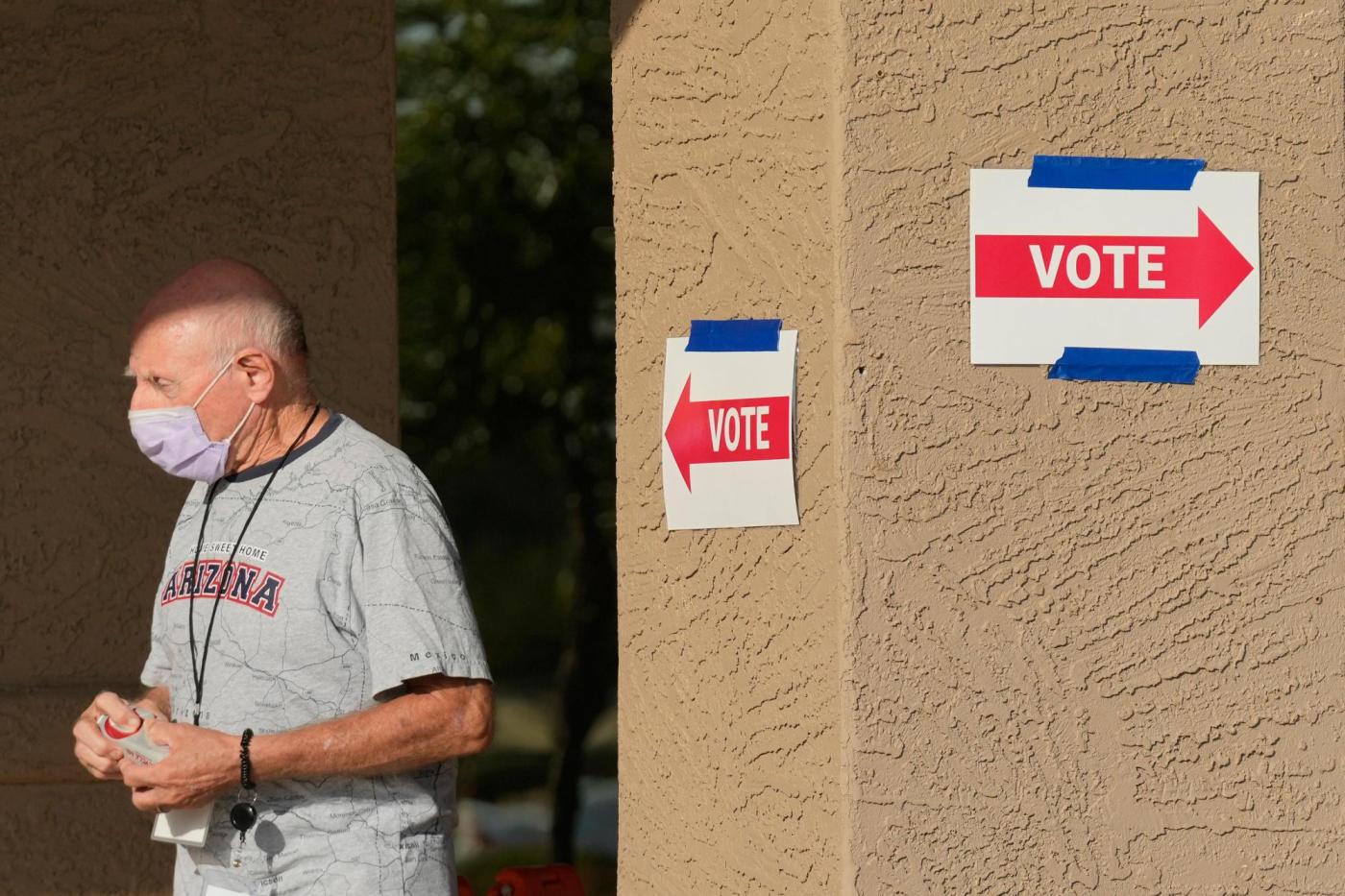
WASHINGTON (AP) — The Supreme Court on Thursday rejected a Republican push that could have blocked more than 41,000 Arizona voters from casting ballots for president in the state that Democratic President Joe Biden won by less than 11,000 votes four years ago.

But in a 5-4 order, the high court allowed some enforcement of regulations barring people from voting if they don’t provide proof of citizenship when they register.

The justices acted on an emergency appeal filed by state and national Republicans that sought to give full effect to voting measures enacted in 2022 following Biden’s narrow win over Republican Donald Trump.

The court did not detail its reasoning in a brief order. Conservative Justices Clarence Thomas, Samuel Alito and Neil Gorsuch would have allowed the law to be fully enforced, while Justice Amy Coney Barrett would have joined with the court’s three liberals in fully rejecting the push, the order states.

The legal fight will continue in lower courts.

National and state Republicans had asked the Supreme Court to get involved in a legal fight over voter registration restrictions that Republicans enacted in Arizona in 2022 following Biden’s thin victory in the state in 2020.

The court’s action came after a lower court had blocked a requirement that called for state voter registration forms to be rejected if they are not accompanied by documents proving U.S. citizenship. A second measure, also not in effect, would have prohibited voting in presidential elections or by mail if registrants don’t prove they are U.S. citizens. Federal law requires voters to swear they are U.S. citizens under penalty of perjury but does not require proof of citizenship either to vote in federal elections in person or cast ballots by mail.

An appellate panel of three Trump appointees initially blocked the lower court ruling in part and allowed enforcement of a provision dealing with state voter registration forms. But another appellate panel voted 2-1 to keep both provisions on hold, with two Bill Clinton appointees allowing the voter registrations to go forward over the dissent of a Trump appointee.

The measures were passed on party-line votes and signed into law by then-Gov. Doug Ducey, a Republican, amid a wave of proposals that Republicans introduced around the country after Biden’s 2020 victory over Trump, including in Arizona.

For state and local elections, voters must provide proof of citizenship when they register or have it on file with the state. Since that isn’t a requirement for federal elections for Congress or president, tens of thousands of voters who haven’t provided proof of citizenship are registered only for federal elections.

There were 41,352 of those voters registered as of August 9 in Arizona, Democratic Secretary of State Adrian Fontes said.

Fontes warned in a court filing that an order in favor of the state and national Republicans this close to the November election “will create chaos and confusion.”

The voters most affected would include military service members, students and Native Americans, Fontes said. About 27% of those voters are registered Democrats and 15% are Republicans. More than half, 54%, are registered independents, according to state data.

Voting rights groups and the Biden administration had sued over the Arizona laws.

Kansas Attorney General Kris Kobach led Republican attorneys general in 24 states in supporting the restrictions, saying the “case threatens to continue chipping away Arizona’s authority to secure its own elections.”

Arizona House Speaker Ben Toma, who along with Senate President Warren Petersen had asked the court to take up the issue, said in a statement that the order was “a step in the right direction to require proof of citizenship in all our elections.” Toma and Peterson are both Republicans.

Federal-only voters have been a subject of political wrangling since the Supreme Court ruled in 2013 that Arizona cannot require documentary proof of citizenship for people to vote in national elections. The state responded by creating two classes of voters: those who can vote in all races and those who can vote only in federal elections.

One of the new laws sought to further divide voters, allowing votes in congressional elections without proof of citizenship, but denying the vote in presidential contests.

The 2022 law has drawn fierce opposition from voting rights advocates, who described the statute as an attempt to get the issue back in front of the now more conservative Supreme Court.

Proponents say the measure is about eliminating opportunities for fraud. There is no evidence that the existence of federal-only voters has allowed noncitizens to illegally vote, but Republican skeptics have nonetheless worked aggressively to crack down on federal-only voting.

The Legislature’s own lawyers had said much of the measure was unconstitutional, directly contradicted the earlier Supreme Court decision and was likely to be thrown out in court.

___

Billeaud reported from Phoenix. Associated Press writer Mark Sherman in Washington contributed to this story.
Maureen Dowd: Nancy Pelosi, mother of dragons

posted in: Politics | 0

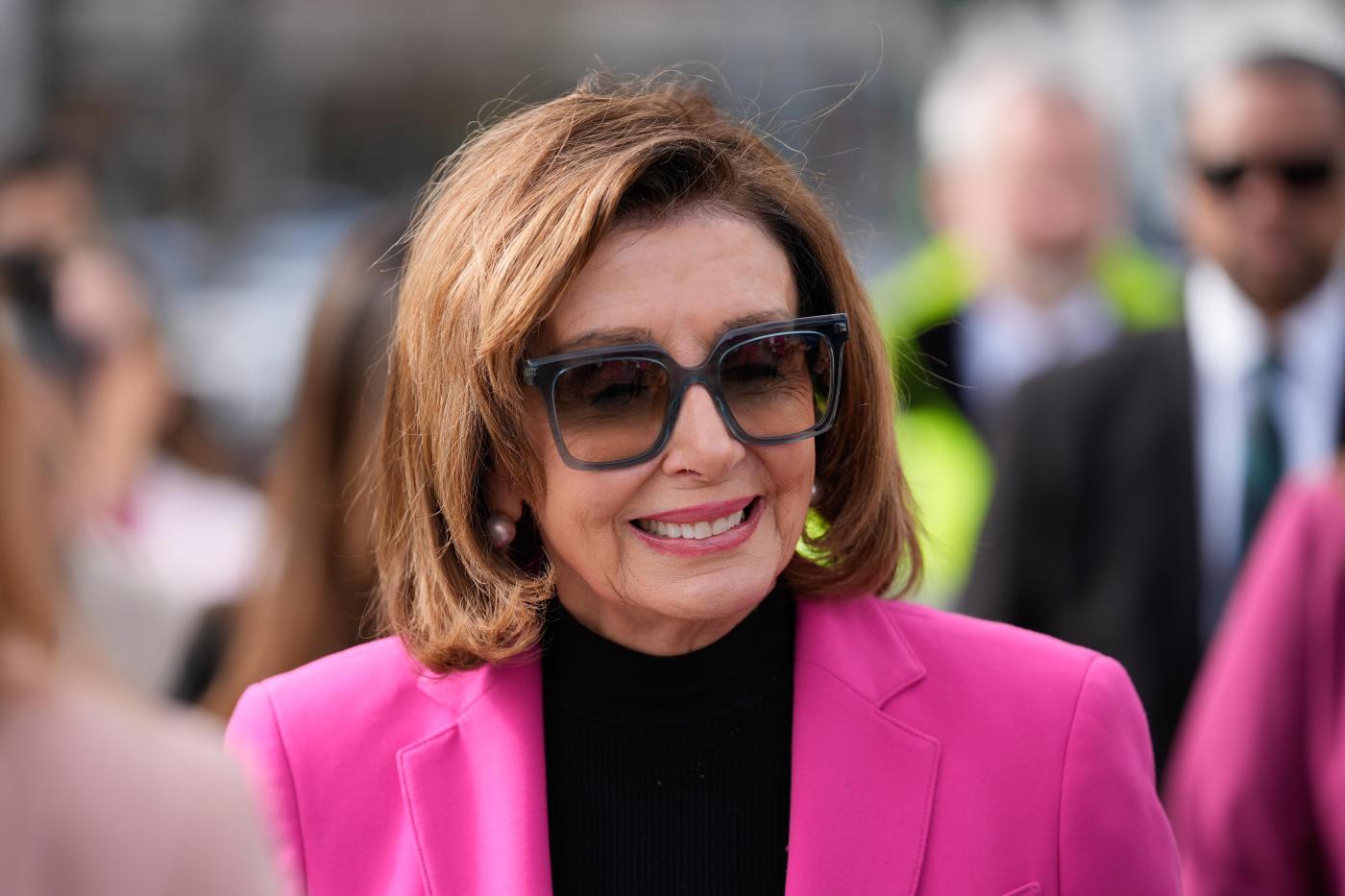
CHICAGO — Nancy Pelosi has spent a month coyly trying not to take credit for ringing down the curtain on the half-century run of a prolix play called “Scranton Joe.”

But blissed-out delegates here are not having it. Their attitude mirrors poet Andrew Marvell, who wrote, “Had we but World enough and Time, This coyness, Lady, were no crime.”

In his speech Wednesday night, Bill Clinton praised Joe Biden for “voluntarily” giving up the presidency.

But the crowd here, who gave Pelosi a standing ovation when she came out after Clinton, knew who the mastermind was behind the nick-of-time, get-the-hook, take-no-prisoners maneuver that they believe saved their party’s chances in November and turned this convention into a rager.

It was the first female House speaker and, as Republican former Speaker John Boehner called her, the best speaker of all time. The most powerful woman — and, along with LBJ, the most talented vote wrangler — in the history of Congress. The boss, who clearly inherited the DNA of her father, Thomas D’Alessandro, a famed party boss in Baltimore. People here were posting admiring Instagrams of Pelosi walking through the convention area, adding the soundtrack of “The Godfather.” “Godmother” buttons sprang up.

Unlike the party bosses of yore, Pelosi, 84, doesn’t swig Scotch and talk dirty. She’s a devout Catholic who likes chocolate ice cream sundaes. Before TikTok discovered “demure,” Pelosi looked demure.

But she has a dozen different ways to threaten and cajole and make you submit to her will — even if you are the commander in chief.

The cameras kept cutting to Pelosi’s face during Biden’s speech Monday night amid a sea of bobbing blue “We (heart) Joe” signs and “We love you, Joe!” chants, looking for signs of the pair’s schism. Some skeptical observers thought Pelosi was forcing her smile, as though, one person joked on X, you were singing “Happy Birthday” to a co-worker you hate.

Related Articles

Opinion |


Other voices: Harris needs to fill in the blanks for undecided voters

Opinion |


Mary Ellen Klas: Trump’s allies create potential for more election chaos in Georgia

Opinion |


Robert Burgess: The Harris economic agenda has two gems worth mining

Opinion |


Lynn Schmidt: Harris’ about-face on border issues is classic flip-flopping. Will voters care?

Opinion |


Ana Zamora: Voters don’t want to hear Trump and Harris fight over crime. They want to hear actual solutions

The two old friends and political allies have not been speaking since Pelosi and a coterie of other top Democrats — including Barack Obama, Chuck Schumer and Hakeem Jeffries — told Biden to step away from Air Force One. Pelosi wanted an open convention, where more Democratic stars could compete, but Biden forestalled that by quickly endorsing Kamala Harris, who then exploded off the blocks.

Pelosi is sad about the rift with Biden, but what could she do? She wasn’t going to let someone who encouraged insurrectionists to take over the Capitol on Jan. 6 regain the Oval if she could help it. Her take-the-cannoli-leave-the-gun fierceness is a good model for Harris in how to play the game. When sentimentality collides with viability, it’s not a contest. “It’s not personal, Joe. It’s strictly business.”

Mindy Kaling introduced Pelosi on Wednesday night as “brat before brat was brat,” and as “the Mother of Dragons.”

Looking meticulous as always, in a lavender pantsuit, chunky necklace and her beloved stilettos, Pelosi started her remarks with the de rigueur thank you to Biden, and a litany of his accomplishments.

Then she moved to the matter of most importance to her: defeating the former president who egged on his “patriots” to smear the Capitol with feces and blood, bringing violence and sedition to that hallowed building.

“Let us not forget who assaulted democracy on Jan. 6,” Pelosi said. “HE DID. But let us not forget who saved democracy that day. WE DID.”

She quoted “The Star-Spangled Banner,” saying, “We gave proof through the night that our flag was still there.”

Nancy Pelosi did help save democracy that night. And she helped save her party when she worked with others to persuade Biden that it was time to go home to Wilmington.

Mother of Dragons, indeed.

Maureen Dowd writes a column for the New York Times.

Trump is visiting the border to highlight immigration as Democrats accuse him of sabotaging progress

posted in: Politics | 0

By JONATHAN J. COOPER and ADRIANA GOMEZ LICON Associated Press

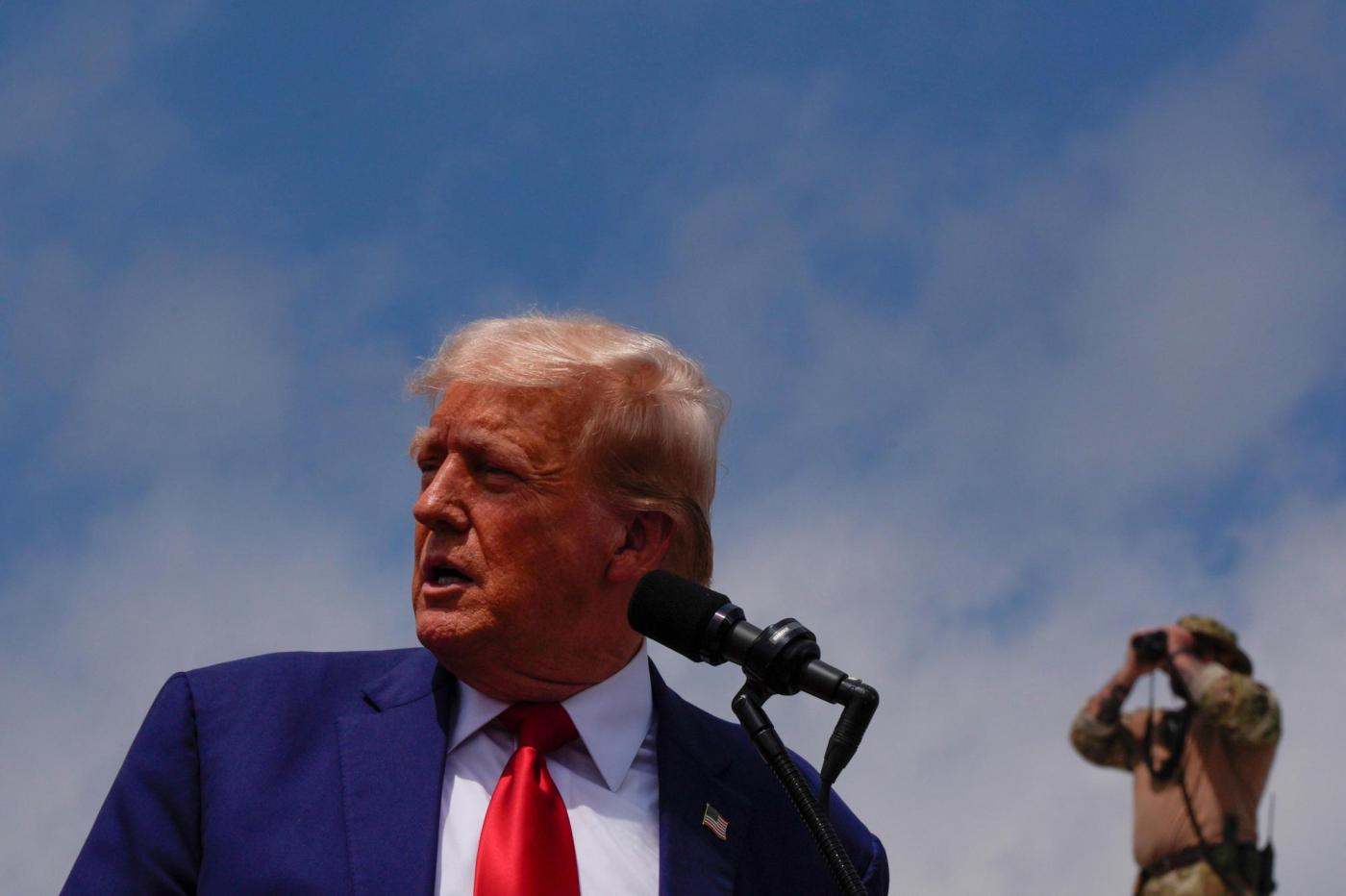
SIERRA VISTA, Ariz. (AP) — Donald Trump is traveling to the shrub-dotted hills of Arizona near the U.S.-Mexico border to campaign Thursday on immigration, his signature issue since launching his first successful presidential bid nine years ago.

The visit is the fourth in a series of events held in battleground states this week to try to draw the focus away from Democrats’ celebration of Vice President Kamala Harris’ presidential nomination in Chicago. The Trump campaign placed a lectern with a sign that says “the southern border” on a dirt road between a border wall and piles of steel beams.

The theme of Thursday’s visit is “Make America Safe Again,” and Trump plans to meet with people whose relatives were attacked or slain by immigrants who arrived in the country illegally during the Biden administration. Nearby, snipers stood at an elevated position, their eyes and weapons pointed toward Mexico. On Wednesday, the GOP nominee held his first outdoor rally since an assassination attempt, speaking to supporters while surrounded by bulletproof glass.

Republican presidential nominee former President Donald Trump speaks during a campaign rally at North Carolina Aviation Museum, Wednesday, Aug. 21, 2024, in Asheboro, N.C. (AP Photo/Julia Nikhinson)

Trump and his Republican allies are criticizing Harris and other Democrats for spending more time talking about him this week at the Democratic National Convention than talking about issues like the border and immigration.

“It’s like they’re having a party. They don’t mention the border. All they do is make up lies about me,” Trump complained as he called into “Fox & Friends” on Thursday morning.

Some of the speakers at the convention on Wednesday accused Trump of using the border to stir up his base. They argued that Democrats are the ones offering “real leadership” while Trump demonizes immigrants.

Related Articles

National Politics |


Trump posted a fake Taylor Swift image. AI and deepfakes are only going to get worse this election cycle

National Politics |


Could a Harris administration spur construction of 3 million new homes?

National Politics |


Uncommitted delegates, ‘Squad’ members sit-in at DNC to demand a Palestinian American get a speaking slot

National Politics |


In search for younger voters, Harris courts influencers at DNC

National Politics |


Fact-checking Day 3 of the Democratic National Convention

“When it comes to the border, hear me when I say, ‘You know nothing, Donald Trump,’” said U.S. Rep. Veronica Escobar, who represents the border city of El Paso, Texas. “He and his Republican imitators see the border and immigration as a political opportunity to exploit instead of an issue to address.”

U.S. Sen. Chris Murphy, a Connecticut Democrat, spoke after a video played showing Republican opposition to a bipartisan border deal earlier this year. Murphy was the top Democrat negotiating the proposal with conservative senators and said the bill would have had unanimous support if it weren’t for Trump.

Trump has spent the week campaigning across the battleground states. He traveled to Pennsylvania, Michigan and North Carolina and will hold events in Las Vegas and the Phoenix suburb of Glendale on Friday. His running mate, Sen. JD Vance of Ohio, spoke at the same location near the border a few weeks ago.

Gomez Licon reported from Fort Lauderdale, Fla. Associated Press writer Farnoush Amiri contributed to this report from Chicago.

Trump posted a fake Taylor Swift image. AI and deepfakes are only going to get worse this election cycle

posted in: All news | 0

Queenie Wong and Wendy Lee | (TNS) Los Angeles Times

The patriotic image shows megastar Taylor Swift dressed up like Uncle Sam, falsely suggesting she endorses Republican presidential nominee Donald Trump.

“Taylor Wants You To Vote For Donald Trump,” the image, which appears to be generated by artificial intelligence, says.

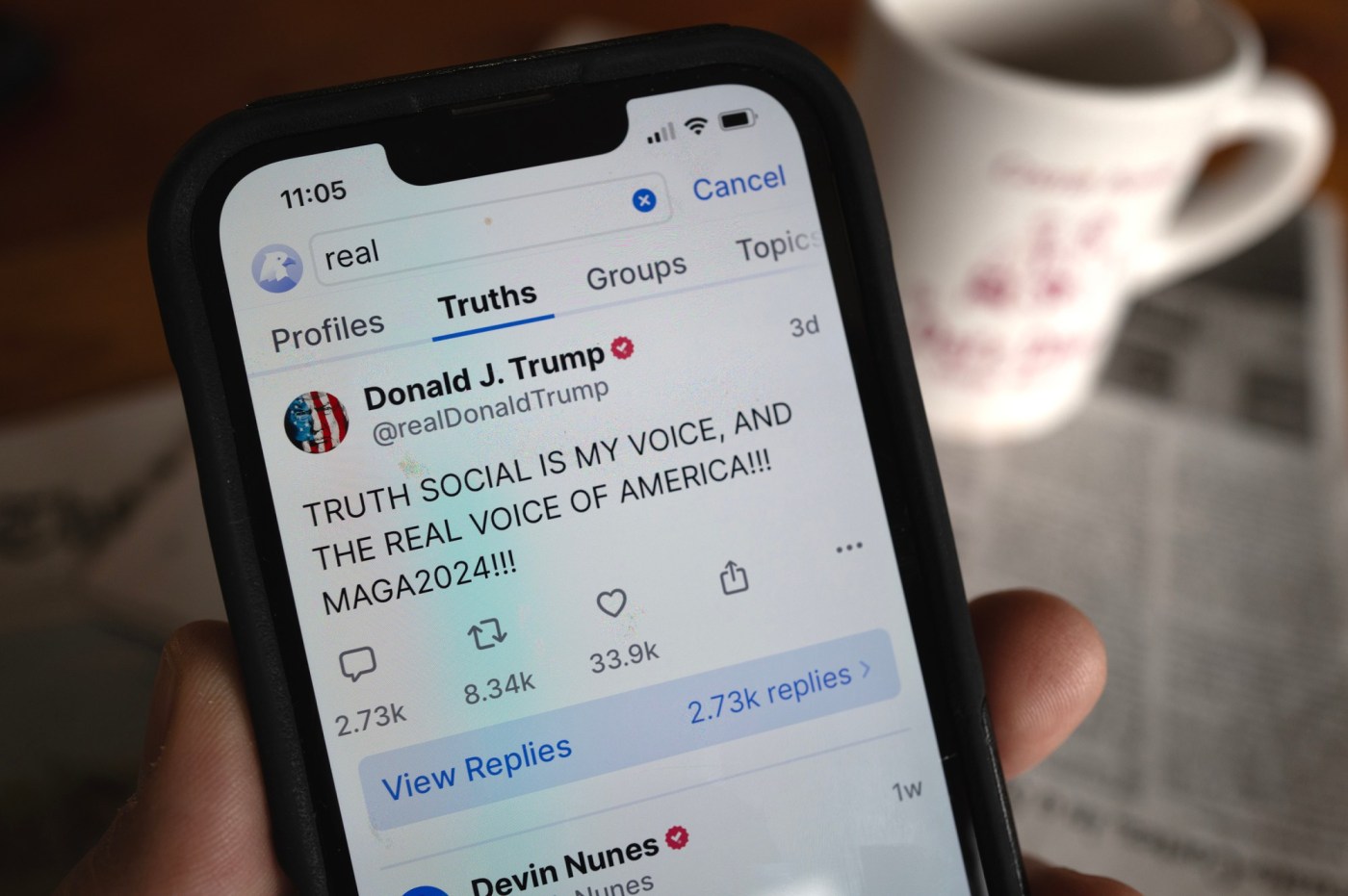
Over the weekend, Trump amplified the lie when he shared the image along with others depicting support from Swift fans to his 7.6 million followers on his social network Truth Social.

Deception has long played a part in politics, but the rise of artificial intelligence tools that allow people to rapidly generate fake images or videos by typing out a phrase adds another complex layer to a familiar problem on social media. Known as deepfakes, these digitally-altered images and videos can make it appear someone is saying or doing something they aren’t.

As the race between Trump and Democratic nominee Kamala Harris intensifies, disinformation experts are sounding the alarm about generative AI’s risks.

“I’m worried as we move closer to the election, this is going to explode,” said Emilio Ferrara, a computer science professor at USC Viterbi School of Engineering. “It’s going to get much worse than it is now.”

Platforms such as Facebook and X, formerly known as Twitter, have rules against manipulated images, audio and videos, but they’ve struggled to enforce these policies as AI-generated content floods the internet. Faced with accusations they’re censoring political speech, they’ve focused more on labeling content and fact checking, rather than pulling posts down. And there are exceptions to the rules, such as satire, that allow people to create and share fake images online.

“We have all the problems of the past, all the myths and disagreements and general stupidity, that we’ve been dealing with for 10 years,” said Hany Farid, a UC Berkeley professor who focuses on misinformation and digital forensics. “Now we have it being supercharged with generative AI and we are really, really partisan.”

Amid the surging interest in OpenAI, the maker of popular generative AI tool ChatGPT, tech companies are encouraging people to use new AI tools that can generate text, images and videos.

Farid, who analyzed the Swift images that Trump shared, said they appear to be a mix of both real and fake images, a “devious” way to push out misleading content.

People share fake images for various reasons. They might be doing it to just go viral on social media or troll others. Visual imagery is a powerful part of propaganda, warping people’s views on politics including about the legitimacy of the 2024 presidential election, he said.

On X, images that appear to be AI-generated depict Swift hugging Trump, holding his hand or singing a duet as the Republican strums a guitar. Social media users have also used other methods to falsely claim Swift endorsed Trump.

X labeled one video that falsely claimed Swift endorsed Trump as “manipulated media.” The video, posted in February, uses footage of Swift at the 2024 Grammys and makes it appear as if she’s holding a sign that says, “Trump Won. Democrats Cheated!”

Political campaigns have been bracing for AI’s impact on the election.

Vice President Harris’ campaign has an interdepartmental team “to prepare for the potential effects of AI this election, including the threat of malicious deepfakes,” said spokeswoman Mia Ehrenberg in a statement. The campaign only authorizes the use of AI for “productivity tools” such as data analysis, she added.

Trump’s campaign didn’t respond to a request for comment.

Part of the challenge in curbing fake or manipulated video is that the federal law that guides social media operations doesn’t specifically address deepfakes. The Communications Decency Act of 1996 does not hold social media companies liable for hosting content, as long as they do not aid or control those who posted it.

But over the years, tech companies have come under fire for what’s appeared on their platforms and many social media companies have established content moderation guidelines to address this such as prohibiting hate speech.

“It’s really walking this tightrope for social media companies and online operators,” said Joanna Rosen Forster, a partner at law firm Crowell & Moring.

Legislators are working to address this problem by proposing bills that would require social media companies to take down unauthorized deepfakes.

Gov. Gavin Newsom said in July that he supports legislation that would make altering a person’s voice with the use of AI in a campaign ad illegal. The remarks were a response to a video billionaire Elon Musk, who owns X, shared that uses AI to clone Harris’ voice. Musk, who has endorsed Trump, later clarified that the video he shared was parody.

The Screen Actors Guild-American Federation of Television and Radio Artists is one of the groups advocating for laws addressing deepfakes.

Duncan Crabtree-Ireland, SAG-AFTRA’s national executive director and chief negotiator, said social media companies are not doing enough to address the problem.

“Misinformation and outright lies spread by deepfakes can never really be rolled back,” Crabtree-Ireland said. “Especially with elections being decided in many cases by narrow margins and through complex, arcane systems like the electoral college, these deepfake-fueled lies can have devastating real world consequences.”

Crabtree-Ireland has experienced the problem firsthand. Last year, he was the subject of a deepfake video circulating on Instagram during a contract ratification campaign. The video, which showed false imagery of Crabtree-Ireland urging members to vote against a contract he negotiated, got tens of thousands of views. And while it had a caption that said “deepfake,” he received dozens of messages from union members asking him about it.

It took several days before Instagram took the deepfake video down, he said.

“It was, I felt, very abusive,” Crabtree-Ireland said. “They shouldn’t steal my voice and face to make a case that I don’t agree with.”

With a tight race between Harris and Trump, it’s not surprising both candidates are leaning on celebrities to appeal to voters. Harris’ campaign embraced pop star Charli XCX’s depiction of the candidate as“brat” and has used popular tunes such as Beyoncé’s “Freedom” and Chappell Roan’s “Femininomenon” to promote the Democratic Black and Asian American female presidential nominee. Musicians Kid RockJason Aldean and Ye, formerly known as Kanye West, have voiced their support for Trump, who was the target of an assassination attempt in July.

Swift, who has been the target of deepfakes before, hasn’t publicly endorsed a candidate in the 2024 presidential election, but she’s criticized Trump in the past. In the 2020 documentary “Miss Americana,” Swift says in a tearful conversation with her parents and team that she regrets not speaking out against Trump during the 2016 election and slams Tennessee Republican Marsha Blackburn, who was running for U.S. Senate at the time, as “‘Trump in a wig.”

Swift’s publicist, Tree Paine, did not respond to a request for comment.

AI-powered chatbots from platforms such as Meta, X and OpenAI make it easy for people to create fictitious images. While news outlets have found that X’s AI chatbot Grok can generate election fraud images, other chatbots are more restrictive.

Meta AI’s chatbot declined to create images of Swift endorsing Trump.

“I can’t generate images that could be used to spread misinformation or create the impression that a public figure has endorsed a particular political candidate,” Meta AI’s chatbot replied.

Meta and TikTok cited their efforts to label AI-generated content and partner with fact checkers. For example, TikTok said an AI-generated video falsely depicting a political endorsement of a public figure by an individual or group is not allowed. X didn’t respond to a request for comment.

When asked how Truth Social moderates AI-generated content, the platform’s parent company Trump Media and Technology Group Corp. accused journalists of “demanding more censorship.” Truth Social’s community guidelines has rules against posting fraud and spam but doesn’t spell out how it handles AI-generated content.

With social media platforms facing threats of regulation and lawsuits, some misinformation experts are skeptical that social networks want to properly moderate misleading content.

Social networks make most of their money from ads so keeping users on the platforms for a longer time is “good for business,” Farid said.

“What engages people is the absolute, most conspiratorial, hateful, salacious, angry content,” he said. “That’s who we are as human beings.”

It’s a harsh reality that even Swifties won’t be able to shake off.

____

Staff writer Mikael Wood contributed to this report.

©2024 Los Angeles Times. Visit at latimes.com. Distributed by Tribune Content Agency, LLC.