The Defense Department has been roiled by the Donald Trump administration’s desire to root out diversity, equity and inclusion programs his administration believes are divisive and unfair. This has manifested itself in closing offices focused on DEI; rescinding a variety of internal directives; restoring the names of military bases originally honoring Confederate generals; and adjusting websites to remove well-known military figures from Jackie Robinson to the heroic Navajo code talkers of World War II (after a public outcry, the Pentagon has said some web entries are being restored).
Additionally, the abrupt firing of two members of the Joint Chiefs of Staff — Chairman C.Q. Brown and Chief of Naval Operations Lisa Franchetti — seems tied to their support for DEI programs, although this was not explicit in their dismissals.
All of this has made me reflect on a variety of mentors I’ve had in the military. Many senior officers and civilian political leaders gave me sound advice, guidance when I’ve stumbled, and a leg up the Navy’s chain of command. And the majority of them have looked like me: straight white males.
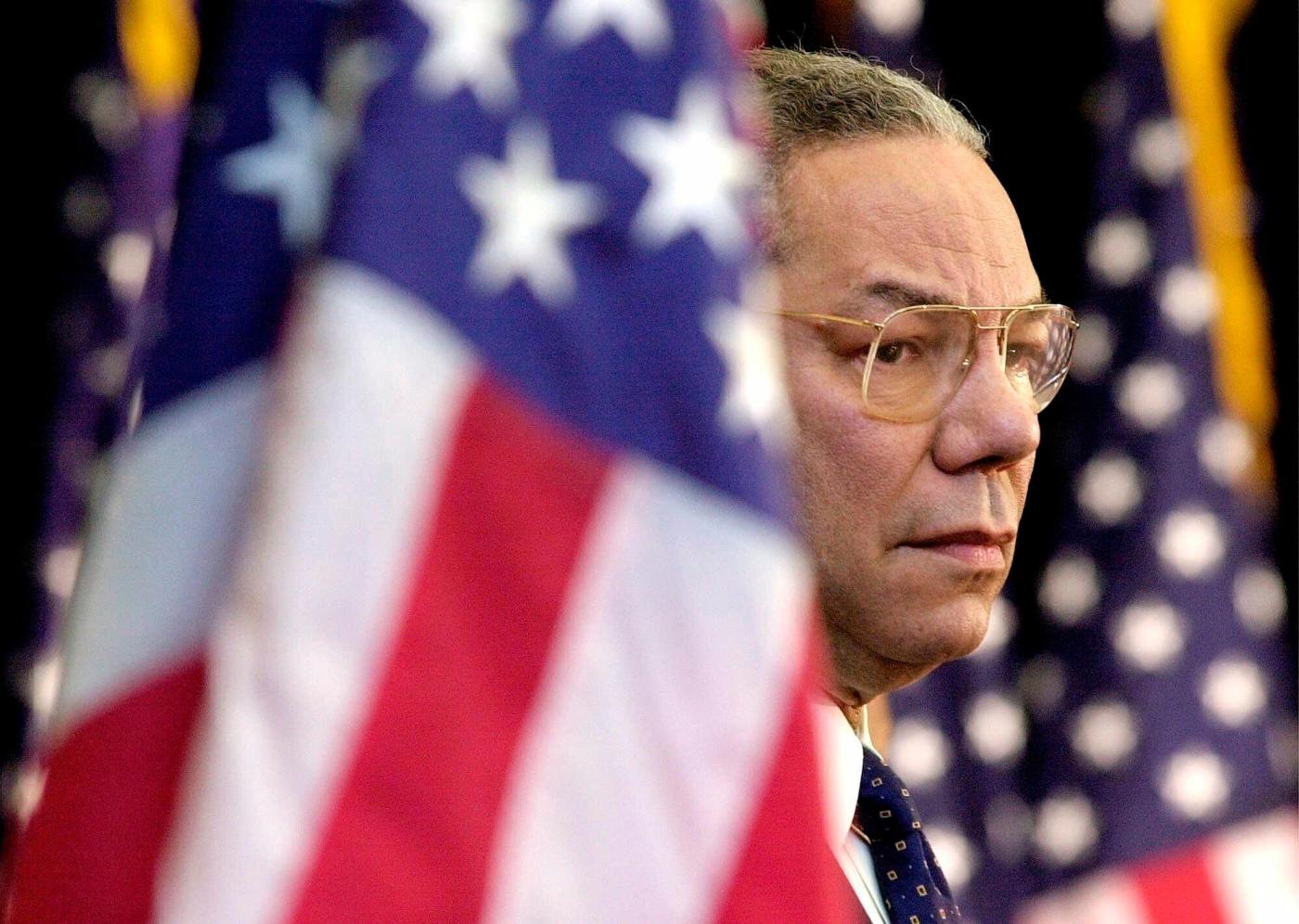
But one mentor who was a big part of my career did not look like me: Colin Powell. And in so many ways, General Powell’s advice and guidance helped me precisely because our lives and careers were so different. What did I learn from Powell, and how can his advice help us in today’s world?
The child of Jamaican immigrants, Powell gained an Army commission through the Reserve Officer Training Corps at the City College of New York. Although he competed against well-connected West Point graduates at every level, he had a stellar career. He was the first Black officer to serve as the nation’s national security advisor, chairman of the Joint Chiefs of Staff, and secretary of state. Powell’s combat experience spanned decades, from leading soldiers as a junior officer in Vietnam to helming the Pentagon during invasions of Panama (1989) and Iraq (1990-1991).
I first met him in 1992: I was a lowly Navy commander, he was chairman of the Joint Chiefs and giving a talk at the National Defense University, where I was a student. I was lucky enough to be among a dozen mid-grade officers chosen to meet with him. He immediately took off his tie, saying, “It’s OK for me to do that, but you guys better keep yours on.” We all laughed nervously.
The conversation included a memorable line from Powell: “You know, people criticize me for being a ‘political general.’ Guilty. I’ve worked in the White House as national security adviser, and I know politics. But that doesn’t mean I’m a Republican or a Democrat. What matters is the oath we swear to the Constitution.”
That sense of the active-duty military needing to stay out of domestic politics has stuck with me throughout my career, and I hope the current generation of leaders feels the same way — and I think they do.
In the early 2000s, during the George W. Bush presidency, I was the senior military assistant to Secretary of Defense Don Rumsfeld, and I spent plenty of time around then-Secretary of State Powell. I watched him provide gold-standard advice to the president and the top interagency officials. He was restrained and calm, and always brought his soldier’s outlook into the White House.
President Dwight Eisenhower, a figure to whom General Powell is often compared, famously said: “I hate war as only a soldier who has lived it can.” Powell injected that sort of experience into the counsels of an administration deeply enmeshed in what we called the Global War on Terror.
Powell also advised me to always tell the truth, especially to the news media. “I always regretted the results of the invasion of Iraq,” he said to me years later. “But when I spoke at the United Nations, it was based on the intelligence and briefings I had received. I’ll always regret how it turned out.”
A few years later, when I was selected as military commander for the North Atlantic Treaty Organization, the then-retired Powell was the first person I went to for guidance. I spent hours with him learning about the complex web of relationships between NATO and Washington. In particular, he warned not to let my exalted title, “supreme allied commander,” go to my head. Sound advice — it is the kind of job where you can easily become full of yourself.
After one session, as I was leaving, he gave me a copy of his memoir with a very kind inscription. But just to make sure I didn’t become overly pleased with myself, he said, “Just remember SACEUR, we didn’t send you over there to be Charlemagne,” i.e. the king of Europe, independent of the U.S. As always, his humor was a powerful tool in his leadership philosophy. (I mentioned that line later to another good friend, General George Casey, then chief of staff of the Army, and he said, “Don’t worry, Jim, you’re not tall enough to be Charlemagne.” Fair enough). I continued to reach out to Powell until his death in 2021. I miss him a great deal.
Finally, in all my engagements with Powell, what I learned most was to maintain a sense of optimism. His famous 13 Rules of Leadership was a pretty good summary of his life and philosophy. Four of those rules deal with the power of optimism: It will look better in the morning (No.1); It can be done (No. 4); don’t take counsel of your fears or naysayers (No. 12); and optimism is a force multiplier (No. 13).
Like Napoleon (whom I am tall enough to quote, I suppose), Powell knew that a leader is a dealer in hope — not in fear, chaos or anger. Especially today, when confusing and contradictory messages about racial and gender pioneers are rife, he should be celebrated as a unique and remarkable leader whose impact is still felt. Fort Colin Powell, anyone?
James Stavridis is a Bloomberg Opinion columnist, a retired US Navy admiral, former supreme allied commander of NATO, and vice chairman of global affairs at the Carlyle Group.