Niko Medved’s path to Gophers included steering him off hockey rinks

posted in: All news | 0

One of the most Minnesotan facts about Niko Medved was his love for hockey as a kid growing up in Roseville.

“I was a hockey nut,” he told the Pioneer Press this week. “Every day, I would skate, I would play. I love the sport.”

In middle school, Medved was set to join an elite traveling team in his hometown. But his parents, Milo and Karen, had to discuss it among themselves first. They later told him the time (and financial) commitments would be too much for their family of five; Niko has two brothers, Anton and Aleksi.

“I told him, ‘Niko, I’m sorry. We have five members of our family. We can’t devote 80% of our time for one,’ ” Miro recalled this week.

Niko was crestfallen, but he quickly bounced back and picked up basketball — on top of soccer and golf, the other primary sports of his youth.

“It’s so funny how life works,” Niko said Wednesday. “Had that not happened, I wouldn’t be sitting here today.”

Then Gophers assistant coach Niko Medved holds a clipboard during a timeout during a game against University of Arkansas Little Rock at Williams Arena on Dec. 9, 2006. Medved was named Minnesota’s head coach this week. (Alicia Jerome / Gophers Athletics)

Medved shared that anecdote as he rested in a padded black chair in the corner of Williams Arena’s raised hardwood floor after being named the Gophers’ new men’s basketball coach on Monday. The University of Minnesota alumnus, former student manager under ex-head coach Clem Haskins and one-year assistant coach at Minnesota is now back to live out what he calls his dream job.

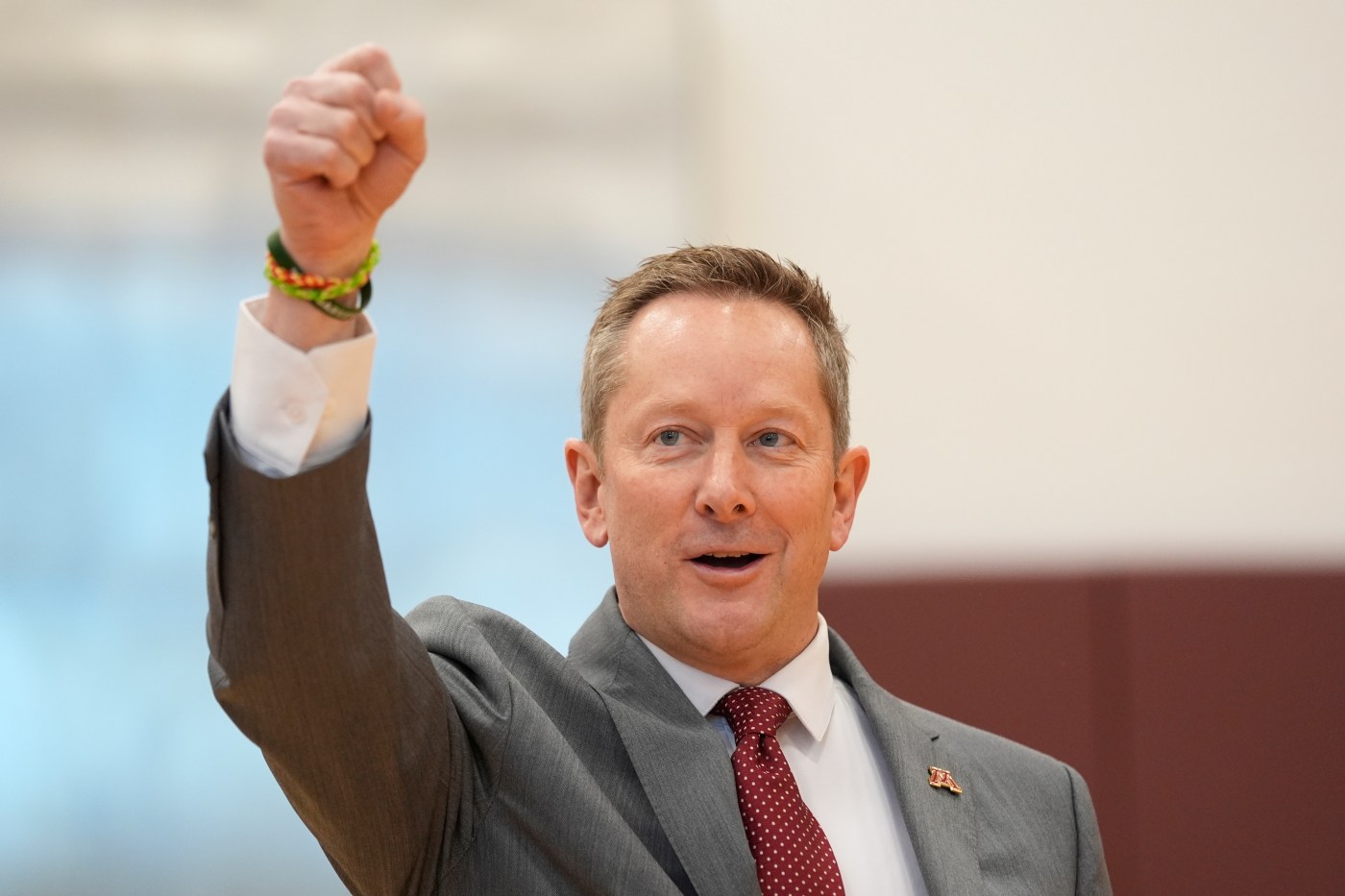
“I knew I always wanted to coach, but I’ll be honest, growing up, (if) somebody said, ‘Hey, you can be the head coach at Roseville High School,’ that would be awesome to get an opportunity to do that,” Medved, now 51, said during his introductory news conference Tuesday on the U’s practice court. “And then as my career kept going. I kept dreaming bigger and bigger.”

Medved has climbed the college ranks over the last 12 seasons, going from four seasons at Furman in Greenville, S.C., to one year at Drake in Des Moines to the last seven seasons at Colorado State. His Rams teams in Fort Collins, Colorado, have made three of the last four NCAA Tournaments, including being a Maryland buzzer-beater away from reaching the Sweet 16 this week.

Medved’s desire to be a head coach really started as a Gopher student manager in the mid-1990s. “I looked at it like a coaching internship, which was the best thing I ever did for my career,” he said.

During that time, Medved worked at the Nike All-American Camp, where Haskins connected him with George Raveling, who took Washington State, Iowa and Southern California to the NCAA Tournament.

“At that time, it was just kind of the epicenter of grassroots basketball,” Medved said of the camp. “All these guys, you name it. I remember being at camp with Yao Ming, Tracy McGrady, I could go on and on. … These guys went on to have great careers in college basketball or professional basketball, just getting an opportunity to kind of be a part of that at the highest level was really cool for me at such a young age.”

Medved bonded with Frank Martin, who was then head coach at Miami (Fla.) Senior High School and has since been head coach at Kansas State, South Carolina and now Massachusetts. He went to the Final Four with South Carolina in 2017.

“I just remember he and I talked about those days,” Medved said. “We were just, kind of, the younger up-and-comers.”

Miro Medved said he saw Niko as a future head coach during his one year as Gopher assistant coach in 2006-07. Dan Monson had been fired and Niko was helping out interim head coach Jim Molinari.

“He never spoke about it,” Miro said about being the aspiration to be a head coach. “Niko has always been one that: What he is doing, that is the task. That is what he is focusing on.”

Medved’s resume precedes itself. He was an assistant at Furman, Colorado State and the U before taking over as head coach. “(It’s) because he established a reputation,” Miro said.

Miro Medved has had to put his own head down in order to build a life in the U.S. He was born in Trboje, a small village in the former Yugoslavia and now Slovenia. He immigrated to the U.S. at age 7 and his family settled in Biwabik, Minn., a small town 200 miles north of the Twin Cities.

Miro then attended the U, served in the U.S. Army and settled in Roseville, starting careers, raising a family and being named an Honorary Consul to Slovenia.

Miro and the Medveds have held Gopher basketball season tickets at The Barn for more than 50 consecutive seasons. Miro’s love for basketball also played a role in steering Niko away from hockey rinks roughly 40 years ago.

Niko has recalled going to games when he was five or six years old. After his hiring this week, he went back to those seats in Section 114 of The Barn, which are kitty corner from his new seat on the U’s home bench.

Medved name-dropped watching former Gopher players such as Kevin Lynch and Melvin Newbern in the late 1980s and early ‘90s, an era when Indiana coach Bob Knight and Purdue coach Gene Keady were “roaming the sidelines here.”

“It was just a magical time in the Big Ten and college basketball,” Medved said. “And so when I’m a kid, and I’m doing that, and I’m watching it. This program was really starting to take off, and this place was full. The energy was unbelievable. And so those were the kind of the transformative times, you’re like, ‘I want to be a part of that.’”

But the Gophers have fallen on hard times. Minnesota has made six NCAA Tournament appearances in the last 26 years since Haskins was forced to resign after the academic scandal in 1999. The previous coach, Ben Johnson, couldn’t get over the hump in his four seasons, having his roster hit hard by defections when a lack of name, image and likeness (NIL) money led to two key players receiving bigger paydays after last season. Johnson was fired earlier this month after posting a 56-71 overall record and 22-57 mark in Big Ten play.

University of Minnesota athletics director Mark Coyle, left, and head coach Niko Medved pose for a photo during an NCAA college basketball news conference, Tuesday, March 25, 2025, in Minneapolis. (AP Photo/Abbie Parr)

Gophers Athletics Director Mark Coyle has committed the U to spend $6 million in buyouts for Johnson to leave and Medved to come in from Colorado State. Coyle has vowed to spend more of the incoming revenue sharing on the men’s basketball program and he rewarded Medved with a $3 million salary, which is $1 million more than Johnson received.

“I’ve seen this place at its best,” Medved said. “I believe we have everything it takes here to be successful. We have one of the best universities in the country. We play in the premier league in the country. We have, in my opinion, the best community in the Big Ten. We plan a historic venue that, in my opinion, OK, when it’s right, is one of the best places to watch a game and be at a game in college basketball.

“I just feel like now is the time.”

Related Articles


Another Gophers men’s basketball player enters NCAA transfer portal


What Niko Medved and P.J. Fleck talked about during hiring process


Niko Medved’s first recruiting win: Isaac Asuma remains a Gopher


Dane Mizutani: Gophers need Niko Medved to channel his inner P.J. Fleck


Glimpse inside Gophers AD Mark Coyle’s hire of Niko Medved

Utah becomes the first state to ban fluoride in public drinking water

posted in: All news | 0

SALT LAKE CITY (AP) — Utah has become the first state to ban fluoride in public drinking water, despite widespread opposition from dentists and national health organizations.

Republican Gov. Spencer Cox signed legislation late Thursday that bars cities and communities from deciding whether to add the mineral to their water systems.

Fluoride strengthens teeth and reduces cavities by replacing minerals lost during normal wear and tear, according to the U.S. Centers for Disease Control and Prevention.

Utah lawmakers who pushed for a ban said putting fluoride in water was too expensive. Cox, who grew up and raised his own children in a community without fluoridated water, compared it recently to being “medicated” by the government.

The ban comes weeks after U.S. Health Secretary Robert F. Kennedy Jr., who has expressed skepticism about water fluoridation, was sworn into office.

More than 200 million people in the U.S., or almost two-thirds of the population, receive fluoridated water through community water. The addition of low levels of fluoride to drinking water has long been considered one of the greatest public health achievements of the last century.

But some cities across the country have gotten rid of fluoride from their water, and other municipalities are considering doing the same. A few months ago, a federal judge ordered the U.S. Environmental Protection Agency to regulate fluoride in drinking water because high levels could pose a risk to the intellectual development of children.

The president of the American Dental Association, Brett Kessler, has said the amounts of fluoride added to drinking water are below levels considered problematic.

Opponents warn the ban will disproportionately affect low-income residents who may rely on public drinking water having fluoride as their only source of preventative dental care. Low-income families may not be able to afford regular dentist visits or the fluoride tablets some people buy as a supplement in cities without fluoridation.

The sponsor of the Utah legislation, Republican Rep. Stephanie Gricius, acknowledged fluoride has benefits, but said it was an issue of “individual choice” to not have it in the water.

Review: Under-the-radar gems from SPCO

posted in: All news | 0

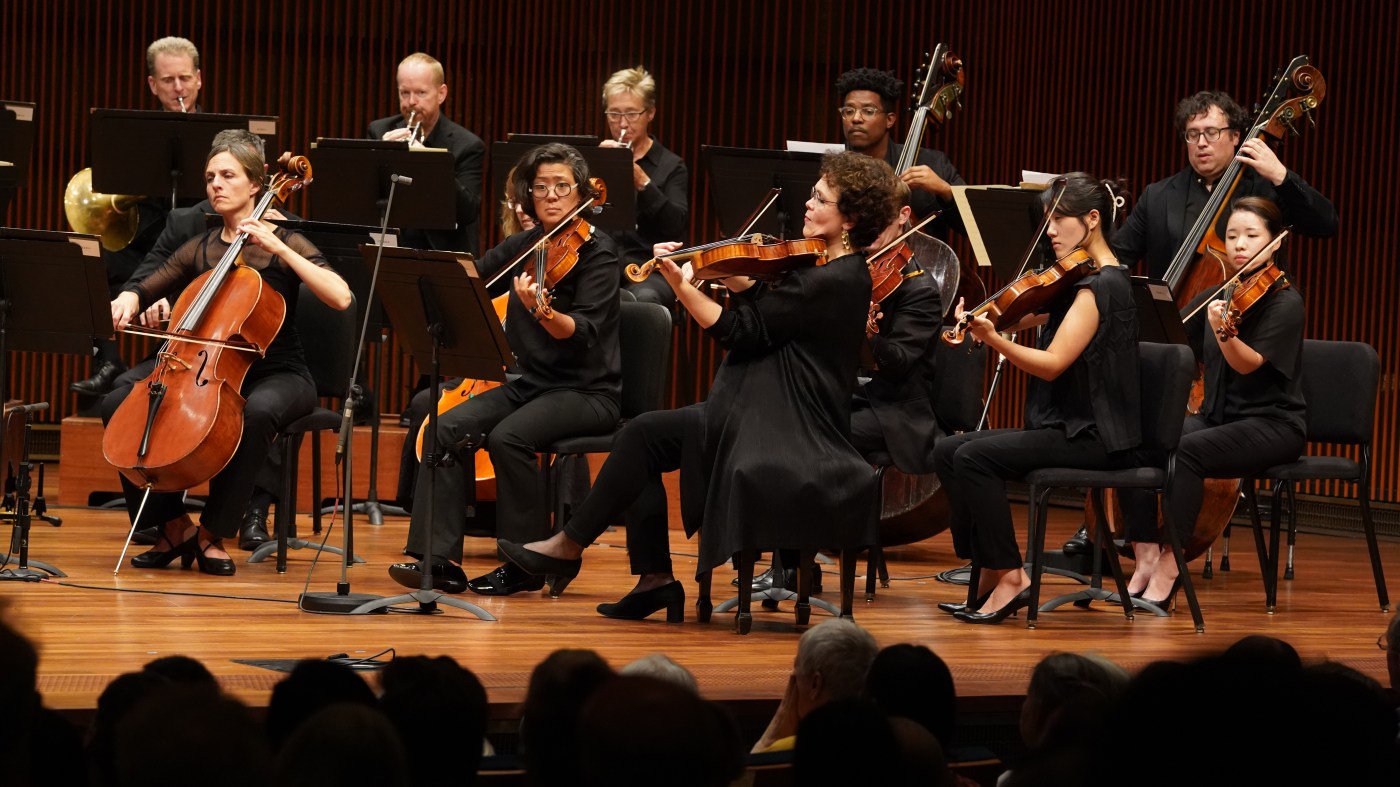
Violist Tabea Zimmermann, in her role as artistic partner of the St. Paul Chamber Orchestra, delivers an intriguing look at Austrian and German composers for this weekend’s performances. From Franz Schubert to lesser-known composers like Erich Wolfgang Korngold, Paul Hindemith and Max Bruch, the program features Zimmermann as ensemble member, leader and soloist.

Starting things off, the SPCO performs two pieces of incidental music from a play Franz Schubert wrote for called “Rosamunde.” Zimmermann sways her head subtly before the music begins, as if setting the time. Seated with the violas and cellos on stage left, she seems to face off with the first and second violins. In the first piece, Ballet Music II, the strings skip along in the beginning, before being joined by the woodwinds. The piece has a bittersweet sound that swells with feeling. In Entr’acte III, the orchestra revels in the big, bold energy of the music.

The SPCO’s string musicians then perform Symphonic Serenade, a work by Erich Wolfgang Korngold. The Viennese composer had a successful career in Austria before composing his first Hollywood film in 1934. He’d eventually move permanently to the U.S. after the Nazis annexed Austria and became an influential film composer, winning two Academy Awards.

In the first movement, you can get a sense of that cinematic sensibility. As the lower and upper strings trade a kind of call and response back and forth, the music builds to a smashing of beautiful sound.

An exciting pizzicato section begins the second movement, played remarkably fast by the musicians, followed by sliding notes before the pizzicato returns. The third movement slows things down into a rolling, mystical beat before the music becomes a fierce rumble for the last movement.

After intermission, the SPCO’s principal flute player Julia Bogorad-Kogan and bassoonist Demetra Alikakos are joined by guest musicians Noah Kay playing oboe, JJ Koh playing clarinet and Michael Petruconis on horn for “Kleine Kammermusik” (Little Chamber Music) by Paul Hindemith. The most dissonant work on the program, the music has sharp angles and a curious circularity. In his remarks about the music, violist Daniel Orsen noted Bogorad-Kogan called the music “kind of like Looney Tunes,” and there’s certainly a playful feeling in it.

The concert finishes with a terrific performance by Zimmermann as a soloist along with principal clarinet Sang Yoon Kim, playing the Concerto for Clarinet and Viola by Max Bruch. Zimmermann and Kim make fire together in the double concerto, with their combination of instruments that don’t often get paired together. Zimmerman’s free, inspired style plays off Kim’s clear and velvety tone. They both move quite a bit as they play, and look like they are dancing for much of the piece.

During the Schubert and Korngold, Zimmermann sometimes conducts from her seat as she plays with the orchestra. As a soloist in Bruch’s concerto, she occasionally turns around to signal the time for the rest of the musicians— and does so without missing a beat herself. Timpani and horns add gravitas to the work, adding flourish and a sense of majesty. It’s a satisfying conclusion for the concert.

St. Paul Chamber Orchestra

What: Bruch and Korngold with Tabea Zimmermann

When: 7 p.m. Sat., March 29, 2 p.m. Sunday, March 30

Where: Saturday: The Ordway, 345 Washington St., St. Paul. Sunday: St. Andrew’s Lutheran Church, 900 Stillwater Road, Mahtomedi.

Tickets: $16-$68

Accessibility: Ordway: Elevators access all floors of Concert Hall, accessibility seating for all mobility devices (request when buying tickets); service animals welcome (inform ticket representative); listening units and large print available upon request. One single occupancy, accessible restroom in the Music Theater lobby. Ordway.org/visit/accessibility.

Capsule: Tabea Zimmermann returns to the SPCO performing German and Austrian composers, including Schumann and three under-the-radar gems.

Related Articles


Review: Minnesota Orchestra turns out poetry in more than one guise

Trump signs executive order to end collective bargaining at agencies involved with national security

posted in: All news | 0

By DARLENE SUPERVILLE, Associated Press

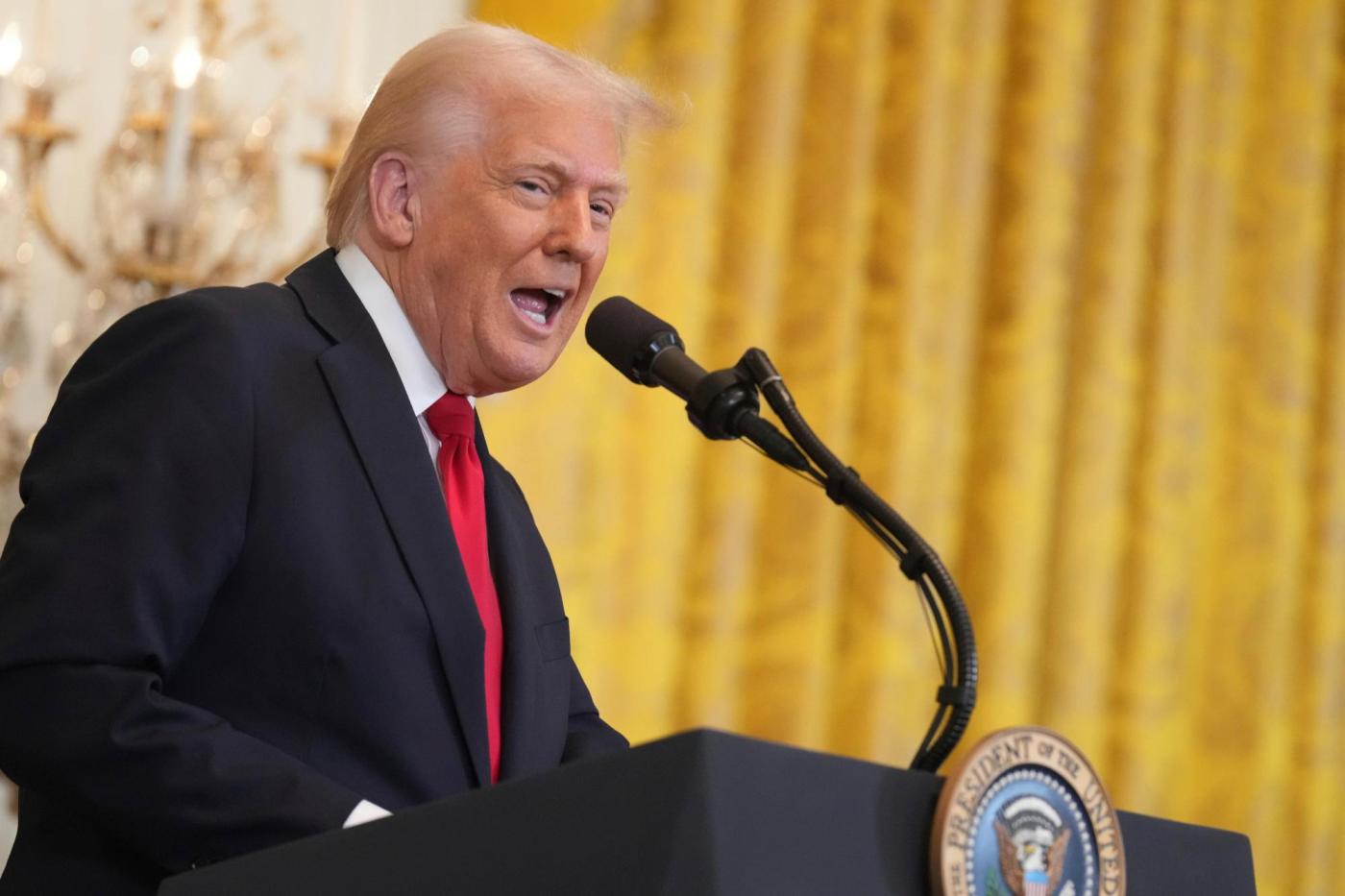
WASHINGTON (AP) — President Donald Trump moved Thursday to end collective bargaining with federal labor unions in agencies with national security missions across the federal government, citing authority granted him under a 1978 law.

The order, signed without public fanfare and announced late Thursday, appears to touch most of the federal government. Affected agencies include the Departments of State, Defense, Veterans Affairs, Energy, Health and Human Services, Treasury, Justice and Commerce and the part of Homeland Security responsible for border security.

Police and firefighters will continue to collectively bargain.

Related Articles


Trump restricts federal research funding, a lifeblood for colleges


Another federal judge blocks Trump policy banning transgender troops in the military


The US is on an egg hunt in Europe to ease prices at home


James Stavridis: What Colin Powell would say about the Pentagon DEI purge


Trump executive order on Smithsonian targets funding to programs with ‘improper ideology’

Trump said the Civil Service Reform Act of 1978 gives him the authority to end collective bargaining with federal unions in these agencies because of their role in safeguarding national security.

The American Federation of Government Employees, which represents 820,000 federal and D.C. government workers, said late Thursday that it is “preparing immediate legal action and will fight relentlessly to protect our rights, our members, and all working Americans from these unprecedented attacks.”

“President Trump’s latest executive order is a disgraceful and retaliatory attack on the rights of hundreds of thousands of patriotic American civil servants — nearly one-third of whom are veterans — simply because they are members of a union that stands up to his harmful policies,” AFGE National President Everett Kelley said.

AFL-CIO President Liz Shuler said in a statement, “It’s clear that this order is punishment for unions who are leading the fight against the administration’s illegal actions in court — and a blatant attempt to silence us.” She also vowed, “We will fight this outrageous attack on our members with every fiber of our collective being.”

The announcement builds on previous moves by the Trump administration to erode collective bargaining rights in the government.

Earlier this month, DHS said it was ending the collective bargaining agreement with the tens of thousands of frontline employees at the Transportation Security Administration. The TSA union called it an “unprovoked attack” and vowed to fight it.

A White House fact sheet on Thursday’s announcement says that “Certain Federal unions have declared war on President Trump’s agenda” and that Trump “refuses to let union obstruction interfere with his efforts to protect Americans and our national interests.”

“President Trump supports constructive partnerships with unions who work with him; he will not tolerate mass obstruction that jeopardizes his ability to manage agencies with vital national security missions,” the White House said.