‘Una situación imposible’: Proveedores en NY luchando después de recorte de Trump a representación legal para menores no acompañados

posted in: All news | 0

Si bien las organizaciones en Nueva York no han dejado de representar a los menores no acompañados con los que ya trabajan, no están seguras de cuánto tiempo podrán hacerlo sin financiación.

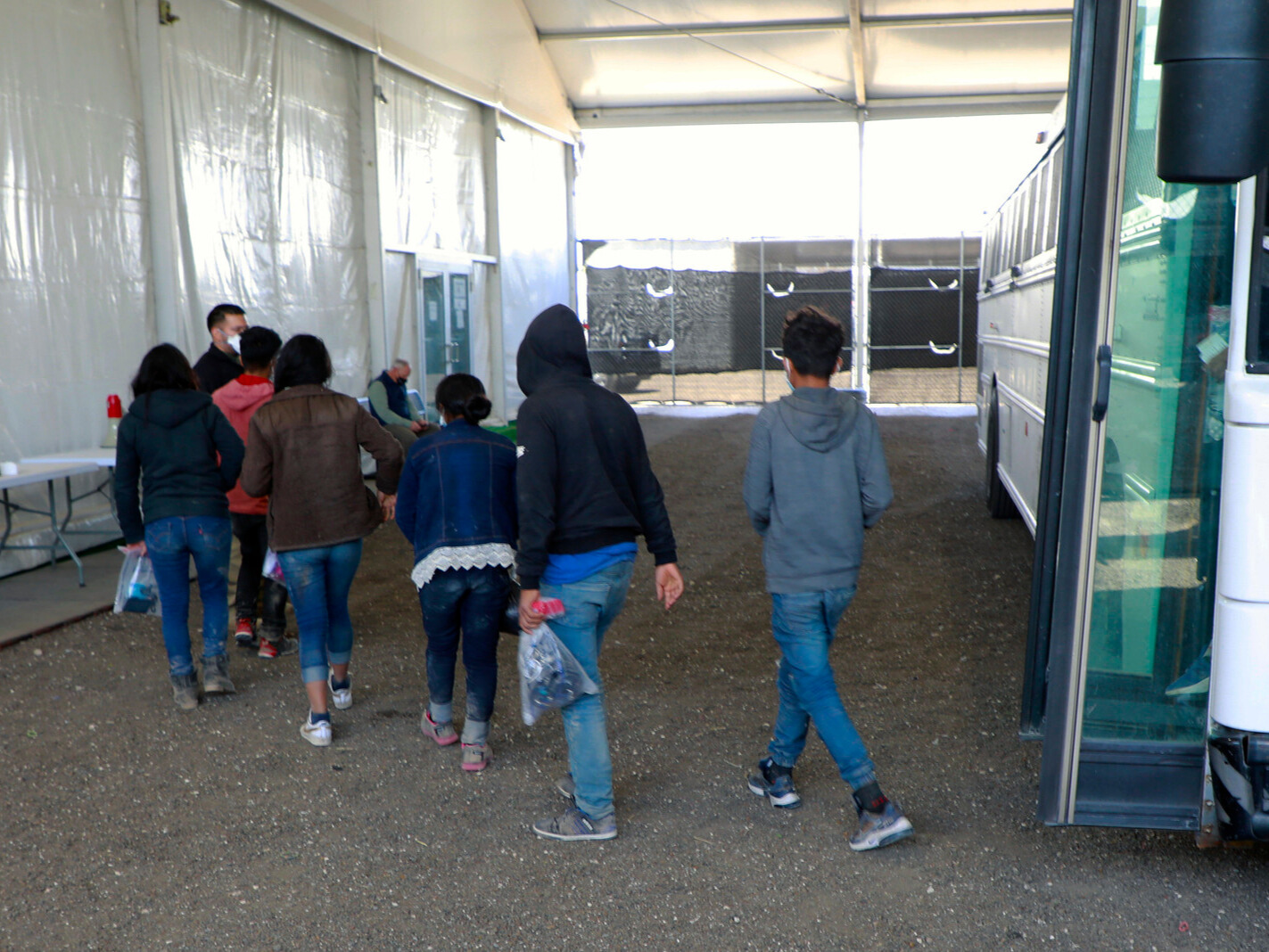
Un centro de procesamiento de la Patrulla Fronteriza estadounidense para familias inmigrantes y menores no acompañados en Texas en 2021. (Jaime Rodriguez Sr./Customs and Border Patrol)

Este artículo se publicó originalmente en inglés el 31 de marzo. Traducido por Daniel Parra. Read the English version here.

Recientemente, un inmigrante de 5 años cruzó la frontera y fue puesto bajo custodia de la Oficina de Reasentamiento de Refugiados (ORR por sus siglas en inglés), la agencia federal responsable de los menores no acompañados.

El niño, que cruzó la frontera sin padres ni tutor legal, fue entregado a un patrocinador en Nueva York y obtuvo representación legal a través de Church World Service, una de las nueve organizaciones que prestan servicios jurídicos a jóvenes inmigrantes con financiación federal.

Sin embargo, el contrato se canceló hace dos semanas.

El 21 de marzo, la administración Trump dio instrucciones a los proveedores de todo el país para que terminaran los servicios para más de 25.000 menores y no renovó el contrato de $200 millones de dólares, que expiraba el 29 de marzo. Esta es la segunda vez que la administración Trump intentaba dejar de financiar estos servicios. En febrero, el gobierno federal emitió una orden de suspensión de la asistencia legal a menores no acompañados, pero la revocó pocos días después.

La ORR es una oficina de programas de la Administración de Asuntos de Niños y Familias (ACF por sus siglas en inglés) dentro del Departamento de Salud y Servicios Humanos (HHS por sus siglas en inglés), la agencia encargada de la atención de los niños inmigrantes, y que supervisa el contrato.

Un portavoz de la ACF dijo que la ORR “sigue cumpliendo los requisitos legales establecidos por” la Ley de Seguridad Nacional de 2002, también conocida como el “Homeland Security Act of 2002” que estableció el Departamento de Seguridad Nacional, y la Ley de Protección de Víctimas de Trata de Personas y Víctimas de Violencia (TVPRA por sus siglas en ingles), que aumentó las protecciones para las víctimas y exigió que los menores no acompañados sean evaluados para detectar posibles casos de trata.

Los defensores afirman que el fin del contrato elimina casi todos sus servicios con menores no acompañados y desmantela la infraestructura y la experiencia acumuladas durante décadas. Desde que se conoció la noticia el 21 de marzo, proveedores y defensores han dado la voz de alarma, afirmando que los bebés, niños pequeños y adolescentes sin abogados tienen muchas más probabilidades de ser detenidos y deportados.

El Acacia Center for Justice, que gestiona el Programa de Menores No Acompañados (UCP por sus siglas en inglés) con una red de organizaciones, dijo que la orden termina casi todos los servicios, incluida representación legal completa y traducción e interpretación al español.

“El único trabajo que se permite continuar son las presentaciones de ‘conozca sus derechos’ para menores porque así lo exige la Ley de Protección de Víctimas de Trata de Personas y Víctimas de Violencia”, dijo Madison Allman, directora de comunicaciones de Acacia, por correo electrónico.

Sólo en Nueva York, aproximadamente 7.700 menores fueron atendidos como parte del UCP en el año fiscal 2024, dijo Sierra Kraft, directora ejecutiva de la Coalición ICARE, una organización que aboga por ampliar el acceso a la representación legal para menores no acompañados en la ciudad de Nueva York.

El UCP tiene unos 1.800 casos abiertos en el estado de Nueva York financiados por el contrato, la mayoría de los cuales corren ahora el riesgo de perder su representación. El fin del contrato afecta directamente a 191 empleados de nueve proveedores de servicios jurídicos de Nueva York, explicó Kraft.

City Limits contactó a todos los proveedores del estado para conocer el impacto de los recortes. Si bien las organizaciones no han dejado de representar a los menores con los que ya trabajan, no están seguras de cuánto tiempo podrán seguir haciéndolo sin financiación.

Aunque los abogados tienen obligaciones éticas con los menores a los que ya representan y no pueden retirarse de un caso sin permiso del juez, la pérdida de financiación les pone en una situación difícil.

“Los abogados se enfrentarán a una serie de preguntas cada vez más difíciles: ¿hasta cuándo podrán permitirse representar a los niños gratuitamente? ¿Cómo equilibrarán sus deberes éticos con los niños vulnerables? Arriesgarán sus licencias si no siguen representando los intereses de sus clientes infantiles sin encontrar a otra persona que pueda representarlos”, explicó Allman. “Ahora están atrapados en una situación imposible totalmente fabricada por esta administración”.

Proveedores como el Empire Justice Center ya han emitido avisos de despido de 30 días a los abogados contratados, dijo Kristin Brown, presidenta y directora ejecutiva del Empire Justice Center, una organización sin ánimo de lucro que presta servicios jurídicos a menores en centros de acogida de la ORR o entregados a patrocinadores, o que no tienen familiares en el país y viven en hogares de acogida.

Robert Cisneros, abogado del Empire Justice Center, dijo que la organización representa actualmente entre 290 y 310 casos de menores en proceso de expulsión ante los tribunales de inmigración del bajo valle del Hudson, en Nueva York.

A diferencia de los casos penales, la representación legal no está garantizada en los tribunales de inmigración. Los abogados afirmaron que, a pesar de ser elegibles para protecciones bajo la ley estadounidense, los menores no acompañados tienen más probabilidades de ser deportados sin acceso a un abogado.

Según Acacia, los menores no acompañados tienen siete veces más probabilidades de obtener un resultado favorable en el tribunal de inmigración si cuentan con un abogado que les represente.

Estos abogados representan una amplia gama de casos, desde trauma y abuso de los niños a supervivientes de la trata de personas. Justo antes de la orden, dijo Cisneros, tomaron un caso de una adolescente traficada a los EE.UU. que ahora se enfrenta a procedimientos de expulsión en Nueva York.

“El gobierno sigue intentando expulsarlos”, dijo Cisneros. “Siguen intentando deportarlos, así que siguen teniendo que ir al tribunal de inmigración”.

Otra organización que presta servicios jurídicos, Prisoners’ Legal Services of New York, tiene 265 casos de menores no acompañados en la zona de Albany.

“Un gran porcentaje de estos menores cumplen los requisitos y recibirán un estatuto legal si cuentan con un abogado que pueda ayudarles a negociar el complejo sistema de inmigración”, afirma Jim Milstein, director del proyecto de inmigración de la organización.

Otro efecto directo del recorte es que las organizaciones no pueden tomar nuevos casos. Justo antes de una llamada con City Limits, Milstein estaba al teléfono con un menor que pedía ayuda. “No hemos aceptado oficialmente su representación, pero creo que vamos a intentar averiguar cómo hacerlo”, dijo.

Y la necesidad está presente en todo el estado. Incluso antes de que se terminara el contrato, muchos proveedores ya estaban al límite de su capacidad. Los abogados del Empire Justice Center dijeron que no están aceptando más casos, aunque se han puesto en contacto con ellos para recibir más.

Todos los proveedores que hablaron con City Limits dijeron que están buscando urgentemente fuentes de financiación para mantener estos servicios. Safe Passage Project, por ejemplo, también está movilizando a abogados pro bono para ayudar a llenar el vacío de representación, mientras que otros proveedores están trabajando para transferir casos a otras organizaciones con financiación.

Los proveedores también dijeron que están buscando financiación de emergencia y trabajando con el Congreso, el Senado y los legisladores estatales y locales para intentar cubrir el déficit, pero que aún no hay resultados concretos.

Los legisladores estatales han presentado dos proyectos de ley para financiar la representación legal en Nueva York: un proyecto de ley proporcionaría abogados a quienes cuenten con los recursos mientras se enfrentan a la deportación, y el otro proyecto crearía una fondo para los proveedores de servicios legales de inmigración.

Según una encuesta reciente de Acacia, el 61 por ciento de los adultos estadounidenses opinaba que se deben garantizar el acceso a apoyo y servicios jurídicos a menores no acompañados.”El UCP no es sólo un salvavidas, es una obligación moral proteger a los niños inmigrantes. Sin este programa, estos niños quedan indefensos, lo que pone en peligro su seguridad, su bienestar y su futuro”, dijo Ángela Fernández, directora ejecutiva de Safe Passage Project, por correo electrónico.

“Instamos a los líderes y funcionarios a que tomen medidas inmediatas y restablezcan el UCP para garantizar que todos los niños tengan la oportunidad de ser escuchados, apoyados y salvaguardados en su viaje hacia un futuro mejor”, añadió Fernández.

Para ponerse en contacto con el reportero de esta noticia, escriba a Daniel@citylimits.org. Para ponerse en contacto con la editora, escriba a Jeanmarie@citylimits.org

The post ‘Una situación imposible’: Proveedores en NY luchando después de recorte de Trump a representación legal para menores no acompañados appeared first on City Limits.

Can Timberwolves avoid the play-in tournament? A guide to Minnesota’s playoff prospects

posted in: All news | 0

The race to avoid the play-in tournament in the Western Conference is once again on, and heated. And, for the third time in four years, Minnesota is at the center of it.

While the Timberwolves are firmly inside the top eight of the West standings, their playoff spot is not secure.

Much is still to be determined over the final week and a half of the regular season as they attempt to lock down their fourth consecutive playoff appearance, and climb as high as they can in the standings.

Schedules, tiebreakers and scenarios are all broken down below

What is the play-in, again?

It’s the Timberwolves’ annual rite of passage into the Western Conference playoffs. Kidding! (Kind of. Minnesota has played in the mini-tournament in two of the past three seasons, but that’s beside the point.)

The play-in tournament pits the Nos. 7-10 regular-season finishers in each conference against one another for two rounds of games — played the week between the end of the regular season and the start of the playoffs — to determine who captures the No. 7-8 seeds in each conference.

The No. 7 seed plays the No. 8 seed, with the winner earning the No. 7 seed in the first round of the playoffs. The loser goes on to play the winner of a game between teams No. 9-10 in a win-or-go-home game for the No. 8 seed.

So, if you enter the play-in as the No. 7 or No. 8 team, you’d have to go 0-2 to miss the playoffs. If you’re the No. 9 or No. 10, you have to go 2-0 to make the playoffs.

Seems like the Wolves would win at least one of those play-in games?

That’s true. Even if worst came to worst, and Minnesota both didn’t finish in the top six and dropped its first play-in tournament game, it would be left with a home game almost certainly against one of Sacramento, Dallas or Phoenix, teams the Wolves would be heavily favored to beat.

So, does it really matter if they have to play in it?

Yes, for a few reasons. First off, no one wants to risk potential elimination in a win-or-go-home game. Secondly, teams that finish in the top six get a full week off before the playoffs start, the value of which was widely acknowledged by players and coaches last spring.

The Wolves looked like a rejuvenated, refocused team as they swept Phoenix out of the first round, a stark contrast to the year prior, when Minnesota dropped its first two games in Denver after having to play two play-in games leading up to its first-round series.

Lastly, even if a team survives the play-in tournament to reach the West playoffs as the No. 8 seed, its reward is a first-round series with Oklahoma City. And while the Wolves have competed well with the Thunder in recent years, opening the playoffs against the conference favorite is far from ideal.

What’s Minnesota’s current situation?

Minnesota can realistically finish the regular season anywhere from the No. 5 seed to No. 8. Memphis, Golden State, Minnesota and the Clippers all entered Tuesday’s NBA slate separated by just one game in the loss column with seven games to play.

As of Tuesday afternoon, the standings were as follows:

No. 5: Memphis (44-31)

No. 6: Golden State (43-31)

No. 7: Minnesota (43-32)

No. 8: Los Angeles Clippers (43-32)

The Wolves hold the tiebreaker over the Clippers via their 3-0 record against Los Angeles. Who finishes No. 7 and No. 8 matters, because whoever is No. 7 would host that first play-in game.

But the Wolves would like to climb out of that tournament altogether. Working in their favor is their schedule. While Tuesday’s late game at Denver is the first of a five-game road trip for the Wolves, Minnesota’s remaining strength of schedule is fifth-easiest in the NBA, per Tankathon.com. Golden State’s is 10th toughest, while Memphis has the 14th most difficult, and the Clippers is the 11th easiest.

Minnesota played in Denver on Tuesday, while Memphis hosted Golden State and the Clippers were idle. The Timberwolves play the Grizzlies once more this season, on April 10 in Memphis.

What happens if any of those teams tie?

As previously mentioned, Minnesota holds the tiebreaker over the Clippers but the opposite is true if the Wolves finish in a two-way tie with either Golden State or Memphis, which already have clinched their respective season series with Minnesota.

The Wolves would likely win a three-way tiebreaker involving the Warriors and Clippers but finish third in one involving the Warriors and Grizzlies.

Minnesota would secure a three-way tiebreaker victory between Memphis and Los Angeles should it beat the Grizzlies on the 10th but would likely win it regardless of that game’s outcome. Determining scenarios in the unlikely event of a four-way tie becomes far clearer after Tuesday’s Grizzlies-Warriors contest.

Related Articles


Donte DiVincenzo, Naz Reid suspended for Wolves game Tuesday in Denver


March was good to Timberwolves


Wolves top Pistons on fight night in Minneapolis


Mike Conley, Rudy Gobert driving the bus on Timberwolves’ team success


Timberwolves blast Phoenix, per usual, for needed victory

University of Minnesota student who was detained by ICE sues for immediate release

posted in: All news | 0

By STEVE KARNOWSKI

MINNEAPOLIS (AP) — A University of Minnesota graduate business student who’s being held by Immigration and Customs Enforcement is suing for his immediate release, saying his arrest violated his rights and he’s been given little explanation for why he’s being held.

The lawsuit filed this week on behalf of Doğukan Günaydın, 28, a Turkish citizen, says two plainclothes federal officers arrested him on the street outside his St. Paul home while he was on his way to class Thursday.

“Doğukan feared he was being kidnapped as a man in a hooded sweatshirt grabbed him and handcuffed him,” according to his petition.

The lawsuit partially comports with a statement issued Monday by the Department of Homeland Security that he was arrested because he had a conviction for drunken driving on his record. The federal agency said he was not detained for any political activity. His petition says Günaydın has attended no protests and has written no politically driven publications.

His attorney, Hannah Brown, did not immediately respond to messages seeking comment Tuesday, nor did Justice Department and State Department officials in Washington.

Elected officials in Minnesota — including Gov. Tim Walz and U.S. Sens. Amy Klobuchar and Tina Smith — have been demanding an explanation from Homeland Security officials.

“Snatching up students who come here legally to work hard and get an education does not make you tough on immigration,” Walz tweeted. “We need answers.”

Günaydın was in the U.S. on a student visa until the Department of Homeland Security canceled it Thursday. The petition alleges that action was illegal. It says he was held for several hours after his arrest without being told why, except that his F-1 student visa was “retroactively revoked.”

But the petition cites online records showing that his student visa wasn’t terminated until roughly seven hours after his arrest, with the only reason listed as “otherwise failing to maintain status,” citing laws that say an alien is deportable if they fail to maintain the immigration status under which they were admitted to the U.S. or whose presence in the U.S. “would have potentially adverse foreign policy consequences.”

The petition says authorities have met none of those legal grounds for terminating his student visa. It says a drunken driving condition is not a legal basis, citing a DHS list of termination reasons.

His petition acknowledges that Günaydın was arrested for drunken driving on June 27, 2023, but says he pleaded guilty, served his sentence and complied with all conditions of his release. It says he has no other criminal convictions or arrests except for a 2021 speeding ticket when he was an undergraduate at St. Olaf College in Northfield.

After his conviction, Günaydın was accepted into the university’s Carlson School of Business, awarded a scholarship and maintained a full course load with a high grade-point average, the petition says.

“Importantly, Mr. Günaydın has committed no crime that is cause for termination of his Student Status or that renders him deportable,” his attorney wrote.

After his arrest, Günaydın was taken to the Sherburne County Jail in Elk River, which also holds federal prisoners, and was told he’d get a hearing before an immigration judge April 8, but as of the lawsuit’s filing, he hadn’t been given any kind of charging document or hearing notice, his petition says.

“Without a charging document, Mr. Günaydın and counsel remain in the dark about the basis for his detention,” his attorney wrote.

The petition asks the court to order Günaydın’s immediate release, declare his arrest and continued detention illegal, and restore his student status.

“Even if he is ultimately freed, as long as Doğukan remains in ICE’s physical custody, he will be prevented from speaking freely and openly and his unlawful detention will serve to chill others,” his attorney wrote.

State court records show that Günaydın was arrested in Minneapolis in 2023 after a police officer saw him driving erratically. A preliminary breath test showed his blood alcohol level at 0.20%, well above the legal limit of 0.08%. A breath test in jail almost 90 minutes later registered 0.17%.

He pleaded guilty to a gross misdemeanor count of drunken driving, was given credit for four days served in custody and was ordered to perform one day of community service in lieu of further jail time. His fines and court fees totaled $528.

Melania Trump says courage is ‘based in love’ as she honors women from around the world for bravery

posted in: All news | 0

By DARLENE SUPERVILLE, Associated Press

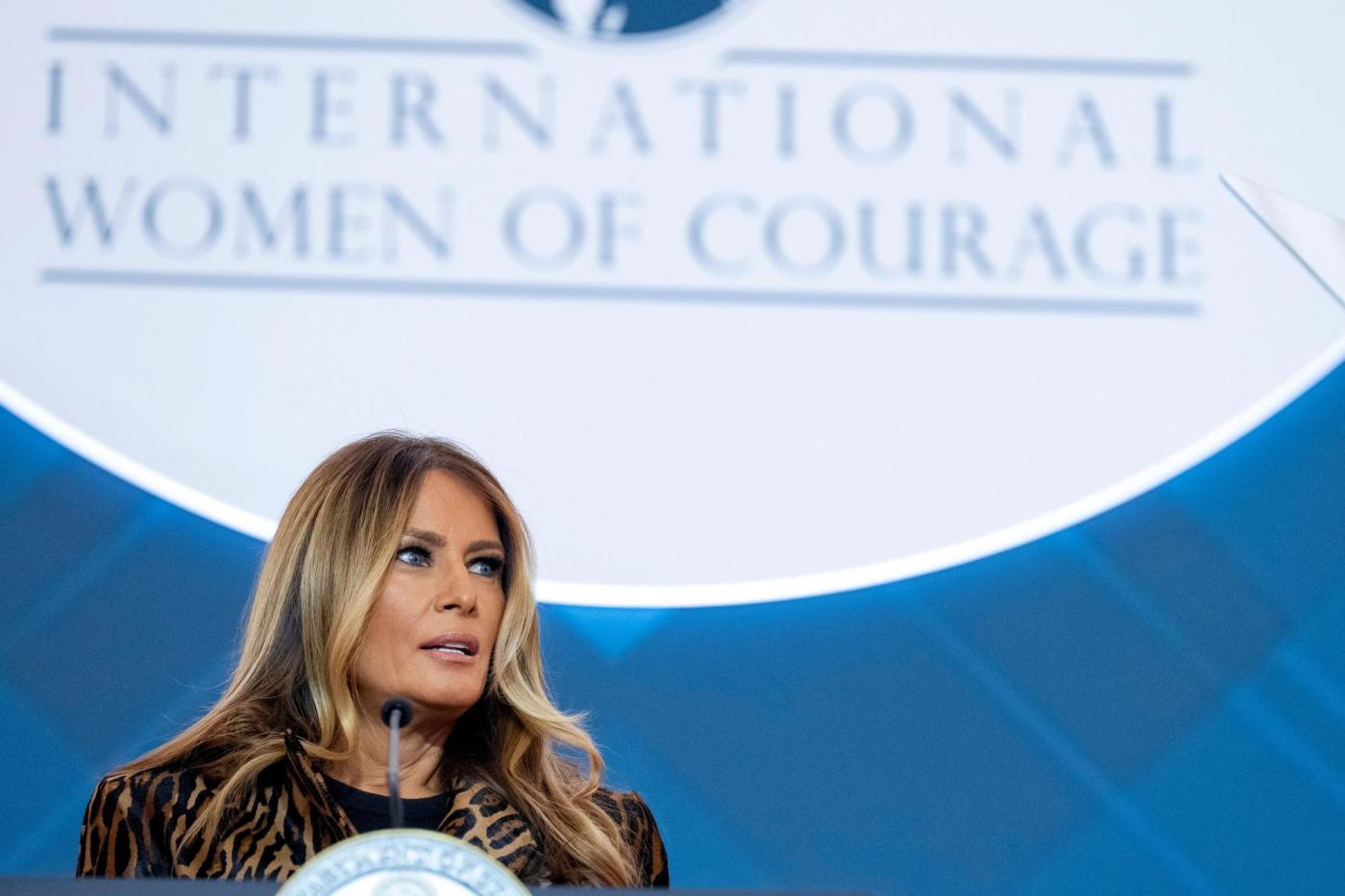
WASHINGTON (AP) — Courage is based in love, Melania Trump said Tuesday as she recognized eight women from around the world for bravery, including an Israeli citizen who was held captive by Hamas for nearly two months after the militant group’s deadly raid on her country in October 2023.

“These extraordinary women illuminate the transformative power of love in shaping our world,” the first lady said during a ceremony at the State Department, which created the International Women of Courage Award. “Their journeys remind us that true courage is born from a deep commitment to others, showing the love fuels the call for justice.”

The public appearance was her first in Washington since she sat in the gallery for President Donald Trump’s speech to a joint session of Congress on March 4. Tuesday marked her fifth time speaking at the awards ceremony; she participated every year during the president’s first term.

First lady Melania Trump speaks during the International Women of Courage award ceremony, Tuesday April 1, 2025, at the State Department in Washington. (AP Photo/Jacquelyn Martin)

Melania Trump defined courage as “a strength that is based in love,” and she sought parallels with the diverse group of honorees. She said that, in her own life, “I have harnessed the power of love as a source of strength during challenging times. Love has inspired me to embrace forgiveness, nurture empathy and exhibit bravery in the face of unforeseen obstacles.”

Trump singled out recipient Georgiana Pascu, of Romania, as someone who exemplifies “love in action.” Pascu advocates for the rights of institutionalized children and adults with psychosocial and intellectual disabilities, the State Department said.

“Georgiana is a ‘watchdog’ who defends the dignity of Romanians whose voices cannot be heard,” Trump said, telling the audience that Pascu “fearlessly enters” facilities designated as “care centers,” often dropping in unannounced, to rescue people with disabilities “who are unwittingly held captive.”

“Thanks to Georgiana’s brave work, dozens of offenders have been charged with human trafficking, exploitation and even organized crime,” the first lady said.

First lady Melania Trump, left, is introduced by Secretary of State Marco Rubio, during the International Women of Courage award ceremony, Tuesday April 1, 2025, at the State Department in Washington. (AP Photo/Jacquelyn Martin)

Another honoree, Israeli lawyer Amit Soussana, has publicly described being sexually assaulted during the 55 days that Hamas kept her in Gaza after the attack. On Tuesday, she delivered a passionate plea for freedom for the hostages still held, saying, “My friends remain in the dark” after more than 540 days, ”still suffering, still waiting, still hoping.”

“Every single day that passes is another day of unimaginable suffering,” she said. “With every passing moment, their pain deepens, their hopes fades and their chances of survival diminish. I call on the world to act, to bring them home now, not tomorrow, not next week. Now.”

The other award recipients are:

Henriette Da, of Burkina Faso, a human rights advocate.
Major Velena Iga, of Papua New Guinea, an advocate for combatting violence against women and human trafficking.
Angelique Songco, of the Philippines, also known as “Mama Ranger,” because she leads a small team of rangers protecting Tubbataha Reefs Natural Park from illegal fishing and poaching.
Zabib Musa Loro Bakhit, of South Sunday, a women’s rights leader.
Namini Wijedasa, of Sri Lanka, an investigative journalist.
Amat Al-Salam Al-Hajj, of Yemen, who works to bring international attention to the plight of thousands of abducted and forcibly detained Yemenis.

A group award named for Madeleine Albright, the late former secretary of state, went to female student leaders who protested against violent repression in Bangladesh in July and August of 2024.

Secretary of State Marco Rubio, center, next to Angelique Songco, of the Philippines, left, who is also known as “Mama Ranger,” at the Tubbataha Reefs Natural Park, and Zabib Musa Loro Bakhit, of South Sudan, a women’s rights leader, attends the International Women of Courage award ceremony, Tuesday, April 1, 2025, at the State Department in Washington. (AP Photo/Jacquelyn Martin)

Now in its 19th year, the International Women of Courage Award recognizes women from around the world who have shown “exceptional courage, strength and leadership, often at great personal risk and sacrifice.”

More than 200 women from over 90 countries have been recognized since the first awards in 2007.