Kevin Waldman: The dangerous consequences of radical empathy unchecked by reason

posted in: All news | 0

As a psychological researcher studying the intersection of empathy, ideological extremism and social influence, I have spent years analyzing the mechanisms by which belief systems spread and take hold.

After interviewing hundreds of students, I have observed how these dynamics materialize. One of the most provocative, and fundamentally contentious, trends I have identified is how radical empathy has been weaponized to fuel ideological extremism on American college campuses.

What was once a noble impulse — the ability to assimilate and share the feelings of others — has, in its most unmitigated form, become a liability, one that foreign adversaries and domestic radicals alike have learned to exploit.

In the wake of the Oct. 7, 2023, Hamas attacks on Israel, I witnessed an extraordinary surge of student activism at my alma mater, the University of Michigan, where many students rushed to declare unwavering support for the Palestinian cause.

However, what proved particularly conspicuous was the fervor of their activism and the pronounced absence of critical thought underpinning it. For many students, allegiance to Palestine was less about a sophisticated understanding of geopolitical realities and more about aligning with a prescribed moral stance shaped not by historical analysis but by the relentless cultural conditioning of radical empathy.

Determined to understand the roots of this phenomenon, I traveled to Dearborn, Michigan, in November 2023 to attend a community meeting where local leaders strategized their response to the Israel-Hamas war. What I heard was both illuminating and alarming: a calculated effort to leverage America’s emotional susceptibility to advance an ideological agenda.

Organizers spoke explicitly about using social media to manipulate Western narratives, exploiting empathy as a tool to dismantle American institutions from within. It was a real-time case study in the psychological mechanics of influence and persuasion, which I had the opportunity to observe firsthand.

As a researcher, I am now compelled to ask: Can a society have too much empathy? The assumption that empathy is an unqualified good has led to a dangerous oversimplification of multifaceted sociopolitical issues. In its most radical form, empathy demands unconditional allegiance to perceived victims, often at the expense of truth, reason and moral clarity.

This phenomenon is particularly pervasive in academic settings, where the prioritization of emotional identification over intellectual discipline has rendered universities vulnerable to ideological infiltration. The very institutions meant to champion critical thinking have instead become breeding grounds for emotional manipulation.

This is not an abstract concern — it is an observable trend with real consequences. My research into the psychological foundations of extremism has shown that radical movements rely on a three-step process: emotional priming, ideological reframing and behavioral reinforcement.

First, students are primed through exposure to narratives that depict a binary world of oppressors and oppressed. Then, these narratives are reframed within the context of Western guilt, positioning radical activism as a moral imperative. Finally, students are socially rewarded for their participation, reinforcing ideological adherence and discouraging dissent.

This process is especially insidious because it co-opts one of the most deeply ingrained American values — empathy — and turns it against itself. The result is a generation of students who, believing themselves to be warriors of justice, inadvertently provide cover for extremist ideologies.

I saw this very strategy in Dearborn, where activists explicitly articulated their goal: use Western empathy as a Trojan horse for ideological conquest at the University of Michigan. I urgently appealed to President Santa Ono numerous times, seeking the opportunity to share firsthand what I witnessed in Dearborn — but each request was met with silence.

I interviewed 360 undergraduates at Northwestern University, and data from my research there revealed that 81% of students on campus feel pressured by faculty to take a stance on the Middle East conflict, yet 74% privately admit they have little personal investment in the issue.

In confidential interviews, students voiced deep frustration that their academic experience is being eclipsed by ideological imperatives, with many lamenting the intrusion of political conformity into spaces meant for intellectual and professional growth. Psychological models on social coercion and performative activism confirm that when authority figures set the terms of discourse, students often comply out of obligation rather than belief. The evidence is clear: Universities are not encouraging independent thought but manufacturing ideological participation.

Today, the implications of this trend extend far beyond campus protests. Suppose radical empathy continues to undermine critical thought in academia. In that case, we risk engendering a society where emotional reflex overrides reasoned analysis, moral intelligibility is abandoned to ideological orthodoxy and the very freedoms that define America are compromised by those who profess to protect them.

Acknowledging this issue is not enough. Universities must recommit themselves to intellectual discipline, ensuring that empathy is balanced by reason. Public discourse must resist the seduction of emotional absolutism, demanding instead that moral arguments be grounded in fact and logic. And above all, we must recognize that empathy, like any other human faculty, can be corrupted when left unchecked.

If we fail to address this crisis, the consequences will be devastating. The next generation will not inherit a society built on genuine understanding and progress, but one defined by ideological extremism masquerading as compassion. In studying the psychology of influence, I have learned that ideas do not spread in a vacuum — they are shaped, nurtured and directed by those who understand the power of belief.

It is time we reclaim that power for the cause of reason before it is too late.

Kevin Waldman is a psychological researcher at Northwestern University and the University of Michigan, specializing in the cognitive and developmental mechanisms underlying adolescent susceptibility to extremism. He wrote this column for the Chicago Tribune.
Remember public phones? The Masters still offers old-school devices as alternative to cellphones

posted in: All news | 0

By STEVE REED

AUGUSTA, Ga. (AP) — Attending the Masters for the first time was a new experience for Thomas Abraham, and it wasn’t just about the golf.

Related Articles


South St. Paul: As a kid, he checked out a Cat Stevens vinyl from the library. As a grandpa, he tried to return it.


Author, wife of Weezer bassist arrested after being shot by police who say she pointed a gun at them


Passover performers: 3 dishes that go beyond Seder to the rest of the week


Acclaimed designer reveals the item to pack for a good night’s sleep at any hotel


Oaks, asters and 6 other ‘keystone’ native species to plant for biodiversity

The 16-year-old from Houston had the rare opportunity to use a public telephone for the first time.

“It was kind of cool,” said Abraham, who phoned a friend while attending the Masters Par 3 competition on Wednesday with his father, Sid. “I’ve never used one before. I figured it out. If I had to use one of those (rotary) phones I probably would’ve had to ask my dad.”

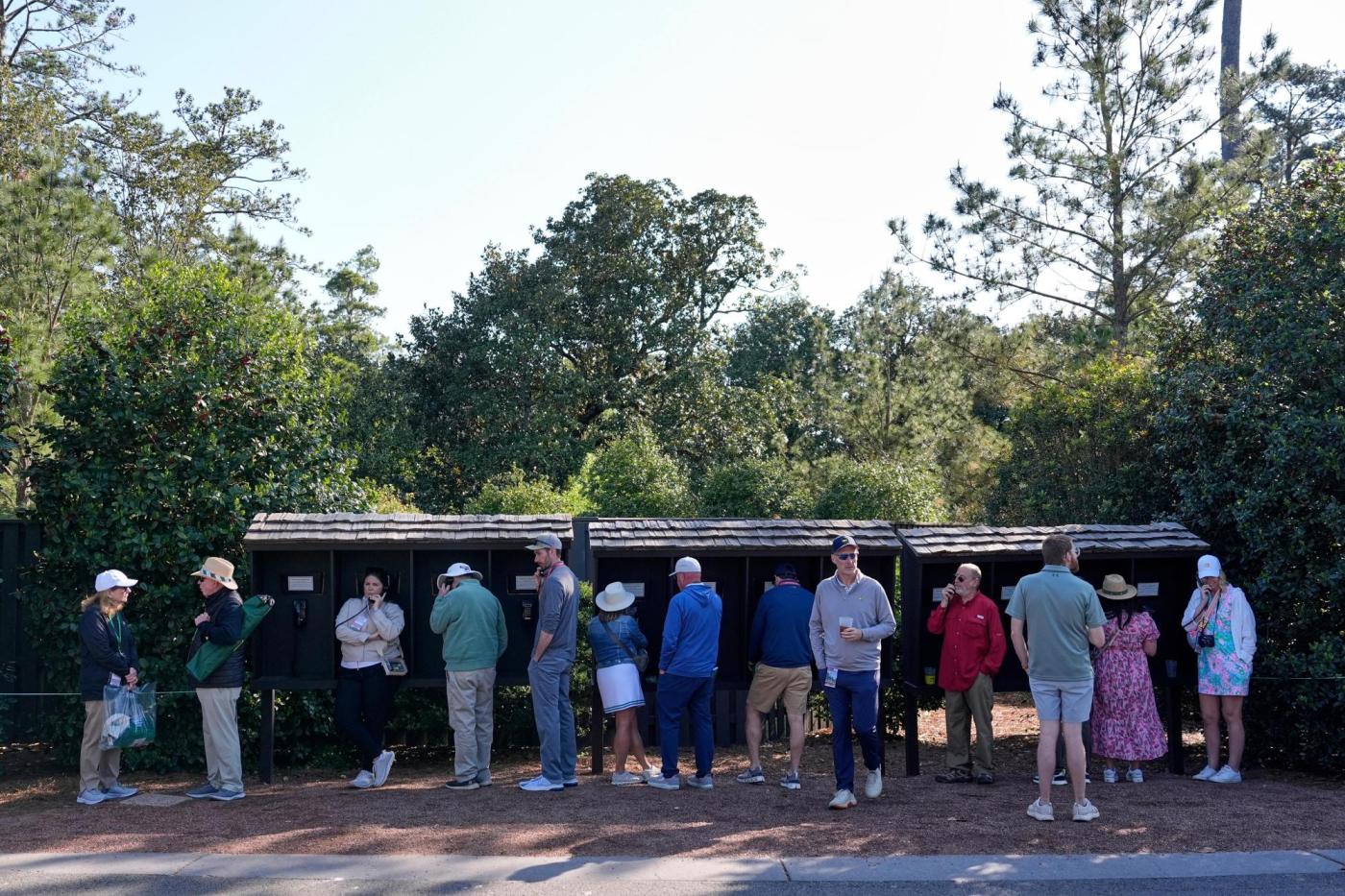
Augusta National requires its patrons to leave their cellphones and other electronic devices behind. In place of those security blankets, there are several public telephone banks of those throwback devices from days gone by. They are a foreign sight for many in the younger generation who’ve never seen a phone with an attached cord.

Abraham is not unlike most teenagers — or adults, for that matter — who are very much attached to the world through their cellphones.

At some point, chances are, patrons check for their phone — patting their pockets, reaching for the clip on their belts, wherever it usually is.

And when they can’t find it, well…

“It’s kind of panic mode,” Abraham said. “We were at 18th (hole) and I went to reach in my pocket and it wasn’t there. Then I remembered it’s in the car.”

He wasn’t alone.

“I’ve checked my pockets for my phone no less than 10 times today,” said Ryan O’Connor from Little Rock, Arkansas. “I was sitting in the bleachers on the 16th green and someone dropped a water bottle and it made a loud noise and I instinctively reached for my phone. Not there.”

The line at the public phone bank can stretch up to 10 people deep at the height of the Masters. And while they provide an outlet for those looking to touch base with the world outside of Augusta National’s gates, there are some issues that come with them.

Like, remembering phone numbers.

Bill Kehoe, 50, from Raleigh, North Carolina came prepared.

As he approached the public phones, Kehoe whipped out a sheet of paper with a handful of names and numbers written on them with a black Sharpie. He picked up the receiver on the phone, punched in the number “1” to start the call and then looked down at the paper and entered the remaining numbers to complete the free call.

“I can’t even remember my own phone number, let alone anyone else’s number,” Kehoe joked. “They’re all saved in my phone.”

One of the calls he made was to his 14-year-old son Connor, who was on a school fieldtrip to Washington. D.C.

Connor had asked his dad to call at a prearranged time while he was on a bus, and his 8th grade classmates were shocked when his caller ID popped popped up as “Augusta National Golf Club.”

“You could hear all of the kids like, ‘Oh, that’s so cool!,” Kehoe said with a laugh. “But then they all started asking for merchandise so I had to hang up.”

The reasons patrons disrupt their round of watching professional golf to make a call.

One person was calling to hear about the day’s dramatic movement in the stock market. Another said he was checking in with work. And several others were simply touching base with family or loved ones.

Tyler Johnson and his wife Lauren called home to Roswell, Georgia to check on their 5-year-old son, who is staying with his grandparents, “just to make sure there’s no blood,” Tyler said with a laugh. As mom and dad alternated talking to their son, they took pictures of each other talking on the odd-looking black public phone.

“I think the last time I used one of these was 1999, before Y2K, I think,” Tyler joked.

While not having a cellphone is an inconvenience for some, others have come to relish the liberating feeling of being disconnected from the world for a little while.

Fletcher Lord from Little Rock texted his wife after he arrived at the course around 6 a.m. and reminded her not to expect to hear from him all day. He then set out to enjoy a few refreshments on a sunny, 70-degree day amid the serene backdrop of blooming azaleas and tall pines.

“Once you get over the anxiety of not having your phone, it’s a very freeing feeling because it forces you to just be here in the moment,” Lord said.

O’Connor agreed.

He phoned one of his old friends from high school just to see if he’d pick up. He did.

“He didn’t recognize the number obviously, but when he saw Augusta National pop up he said I better pick this one up,” O’Connor said.

Then it was off to enjoy the day.

“Is not having a phone a pain?” O’Connor said. “No, I think it’s actually good for me. Those emails will be there when I get back home.”

AP golf: https://apnews.com/hub/golf

Stephen L. Carter: Supreme Court’s rulings aren’t White House ‘wins’

posted in: All news | 0

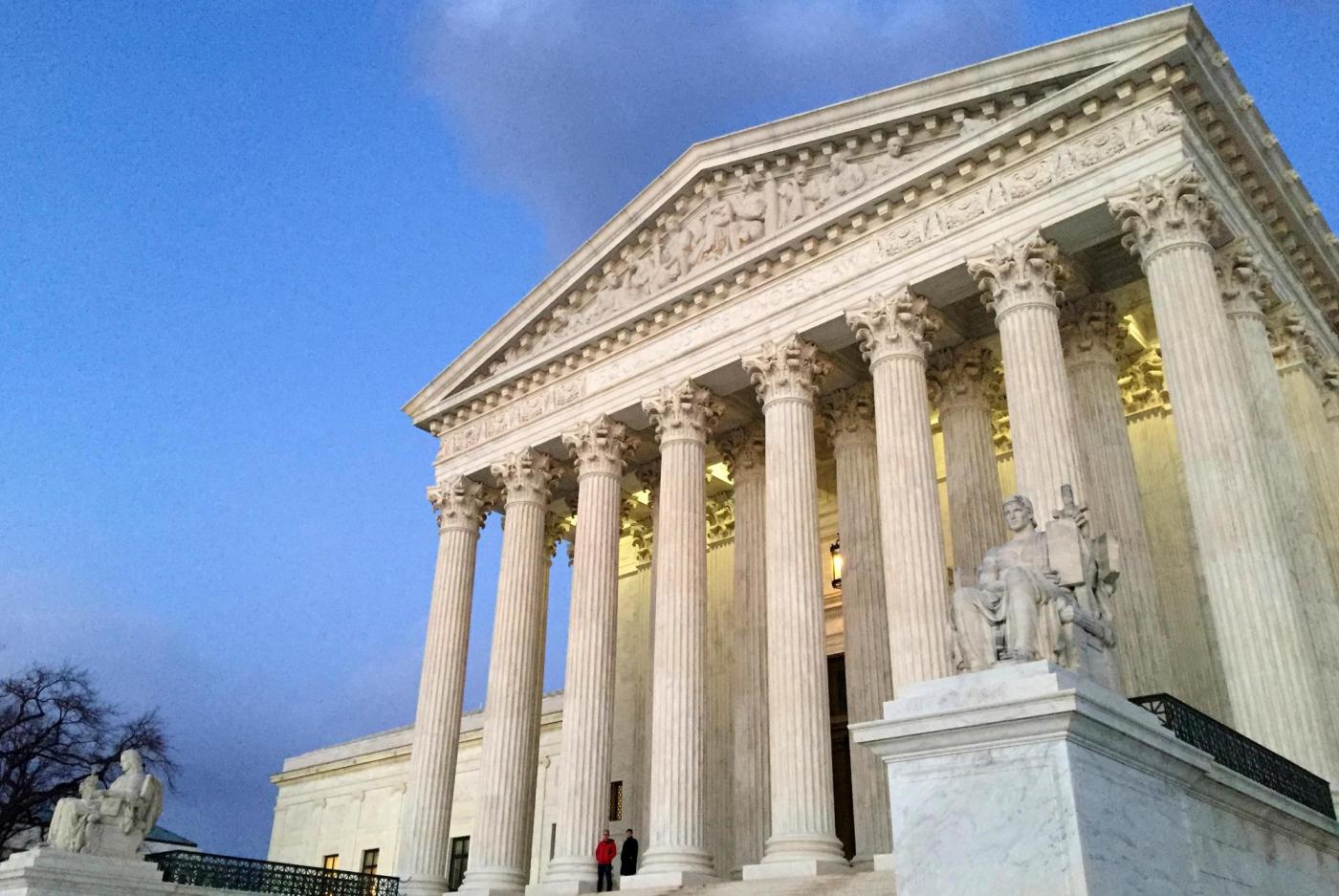
Commentators keep pointing to the Trump administration’s Supreme Court “wins” over the past several days in cases involving the whirlwind of his executive orders, but in legal terms there’s a lot less to the victories than meets the eye.

Friday’s decision allowing the Department of Education to end $65 million in grants was really about the venue where the lawsuits should be brought. Tuesday’s ruling that the government can proceed with forced deportations of alleged gang members arrived with safeguards that the administration sought to deny. The real news shouldn’t be which party prevailed but what the justices actually said.

Regarding the grants

First, the grants.

According to the Trump administration, the agencies that sued the Education Department for canceling grants filed their actions in the wrong court. The grants in question were previously approved under the Teacher Quality Partnership and the Supporting Effective Educator Development programs. The termination letters placed the decision principally on the grounds that the grants were funding DEI and other “unlawful” initiatives. The plaintiffs argued that whether or not the Trump administration shares the priorities of its predecessors is beside the point. The grants had already been awarded; the department and the grantees had signed on the dotted line. The government breached the contract.

The administration’s response is that even if all this is true — if the plaintiffs are, in fact, entitled to damages for breach of contract — the lawsuits should not have been filed in federal district court. The government argued they should have been filed in the Court of Federal Claims, which has exclusive jurisdiction over contract actions against federal agencies. A majority of the justices agreed, overturning the trial court’s restraining order on basically this ground. Justice Ketanji Brown Jackson’s thoughtful dissent argued that a federal district court can hear a challenge to what amounts to a change in policy, and in any case, there was no emergency justifying the majority’s decision to allow the Education Department to “jump the line” rather than moving through the usual process of trial and appeal.

Whichever side you might think is right, the important point is that the Supreme Court did not hold that the Trump administration is free to abrogate its contracts because it happens not to like DEI. The ruling was only that the suits were filed in the wrong place. It’s true that in the Court of Federal Claims the wheels of justice might indeed grind slowly. But that’s where every other plaintiff has to go to resolve assertions that the feds have breached a contract.

Regarding the instant deportations

And speaking of the slowness of justice, let’s consider for a moment the Trump administration’s enthusiasm for instant deportations, on which the Supreme Court ruled on Tuesday. Here, too, the headlines seem not to have the court’s decision quite right.

Critics have argued, among other things, that the Alien Enemies Act is an outdated and rarely used statute. Here, I largely agree with Harvard legal scholar Jack Goldsmith, who wrote of the dispute that the age of a statute “is irrelevant to the authority it confers.” Goldsmith, no fan of Trump’s approach to questions of legality, further argues that the merits of this particular exercise of presidential power under the Alien Enemies Act are trickier than much of the rather superficial media coverage suggests.

But the question of whether the administration has the power to deport those immigrants it considers dangerous is distinct from whether that power can be exercised summarily. A majority of the Supreme Court said no. In particular, the justices went back almost 80 years to find a precedent for the proposition that in a case involving summary deportation, the target has the right to a court hearing on whether he or she “is in fact an alien enemy fourteen years of age or older.”

Thus, those marked by the administration for removal must be given the opportunity to challenge the factual basis of their deportations. The justices ruled that those challenges should be heard in Texas not Washington, but the key is that the targets of the sweeping deportation orders have the right to fight them.

Ironically, had the Trump administration chosen from the beginning to allow some semblance of due process, it would not now find itself in the legally and morally ridiculous position of arguing that an innocent deportee swept up by accident has no recourse but to remain in a Salvadoran prison. Perhaps the hearings to come will weed out others who should have been exempt in the first place. Yes, the wheels will grind slowly, but here that’s surely to the good. It’s in the rush to action that errors are most likely to be made.

To be sure, there are other issues at stake in the cases, regarding when a temporary restraining order can be appealed (old rule: almost never; new rule: almost sometimes); and how the Supreme Court should treat cases filed on its emergency docket rather than through the usual appellate process (old rule: use rarely; new rule: hey, this is fun!); and under which circumstances federal trial judges can issue injunctions covering the entire country (old rule and new rule: oops, there is no rule). Those disputes might seem technical and lawyerly, but given the endless lawsuits predictably sparked by the Trump administration’s endless string of orders, they’re likely to prove important indeed.

Whatever happens going forward, let’s all keep our eyes not on which side “wins” but on what the courts actually say.

Stephen L. Carter is a Bloomberg Opinion columnist, a professor of law at Yale University and author of “Invisible: The Story of the Black Woman Lawyer Who Took Down America’s Most Powerful Mobster.”

Publishers Clearing House, known for its ‘Prize Patrol’ sweepstakes, files for bankruptcy

posted in: All news | 0

By WYATTE GRANTHAM-PHILIPS

NEW YORK (AP) — Publishers Clearing House, a decades-old marketing and sweepstakes company known for doling out large “Prize Patrol” checks, has filed for Chapter 11 bankruptcy protection.

In an announcement this week, PCH said it was using the bankruptcy process to “finalize a shift away” from its legacy business of direct-mail, retail merchandise and magazine subscriptions. The company is hoping to instead transition to a “pure digital advertising” model, where it will continue to offer free-to-play entertainment and prizes.

The Chapter 11 proceedings, filed in New York on Wednesday, arrive amid growing financial strain for PCH — which has struggled with rising operational costs and changing consumer habits in recent years.

Pivoting from its old way of doing business will help the company break free from past constraints and “establish a strong foundation for our future,” CEO Andy Goldberg said in a statement.

But that doesn’t mean the famous sweepstakes are going away. PCH says it plans to operate in a “business-as-usual manner” throughout the bankruptcy process — noting that the “Prize Patrol” team will continuing to deliver awards across the U.S. The company says it’s lined up debtor-in-possession financing from Prestige Capital to fund operations through its restructuring.

PCH’s roots date back to 1953 — when Harold and LuEsther Mertz and their daughter, Joyce Mertz-Gilmore, formed a business out of their Long Island, New York home to send direct-to-consumer mailings that solicited subscribers for a number of magazines through one single offering.

The company later grew with chances for consumers to win money — first launching a direct mail sweepstakes in 1967 — and expanded its offerings to a wide variety of merchandise, from collectible figurines to houseware and “As Seen on TV” accessories, in the years that followed. Its in-person “Prize Patrol” team was formed in 1989.

PCH became known for surprising prize winners with oversized checks, which was often filmed and featured in TV commercials. In Wednesday court documents, the company said it has awarded over half a billion dollars in prizes and continues to attract millions of contestants today.

But its operations haven’t been without financial strain — particularly in recent years.

“While PCH’s direct mail and e-commerce programs were profitable for decades, changing patterns of consumer behavior, costs and competition, along with a declining pool of new prospecting names, negatively impacted the business, resulted in losses beginning in 2022,” William H. Henrich, co-chief restructuring officer for PCH, wrote in a court declaration Wednesday.

Henrich pointed to a handful of cost pressures — including rising shipping and postal rates, inventory and supply chain challenges that have continued since the start of the COVID-19 pandemic and rising competition from major retailers today, like Walmart and Amazon, that have dominated the e-commerce space.

PCH also faced some scrutiny from regulators who previously raised concerns about consumers mistakenly believing that making purchases from the company would improve their chances at winning its sweepstakes. As a result, PCH has racked up several costly legal settlements over the years — most recently, Wednesday’s court documents note, paying $18.5 million to resolve allegations from the Federal Trade Commission in 2018.

As of the end of March, PCH had total assets of nearly $11.7 million and total liabilities of about $65.7 million, court documents show. The company currently has 105 employees and an annual gross revenue of about $38 million.