A micromoon will grace the night skies this weekend

posted in: All news | 0

By ADITHI RAMAKRISHNAN, AP Science Writer

NEW YORK (AP) — There’s a micromoon coming up.

The full moon will look slightly smaller and dimmer on Saturday night. But the change may be tricky to spot with the naked eye.

“It’s a very subtle difference,” said astrophysicist Alain Brizard from Saint Michael’s College in Vermont.

The phenomenon happens when the moon is at a point farthest away from Earth. It’s opposite to a supermoon, where the moon swings closer to Earth and looks a bit larger.

To see the micromoon, go outside and look up in an area with a clear view of the moon.

Supermoons and micromoons happen a few times a year as the moon’s full phase syncs up with its orbit.

Another micromoon is on tap for May. Three supermoons will be visible this year in October, November and December.

A more colorful lunar event took place in March when a total eclipse turned the moon coppery red.

The Associated Press Health and Science Department receives support from the Howard Hughes Medical Institute’s Science and Educational Media Group and the Robert Wood Johnson Foundation. The AP is solely responsible for all content.

Related Articles


Without federal funding, Minnesota cancels treatments for invasive moths


Billionaire spacewalker highlights Mars trip for astronauts in his bid to become NASA’s next chief


Scientists genetically engineer wolves with white hair and muscular jaws like the extinct dire wolf


Four space tourists return to Earth after a private flight over the poles


Einstein called it his “biggest blunder.” Now a Berkeley Lab breakthrough is shedding light on the mysteries of dark energy and cosmic expansion

Patience in Joaquin Pereyra is paying off for Minnesota United

posted in: All news | 0

When Argentine attacking midfielder Joaquin Pereyra arrived in St. Paul last September, his new club was making almost immediate calls for patience.

But even in building out a longer runway for Pereyra to take off in a new league and country, Minnesota United could have reasonably expected more than they got from Pereyra’s first stint, when he logged one assist and no goals in 588 minutes across the regular season and playoffs.

Pereyra, in fact, didn’t even play a full 90 minutes across 10 total matches in 2024.

That’s just not good enough considering Pereyra joined MNUFC as one of the club’s three Designated Players during last year’s summer transfer window. The Loons paid Tucuman, a club in Argentine’s top flight, a transfer fee of approximately $3 million, and the 25-year-old is the team’s third-highest paid player at nearly $700,000 in guaranteed compensation, according to the MLS Players Association.

Pereyra cost more than a diamond, but MNUFC wasn’t expecting him to sparkle — at least not in first light. That is starting to come this spring.

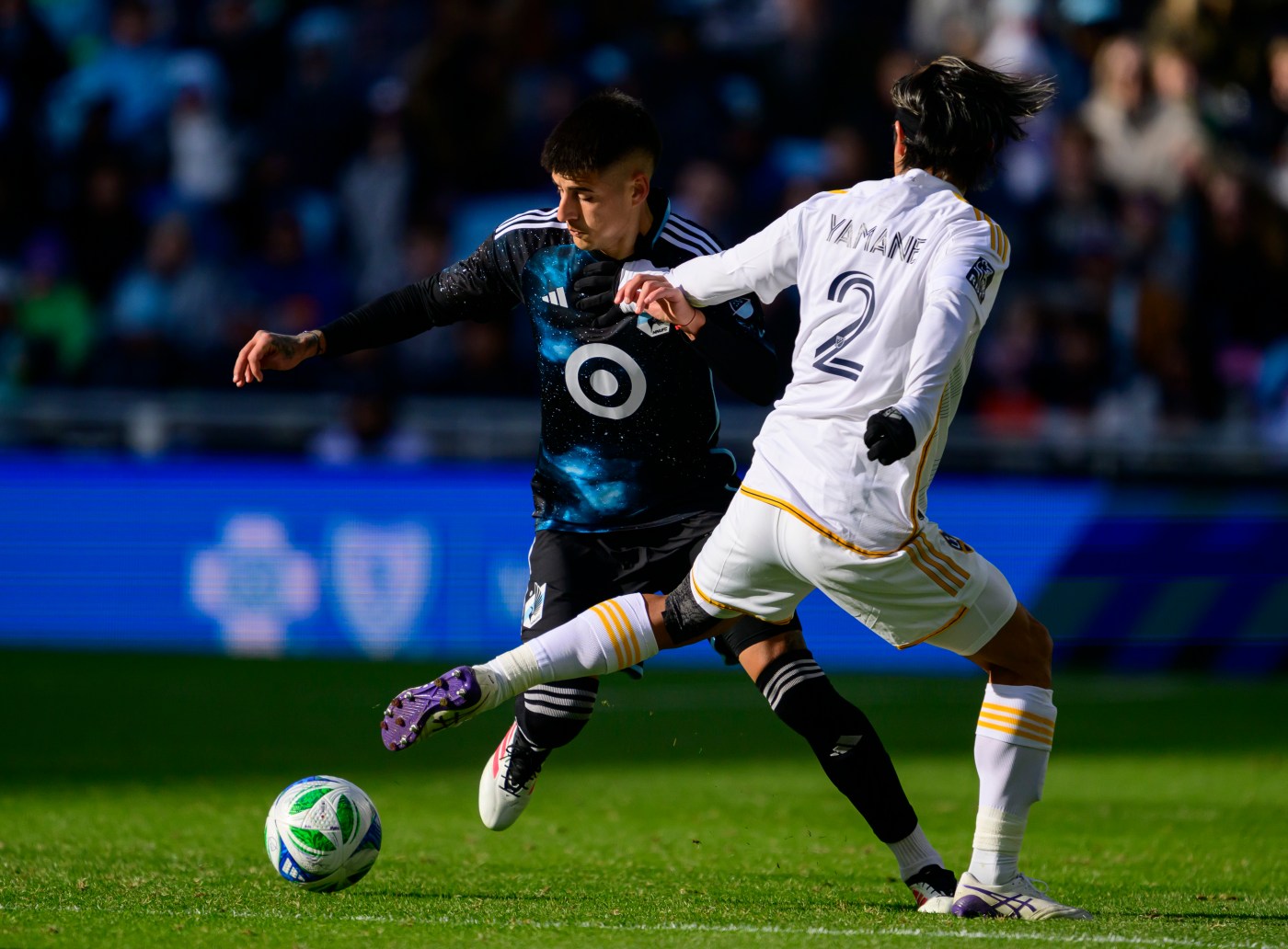
With a pair of assists in United’s 2-1 win at New York City on Sunday, Pereyra has four primary assists in 461 total minutes, one behind a trio of MLS leaders — Miami’s Luis Suarez, San Jose’s Cristian Espinoza and Charlotte’s Pep Biel.

Instead of answering questions about why he took Pereyra off the field in the second half, head coach Eric Ramsay was pumping up Pereyra after his second 90-minute shift this season in the Loons’ 2-1 victory at New York City last Sunday.

“He has evolved hugely in his time with us here,” Ramsay told reporters from Yankee Stadium. “He is a very complete player now, I would say, and you could see in his performance, which was very dogged. He showed real aggression, a real willingness to stick to a game plan and level of discipline.

“He had some hard running, but he also had some great moments on the ball, and that’s what we expect of him because he is a good player.”

Pereyra has notched all four assists over the past four games.

“I feel better, obviously. Much better than last season, like it happens with everyone, everywhere,” Pereyra said in Spanish via a club translator. “It took me a while to adapt to the league, but now I’m more comfortable than I’ve been here in a long time. I feel very good. I feel calm. And obviously, with the team, we’re trying to consolidate ourselves again to compete in the (league).”

Pereyra’s assist on Tani Oluwaseyi’s second goal against Real Salt Lake was his best yet in a Loons shirt. With his weaker right foot, Pereyra hit a long ball over the top to uncork a counter attack. Oluwaseyi sprinted underneath it and scored in the 55th minute.

Oluwaseyi called the pass “incredible,” and Pereyra’s service has helped the Canadian forward move into a second-place tie for goals scored (five) this season.

“I think we saw that quality early last year, and I think we’ve all been waiting for him to show it in games,” Oluwaseyi said after the RSL win. “You can see now, game in and game out, he’s just been performing. He’s been one of our best players all year and makes my life easier and creates more chances for me and Kelvin (Yeboah). So, we’re just happy he’s finally finding his stride.”

When Pereyra arrived last year, Ramsay said his biggest improvement needed to come on the defensive side. That, too, has transpired.

“Without the ball, I’ve got to say, in his time here, he’s really improved,” Ramsay said after RSL. “In that sense, he’s really reliable. He’s very competitive, very aggressive.”

When Ramsay subbed out Pereyra against RSL — his yellow-card booking was a catalyst for the change, Ramsay emphasized — Pereyra was not pleased.

“He didn’t want to come off on 65 minutes, and that is a sign of a player that smells blood, feels like he’s in a really good vein of form and had really good rhythm,” Ramsay said. “And it was a shame we had to disrupt that, but I think justified, all in all.”

Pereyra is still waiting to open up his goal-scoring account in MLS. It looks closer: he has 1.4 expected goals this season, compared to 0.5 last season.

“Obviously, it would be a good thing,” Pereyra said. “… I’m at a point where I feel very good, physically fit, and I can help the team from my position. And, well, the goal will come when it has to. But … I’m not desperate. I’m calm.”

Trump figuring out next steps in global tariff battle

posted in: All news | 0

By JOSH BOAK, Associated Press

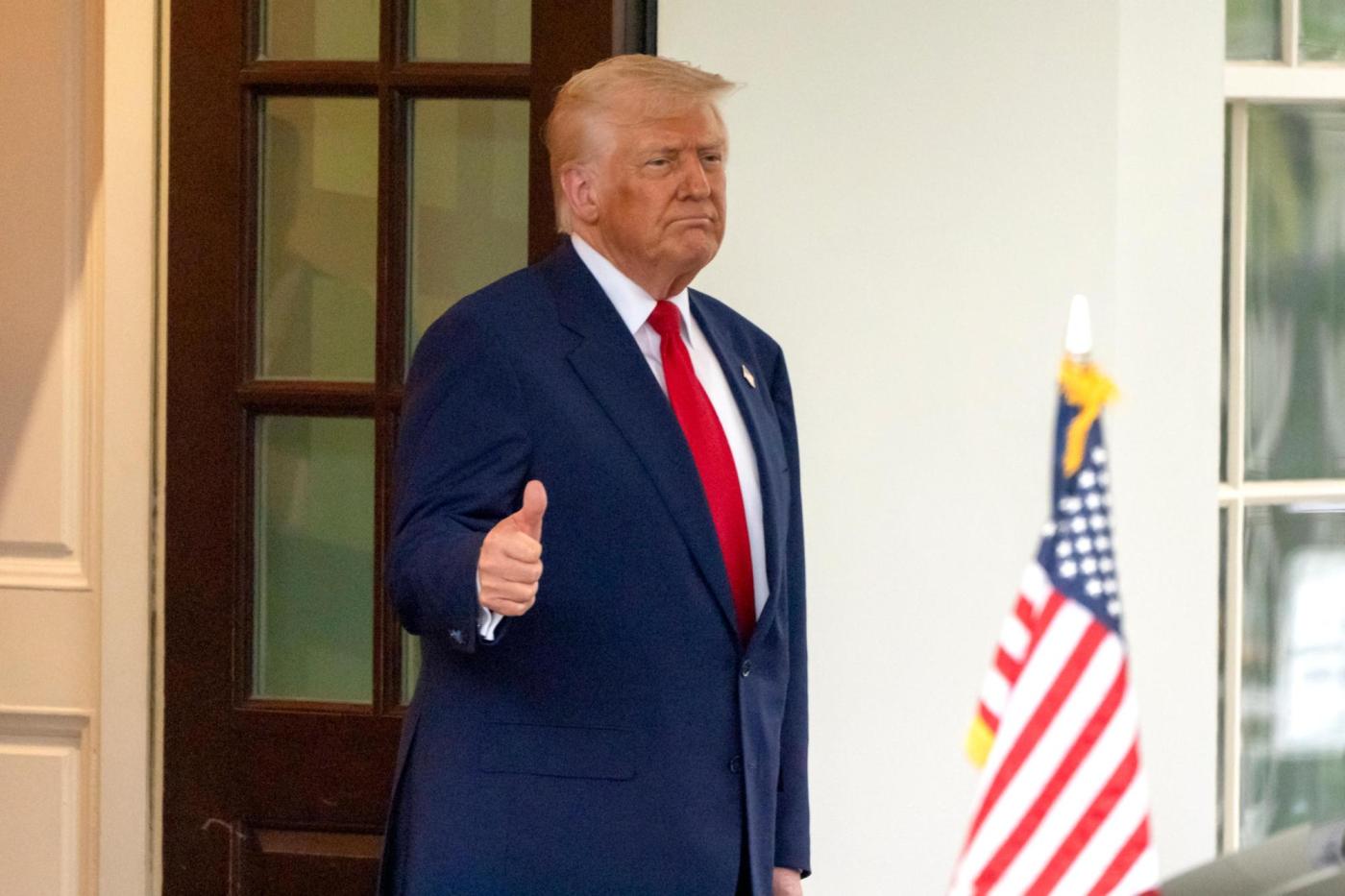
WASHINGTON (AP) — In the aftermath of this week’s tariff whiplash, President Donald Trump is deciding exactly what he wants out of trade talks with as many as 75 nations in the coming weeks.

Related Articles


House passes GOP bill requiring proof of US citizenship for voting, a Trump priority


House GOP approves framework for Trump’s big bill after intense wrangling wins over GOP holdouts


Trump’s ‘buy’ tip on social media before his tariffs pause made money for investors who listened


Other voices: University funding should be reformed, not reduced


Letters: This is what was promised, what Americans voted for

Trump is also figuring out next steps with China. He upped his tariffs on Chinese goods to 145% after China placed retaliatory taxes of 84% on imports from the U.S. While his 90-day pause on other tariffs caused the stock market to rally on Wednesday, countries still face a baseline 10% import tax instead of the higher rates announced on April 2.

Kevin Hassett, director of the White House National Economic Council, told Fox News’ “Fox and Friends” on Wednesday that the administration already has “offers on the table from more than 15 countries.”

Hassett said the next step will be determining exactly what Trump wants out of the negotiations.

“We have a meeting today with all the top principals where we’re going to present to the president a list of what we think his priorities might look like,” Hassett said. “And I’m sure he’s going to, you know, have his own ideas about where to move things.”

Here’s a look at where Trump’s tariffs showdown stands:

The financial markets can tame Trump

With $28.9 trillion in publicly held debt, the U.S. government can still be beholden to the investors who lend it money. Trump might be willing to run roughshod over political rivals, judges he dislikes and a host of political norms, but the bond market showed Wednesday that it can temper his plans.

Going into Wednesday, the interest rate on a 10-year U.S. Treasury note was increasing and approaching 4.5%. That meant the U.S. government was having a tough time finding possible buyers for its debt, as market participants were wondering if Trump’s tariffs had caused foreign buyers to sour on the U.S. government. Higher interest rates for the government could trigger even higher mortgage rates and auto loans for consumers, among other problems.

Trump on Wednesday said investors were getting “yippy,” but after his tariff pause he described the bond market as “beautiful.”

The tariff drama is far from done

The S&P 500 stock index jumped 9.5% after the pause was announced. But reality crept back in on Thursday and the stock market slumped. Sure, Trump was no longer going to put a 20% tariff on goods from the European Union, a 24% tariff on Japan or 25% on South Korea. But those nations still have imports taxed at an elevated 10%, Trump’s new baseline as trade talks begin. And tariffs went up against China, locking the world’s two largest economies in a trade war.

Plus, the trade war has expanded with China, and 25% tariffs still apply to imported autos, steel and aluminum. Imports from Canada and Mexico, the two largest U.S. trading partners, still face import taxes of as much as 25%. And Trump still plans tariffs on pharmaceutical drugs, lumber, copper and computer chips.

Because tariffs are taxes paid by importers, the costs generally get passed along to consumers and businesses in the form of higher prices and slower economic growth. The Budget Lab at Yale University estimated on Thursday that even with the pause, Trump’s current tariff regime would pull down a household’s average disposable income by $4,364.

What Trump really, really wants

Treasury Secretary Scott Bessent said that any trade agreements will be “bespoke” deals, rather than some overarching pact among a group of countries. Trump has laid out a series of grievances and goals regarding tariffs, but Canadian and European counterparts have said the actual asks from administration officials have been vague so far.

Trump has said he wants to eliminate the $1.2 trillion trade deficit, which means he no longer wants the U.S. to import more goods than it exports to other nations. He also wants revenues from tariffs to offset his income tax cut plans. The president has also said he wants the tariffs to bring back factory jobs and raise workers’ wages.

Aides have said that Trump wants other nations to scrap regulations and other policies such as Europe’s value-added taxes that he deems to be a barrier to U.S. goods, an ask that would require other countries to change their laws. Commerce Secretary Howard Lutnick has said the goal is to get other nations to “respect” Trump.

A trade war with China could cause mutual pain

The Trump administration views China as violating basic trade norms with how it subsidizes its manufacturers, takes intellectual property from its global competitors, suppresses wages for its workers and manipulates its currency.

The White House clarified that the 125% tariffs that Trump announced on Wednesday against China were actually 145%, once his previous 20% fentanyl tariffs were included.

Census Bureau data show the U.S. ran a $295 billion trade deficit last year with China. Because U.S. consumers and businesses are such a major customer of Chinese manufacturers, Bessent has said that gives the U.S. an edge in terms of inflicting pain on that nation’s economy through tariffs. Of course, China has also spent several years preparing for a trade war.

Wendong Zhang, an economist at Cornell University, said that the Chinese economy might suffer a steeper hit to its gross domestic product than the U.S., but it’s “likely to stick to its guns” due to internal public support and the ability to increase consumption domestically on goods that might no longer be going to the U.S.

Meanwhile, Trump will need to deal with voters who might be frustrated over the higher price of electronics and other goods resulting from the trade wars.

“Many products that the U.S. imports are predominantly from China: smartphones (73%), laptops (78%), video game consoles (87%), toys (77%), and also antibiotics for U.S. livestock production,” Zhang said in an email. “Resourcing from other countries will take time and result in much higher costs.”


OpenAI countersues Elon Musk in legal dispute over ChatGPT maker’s business ambitions

posted in: All news | 0

By MATT O’BRIEN, Associated Press Technology Writer

OpenAI is suing Elon Musk for unfair competition and interfering with its business relationships with investors and customers, escalating a legal battle between the ChatGPT maker and the billionaire who helped bankroll the artificial intelligence startup a decade ago.

The allegations against Musk were filed Wednesday in a federal court in California as a counterclaim to the Tesla CEO’s lawsuit against OpenAI, which is heading to a jury trial next year.

Musk, an early OpenAI investor who now runs his own AI firm, xAI, along with Tesla, SpaceX, social media platform X and President Donald Trump’s Department of Government Efficiency, began a legal offensive against OpenAI and its CEO Sam Altman more than a year ago.

He first sued for breach of contract over what he said was the betrayal of its founding aims as a nonprofit research laboratory, and later expanded his claims.

A federal judge in March denied Musk’s request for a court order blocking OpenAI from converting itself to a for-profit company but said she could expedite a trial to consider Musk’s claims. She offered to hold a trial later this year, but it has been pushed back to March 2026.

In this week’s counterclaim, OpenAI accuses Musk of making a “sham bid” in February to buy a controlling stake in the nonprofit.

Musk and a group of investors offered $97.4 billion for OpenAI’s assets, a number that OpenAI said Musk pulled from the character 974 Praf in the science fiction novel “Look to Windward” by Scottish writer Iain Banks. Musk has also named some of his SpaceX machinery after ships in the book.

OpenAI said it “recognized the bid as a feint” but has repeatedly had to divert resources and “suffered harm as a result of Musk’s unlawful campaign of harassment, interference, and misinformation.”

Musk attorney Marc Toberoff responded in an email late Wednesday and said that if OpenAI’s board of directors had “genuinely considered the bid, as they were obligated to do, they would have seen how serious it was.”

“It’s telling that having to pay fair market value for OpenAI’s assets allegedly ‘interferes’ with their business plans,” Toberoff wrote.

The Associated Press and OpenAI have a licensing and technology agreement that allows OpenAI access to part of AP’s text archives.