Texans at Vikings picks: We vote 3-0 for Vikings’ 3-0 start

posted in: News | 0

Members of the Pioneer Press sports staff who cover the Vikings forecast Sunday’s home game against the Houston Texans:

DANE MIZUTANI >

Vikings 31, Texans 27: The world is starting to learn what former USC head coach Clay Helton knew all along. Sam Darnold is that dude. Though some are waiting for the other shoe to drop for the Vikings, maybe it’s time to lean into Darnold and his career renaissance.

JOHN SHIPLEY >

Vikings 22, Texans 16: The Texans won’t be the best team the Vikings play all year, and Minnesota truly believes it’s for real. At this point, not picking against that.

CHARLEY WALTERS >

Vikings 24, Texans 21: You beat the 49ers at home, you’ll beat the Texans at home. Vikings rooters can now get legitimately excited.

Red and blue states have big climate plans. The election could upend them

posted in: News | 0

Alex Brown | (TNS) Stateline.org

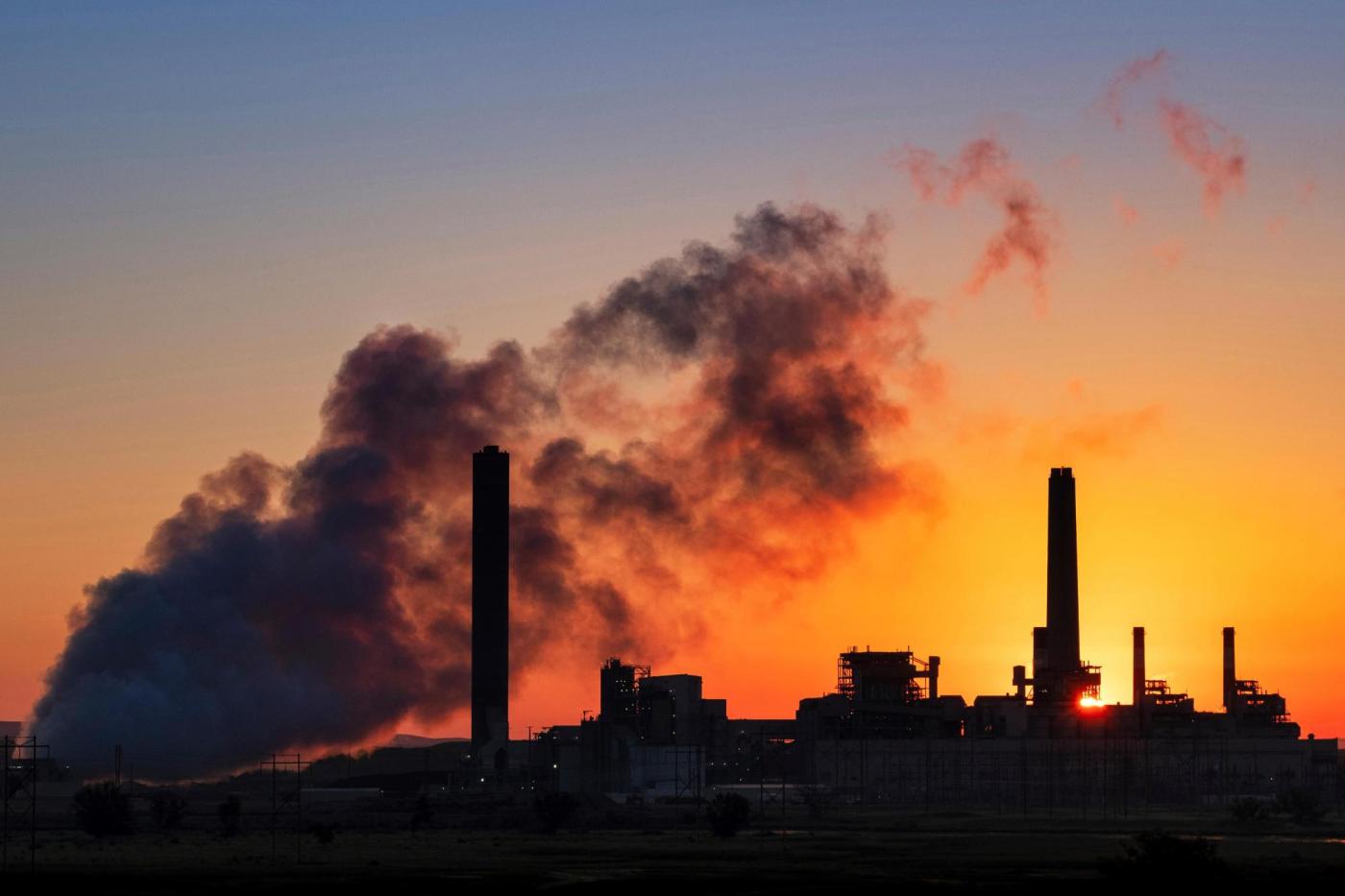
Pennsylvania wants to remain a manufacturing powerhouse. But state leaders also want to reduce climate change-causing emissions from steel mills and other industrial facilities, while cutting back the toxic pollutants that cause health problems in nearby neighborhoods.

Thanks to a nearly $400 million investment from the federal government, the state is preparing a massive plan to help industrial operators upgrade to new technologies and switch to cleaner fuel sources.

“Pennsylvania was one of the birthplaces of the industrial revolution, and now we’ve been given the opportunity to lead the nation in the industrial decarbonization movement,” said Louie Krak, who is coordinating the plan for the state Department of Environmental Protection.

Leaders in every state in the country have their own big plans. North Carolina and neighboring states are preparing to restore wetlands and conserve natural areas along the Atlantic coast. Iowa leaders intend to plant trees in neighborhoods that lack shade. Local governments in Texas plan to help residents install solar panels on their rooftops. And Utah is readying to purchase electric buses and reduce methane emissions at oil and gas operations.

All of these plans are backed by federal money from the Inflation Reduction Act, the climate law passed by Congress in 2022. But former President Donald Trump, who has called climate change measures a “scam” and vowed to rescind “unspent” funds under the law, could throw much of that work into chaos if he retakes the White House.

Legal experts say Trump couldn’t outright cancel the law without an act of Congress. But climate leaders say a Trump administration could create extra barriers for grant awards, slow the approval of tax credits and delay loan requests. If the federal support becomes unreliable, projects could lose financing from the private sector and cease to be viable.

“Even if the money is technically safe, we would definitely expect to see agencies [in a Trump administration] dragging their feet,” said Rachel Jacobson, lead researcher of state climate policy at the Center on Budget and Policy Priorities, a progressive think tank.

Federal agencies have already announced plans to award $63 billion — mostly in the form of grants — to states, nonprofits and other entities for a host of projects to fight climate change, according to Atlas Public Policy, a climate-focused research group. Many Republican-led states have, for the first time, drafted plans to fight climate change in order to compete for the money.

In addition, the feds are rolling out billions more in loans and tax credits aimed at similar projects. States say the mix of funding sources and financial incentives that will soon be available could supercharge efforts to fight climate change and create green jobs.

Many states whose projects have been approved say they’re urging the feds to issue their funding before the election.

“There’s a risk that an incoming administration could cancel our agreement,” said Krak, adding that Pennsylvania is hoping to finalize its funding award this fall.

Another $30 billion from the law is still up for grabs, much of it aimed at reducing emissions in the agricultural sector. And agencies have just begun offering loans and tax credits to provide hundreds of billions more in financing.

“So many states have climate plans for the first time [because of the federal law],” said Ava Gallo, climate and energy program manager with the National Caucus of Environmental Legislators, a collaborative forum for state lawmakers. “Even states that weren’t supportive of the Inflation Reduction Act are certainly touting these projects.”

State plans

In July, Utah learned that it would be receiving nearly $75 million to carry out its climate plan. The program will pay for electric school and transit buses, help residents purchase electric vehicles and install equipment to reduce methane emissions at oil and gas operations, among many other components.

By 2050, the investments are expected to reduce carbon dioxide emissions by 1.4 million metric tons, said Glade Sowards, who is coordinating the plan for the Utah Department of Environmental Quality. Sowards said the plan was also designed to reduce pollution that harms public health.

North Carolina is focused on protecting natural areas. The state filed a joint plan with Maryland, South Carolina and Virginia that is set to receive $421 million in federal funding. The coalition plans to conserve and restore more than 200,000 acres in coastal areas in the four states. While the natural lands are valuable for pulling carbon from the air, the funding will also help to expand state parks and protect residents from flooding.

Like many of the state projects supported through the climate law, the four-state plan has been announced as a recipient but the funding agreement is still being finalized. State leaders are urging the feds to complete that this fall.

“We want to get this done quickly for two reasons: one, so we can get the work underway, but two, to make sure that the money will be there [before a new administration could threaten it],” said Reid Wilson, secretary of the North Carolina Department of Natural and Cultural Resources.

The federal law also will pay for trees in urban areas, where they can reduce the dangerous “heat island” effect and limit stormwater runoff and air pollution. Iowa earned a pair of grants totaling more than $5 million to increase tree canopy in its cities.

“We’ve never had this level of funding before,” said Emma Hanigan, urban forestry coordinator with the Iowa Department of Natural Resources. “We have a really low canopy cover, one of the lowest in the nation.”

Another nationwide program is set to offer funding in all 50 states to help residents put solar panels on their rooftops or buy into community solar operations. In Texas, a coalition of municipalities and nonprofits, led by Harris County (which includes Houston), earned a nearly $250 million award to carry out that work.

The program will largely focus on disadvantaged communities, with a requirement that solar projects reduce participants’ energy bills by at least 20%. Leaders in Texas expect the investment to reach about 28,000 households.

States are also tasked with distributing rebates to help residents with their home energy needs. Wisconsin was the first state to bring its rebate program online, with $149 million in funding. Residents can receive up to $10,000 to improve insulation, upgrade appliances or install electric heat pumps. Over time, they will see greater savings in the form of lower energy bills.

“It’s nice [for a contractor] to be able to sit at the kitchen table and say, ‘You’re getting $3,000 of work here, but the state is paying $2,800,’” said Joe Pater, director of the Office of Energy Innovation with the Public Service Commission of Wisconsin.

Three other states (Arizona, New Mexico and New York) have rebate programs up and running, and others are finalizing applications. Indiana is among the many states awaiting federal approval to launch its program. The state expects to offer $182 million in rebates starting in early 2025. Greg Cook, communications manager with the Indiana Office of Energy Development, said the state is hoping to execute its plan regardless of the election outcome.

The climate law also has boosted “green banks,” which are state or nonprofit-run institutions that finance climate-friendly projects. The nonprofit Coalition for Green Capital received $5 billion of the federal money, which it will use to build a network that includes a green bank in each state, said Reed Hundt, the group’s CEO.

Michigan Saves, a nonprofit bank, expects to receive $95 million as a sub-award from the coalition. Chanell Scott Contreras, the president and CEO of Michigan Saves, said the “unprecedented” funding will enable the bank to expand its work, which includes helping low-income residents weatherize their homes and financing electric vehicle chargers and solar installations.

Loans and tax credits

The grants given out to states and other entities are just the start. The climate law supersized a federal loan program for clean energy projects, bringing its lending authority to $400 billion. And a new mechanism known as elective pay will now allow states, cities and nonprofits to receive the clean energy tax credits that have long been available to the private sector.

Climate advocates say many of the plans that states are setting in motion rely on the financing and tax rebates — components of the law that are most vulnerable to political interference.

“If an administration wanted to completely thwart the ability of [the Department of Energy] to make those loans, they could do so,” said Annabelle Rosser, a policy analyst with Atlas Public Policy, which has been tracking the rollout of the climate law. “That could be cut off at the knees.”

Meanwhile, many states are relying on the new tax credit to support plans such as electrifying state vehicle fleets and installing solar panels on public schools. In Washington state, for instance, the Office of Financial Management is coordinating a governmentwide effort to ensure state agencies use elective pay to bolster their climate work.

But climate advocates fear that an Internal Revenue Service led by Trump appointees could stall that work.

“There’s a lot of concern about what [Trump] would do with IRS staffing to limit the ability for them to get the refund checks out,” said Jillian Blanchard, director of the climate change and environmental justice program with Lawyers for Good Government, a nonprofit focused on human rights. Such delays could “chill hundreds of thousands of projects,” she said.

“I’m not sure he knows that red states are counting on this money too.”

©2024 States Newsroom. Visit at stateline.org. Distributed by Tribune Content Agency, LLC.

Is 2024 the year of the ‘girl dad’ candidate?

posted in: News | 0

Daniela Altimari | (TNS) CQ-Roll Call

As he seeks to flip a competitive House district in Southern California, Republican Matt Gunderson is leaning into his identity as a “girl dad” to convince voters that he backs abortion rights.

“I don’t want politicians dictating health care for my daughters,” Gunderson says in a new ad – his first of the cycle – asserting that he believes abortion should be “safe, legal and rare.”

Gunderson, who is running against Democratic Rep. Mike Levin, said in an interview that being the father of four daughters, ages 18 to 23, has shaped his thinking on several key issues.

“When you do have four young adult women in your world, you are concerned about how government impacts their lives in every single way,’’ he said, “whether it’s [abortion], or…this incredible debt that we’re piling on these generations and or the crime on the streets, or what open borders are doing to their opportunities and their quality of their life.”

Gunderson, who is running in a district covering southern Orange and northern San Diego counties, isn’t the only GOP candidate centering his role as the father of daughters.

While none of the ads specifically deploy the phrase “girl dad’’ — which has become shorthand for a father’s pride in his daughter’s achievements and a way to signify that he values gender equality – the message of female empowerment is clear.

And it’s not exclusive to Republicans: in a speech at the Democratic National Convention last month, Ashley Biden, President Joe Biden’s 43-year-old daughter, deployed the phrase with a gangsta modifier, calling him “the OG girl dad” who “told me I could be anything and I could do anything.”

‘Know how to listen’

In Pennsylvania, Dave McCormick, who is running against Democratic Sen. Bob Casey in a race that could determine the balance of power in the chamber, is airing an ad that stars his wife, Dina McCormick, and alludes to their six daughters.

In the ad, which does not mention abortion, McCormick says being the only male in the household has taught him to be a better listener. “In Washington, we need more people who know how to listen, not just argue,’’ he said.

And in Maryland, GOP Senate candidate and former Gov. Larry Hogan enlisted his three daughters to make the case that he would push to codify abortion rights into law if he wins the open seat. The ad also features Hogan’s four young granddaughters.

“When Larry Hogan married my mom, he became a father to three strong, independent women, and he gained our trust,’’ Hogan’s daughter, Jaymi Sterling, said. “Now, once again, they’re attacking him as anti-women. Nothing could be further from the truth.”

‘Representation by proxy’

Embracing the girl dad mantle is a way for Republican candidates to soften their image on abortion and other polarizing issues, said Erin C. Cassese, a professor of political science at the University of Delaware.

“It’s kind of like representation by proxy. Hogan’s daughters and granddaughters are standing up to support him and argue that he represents them,” she said. “It’s a very different kind of messaging on gender and parenthood than what we’re seeing from [GOP vice presidential nominee] JD Vance.”

Polls in the presidential race have shown a marked gender gap between supporters of Vice President Kamala Harris and former President Donald Trump, and recent history has seen a significant drop in voters who back one party for president and another for Congress.

A Suffolk University/USA Today poll of likely voters in Pennsylvania taken Sept. 11-15, for example, found Harris leading among women 56 percent to 39 percent. The same polls showed women prefer Casey over McCormick in the Senate race, 51 percent to 39 percent.

Abortion has proven to be an especially vexing issue for GOP candidates running for Congress since national protections were taken away when the Roe v. Wade precedent was overturned in 2022. As governor, Hogan, who is running against Prince George’s County Executive Angela Alsobrooks, a Democrat, vetoed a measure that would have permitted nurse practitioners and physician assistants to perform abortions.

Gunderson opposed a 2022 California ballot question that enshrined abortion rights in the state constitution. At a Republican event in January, he called the vote “disgusting,” according to a recording first reported by NOTUS.

‘Attempt to mislead’

“Their records are so clear….and that’s something they can’t get away from no matter who they put in front of the camera,’’ said Yari Aquino, director of campaign communications for EMILY’s List, which backs Democratic women who support abortion rights and has endorsed Alsobrooks.

“The reality is, women are already seeing the consequences in states across the country where the Republican abortion ban is going into place, so this attempt to mislead voters with emotional pleas from family members is not going to track the same as their scary track records will,” Aquino said.

Gunderson has sought to frame his support for abortion rights in terms Democrats employed during the administration of President Bill Clinton, three decades ago.

“My position on abortion and the perspective that it should be ‘safe, legal and rare’ can be documented back to 1994 so you know that predates my being married, and certainly predates my children,’’ Gunderson said. “And so I can’t say that having four daughters dictated my position on this issue [because] it hasn’t changed.”

But Democrats say Gunderson and other GOP candidates are now walking back their opposition to abortion rights because such stances have become politically unpopular since Roe was overturned.

“Every single so-called moderate House Republican has voted to restrict reproductive freedom — pushing an extreme agenda that endangers the health of millions of women,’’ said Rep. Suzan DelBene, chair of the Democratic Congressional Campaign Committee. ”Now that they’ve realized it’s a losing issue for them, they’re desperately attempting to cover up their extreme record from the voters they seek to represent.”

Levin, who is seeking his fourth term and running in a race rated Likely Democratic by Inside Elections with Nathan L. Gonzales, echoed DelBene’s view as far as Gunderson is concerned.

“My opponent has not been consistent or truthful in his stance on abortion…[he’s] just throwing everything at the wall to see what sticks,” Levin said in a statement. “The only thing that’s going to stick is that he’s trying to deceive voters.”

___

©2024 CQ-Roll Call, Inc., All Rights Reserved. Visit cqrollcall.com. Distributed by Tribune Content Agency, LLC.

Celebrate Hispanic Heritage month with these Twin Cities events

posted in: News | 0

It’s Hispanic Heritage Month and, while Hispanic Heritage can be celebrated all year round, some special events are happening in the Twin Cities over the next few weeks.

The annual celebration, which began as Hispanic Heritage Week 1968 under President Lyndon Johnson and was expanded by President Ronald Reagan in 1988, spans Sept. 15 through Oct. 15, according to hispanicheritagemonth.gov. Hispanic Heritage Month spans parts of September and October because multiple Latin American countries celebrate their independence days throughout the 30 days, including Costa Rica, El Salvador, Guatemala, Honduras, Nicaragua, Mexico and Chile.

Here are some things to do:

Representing Latinidad

Now through Nov. 18, Comunidades Latinas Unidas En Servicio host at an art gallery featuring local Minnesota based Latine artists, at the CLUES Art Gallery (797 E. Seventh St., St. Paul), Monday through Friday from 8:30 a.m. to 5 p.m. For more information visit, clues.org.

Mes de la Herencia Hispanica Celebraciones

From 4 to 7 p.m. Sept. 21, visit Rice Park (109 W. Fourth St., St. Paul) for the free event, which features a performance by Aztec dance group Nahui Ollin at 5 p.m. The event is open to the public and food will be available for purchase. For more information, visit facebook.com/people/Latino-Community-Association-Of-Willmar.

Hispanic Heritage month potluck w/SHEP-TC

From 12:30 to 3 p.m. Sept. 22, the Society of Hispanic Professional Engineers Twin Cities host a potluck at the North Regional Library (1315 Lowry Ave. N., Minneapolis). The event encourages people to bring a Latin food or drink to share, homemade or from a favorite restaurant. For more information visit, eventbrite.com/e/hispanic-heritage-month-potluck.

‘Cultura y Estilo: Latino Fashion Extravaganza’

From 5 to 8 p.m. Oct. 4, “Cultura y Estilo: Latino Fashion Extravaganza” celebrates Latino fashion and culture by “fusing of tradition and modernity on the runway,” according to event advertising, at The B Suite (81 S. Ninth St., Minneapolis). Tickets cost $45-$75 and can be purchased through eventbrite.com/e/cultura-y-estilo-latino-fashion-extravaganza.

Make your own pupusas

From 10 a.m. to noon Oct. 5, Mississippi Market is hosting a “make your own pupusas” event at the Dayton’s Bluffs location (740 E. Seventh St., St. Paul) for $20-$25. Learn how to make the traditional Salvadorean meal, vegetarian or meat-lover friendly. For more information or to buy tickets visit, eventbrite.com/e/daytons-bluff-location-make-your-own-pupusas. 

Latin Heritage Month with Fiesta Americana Travelty

From 11 a.m. to 1 p.m. Oct. 9, Fiesta Americana Travelty hosts an event with music, dance and food, free and open to the public, at Nico’s Tacos and Agave Bar (4959 Penn Ave. S., Minneapolis). For more information, visit eventbrite.com/e/latin-heritage-month-with-fiesta-americana-travelty-minneapolis.

Latino Fest

From 5 to 7 p.m. Oct. 11, celebrate Hispanic Heritage Month with cultural performances, art activities and community resources with this free event open to the public at the Brooklyn Park Community Activity Center (5600 85th Ave. N.). The first 200 guests will receive samples from locally owned Latino restaurants. For more information, visit brooklynpark.org/event/latinofest.

Feeding our souls: The essence of Latino joy

From 6 to 8 p.m. Oct. 20, the Minnesota Humanities Center (987 Ivy Ave. E., St. Paul) hosts a free community event featuring Venezuelan musician Jesus Guzman and food from Mexico-born chef Manuel Gonzalez. Registration is required for the event, visit event/feeding-our-souls-the-essence-of-latino-joy/.

Related Articles

Entertainment |


St. Paul playwright aims to honor 130th anniversary of the Great Hinckley Fire

Entertainment |


Curio Dance marks 10 years in Stillwater with new space

Entertainment |


After record-breaking attendance in 2023, Summit Hill House Tour is back this weekend

Entertainment |


Get out your dirndls and lederhosen! Oktoberfest 2024 is here.

Entertainment |


Tour seven new murals in St. Paul at annual Chroma Zone festival