With playoffs on the line, Wild bracing for intensity in Calgary

posted in: All news | 0

Since entering the NHL as an expansion team in 2000, the Minnesota Wild have played 17 playoff series of varying lengths, none beyond the third round and only three beyond the first. Surprisingly, none of them have been against the Calgary Flames, an old rival from days of the Northwest Division.

To say Friday night’s Wild game in Calgary will have a playoff-type atmosphere is one way of looking at things, but the way the standings and remaining games are shaking out, it will, in fact, be like Game 4 of a best-of-seven playoff series that the Wild already lead 3-0.

Minnesota has three games remaining, Calgary four. The Wild (43-29-7) have a five-point lead on the Flames (37-27-14) for the final Western Conference playoff spot, meaning that a Wild win — in regulation, overtime or a shootout — would effectively knock Calgary out of the race for the postseason.

It also would clinch Minnesota’s first playoff berth under coach John Hynes.

The Wild are 0-1-1 against Calgary this season, the last being a 4-3 shootout loss at the Saddledome in November and a 5-4 home loss on Hockey Day Minnesota in January. With Calgary fighting to extend its season, and the Wild fighting to put the regular season drama behind them, Hynes expects a battle in Alberta.

“I think it’s going to be a highly competitive environment. It’s two teams that are in a heated playoff race,” he said after the Wild’s 8-7, overtime win over San Jose on Wednesday. “So, I think that lends itself to high intensity, not a lot of time and space, just I think a real battle in every sense of the word. I think the competitive nature of the game is going to be very high.

“I think the attention to detail and the mindset needs to be at a high level. I think both teams are probably going to bring it. It’s going to be a hard playoff style, playoff race right down to the end type of game.”

The narrative for the Wild this season has been driven by player health. The Wild roster Calgary saw in November was among the best in the NHL, best in the league on the road. The team Calgary saw in January was on the front end of roughly two months of offensive struggles that made the Wild vulnerable to late pushes from teams such as Calgary and St. Louis.

On Wednesday, the boisterous crowd inside Xcel Energy Center got a glimpse of that November team, with sure-fire sources of offense available for Hynes. In their return to the lineup, forwards Joel Eriksson Ek and Kirill Kaprizov combined for six of the team’s eight goals. What happens on the rink in Calgary on Friday might be indicative of whether that sweet music from before the New Year can be re-created now that the Wild have the band back together.

“That’s where we want to be, that’s where we believe we can be. … We’re getting healthy, you know, slowly but surely,” Wild goalie Marc-Andre Fleury said, after his win over the Sharks gave him 70 career overtime victories — tops in NHL history.

“If tonight can be a little bit of a show of what we can do, I think if we keep our grinding attitude from the last couple months and adding a little bit of offense here and there from these guys, I think we’ll be interesting.”

On Wednesday, Hynes said the revitalized Wild don’t want to be that NHL-leading team from last Thanksgiving. They want to be even better.

“I don’t think that it’s trying to get back to a team that we were, or whatever it is,” he said. “I think that it’s making sure that we’re a really good hockey team. Focused, we’re dialed in, we’re at the competitive level we need to to ice the game that should give us the best chance to win in the next game. And that’s all our focus is.”

Hynes sounded ready to lead two-dozen players into the playoffs, even if it feels like they’re starting a week early, on a Friday night not far from the Canadian Rockies.

Related Articles


Tricks, and treats, as Wild sink Sharks for vital playoff points


Kaprizov, Eriksson Ek set to make long-awaited returns to the Wild lineup


Wild executive Ray Shero dies at age 62


Wild’s Kaprizov, Eriksson Ek take another positive step toward returns


Frozen Four is first priority for Wild prospect Zeev Buium
Supreme Court denies Karen Read’s request to halt her trial

posted in: All news | 0

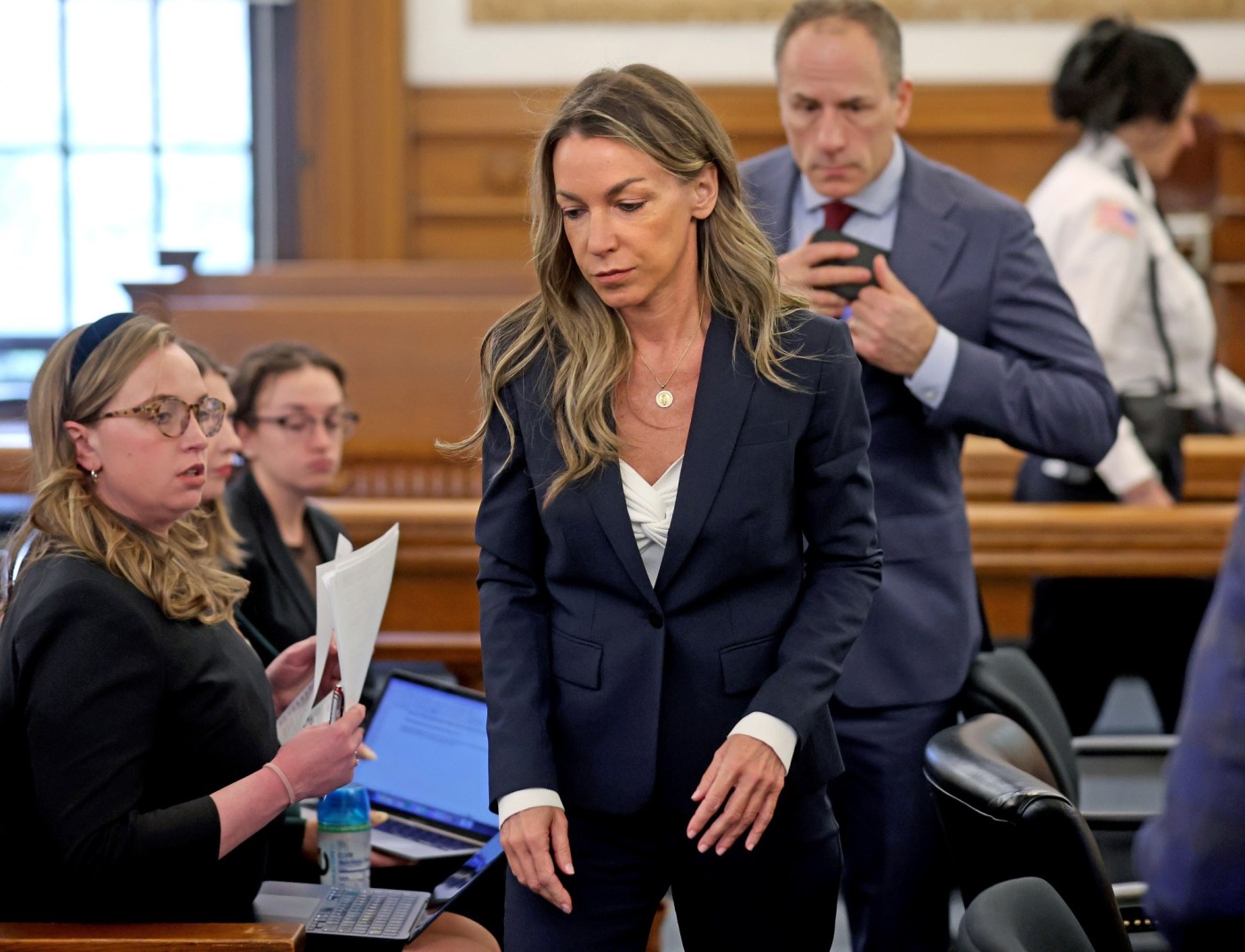
The Karen Read murder retrial has nearly enough jurors seated to begin and on Wednesday got a green light of sorts when the U.S. Supreme Court declined a defense request to stay the case.

Attorneys in the case against the Mansfield former financial analyst and Bentley College lecturer picked up three more jurors among the 58 potential jurors called on Wednesday, making a total of 15 jurors seated for trial: eight men and seven women.

Attorneys want to have at least 16 jurors in the final pool to leave a healthy number of alternates by the end of the trial — which Norfolk Superior Court Judge Beverly J. Cannone said could take as long as eight weeks. There will be 12 deliberating jurors.  Any remainder would be deemed alternates.

Read on Tuesday told reporters outside of court that opening statements in her trial could begin next Tuesday.

Read, 45, of Mansfield, is accused of striking Boston Police Officer John O’Keefe, 46, her boyfriend of about two years, with her SUV and leaving him to die in a major snowstorm on the front lawn of 34 Fairview Road in Canton on Jan. 29, 2022.

Efforts to dismiss

She was tried last year on charges of second-degree murder, manslaughter while operating a motor vehicle under the influence, and leaving the scene of an accident causing death, but that ended in mistrial on July 1, 2024, after the jury, in a succession of notes to the judge, reported an impasse.

Since Read’s last trial, the defense has mounted efforts to have charges tossed. So far, those efforts have failed before Cannone, the Massachusetts Supreme Judicial Court, the federal district court in Boston, and the U.S. Court of Appeals for the First Circuit.

The Supreme Court

On April 1, the same day jury selection began, appellate defense attorney Martin Weinberg filed a petition to the U.S. Supreme Court to consider Read’s case. He has also asked for the Supreme Court to issue a stay to the state courts until it has decided whether it will take up Read’s case.

On Wednesday, Associate Supreme Court Justice Ketanji Brown Jackson denied the request to stay the proceedings.

Also on Wednesday, however, Read’s Supreme Court docket reported that her request for their review of her Double Jeopardy claims was “Distributed for conference” with a consideration date of April 25, during which the court will decide whether it will take up the case.

This federal rule helped clear air over America’s most beloved parks. Trump’s EPA wants to kill it

posted in: All news | 0

By TODD RICHMOND and MARY KATHERINE WILDEMAN

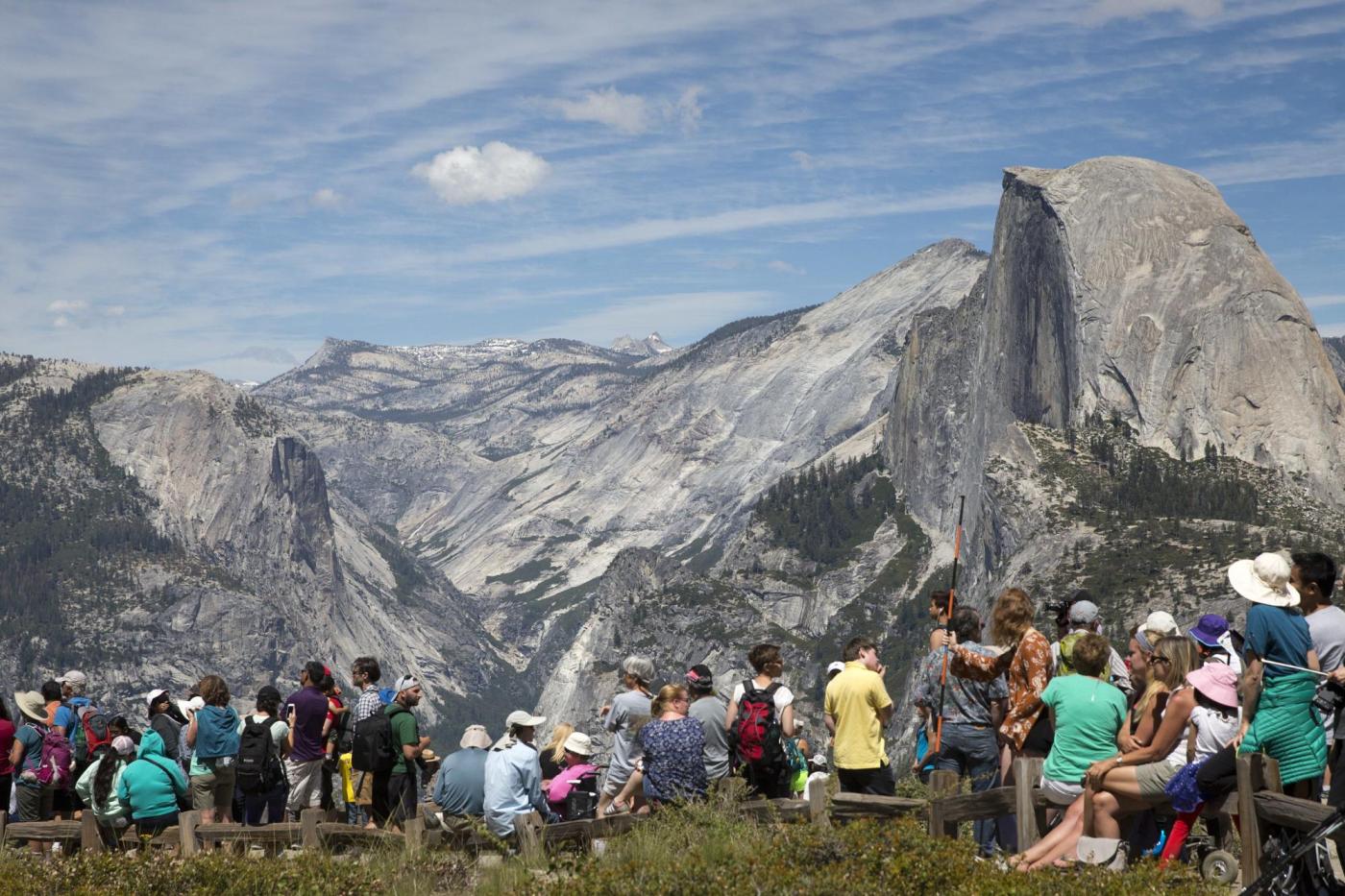
During a hike in the Great Smoky Mountains National Park in 1995, Don Barger climbed Chilhowee Mountain hoping to gaze across the valley below. All he saw was a wall of gray haze.

Related Articles


Trump targets ‘Anonymous’ author and former top cybersecurity official in escalation of retribution


Trump’s new energy order puts states’ climate laws in the crosshairs of the Department of Justice


House votes to overturn Biden-era rule limiting bank overdraft fees to $5, sends to Trump to sign


The week that Trump pushed the global economy to the brink with tariffs — and then pulled back


Where things stand for Trump in global tariff battle

Today, he said, he can see some 50 miles across that same valley to the Cumberland Mountains.

A 26-year-old federal regulation known as the regional haze rule has helped cut down on pollution over national parks, wilderness areas and tribal reservations, restoring some of the nation’s most spectacular natural vistas for outdoor lovers like Barger. But conservationists fear those gains may be lost after President Donald Trump’s administration announced in March the rule is among dozens of landmark environmental regulations that it plans to roll back.

“It means a promise that was made to the American public is lost,” Barger, 74, said. “More and more generations of people are going to grow up as ignorant as I was, not realizing what I’m missing and not seeing.”

Congress pushes to clean air over parks, wilderness areas

Haze forms when small particles of air pollution, such as sulfur dioxide or nitrogen oxides, scatter and absorb sunlight, blurring views and decreasing visibility.

Congress amended the Clean Air Act in 1977 to make restoring and maintaining visibility a goal for 156 national parks, wilderness areas, wildlife refuges and tribal reservations across 36 states. That includes places like the Great Smoky Mountains National Park in North Carolina and Tennessee; Grand Canyon National Park; Glacier National Park; and the Boundary Waters Canoe Area Wilderness.

After years of drafting and litigation, the U.S. Environmental Protection Agency adopted regulations known as the regional haze rule in 1999 to implement the amendments.

The rule calls for attaining natural visibility conditions by the year 2064 and mandates that states come up with plans that include limitations on emissions, compliance schedules and monitoring strategies. Older facilities that emit pollution, such as coal-fired power plants, must adopt mitigation technology such as scrubbers or shut down periodically to decrease overall annual emissions.

A work in progress

The states’ plans have been plagued with delays as the EPA approves parts of them and rejects others. For example, two big oil- and coal-producing states, North Dakota and Wyoming, and industry groups filed petitions in federal court in January seeking review of EPA decisions rejecting their plans, according to the Harvard Law School’s Environmental and Energy Law Program.

The rule works in conjunction with other federal antipollution regulations, but it’s been crucial in clearing the skies over national parks and wilderness areas.

An Associated Press analysis of data from a nationwide network of monitoring sites from 1999, when the rule was implemented, through 2023 shows 93% of the parks and wilderness areas have seen improved air quality on clear days. No parks or wilderness areas have seen any notable worsening in visibility.

Visibility in the Great Smoky Mountains National Park was twice as good on a typical clear day in 2023 as it was in 1999, marking the biggest improvement among the national parks.

The EPA estimates that between 2007 and 2018 the rule has cut 500,000 tons of sulfur dioxide and 300,000 tons of nitrous oxides annually. The average visual range has increased from 90 miles to 120 miles in some western parks and from 50 to 70 miles in some eastern parks, according to the Harvard program.

‘Most consequential day of deregulation’

Trump’s EPA administrator, Lee Zeldin, announced March 12 that the agency would look to roll back 31 landmark environmental regulations, including the regional haze rule. Zeldin called the announcement the “most consequential day of deregulation in American history” and said in an essay published in the Wall Street Journal that the administration is “driving a dagger through the heart of climate-change religion.”

FILE- Steam rises a the Norris Geyser Basin in Yellowstone National Park, Wyo., Spet. 2009. (AP Photo/Beth Harpaz, File)

Asked for comment on the regional haze rule, the EPA said they want to better account for pollution from outside the U.S. and from natural sources and avoid unnecessary burdens for states and industry.

Has the rule hurt energy producers?

In a cost-benefit analysis of the rule before it took effect, the EPA found it would cost energy producers up to $98 billion by 2025 while providing about $344 billion in benefits such as health care savings.

Producers argue that the haze rule has done its job and it doesn’t make sense to continue to impose costs on them.

“This is a matter of diminishing returns,” said Jonathan Fortner, interim president and CEO of the Lignite Energy Council, which advocates for North Dakota’s coal industry. “The air is clean, the data proves it, and the science backs that up. The rule’s being misapplied, not because we disagree with clean air goals, but because we’re already there.”

Two federal properties in North Dakota are subject to the rule, the Lostwood National Wildlife Refuge and Theodore Roosevelt National Park. The AP analysis found both sites have seen dramatic visibility improvements over the five years from 2019 to 2023.

EPA officials did not respond to an AP request for a list of power plants that have closed due to the regional haze rule. A number of energy industry groups did not return repeated requests for comment, including the U.S. Energy Association and the National Utility Contractors Association.

What’s next for the parks?

Advocates of the rule say eliminating it could lead to reduced tourism and the economic boom visitors bring to national park regions. The National Park Service estimates 325 million people visited national parks in 2023, spending $26.4 billion in gateway communities.

FILE – Sheer cliffs rise at Zion National Park, near Springdale, Utah., Sept. 16, 2015. (AP Photo/Rick Bowmer, File)

Nothing appears likely to change overnight. Conservationists expect the Trump administration to pursue a rollback through language revisions in the rule, a process that would require a public comment period and would likely trigger court challenges that could last years.

“I’ve watched the Great Smoky Mountains National Park emerge from the chemical haze that once enshrouded it and was getting worse,” Barger said. “It’s just this visceral sense of place. We had lost it entirely. The Clean Air Act is working and it’s a work in progress. You have to stay with it or it doesn’t work.”

Associated Press Science Writer Seth Borenstein contributed to this report.

The Associated Press’ climate and environmental coverage receives financial support from multiple private foundations. AP is solely responsible for all content. Find AP’s standards for working with philanthropies, a list of supporters and funded coverage areas at AP.org.

Billionaires, trusted allies, media personalities. These are the people Trump picked for top roles

posted in: All news | 0

By PARKER KAUFMANN, HUMERA LODHI and CHRISTOPHER KELLER

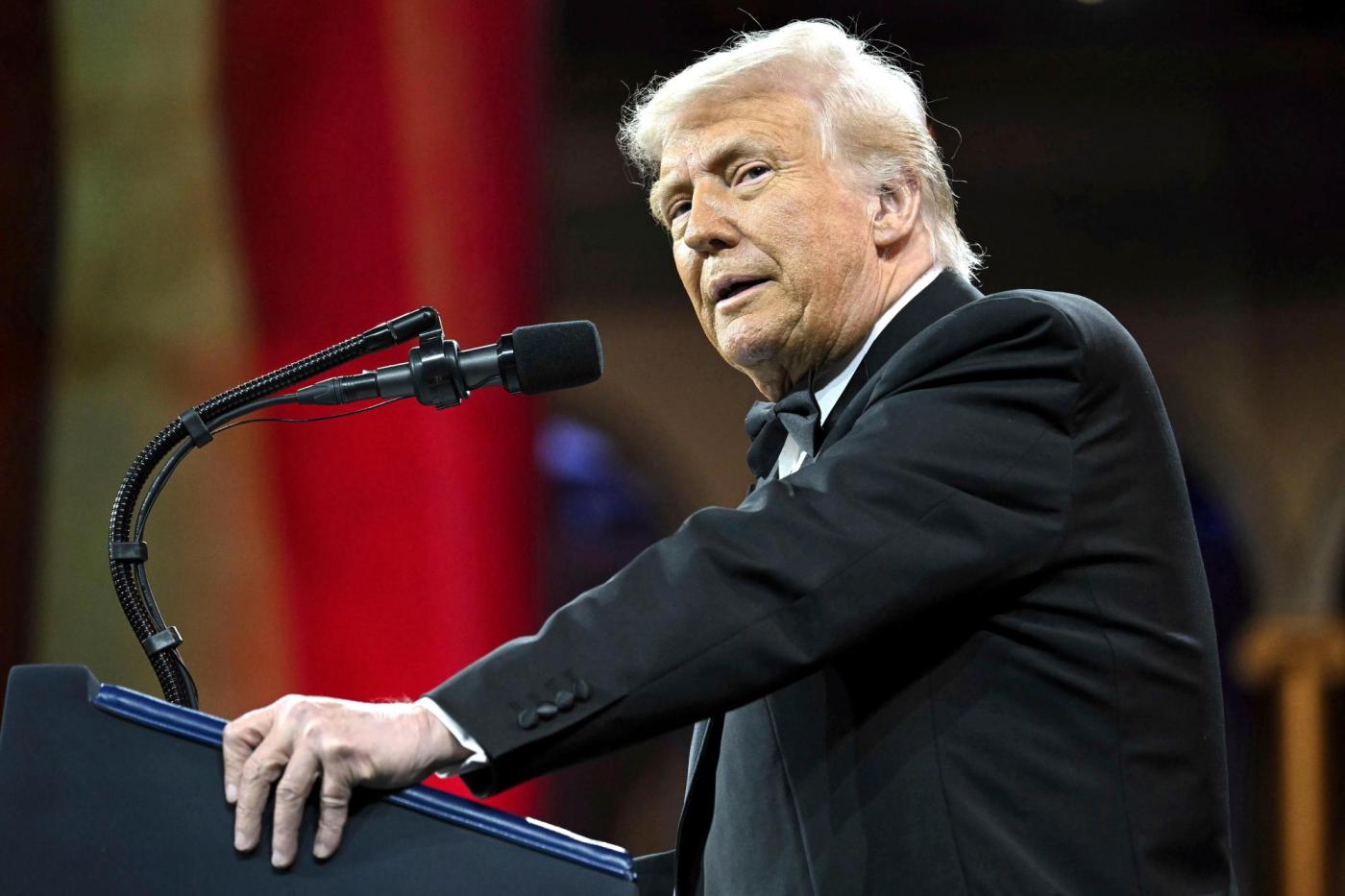
President Donald Trump prioritized loyalty as he built out a team for his second term, surrounding himself with people who served faithfully in his first administration or who worked on one or more of his three campaigns.

Those are not the only ties that connect the people in the highest ranks of his administration. Several are billionaires or campaign donors, or both. There also are media personalities, former lawmakers and people who worked on Project 2025, the conservative blueprint for slashing government that Trump insisted he had no affiliation with as he campaigned for the White House.

Some people in key roles have personal relationships with Trump that go back years, from a onetime caddy at one of Trump’s golf courses to his son’s former fiancée. Others came around after opposing Trump in the past; examples include his vice president and a handful of Republicans and Democrats who once ran against him.

These are some of the people Trump picked for top roles in his second administration — and a look at what they have in common, according to a review by The Associated Press.

Who’s who:

Tom Barrack, ambassador to Turkey

Scott Bessent, treasury secretary

Pam Bondi, attorney general

Doug Burgum, interior secretary

Lori Chavez-DeRemer, labor secretary

Doug Collins, veterans affairs secretary

Sean Duffy, transportation secretary

Tulsi Gabbard, director of national intelligence

Jamieson Greer, trade representative

Kimberly Guilfoyle, ambassador to Greece

Kevin Hassett, National Economic Council director

Pete Hegseth, defense secretary

Pete Hoekstra, ambassador to Canada

Tom Homan, border czar

Mike Huckabee, ambassador to Israel

Jared Isaacman, NASA administrator

Ronald Johnson, ambassador to Mexico

Keith Kellogg, special envoy for Ukraine and Russia

Robert F. Kennedy Jr., health and human services secretary

Karoline Leavitt, White House press secretary

Kelly Loeffler, administrator of the Small Business Administration

Howard Lutnick, commerce secretary

Dr. Marty Makary, Food and Drug Administration commissioner

Linda McMahon, education secretary

Stephen Miller, White House deputy chief of staff

Elon Musk, Department of Government Efficiency

Related Articles


Trump targets ‘Anonymous’ author and former top cybersecurity official in escalation of retribution


Trump’s new energy order puts states’ climate laws in the crosshairs of the Department of Justice


House votes to overturn Biden-era rule limiting bank overdraft fees to $5, sends to Trump to sign


The week that Trump pushed the global economy to the brink with tariffs — and then pulled back


Where things stand for Trump in global tariff battle

Peter Navarro, White House senior counselor on trade and manufacturing

Janette Nesheiwat, surgeon general

Kristi Noem, homeland security secretary

Dr. Mehmet Oz, Centers for Medicare and Medicaid Services

Kash Patel, FBI director

David Perdue, ambassador to China

John Ratcliffe, CIA director

Brooke Rollins, agriculture secretary

Marco Rubio, secretary of state

Dan Scavino, White House deputy chief of staff

Rodney Scott, Customs and Border Protection commissioner

Scott Turner, housing secretary

JD Vance, vice president

Russell Vought, director of the Office of Management and Budget

Mike Waltz, national security adviser

Matthew Whitaker, ambassador to NATO

Susie Wiles, White House chief of staff

Steven Witkoff, special envoy

Chris Wright, energy secretary

Lee Zeldin, Environmental Protection Agency administrator

What they have in common:

Worked in the Trump administration during his first term: Rollins, Scavino, Greer, Ratcliffe, Leavitt, Patel, Kellogg, Hassett, McMahon, Whitaker, Hoekstra, Navarro, Scott, Johnson, Vought, Turner, Miller, Homan.

Is from Florida, Trump’s home when he’s not in the White House and site of his estate, Mar-a-Lago: Guilfoyle, Rubio, Waltz, Bondi, Johnson, Witkoff, Wiles, Barrack.

Gave money to Trump’s campaign or a pro-Trump PAC, according to campaign finance data: Wright, Musk, Lutnick, Loeffler, Zeldin, McMahon, Hoekstra, Bessent, Witkoff, Wiles, Barrack.

Employed by Trump’s 2016, 2020 or 2024 campaign (or for more than one): Scavino, Leavitt, Guilfoyle, Miller, Wiles.

Previously served in state or federal public office: Perdue, Burgum, Collins, Vance, Ratcliffe, Loeffler, Noem, Zeldin, Chavez-DeRemer, Rubio, Huckabee, Waltz, Bondi, Hoekstra, Turner, Duffy, Gabbard.

Formerly opposed Trump, by being openly critical of him or running against him for president: Burgum, Musk, Vance, Rubio, Kennedy, Gabbard.

Hosted a TV show, was employed by a TV network as a paid contributor or owns a social media company: Nesheiwat, Oz, Musk, Guilfoyle, Huckabee, Hegseth, Duffy.

Has a personal wealth of $1 billion or more, according to AP reporting: Musk, Lutnick, Isaacman, Loeffler, McMahon, Bessent, Witkoff, Barrack.

Was an author or contributor to the conservative policy playbook known as Project 2025: Ratcliffe, Hoekstra, Navarro, Vought, Homan.

Has a personal relationship with Trump, such as a longtime friend, business colleague or person with other close ties to Trump family members: Scavino, Guilfoyle, McMahon, Witkoff, Barrack.

Reporting and research from Sara Burnett, Lolita C. Baldor, Bill Barrow, Thomas Beaumont, Collin Binkley, Matt Brown, Cathy Bussewitz, Jill Colvin, Bernard Condon, Tara Copp, Matthew Daly, Jack Dura, Alanna Durkin Richer, Adriana Gomez Licon, Fatima Hussein, David Klepper, Matthew Lee, Aamer Madhani, Scott McFetridge, Matthew Perrone, Michelle L. Price, Amanda Seitz, Brian Slodysko, Mike Stobbe, Darlene Superville and Eric Tucker.