Opinion: Helping NYC’s Small Businesses Relocate & Grow

posted in: All news | 0

“If implemented, RACE would incentivize large-scale relocations to older, underused office spaces to bolster the citywide economy. This would work hand-in-hand with REAP, elevating additional businesses, neighborhoods, and industries.”

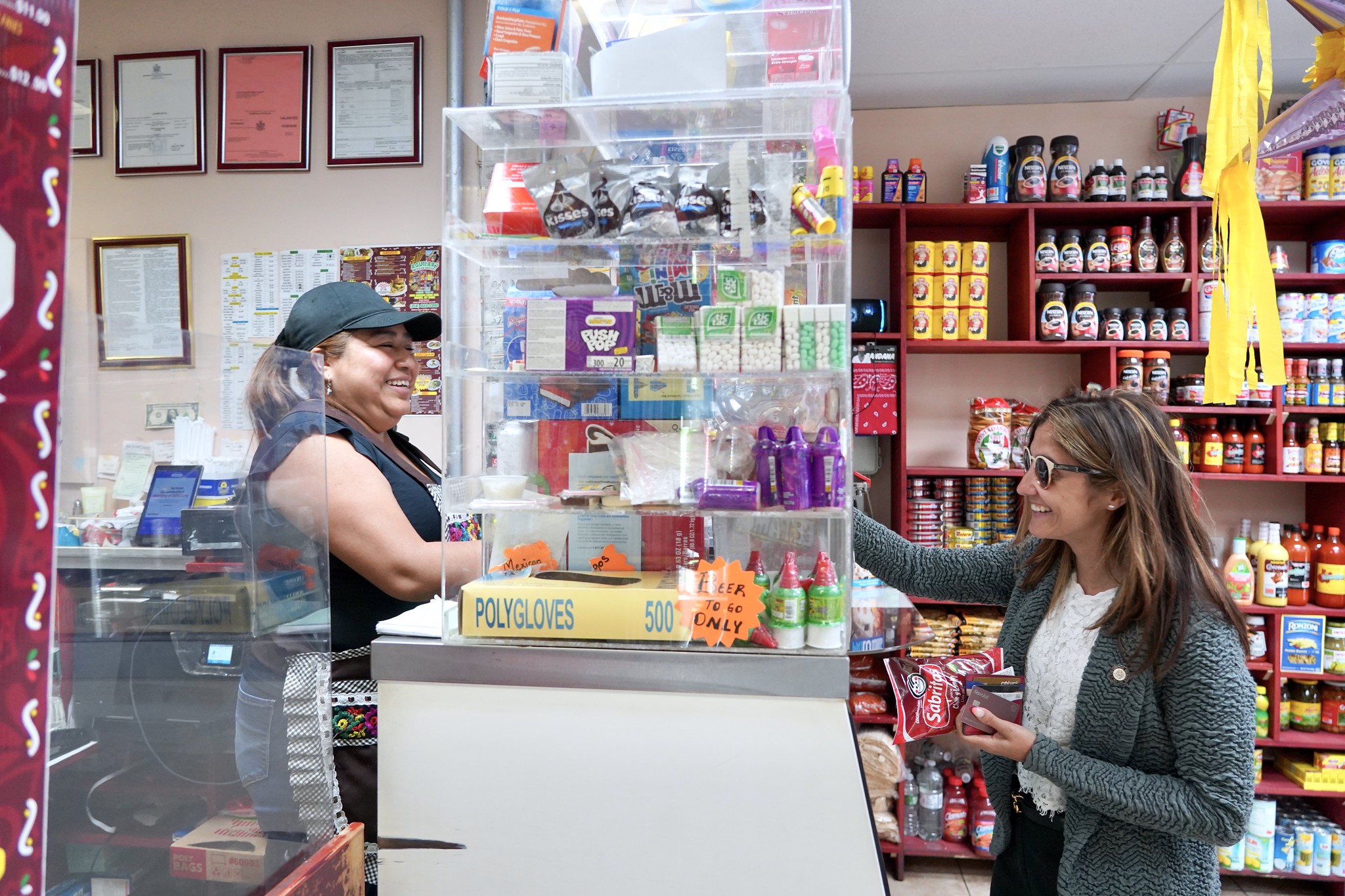
(Gerardo Romo / NYC Council Media Unit)

Anyone who has lived, worked, or even visited New York City can attest to its growing lack of affordability. The city’s 183,000 small business owners aren’t exempt—with rising costs on everything from materials to utilities, it’s harder to stay afloat and nearly impossible to grow. This is stunting businesses and job growth, and as a result, communities in every corner of our city, with no signs of abating anytime soon.

Any elected official who is serious about addressing our affordability crisis must prioritize strengthening jobs in our city. That means we need smart policy that maintains and grows businesses by providing them the resources to succeed. 

One successful initiative doing so is the Relocation and Employment Assistance Program (REAP), which incentivizes businesses to move to New York City’s outer boroughs and Northern Manhattan. As leaders of the Chambers of Commerce in Brooklyn, Queens and the Bronx, we’ve seen this impact firsthand from businesses that have relocated, grown, created jobs, and contributed to our boroughs’ overall vitality.

Gov. Kathy Hochul’s got the right idea—in the Executive Budget, as part of her affordability agenda, she proposed a five-year extension of this essential incentive so communities are able to withstand the financial pressures that come with living here, making them more resilient.

Take Brooklyn, where at least 50 businesses have utilized REAP, creating over 3,500 new jobs. Not only is that impacting those thousands of New Yorkers and their families, it’s also creating economic activity for Brooklyn’s bodegas, restaurants, and other businesses, beginning a positive loop that strengthens the borough.

And those businesses themselves are contributing to Brooklyn’s strength: the Architecture Research Office used REAP to relocate to a larger office space in Willoughby Square, and went on to design a brand new building for the Khalil Gibran International Academy, New York City’s first Arabic-English dual-language public school.

In Queens, REAP has also had profound impacts. Data from the Long Island City Partnership shows that the program has led to an estimated 3,000 new jobs in just the one neighborhood, with many stemming from the manufacturing industry.

And as the South Bronx is seeing a boom in development and activity, REAP is helping businesses match the growing needs there. From office jobs to manufacturing jobs, REAP helps diversify our economic strength to make it more resilient both citywide and across each borough.   

Gov. Hochul understands that without adequately supporting our small businesses, our communities will suffer— which is why she doubled down on her promise to support business owners in New York City and introduced the Relocation Assistance Credit for Employees (RACE) program.

If implemented, RACE would incentivize large-scale relocations to older, underused office spaces to bolster the citywide economy. This would work hand-in-hand with REAP, elevating additional businesses, neighborhoods, and industries.

However, the state legislature hasn’t stepped up to match the governor’s commitment. The criticism that it shuffles businesses within the city misses both the point, and the moment—our businesses will leave without the proper resources. While neither program was included in State Senate and Assembly’s one-house budget proposals, we are optimistic that our legislative leaders will recognize that we need to use every tool available to address our affordability crisis, and that REAP and RACE are important ones. 

With the budget deadline approaching, it’s imperative that REAP and RACE be included. Investing in both of these programs means investing in more jobs, better affordability for our neighborhoods and a higher quality of life for all New Yorkers. 

Randy Peers is the president and CEO of the Brooklyn Chamber of Commerce. Thomas Grech is the president and CEO of the Queens Chamber of Commerce. Lisa Sorin is the president and CEO of the Bronx Chamber of Commerce. 

The post Opinion: Helping NYC’s Small Businesses Relocate & Grow appeared first on City Limits.

A helicopter has crashed in the Hudson River off Manhattan, authorities say

posted in: All news | 0

NEW YORK (AP) — A helicopter crashed Thursday into the Hudson River just off Manhattan, authorities said. There were no immediate reports on injuries or fatalities.

The fire department said it received a report of a helicopter in the water at 3:17 p.m.

Videos posted on social media showed the aircraft mostly submerged, upside down in the water. The fire department said it had units on scene performing rescue operations. Multiple rescue boats were seen on video circling the aircraft.

The rescue craft were near a site close to the Manhattan waterfront, near the end of a long maintenance pier for one of the ventilation towers for the Holland Tunnel. Fire trucks and other emergency vehicles were on streets near the scene with their lights flashing.

The skies over Manhattan are routinely filled with both planes and helicopters, both private recreational aircraft and commercial and tourist flights. Manhattan has several helipads that whisk business executives and others to destinations throughout the metropolitan area.

Over the years, there have been multiple crashes, including a collision between a plane and a tourist helicopter over the Hudson River in 2009 that killed nine people and the 2018 crash of a charter helicopter offering “open door” flights that went down into the East River, killing five people.

Bernice King reflects on the Fair Housing Act, made law after her father’s killing

posted in: All news | 0

By THALIA BEATY

Bernice King warns decades of work to reduce inequities in housing is at risk, as the Trump administration cuts funding for projects and tries to reduce funding for nonprofits that handle housing discrimination complaints.

“I shudder to think what’s going to happen — there’s still a lot of residential segregation,” King, CEO of The King Center and the youngest daughter of civil rights leaders The Rev. Martin Luther King Jr. and Coretta Scott King, told The Associated Press. “It’s better than it was during my father’s lifetime. But going forward, we may end up right back where we were in the ‘50s and in the ’60s. People will feel very emboldened to discriminate because they know there’s nothing there to to stop it.”

In February, the U.S. Department of Housing and Urban Development canceled millions of dollars in grants to nonprofits that handle housing discrimination complaints. A judge temporarily froze the terminations, which HUD said targeted funding awards that included diversity, equity and inclusion, or DEI, language.

The department will uphold the Fair Housing Act and combat discrimination in housing, a HUD official said, adding that no staffing changes specific to the department have been announced.

King said the attacks on what the administration calls DEI look familiar.

“To me, these are those same old historic, divide-and-conquer tactics to try to keep people fighting with each other and keep people separated and keep a certain hierarchy existing in a society,” she said.

FILE – Dr. Martin Luther King, Jr. and his wife Coretta Scott King wave to crowd in street from center window of a third-floor walk-up apartment he rented on Chicago’s West Side, Jan. 26, 1966. (AP Photo/Edward Kitch, File)

Continuing to press to end discrimination in housing

Whenever she can, King said she highlights her father’s legacy pressing for economic equality, including speaking Thursday at the Northwest African American Museum in Seattle, near where Habitat for Humanity of Seattle-King & Kittitas Counties is building a new condominium named after him.

The 58-unit apartment block is located on Martin Luther King Jr. Way in King County, which is also named for him. Construction on the site has started and units will eventually be sold to buyers at affordable prices.

Seattle Habitat CEO Brett D’Antonio, said naming the building after King offered a chance to talk about racial equity in housing, part of Habitat for Humanity’s efforts to raise awareness about fair housing, including its fundraising campaign Home is the Key, in April in remembrance of the Fair Housing Act’s passage.

“There was just no better opportunity to name the building in honor of Dr. King as we look to the work ahead of us in tackling affordable housing needs across the country, but also here in Seattle,” he said.

Bernice King remembers when her father moved their family in 1966 to a third-floor walk-up without heat in Chicago. Martin Luther King Jr. came to Chicago to try to break through discrimination in housing, which left Black residents paying more in rent for worse conditions than white tenants.

Martin Luther King Jr. campaigned in Chicago, speaking to crowds of tens of thousands around the area and leading a march to City Hall to tape their demands on the front door. A week after he was assassinated in 1968, the Fair Housing Act was signed into law, which prohibited discrimination in housing based on race and other characteristics and created mechanisms to resolve complaints.

She said the dream of fair and equitable housing that the law’s passage signaled has still not be realized.

“To allow its provisions to be weakened is to betray the commitment and the sacrifices made to realize it,” she said, speaking in Seattle.

FILE – Hands of civil rights leaders Al Raby, left, and Dr. Martin Luther King, post a scroll on door of Chicago’s City Hall, July 10, 1966. (AP Photo/Larry Stoddard, File)

Housing inequity continues today

Large discrepancies in homeownership between Black, Hispanic and white Americans persist today, though that is just one measure of inequity in housing access. The National Fair Housing Alliance found housing discrimination complaints reached a record 34,000 in 2023, with most involving rentals and over half having to do with discrimination based on disability.

Related Articles


St. Paul City Council gets an earful on rent control, tenant protections


St. Paul City Council to hear rent control, tenant protections


More homes for sale and easing rates favor homebuyers this spring, but affordability hurdles remain


After Trump cuts, fate of energy assistance program in question in Minnesota


St. Paul nonprofit pays $7.3M to turn Bandana Square hotel into emergency shelter

Diane Levy, who researches housing at the Urban Institute, said she was concerned about who will take future fair housing complaints if funding to nonprofits that handle those complaints is significantly diminished.

“If you experience discrimination, if it’s blatant, that takes a toll,” she said, adding even unseen discrimination limits where you can live and whether to rent or buy home, which, in turn, limits where you can work or go to school.

Levy also noted the administration ended federal protections against housing discrimination based on sexual orientation and gender identity.

Bernice King said this moment calls for creativity and perseverance.

“People feel like it’s okay to discriminate — okay to suppress, oppress and deny,” she said. “It just means those of us who are on the side of standing up for what is right and fighting for freedom, justice and equality, having even more work to do.”

Associated Press coverage of philanthropy and nonprofits receives support through the AP’s collaboration with The Conversation US, with funding from Lilly Endowment Inc. The AP is solely responsible for this content. For all of AP’s philanthropy coverage, visit https://apnews.com/hub/philanthropy.

Trump’s tariffs threaten to end quarter-century era of cheap goods for US consumers

posted in: All news | 0

By CHRISTOPHER RUGABER and ANNE D’INNOCENZIO, AP Business Writers

WASHINGTON (AP) — President Donald Trump’s new tariffs threaten to push up prices on clothes, mobile phones, furniture and many other products in the coming months, possibly ending the era of cheap goods that Americans enjoyed for about a quarter-century before the pandemic.

Related Articles


China reaches out to others as Trump layers on tariffs


Apple has few incentives to start making iPhones in US, despite Trump’s trade war with China


Trump’s new energy order puts states’ climate laws in the crosshairs of the Department of Justice


The week that Trump pushed the global economy to the brink with tariffs — and then pulled back


Average US rate on a 30-year mortgage falls to 6.62%, easing for the third week in a row

In return, White House officials hope the import taxes create more high-paying manufacturing jobs by bringing production back to the United States. It is a politically risky trade-off that could take years to materialize, and it would have to overcome tall barriers, such as the automation of most modern factories.

Even after Trump’s U-turn on Wednesday that paused steep new tariffs on about 60 nations for 90 days, average U.S. duties remain much higher than a couple of months ago.

Trump has imposed a 10% tariff on all imports, while goods from China — the United States’ third-largest source of imports — face huge 145% duties. And there are 25% taxes on imports of steel, aluminum, cars, and roughly half of goods from Canada and Mexico.

As a result, the average U.S. tariff has soared from below 3% before Trump’s inauguration to roughly 20% now, economists calculate, the highest level since at least the 1940s.

Globalization’s effect on prices

Should they remain in place, such high duties would reverse decades of globalization that helped lower costs for American shoppers.

Other trends, including factory automation and technological innovation, particularly in electronics such as TVs, have also brought down prices. But imports help keep prices in check, economists say, partly because of lower labor costs overseas and because increased competition in the U.S. market forces American companies to be more efficient.

“Freer trade has helped moderate inflation over the long term,” said Scott Lincicome, a trade analyst at the libertarian Cato Institute. “If we are entering a more restricted supply side … then you’re likely to see more expensive stuff,” Lincicome said.

Bank of America estimates that the new duties could raise car prices an average of $4,500, even assuming that automakers absorb some of the tariffs’ impact. Such an increase would follow sharp price hikes of the past few years that have left the average price of a new car at a painful $48,000.

Aaron Rubin, CEO of ShipHero LLC, which provides software for merchants to help book shipments and track order deliveries, said his data indicates that retailers are already starting to raise prices to get ahead of the tariffs.

ShipHero’s data captures prices on several million products equivalent to about 1% of overall U.S. e-commerce sales. Prices rose 3.9% on Sunday and Monday on a variety of goods compared with the week before Trump announced more tariffs, Rubin said.

A long streak of low prices

After the double-digit inflation of the 1970s was defeated in the early 1980s, inflation still regularly topped 4% yearly until the mid-1990s, when freer trade and globalization began to intensify. From 1995 through 2020, it averaged less than 2.2%.

American shoppers reaped the benefits. Average clothing costs fell 8% from 1995 through 2020, at the same time that overall prices rose 74%, according to government data. Furniture costs were roughly unchanged. The average price of shoes rose just 10%.

Trump administration officials have at times acknowledged the prospect of higher prices from the tariffs.

In a speech last month to the Economic Club of New York, Treasury Secretary Scott Bessent said, “Access to cheap goods is not the essence of the American dream.”

The administration’s willingness to downplay the allure of cheap goods is a risky move, coming after the worst inflation spike in four decades from 2021 to 2023. The jump in prices for essentials such as groceries, gas and housing soured many voters on the economy under former President Joe Biden, despite low unemployment.

According to AP VoteCast, a nationwide survey of voters last November, about half of Trump’s voters said the high price of gas, groceries and other goods was the single most important factor in their vote. Another 43% of Trump voters said it was an important factor, even if it was not the most important consideration.

Some consumers say they are willing to pay more for U.S. goods.

Alisha Sholtis, 38, a nurse-turned-social media influencer, used to shop heavily on China-founded fast-fashion e-commerce site Temu, scooping up polyester tops and dresses for $5 to $25 and grabbing cheap electronics and toys. Products from Temu will now face huge new tariffs.

Yet Sholtis, who lives in Davison, Michigan, said she got tired of the clothes that fell apart after one washing and the toys that broke easily. She now shops elsewhere.

She applauds Trump’s goal of bringing some manufacturing back to the U.S. because she feels the move will lead to better quality. And she said she wouldn’t mind paying higher prices as a result.

“I would buy less of more higher quality things,” she said.

Kevin Hassett, Trump’s top economic adviser, acknowledged Sunday that “there might be some increase in prices” from the president’s tariffs.

But he noted that there have been trade-offs from globalization: “We got the cheap goods at the grocery store, but then we had fewer jobs,” he said on ABC’s “This Week.”

Yet many industries will find it hard to shift much production back to the U.S. in the face of the tariffs, particularly since the scope of the duties has been changing frequently. With duties on Chinese goods so much higher than in the rest of the world, many Chinese products will likely be routed through other countries, such as Vietnam, and pay a lower duty, economists say.

Shannon Williams, CEO of the Home Furnishings Association, a furniture trade group, said it can take years to set up a factory in the U.S. It’s not clear if there would be enough workers either, given the low U.S. unemployment rate of 4.2%.

And the most innovative furniture makers in the U.S. are using technology to reduce their labor needs. “They’re going through it and completely automating their assembly line,” she said.

China is the United States’ third-largest trading partner, and the U.S. imported more than $60 billion worth of iPhones and other mobile phones from China last year.

China also exported 1.2 billion pairs of shoes to the United States, according to the Footwear Distributors and Retailers of America. About 26% of U.S. clothes were imported from China in 2023, one study found, and about 80% of U.S. toys.

Williams said furniture prices likely won’t rise much anytime soon because most companies now import from other Asian nations, such as Vietnam or Malaysia.

Yet “globalization has definitely helped bring costs down,” she said. “There’s a reason you could buy a $699 sofa in 1985 and buy a $699 sofa today.”

D’Innocenzio reported from New York. Associated Press Writer Linley Sanders also contributed to this report.